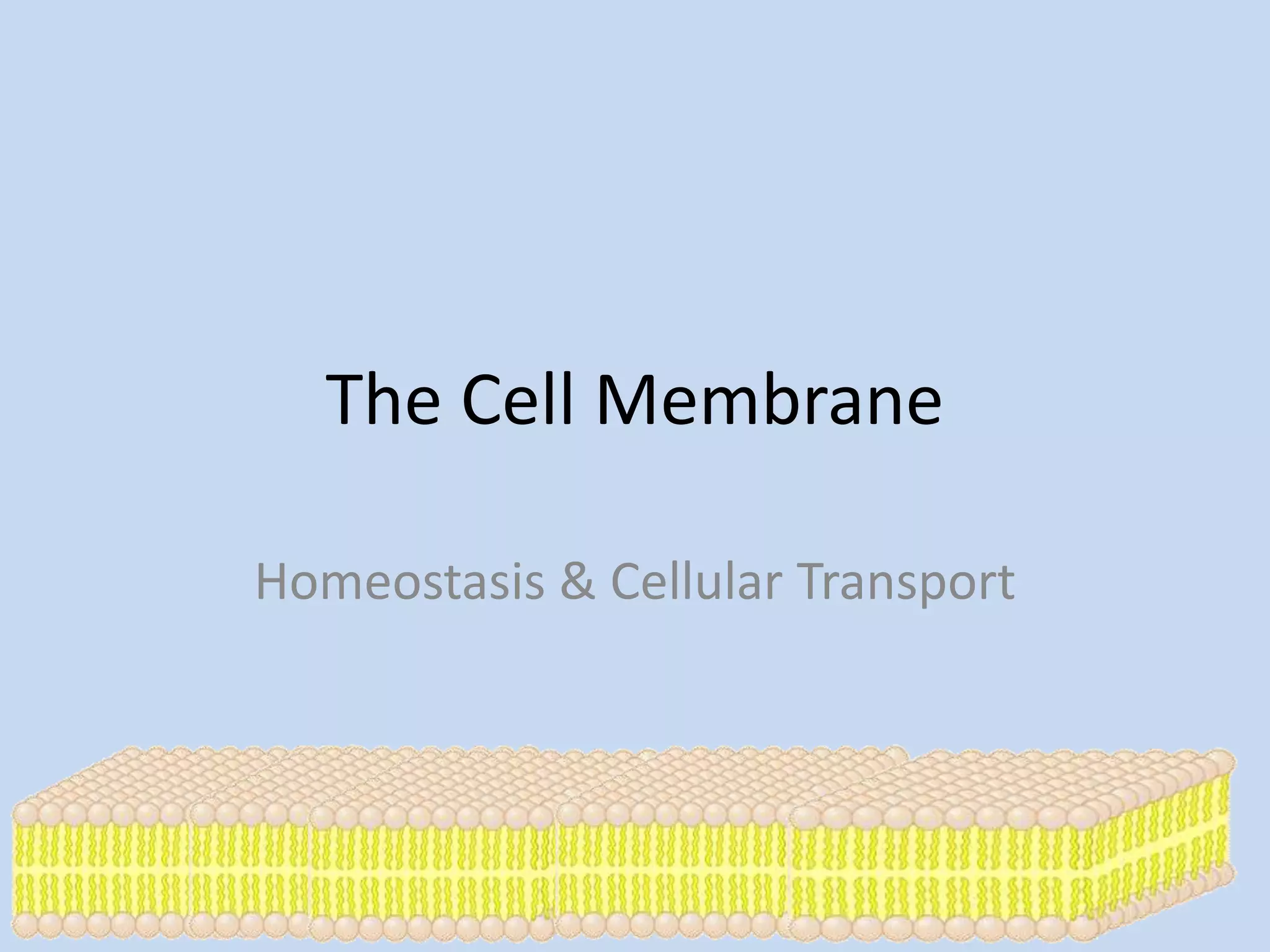
The Cell Membrane
Homeostasis & Cellular Transport
Function of the Cell Membrane:
• Cell membrane separates the components of a cell
from its environment—surrounds the cell
• “Gatekeeper” of the cell—regulates the flow of
materials into and out of cell—selectively permeable
• Cell membrane helps cells maintain homeostasis—
stable internal balance
Cell Membrane aka “The Phospholipid Bilayer”
• ALL cells have a cell membrane made of Phosphate,
proteins, and lipids
•That’s why it’s called the Phospholipid Bilayer
Cell Membrane
lipid bilayer
protein channel
protein pump
Layer 1
Layer 2
All Cells have a cell (plasma membrane):
• Prokaryotes (have a cell wall + cell membrane)
• Eukaryotes:
• a) Animal Cells ( cell membrane only)
• b) Plant cells (cell membrane + cell wall)
The cell membrane in detail
• It’s a double layer (bilayer)
of phosphates, and fats
(lipids)
• A single phospholipid has
hydrophilic (water loving)
phosphate heads AND
hydrophobic (water hating)
fatty acid tails
• The cell membrane both
repels and attracts water
through the membrane at
the same time
HydroPHILIC head
hydroPHOBIC tails
Passive Transport
A process that does not require energy to move
molecules from a HIGH to LOW concentration
 Diffusion
 Facilitated Diffusion (uses proteins to push
particles across)
 Osmosis
•Diffusion is the movement of small particles across the
cell membrane like the cell membrane until homeostasis
is reached.
• Facilitated diffusion requires the help of carrier and
channel proteins
These particles move from an area of high concentration
to an area of low concentration.
outside of cell
inside of cell
• Examples of diffusion: spraying aerosols, and perfumes.
• High concentration (inside of the can)—the molecules are
packed tightly together….
• To a LOW concentration – when sprayed, the molecules
are released to a more free environment
• The particles SPREAD OUT
• Osmosis is the movement of water through a selectively
permeable membrane like the cell membrane
Water moves across the cell membrane from an area of
high concentration to an area of low concentration.
Semi-permeable
membrane is
permeable to water,
but not to sugar
Hypertonic Solutions: contain a high concentration of solute
relative to another solution (e.g. the cell's cytoplasm). When
a cell is placed in a hypertonic solution, the water diffuses
out of the cell, causing the cell to shrivel.
Hypotonic Solutions: contain a low concentration of solute
relative to another solution (e.g. the cell's cytoplasm). When
a cell is placed in a hypotonic solution, the water diffuses
into the cell, causing the cell to swell and possibly explode.
Isotonic Solutions: contain the same concentration of solute
as another solution (e.g. the cell's cytoplasm). When a cell is
placed in an isotonic solution, the water diffuses into and
out of the cell at the same rate. The fluid that surrounds the
body cells is isotonic.
Osmosis Concentration
• Hypertonic: the water or solution OUTSIDE of
the cell is saltier than the INSIDE of the cell.
• Hyper = “more” ore “above”
• This will cause it to shrivel, and shrink
• Ex. Pouring salt on a slug will cause it to shrink
Osmosis Concentration
• Hypotonic: the water or solution OUTSIDE of
the cell
• Hypo means “less than” or “below”
• A hypotonic solution will cause the cell to take
in water, and swell
Osmosis Concentration
• Isotonic: the water outside of the cell has an
EQUAL amount of salt as the water INSIDE of
the cell.
• Iso means “equal”
• Will cause NO CHANGE in cell size
Click
Types of Active Transport
• Active transport uses ENERGY (ATP)
• Exocytosis = how materials EXIT the cell (how the cell uses the
bathroom)
• Endocytosis = how materials ENTER the cell (cell eating/engulfing)
• Pinocytosis= how small materials ENTER the cell (cell
eating/engulfing)
• Phagocytosis = how larger materials ENTER the cell (cell
eating/engulfing)
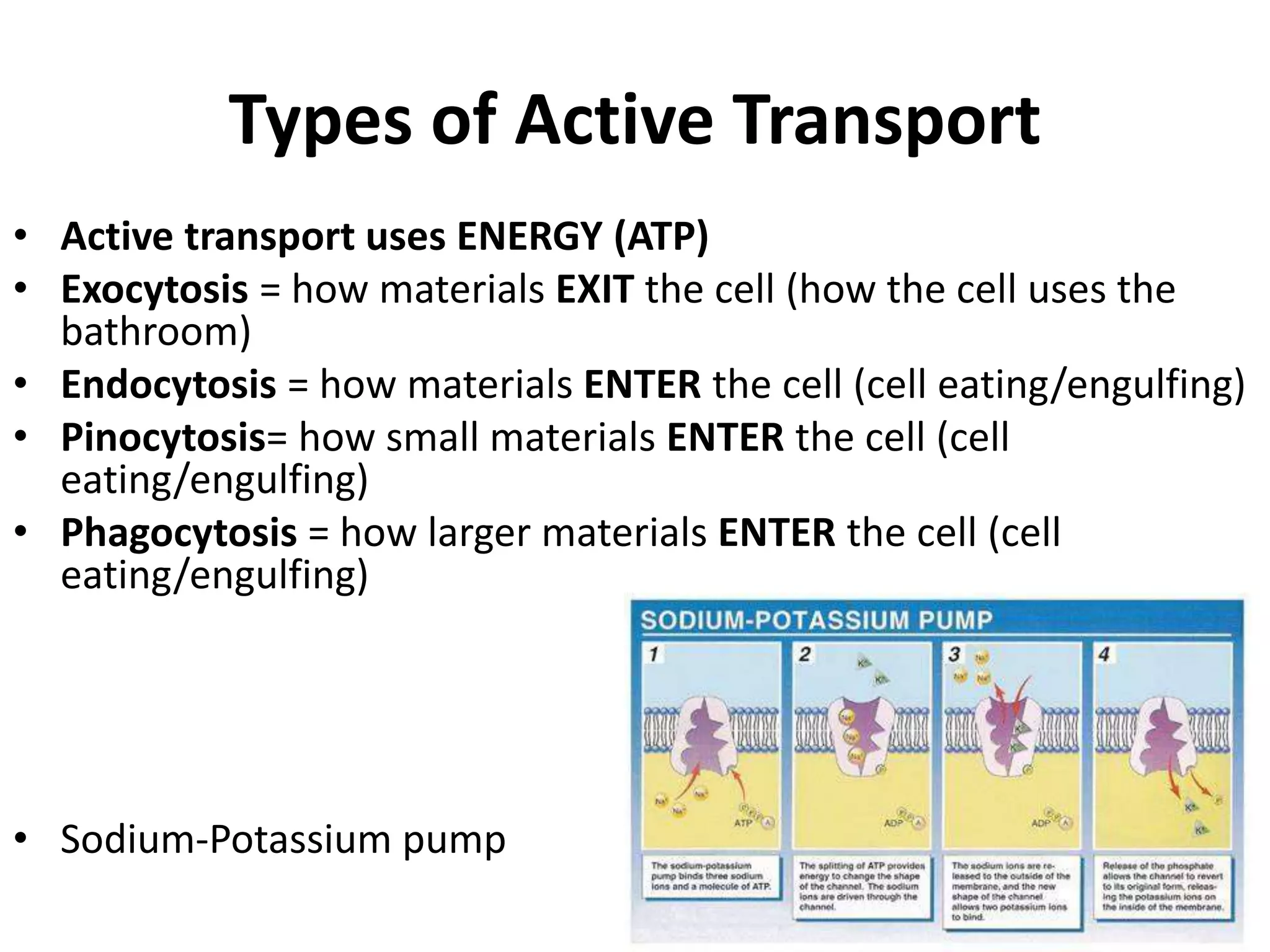
• Sodium-Potassium pump
Active Transport
Active transport is the movement of molecules from LOW to HIGH
concentration.
Energy is required as molecules must be pumped against the
concentration gradient.
Proteins that work as pumps are called protein pumps.
NO ENERGY NEEDED:
Diffusion
Osmosis
Facilitated Diffusion
ENERGY NEEDED:
Active Transport
ANALOGY: Passive Transport vs. Active Transport
Passive Transport: Like
going DOWNHILL
Active Transport: like going
UPHILL

cell.transport..pptx

  • 1.
    The Cell Membrane Homeostasis& Cellular Transport
  • 2.
    Function of theCell Membrane: • Cell membrane separates the components of a cell from its environment—surrounds the cell • “Gatekeeper” of the cell—regulates the flow of materials into and out of cell—selectively permeable • Cell membrane helps cells maintain homeostasis— stable internal balance
  • 3.
    Cell Membrane aka“The Phospholipid Bilayer” • ALL cells have a cell membrane made of Phosphate, proteins, and lipids •That’s why it’s called the Phospholipid Bilayer Cell Membrane lipid bilayer protein channel protein pump Layer 1 Layer 2 All Cells have a cell (plasma membrane): • Prokaryotes (have a cell wall + cell membrane) • Eukaryotes: • a) Animal Cells ( cell membrane only) • b) Plant cells (cell membrane + cell wall)
  • 4.
    The cell membranein detail • It’s a double layer (bilayer) of phosphates, and fats (lipids) • A single phospholipid has hydrophilic (water loving) phosphate heads AND hydrophobic (water hating) fatty acid tails • The cell membrane both repels and attracts water through the membrane at the same time HydroPHILIC head hydroPHOBIC tails
  • 5.
    Passive Transport A processthat does not require energy to move molecules from a HIGH to LOW concentration  Diffusion  Facilitated Diffusion (uses proteins to push particles across)  Osmosis
  • 6.
    •Diffusion is themovement of small particles across the cell membrane like the cell membrane until homeostasis is reached. • Facilitated diffusion requires the help of carrier and channel proteins These particles move from an area of high concentration to an area of low concentration. outside of cell inside of cell
  • 7.
    • Examples ofdiffusion: spraying aerosols, and perfumes. • High concentration (inside of the can)—the molecules are packed tightly together…. • To a LOW concentration – when sprayed, the molecules are released to a more free environment • The particles SPREAD OUT
  • 8.
    • Osmosis isthe movement of water through a selectively permeable membrane like the cell membrane Water moves across the cell membrane from an area of high concentration to an area of low concentration. Semi-permeable membrane is permeable to water, but not to sugar
  • 9.
    Hypertonic Solutions: containa high concentration of solute relative to another solution (e.g. the cell's cytoplasm). When a cell is placed in a hypertonic solution, the water diffuses out of the cell, causing the cell to shrivel. Hypotonic Solutions: contain a low concentration of solute relative to another solution (e.g. the cell's cytoplasm). When a cell is placed in a hypotonic solution, the water diffuses into the cell, causing the cell to swell and possibly explode. Isotonic Solutions: contain the same concentration of solute as another solution (e.g. the cell's cytoplasm). When a cell is placed in an isotonic solution, the water diffuses into and out of the cell at the same rate. The fluid that surrounds the body cells is isotonic.
  • 10.
    Osmosis Concentration • Hypertonic:the water or solution OUTSIDE of the cell is saltier than the INSIDE of the cell. • Hyper = “more” ore “above” • This will cause it to shrivel, and shrink • Ex. Pouring salt on a slug will cause it to shrink
  • 11.
    Osmosis Concentration • Hypotonic:the water or solution OUTSIDE of the cell • Hypo means “less than” or “below” • A hypotonic solution will cause the cell to take in water, and swell
  • 12.
    Osmosis Concentration • Isotonic:the water outside of the cell has an EQUAL amount of salt as the water INSIDE of the cell. • Iso means “equal” • Will cause NO CHANGE in cell size
  • 14.
  • 15.
    Types of ActiveTransport • Active transport uses ENERGY (ATP) • Exocytosis = how materials EXIT the cell (how the cell uses the bathroom) • Endocytosis = how materials ENTER the cell (cell eating/engulfing) • Pinocytosis= how small materials ENTER the cell (cell eating/engulfing) • Phagocytosis = how larger materials ENTER the cell (cell eating/engulfing) • Sodium-Potassium pump
  • 16.
    Active Transport Active transportis the movement of molecules from LOW to HIGH concentration. Energy is required as molecules must be pumped against the concentration gradient. Proteins that work as pumps are called protein pumps.
  • 17.
    NO ENERGY NEEDED: Diffusion Osmosis FacilitatedDiffusion ENERGY NEEDED: Active Transport ANALOGY: Passive Transport vs. Active Transport Passive Transport: Like going DOWNHILL Active Transport: like going UPHILL