Chapter 5Chapter 5
A Day in the LifeA Day in the Life
of a Theatreof a Theatre
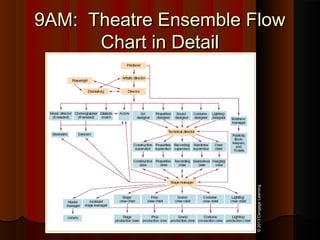
9AM: Theatre Ensemble Flow9AM: Theatre Ensemble Flow
Chart in DetailChart in Detail
©2013CengageLearning
10AM10AM
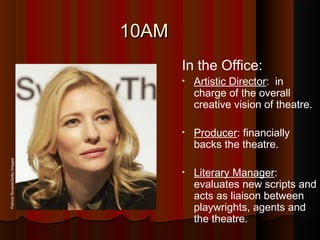
In the Office:
• Artistic Director: in
charge of the overall
creative vision of theatre.
• Producer: financially
backs the theatre.
• Literary Manager:
evaluates new scripts and
acts as liaison between
playwrights, agents and
the theatre.
PatrickRiviere/GettyImages
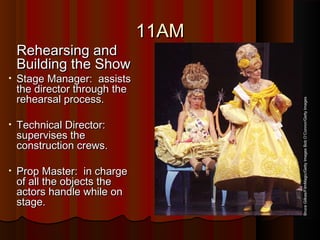
11AM11AM
Rehearsing andRehearsing and
Building the ShowBuilding the Show
• Stage Manager: assistsStage Manager: assists
the director through thethe director through the
rehearsal process.rehearsal process.
• Technical Director:Technical Director:
supervises thesupervises the
construction crews.construction crews.
• Prop Master: in chargeProp Master: in charge
of all the objects theof all the objects the
actors handle while onactors handle while on
stage.stage.
BruceGilkas/FilmMagic/GettyImagesBobO’Connor/GettyImages
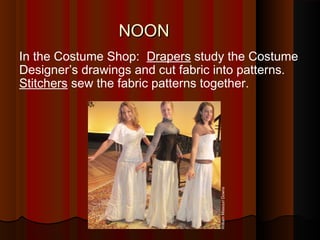
In the Costume Shop: Drapers study the Costume
Designer’s drawings and cut fabric into patterns.
Stitchers sew the fabric patterns together.
NOONNOON
WilliamMissouriDowns
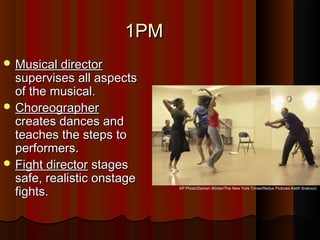
1PM1PM
 Musical directorMusical director
supervises all aspectssupervises all aspects
of the musical.of the musical.
 ChoreographerChoreographer
creates dances andcreates dances and
teaches the steps toteaches the steps to
performers.performers.
 Fight directorFight director stagesstages
safe, realistic onstagesafe, realistic onstage
fights.fights. AP Photo/Damon Winter/The New York Times/Redux Pictures Keith Srakocic
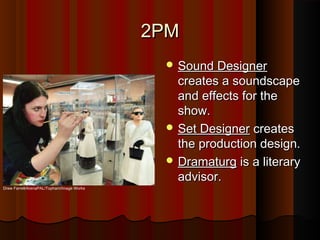
2PM2PM
 Sound DesignerSound Designer
creates a soundscapecreates a soundscape
and effects for theand effects for the
show.show.
 Set DesignerSet Designer createscreates
the production design.the production design.
 DramaturgDramaturg is a literaryis a literary
advisor.advisor.
Drew Farrell/ArenaPAL/Topham/Image Works
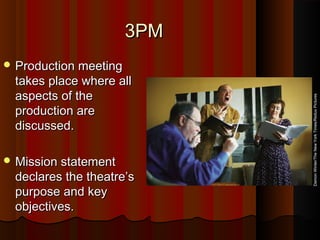
3PM3PM
 Production meetingProduction meeting
takes place where alltakes place where all
aspects of theaspects of the
production areproduction are
discussed.discussed.
 Mission statementMission statement
declares the theatre’sdeclares the theatre’s
purpose and keypurpose and key
objectives.objectives.
DamonWinter/TheNewYorkTimes/ReduxPictures
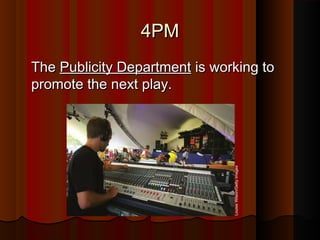
4PM4PM
TheThe Publicity DepartmentPublicity Department is working tois working to
promote the next play.promote the next play.
LouiseWilson/GettyImages
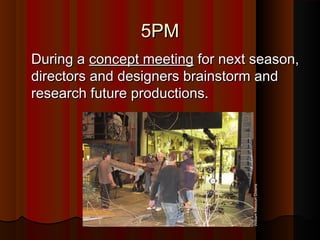
5PM5PM
During aDuring a concept meetingconcept meeting for next season,for next season,
directors and designers brainstorm anddirectors and designers brainstorm and
research future productions.research future productions.
WilliamMissouriDowns
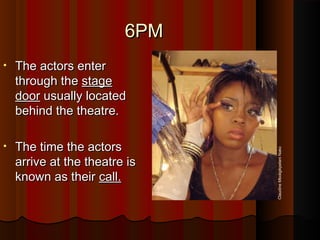
6PM6PM
• The actors enterThe actors enter
through thethrough the stagestage
doordoor usually locatedusually located
behind the theatre.behind the theatre.
• The time the actorsThe time the actors
arrive at the theatre isarrive at the theatre is
known as theirknown as their call.call.
ClaudineMboligikpelaniNako
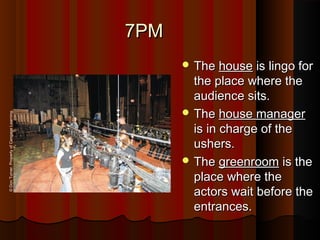
7PM7PM
 TheThe househouse is lingo foris lingo for
the place where thethe place where the
audience sits.audience sits.
 TheThe house managerhouse manager
is in charge of theis in charge of the
ushers.ushers.
 TheThe greenroomgreenroom is theis the
place where theplace where the
actors wait before theactors wait before the
entrances.entrances.
©DonTurner.PropertyofCengageLearning.
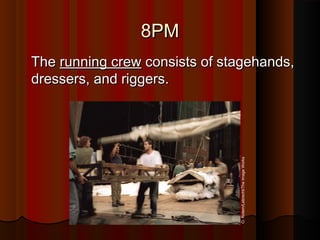
8PM8PM
TheThe running crewrunning crew consists of stagehands,consists of stagehands,
dressers, and riggers.dressers, and riggers.
O.Rotem/Lebrecht/TheImageWorks
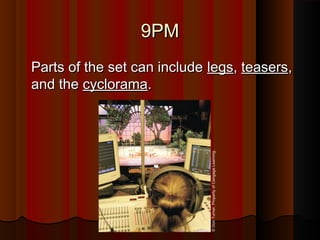
9PM9PM
Parts of the set can includeParts of the set can include legslegs,, teasersteasers,,
and theand the cycloramacyclorama..
©DonTurner.PropertyofCengageLearning.
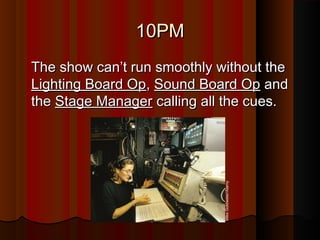
10PM10PM
The show can’t run smoothly without theThe show can’t run smoothly without the
Lighting Board OpLighting Board Op,, Sound Board OpSound Board Op andand
thethe Stage ManagerStage Manager calling all the cues.calling all the cues.
MikeGoldwater/Alamy
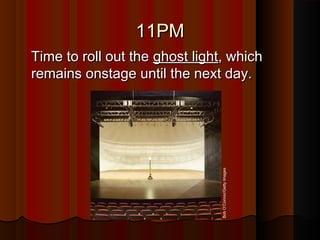
11PM11PM
Time to roll out theTime to roll out the ghost lightghost light, which, which
remains onstage until the next day.remains onstage until the next day.
BobO’Connor/GettyImages
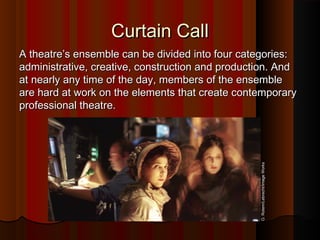
Curtain CallCurtain Call
A theatre’s ensemble can be divided into four categories:A theatre’s ensemble can be divided into four categories:
administrative, creative, construction and production. Andadministrative, creative, construction and production. And
at nearly any time of the day, members of the ensembleat nearly any time of the day, members of the ensemble
are hard at work on the elements that create contemporaryare hard at work on the elements that create contemporary
professional theatre.professional theatre.
O.Rotem/Lebrecht/ImageWorks

Chapter 5: A Day in the Life...

  • 1.
    Chapter 5Chapter 5 ADay in the LifeA Day in the Life of a Theatreof a Theatre
  • 2.
    9AM: Theatre EnsembleFlow9AM: Theatre Ensemble Flow Chart in DetailChart in Detail ©2013CengageLearning
  • 3.
    10AM10AM In the Office: •Artistic Director: in charge of the overall creative vision of theatre. • Producer: financially backs the theatre. • Literary Manager: evaluates new scripts and acts as liaison between playwrights, agents and the theatre. PatrickRiviere/GettyImages
  • 4.
    11AM11AM Rehearsing andRehearsing and Buildingthe ShowBuilding the Show • Stage Manager: assistsStage Manager: assists the director through thethe director through the rehearsal process.rehearsal process. • Technical Director:Technical Director: supervises thesupervises the construction crews.construction crews. • Prop Master: in chargeProp Master: in charge of all the objects theof all the objects the actors handle while onactors handle while on stage.stage. BruceGilkas/FilmMagic/GettyImagesBobO’Connor/GettyImages
  • 5.
    In the CostumeShop: Drapers study the Costume Designer’s drawings and cut fabric into patterns. Stitchers sew the fabric patterns together. NOONNOON WilliamMissouriDowns
  • 6.
    1PM1PM  Musical directorMusicaldirector supervises all aspectssupervises all aspects of the musical.of the musical.  ChoreographerChoreographer creates dances andcreates dances and teaches the steps toteaches the steps to performers.performers.  Fight directorFight director stagesstages safe, realistic onstagesafe, realistic onstage fights.fights. AP Photo/Damon Winter/The New York Times/Redux Pictures Keith Srakocic
  • 7.
    2PM2PM  Sound DesignerSoundDesigner creates a soundscapecreates a soundscape and effects for theand effects for the show.show.  Set DesignerSet Designer createscreates the production design.the production design.  DramaturgDramaturg is a literaryis a literary advisor.advisor. Drew Farrell/ArenaPAL/Topham/Image Works
  • 8.
    3PM3PM  Production meetingProductionmeeting takes place where alltakes place where all aspects of theaspects of the production areproduction are discussed.discussed.  Mission statementMission statement declares the theatre’sdeclares the theatre’s purpose and keypurpose and key objectives.objectives. DamonWinter/TheNewYorkTimes/ReduxPictures
  • 9.
    4PM4PM TheThe Publicity DepartmentPublicityDepartment is working tois working to promote the next play.promote the next play. LouiseWilson/GettyImages
  • 10.
    5PM5PM During aDuring aconcept meetingconcept meeting for next season,for next season, directors and designers brainstorm anddirectors and designers brainstorm and research future productions.research future productions. WilliamMissouriDowns
  • 11.
    6PM6PM • The actorsenterThe actors enter through thethrough the stagestage doordoor usually locatedusually located behind the theatre.behind the theatre. • The time the actorsThe time the actors arrive at the theatre isarrive at the theatre is known as theirknown as their call.call. ClaudineMboligikpelaniNako
  • 12.
    7PM7PM  TheThe househouseis lingo foris lingo for the place where thethe place where the audience sits.audience sits.  TheThe house managerhouse manager is in charge of theis in charge of the ushers.ushers.  TheThe greenroomgreenroom is theis the place where theplace where the actors wait before theactors wait before the entrances.entrances. ©DonTurner.PropertyofCengageLearning.
  • 13.
    8PM8PM TheThe running crewrunningcrew consists of stagehands,consists of stagehands, dressers, and riggers.dressers, and riggers. O.Rotem/Lebrecht/TheImageWorks
  • 14.
    9PM9PM Parts of theset can includeParts of the set can include legslegs,, teasersteasers,, and theand the cycloramacyclorama.. ©DonTurner.PropertyofCengageLearning.
  • 15.
    10PM10PM The show can’trun smoothly without theThe show can’t run smoothly without the Lighting Board OpLighting Board Op,, Sound Board OpSound Board Op andand thethe Stage ManagerStage Manager calling all the cues.calling all the cues. MikeGoldwater/Alamy
  • 16.
    11PM11PM Time to rollout theTime to roll out the ghost lightghost light, which, which remains onstage until the next day.remains onstage until the next day. BobO’Connor/GettyImages
  • 17.
    Curtain CallCurtain Call Atheatre’s ensemble can be divided into four categories:A theatre’s ensemble can be divided into four categories: administrative, creative, construction and production. Andadministrative, creative, construction and production. And at nearly any time of the day, members of the ensembleat nearly any time of the day, members of the ensemble are hard at work on the elements that create contemporaryare hard at work on the elements that create contemporary professional theatre.professional theatre. O.Rotem/Lebrecht/ImageWorks