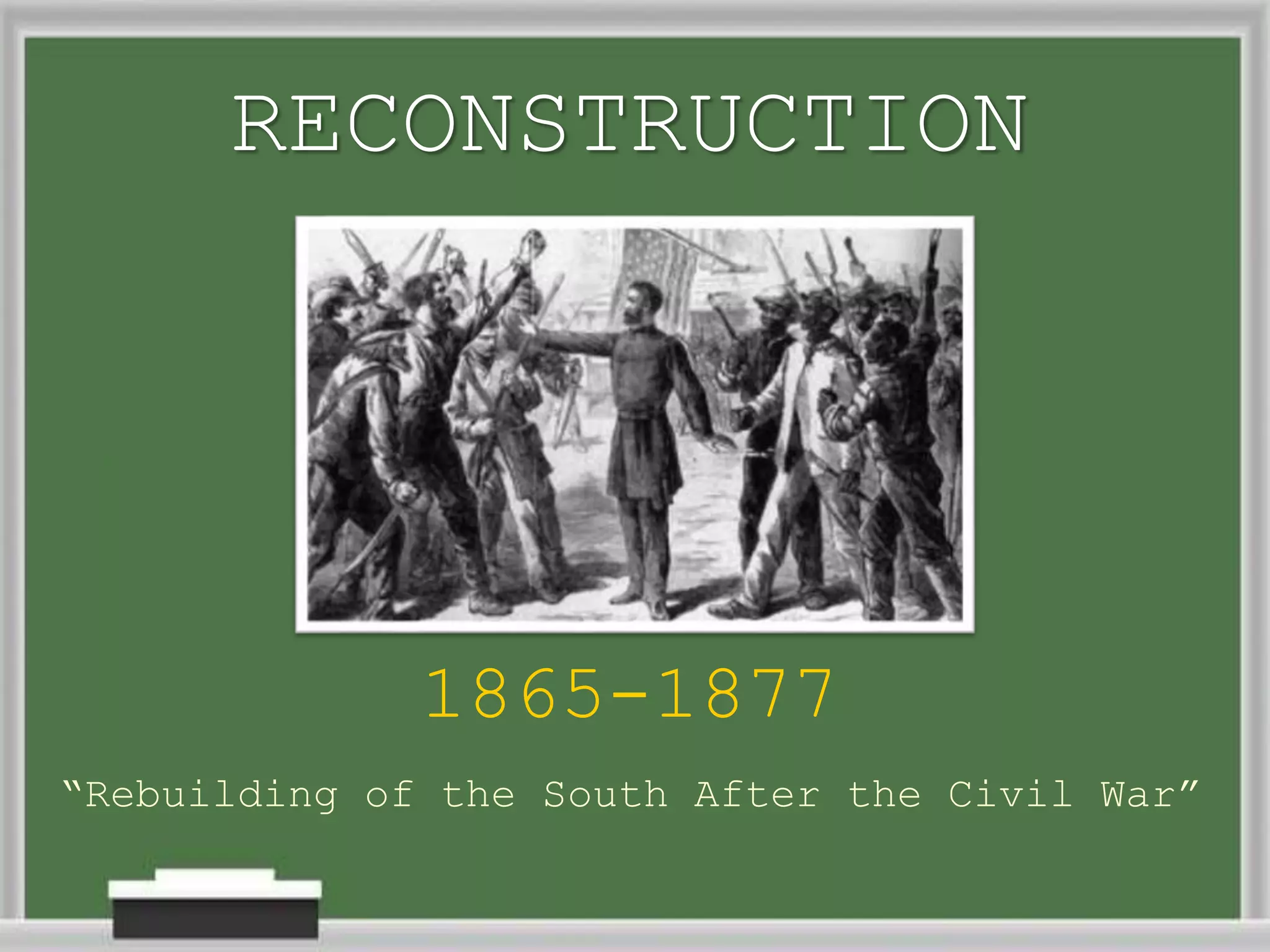
RECONSTRUCTION
1865-1877
“Rebuilding of the South After the Civil War”
Reconstruction Vocabulary:
• Reconstruction
• Public Office
• Federal
• Freedman’s Bureau
• Carpetbaggers
• Civil Rights
• Black Codes
• Jim Crow Laws
• Citizenship
• Reconciliation
• Preservation
• Constitutional
• Amendment
• Compromise
• Moderate Republicans:
– Leaders like President Lincoln
and Vice President Johnson…
who wished to take it easy on the
South so that they will peacefully
rejoin the Union without too much
resentment.
Opposing Views at the End of the Civil War:
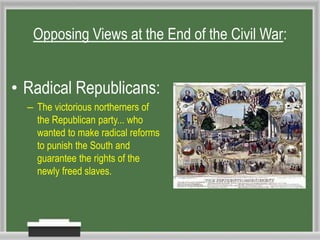
• Radical Republicans:
– The victorious northerners of
the Republican party... who
wanted to make radical reforms
to punish the South and
guarantee the rights of the
newly freed slaves.
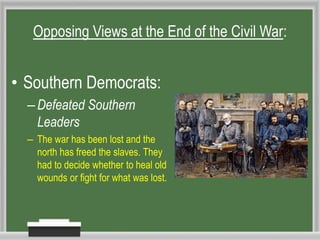
• Southern Democrats:
–Defeated Southern
Leaders
– The war has been lost and the
north has freed the slaves. They
had to decide whether to heal old
wounds or fight for what was lost.
Opposing Views at the End of the Civil War:
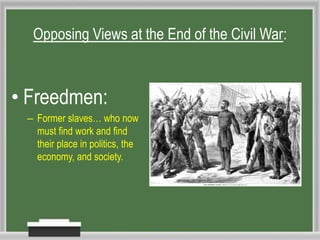
• Freedmen:
– Former slaves… who now
must find work and find
their place in politics, the
economy, and society.
Opposing Views at the End of the Civil War:
Reconstruction Amendments
Passed by the Radical Republicans in Congress
• 13th Amendment - bans slavery in the U.S. and all of its
territories
• The Civil Rights Act of 1866 – An act passed by Congress that
directly led to the 14th Amendment
• 14th Amendment - grants citizenship to all persons born in the
U.S and gives them equal protection under the law; Authorized
the use of federal troops to enforce this amendment
• 15th Amendment - gives all citizens the right to vote regardless
of race, color, or previous condition of servitude (former slaves)
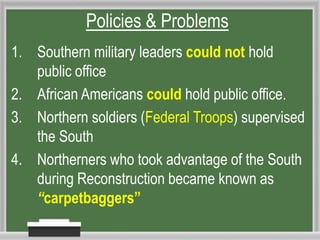
Policies & Problems
1. Southern military leaders could not hold
public office
2. African Americans could hold public office.
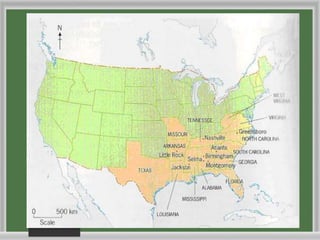
3. Northern soldiers (Federal Troops) supervised
the South
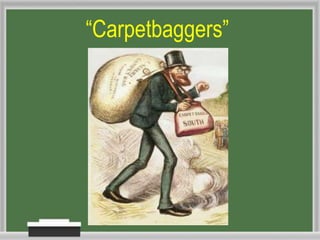
4. Northerners who took advantage of the South
during Reconstruction became known as
“carpetbaggers”
“Carpetbaggers”
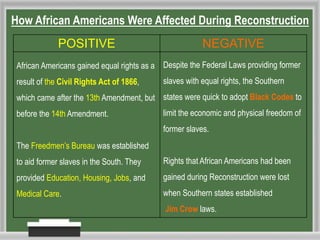
POSITIVE NEGATIVE
African Americans gained equal rights as a
result of the Civil Rights Act of 1866,
which came after the 13th Amendment, but
before the 14th Amendment.
The Freedmen’s Bureau was established
to aid former slaves in the South. They
provided Education, Housing, Jobs, and
Medical Care.
Despite the Federal Laws providing former
slaves with equal rights, the Southern
states were quick to adopt Black Codes to
limit the economic and physical freedom of
former slaves.
Rights that African Americans had been
gained during Reconstruction were lost
when Southern states established
Jim Crow laws.
How African Americans Were Affected During Reconstruction
Important People
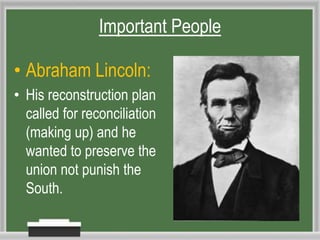
• Abraham Lincoln:
• His reconstruction plan
called for reconciliation
(making up) and he
wanted to preserve the
union not punish the
South.
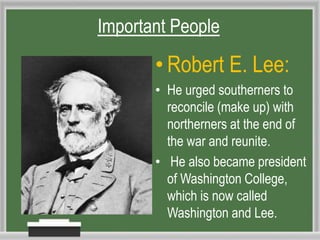
• Robert E. Lee:
• He urged southerners to
reconcile (make up) with
northerners at the end of
the war and reunite.
• He also became president
of Washington College,
which is now called
Washington and Lee.
Important People
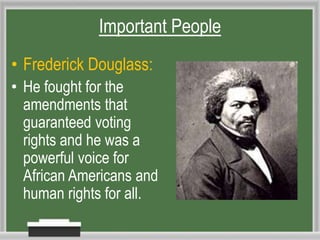
• Frederick Douglass:
• He fought for the
amendments that
guaranteed voting
rights and he was a
powerful voice for
African Americans and
human rights for all.
Important People
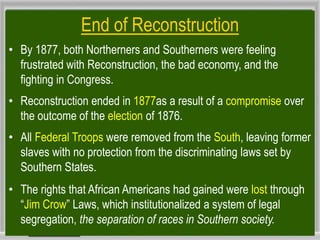
End of Reconstruction
• By 1877, both Northerners and Southerners were feeling
frustrated with Reconstruction, the bad economy, and the
fighting in Congress.
• Reconstruction ended in 1877as a result of a compromise over
the outcome of the election of 1876.
• All Federal Troops were removed from the South, leaving former
slaves with no protection from the discriminating laws set by
Southern States.
• The rights that African Americans had gained were lost through
“Jim Crow” Laws, which institutionalized a system of legal
segregation, the separation of races in Southern society.
Compromise of 1877
“Immediately after the presidential election of 1876, it became clear that the
outcome of the race hinged largely on disputed returns from Florida, Louisiana
and South Carolina--the only three states in the South with Reconstruction-era
Republican governments still in power. As a bipartisan congressional
commission debated over the outcome early in 1877, allies of the Republican
Party candidate Rutherford Hayes met in secret with moderate southern
Democrats in order to negotiate acceptance of Hayes' election. The Democrats
agreed not to block Hayes' victory on the condition that Republicans withdraw all
federal troops from the South, thus consolidating Democratic control over the
region. As a result of the so-called Compromise of 1877 (or Compromise of
1876), Florida, Louisiana and South Carolina became Democratic once again,
effectively marking the end of the Reconstruction era.”
- History Channel
-http://www.history.com/topics/compromise-of-1877
http://www.u-s-history.com/pages/h396.html

Reconstruction presentation 2015

  • 1.
  • 2.
    Reconstruction Vocabulary: • Reconstruction •Public Office • Federal • Freedman’s Bureau • Carpetbaggers • Civil Rights • Black Codes • Jim Crow Laws • Citizenship • Reconciliation • Preservation • Constitutional • Amendment • Compromise
  • 3.
    • Moderate Republicans: –Leaders like President Lincoln and Vice President Johnson… who wished to take it easy on the South so that they will peacefully rejoin the Union without too much resentment. Opposing Views at the End of the Civil War:
  • 4.
    Opposing Views atthe End of the Civil War: • Radical Republicans: – The victorious northerners of the Republican party... who wanted to make radical reforms to punish the South and guarantee the rights of the newly freed slaves.
  • 5.
    • Southern Democrats: –DefeatedSouthern Leaders – The war has been lost and the north has freed the slaves. They had to decide whether to heal old wounds or fight for what was lost. Opposing Views at the End of the Civil War:
  • 6.
    • Freedmen: – Formerslaves… who now must find work and find their place in politics, the economy, and society. Opposing Views at the End of the Civil War:
  • 7.
    Reconstruction Amendments Passed bythe Radical Republicans in Congress • 13th Amendment - bans slavery in the U.S. and all of its territories • The Civil Rights Act of 1866 – An act passed by Congress that directly led to the 14th Amendment • 14th Amendment - grants citizenship to all persons born in the U.S and gives them equal protection under the law; Authorized the use of federal troops to enforce this amendment • 15th Amendment - gives all citizens the right to vote regardless of race, color, or previous condition of servitude (former slaves)
  • 8.
    Policies & Problems 1.Southern military leaders could not hold public office 2. African Americans could hold public office. 3. Northern soldiers (Federal Troops) supervised the South 4. Northerners who took advantage of the South during Reconstruction became known as “carpetbaggers”
  • 9.
  • 11.
    POSITIVE NEGATIVE African Americansgained equal rights as a result of the Civil Rights Act of 1866, which came after the 13th Amendment, but before the 14th Amendment. The Freedmen’s Bureau was established to aid former slaves in the South. They provided Education, Housing, Jobs, and Medical Care. Despite the Federal Laws providing former slaves with equal rights, the Southern states were quick to adopt Black Codes to limit the economic and physical freedom of former slaves. Rights that African Americans had been gained during Reconstruction were lost when Southern states established Jim Crow laws. How African Americans Were Affected During Reconstruction
  • 12.
    Important People • AbrahamLincoln: • His reconstruction plan called for reconciliation (making up) and he wanted to preserve the union not punish the South.
  • 13.
    • Robert E.Lee: • He urged southerners to reconcile (make up) with northerners at the end of the war and reunite. • He also became president of Washington College, which is now called Washington and Lee. Important People
  • 14.
    • Frederick Douglass: •He fought for the amendments that guaranteed voting rights and he was a powerful voice for African Americans and human rights for all. Important People
  • 15.
    End of Reconstruction •By 1877, both Northerners and Southerners were feeling frustrated with Reconstruction, the bad economy, and the fighting in Congress. • Reconstruction ended in 1877as a result of a compromise over the outcome of the election of 1876. • All Federal Troops were removed from the South, leaving former slaves with no protection from the discriminating laws set by Southern States. • The rights that African Americans had gained were lost through “Jim Crow” Laws, which institutionalized a system of legal segregation, the separation of races in Southern society.
  • 16.
    Compromise of 1877 “Immediatelyafter the presidential election of 1876, it became clear that the outcome of the race hinged largely on disputed returns from Florida, Louisiana and South Carolina--the only three states in the South with Reconstruction-era Republican governments still in power. As a bipartisan congressional commission debated over the outcome early in 1877, allies of the Republican Party candidate Rutherford Hayes met in secret with moderate southern Democrats in order to negotiate acceptance of Hayes' election. The Democrats agreed not to block Hayes' victory on the condition that Republicans withdraw all federal troops from the South, thus consolidating Democratic control over the region. As a result of the so-called Compromise of 1877 (or Compromise of 1876), Florida, Louisiana and South Carolina became Democratic once again, effectively marking the end of the Reconstruction era.” - History Channel -http://www.history.com/topics/compromise-of-1877 http://www.u-s-history.com/pages/h396.html