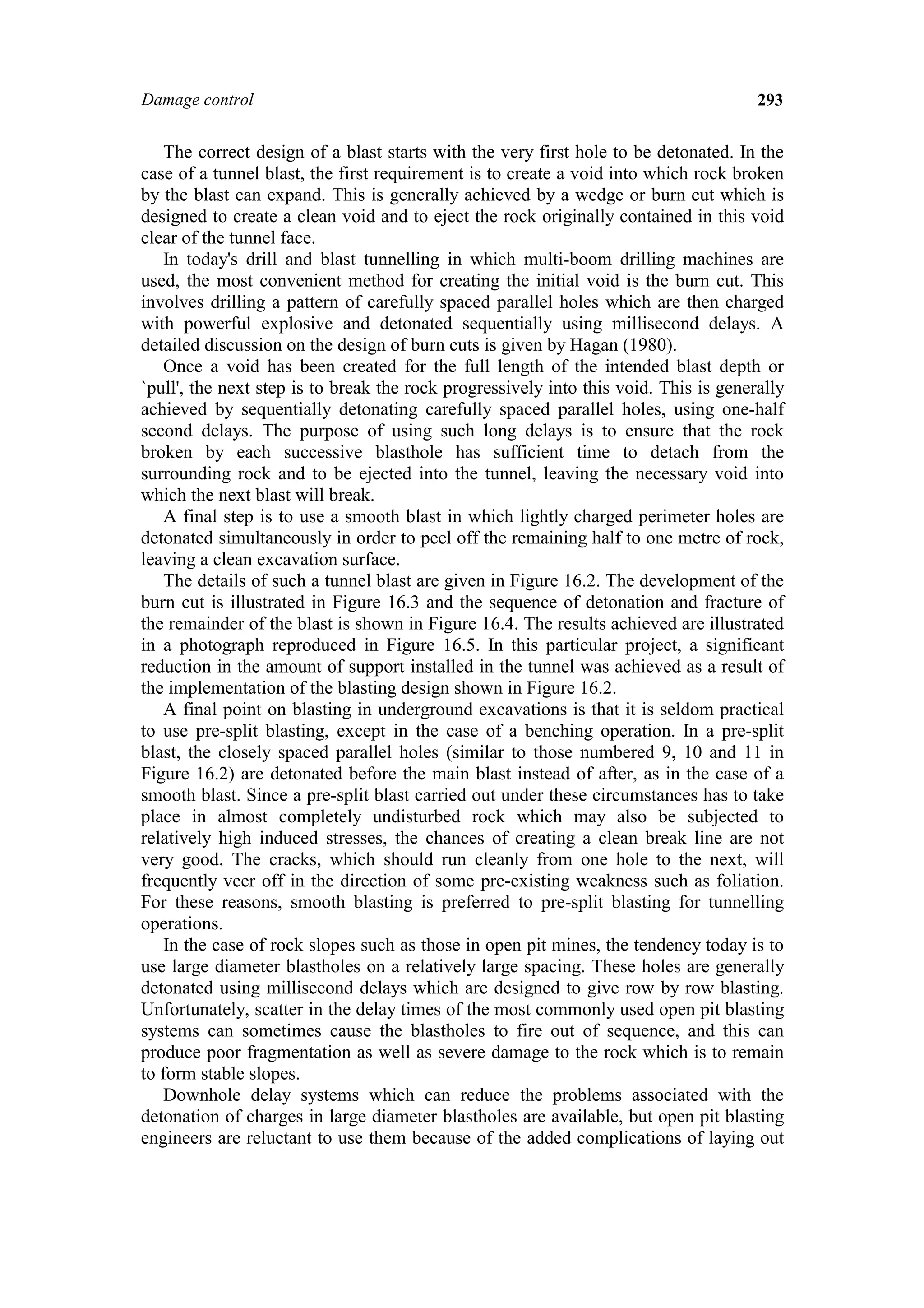
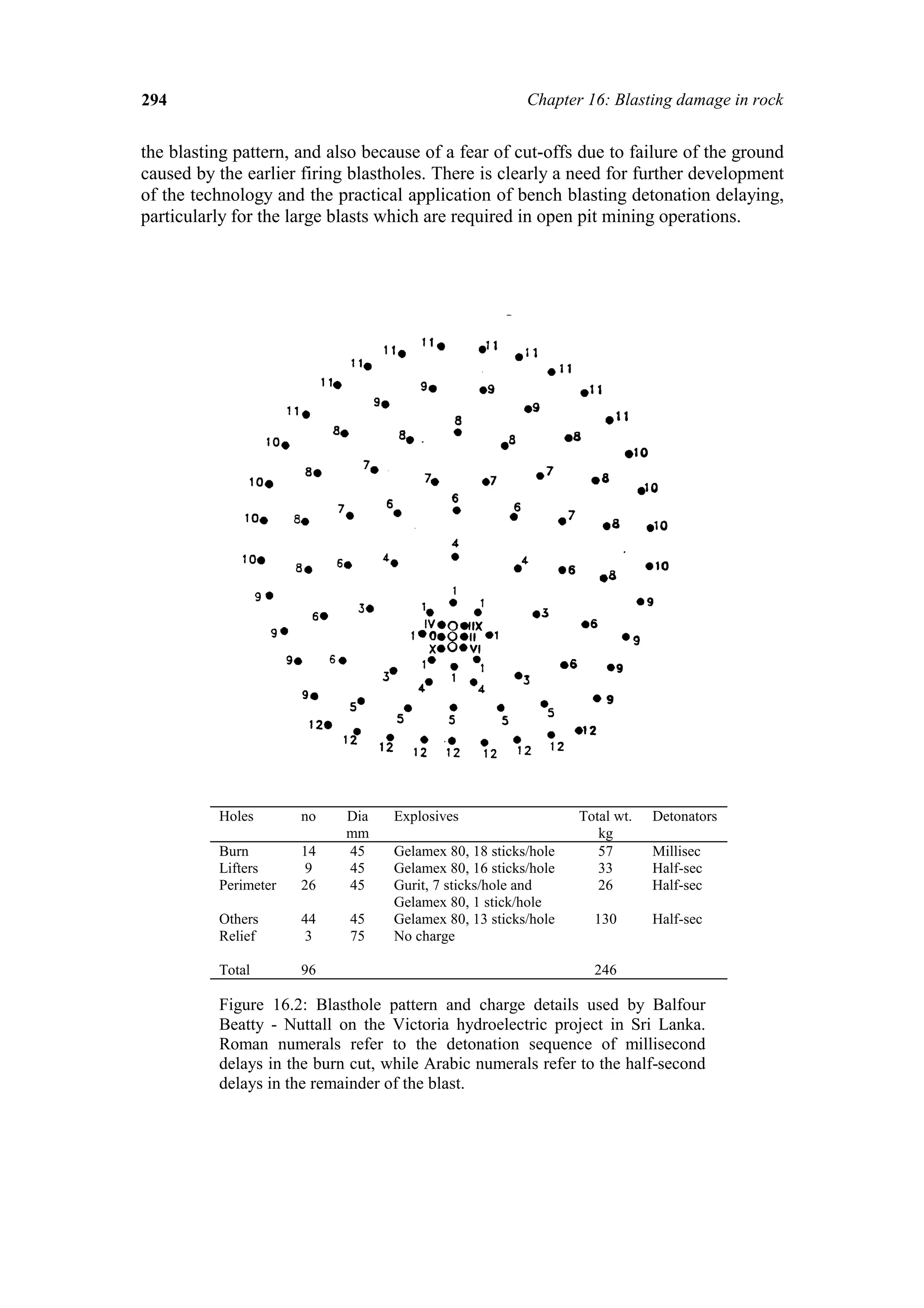
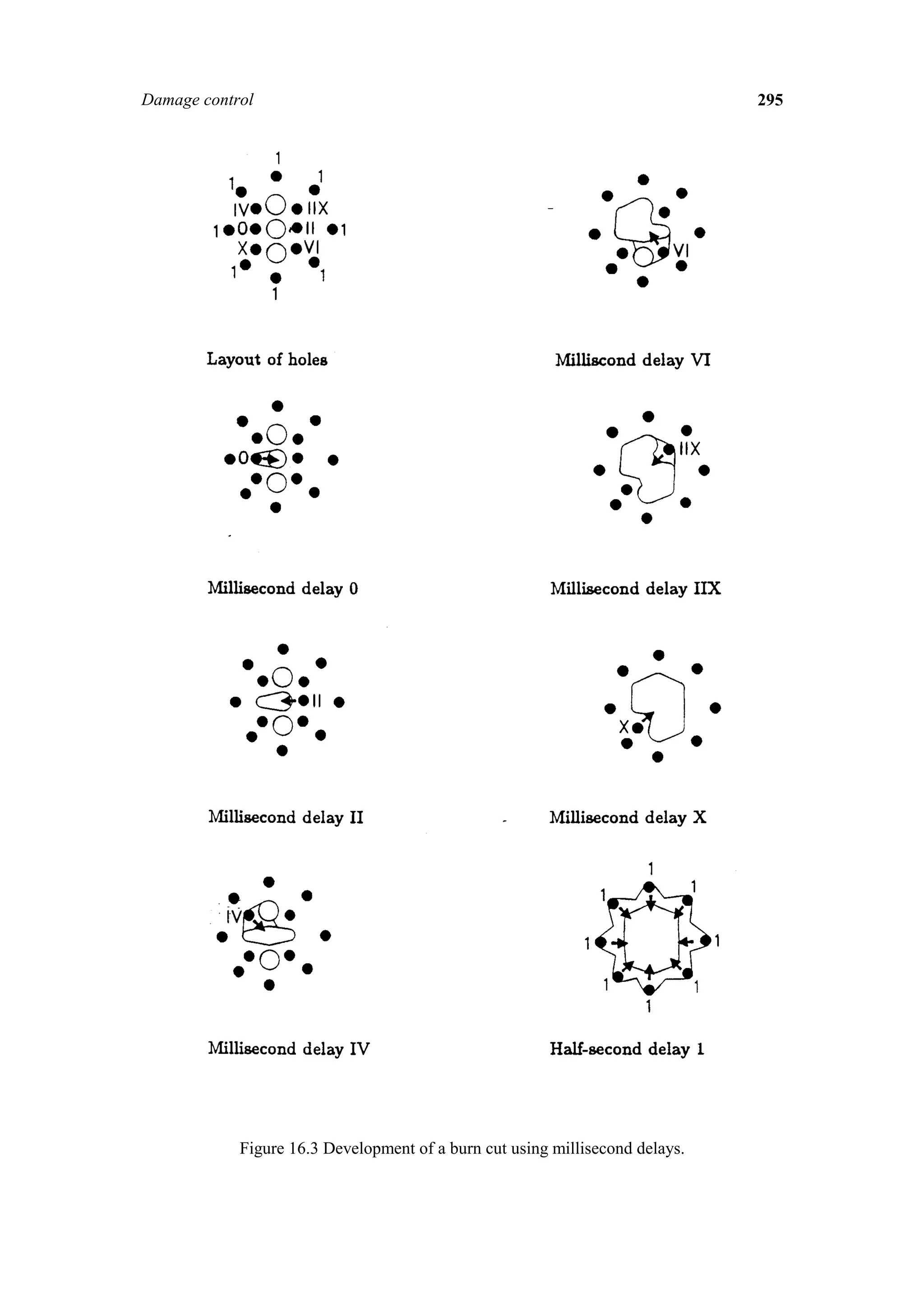
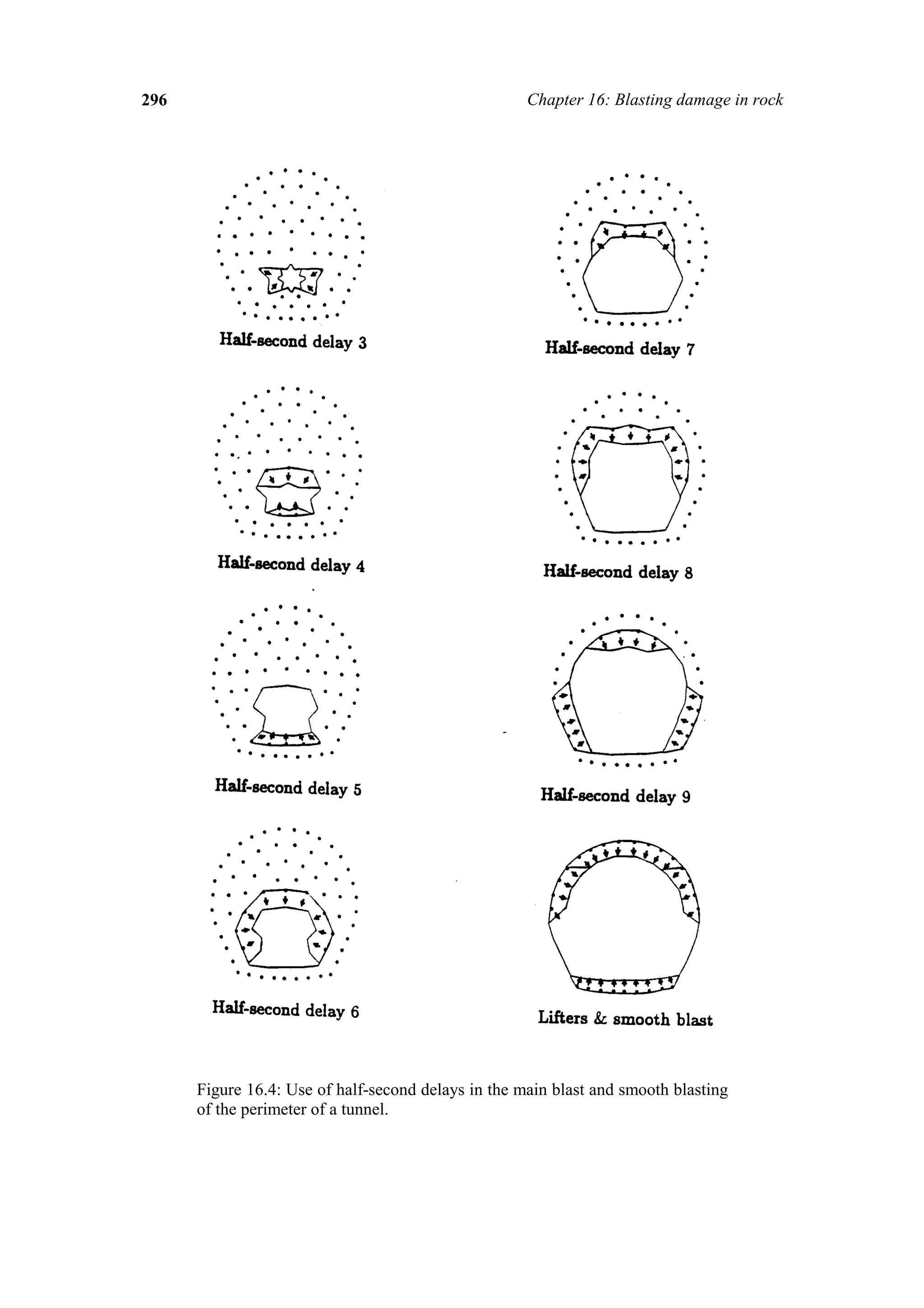
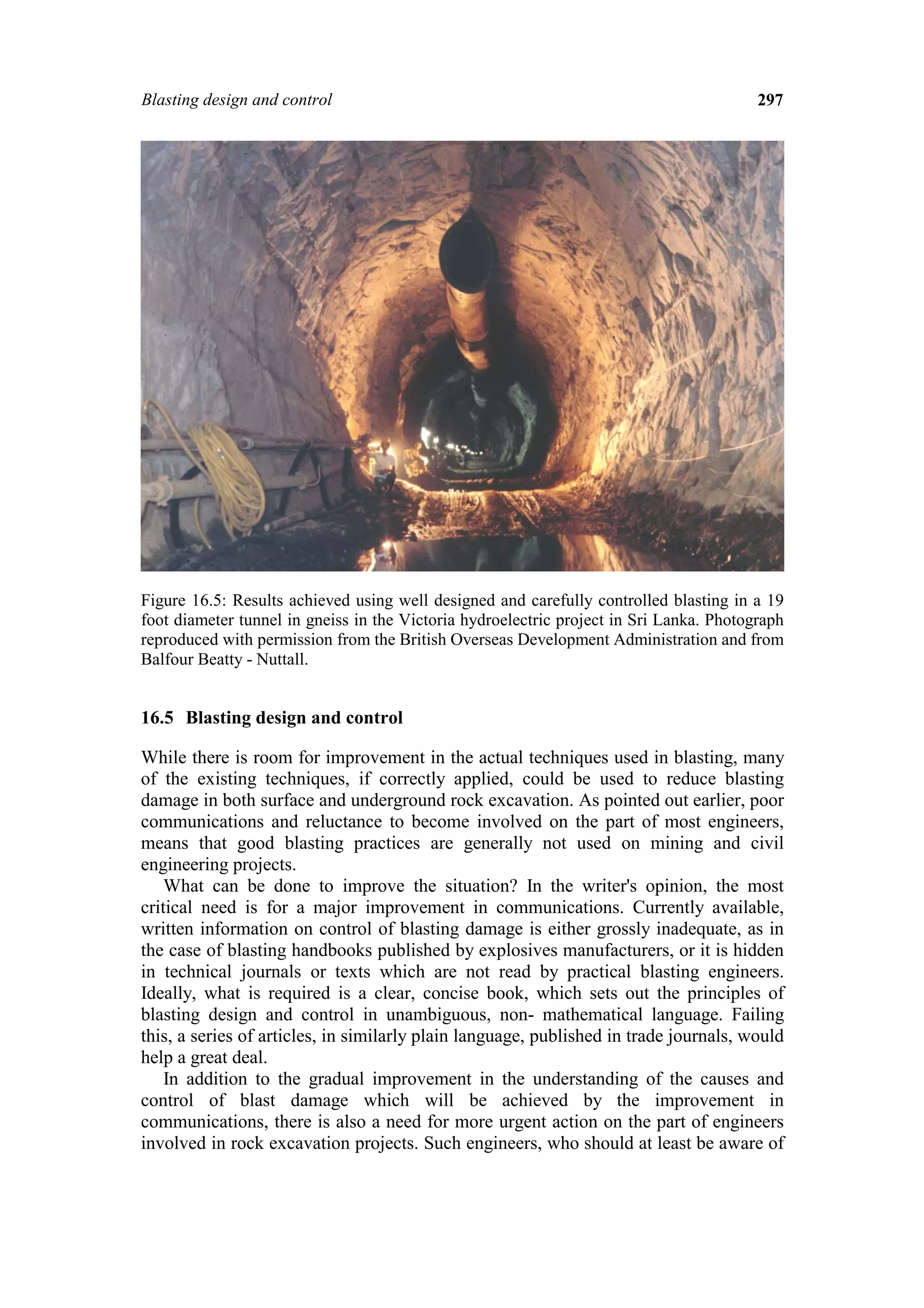
The document discusses blasting damage in rock excavations and methods to control it. It begins with a brief history of blasting and how the understanding of its effects on rock stability has lagged behind other areas of rock mechanics. Blasting can damage rock through dynamic stresses, gas pressure, and fracturing from the release of compressed rock. Precisely controlling blasting techniques from the initial cut through the full blast sequence is necessary to minimize damage extending several meters into the surrounding rock. Methods discussed include pre-splitting, smooth blasting, and the use of delays to allow broken rock to clear before subsequent holes detonate. Proper blasting design is crucial for ensuring the stability of underground excavations and rock slopes.