







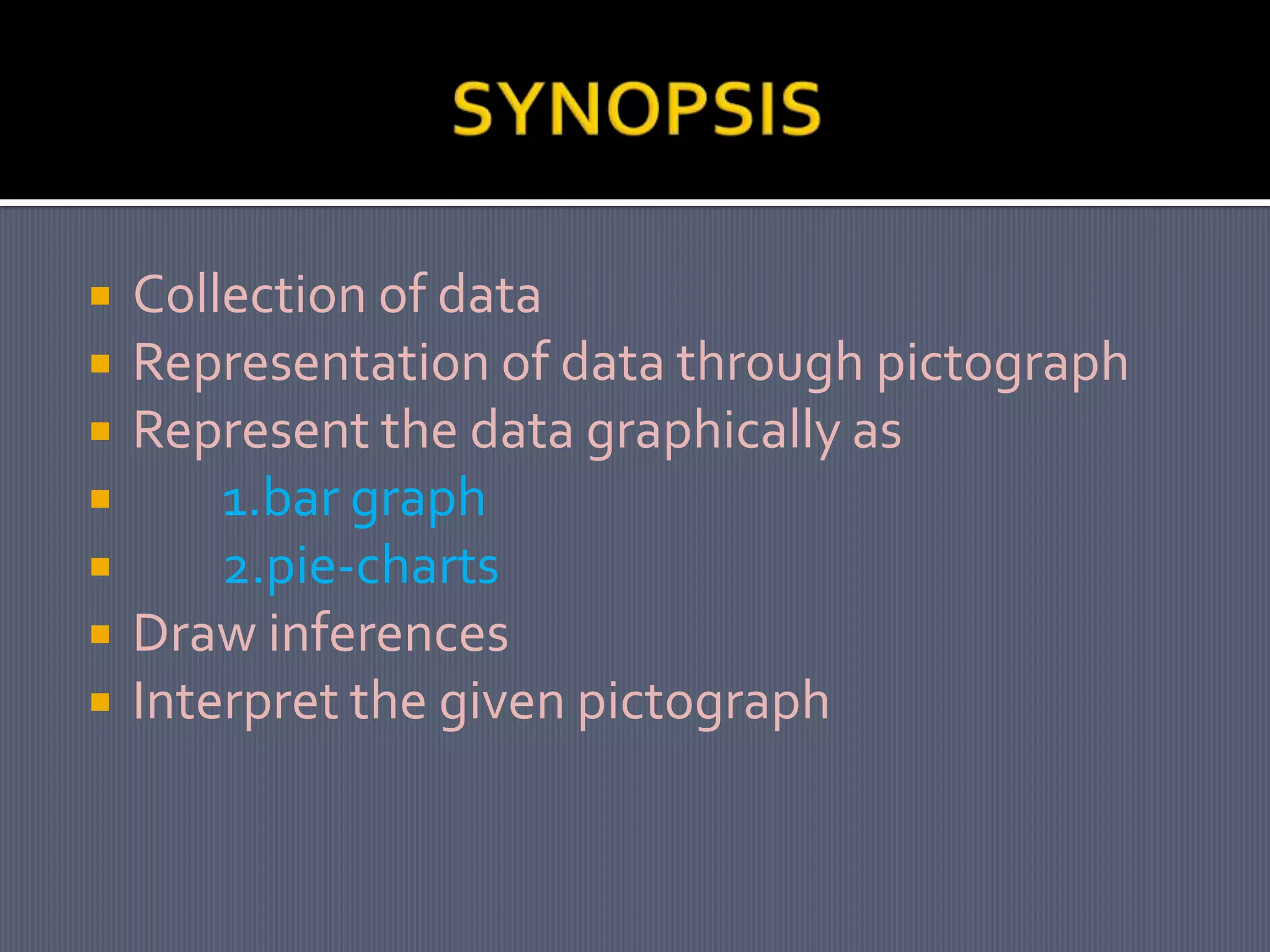
Collection of data
Representation of data through pictograph
Represent the data graphically as
1.bar graph
2.pie-charts
Draw inferences
Interpret the given pictograph


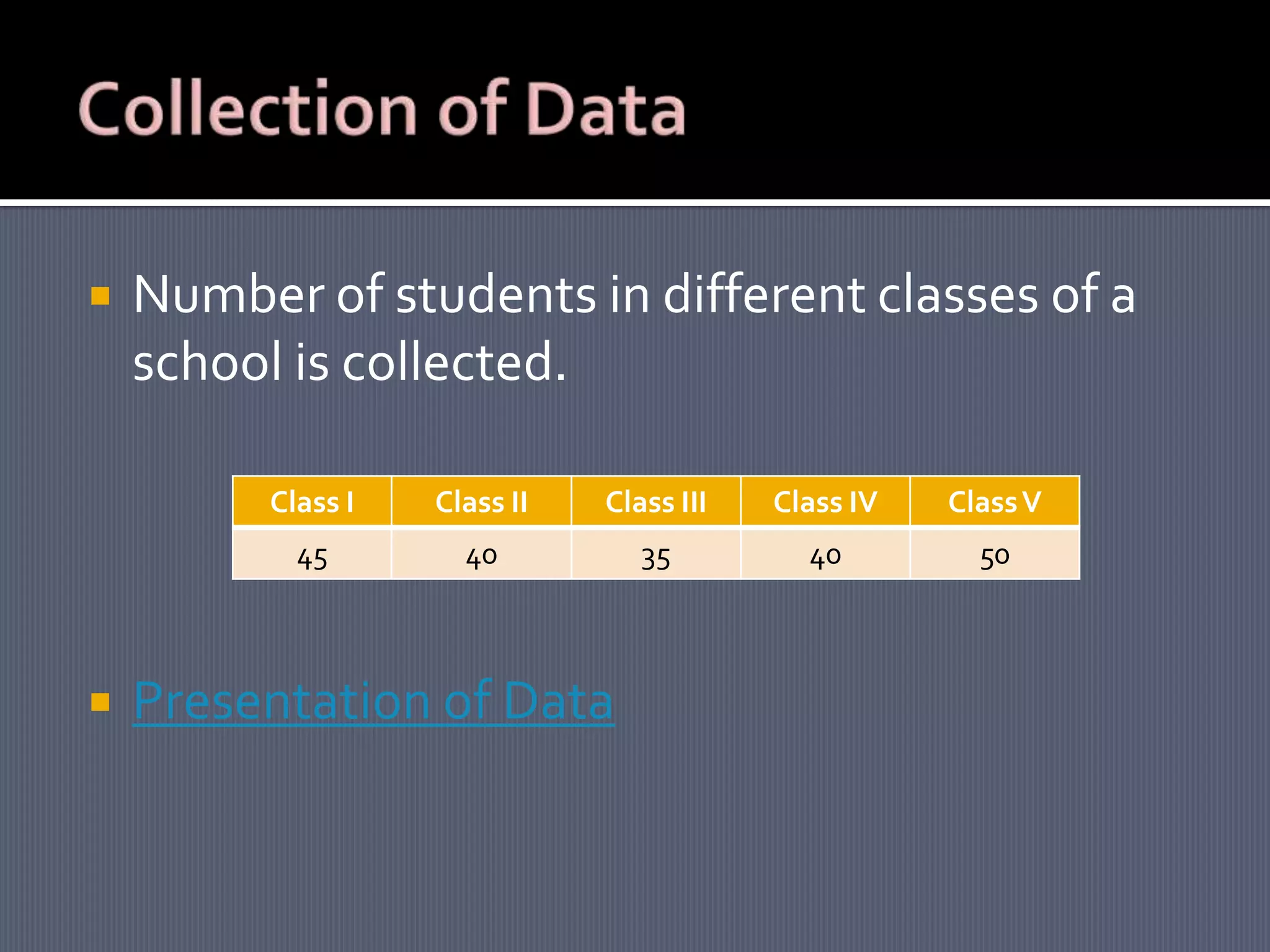
Number of students in different classes of a
school is collected.
Class I

Class III

Class IV

Class V

45



Class II
40

35

40

50

Presentation of Data
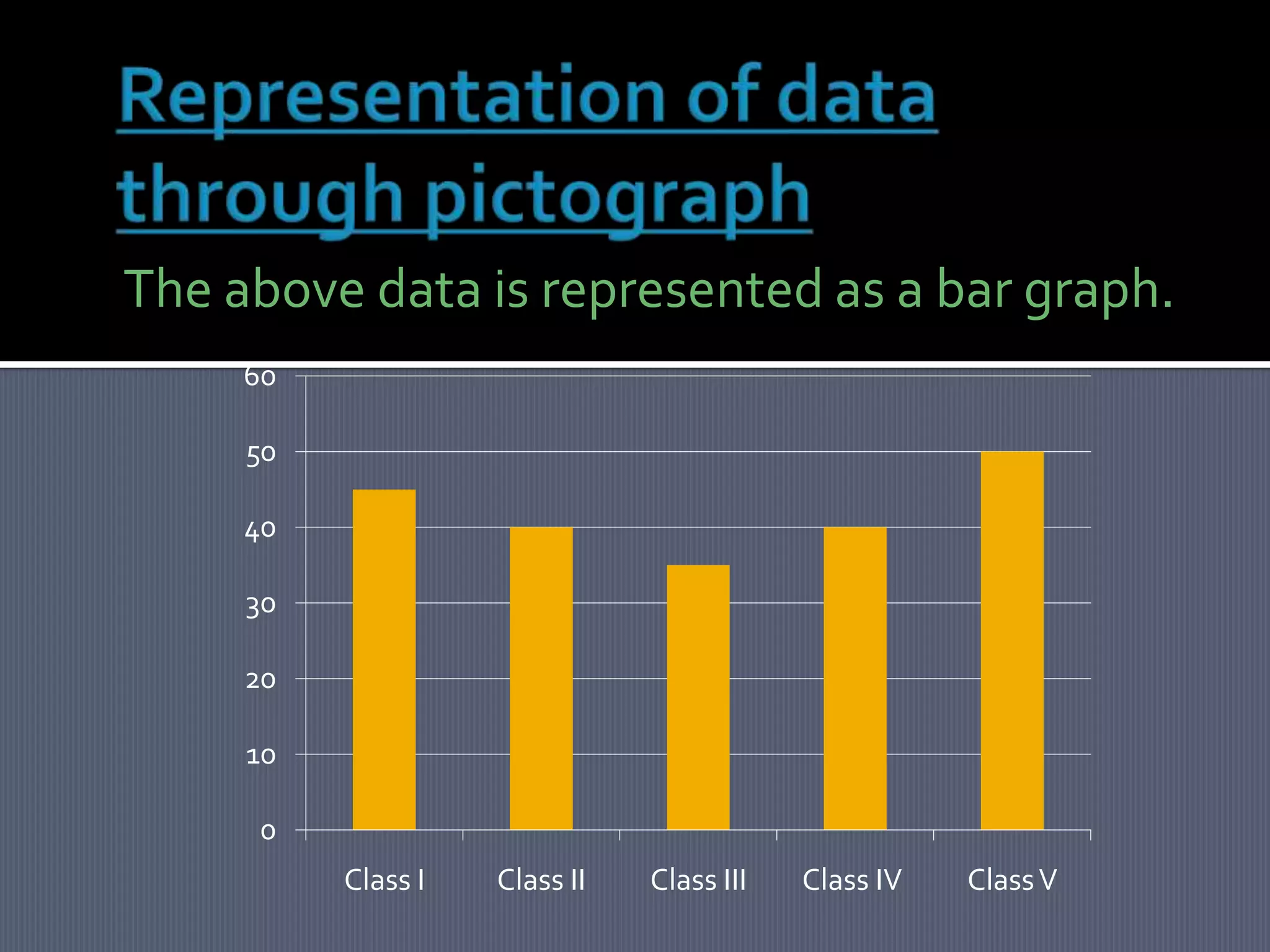
The above data is represented as a bar graph.
60
50
40
30

20
10
0
Class I

Class II

Class III

Class IV

Class V
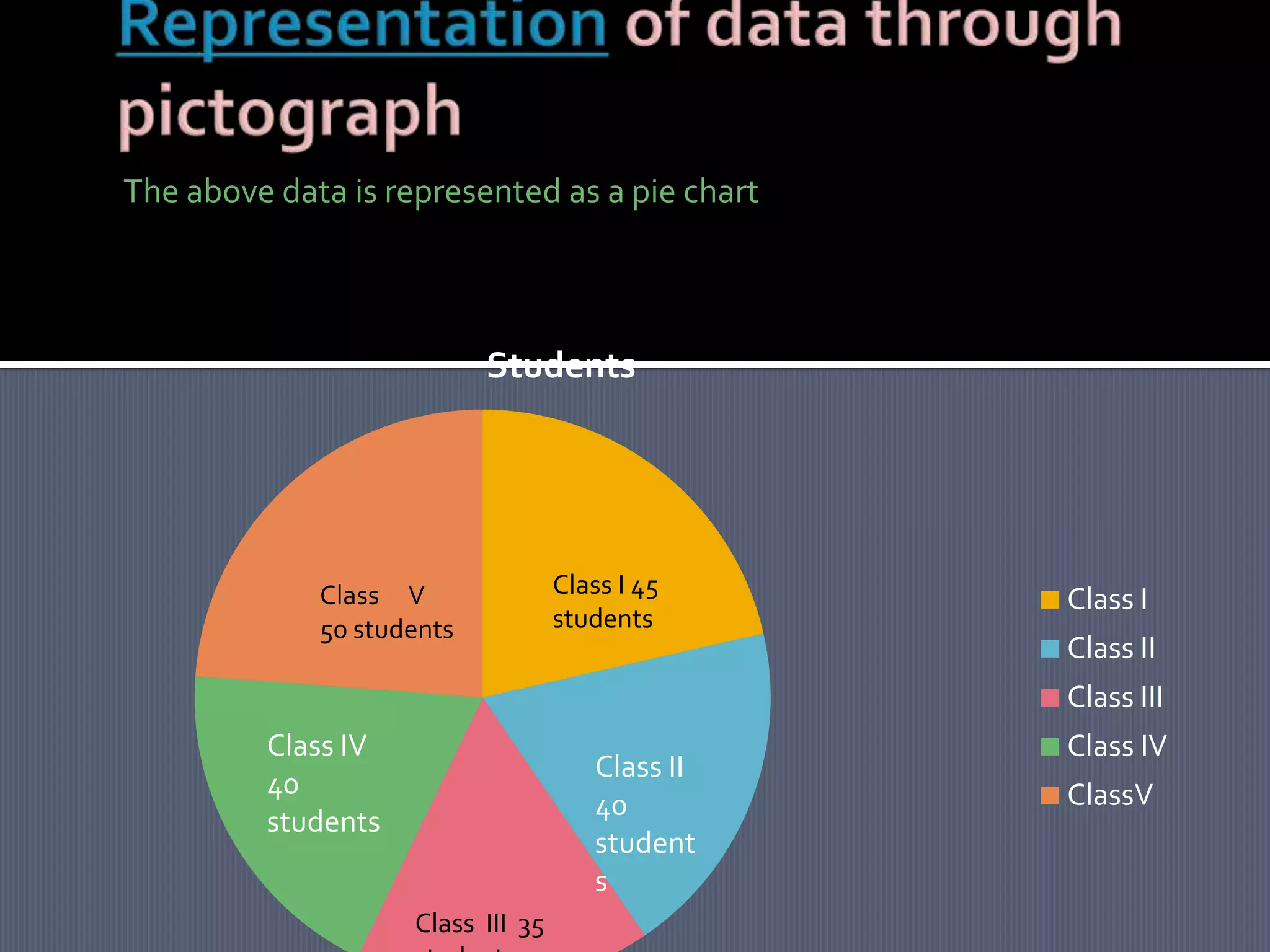
The above data is represented as a pie chart

Students

Class V
50 students

Class I 45
students

Class I
Class II
Class III

Class IV
40
students

Class II
40
student
s
Class III 35

Class IV
ClassV
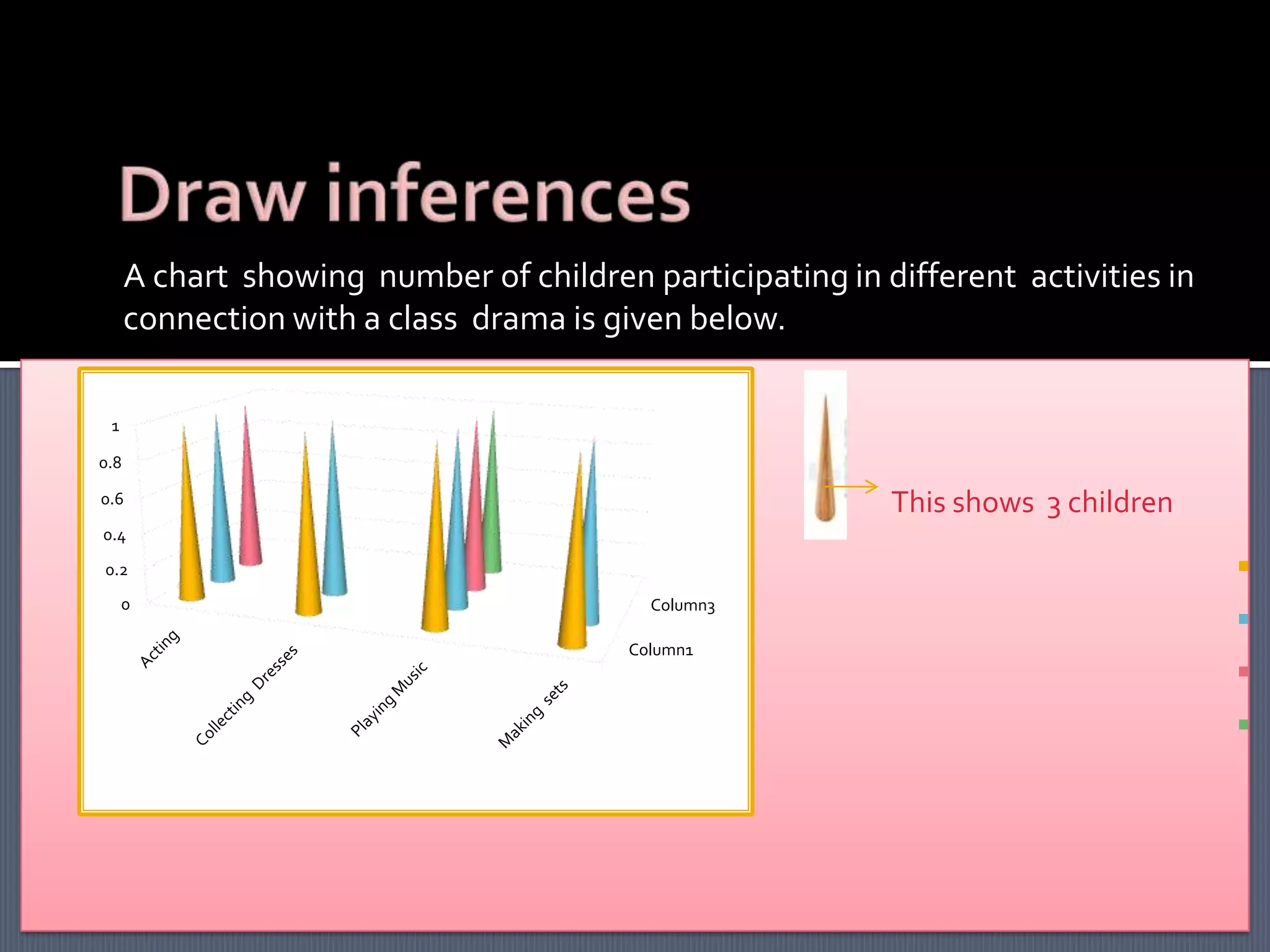
A chart showing number of children participating in different activities in
connection with a class drama is given below.
1
0.8

This shows 3 children

0.6
0.4
0.2
0

Column3
Column1
1.
2.
3.
4.
5.
6.
7.
8.

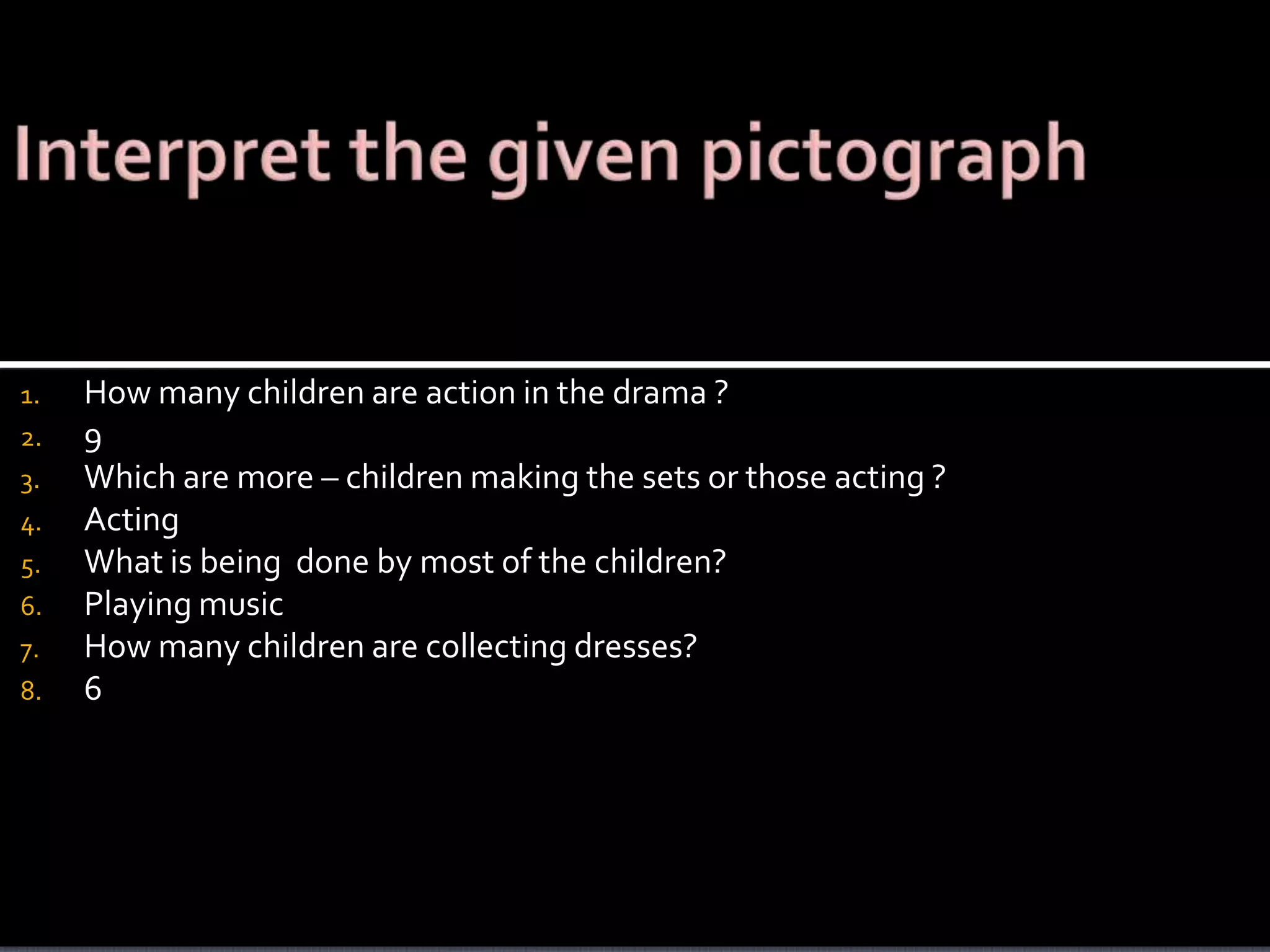
How many children are action in the drama ?
9
Which are more – children making the sets or those acting ?
Acting
What is being done by most of the children?
Playing music
How many children are collecting dresses?
6
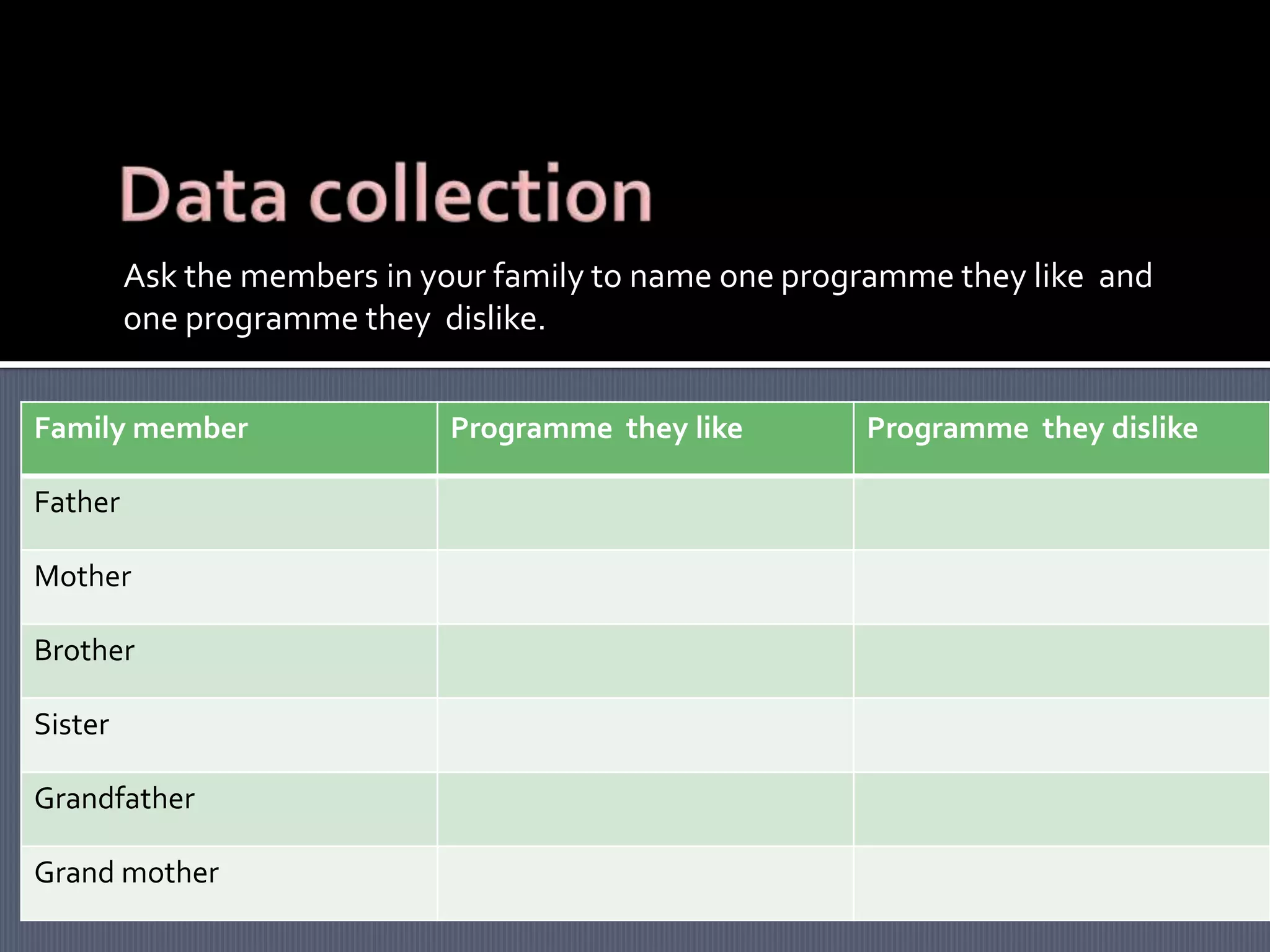
Ask the members in your family to name one programme they like and
one programme they dislike.
Family member
Father
Mother
Brother
Sister
Grandfather
Grand mother

Programme they like

Programme they dislike
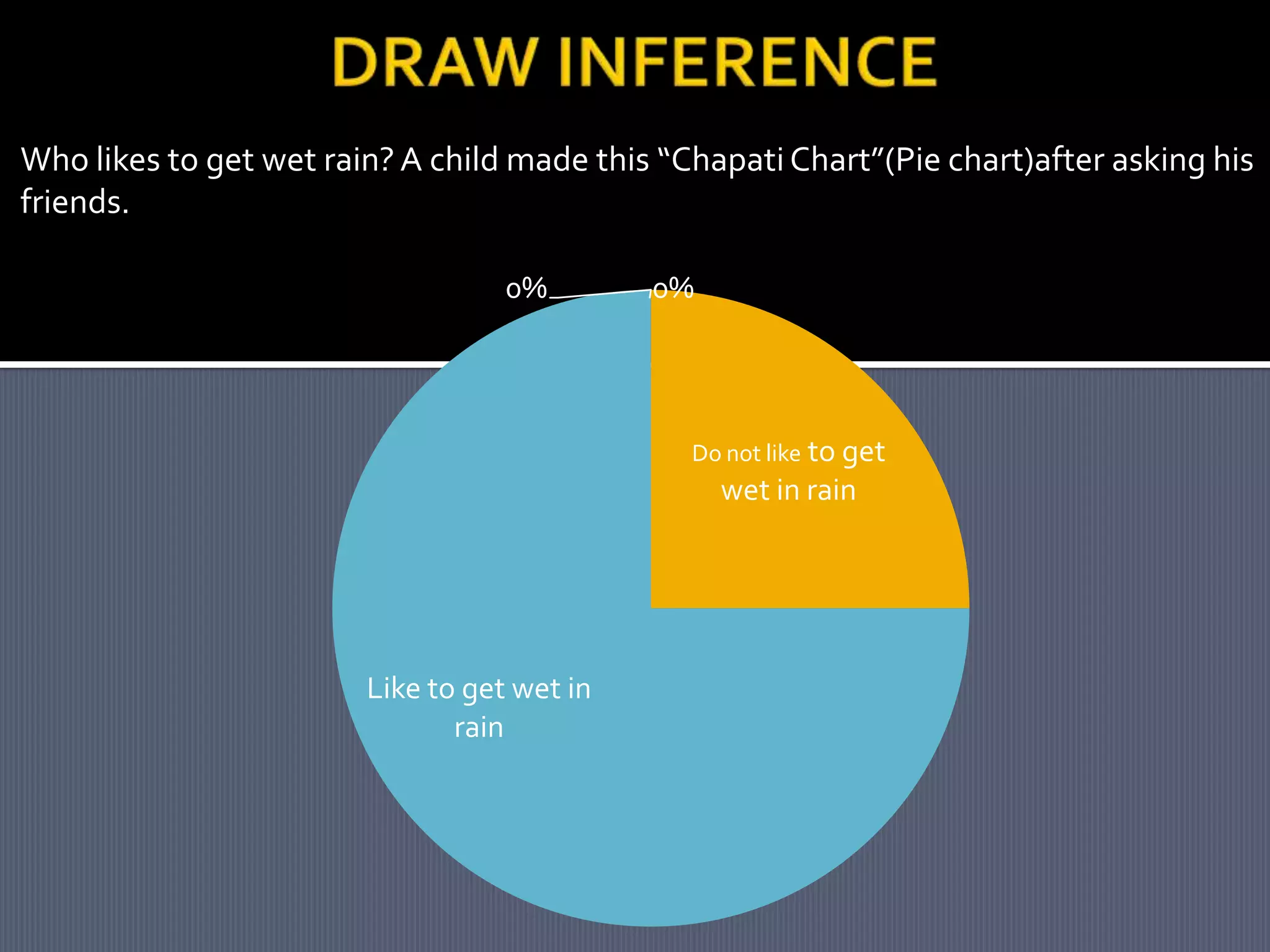
Who likes to get wet rain? A child made this “Chapati Chart”(Pie chart)after asking his
friends.
0%

0%

Do not like to get

wet in rain

Like to get wet in
rain
1.
2.
3.

4.
5.
6.
7.
8.
9.

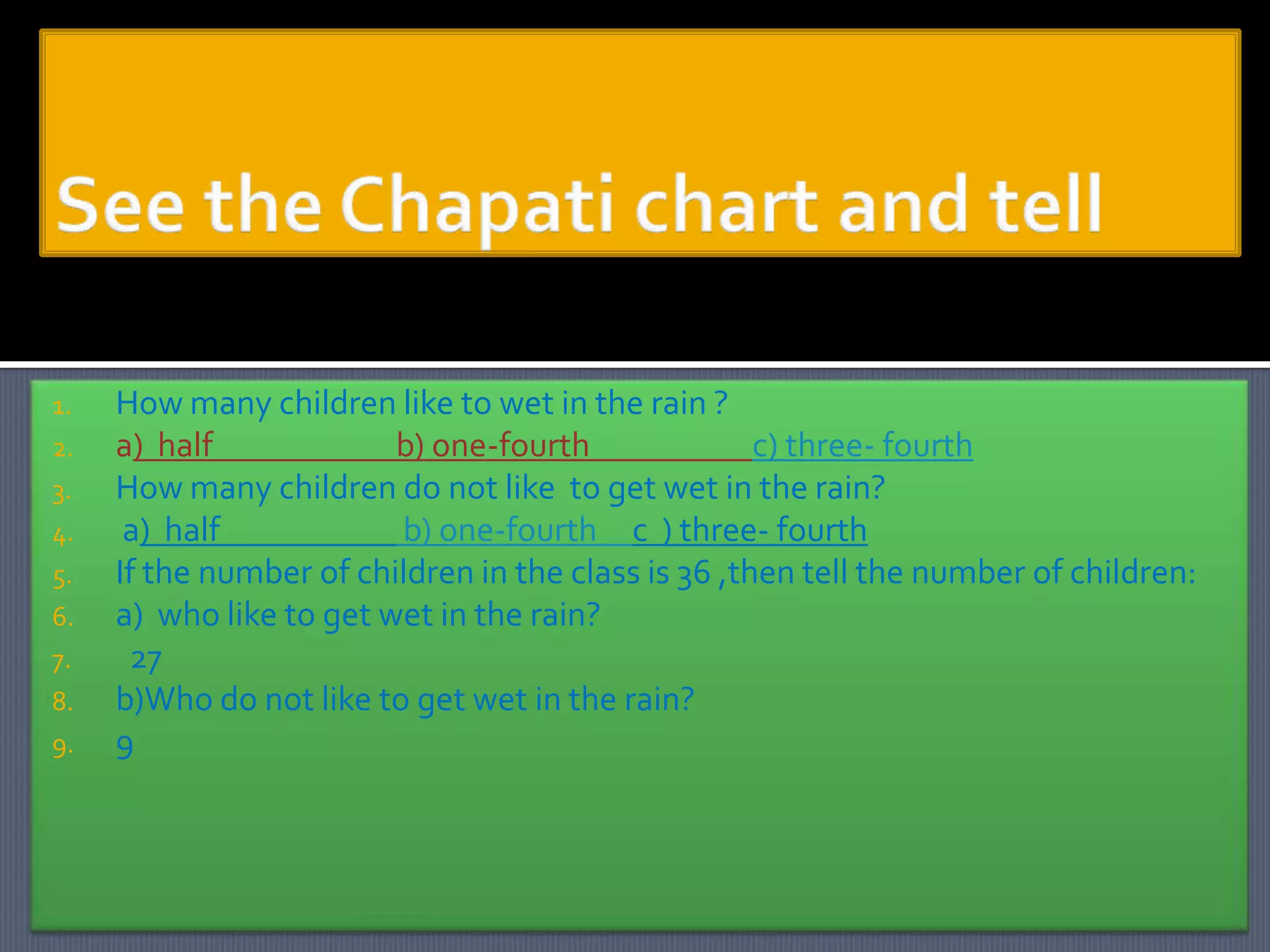
How many children like to wet in the rain ?
a) half
b) one-fourth
c) three- fourth
How many children do not like to get wet in the rain?
a) half
b) one-fourth c ) three- fourth
If the number of children in the class is 36 ,then tell the number of children:
a) who like to get wet in the rain?
27
b)Who do not like to get wet in the rain?
9

smart charts and graphs

  • 2.
           Collection of data Representationof data through pictograph Represent the data graphically as 1.bar graph 2.pie-charts Draw inferences Interpret the given pictograph
  • 3.
     Number of studentsin different classes of a school is collected. Class I Class III Class IV Class V 45  Class II 40 35 40 50 Presentation of Data
  • 4.
    The above datais represented as a bar graph. 60 50 40 30 20 10 0 Class I Class II Class III Class IV Class V
  • 5.
    The above datais represented as a pie chart Students Class V 50 students Class I 45 students Class I Class II Class III Class IV 40 students Class II 40 student s Class III 35 Class IV ClassV
  • 6.
    A chart showingnumber of children participating in different activities in connection with a class drama is given below. 1 0.8 This shows 3 children 0.6 0.4 0.2 0 Column3 Column1
  • 7.
    1. 2. 3. 4. 5. 6. 7. 8. How many childrenare action in the drama ? 9 Which are more – children making the sets or those acting ? Acting What is being done by most of the children? Playing music How many children are collecting dresses? 6
  • 8.
    Ask the membersin your family to name one programme they like and one programme they dislike. Family member Father Mother Brother Sister Grandfather Grand mother Programme they like Programme they dislike
  • 9.
    Who likes toget wet rain? A child made this “Chapati Chart”(Pie chart)after asking his friends. 0% 0% Do not like to get wet in rain Like to get wet in rain
  • 10.
    1. 2. 3. 4. 5. 6. 7. 8. 9. How many childrenlike to wet in the rain ? a) half b) one-fourth c) three- fourth How many children do not like to get wet in the rain? a) half b) one-fourth c ) three- fourth If the number of children in the class is 36 ,then tell the number of children: a) who like to get wet in the rain? 27 b)Who do not like to get wet in the rain? 9