*
ANALYSIS &
INTERPRETATION OF
ASSESSMENT RESULTS
*
LESSON 1 PRESENTATION
OF TEST DATE USING
TEXT,TABLES &GRAPHS
2
*
TEXTUAL REPRESENTATION
3
*
4
➢ The data are presented in paragraph form.
➢ This kind of representation is useful when we are looking to supplement qualitative
statements
with some data.
➢ For this purpose, the data should not be voluminously represented in tables or diagrams.
It just
has to be a statement that serves as fitting evidence to our qualitative evidence and helps
the reader
to get an idea of the scale of a phenomenon.
➢ If the data under consideration is large then the text matter increases substantially. As a
result, the
reading process becomes more intensive, time-consuming and cumbersome
*
5
Example:
There are about 540, 000 Filipinos who
joined the ranks of job seekers.
According to government data, the
number of jobless Filipinos last July
reached 4.35 million, an increase of
more than half-a-million Filipinos from
the
same period last year. The
unemployment rate last July was 12.7%
compared to 11.2% of July last year.
*
Tabular
Presentation
*
➢ The data are presented in tables to
show relation between the column and
row quantities.
Tables are useful to highlight precise
➢
numerical values; proportions or trends
are better illustrated
with charts or graphics.
Tables summarize large amounts of
➢
related data clearly and allow
comparison to be made among
groups of variables.
Generally, well-constructed tables
➢
should be self-explanatory with four
main parts: title, columns,
rows and footnotes
*
8
➢ A table facilitates representation of even large amounts
of data in an attractive, easy to read and
organized manner. The data is organized in rows and
columns.
➢ This is one of the most widely used forms of
presentation of data since data tables are easy to
construct and read.
➢ The advantages of tabular presentation include: ease of
representation; ease of analysis; helps in
comparison, and economical.
➢ Frequency distribution is the most common tabular
presentation.
*
9
Frequency Distribution
Frequency distribution is
a tabular arrangement of data into
appropriate categories showing the
number of observations in each category or
group. Using frequency distribution
encompasses the size of
the table and it makes the data more
interpretive.
*
10
Steps in Constructing Frequency Table
1. Compute the value of the range (R). Range is the difference between
the highest score and the
lowest score.
2. Determine the class size (c.i.). The class size is the width of each class
interval. It is the quotient
when you divide the range by the desired number of classes or
categories. If the desired number
of classes is not identified, find the value of k, where k = 1 + 3.322 log n
or k = 1 + 3.3 log n.
*
11
3. Set up the class limits of each category. Class limit is the
groupings or categories defined by the
lower and upper limits. Lower class limit represents the smallest
number in each group while
upper class limit represents the highest number in each group.
Use the lowest score as the lower
limit of the first class.
4. Set up the class boundaries if needed. This can be computed
by getting the difference of the lower
limit of the second class and the upper limit of the first class
divided by 2.
5. Tally the scores in the appropriate classes
*
12
6. Find the other parts if necessary, such as class
marks, class boundaries among others. Class marks
are the midpoint of the lower and the upper-class
limits. Class boundaries are the numbers used
to separate each category in the frequency
distribution but without gaps created by the class
limits.
Add 0.5 to the upper limit to get the upper-class
boundary and subtract 0.5 to the lower limit to get
the lower-class boundary in each group or category.
*
13
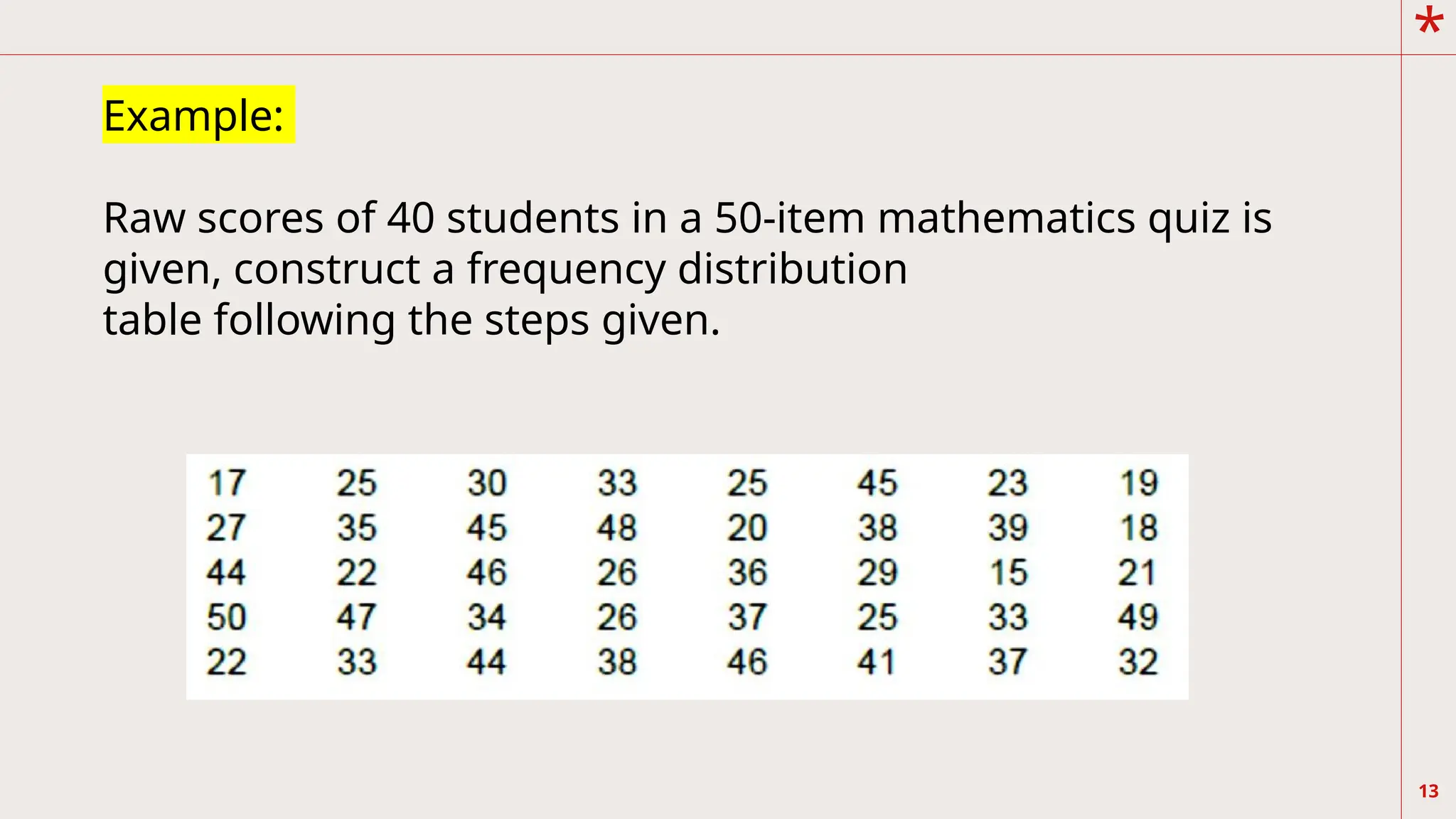
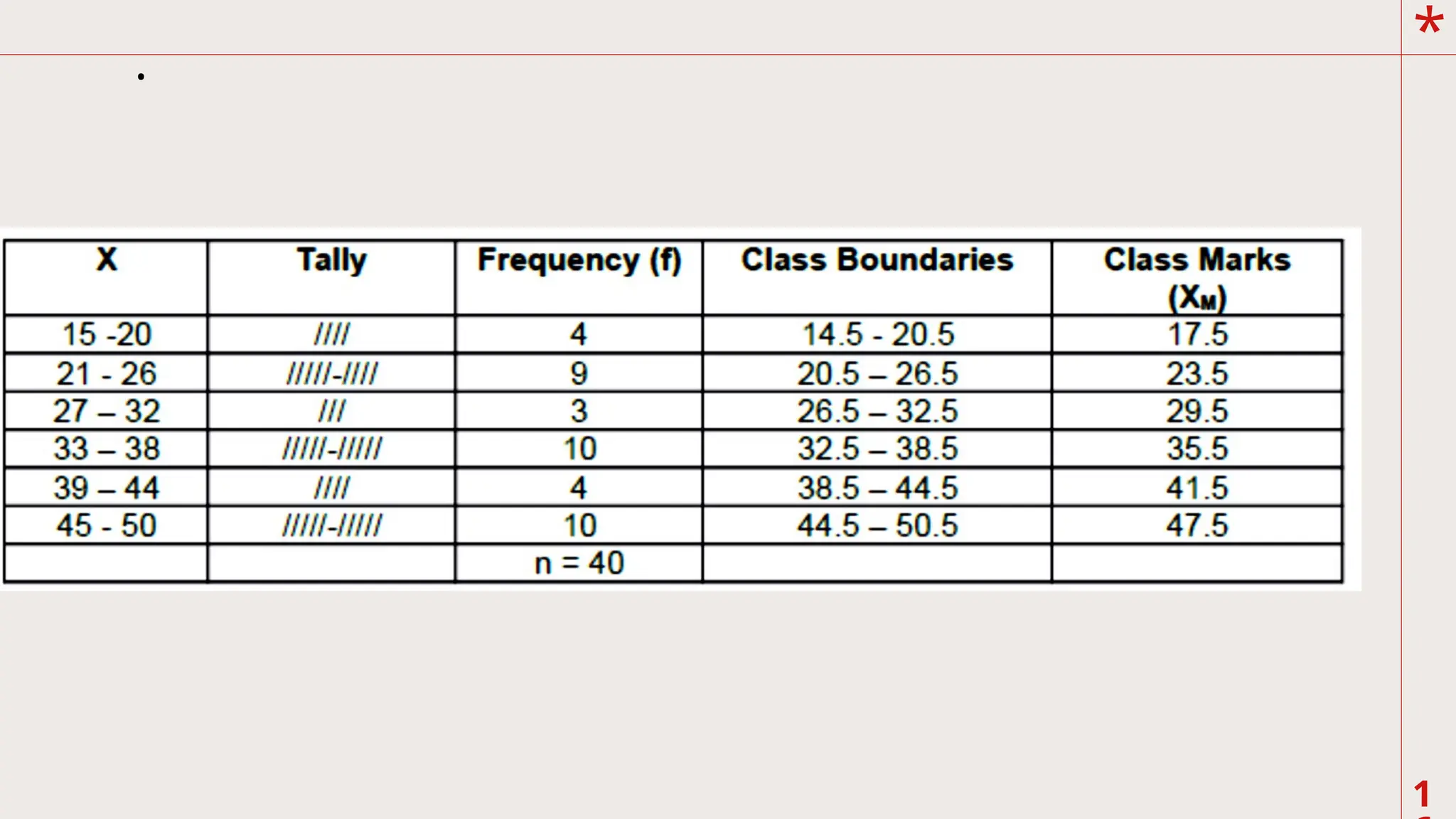
Example:
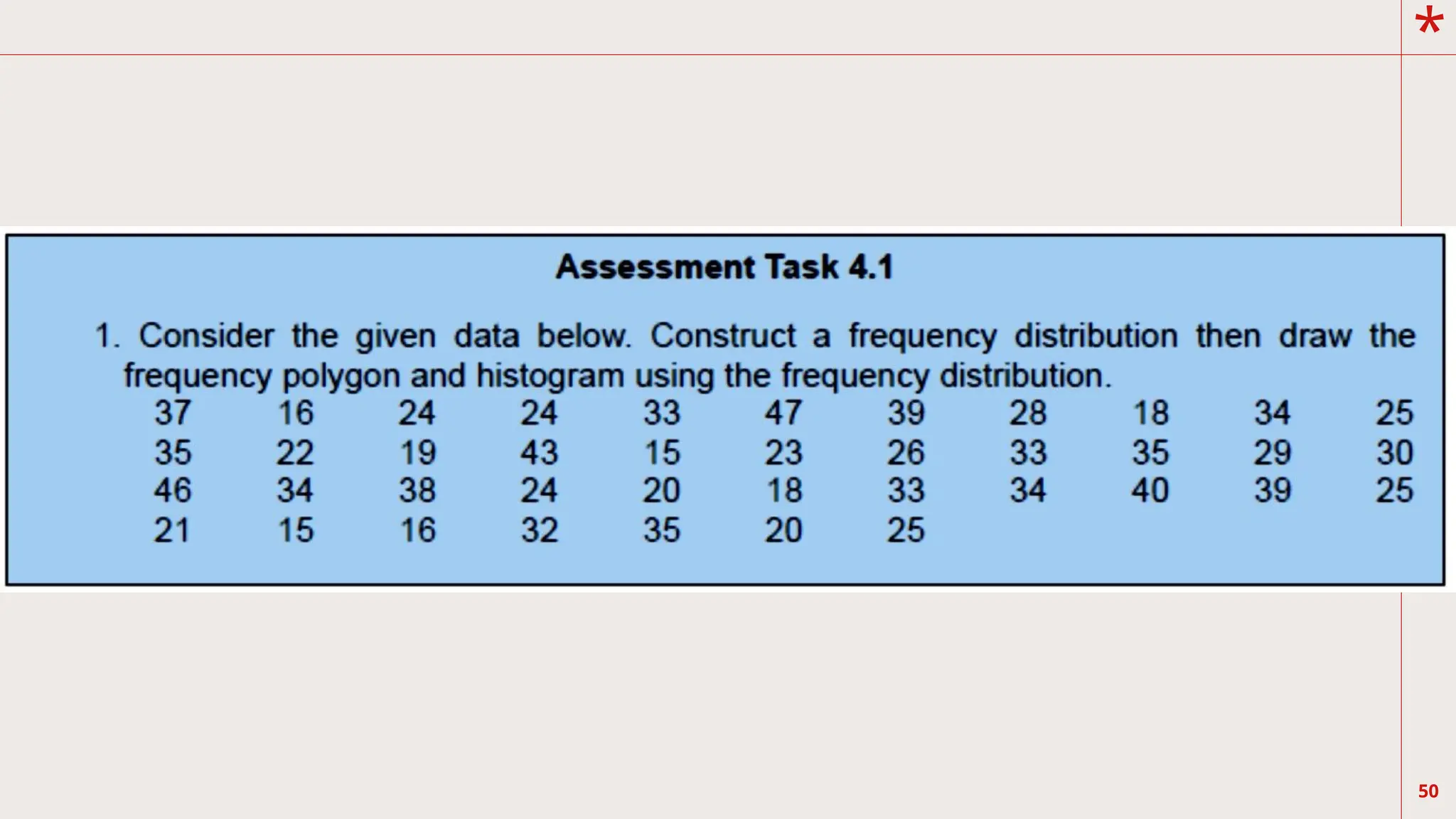
Raw scores of 40 students in a 50-item mathematics quiz is
given, construct a frequency distribution
table following the steps given.
*
1
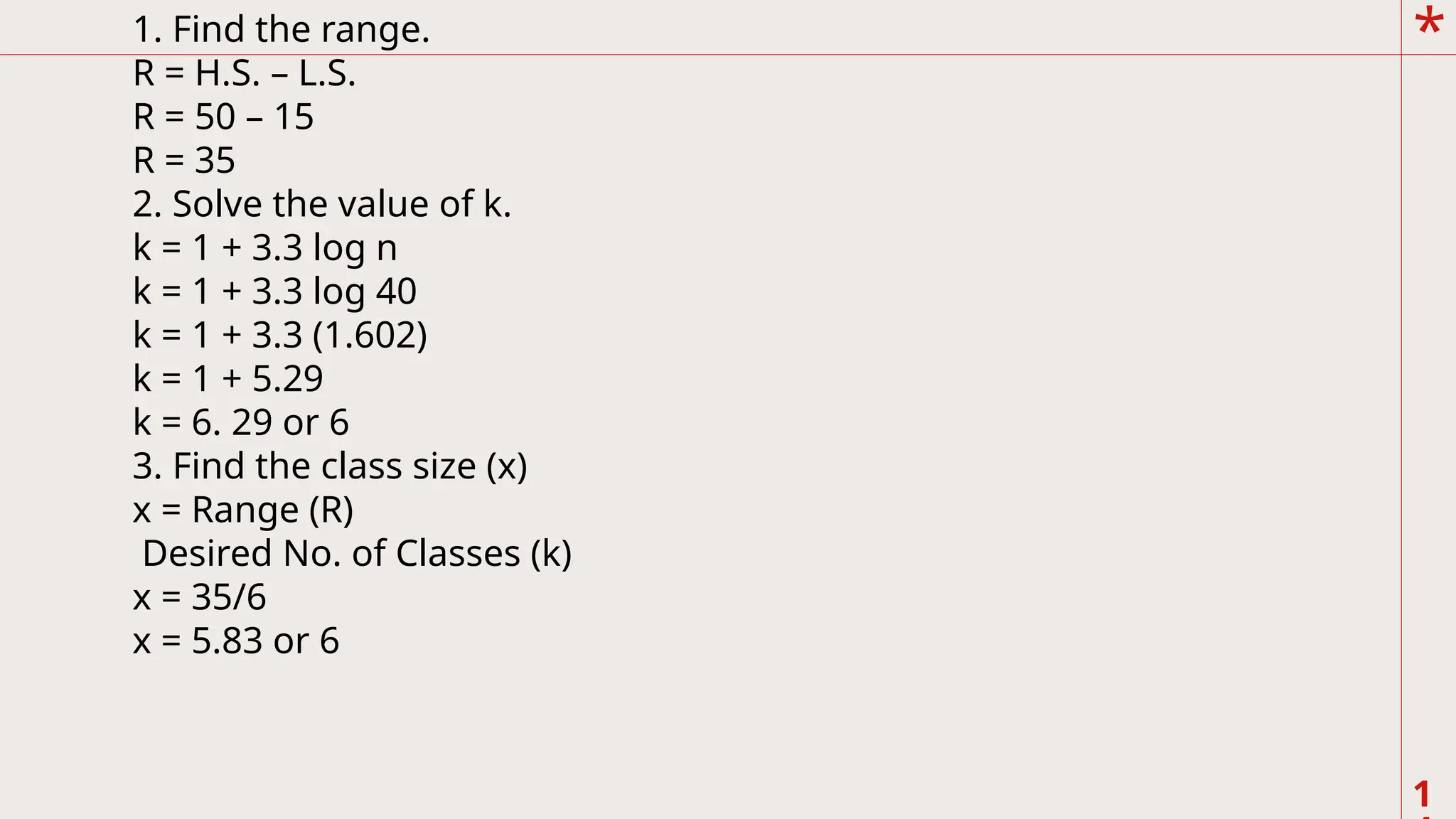
1. Find the range.
R = H.S. – L.S.
R = 50 – 15
R = 35
2. Solve the value of k.
k = 1 + 3.3 log n
k = 1 + 3.3 log 40
k = 1 + 3.3 (1.602)
k = 1 + 5.29
k = 6. 29 or 6
3. Find the class size (x)
x = Range (R)
Desired No. of Classes (k)
x = 35/6
x = 5.83 or 6
*
1
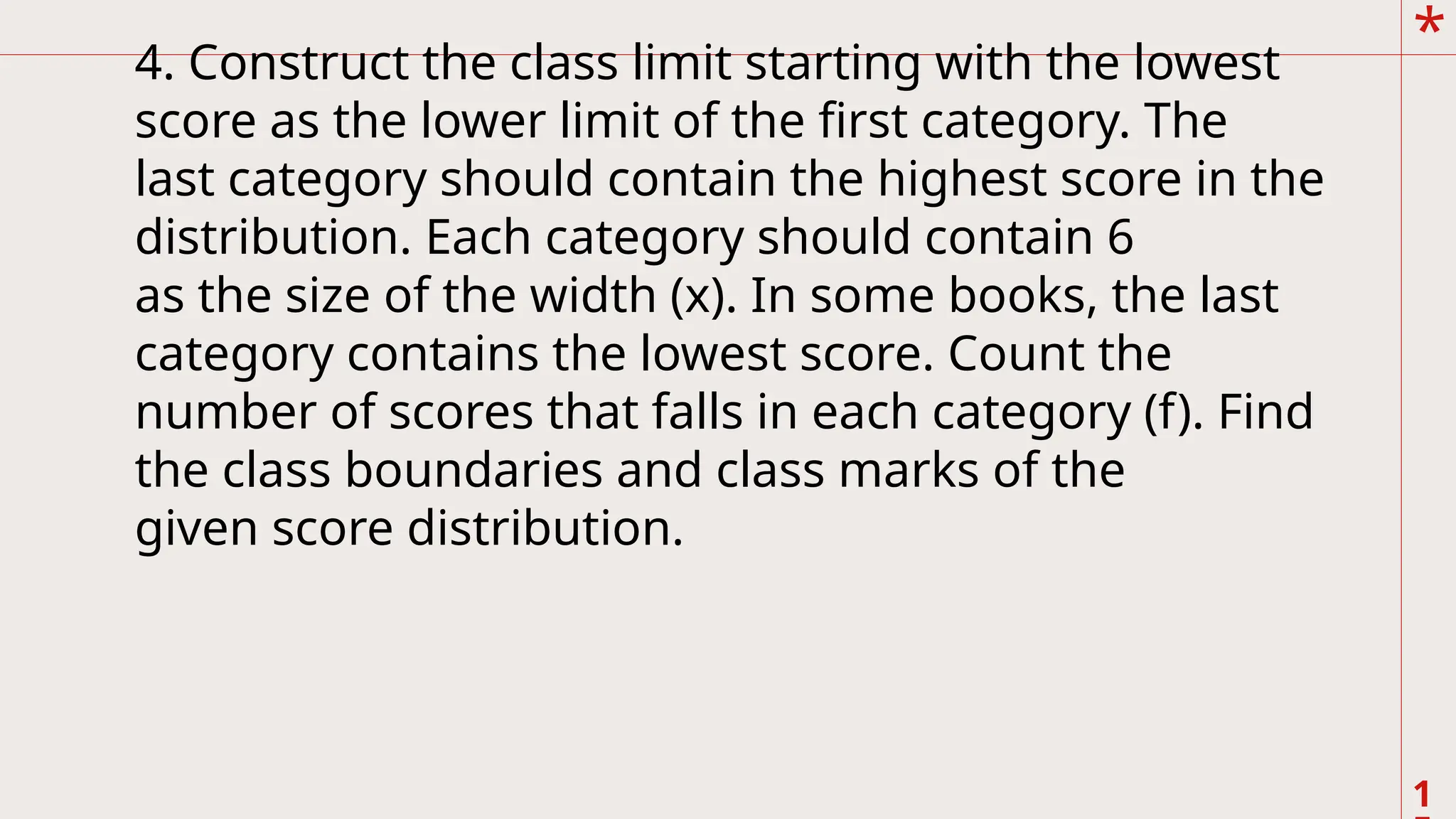
4. Construct the class limit starting with the lowest
score as the lower limit of the first category. The
last category should contain the highest score in the
distribution. Each category should contain 6
as the size of the width (x). In some books, the last
category contains the lowest score. Count the
number of scores that falls in each category (f). Find
the class boundaries and class marks of the
given score distribution.
*
1
.
*
1
.
aphical Presentation
Graphics are particularly good for demonstrating a trend in the data that would
t be apparent
tables.
t provides visual emphasis and avoids lengthy text description.
The data are presented in visual form.
t is a picture that displays numerical information
However, presenting numerical data in the form of graphs will lose details of its
ecise values
ich tables are able to provide.
The scores expressed in frequency distribution can be meaningful and easier to
erpret when they
e graphed.
There are methods of graphing frequency distribution: bar graph or histogram
d frequency
ygon and smooth curve.
*
1
.
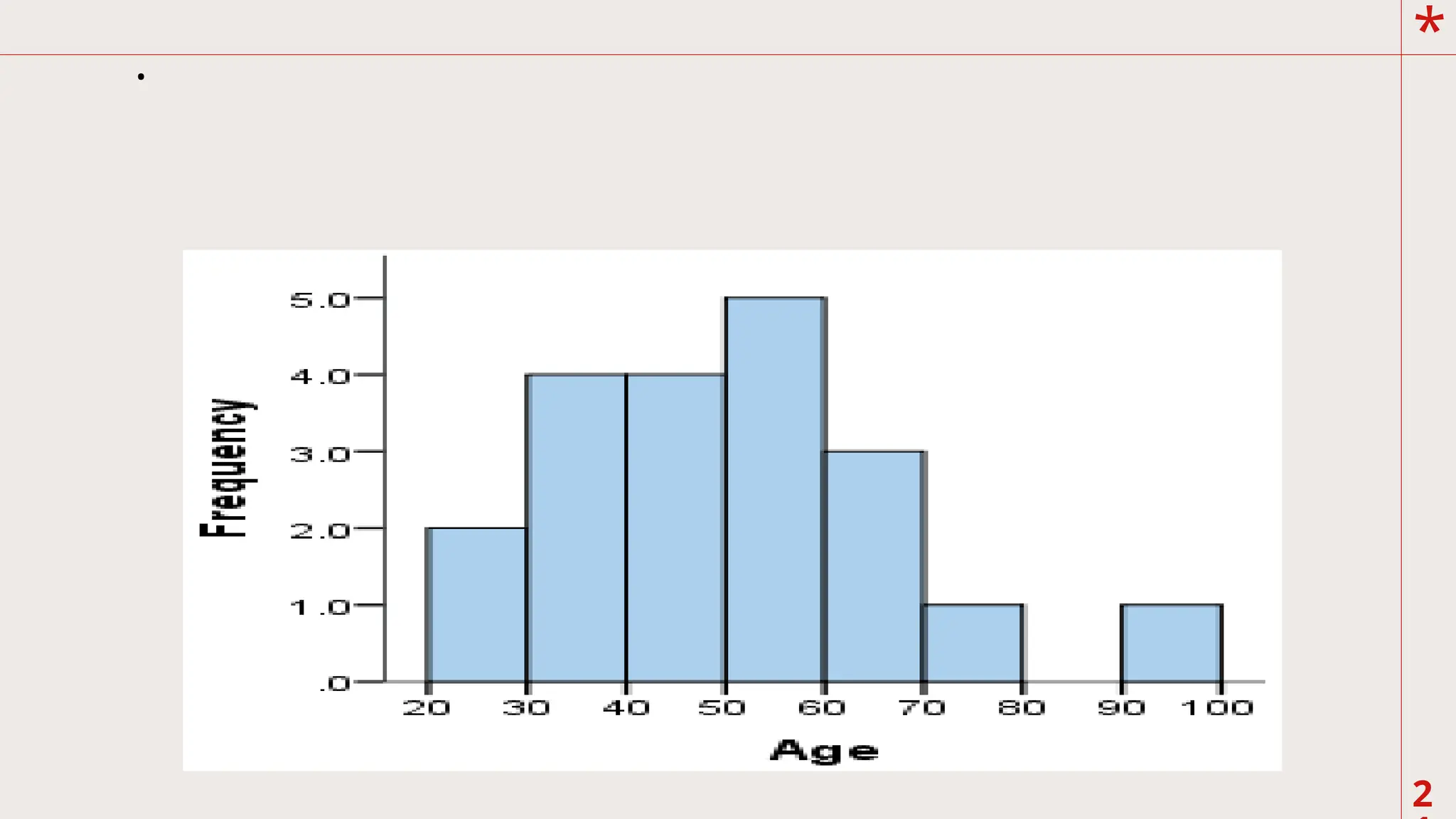
A. Histogram
It consists of a set of rectangles having bases on
the horizontal axis which centers at the class
marks.
The base widths correspond to the class size and
the
height of the rectangles corresponds to the class
frequencies. Histogram is best used for graphical
representation of discrete data or non-continuous.
*
1
.
A. Histogram
It consists of a set of rectangles having bases on
the horizontal axis which centers at the class
marks.
The base widths correspond to the class size and
the
height of the rectangles corresponds to the class
frequencies. Histogram is best used for graphical
representation of discrete data or non-continuous.
*
2
.
A. Histogram
It consists of a set of rectangles having bases on
the horizontal axis which centers at the class
marks.
The base widths correspond to the class size and
the
height of the rectangles corresponds to the class
frequencies. Histogram is best used for graphical
representation of discrete data or non-continuous.
*
2
.
*
2
.
*
2
.
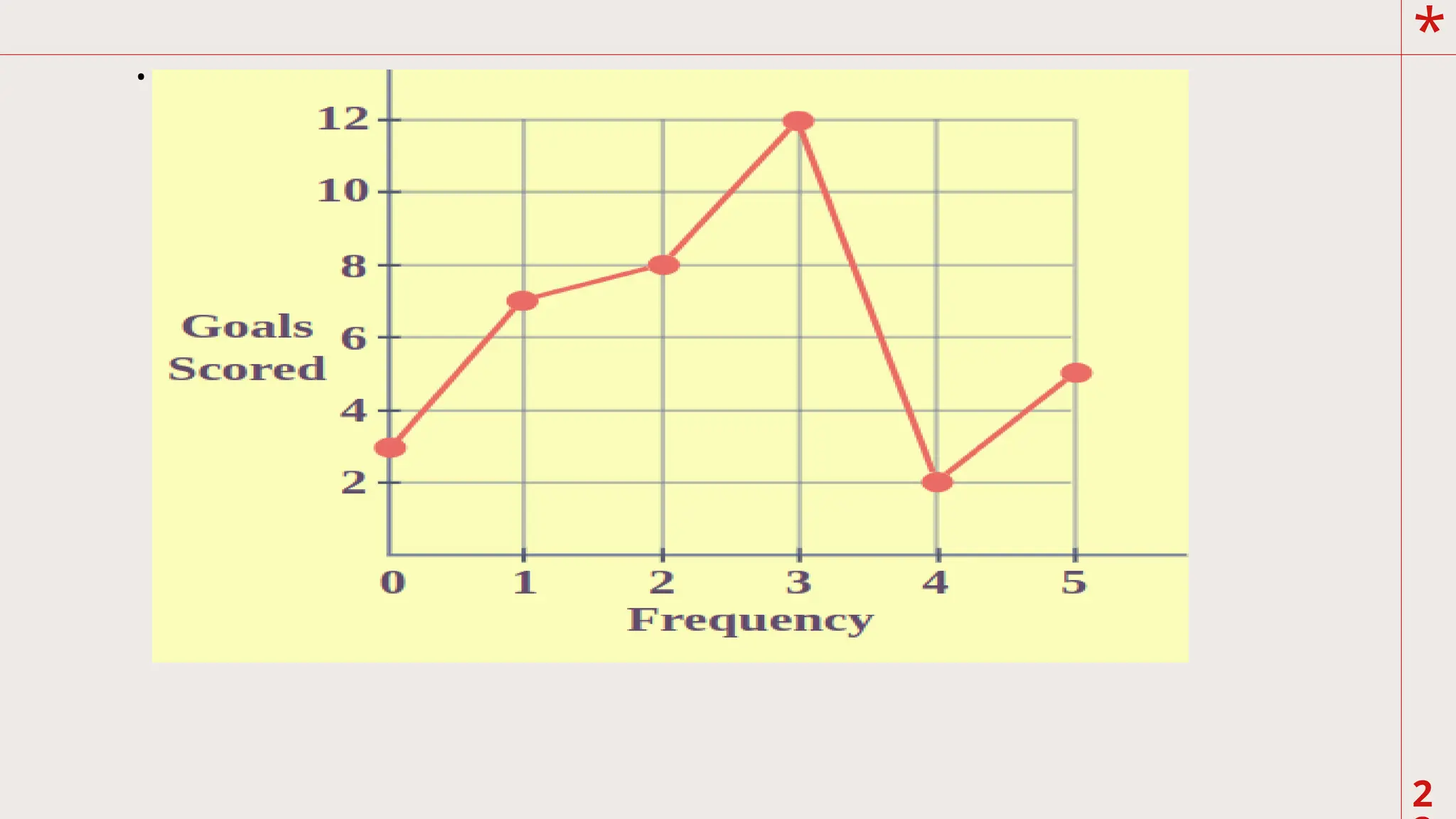
B. Frequency Polygon
It is constructed by plotting the class marks
against the class frequencies. The horizontal (x)
axis corresponds to the class marks and the vertical
(y) axis corresponds to the class frequencies.
Connect the points consecutively using a straight
line. Frequency polygon is best used in
representing continuous data such as scores of
students in a given test
*
2
.
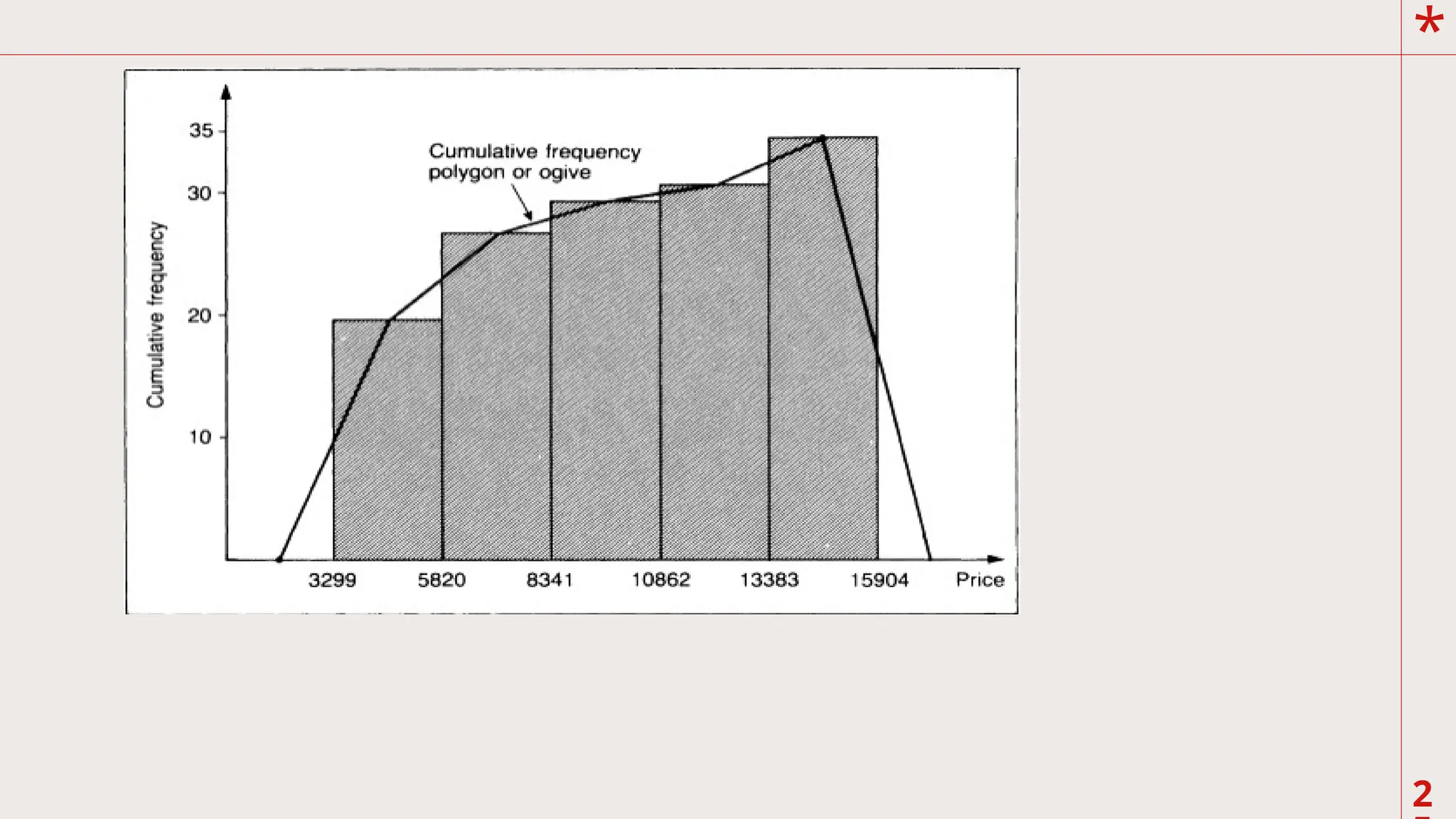
C. Cumulative Frequency polygon
This graph is quite different from a frequency
polygon because the cumulative frequencies are
plotted. In addition, you plot the point above the exact
limits of the intervals. As such, a cumulative polygon
gives a picture of the number of observations that fall
below a certain score instead of the frequency within a
class interval. The cumulative frequency polygon are
useful to obtain a number of summary measures. The
graph display ogive (pronounced as “o jive”) curves
*
2
.
*
2
.
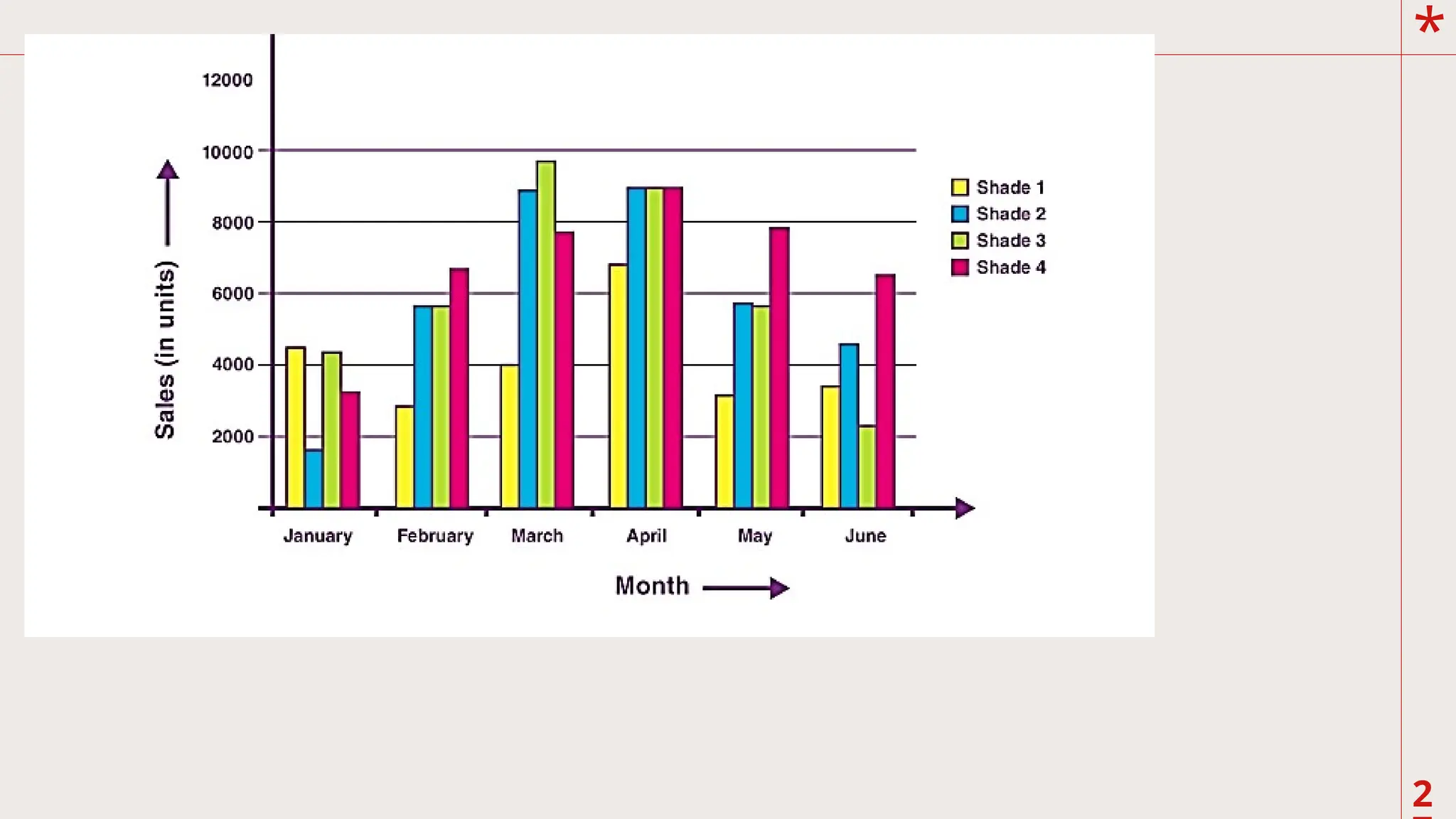
D. Bar Graph
This graph is often used to represent
frequencies in categories of a qualitative variable.
It looks very similar to a histogram, constructed
in the same manner, but spaces are placed in
between the consecutive bars. The columns
represent the categories and the height of each bar
as in a histogram represents the frequency. If
experimental data are graphed, the independent
variable in categories is usually plotted on the xaxis, while the
dependent variable is the test score
on the y-axis. However, since the variable in the
horizontal or x-axis is categorical, bar graphs can
be presented horizontally. Bar graphs are very
useful in comparison of test performance of
groups categorized in two or more variables.
*
2
.
*
28
*
29
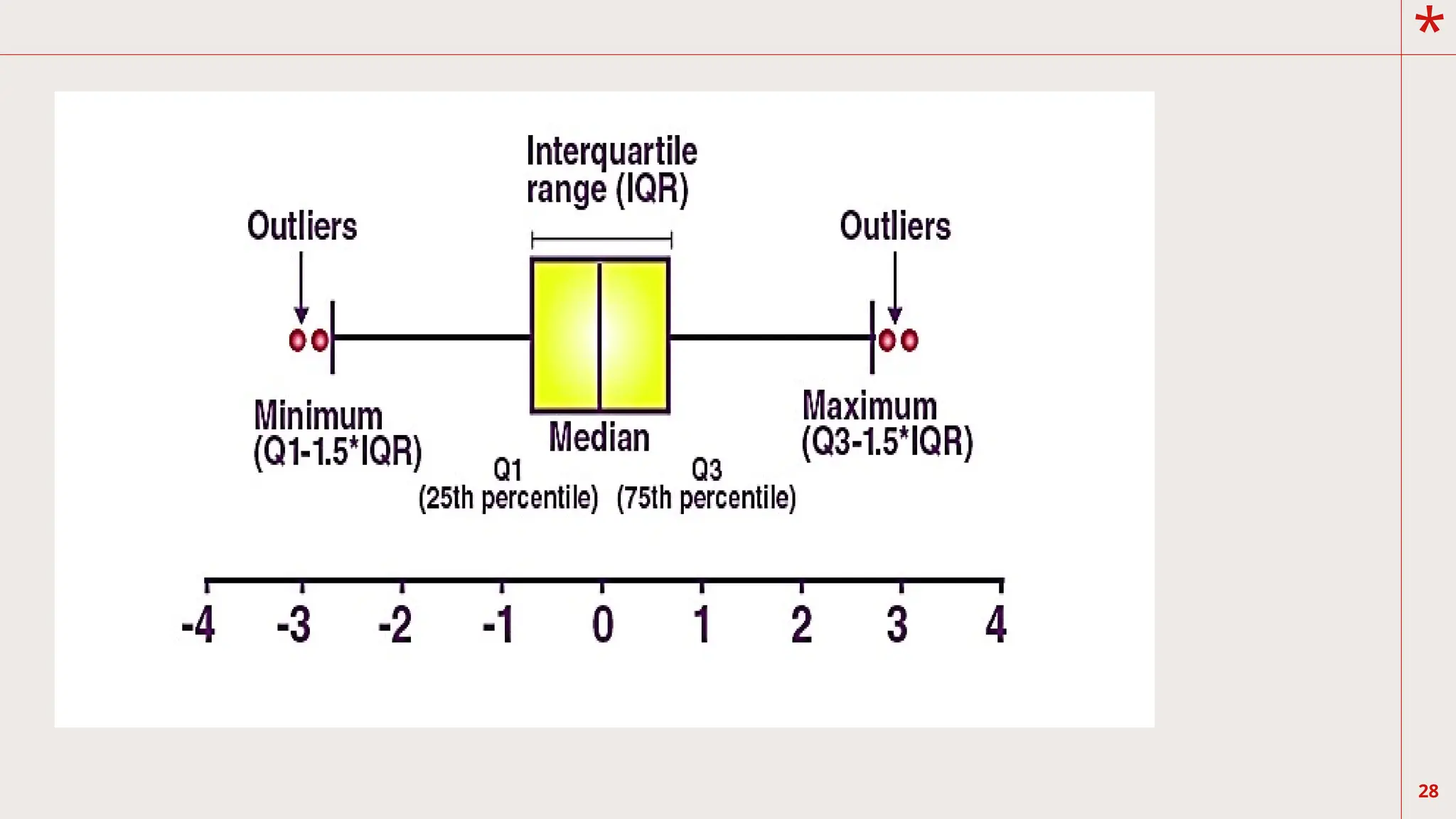
E. Box-and-Whisker Plots
This is a very useful graph depicting
the distribution of test scores through their
quartiles. The first quartile, Q1 is the point in
the test scale below, which is 25% of the scores
lie. The second quartile is the median, which
defines the upper 50% and lower 50% of the
scores. The third quartile is the point above
which 25% of the scores lie.
*
30
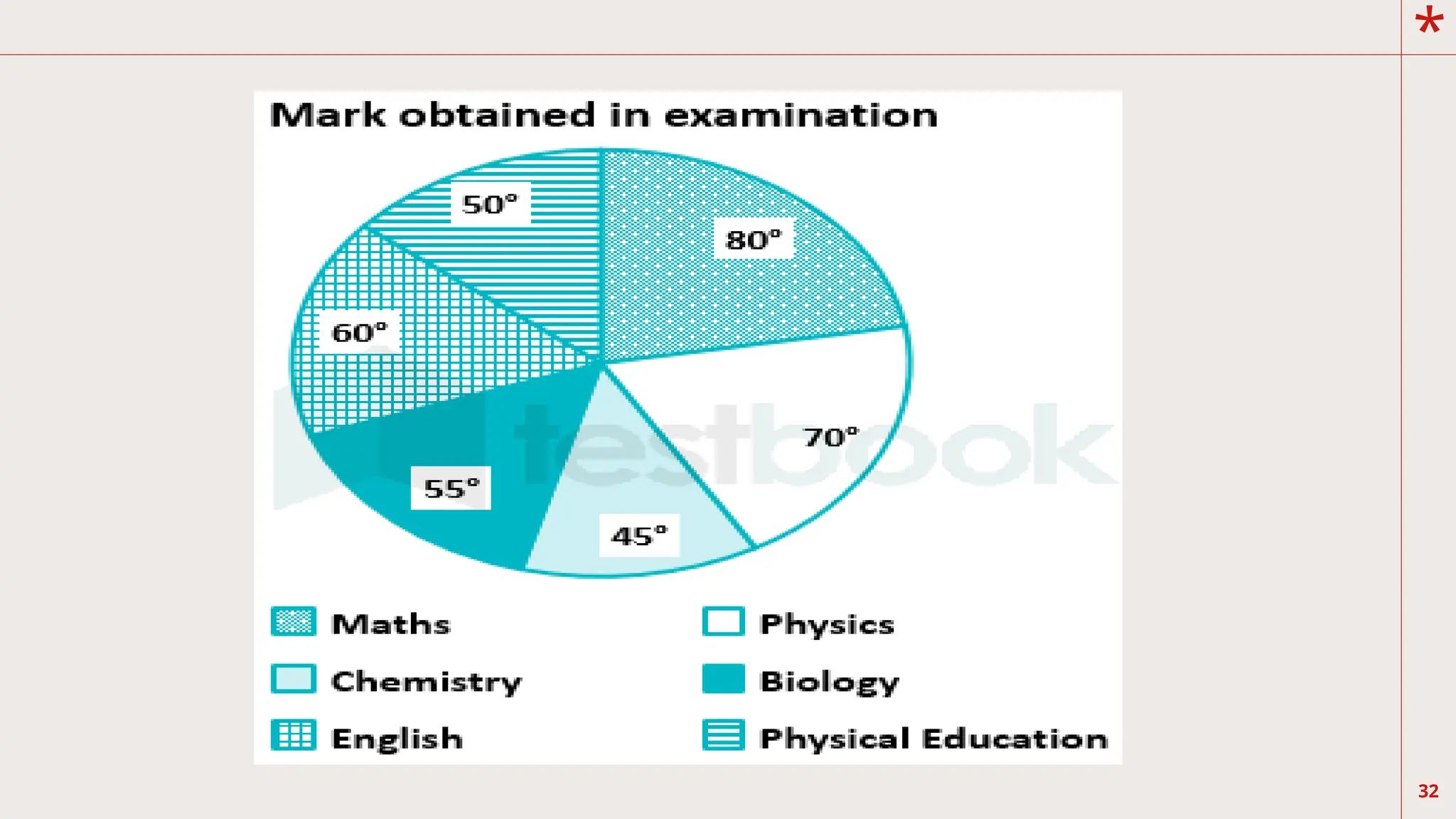
F. Pie Graph
One commonly used method to represent categorical
data is the use of circle graph. You have learned in basic
mathematics that there are 3600 in a full circle. As such, the
categories can be represented by the slices of the circle that
appear like a pie; thus, the name pie graph. The size of the
pie
is determined by the percentage of students who belong in
each
category
*
31
*
32
*
33
What are the variations on the shapes of frequency distribution?
A frequency distribution is an arrangement of a set of observations. These
observations in the field
of education or other sciences are empirical data that illustrates situations
in the real world. Let us
remember that in general (in statistics) a distribution refers to the way
data collected is presented (a graphic
representation of a data set), in other words, a distribution is the way a
data set has been arranged to show
the spread of its values: the range the values have, how dispersed are they
from each other, or close, etc.
*
Usually, a distribution is either a frequency
distribution or a probability distribution, and the
type
of distribution depends on the basis of the
arrangement (the basis taken to graph or depict
the data in any
way). While a frequency distribution depicts the
data based on the specific outcomes obtained
from the
study or experiment, the probability distribution
will base its depiction on the chances of each
possible
outcome to happen. Please study the figures
below. 34
*
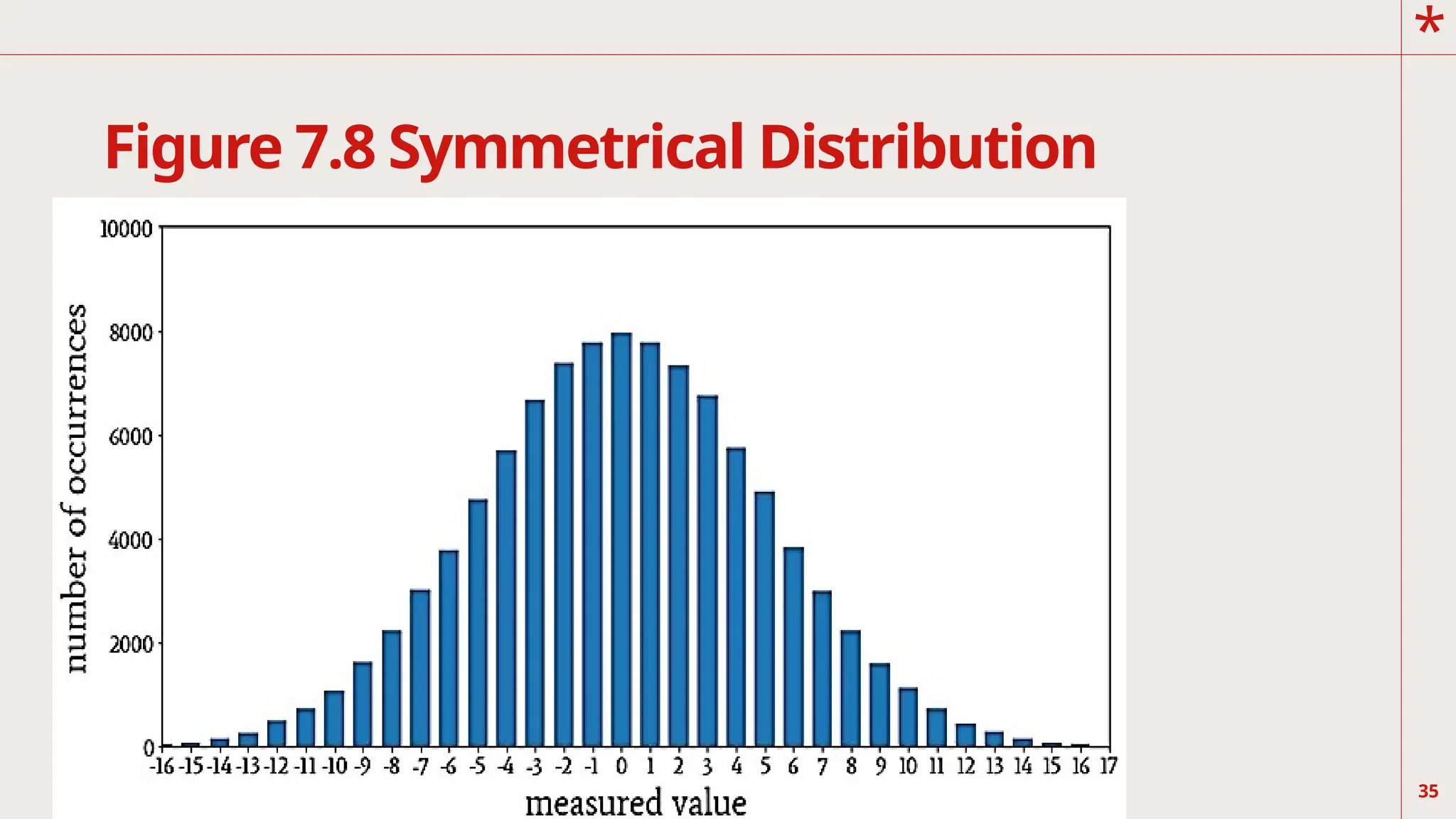
Figure 7.8 Symmetrical Distribution
35
*
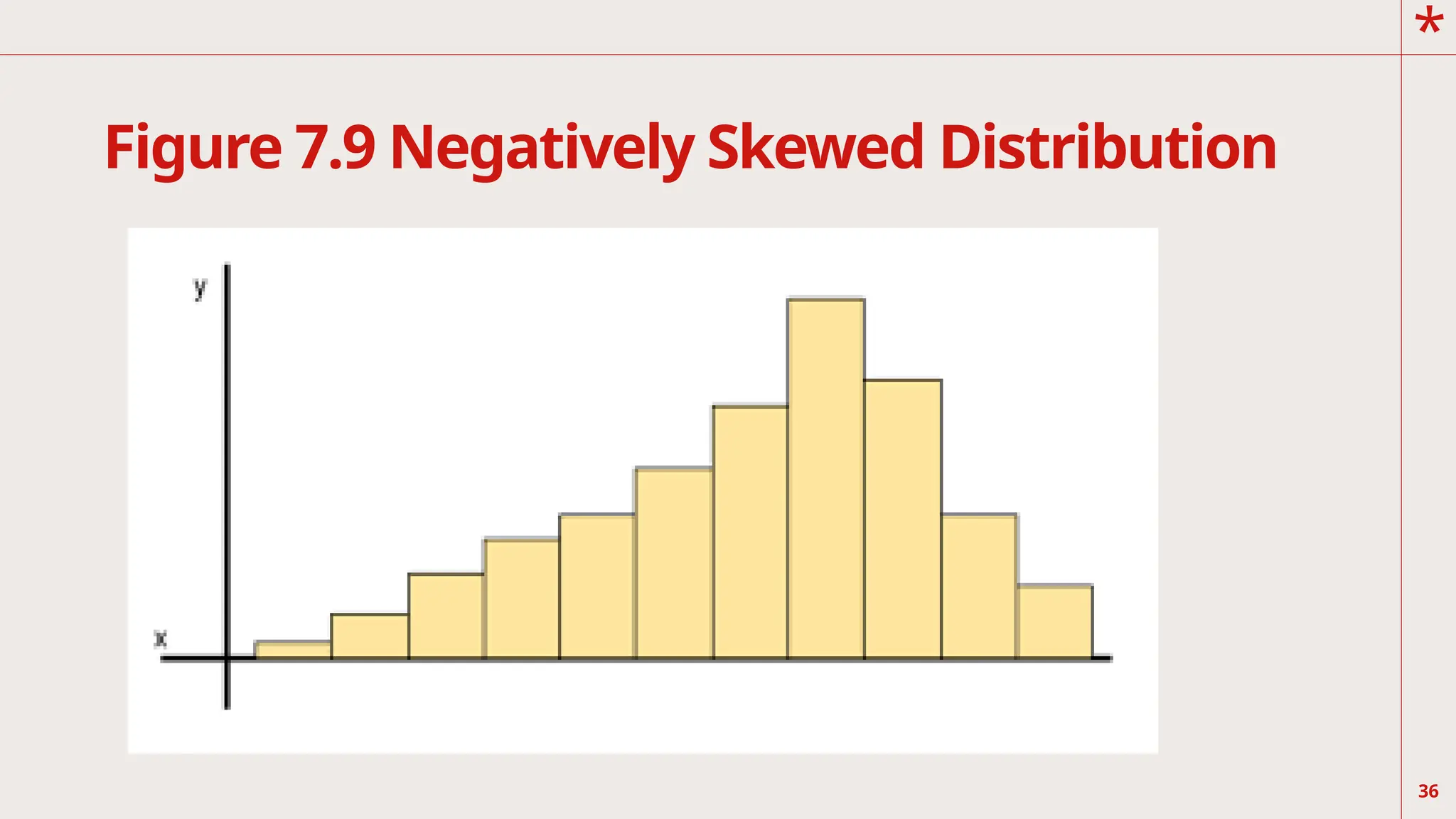
Figure 7.9 Negatively Skewed Distribution
36
*
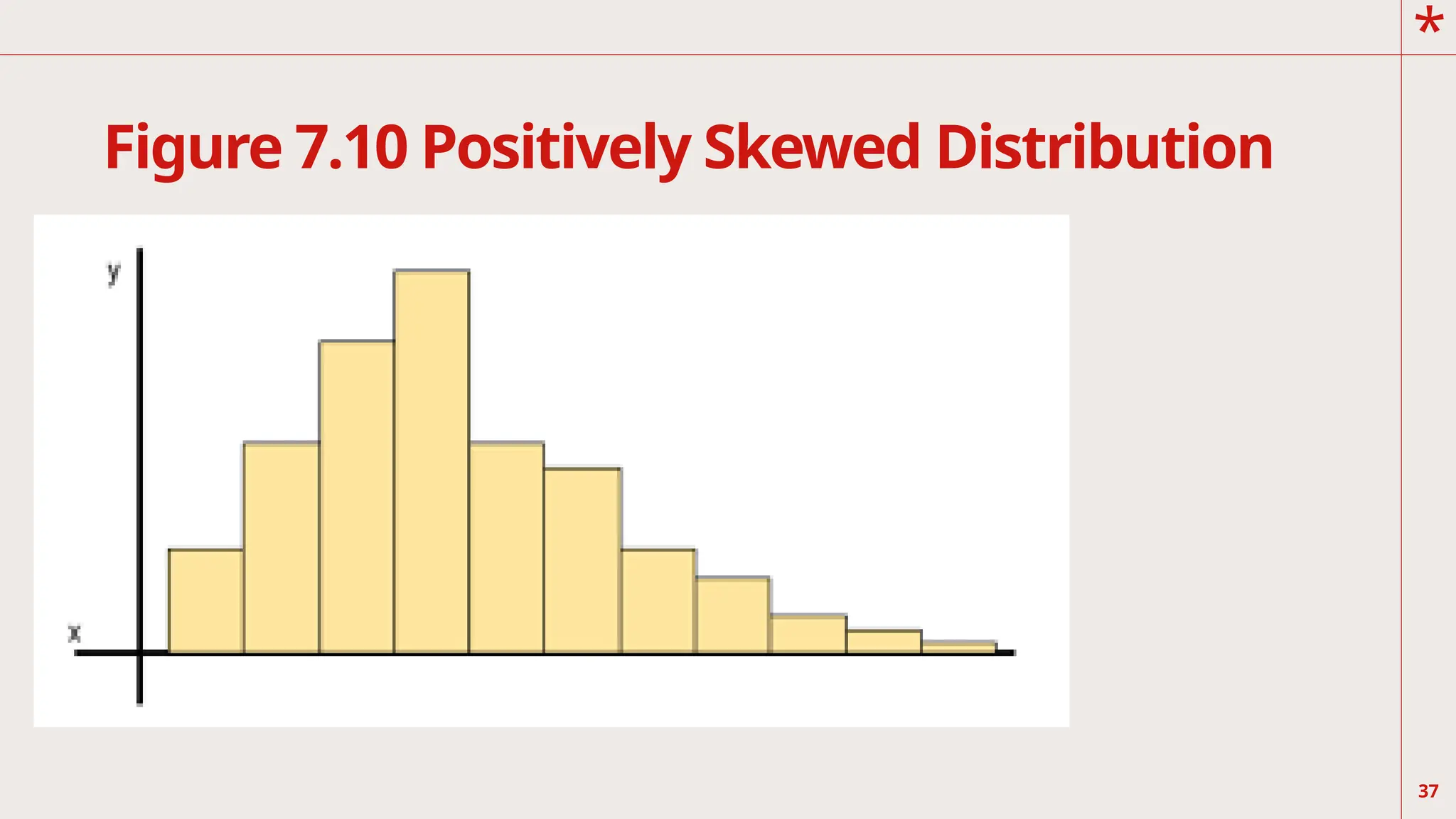
Figure 7.10 Positively Skewed Distribution
37
*
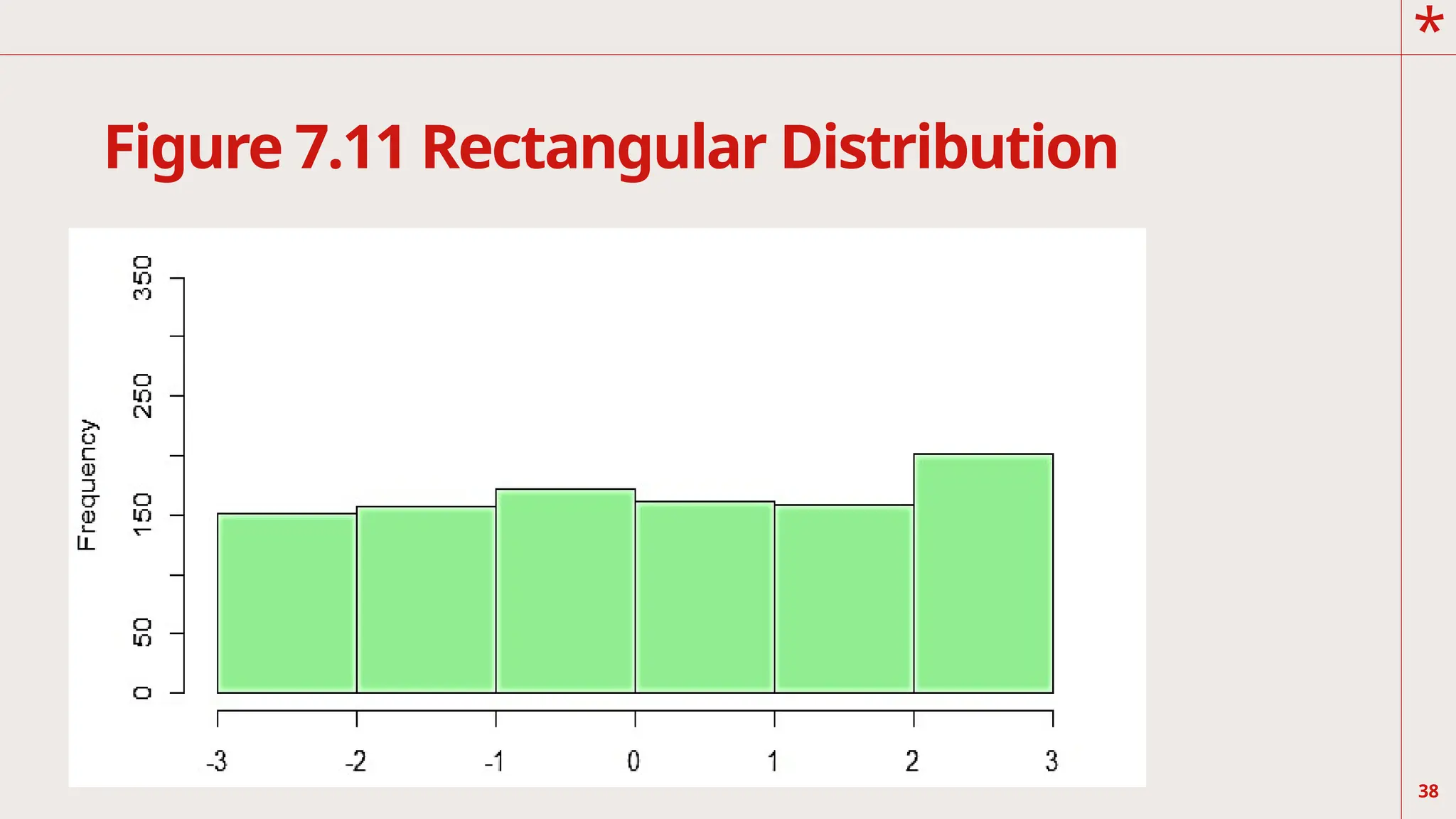
Figure 7.11 Rectangular Distribution
38
*
39
Figure 7.8 is labelled as normal distribution. Note that half
of the area of the curve is a mirror
reflection of the other half. In other words, it is a
symmetrical distribution, which is also referred to as bell
shaped distribution. The higher frequencies are
concentrated in the middle of the distribution. A number
of experiments have shown that IQ scores, height, and
weight of human beings follow a normal
distribution. This happens when the mean is equal to the
median and median is equal to the mode.
*
40
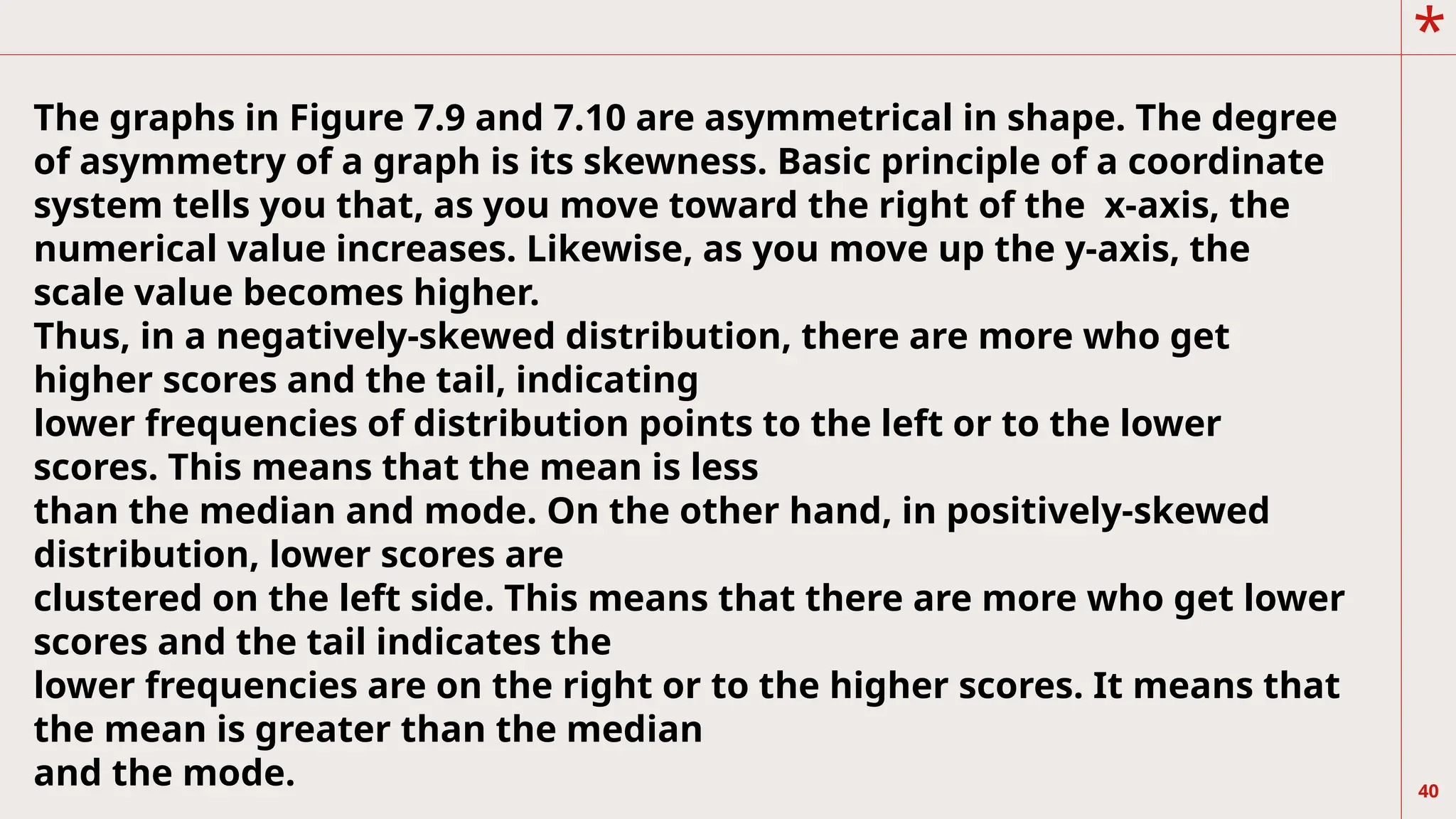
The graphs in Figure 7.9 and 7.10 are asymmetrical in shape. The degree
of asymmetry of a graph is its skewness. Basic principle of a coordinate
system tells you that, as you move toward the right of the x-axis, the
numerical value increases. Likewise, as you move up the y-axis, the
scale value becomes higher.
Thus, in a negatively-skewed distribution, there are more who get
higher scores and the tail, indicating
lower frequencies of distribution points to the left or to the lower
scores. This means that the mean is less
than the median and mode. On the other hand, in positively-skewed
distribution, lower scores are
clustered on the left side. This means that there are more who get lower
scores and the tail indicates the
lower frequencies are on the right or to the higher scores. It means that
the mean is greater than the median
and the mode.
*
41
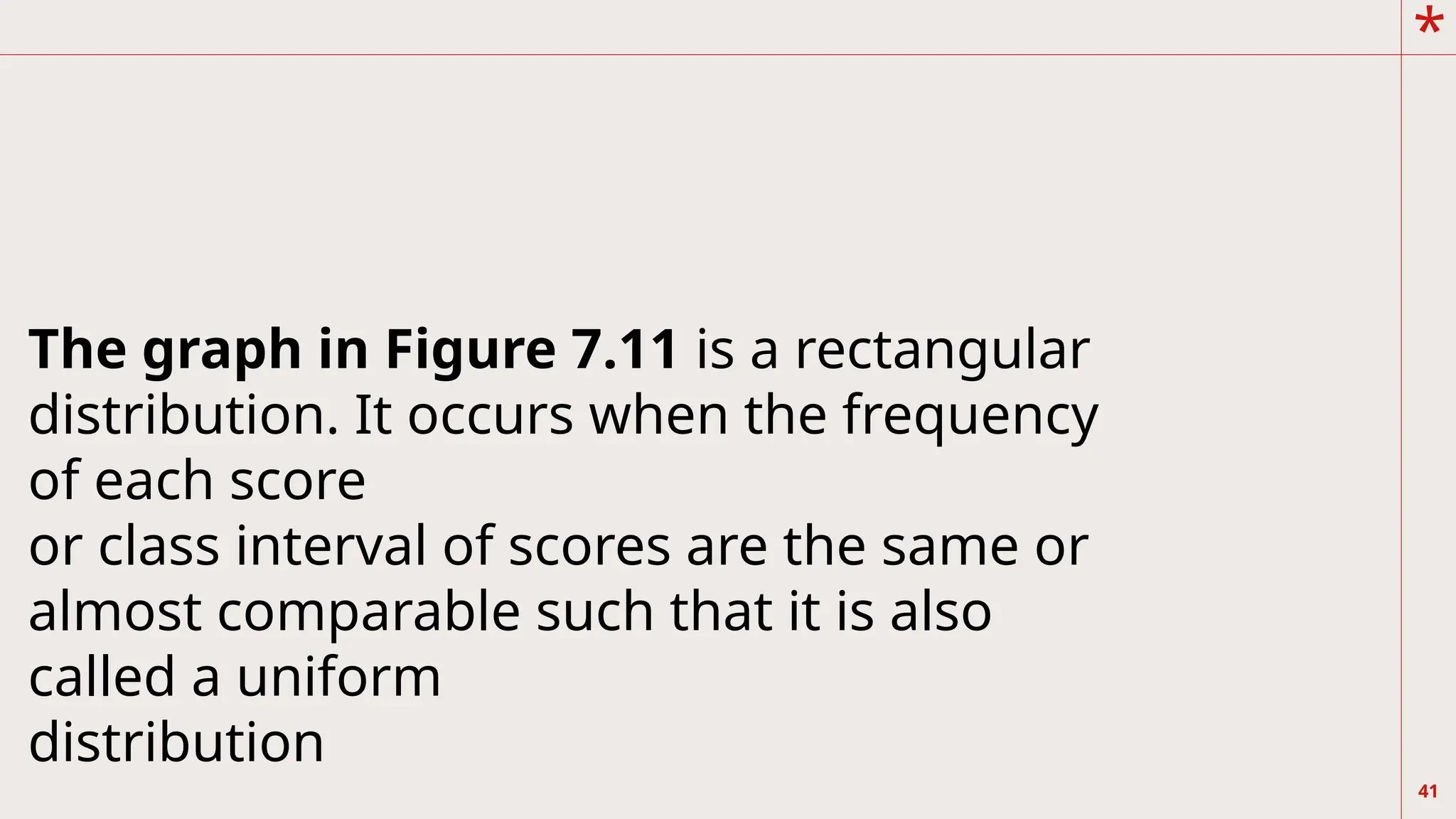
The graph in Figure 7.11 is a rectangular
distribution. It occurs when the frequency
of each score
or class interval of scores are the same or
almost comparable such that it is also
called a uniform
distribution
*
42
We have differentiated the four graphs in
terms of skewness, which refers to their
symmetry or
asymmetry (non-symmetry). Another way of
characterizing frequency distribution is with
respect to the
number of “peaks” seen on the curve. Refer
to the following graphs below.
*
43
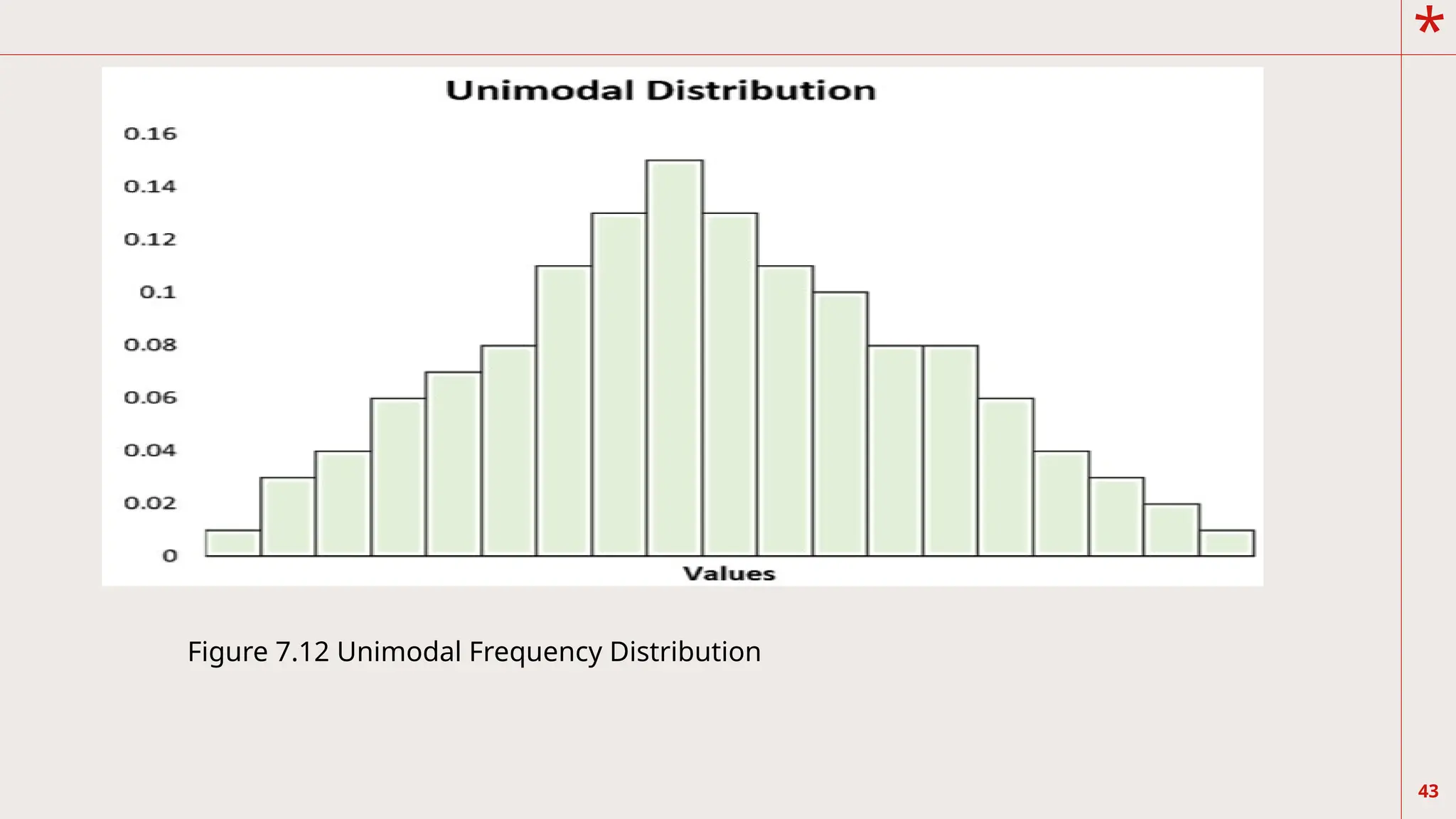
Figure 7.12 Unimodal Frequency Distribution
*
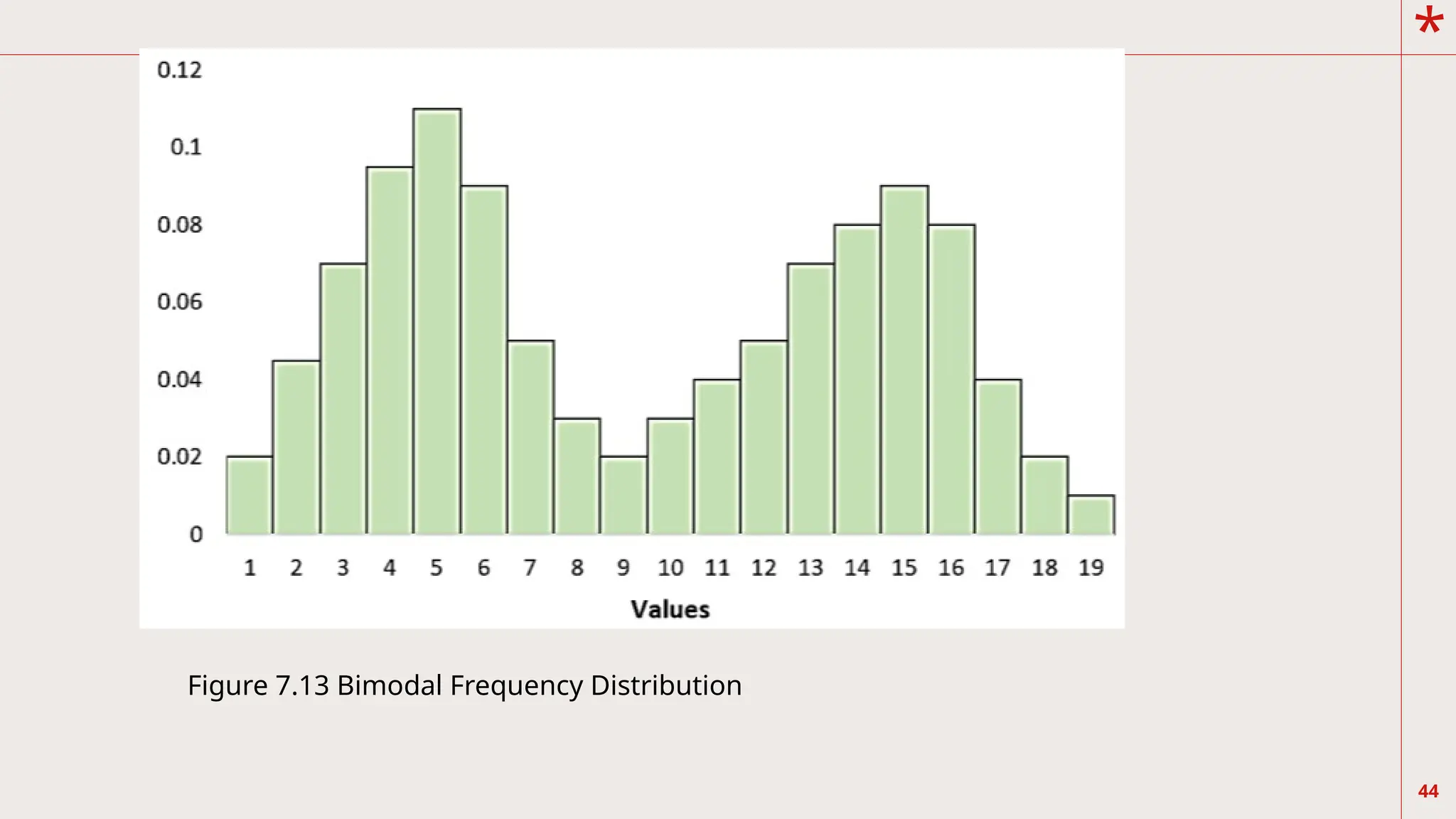
44
Figure 7.13 Bimodal Frequency Distribution
*
45
You see in Figure 7.12 that the curve has only one
peak. We refer to the shape of this distribution
as unimodal.
On the other hand, Figure 7.13 shows that there
are two peaks appearing at the highest
frequencies. We call this bimodal distribution. For
those with more than two peaks, we call this
multimodal distribution. In addition, unimodal,
bimodal, or multimodal may or may not be
symmetric.
*
46
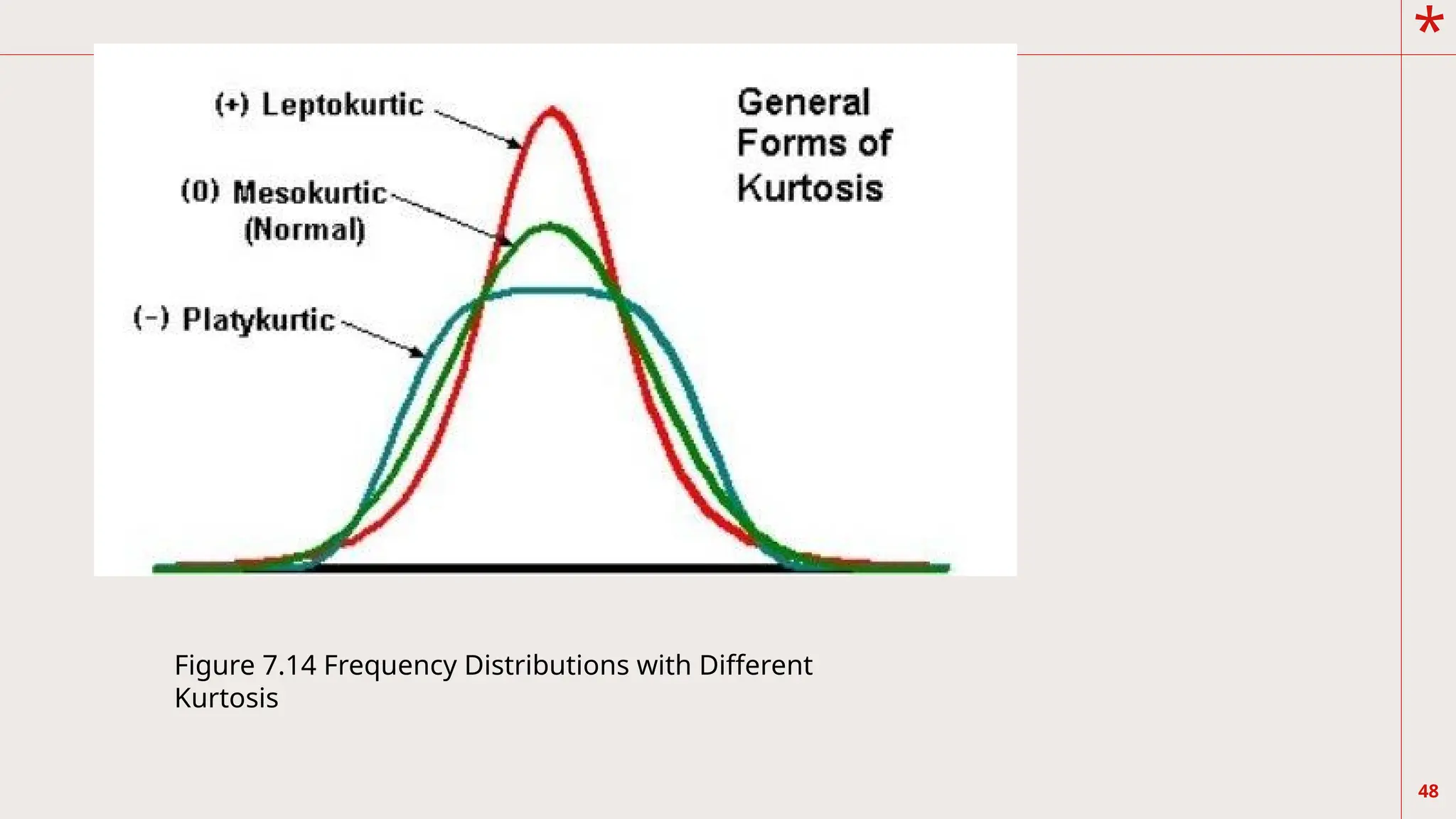
Another way of differentiating
frequency distributions is shown
below. Consider now the graphs
of three frequency distributions
in Figure 7.14.
*
47
*
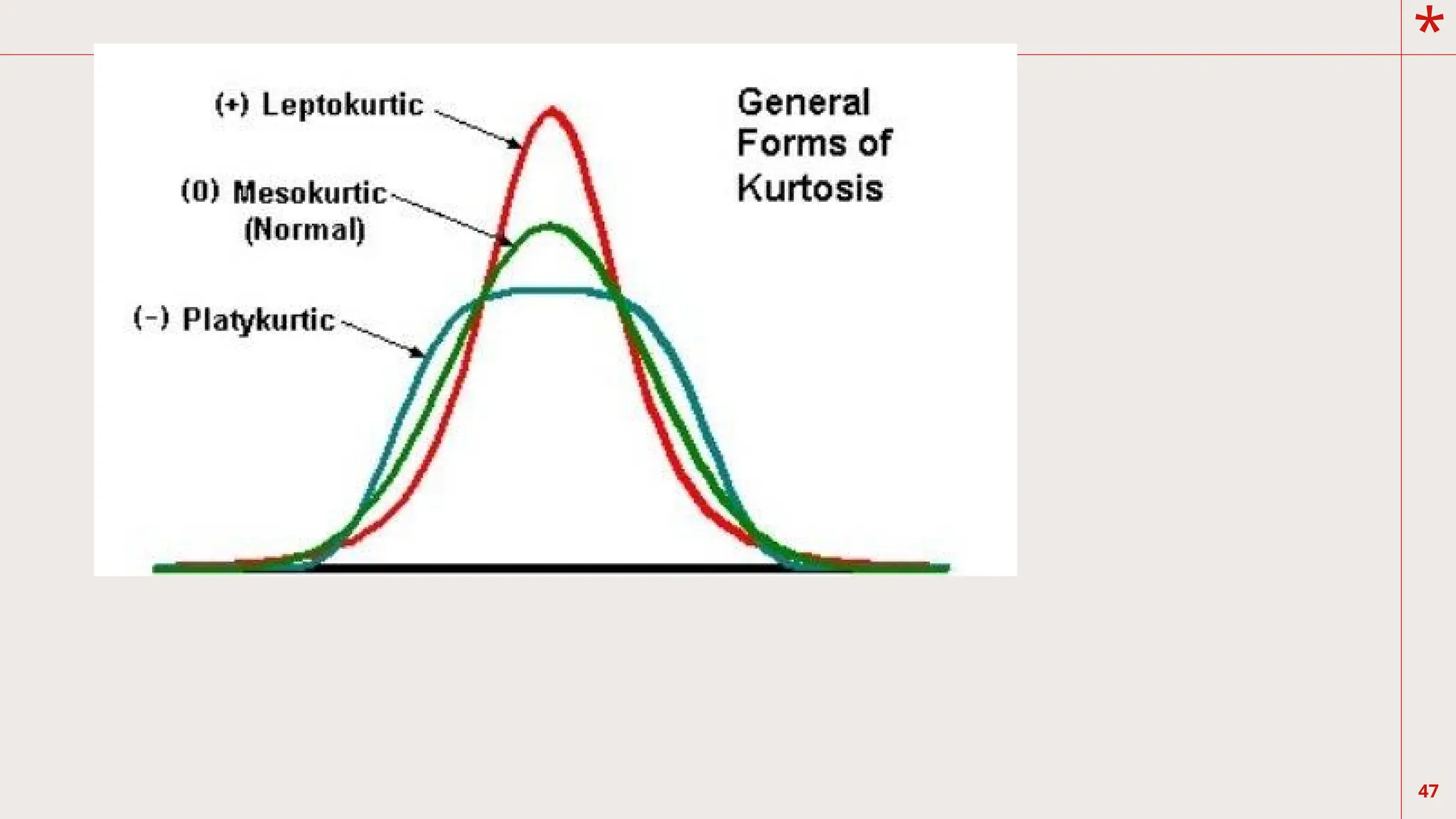
48
Figure 7.14 Frequency Distributions with Different
Kurtosis
*
49
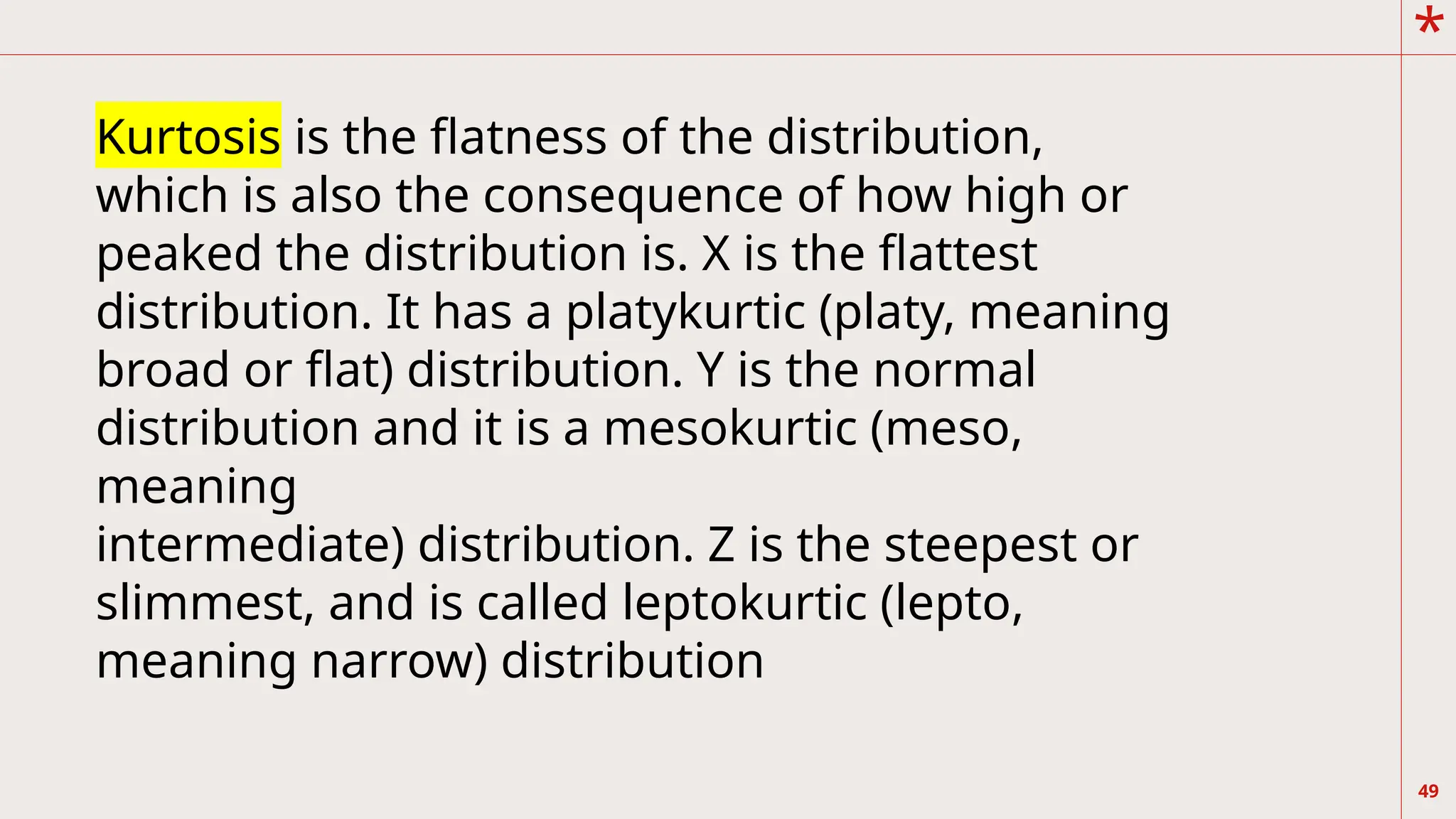
Kurtosis is the flatness of the distribution,
which is also the consequence of how high or
peaked the distribution is. X is the flattest
distribution. It has a platykurtic (platy, meaning
broad or flat) distribution. Y is the normal
distribution and it is a mesokurtic (meso,
meaning
intermediate) distribution. Z is the steepest or
slimmest, and is called leptokurtic (lepto,
meaning narrow) distribution
*
50
*
Thank
you

TEXTS-TABLES-GRAPHS.pptx advance eduaction learning

  • 1.
  • 2.
    * LESSON 1 PRESENTATION OFTEST DATE USING TEXT,TABLES &GRAPHS 2
  • 3.
  • 4.
    * 4 ➢ The dataare presented in paragraph form. ➢ This kind of representation is useful when we are looking to supplement qualitative statements with some data. ➢ For this purpose, the data should not be voluminously represented in tables or diagrams. It just has to be a statement that serves as fitting evidence to our qualitative evidence and helps the reader to get an idea of the scale of a phenomenon. ➢ If the data under consideration is large then the text matter increases substantially. As a result, the reading process becomes more intensive, time-consuming and cumbersome
  • 5.
    * 5 Example: There are about540, 000 Filipinos who joined the ranks of job seekers. According to government data, the number of jobless Filipinos last July reached 4.35 million, an increase of more than half-a-million Filipinos from the same period last year. The unemployment rate last July was 12.7% compared to 11.2% of July last year.
  • 6.
  • 7.
    * ➢ The dataare presented in tables to show relation between the column and row quantities. Tables are useful to highlight precise ➢ numerical values; proportions or trends are better illustrated with charts or graphics. Tables summarize large amounts of ➢ related data clearly and allow comparison to be made among groups of variables. Generally, well-constructed tables ➢ should be self-explanatory with four main parts: title, columns, rows and footnotes
  • 8.
    * 8 ➢ A tablefacilitates representation of even large amounts of data in an attractive, easy to read and organized manner. The data is organized in rows and columns. ➢ This is one of the most widely used forms of presentation of data since data tables are easy to construct and read. ➢ The advantages of tabular presentation include: ease of representation; ease of analysis; helps in comparison, and economical. ➢ Frequency distribution is the most common tabular presentation.
  • 9.
    * 9 Frequency Distribution Frequency distributionis a tabular arrangement of data into appropriate categories showing the number of observations in each category or group. Using frequency distribution encompasses the size of the table and it makes the data more interpretive.
  • 10.
    * 10 Steps in ConstructingFrequency Table 1. Compute the value of the range (R). Range is the difference between the highest score and the lowest score. 2. Determine the class size (c.i.). The class size is the width of each class interval. It is the quotient when you divide the range by the desired number of classes or categories. If the desired number of classes is not identified, find the value of k, where k = 1 + 3.322 log n or k = 1 + 3.3 log n.
  • 11.
    * 11 3. Set upthe class limits of each category. Class limit is the groupings or categories defined by the lower and upper limits. Lower class limit represents the smallest number in each group while upper class limit represents the highest number in each group. Use the lowest score as the lower limit of the first class. 4. Set up the class boundaries if needed. This can be computed by getting the difference of the lower limit of the second class and the upper limit of the first class divided by 2. 5. Tally the scores in the appropriate classes
  • 12.
    * 12 6. Find theother parts if necessary, such as class marks, class boundaries among others. Class marks are the midpoint of the lower and the upper-class limits. Class boundaries are the numbers used to separate each category in the frequency distribution but without gaps created by the class limits. Add 0.5 to the upper limit to get the upper-class boundary and subtract 0.5 to the lower limit to get the lower-class boundary in each group or category.
  • 13.
    * 13 Example: Raw scores of40 students in a 50-item mathematics quiz is given, construct a frequency distribution table following the steps given.
  • 14.
    * 1 1. Find therange. R = H.S. – L.S. R = 50 – 15 R = 35 2. Solve the value of k. k = 1 + 3.3 log n k = 1 + 3.3 log 40 k = 1 + 3.3 (1.602) k = 1 + 5.29 k = 6. 29 or 6 3. Find the class size (x) x = Range (R) Desired No. of Classes (k) x = 35/6 x = 5.83 or 6
  • 15.
    * 1 4. Construct theclass limit starting with the lowest score as the lower limit of the first category. The last category should contain the highest score in the distribution. Each category should contain 6 as the size of the width (x). In some books, the last category contains the lowest score. Count the number of scores that falls in each category (f). Find the class boundaries and class marks of the given score distribution.
  • 16.
  • 17.
    * 1 . aphical Presentation Graphics areparticularly good for demonstrating a trend in the data that would t be apparent tables. t provides visual emphasis and avoids lengthy text description. The data are presented in visual form. t is a picture that displays numerical information However, presenting numerical data in the form of graphs will lose details of its ecise values ich tables are able to provide. The scores expressed in frequency distribution can be meaningful and easier to erpret when they e graphed. There are methods of graphing frequency distribution: bar graph or histogram d frequency ygon and smooth curve.
  • 18.
    * 1 . A. Histogram It consistsof a set of rectangles having bases on the horizontal axis which centers at the class marks. The base widths correspond to the class size and the height of the rectangles corresponds to the class frequencies. Histogram is best used for graphical representation of discrete data or non-continuous.
  • 19.
    * 1 . A. Histogram It consistsof a set of rectangles having bases on the horizontal axis which centers at the class marks. The base widths correspond to the class size and the height of the rectangles corresponds to the class frequencies. Histogram is best used for graphical representation of discrete data or non-continuous.
  • 20.
    * 2 . A. Histogram It consistsof a set of rectangles having bases on the horizontal axis which centers at the class marks. The base widths correspond to the class size and the height of the rectangles corresponds to the class frequencies. Histogram is best used for graphical representation of discrete data or non-continuous.
  • 21.
  • 22.
  • 23.
    * 2 . B. Frequency Polygon Itis constructed by plotting the class marks against the class frequencies. The horizontal (x) axis corresponds to the class marks and the vertical (y) axis corresponds to the class frequencies. Connect the points consecutively using a straight line. Frequency polygon is best used in representing continuous data such as scores of students in a given test
  • 24.
    * 2 . C. Cumulative Frequencypolygon This graph is quite different from a frequency polygon because the cumulative frequencies are plotted. In addition, you plot the point above the exact limits of the intervals. As such, a cumulative polygon gives a picture of the number of observations that fall below a certain score instead of the frequency within a class interval. The cumulative frequency polygon are useful to obtain a number of summary measures. The graph display ogive (pronounced as “o jive”) curves
  • 25.
  • 26.
    * 2 . D. Bar Graph Thisgraph is often used to represent frequencies in categories of a qualitative variable. It looks very similar to a histogram, constructed in the same manner, but spaces are placed in between the consecutive bars. The columns represent the categories and the height of each bar as in a histogram represents the frequency. If experimental data are graphed, the independent variable in categories is usually plotted on the xaxis, while the dependent variable is the test score on the y-axis. However, since the variable in the horizontal or x-axis is categorical, bar graphs can be presented horizontally. Bar graphs are very useful in comparison of test performance of groups categorized in two or more variables.
  • 27.
  • 28.
  • 29.
    * 29 E. Box-and-Whisker Plots Thisis a very useful graph depicting the distribution of test scores through their quartiles. The first quartile, Q1 is the point in the test scale below, which is 25% of the scores lie. The second quartile is the median, which defines the upper 50% and lower 50% of the scores. The third quartile is the point above which 25% of the scores lie.
  • 30.
    * 30 F. Pie Graph Onecommonly used method to represent categorical data is the use of circle graph. You have learned in basic mathematics that there are 3600 in a full circle. As such, the categories can be represented by the slices of the circle that appear like a pie; thus, the name pie graph. The size of the pie is determined by the percentage of students who belong in each category
  • 31.
  • 32.
  • 33.
    * 33 What are thevariations on the shapes of frequency distribution? A frequency distribution is an arrangement of a set of observations. These observations in the field of education or other sciences are empirical data that illustrates situations in the real world. Let us remember that in general (in statistics) a distribution refers to the way data collected is presented (a graphic representation of a data set), in other words, a distribution is the way a data set has been arranged to show the spread of its values: the range the values have, how dispersed are they from each other, or close, etc.
  • 34.
    * Usually, a distributionis either a frequency distribution or a probability distribution, and the type of distribution depends on the basis of the arrangement (the basis taken to graph or depict the data in any way). While a frequency distribution depicts the data based on the specific outcomes obtained from the study or experiment, the probability distribution will base its depiction on the chances of each possible outcome to happen. Please study the figures below. 34
  • 35.
    * Figure 7.8 SymmetricalDistribution 35
  • 36.
    * Figure 7.9 NegativelySkewed Distribution 36
  • 37.
    * Figure 7.10 PositivelySkewed Distribution 37
  • 38.
  • 39.
    * 39 Figure 7.8 islabelled as normal distribution. Note that half of the area of the curve is a mirror reflection of the other half. In other words, it is a symmetrical distribution, which is also referred to as bell shaped distribution. The higher frequencies are concentrated in the middle of the distribution. A number of experiments have shown that IQ scores, height, and weight of human beings follow a normal distribution. This happens when the mean is equal to the median and median is equal to the mode.
  • 40.
    * 40 The graphs inFigure 7.9 and 7.10 are asymmetrical in shape. The degree of asymmetry of a graph is its skewness. Basic principle of a coordinate system tells you that, as you move toward the right of the x-axis, the numerical value increases. Likewise, as you move up the y-axis, the scale value becomes higher. Thus, in a negatively-skewed distribution, there are more who get higher scores and the tail, indicating lower frequencies of distribution points to the left or to the lower scores. This means that the mean is less than the median and mode. On the other hand, in positively-skewed distribution, lower scores are clustered on the left side. This means that there are more who get lower scores and the tail indicates the lower frequencies are on the right or to the higher scores. It means that the mean is greater than the median and the mode.
  • 41.
    * 41 The graph inFigure 7.11 is a rectangular distribution. It occurs when the frequency of each score or class interval of scores are the same or almost comparable such that it is also called a uniform distribution
  • 42.
    * 42 We have differentiatedthe four graphs in terms of skewness, which refers to their symmetry or asymmetry (non-symmetry). Another way of characterizing frequency distribution is with respect to the number of “peaks” seen on the curve. Refer to the following graphs below.
  • 43.
    * 43 Figure 7.12 UnimodalFrequency Distribution
  • 44.
    * 44 Figure 7.13 BimodalFrequency Distribution
  • 45.
    * 45 You see inFigure 7.12 that the curve has only one peak. We refer to the shape of this distribution as unimodal. On the other hand, Figure 7.13 shows that there are two peaks appearing at the highest frequencies. We call this bimodal distribution. For those with more than two peaks, we call this multimodal distribution. In addition, unimodal, bimodal, or multimodal may or may not be symmetric.
  • 46.
    * 46 Another way ofdifferentiating frequency distributions is shown below. Consider now the graphs of three frequency distributions in Figure 7.14.
  • 47.
  • 48.
    * 48 Figure 7.14 FrequencyDistributions with Different Kurtosis
  • 49.
    * 49 Kurtosis is theflatness of the distribution, which is also the consequence of how high or peaked the distribution is. X is the flattest distribution. It has a platykurtic (platy, meaning broad or flat) distribution. Y is the normal distribution and it is a mesokurtic (meso, meaning intermediate) distribution. Z is the steepest or slimmest, and is called leptokurtic (lepto, meaning narrow) distribution
  • 50.
  • 51.