Chapter 1: Understanding Health and Wellness Lesson 1—Your Total Health
Vocabulary Health—the combination of physical, mental/emotional, and social well-being Spiritual Health—a deep-seated sense of meaning and purpose in life Wellness—an overall state of well-being or total health Chronic Disease—an ongoing condition or illness
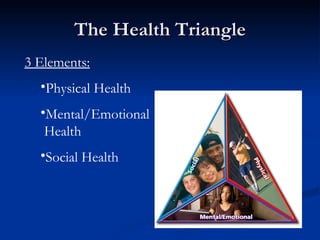
The Health Triangle 3 Elements: Physical Health Mental/Emotional   Health Social Health
Physical Health Physical health is all about how well your body functions 5 tips to maintain good physical health Get 8—10 hours of sleep each night Eat nutritious meals and drink eight cups of water daily Participate in 30—60 minutes of physical activity every day Avoid the use of tobacco, alcohol, and other drugs Bathe daily, and floss and brush your teeth daily
Mental/Emotional Health Mental and emotional health is about your feelings and thoughts. How do you feel about yourself? How do you meet the demands of your daily life? How do you cope with the problems that occur in your life? What are some things that people who are mentally and emotionally healthy do on a day to day basis? Spiritual Health—involves having a feeling of purpose and a sense of values
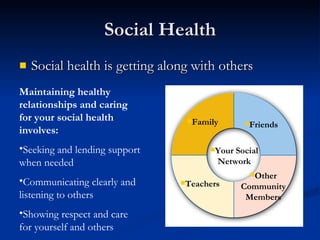
Social Health Social health is getting along with others Family Friends Teachers Other Community Members Your Social Network Maintaining healthy relationships and caring for your social health involves: Seeking and lending support when needed Communicating clearly and listening to others Showing respect and care for yourself and others
Health v. Wellness Health is the combination of physical, mental/emotional, and social well-being Wellness is keeping a balance among the three components of health
Keeping a Balance Wellness comes from making decisions and practicing behaviors that are based on sound health knowledge and healthful attitudes
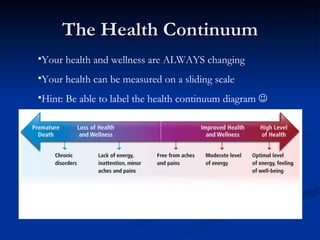
The Health Continuum Your health and wellness are ALWAYS changing Your health can be measured on a sliding scale  Hint: Be able to label the health continuum diagram  
Life Style Factors Life style factors are repeated behaviors related to the way a person lives, which help determine his or her level of health
Risk Behaviors Risk behaviors are actions that can potentially threaten your health or the health of others. The  Center for Disease Control  and Prevention (CDC), has listed  6  risk behaviors that account for most of the deaths and disabilities among young people. Tobacco Use Unhealthy dietary behaviors Inadequate physical activity Alcohol and other drug use Sexual behaviors that result in STD’s, pregnancy, and HIV infection Behaviors that contribute to unintentional injuries and violence.
Abstinence Abstinence is a deliberate decision to avoid high-risk behaviors such as sexual activity and the use of tobacco, alcohol, and other drugs.
Prevention Getting regular medical and dental checkups Wearing a seat belt Eating healthy Staying active Making your decision before faced with a choice

Chapter 1: Understanding Health and Wellness

  • 1.
    Chapter 1: UnderstandingHealth and Wellness Lesson 1—Your Total Health
  • 2.
    Vocabulary Health—the combinationof physical, mental/emotional, and social well-being Spiritual Health—a deep-seated sense of meaning and purpose in life Wellness—an overall state of well-being or total health Chronic Disease—an ongoing condition or illness
  • 3.
    The Health Triangle3 Elements: Physical Health Mental/Emotional Health Social Health
  • 4.
    Physical Health Physicalhealth is all about how well your body functions 5 tips to maintain good physical health Get 8—10 hours of sleep each night Eat nutritious meals and drink eight cups of water daily Participate in 30—60 minutes of physical activity every day Avoid the use of tobacco, alcohol, and other drugs Bathe daily, and floss and brush your teeth daily
  • 5.
    Mental/Emotional Health Mentaland emotional health is about your feelings and thoughts. How do you feel about yourself? How do you meet the demands of your daily life? How do you cope with the problems that occur in your life? What are some things that people who are mentally and emotionally healthy do on a day to day basis? Spiritual Health—involves having a feeling of purpose and a sense of values
  • 6.
    Social Health Socialhealth is getting along with others Family Friends Teachers Other Community Members Your Social Network Maintaining healthy relationships and caring for your social health involves: Seeking and lending support when needed Communicating clearly and listening to others Showing respect and care for yourself and others
  • 7.
    Health v. WellnessHealth is the combination of physical, mental/emotional, and social well-being Wellness is keeping a balance among the three components of health
  • 8.
    Keeping a BalanceWellness comes from making decisions and practicing behaviors that are based on sound health knowledge and healthful attitudes
  • 9.
    The Health ContinuumYour health and wellness are ALWAYS changing Your health can be measured on a sliding scale Hint: Be able to label the health continuum diagram 
  • 10.
    Life Style FactorsLife style factors are repeated behaviors related to the way a person lives, which help determine his or her level of health
  • 11.
    Risk Behaviors Riskbehaviors are actions that can potentially threaten your health or the health of others. The Center for Disease Control and Prevention (CDC), has listed 6 risk behaviors that account for most of the deaths and disabilities among young people. Tobacco Use Unhealthy dietary behaviors Inadequate physical activity Alcohol and other drug use Sexual behaviors that result in STD’s, pregnancy, and HIV infection Behaviors that contribute to unintentional injuries and violence.
  • 12.
    Abstinence Abstinence isa deliberate decision to avoid high-risk behaviors such as sexual activity and the use of tobacco, alcohol, and other drugs.
  • 13.
    Prevention Getting regularmedical and dental checkups Wearing a seat belt Eating healthy Staying active Making your decision before faced with a choice