9
1. UCL School of Pharmacy: Affording the Future? The role of cost effectiveness thresholds in determining NHS patient access to high quality care in the post-Brexit era
http://www.ucl.ac.uk/pharmacy/departments/practice-policy
Medicines and vaccines –have
helped deliver improved patient
health and overall survival1
Improved outcomes for patients
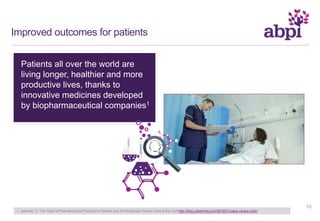
Patients all over the world are
living longer, healthier and more
productive lives, thanks to
innovative medicines developed
by biopharmaceutical companies1
1. Jackman, D. The Value of Pharmaceutical Products to Patients and the Healthcare System Versus the Cost http://blog.cslbehring.com/2016/01/value-versus-cost//
10
Effective vaccinations have contributed to the fight
against communicable diseases
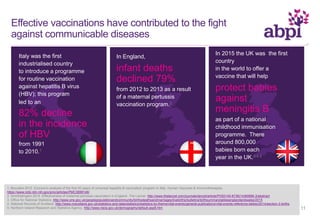
In England,
infant deaths
declined 79%
from 2012 to 2013 as a result
of a maternal pertussis
vaccination program.2
1. Boccalini 2013 .Economic analysis of the first 20 years of universal hepatitis B vaccination program in Italy. Human Vaccines & Immunotherapies.
https://www.ncbi.nlm.nih.gov/pmc/articles/PMC3899148/
2. Amirthalingam 2014 .Effectiveness of maternal pertussis vaccination in England .The Lancet. http://www.thelancet.com/journals/lancet/article/PIIS0140-6736(14)60686-3/abstract
3. Office for National Statistics. http://www.ons.gov.uk/peoplepopulationandcommunity/birthsdeathsandmarriages/livebirths/bulletins/birthsummarytablesenglandandwales/2015
4. National Records of Scotland. http://www.nrscotland.gov.uk/statistics-and-data/statistics/statistics-by-theme/vital-events/general-publications/vital-events-reference-tables/2014/section-3-births.
5. Northern Ireland Research and Statistics Agency. http://www.nisra.gov.uk/demography/default.asp8.htm
Italy was the first
industrialised country
to introduce a programme
for routine vaccination
against hepatitis B virus
(HBV); this program
led to an
82% decline
in the incidence
of HBV
from 1991
to 2010.1
In 2015 the UK was the first
country
in the world to offer a
vaccine that will help
protect babies
against
meningitis B
as part of a national
childhood immunisation
programme. There
around 800,000
babies born each
year in the UK.3,4,5
11
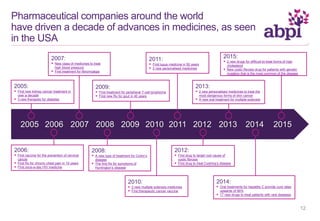
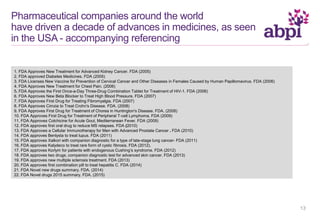
Pharmaceutical companies around the world
have driven a decade of advances in medicines, as seen
in the USA
20102005 2006 2007 20092008 2011 2012 2013 2014
12
2005:
 First new kidney cancer treatment in
over a decade
 3 new therapies for diabetes
2008:
 A new type of treatment for Crohn’s
disease
 The first Rx for symptoms of
Huntington’s disease
2007:
 New class of medicines to treat
high blood pressure
 First treatment for fibromyalgia
2009:
 First treatment for peripheral T-cell lymphoma
 First new Rx for gout in 40 years
2006:
 First vaccine for the prevention of cervical
cancer
 First Rx for chronic chest pain in 10 years
 First once-a-day HIV medicine
2010:
 2 new multiple sclerosis medicines
 First therapeutic cancer vaccine
2011:
 First lupus medicine in 50 years
 2 new personalised medicines
2012:
 First drug to target root cause of
cystic fibrosis
 First drug to treat Cushing’s disease
2013:
 2 new personalised medicines to treat the
most dangerous forms of skin cancer
 A new oral treatment for multiple sclerosis
2014:
 Oral treatments for hepatitis C provide cure rates
upwards of 90%
 17 new drugs to treat patients with rare diseases
2015
2015:
 2 new drugs for difficult-to-treat forms of high
cholesterol
 New cystic fibrosis drug for patients with genetic
mutation that is the most common of the disease
12
1. FDA Approves New Treatment for Advanced Kidney Cancer. FDA (2005)
2. FDA approved Diabetes Medicines. FDA (2005)
3. FDA Licenses New Vaccine for Prevention of Cervical Cancer and Other Diseases in Females Caused by Human Papillomavirus. FDA (2006)
4. FDA Approves New Treatment for Chest Pain. (2006)
5. FDA Approves the First Once-a-Day Three-Drug Combination Tablet for Treatment of HIV-1. FDA (2006)
6. FDA Approves New Beta Blocker to Treat High Blood Pressure. FDA (2007)
7. FDA Approves First Drug for Treating Fibromyalgia. FDA (2007)
8. FDA Approves Cimzia to Treat Crohn's Disease. FDA. (2008)
9. FDA Approves First Drug for Treatment of Chorea in Huntington's Disease. FDA. (2008)
10. FDA Approves First Drug for Treatment of Peripheral T-cell Lymphoma. FDA (2009)
11. FDA Approves Colchicine for Acute Gout, Mediterranean Fever. FDA (2009)
12. FDA approves first oral drug to reduce MS relapses. FDA (2010)
13. FDA Approves a Cellular Immunotherapy for Men with Advanced Prostate Cancer . FDA (2010)
14. FDA approves Benlysta to treat lupus. FDA (2011)
15. FDA approves Xalkori with companion diagnostic for a type of late-stage lung cancer- FDA (2011)
16. FDA approves Kalydeco to treat rare form of cystic fibrosis. FDA (2012).
17. FDA approves Korlym for patients with endogenous Cushing’s syndrome. FDA (2012)
18. FDA approves two drugs, companion diagnostic test for advanced skin cancer. FDA (2013)
19. FDA approves new multiple sclerosis treatment. FDA (2013)
20. FDA approves first combination pill to treat hepatitis C. FDA (2014)
21. FDA Novel new drugs summary. FDA. (2014)
22. FDA Novel drugs 2015 summary. FDA. (2015)
Pharmaceutical companies around the world
have driven a decade of advances in medicines, as seen
in the USA - accompanying referencing
13
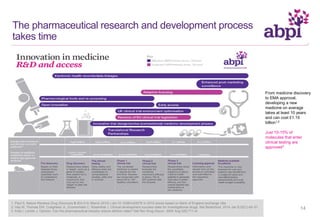
The pharmaceutical research and development process
takes time
From medicine discovery
to EMA approval,
developing a new
medicine on average
takes at least 10 years
and can cost £1.15
billion1,2
Just 10-15% of
molecules that enter
clinical testing are
approved3
1. Paul S, Nature Reviews Drug Discovery 9 203-214 (March 2010) | doi:10.1038/nrd3078 In 2010 prices based on Bank of England exchange rate
2. Hay M, Thomas DW, Craighead JL, Economides C, Rosenthal J. Clinical development success rates for investigational drugs. Nat Biotechnol. 2014 Jan 9;32(1):40–51.
3. Kola I, Landis J. Opinion: Can the pharmaceutical industry reduce attrition rates? Nat Rev Drug Discov. 2004 Aug;3(8):711–6.
14
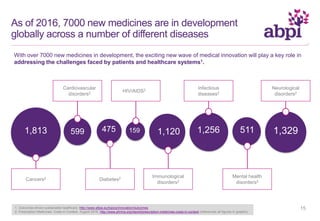
As of 2016, 7000 new medicines are in development
globally across a number of different diseases
1. Outcomes-driven sustainable healthcare. http://www.efpia.eu/topics/innovation/outcomes
2. Prescription Medicines: Costs in Context. August 2016. http://www.phrma.org/report/prescription-medicines-costs-in-context (references all figures in graphic)
Cardiovascular
disorders2
599 159
HIV/AIDS2
1,256
Infectious
diseases2
1,329
Neurological
disorders2
1,813
Cancers2
475
Diabetes2
1,120
Immunological
disorders2
511
Mental health
disorders2
With over 7000 new medicines in development, the exciting new wave of medical innovation will play a key role in
addressing the challenges faced by patients and healthcare systems1.
15
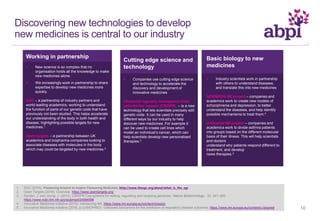
Discovering new technologies to develop
new medicines is central to our industry
Working in partnership
 New science is so complex that no
organisation holds all the knowledge to make
new medicines alone.
 We increasingly work in partnership to share
expertise to develop new medicines more
quickly.
SGC – a partnership of industry partners and
world-leading academics, working to understand
the function of parts of our genetic code that have
previously not been studied. This helps accelerate
our understanding of the body in both health and
disease, highlighting possible targets for new
medicines.1
Open targets – a partnership between UK
academics and biopharma companies looking to
associate diseases with molecules in the body
which may could be targeted by new medicines.2
Cutting edge science and
technology
 Companies use cutting edge science
and technology to accelerate the
discovery and development of
innovative medicines
Clustered regularly interspaced short
palindromic repeats (CRISPR) – is a new
technology that lets scientists precisely edit
genetic code. It can be used in many
different ways by our industry to help
discover new medicines. For example it
can be used to create cell lines which
model an individual’s cancer, which can
help scientists develop new personalised
therapies.3
Basic biology to new
medicines
 Industry scientists work in partnership
with others to understand diseases,
and translate this into new medicines
NEWMEDS IMI project – companies and
academics work to create new models of
schizophrenia and depression, to better
understand the diseases, and help identify
possible mechanisms to treat them.4
U-Biopred IMI project – companies and
academics work to divide asthma patients
into groups based on the different molecular
basis of their illness. This will help scientists
and doctors
understand why patients respond different to
treatment, and develop
news therapies.5
1. SGC (2016). Pioneering Science to Inspire Pioneering Medicines. http://www.thesgc.org/about/what_is_the_sgc
2. Open Targets (2016). Overview. https://www.opentargets.org/
3. Sander, J. and Joung, J. (2014). CRISPR-Cas systems for editing, regulating and targeting genomes. Nature Biotechnology. 32, 347–355.
https://www.ncbi.nlm.nih.gov/pubmed/24584096
4. Innovative Medicines Initiative (2016). Introducing IMI. https://www.imi.europa.eu/content/mission
5. Innovative Medicines Initiative (2016, a).U-BIOPRED: Unbiased biomarkers for the prediction of respiratory disease outcomes. https://www.imi.europa.eu/content/u-biopred 16
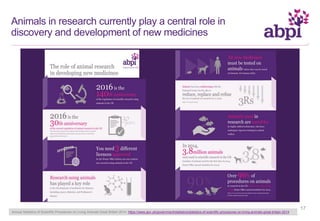
Animals in research currently play a central role in
discovery and development of new medicines
Annual Statistics of Scientific Procedures on Living Animals Great Britain 2014. https://www.gov.uk/government/statistics/statistics-of-scientific-procedures-on-living-animals-great-britain-2014
17
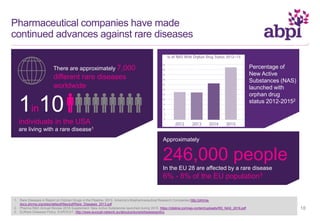
There are approximately 7,000
different rare diseases
worldwide
1in10
individuals in the USA
are living with a rare disease1
Pharmaceutical companies have made
continued advances against rare diseases
1. Rare Diseases A Report on Orphan Drugs in the Pipeline. 2013. America’s Biopharmaceutical Research Companies http://phrma-
docs.phrma.org/sites/default/files/pdf/Rare_Diseases_2013.pdf
2. Pharma R&D Annual Review 2016 Supplement: New Active Substances launched during 2015. https://citeline.com/wp-content/uploads/RD_NAS_2016.pdf
3. EURare Diseases Policy. EUROCAT. http://www.eurocat-network.eu/aboutus/eurarediseasespolicy
Percentage of
New Active
Substances (NAS)
launched with
orphan drug
status 2012-20152
Approximately
246,000 people
In the EU 28 are affected by a rare disease
6% - 8% of the EU population3
18
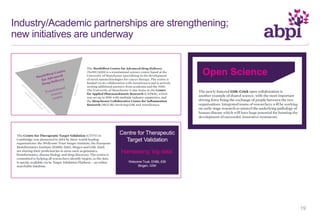
Industry/Academic partnerships are strengthening;
new initiatives are underway
Open Science
Centre for Therapeutic
Target Validation
Harnessing ‘big data’
Welcome Trust, EMBL-EBI
Biogen, GSK
19
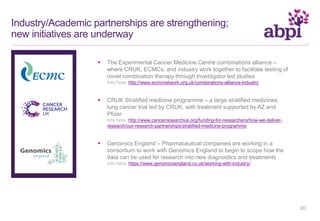
Industry/Academic partnerships are strengthening;
new initiatives are underway
 The Experimental Cancer Medicine Centre combinations alliance –
where CRUK, ECMCs, and industry work together to facilitate testing of
novel combination therapy through investigator led studies
Info here: http://www.ecmcnetwork.org.uk/combinations-alliance-industry
 CRUK Stratified medicine programme – a large stratified medicines
lung cancer trial led by CRUK, with treatment supported by AZ and
Pfizer
Info here: http://www.cancerresearchuk.org/funding-for-researchers/how-we-deliver-
research/our-research-partnerships/stratified-medicine-programme
 Genomics England – Pharmaceutical companies are working in a
consortium to work with Genomics England to begin to scope how the
data can be used for research into new diagnostics and treatments
Info here: https://www.genomicsengland.co.uk/working-with-industry/
20
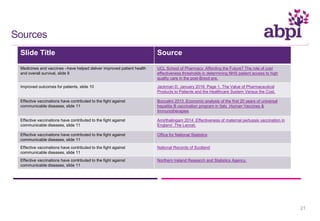
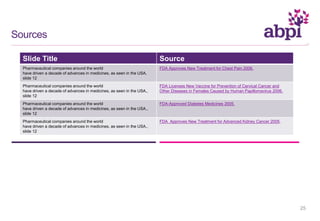
Sources
Slide Title Source
Medicines and vaccines –have helped deliver improved patient health
and overall survival, slide 9
UCL School of Pharmacy: Affording the Future? The role of cost
effectiveness thresholds in determining NHS patient access to high
quality care in the post-Brexit era.
Improved outcomes for patients, slide 10 Jackman D. January 2016. Page 1. The Value of Pharmaceutical
Products to Patients and the Healthcare System Versus the Cost.
Effective vaccinations have contributed to the fight against
communicable diseases, slide 11
Boccalini 2013 .Economic analysis of the first 20 years of universal
hepatitis B vaccination program in Italy .Human Vaccines &
Immunotherapies
Effective vaccinations have contributed to the fight against
communicable diseases, slide 11
Amirthalingam 2014 .Effectiveness of maternal pertussis vaccination in
England .The Lancet.
Effective vaccinations have contributed to the fight against
communicable diseases, slide 11
Office for National Statistics
Effective vaccinations have contributed to the fight against
communicable diseases, slide 11
National Records of Scotland
Effective vaccinations have contributed to the fight against
communicable diseases, slide 11
Northern Ireland Research and Statistics Agency.
21
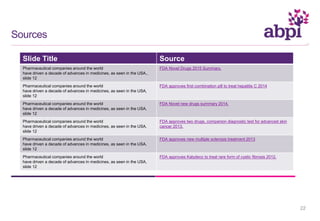
Slide Title Source
Pharmaceutical companies around the world
have driven a decade of advances in medicines, as seen in the USA.,
slide 12
FDA Novel Drugs 2015 Summary.
Pharmaceutical companies around the world
have driven a decade of advances in medicines, as seen in the USA,
slide 12
FDA approves first combination pill to treat hepatitis C 2014
Pharmaceutical companies around the world
have driven a decade of advances in medicines, as seen in the USA,
slide 12
FDA Novel new drugs summary 2014.
Pharmaceutical companies around the world
have driven a decade of advances in medicines, as seen in the USA,
slide 12
FDA approves two drugs, companion diagnostic test for advanced skin
cancer 2013.
Pharmaceutical companies around the world
have driven a decade of advances in medicines, as seen in the USA,
slide 12
FDA approves new multiple sclerosis treatment 2013
Pharmaceutical companies around the world
have driven a decade of advances in medicines, as seen in the USA,
slide 12
FDA approves Kalydeco to treat rare form of cystic fibrosis 2012.
Sources
22
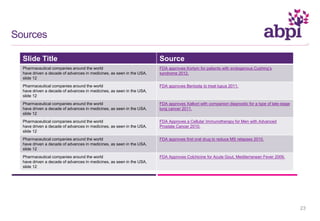
Slide Title Source
Pharmaceutical companies around the world
have driven a decade of advances in medicines, as seen in the USA,
slide 12
FDA approves Korlym for patients with endogenous Cushing’s
syndrome 2012.
Pharmaceutical companies around the world
have driven a decade of advances in medicines, as seen in the USA,
slide 12
FDA approves Benlysta to treat lupus 2011.
Pharmaceutical companies around the world
have driven a decade of advances in medicines, as seen in the USA,
slide 12
FDA approves Xalkori with companion diagnostic for a type of late-stage
lung cancer 2011.
Pharmaceutical companies around the world
have driven a decade of advances in medicines, as seen in the USA,
slide 12
FDA Approves a Cellular Immunotherapy for Men with Advanced
Prostate Cancer 2010.
Pharmaceutical companies around the world
have driven a decade of advances in medicines, as seen in the USA,
slide 12
FDA approves first oral drug to reduce MS relapses 2010.
Pharmaceutical companies around the world
have driven a decade of advances in medicines, as seen in the USA,
slide 12
FDA Approves Colchicine for Acute Gout, Mediterranean Fever 2009.
23
Sources
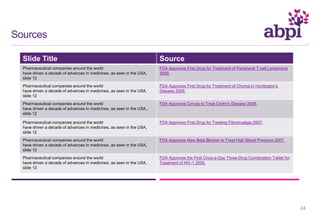
Slide Title Source
Pharmaceutical companies around the world
have driven a decade of advances in medicines, as seen in the USA,
slide 12
FDA Approves First Drug for Treatment of Peripheral T-cell Lymphoma
2009.
Pharmaceutical companies around the world
have driven a decade of advances in medicines, as seen in the USA,
slide 12
FDA Approves First Drug for Treatment of Chorea in Huntington's
Disease 2008.
Pharmaceutical companies around the world
have driven a decade of advances in medicines, as seen in the USA.,
slide 12
FDA Approves Cimzia to Treat Crohn's Disease 2008.
Pharmaceutical companies around the world
have driven a decade of advances in medicines, as seen in the USA,
slide 12
FDA Approves First Drug for Treating Fibromyalgia 2007.
Pharmaceutical companies around the world
have driven a decade of advances in medicines, as seen in the USA,
slide 12
FDA Approves New Beta Blocker to Treat High Blood Pressure 2007.
Pharmaceutical companies around the world
have driven a decade of advances in medicines, as seen in the USA,
slide 12
FDA Approves the First Once-a-Day Three-Drug Combination Tablet for
Treatment of HIV-1 2006.
24
Sources
Slide Title Source
Pharmaceutical companies around the world
have driven a decade of advances in medicines, as seen in the USA,
slide 12
FDA Approves New Treatment for Chest Pain 2006.
Pharmaceutical companies around the world
have driven a decade of advances in medicines, as seen in the USA.,
slide 12
FDA Licenses New Vaccine for Prevention of Cervical Cancer and
Other Diseases in Females Caused by Human Papillomavirus 2006.
Pharmaceutical companies around the world
have driven a decade of advances in medicines, as seen in the USA.,
slide 12
FDA-Approved Diabetes Medicines 2005.
Pharmaceutical companies around the world
have driven a decade of advances in medicines, as seen in the USA.,
slide 12
FDA Approves New Treatment for Advanced Kidney Cancer 2005.
25
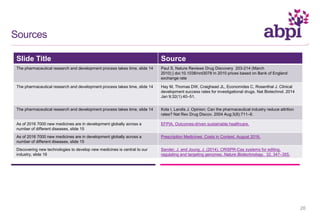
Sources
Slide Title Source
The pharmaceutical research and development process takes time, slide 14 Paul S, Nature Reviews Drug Discovery 203-214 (March
2010) | doi:10.1038/nrd3078 In 2010 prices based on Bank of England
exchange rate
The pharmaceutical research and development process takes time, slide 14 Hay M, Thomas DW, Craighead JL, Economides C, Rosenthal J. Clinical
development success rates for investigational drugs. Nat Biotechnol. 2014
Jan 9;32(1):40–51.
The pharmaceutical research and development process takes time, slide 14 Kola I, Landis J. Opinion: Can the pharmaceutical industry reduce attrition
rates? Nat Rev Drug Discov. 2004 Aug;3(8):711–6.
As of 2016 7000 new medicines are in development globally across a
number of different diseases, slide 15
EFPIA. Outcomes-driven sustainable healthcare.
As of 2016 7000 new medicines are in development globally across a
number of different diseases, slide 15
Prescription Medicines: Costs in Context. August 2016.
Discovering new technologies to develop new medicines is central to our
industry, slide 16
Sander, J. and Joung, J. (2014). CRISPR-Cas systems for editing,
regulating and targeting genomes. Nature Biotechnology. 32, 347–355.
Sources
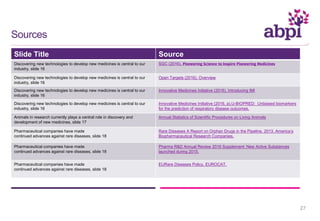
26
Slide Title Source
Discovering new technologies to develop new medicines is central to our
industry, slide 16
SGC (2016). Pioneering Science to Inspire Pioneering Medicines
Discovering new technologies to develop new medicines is central to our
industry, slide 16
Open Targets (2016). Overview
Discovering new technologies to develop new medicines is central to our
industry, slide 16
Innovative Medicines Initiative (2016). Introducing IMI
Discovering new technologies to develop new medicines is central to our
industry, slide 16
Innovative Medicines Initiative (2016, a).U-BIOPRED: Unbiased biomarkers
for the prediction of respiratory disease outcomes.
Animals in research currently plays a central role in discovery and
development of new medicines, slide 17
Annual Statistics of Scientific Procedures on Living Animals
Pharmaceutical companies have made
continued advances against rare diseases, slide 18
Rare Diseases A Report on Orphan Drugs in the Pipeline. 2013. America’s
Biopharmaceutical Research Companies.
Pharmaceutical companies have made
continued advances against rare diseases, slide 18
Pharma R&D Annual Review 2016 Supplement: New Active Substances
launched during 2015.
Pharmaceutical companies have made
continued advances against rare diseases, slide 18
EURare Diseases Policy. EUROCAT.
Sources
27

Chapter 1: Medicines and vaccines

  • 1.
    9 1. UCL Schoolof Pharmacy: Affording the Future? The role of cost effectiveness thresholds in determining NHS patient access to high quality care in the post-Brexit era http://www.ucl.ac.uk/pharmacy/departments/practice-policy Medicines and vaccines –have helped deliver improved patient health and overall survival1
  • 2.
    Improved outcomes forpatients Patients all over the world are living longer, healthier and more productive lives, thanks to innovative medicines developed by biopharmaceutical companies1 1. Jackman, D. The Value of Pharmaceutical Products to Patients and the Healthcare System Versus the Cost http://blog.cslbehring.com/2016/01/value-versus-cost// 10
  • 3.
    Effective vaccinations havecontributed to the fight against communicable diseases In England, infant deaths declined 79% from 2012 to 2013 as a result of a maternal pertussis vaccination program.2 1. Boccalini 2013 .Economic analysis of the first 20 years of universal hepatitis B vaccination program in Italy. Human Vaccines & Immunotherapies. https://www.ncbi.nlm.nih.gov/pmc/articles/PMC3899148/ 2. Amirthalingam 2014 .Effectiveness of maternal pertussis vaccination in England .The Lancet. http://www.thelancet.com/journals/lancet/article/PIIS0140-6736(14)60686-3/abstract 3. Office for National Statistics. http://www.ons.gov.uk/peoplepopulationandcommunity/birthsdeathsandmarriages/livebirths/bulletins/birthsummarytablesenglandandwales/2015 4. National Records of Scotland. http://www.nrscotland.gov.uk/statistics-and-data/statistics/statistics-by-theme/vital-events/general-publications/vital-events-reference-tables/2014/section-3-births. 5. Northern Ireland Research and Statistics Agency. http://www.nisra.gov.uk/demography/default.asp8.htm Italy was the first industrialised country to introduce a programme for routine vaccination against hepatitis B virus (HBV); this program led to an 82% decline in the incidence of HBV from 1991 to 2010.1 In 2015 the UK was the first country in the world to offer a vaccine that will help protect babies against meningitis B as part of a national childhood immunisation programme. There around 800,000 babies born each year in the UK.3,4,5 11
  • 4.
    Pharmaceutical companies aroundthe world have driven a decade of advances in medicines, as seen in the USA 20102005 2006 2007 20092008 2011 2012 2013 2014 12 2005:  First new kidney cancer treatment in over a decade  3 new therapies for diabetes 2008:  A new type of treatment for Crohn’s disease  The first Rx for symptoms of Huntington’s disease 2007:  New class of medicines to treat high blood pressure  First treatment for fibromyalgia 2009:  First treatment for peripheral T-cell lymphoma  First new Rx for gout in 40 years 2006:  First vaccine for the prevention of cervical cancer  First Rx for chronic chest pain in 10 years  First once-a-day HIV medicine 2010:  2 new multiple sclerosis medicines  First therapeutic cancer vaccine 2011:  First lupus medicine in 50 years  2 new personalised medicines 2012:  First drug to target root cause of cystic fibrosis  First drug to treat Cushing’s disease 2013:  2 new personalised medicines to treat the most dangerous forms of skin cancer  A new oral treatment for multiple sclerosis 2014:  Oral treatments for hepatitis C provide cure rates upwards of 90%  17 new drugs to treat patients with rare diseases 2015 2015:  2 new drugs for difficult-to-treat forms of high cholesterol  New cystic fibrosis drug for patients with genetic mutation that is the most common of the disease 12
  • 5.
    1. FDA ApprovesNew Treatment for Advanced Kidney Cancer. FDA (2005) 2. FDA approved Diabetes Medicines. FDA (2005) 3. FDA Licenses New Vaccine for Prevention of Cervical Cancer and Other Diseases in Females Caused by Human Papillomavirus. FDA (2006) 4. FDA Approves New Treatment for Chest Pain. (2006) 5. FDA Approves the First Once-a-Day Three-Drug Combination Tablet for Treatment of HIV-1. FDA (2006) 6. FDA Approves New Beta Blocker to Treat High Blood Pressure. FDA (2007) 7. FDA Approves First Drug for Treating Fibromyalgia. FDA (2007) 8. FDA Approves Cimzia to Treat Crohn's Disease. FDA. (2008) 9. FDA Approves First Drug for Treatment of Chorea in Huntington's Disease. FDA. (2008) 10. FDA Approves First Drug for Treatment of Peripheral T-cell Lymphoma. FDA (2009) 11. FDA Approves Colchicine for Acute Gout, Mediterranean Fever. FDA (2009) 12. FDA approves first oral drug to reduce MS relapses. FDA (2010) 13. FDA Approves a Cellular Immunotherapy for Men with Advanced Prostate Cancer . FDA (2010) 14. FDA approves Benlysta to treat lupus. FDA (2011) 15. FDA approves Xalkori with companion diagnostic for a type of late-stage lung cancer- FDA (2011) 16. FDA approves Kalydeco to treat rare form of cystic fibrosis. FDA (2012). 17. FDA approves Korlym for patients with endogenous Cushing’s syndrome. FDA (2012) 18. FDA approves two drugs, companion diagnostic test for advanced skin cancer. FDA (2013) 19. FDA approves new multiple sclerosis treatment. FDA (2013) 20. FDA approves first combination pill to treat hepatitis C. FDA (2014) 21. FDA Novel new drugs summary. FDA. (2014) 22. FDA Novel drugs 2015 summary. FDA. (2015) Pharmaceutical companies around the world have driven a decade of advances in medicines, as seen in the USA - accompanying referencing 13
  • 6.
    The pharmaceutical researchand development process takes time From medicine discovery to EMA approval, developing a new medicine on average takes at least 10 years and can cost £1.15 billion1,2 Just 10-15% of molecules that enter clinical testing are approved3 1. Paul S, Nature Reviews Drug Discovery 9 203-214 (March 2010) | doi:10.1038/nrd3078 In 2010 prices based on Bank of England exchange rate 2. Hay M, Thomas DW, Craighead JL, Economides C, Rosenthal J. Clinical development success rates for investigational drugs. Nat Biotechnol. 2014 Jan 9;32(1):40–51. 3. Kola I, Landis J. Opinion: Can the pharmaceutical industry reduce attrition rates? Nat Rev Drug Discov. 2004 Aug;3(8):711–6. 14
  • 7.
    As of 2016,7000 new medicines are in development globally across a number of different diseases 1. Outcomes-driven sustainable healthcare. http://www.efpia.eu/topics/innovation/outcomes 2. Prescription Medicines: Costs in Context. August 2016. http://www.phrma.org/report/prescription-medicines-costs-in-context (references all figures in graphic) Cardiovascular disorders2 599 159 HIV/AIDS2 1,256 Infectious diseases2 1,329 Neurological disorders2 1,813 Cancers2 475 Diabetes2 1,120 Immunological disorders2 511 Mental health disorders2 With over 7000 new medicines in development, the exciting new wave of medical innovation will play a key role in addressing the challenges faced by patients and healthcare systems1. 15
  • 8.
    Discovering new technologiesto develop new medicines is central to our industry Working in partnership  New science is so complex that no organisation holds all the knowledge to make new medicines alone.  We increasingly work in partnership to share expertise to develop new medicines more quickly. SGC – a partnership of industry partners and world-leading academics, working to understand the function of parts of our genetic code that have previously not been studied. This helps accelerate our understanding of the body in both health and disease, highlighting possible targets for new medicines.1 Open targets – a partnership between UK academics and biopharma companies looking to associate diseases with molecules in the body which may could be targeted by new medicines.2 Cutting edge science and technology  Companies use cutting edge science and technology to accelerate the discovery and development of innovative medicines Clustered regularly interspaced short palindromic repeats (CRISPR) – is a new technology that lets scientists precisely edit genetic code. It can be used in many different ways by our industry to help discover new medicines. For example it can be used to create cell lines which model an individual’s cancer, which can help scientists develop new personalised therapies.3 Basic biology to new medicines  Industry scientists work in partnership with others to understand diseases, and translate this into new medicines NEWMEDS IMI project – companies and academics work to create new models of schizophrenia and depression, to better understand the diseases, and help identify possible mechanisms to treat them.4 U-Biopred IMI project – companies and academics work to divide asthma patients into groups based on the different molecular basis of their illness. This will help scientists and doctors understand why patients respond different to treatment, and develop news therapies.5 1. SGC (2016). Pioneering Science to Inspire Pioneering Medicines. http://www.thesgc.org/about/what_is_the_sgc 2. Open Targets (2016). Overview. https://www.opentargets.org/ 3. Sander, J. and Joung, J. (2014). CRISPR-Cas systems for editing, regulating and targeting genomes. Nature Biotechnology. 32, 347–355. https://www.ncbi.nlm.nih.gov/pubmed/24584096 4. Innovative Medicines Initiative (2016). Introducing IMI. https://www.imi.europa.eu/content/mission 5. Innovative Medicines Initiative (2016, a).U-BIOPRED: Unbiased biomarkers for the prediction of respiratory disease outcomes. https://www.imi.europa.eu/content/u-biopred 16
  • 9.
    Animals in researchcurrently play a central role in discovery and development of new medicines Annual Statistics of Scientific Procedures on Living Animals Great Britain 2014. https://www.gov.uk/government/statistics/statistics-of-scientific-procedures-on-living-animals-great-britain-2014 17
  • 10.
    There are approximately7,000 different rare diseases worldwide 1in10 individuals in the USA are living with a rare disease1 Pharmaceutical companies have made continued advances against rare diseases 1. Rare Diseases A Report on Orphan Drugs in the Pipeline. 2013. America’s Biopharmaceutical Research Companies http://phrma- docs.phrma.org/sites/default/files/pdf/Rare_Diseases_2013.pdf 2. Pharma R&D Annual Review 2016 Supplement: New Active Substances launched during 2015. https://citeline.com/wp-content/uploads/RD_NAS_2016.pdf 3. EURare Diseases Policy. EUROCAT. http://www.eurocat-network.eu/aboutus/eurarediseasespolicy Percentage of New Active Substances (NAS) launched with orphan drug status 2012-20152 Approximately 246,000 people In the EU 28 are affected by a rare disease 6% - 8% of the EU population3 18
  • 11.
    Industry/Academic partnerships arestrengthening; new initiatives are underway Open Science Centre for Therapeutic Target Validation Harnessing ‘big data’ Welcome Trust, EMBL-EBI Biogen, GSK 19
  • 12.
    Industry/Academic partnerships arestrengthening; new initiatives are underway  The Experimental Cancer Medicine Centre combinations alliance – where CRUK, ECMCs, and industry work together to facilitate testing of novel combination therapy through investigator led studies Info here: http://www.ecmcnetwork.org.uk/combinations-alliance-industry  CRUK Stratified medicine programme – a large stratified medicines lung cancer trial led by CRUK, with treatment supported by AZ and Pfizer Info here: http://www.cancerresearchuk.org/funding-for-researchers/how-we-deliver- research/our-research-partnerships/stratified-medicine-programme  Genomics England – Pharmaceutical companies are working in a consortium to work with Genomics England to begin to scope how the data can be used for research into new diagnostics and treatments Info here: https://www.genomicsengland.co.uk/working-with-industry/ 20
  • 13.
    Sources Slide Title Source Medicinesand vaccines –have helped deliver improved patient health and overall survival, slide 9 UCL School of Pharmacy: Affording the Future? The role of cost effectiveness thresholds in determining NHS patient access to high quality care in the post-Brexit era. Improved outcomes for patients, slide 10 Jackman D. January 2016. Page 1. The Value of Pharmaceutical Products to Patients and the Healthcare System Versus the Cost. Effective vaccinations have contributed to the fight against communicable diseases, slide 11 Boccalini 2013 .Economic analysis of the first 20 years of universal hepatitis B vaccination program in Italy .Human Vaccines & Immunotherapies Effective vaccinations have contributed to the fight against communicable diseases, slide 11 Amirthalingam 2014 .Effectiveness of maternal pertussis vaccination in England .The Lancet. Effective vaccinations have contributed to the fight against communicable diseases, slide 11 Office for National Statistics Effective vaccinations have contributed to the fight against communicable diseases, slide 11 National Records of Scotland Effective vaccinations have contributed to the fight against communicable diseases, slide 11 Northern Ireland Research and Statistics Agency. 21
  • 14.
    Slide Title Source Pharmaceuticalcompanies around the world have driven a decade of advances in medicines, as seen in the USA., slide 12 FDA Novel Drugs 2015 Summary. Pharmaceutical companies around the world have driven a decade of advances in medicines, as seen in the USA, slide 12 FDA approves first combination pill to treat hepatitis C 2014 Pharmaceutical companies around the world have driven a decade of advances in medicines, as seen in the USA, slide 12 FDA Novel new drugs summary 2014. Pharmaceutical companies around the world have driven a decade of advances in medicines, as seen in the USA, slide 12 FDA approves two drugs, companion diagnostic test for advanced skin cancer 2013. Pharmaceutical companies around the world have driven a decade of advances in medicines, as seen in the USA, slide 12 FDA approves new multiple sclerosis treatment 2013 Pharmaceutical companies around the world have driven a decade of advances in medicines, as seen in the USA, slide 12 FDA approves Kalydeco to treat rare form of cystic fibrosis 2012. Sources 22
  • 15.
    Slide Title Source Pharmaceuticalcompanies around the world have driven a decade of advances in medicines, as seen in the USA, slide 12 FDA approves Korlym for patients with endogenous Cushing’s syndrome 2012. Pharmaceutical companies around the world have driven a decade of advances in medicines, as seen in the USA, slide 12 FDA approves Benlysta to treat lupus 2011. Pharmaceutical companies around the world have driven a decade of advances in medicines, as seen in the USA, slide 12 FDA approves Xalkori with companion diagnostic for a type of late-stage lung cancer 2011. Pharmaceutical companies around the world have driven a decade of advances in medicines, as seen in the USA, slide 12 FDA Approves a Cellular Immunotherapy for Men with Advanced Prostate Cancer 2010. Pharmaceutical companies around the world have driven a decade of advances in medicines, as seen in the USA, slide 12 FDA approves first oral drug to reduce MS relapses 2010. Pharmaceutical companies around the world have driven a decade of advances in medicines, as seen in the USA, slide 12 FDA Approves Colchicine for Acute Gout, Mediterranean Fever 2009. 23 Sources
  • 16.
    Slide Title Source Pharmaceuticalcompanies around the world have driven a decade of advances in medicines, as seen in the USA, slide 12 FDA Approves First Drug for Treatment of Peripheral T-cell Lymphoma 2009. Pharmaceutical companies around the world have driven a decade of advances in medicines, as seen in the USA, slide 12 FDA Approves First Drug for Treatment of Chorea in Huntington's Disease 2008. Pharmaceutical companies around the world have driven a decade of advances in medicines, as seen in the USA., slide 12 FDA Approves Cimzia to Treat Crohn's Disease 2008. Pharmaceutical companies around the world have driven a decade of advances in medicines, as seen in the USA, slide 12 FDA Approves First Drug for Treating Fibromyalgia 2007. Pharmaceutical companies around the world have driven a decade of advances in medicines, as seen in the USA, slide 12 FDA Approves New Beta Blocker to Treat High Blood Pressure 2007. Pharmaceutical companies around the world have driven a decade of advances in medicines, as seen in the USA, slide 12 FDA Approves the First Once-a-Day Three-Drug Combination Tablet for Treatment of HIV-1 2006. 24 Sources
  • 17.
    Slide Title Source Pharmaceuticalcompanies around the world have driven a decade of advances in medicines, as seen in the USA, slide 12 FDA Approves New Treatment for Chest Pain 2006. Pharmaceutical companies around the world have driven a decade of advances in medicines, as seen in the USA., slide 12 FDA Licenses New Vaccine for Prevention of Cervical Cancer and Other Diseases in Females Caused by Human Papillomavirus 2006. Pharmaceutical companies around the world have driven a decade of advances in medicines, as seen in the USA., slide 12 FDA-Approved Diabetes Medicines 2005. Pharmaceutical companies around the world have driven a decade of advances in medicines, as seen in the USA., slide 12 FDA Approves New Treatment for Advanced Kidney Cancer 2005. 25 Sources
  • 18.
    Slide Title Source Thepharmaceutical research and development process takes time, slide 14 Paul S, Nature Reviews Drug Discovery 203-214 (March 2010) | doi:10.1038/nrd3078 In 2010 prices based on Bank of England exchange rate The pharmaceutical research and development process takes time, slide 14 Hay M, Thomas DW, Craighead JL, Economides C, Rosenthal J. Clinical development success rates for investigational drugs. Nat Biotechnol. 2014 Jan 9;32(1):40–51. The pharmaceutical research and development process takes time, slide 14 Kola I, Landis J. Opinion: Can the pharmaceutical industry reduce attrition rates? Nat Rev Drug Discov. 2004 Aug;3(8):711–6. As of 2016 7000 new medicines are in development globally across a number of different diseases, slide 15 EFPIA. Outcomes-driven sustainable healthcare. As of 2016 7000 new medicines are in development globally across a number of different diseases, slide 15 Prescription Medicines: Costs in Context. August 2016. Discovering new technologies to develop new medicines is central to our industry, slide 16 Sander, J. and Joung, J. (2014). CRISPR-Cas systems for editing, regulating and targeting genomes. Nature Biotechnology. 32, 347–355. Sources 26
  • 19.
    Slide Title Source Discoveringnew technologies to develop new medicines is central to our industry, slide 16 SGC (2016). Pioneering Science to Inspire Pioneering Medicines Discovering new technologies to develop new medicines is central to our industry, slide 16 Open Targets (2016). Overview Discovering new technologies to develop new medicines is central to our industry, slide 16 Innovative Medicines Initiative (2016). Introducing IMI Discovering new technologies to develop new medicines is central to our industry, slide 16 Innovative Medicines Initiative (2016, a).U-BIOPRED: Unbiased biomarkers for the prediction of respiratory disease outcomes. Animals in research currently plays a central role in discovery and development of new medicines, slide 17 Annual Statistics of Scientific Procedures on Living Animals Pharmaceutical companies have made continued advances against rare diseases, slide 18 Rare Diseases A Report on Orphan Drugs in the Pipeline. 2013. America’s Biopharmaceutical Research Companies. Pharmaceutical companies have made continued advances against rare diseases, slide 18 Pharma R&D Annual Review 2016 Supplement: New Active Substances launched during 2015. Pharmaceutical companies have made continued advances against rare diseases, slide 18 EURare Diseases Policy. EUROCAT. Sources 27