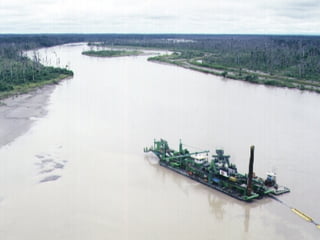
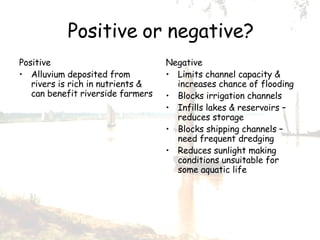
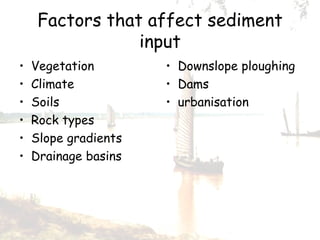
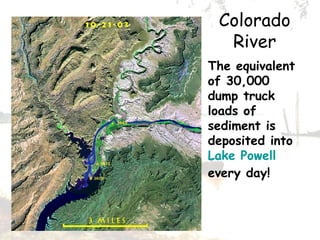
Changing sedimentation levels in rivers can have both positive and negative impacts on human activities. Positively, alluvium deposited from rivers enriches soils for farmers along riverbanks. However, sediment deposition also limits channel capacity and increases flooding risks. It blocks irrigation channels, fills lakes and reservoirs reducing water storage, and requires frequent dredging of shipping channels. Large amounts of sediment are deposited daily in rivers like the Colorado River and Lake Powell, and the Yellow River carries over 1.6 billion tons of silt annually, depositing much of it in its bed and changing its course. Dams and other infrastructure aim to control flooding while capturing water for irrigation and hydropower, but the high sediment loads threaten their long