
Change management
Change Is Good
Opening case
¡  Managing Change at HCL
Meaning
Change management is that it's a comprehensive
term used to describe change at both the
individual and organisational level. For example,
the term Change Management is used to
describe-

¡  The task of managing change;

¡  An area of professional practice;

¡  A body of knowledge (consisting of models,
    methods, techniques, and other tools); and

¡  A control mechanism (consisting of requirements,
    standards, processes and procedures).
Definition
¡  The coordination of a structured period of
    transition from situation A to situation B in order to
    achieve lasting change within an organization'
Definition
¡  Change Management: activities involved in

(1) defining and instilling new values, attitudes,
norms, and behaviors within an organization that
support new ways of doing work and overcome
resistance to change

(2) building consensus among customers and
stakeholders on specific changes designed to
better meet their needs

(3) planning, testing, and implementing all aspects
of the transition from one organizational structure
or business process to another
Causes for Change
¡  Technological

¡  Social

¡  Economical

¡  Organization
Technological
                ¡  While the 1980s - California State
                    University (CSU). Any IT system
                    change that happens at the main
                    campus has to go through:
                      ¡  Every satellite campus- 23
                          campuses and thousands of
                          employees, staff, and
                          students

                ¡  Dealing with change at a
                    smaller organization can be
                    a nightmare by itself; it’s
                    worse at a larger
                    organization like CSU
Technological
                ¡  Hence the IT department
                    decided to institute an
                    automated change
                    management system.


                ¡  Using Cisco’s Pace
                    functionality, the company
                    can now make upgrades
                    that will automatically make
                    changes to the entire
                    system.
Technological
                ¡  To make their change
                    management strategy even
                    more effective, they are now
                    defining who can use what
                    system and what changes they
                    can make to their designated
                    area.

                ¡  Their change management
                    strategy considered the human
                    factor and not only included the
                    automated system,

                ¡  But also defined roles of change
                    so that it would minimize the
                    confusion and issues when a
                    change has to be instituted.
Organizational & Economic


¡  Back in 1981, British Airways brought on board a new chairperson.

¡  He noticed that the company was inefficient & was wasting
    resources.

¡  Increase profitability - restructure the entire organization. The best
    way to do this was through change methodology management
    plan.
Organizational & Economic


¡  Began reducing their workforce.

¡  The chairman gave the company the reasons for the restructuring and
    privatization of the company in order to prepare them for the upcoming
    change.

¡  Thus, through leadership and communication, he directed his company
    through a difficult time that could have been disastrous without effective
    change management resistance communication.
Organizational
Exit Strategy at The End of the product Life Cycle

Mergers and Acquisitions:

Strategic Refocus

Structural changes

Process oriented
Importance of change
¡  Accommodation of Growth

¡  Address Problems

¡  Keep Up to Date

¡  Marketing

¡  New Income Stream.
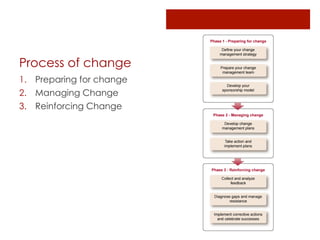
Process of change
1.  Preparing for change
2.  Managing Change
3.  Reinforcing Change
Changement management

Changement management

  • 1.
  • 2.
  • 3.
    Meaning Change management isthat it's a comprehensive term used to describe change at both the individual and organisational level. For example, the term Change Management is used to describe- ¡  The task of managing change; ¡  An area of professional practice; ¡  A body of knowledge (consisting of models, methods, techniques, and other tools); and ¡  A control mechanism (consisting of requirements, standards, processes and procedures).
  • 4.
    Definition ¡  The coordinationof a structured period of transition from situation A to situation B in order to achieve lasting change within an organization'
  • 5.
    Definition ¡  Change Management:activities involved in (1) defining and instilling new values, attitudes, norms, and behaviors within an organization that support new ways of doing work and overcome resistance to change (2) building consensus among customers and stakeholders on specific changes designed to better meet their needs (3) planning, testing, and implementing all aspects of the transition from one organizational structure or business process to another
  • 6.
    Causes for Change ¡ Technological ¡  Social ¡  Economical ¡  Organization
  • 7.
    Technological ¡  While the 1980s - California State University (CSU). Any IT system change that happens at the main campus has to go through: ¡  Every satellite campus- 23 campuses and thousands of employees, staff, and students ¡  Dealing with change at a smaller organization can be a nightmare by itself; it’s worse at a larger organization like CSU
  • 8.
    Technological ¡  Hence the IT department decided to institute an automated change management system. ¡  Using Cisco’s Pace functionality, the company can now make upgrades that will automatically make changes to the entire system.
  • 9.
    Technological ¡  To make their change management strategy even more effective, they are now defining who can use what system and what changes they can make to their designated area. ¡  Their change management strategy considered the human factor and not only included the automated system, ¡  But also defined roles of change so that it would minimize the confusion and issues when a change has to be instituted.
  • 10.
    Organizational & Economic ¡ Back in 1981, British Airways brought on board a new chairperson. ¡  He noticed that the company was inefficient & was wasting resources. ¡  Increase profitability - restructure the entire organization. The best way to do this was through change methodology management plan.
  • 11.
    Organizational & Economic ¡ Began reducing their workforce. ¡  The chairman gave the company the reasons for the restructuring and privatization of the company in order to prepare them for the upcoming change. ¡  Thus, through leadership and communication, he directed his company through a difficult time that could have been disastrous without effective change management resistance communication.
  • 12.
    Organizational Exit Strategy atThe End of the product Life Cycle Mergers and Acquisitions: Strategic Refocus Structural changes Process oriented
  • 13.
    Importance of change ¡ Accommodation of Growth ¡  Address Problems ¡  Keep Up to Date ¡  Marketing ¡  New Income Stream.
  • 14.
    Process of change 1. Preparing for change 2.  Managing Change 3.  Reinforcing Change