APM Group Change Management Practitioner
What is change management2© Maven Training 2011Change management is all of the actions that we take to control how we move from one state to another
These actions involve communication skills, influencing and persuading skills as well as the ability to break the change into all of the activities that need to happen, and prioritise and resource them
Change management is different to project management:
Project management is about creating a deliverable (something new or updated) and making sure it is delivered on time, on budget and to the right level of quality
Change management is about persuading others to use what has been created, and embedding the use of the deliverable into the way people workChange Management Explained
Why is it important?3© Maven Training 2011Everyone is involved in change – leading change, identifying the need for change or making the change happen in their work
Change is not a specialist activity – we are all expected to have the skills to do our job and to improve our job by identifying changes that bring greater efficiencies, increased accuracy and quality, improved customer and supplier relationships or increased revenues
Change takes place all of the time, but to ensure that the right changes happen needs skill and understanding of how change should be planned, managed and controlledChange Management Explained – Skills Guide
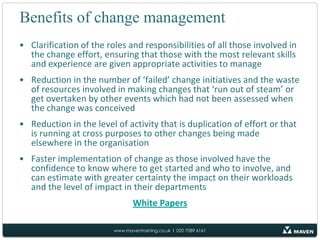
Benefits of change managementClarification of the roles and responsibilities of all those involved in the change effort, ensuring that those with the most relevant skills and experience are given appropriate activities to manageReduction in the number of ‘failed’ change initiatives and the waste of resources involved in making changes that ‘run out of steam’ or get overtaken by other events which had not been assessed when the change was conceivedReduction in the level of activity that is duplication of effort or that is running at cross purposes to other changes being made elsewhere in the organisationFaster implementation of change as those involved have the confidence to know where to get started and who to involve, and can estimate with greater certainty the impact on their workloads and the level of impact in their departmentsWhite Papers
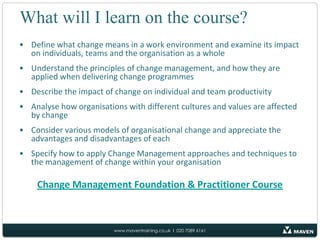
What will I learn on the course?Define what change means in a work environment and examine its impact on individuals, teams and the organisation as a wholeUnderstand the principles of change management, and how they are applied when delivering change programmesDescribe the impact of change on individual and team productivity Analyse how organisations with different cultures and values are affected by changeConsider various models of organisational change and appreciate the advantages and disadvantages of eachSpecify how to apply Change Management approaches and techniques to the management of change within your organisationChange Management Foundation & Practitioner Course

Change Management Quick Guide

  • 1.
    APM Group ChangeManagement Practitioner
  • 2.
    What is changemanagement2© Maven Training 2011Change management is all of the actions that we take to control how we move from one state to another
  • 3.
    These actions involvecommunication skills, influencing and persuading skills as well as the ability to break the change into all of the activities that need to happen, and prioritise and resource them
  • 4.
    Change management isdifferent to project management:
  • 5.
    Project management isabout creating a deliverable (something new or updated) and making sure it is delivered on time, on budget and to the right level of quality
  • 6.
    Change management isabout persuading others to use what has been created, and embedding the use of the deliverable into the way people workChange Management Explained
  • 7.
    Why is itimportant?3© Maven Training 2011Everyone is involved in change – leading change, identifying the need for change or making the change happen in their work
  • 8.
    Change is nota specialist activity – we are all expected to have the skills to do our job and to improve our job by identifying changes that bring greater efficiencies, increased accuracy and quality, improved customer and supplier relationships or increased revenues
  • 9.
    Change takes placeall of the time, but to ensure that the right changes happen needs skill and understanding of how change should be planned, managed and controlledChange Management Explained – Skills Guide
  • 10.
    Benefits of changemanagementClarification of the roles and responsibilities of all those involved in the change effort, ensuring that those with the most relevant skills and experience are given appropriate activities to manageReduction in the number of ‘failed’ change initiatives and the waste of resources involved in making changes that ‘run out of steam’ or get overtaken by other events which had not been assessed when the change was conceivedReduction in the level of activity that is duplication of effort or that is running at cross purposes to other changes being made elsewhere in the organisationFaster implementation of change as those involved have the confidence to know where to get started and who to involve, and can estimate with greater certainty the impact on their workloads and the level of impact in their departmentsWhite Papers
  • 11.
    What will Ilearn on the course?Define what change means in a work environment and examine its impact on individuals, teams and the organisation as a wholeUnderstand the principles of change management, and how they are applied when delivering change programmesDescribe the impact of change on individual and team productivity Analyse how organisations with different cultures and values are affected by changeConsider various models of organisational change and appreciate the advantages and disadvantages of eachSpecify how to apply Change Management approaches and techniques to the management of change within your organisationChange Management Foundation & Practitioner Course