Alex Hill and Terry Hill
Learning 
objectives 
• Understand LEVELS of strategy within business 
• Distinguish between day-to-day and strategic 
ROLES 
• Identify how different levels of strategy 
INTERFACE with each other 
• Appreciate importance of understanding 
MARKETS 
• Understand different strategic APPROACHES 
• DEVELOP and IMPLEMENT an operations strategy
Lecture outline 
• INTRODUCTION 
• What is STRATEGY? 
• LEVELS of strategy within a business 
• DEVELOPING a strategy 
• IMPLEMENTING a strategy 
• Critical REFLECTIONS 
• SUMMARY
What is 
strategy? 
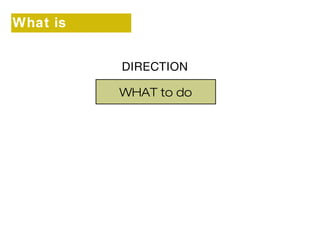
DIRECTION 
WHAT to do
What is 
strategy? 
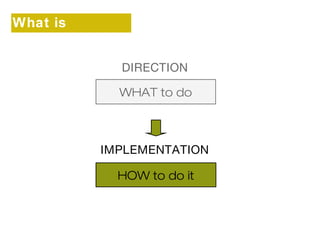
DIRECTION 
WHAT to do 
IMPLEMENTATION 
HOW to do it
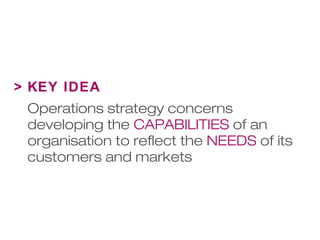
> KEY IDEA 
Operations strategy concerns 
developing the CAPABILITIES of an 
organisation to reflect the NEEDS of its 
customers and markets
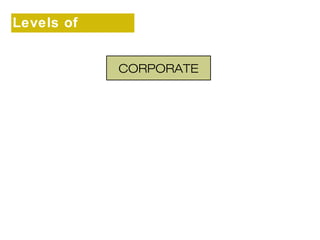
Levels of 
strategy 
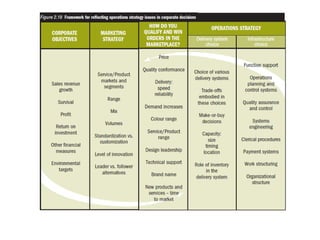
CORPORATE
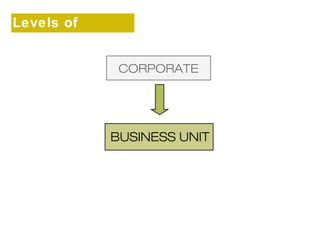
Levels of 
strategy 
CORPORATE 
BUSINESS UNIT
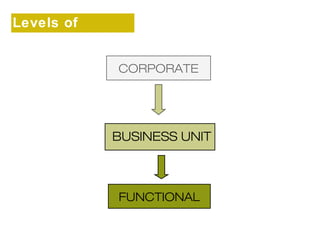
FUNCTIONAL 
Levels of 
strategy 
CORPORATE 
BUSINESS UNIT
•Where to INVEST or 
DIVEST 
• SALES REVENUE 
priorities 
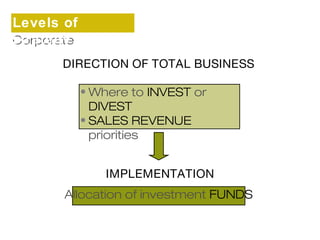
Levels of 
strategy 
Corporate 
DIRECTION OF TOTAL BUSINESS 
IMPLEMENTATION 
Allocation of investment FUNDS
Levels of 
sBtursainteesgsy unit 
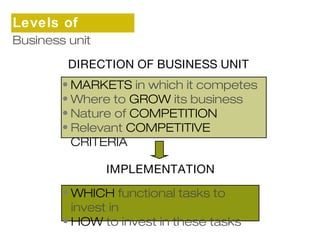
DIRECTION OF BUSINESS UNIT 
•MARKETS in which it competes 
•Where to GROW its business 
• Nature of COMPETITION 
• Relevant COMPETITIVE 
CRITERIA 
IMPLEMENTATION 
•WHICH functional tasks to 
invest in 
• HOW to invest in these tasks
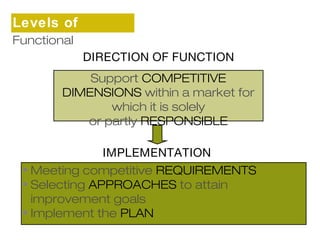
DIRECTION OF FUNCTION 
Support COMPETITIVE 
DIMENSIONS within a market for 
which it is solely 
or partly RESPONSIBLE 
Levels of 
Fsutrnactteiognyal 
IMPLEMENTATION 
• Meeting competitive REQUIREMENTS 
• Selecting APPROACHES to attain 
improvement goals 
• Implement the PLAN
Levels of 
Fsutrnactteiognyal
Levels of 
Fsutrnactteiognyal
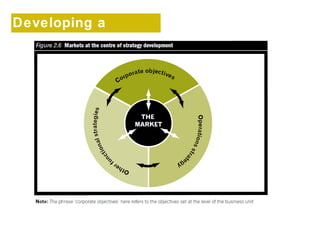
Developing a 
strategy
> KEY IDEA 
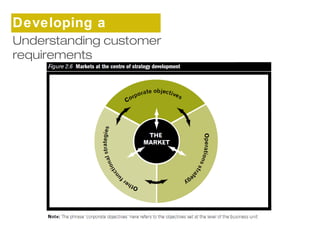
Understanding MARKETS is the FIRST 
step in strategy development
Developing a 
sUtnrdaetresgtaynding customer 
requirements 
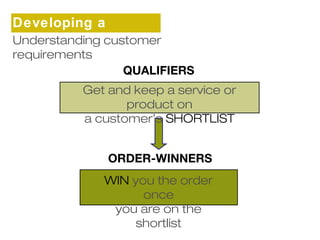
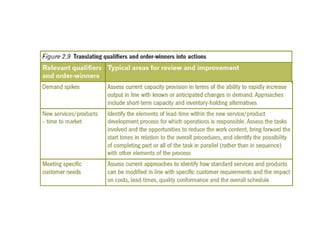
QUALIFIERS 
Get and keep a service or 
product on 
a customer’s SHORTLIST 
ORDER-WINNERS 
WIN you the order 
once 
you are on the 
shortlist
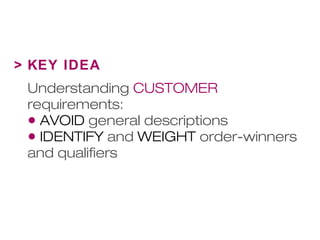
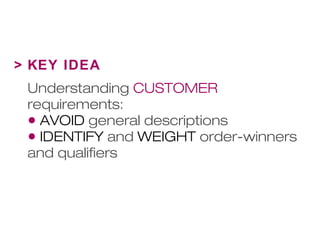
> KEY IDEA 
Understanding CUSTOMER 
requirements: 
• AVOID general descriptions 
• IDENTIFY and WEIGHT order-winners 
and qualifiers
Developing a 
sUtnrdaetresgtaynding customer 
requirements 
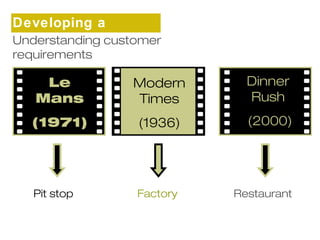
Le 
Mans 
(1971) 
Modern 
Times 
(1936) 
Dinner 
Rush 
(2000) 
Pit stop Factory Restaurant
Developing a 
sOtpreartaetgioyns process 
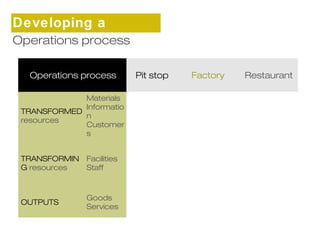
Operations process Pit stop Factory Restaurant 
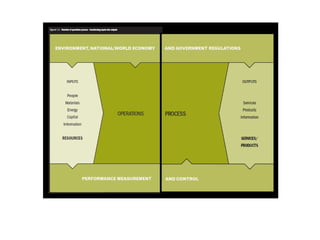
TRANSFORMED 
resources 
Materials 
Informatio 
n 
Customer 
s 
TRANSFORMIN 
G resources 
Facilities 
Staff 
OUTPUTS 
Goods 
Services
Developing a 
sUtnrdaetresgtaynding customer 
requirements 
Key market 
requirements Pit stop Factory Restaurant 
ORDER-WINNERS 
QUALIFIERS
Developing a 
strategy 
•What is the OPERATIONS process? 
•What are the key MARKET 
requirements?
Developing a 
sOtpreartaetgioyns process 
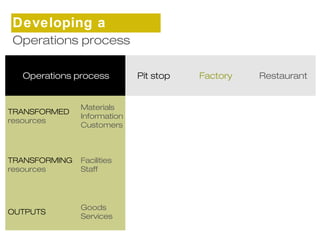
Operations process Pit stop Factory Restaurant 
TRANSFORMED 
resources 
Materials 
Information 
Customers 
TRANSFORMING 
resources 
Facilities 
Staff 
OUTPUTS 
Goods 
Services
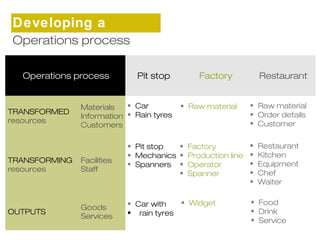
Operations process Pit stop Factory Restaurant 
TRANSFORMED 
resources 
Materials 
Information 
Customers 
TRANSFORMING 
resources 
Facilities 
Staff 
OUTPUTS 
Goods 
Services 
• Car 
• Rain tyres 
• Raw material 
• Pit stop 
• Mechanics 
• Spanners 
• Car with 
• rain tyres 
• Factory 
• Production line 
• Operator 
• Spanner 
• Widget 
• Raw material 
• Order details 
• Customer 
• Restaurant 
• Kitchen 
• Equipment 
• Chef 
• Waiter 
• Food 
• Drink 
• Service 
Developing a 
sOtpreartaetgioyns process
Developing a 
sUtnrdaetresgtaynding customer 
requirements 
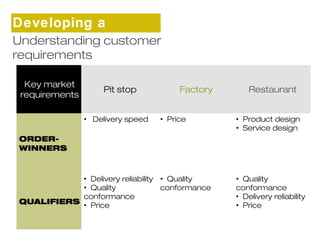
Key market 
requirements Pit stop Factory Restaurant 
ORDER-WINNERS 
• Delivery speed • Price • Product design 
• Service design 
QUALIFIERS 
• Delivery reliability 
• Quality 
conformance 
• Price 
• Quality 
conformance 
• Quality 
conformance 
• Delivery reliability 
• Price
Developing a 
sUtnrdaetresgtaynding customer 
requirements
> KEY IDEA 
Understanding CUSTOMER 
requirements: 
• AVOID general descriptions 
• IDENTIFY and WEIGHT order-winners 
and qualifiers
Developing a 
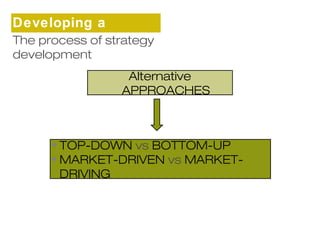
sThtrea pterogcyess of strategy 
development 
Alternative 
APPROACHES 
• TOP-DOWN vs BOTTOM-UP 
•MARKET-DRIVEN vs MARKET-DRIVING
Developing a 
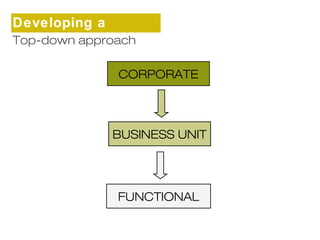
sTotrpa-tdeogwyn approach 
CORPORATE 
BUSINESS UNIT 
FUNCTIONAL
Developing a 
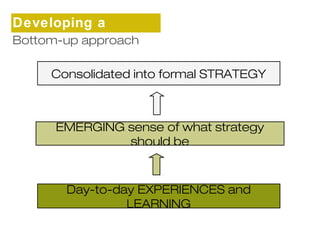
sBtortatotemg-yup approach 
Consolidated into formal STRATEGY 
EMERGING sense of what strategy 
should be 
Day-to-day EXPERIENCES and 
LEARNING
Developing a 
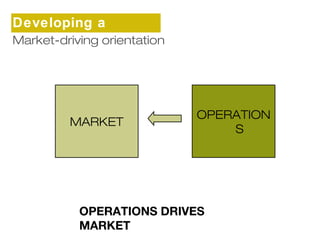
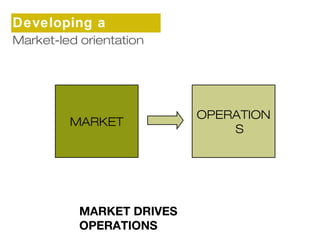
sMtararkteetg-leyd orientation 
MARKET 
MARKET DRIVES 
OPERATIONS 
OPERATION 
S
Developing a 
sMtararkteetg-dyriving orientation 
MARKET 
OPERATION 
OPERATIONS DRIVES 
MARKET 
S
Developing a 
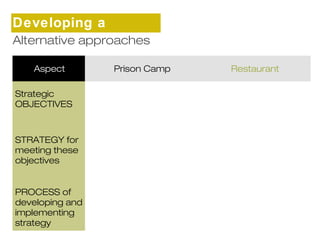
sAtltrearnteagtivye approaches 
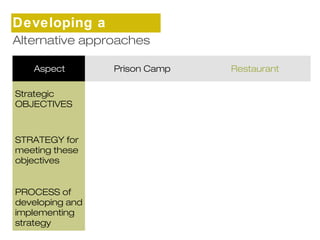
Aspect Prison Camp Restaurant 
Strategic 
OBJECTIVES 
STRATEGY for 
meeting these 
objectives 
PROCESS of 
developing and 
implementing 
strategy
Developing a 
sAtltrearnteagtivye approaches 
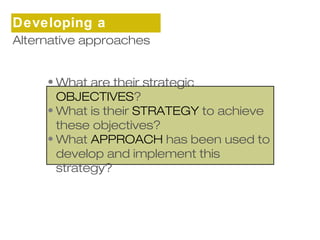
•What are their strategic 
OBJECTIVES? 
•What is their STRATEGY to achieve 
these objectives? 
•What APPROACH has been used to 
develop and implement this 
strategy?
Developing a 
sAtltrearnteagtivye approaches 
Aspect Prison Camp Restaurant 
Strategic 
OBJECTIVES 
STRATEGY for 
meeting these 
objectives 
PROCESS of 
developing and 
implementing 
strategy
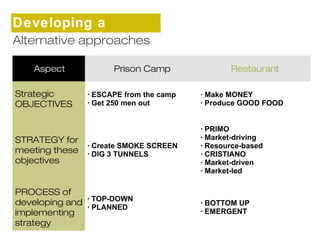
Aspect Prison Camp Restaurant 
Strategic 
OBJECTIVES 
• ESCAPE from the camp 
• Get 250 men out 
• Make MONEY 
• Produce GOOD FOOD 
STRATEGY for 
meeting these 
objectives 
• Create SMOKE SCREEN 
• DIG 3 TUNNELS 
• PRIMO 
• Market-driving 
• Resource-based 
• CRISTIANO 
• Market-driven 
• Market-led 
PROCESS of 
developing and 
implementing 
strategy 
• TOP-DOWN 
• PLANNED • BOTTOM UP 
• EMERGENT 
Developing a 
sAtltrearnteagtivye approaches
Critical 
reflections 
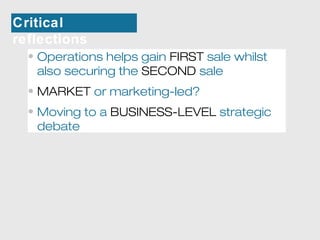
• Operations helps gain FIRST sale whilst 
also securing the SECOND sale 
• MARKET or marketing-led? 
• Moving to a BUSINESS-LEVEL strategic 
debate
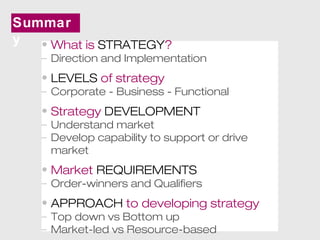
Summar 
y • What is STRATEGY? 
– Direction and Implementation 
• LEVELS of strategy 
– Corporate - Business - Functional 
• Strategy DEVELOPMENT 
– Understand market 
– Develop capability to support or drive 
market 
• Market REQUIREMENTS 
– Order-winners and Qualifiers 
• APPROACH to developing strategy 
– Top down vs Bottom up 
– Market-led vs Resource-based
CASE FOR TUTORIAL 
APPLE

Ch2 operations strategy

  • 1.
    Alex Hill andTerry Hill
  • 2.
    Learning objectives •Understand LEVELS of strategy within business • Distinguish between day-to-day and strategic ROLES • Identify how different levels of strategy INTERFACE with each other • Appreciate importance of understanding MARKETS • Understand different strategic APPROACHES • DEVELOP and IMPLEMENT an operations strategy
  • 3.
    Lecture outline •INTRODUCTION • What is STRATEGY? • LEVELS of strategy within a business • DEVELOPING a strategy • IMPLEMENTING a strategy • Critical REFLECTIONS • SUMMARY
  • 4.
    What is strategy? DIRECTION WHAT to do
  • 5.
    What is strategy? DIRECTION WHAT to do IMPLEMENTATION HOW to do it
  • 7.
    > KEY IDEA Operations strategy concerns developing the CAPABILITIES of an organisation to reflect the NEEDS of its customers and markets
  • 8.
  • 9.
    Levels of strategy CORPORATE BUSINESS UNIT
  • 10.
    FUNCTIONAL Levels of strategy CORPORATE BUSINESS UNIT
  • 11.
    •Where to INVESTor DIVEST • SALES REVENUE priorities Levels of strategy Corporate DIRECTION OF TOTAL BUSINESS IMPLEMENTATION Allocation of investment FUNDS
  • 12.
    Levels of sBtursainteesgsyunit DIRECTION OF BUSINESS UNIT •MARKETS in which it competes •Where to GROW its business • Nature of COMPETITION • Relevant COMPETITIVE CRITERIA IMPLEMENTATION •WHICH functional tasks to invest in • HOW to invest in these tasks
  • 13.
    DIRECTION OF FUNCTION Support COMPETITIVE DIMENSIONS within a market for which it is solely or partly RESPONSIBLE Levels of Fsutrnactteiognyal IMPLEMENTATION • Meeting competitive REQUIREMENTS • Selecting APPROACHES to attain improvement goals • Implement the PLAN
  • 14.
  • 15.
  • 18.
  • 19.
    > KEY IDEA Understanding MARKETS is the FIRST step in strategy development
  • 20.
    Developing a sUtnrdaetresgtayndingcustomer requirements QUALIFIERS Get and keep a service or product on a customer’s SHORTLIST ORDER-WINNERS WIN you the order once you are on the shortlist
  • 21.
    > KEY IDEA Understanding CUSTOMER requirements: • AVOID general descriptions • IDENTIFY and WEIGHT order-winners and qualifiers
  • 22.
    Developing a sUtnrdaetresgtayndingcustomer requirements Le Mans (1971) Modern Times (1936) Dinner Rush (2000) Pit stop Factory Restaurant
  • 24.
    Developing a sOtpreartaetgioynsprocess Operations process Pit stop Factory Restaurant TRANSFORMED resources Materials Informatio n Customer s TRANSFORMIN G resources Facilities Staff OUTPUTS Goods Services
  • 25.
    Developing a sUtnrdaetresgtayndingcustomer requirements Key market requirements Pit stop Factory Restaurant ORDER-WINNERS QUALIFIERS
  • 26.
    Developing a strategy •What is the OPERATIONS process? •What are the key MARKET requirements?
  • 27.
    Developing a sOtpreartaetgioynsprocess Operations process Pit stop Factory Restaurant TRANSFORMED resources Materials Information Customers TRANSFORMING resources Facilities Staff OUTPUTS Goods Services
  • 28.
    Operations process Pitstop Factory Restaurant TRANSFORMED resources Materials Information Customers TRANSFORMING resources Facilities Staff OUTPUTS Goods Services • Car • Rain tyres • Raw material • Pit stop • Mechanics • Spanners • Car with • rain tyres • Factory • Production line • Operator • Spanner • Widget • Raw material • Order details • Customer • Restaurant • Kitchen • Equipment • Chef • Waiter • Food • Drink • Service Developing a sOtpreartaetgioyns process
  • 29.
    Developing a sUtnrdaetresgtayndingcustomer requirements Key market requirements Pit stop Factory Restaurant ORDER-WINNERS • Delivery speed • Price • Product design • Service design QUALIFIERS • Delivery reliability • Quality conformance • Price • Quality conformance • Quality conformance • Delivery reliability • Price
  • 30.
  • 31.
    > KEY IDEA Understanding CUSTOMER requirements: • AVOID general descriptions • IDENTIFY and WEIGHT order-winners and qualifiers
  • 35.
    Developing a sThtreapterogcyess of strategy development Alternative APPROACHES • TOP-DOWN vs BOTTOM-UP •MARKET-DRIVEN vs MARKET-DRIVING
  • 36.
    Developing a sTotrpa-tdeogwynapproach CORPORATE BUSINESS UNIT FUNCTIONAL
  • 37.
    Developing a sBtortatotemg-yupapproach Consolidated into formal STRATEGY EMERGING sense of what strategy should be Day-to-day EXPERIENCES and LEARNING
  • 38.
    Developing a sMtararkteetg-leydorientation MARKET MARKET DRIVES OPERATIONS OPERATION S
  • 39.
    Developing a sMtararkteetg-dyrivingorientation MARKET OPERATION OPERATIONS DRIVES MARKET S
  • 40.
    Developing a sAtltrearnteagtivyeapproaches Aspect Prison Camp Restaurant Strategic OBJECTIVES STRATEGY for meeting these objectives PROCESS of developing and implementing strategy
  • 41.
    Developing a sAtltrearnteagtivyeapproaches •What are their strategic OBJECTIVES? •What is their STRATEGY to achieve these objectives? •What APPROACH has been used to develop and implement this strategy?
  • 42.
    Developing a sAtltrearnteagtivyeapproaches Aspect Prison Camp Restaurant Strategic OBJECTIVES STRATEGY for meeting these objectives PROCESS of developing and implementing strategy
  • 43.
    Aspect Prison CampRestaurant Strategic OBJECTIVES • ESCAPE from the camp • Get 250 men out • Make MONEY • Produce GOOD FOOD STRATEGY for meeting these objectives • Create SMOKE SCREEN • DIG 3 TUNNELS • PRIMO • Market-driving • Resource-based • CRISTIANO • Market-driven • Market-led PROCESS of developing and implementing strategy • TOP-DOWN • PLANNED • BOTTOM UP • EMERGENT Developing a sAtltrearnteagtivye approaches
  • 44.
    Critical reflections •Operations helps gain FIRST sale whilst also securing the SECOND sale • MARKET or marketing-led? • Moving to a BUSINESS-LEVEL strategic debate
  • 45.
    Summar y •What is STRATEGY? – Direction and Implementation • LEVELS of strategy – Corporate - Business - Functional • Strategy DEVELOPMENT – Understand market – Develop capability to support or drive market • Market REQUIREMENTS – Order-winners and Qualifiers • APPROACH to developing strategy – Top down vs Bottom up – Market-led vs Resource-based
  • 46.

Editor's Notes

  • #34 At this point you could illustrate strategy development using clips from three classic films Le Mans (1971) directed by Lee H. Katzin, starring Steve McQueen - stratgey developed in a pitstop Modern Times (1936) directed by and starring Charlie Chaplin - strategy used in factory Dinner rush (2000) directed by Bob Giraldi, starring Danny Aiello - strategy in a restaurant setting
  • #35 Pull out points above through discussion… Make MONEY Produce GOOD FOOD
  • #38 A recap of the operations process is valuable at this point
  • #39 This table can be used to frame a discussion, or printed for students to fill in during the clips
  • #40 This table can be used to frame a discussion, or printed for students to fill in during the clips
  • #41 [play the clips from Le Mans, Modern Times and Dinner Rush] While students are watching the clips, ask them to think about the questions shown above
  • #67 At this point you could use clips from two films to demonstrate approaches to developing a strategy in two different settings: The Great Escape (1963) directed by John Sturges, starring Steve Mcqueen Big Night (1996) directed by Campbell Scott and Stanley Tucci, starring Tony Shalhoub and Stanley Tucci
  • #70 This table can be used as the framework for class discussion and/or printed as a handout for students to fill in while watching the clips
  • #71 Ask students to think about the three points above while watching the clip from each film
  • #78 Pull out points above through discussion… Make MONEY Produce GOOD FOOD
  • #79 Pull out points above through discussion… Make MONEY Produce GOOD FOOD
  • #80 Pull out points above through discussion… Make MONEY Produce GOOD FOOD
  • #81 Pull out points above through discussion… Make MONEY Produce GOOD FOOD
  • #82 Pull out points above through discussion… Make MONEY Produce GOOD FOOD
  • #83 Pull out points above through discussion… Make MONEY Produce GOOD FOOD
  • #84 Pull out points above through discussion… Make MONEY Produce GOOD FOOD
  • #85 Pull out points above through discussion… Make MONEY Produce GOOD FOOD
  • #86 Pull out points above through discussion… Make MONEY Produce GOOD FOOD
  • #87 Pull out points above through discussion… Make MONEY Produce GOOD FOOD
  • #88 Pull out points above through discussion… Make MONEY Produce GOOD FOOD
  • #89 Pull out points above through discussion… Make MONEY Produce GOOD FOOD