Two Well-Being of the  EMT-Basic Chapter
Chapter Effects of emotion and stress   on the EMT-B Death and dying and the   reactions of the patient, family,   and EMT-B Safety at the scene Exposure control Body substance isolation   throughout the call CORE CONCEPTS Two
E MOTION AND STRESS
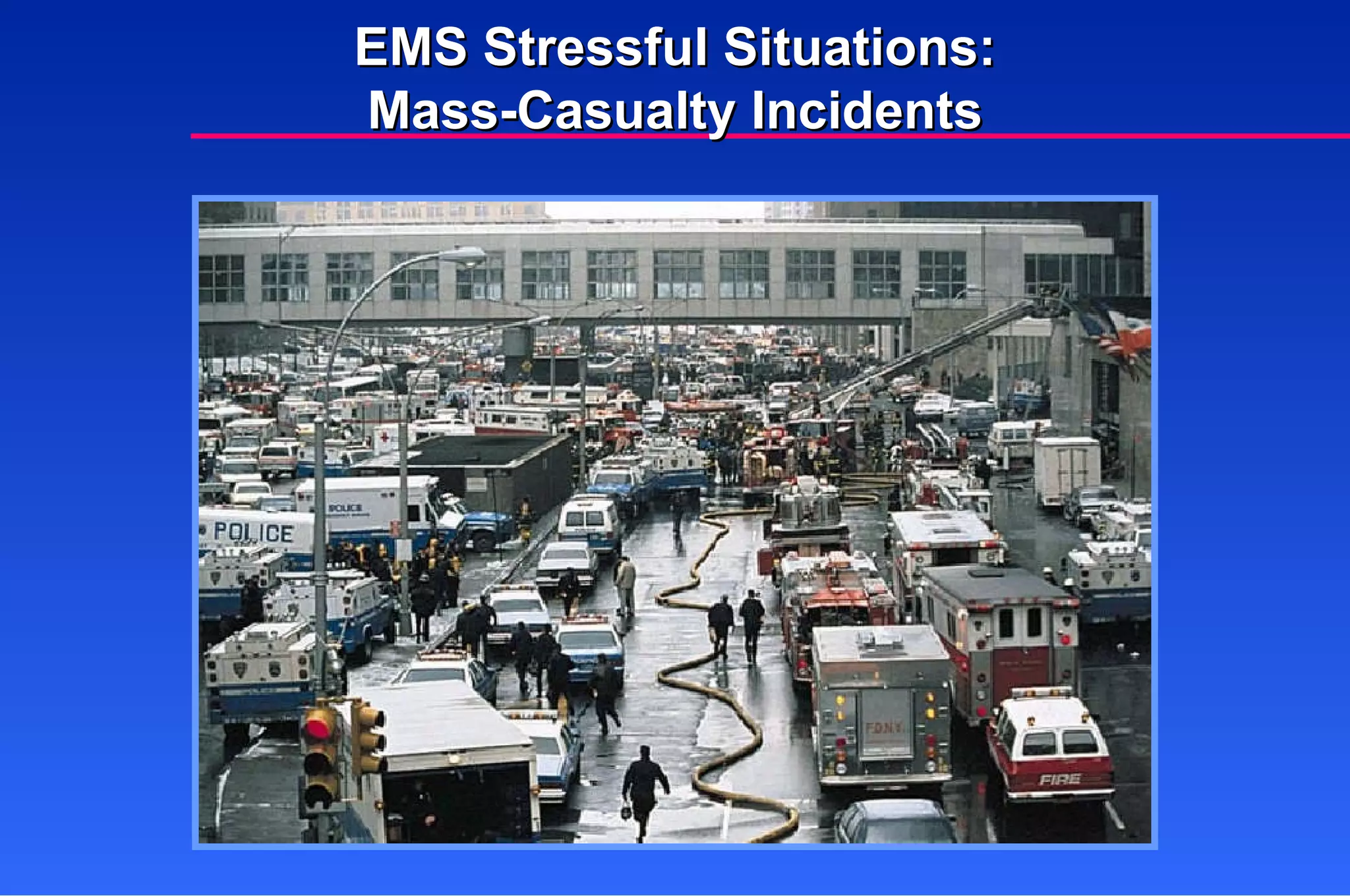
EMS Stressful Situations: Mass-Casualty Incidents
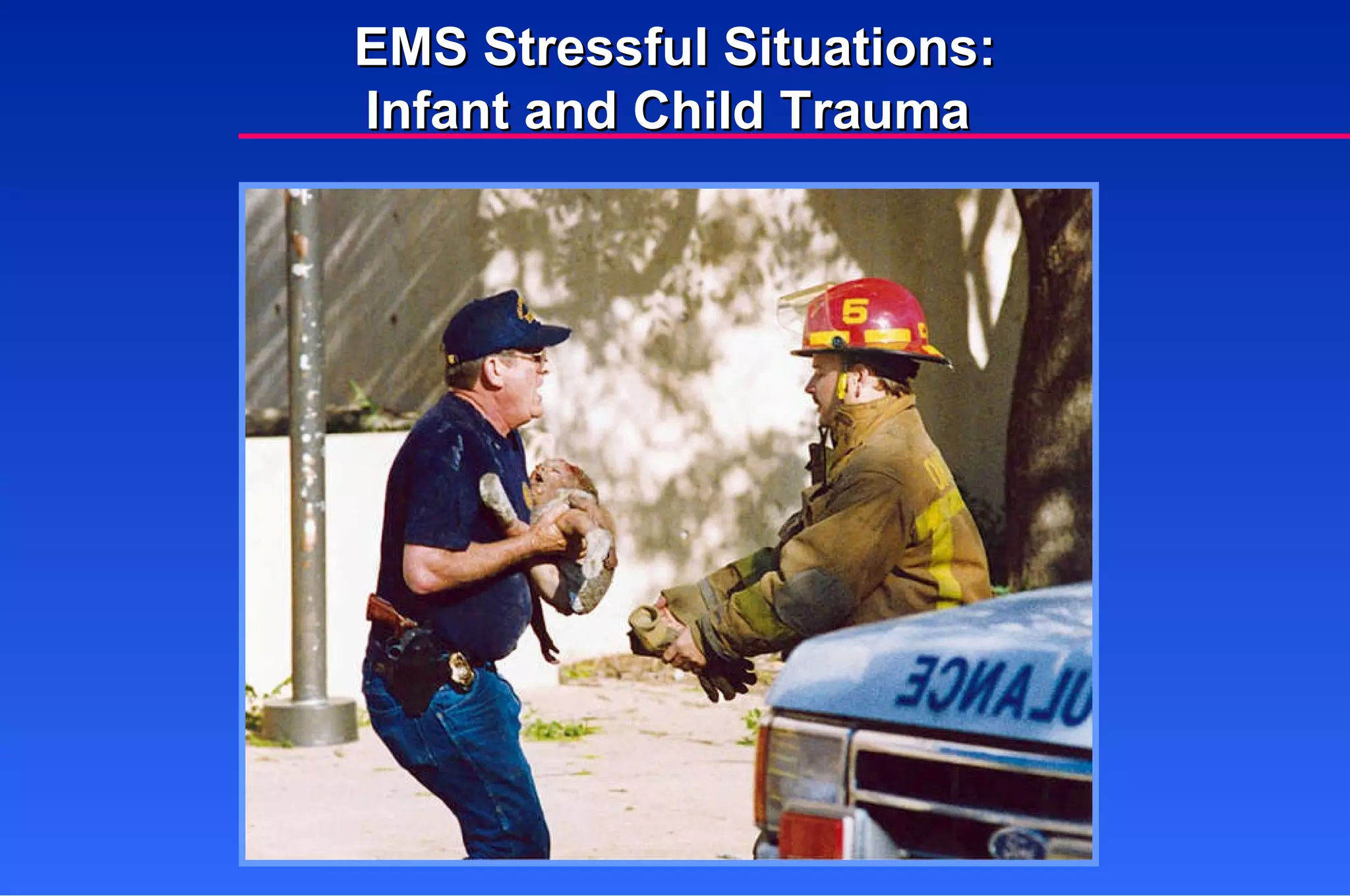
EMS Stressful Situations: Infant and Child Trauma
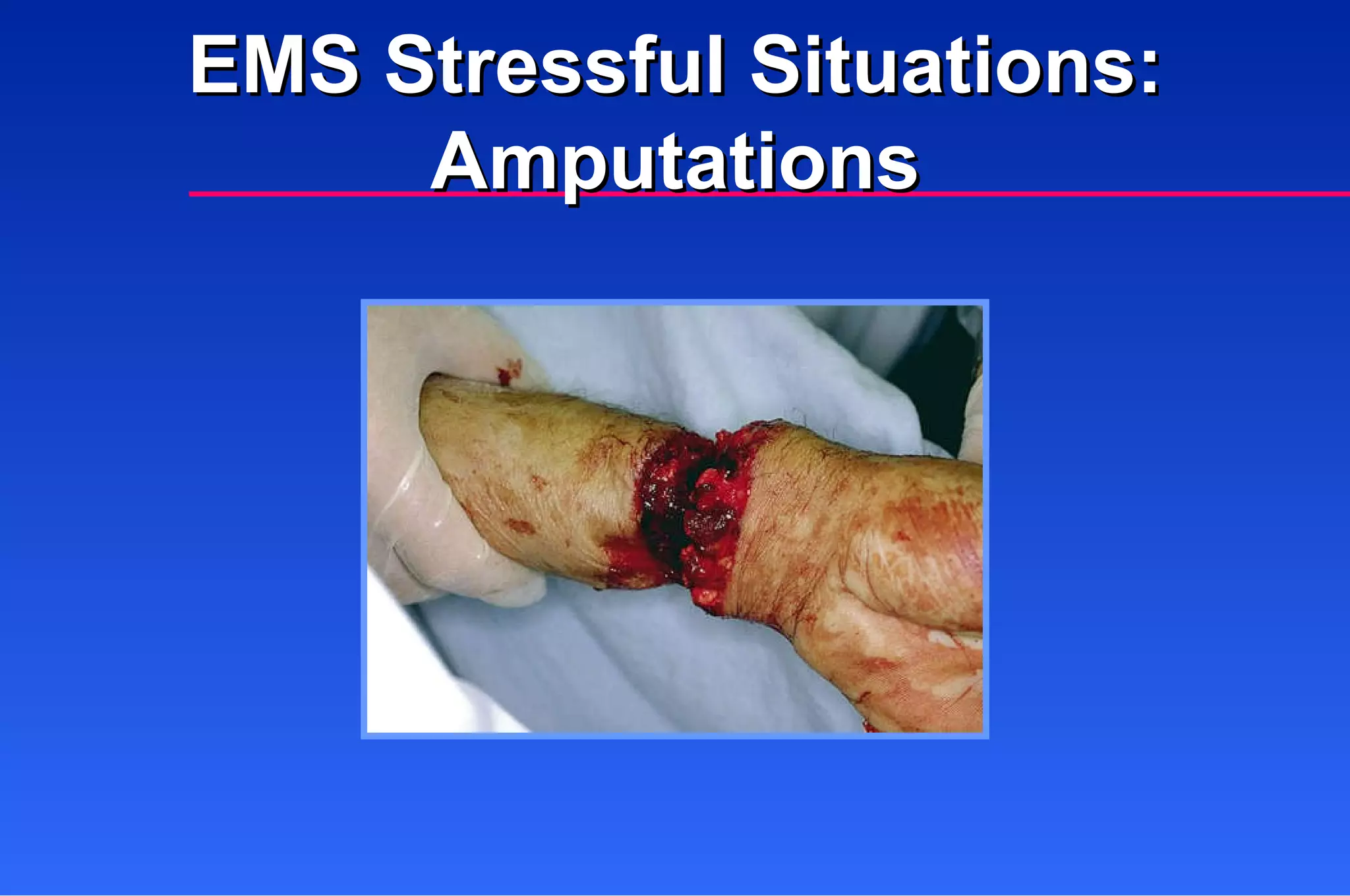
EMS Stressful Situations: Amputations
EMS Stressful Situations Infant/elderly/spouse abuse Death or injury of a coworker
Stress: Warning Signs Irritability toward coworkers,   family, friends Inability to concentrate Insomnia and/or nightmares (Continued)
Stress: Warning Signs Anxiety Indecisiveness Guilt Loss of appetite (Continued)
Stress: Warning Signs Loss of interest in sex Isolation Loss of interest in work
Stress Management Lifestyle Changes Change diet Reduce sugar, caffeine, and alcohol. Avoid fatty foods. Increase carbohydrates. (Continued)
Stress Management Exercise Relaxation Meditation, visual imagery Balance work, family, Lifestyle Changes (Continued) recreation, and health
Stress Management Environmental Changes Request shifts that allow more  Request duty assignment to  time with family and friends. a less busy area. (Continued)
Stress Management Seek professional  help if needed.
Stress: Reactions of  Family and Friends Lack of understanding Fear  (of separation, being ignored) Stress   (caused by on-call situations) Frustration   (wanting to share)
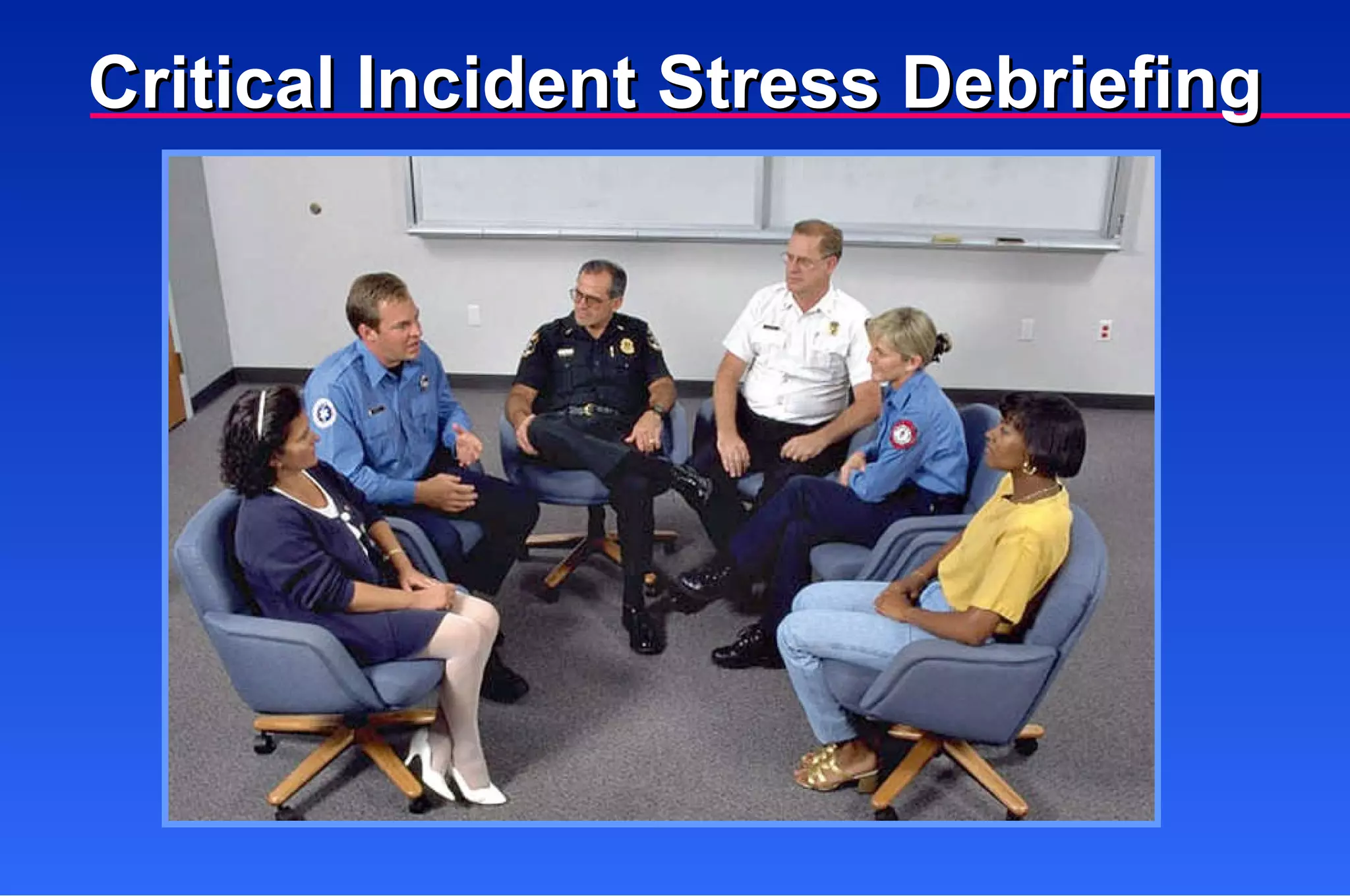
Critical Incident Stress Debriefing
Within 24 – 72 hours after incident Open discussion   (feelings, fears, reactions) Completely confidential   CISD (Continued)
Not an investigation or CISD team offers suggestions  interrogation on overcoming stress CISD
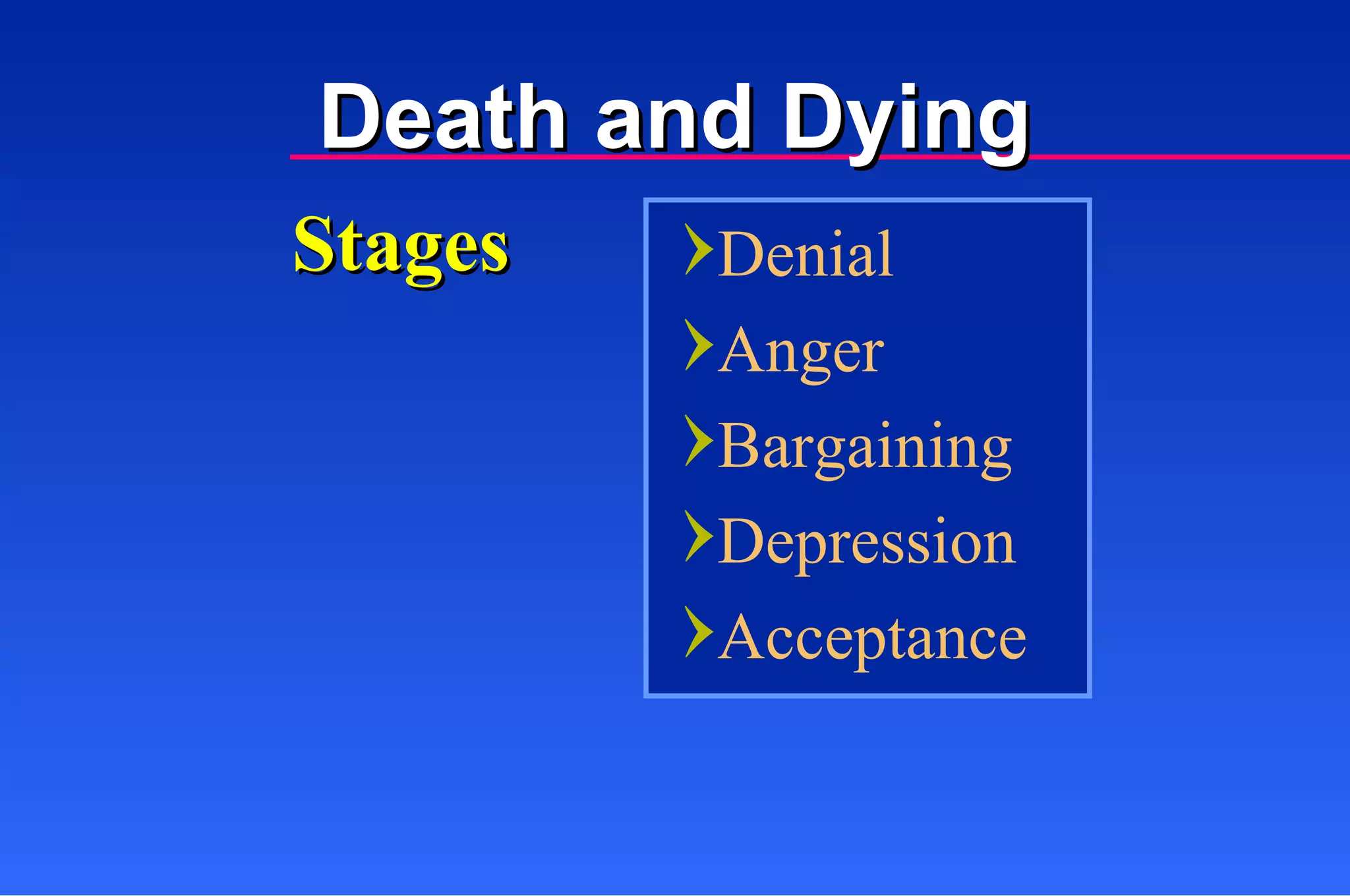
Death and Dying Stages Denial Anger Bargaining Depression Acceptance
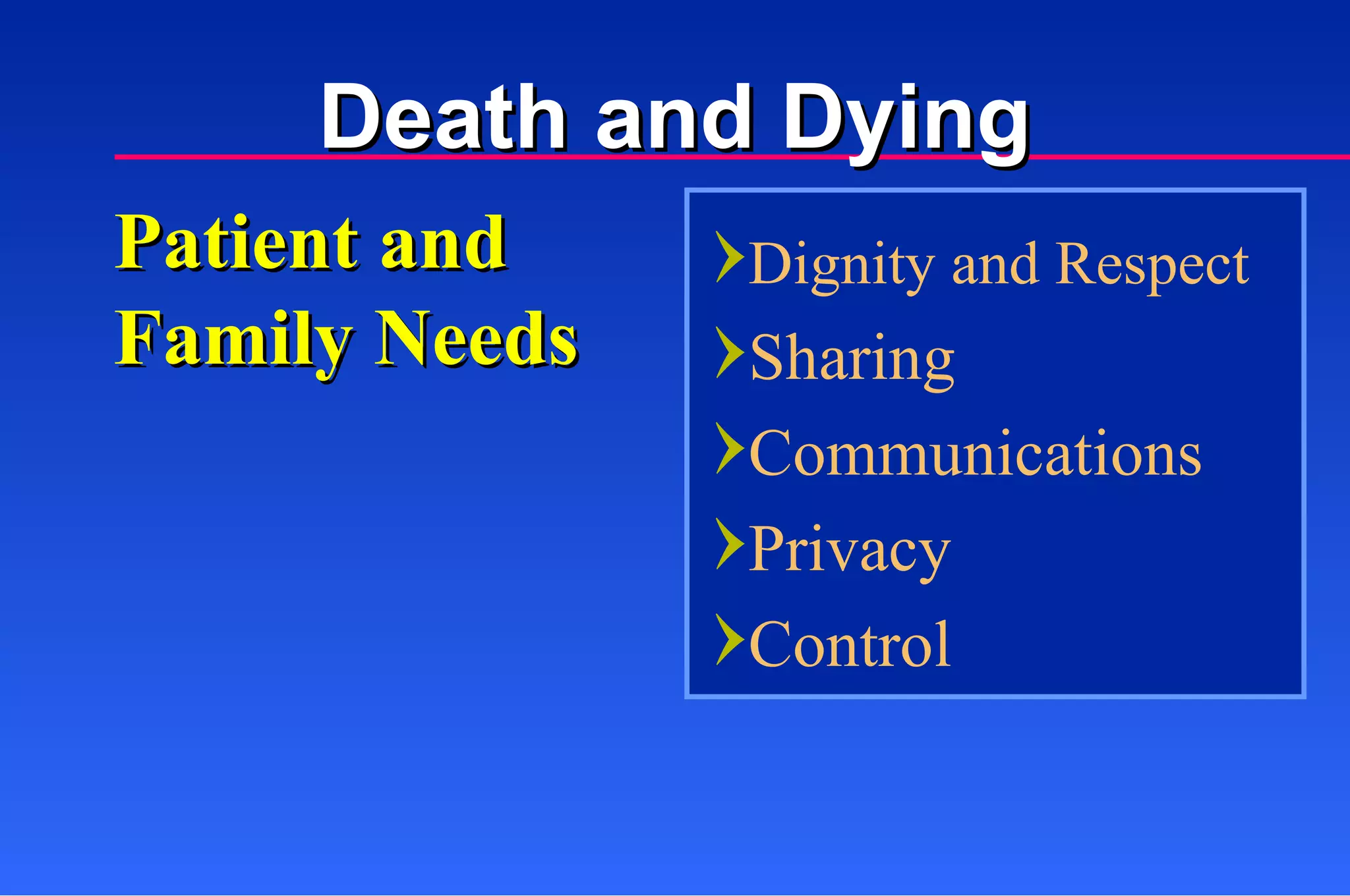
Death and Dying Patient and Family Needs Dignity and Respect Sharing Communications Privacy Control
Reaction of Family Rage Anger Despair Death and Dying
Dealing with Patient and Family Listen empathetically. Use a gentle tone    of voice. Use a reassuring touch,   if appropriate. Do not falsely reassure. Death and Dying
S CENE SAFETY
Fighting or loud voices Intoxicants or illegal drugs Weapons Crime scenes Indicators of Danger (Continued)
Pets Hostile crowds Broken glass, bloodstains Indicators of Danger
Sight Hearing Smell “ Sixth sense” Use Your Senses
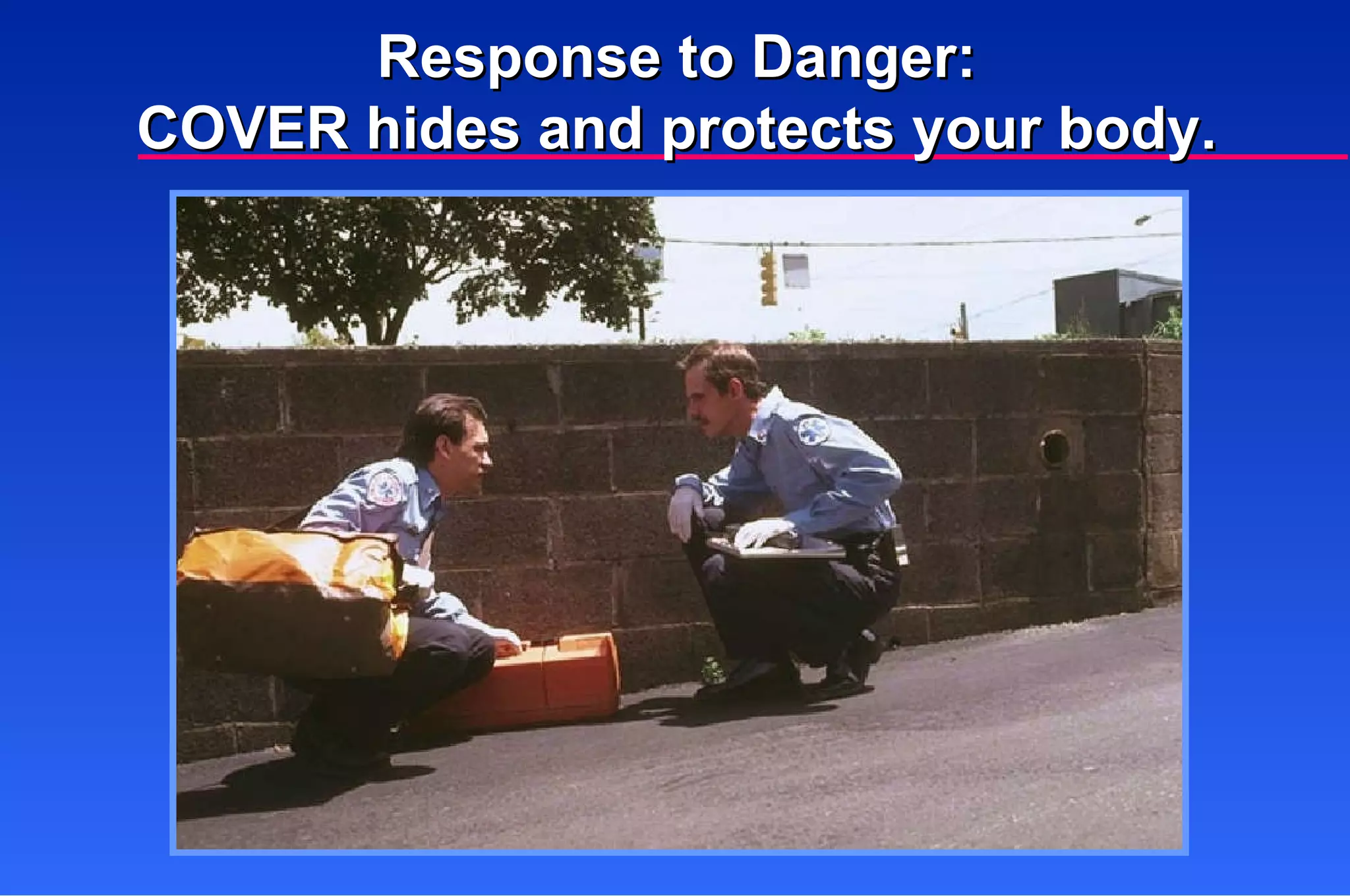
Response to Danger: COVER hides and protects your body.
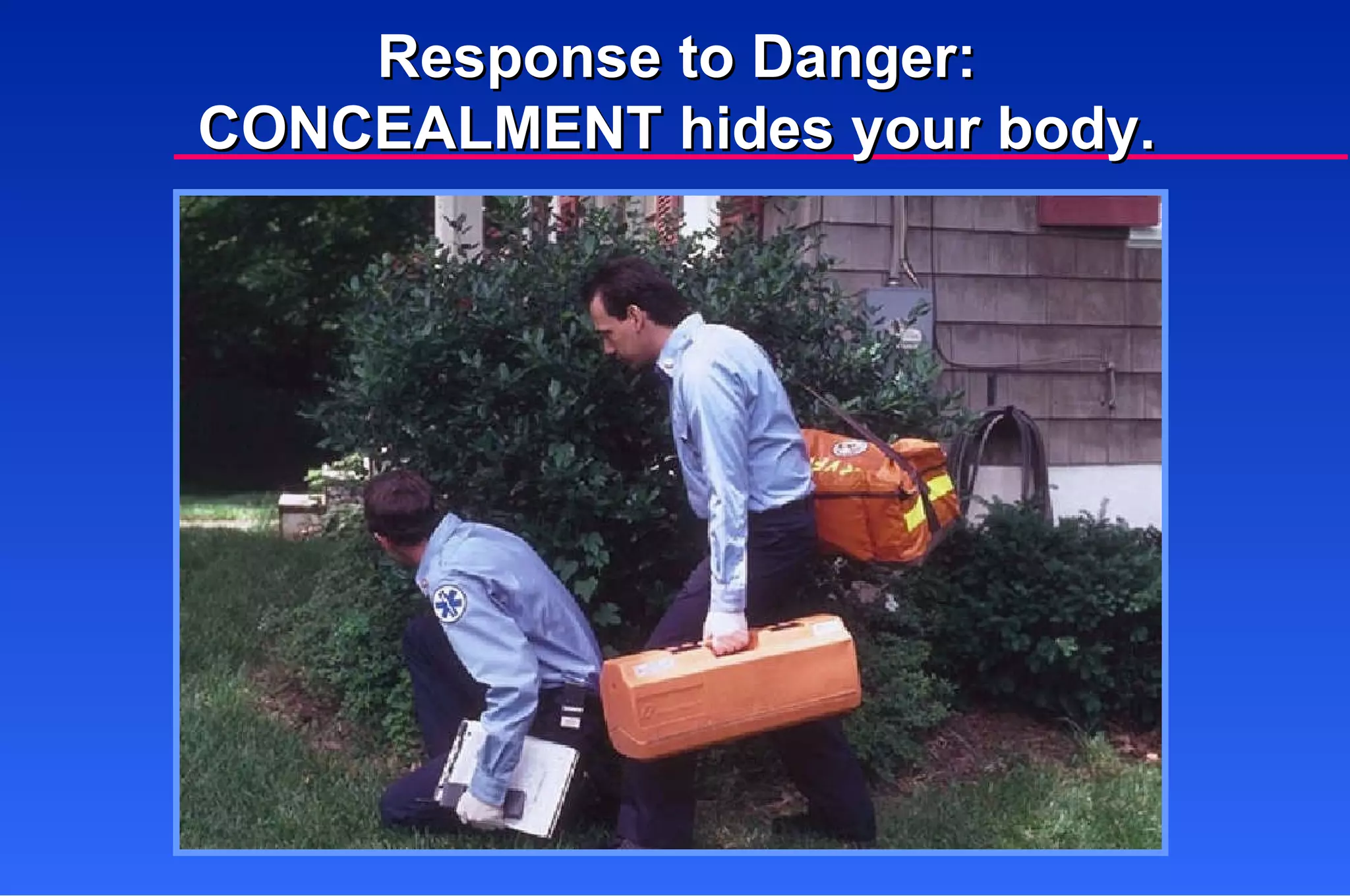
Response to Danger: CONCEALMENT hides your body.
Leave the scene  Response to Danger: RETREAT immediately. Get far enough away. Radio for police.
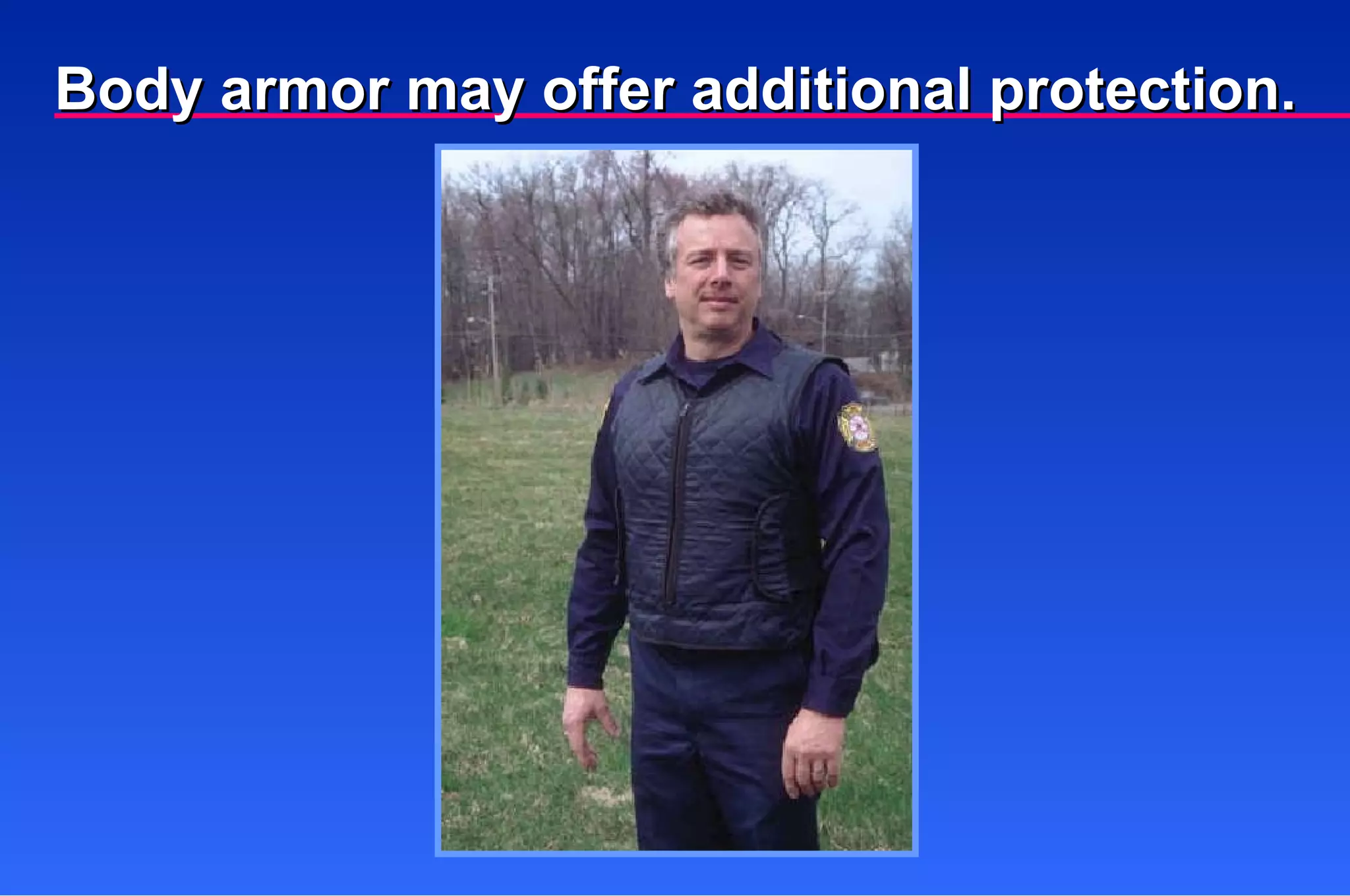
Body armor may offer additional protection.
Electricity Fire Explosion Hazardous materials Rescue: Identify Threats
Turnout gear Puncture-proof gloves Helmet Eyewear Protective Clothing
The  police  are responsible for securing the scene from violence. Violence
Violence Patients Perpetrators of crimes Bystanders Family members Scene Dangers Come From:
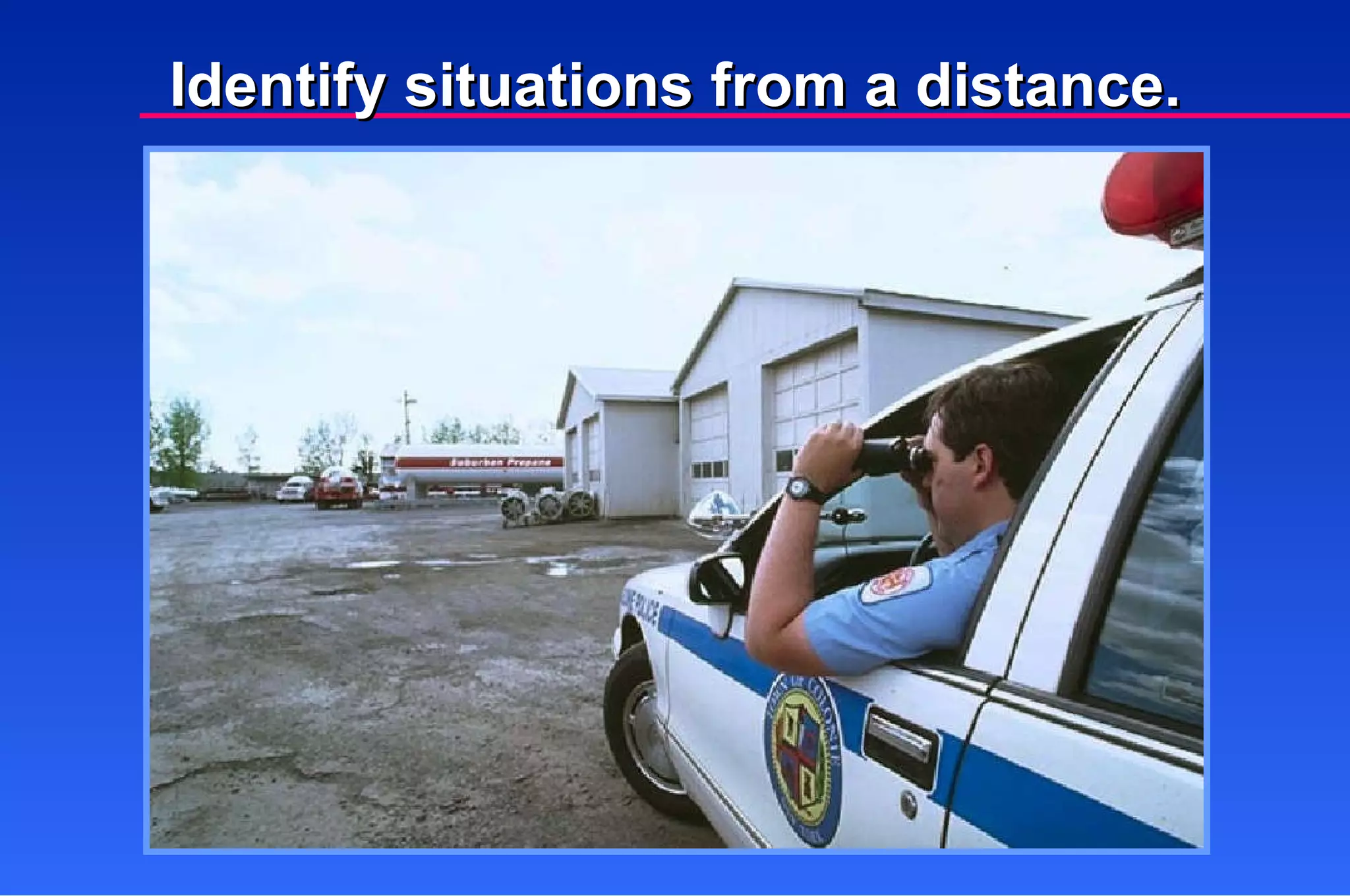
EMT-B identifies situations. Specialized teams control Hazardous Materials Incidents scene. EMT-B treats patients after contamination is limited.
Identify situations from a distance.
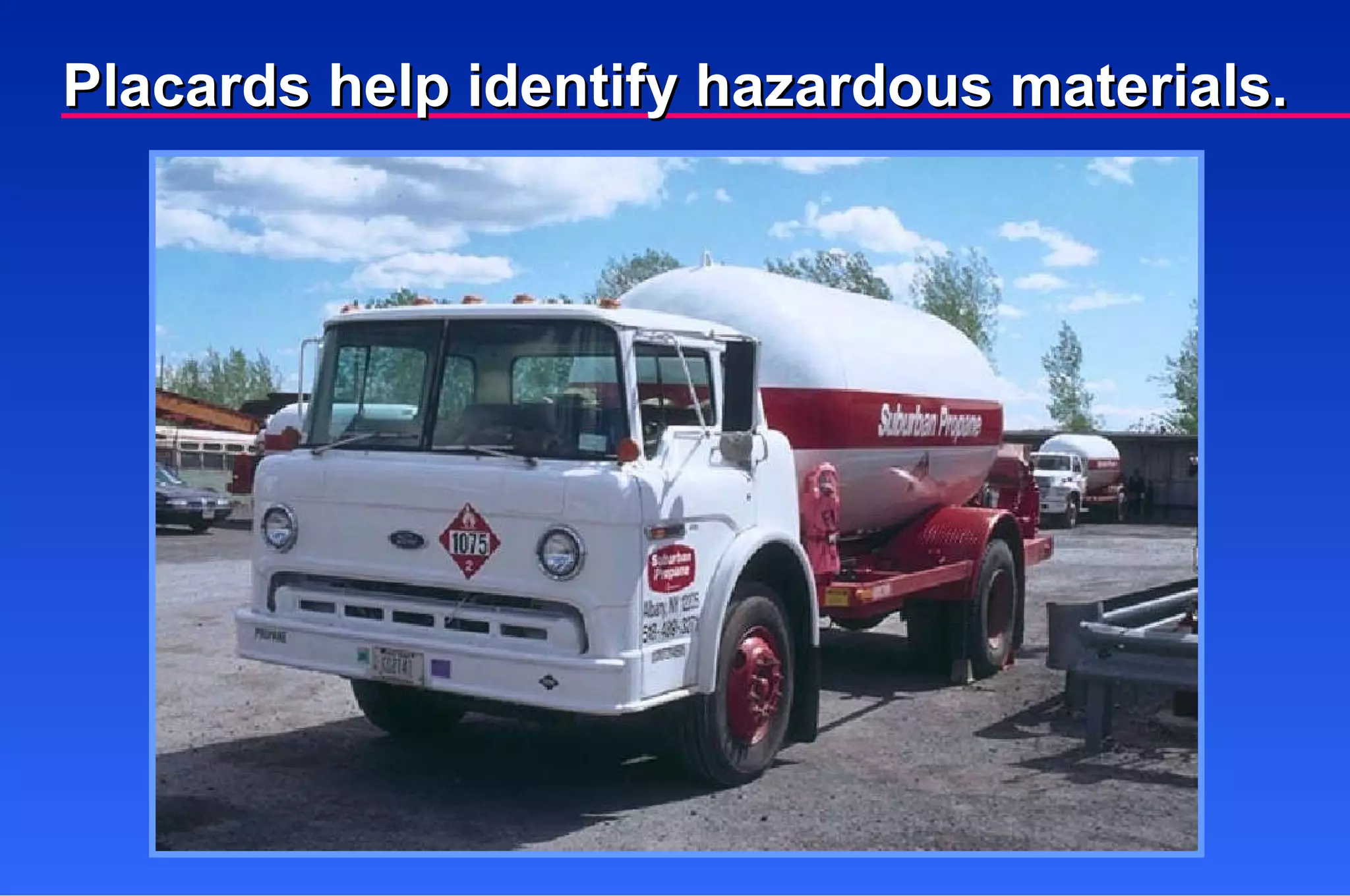
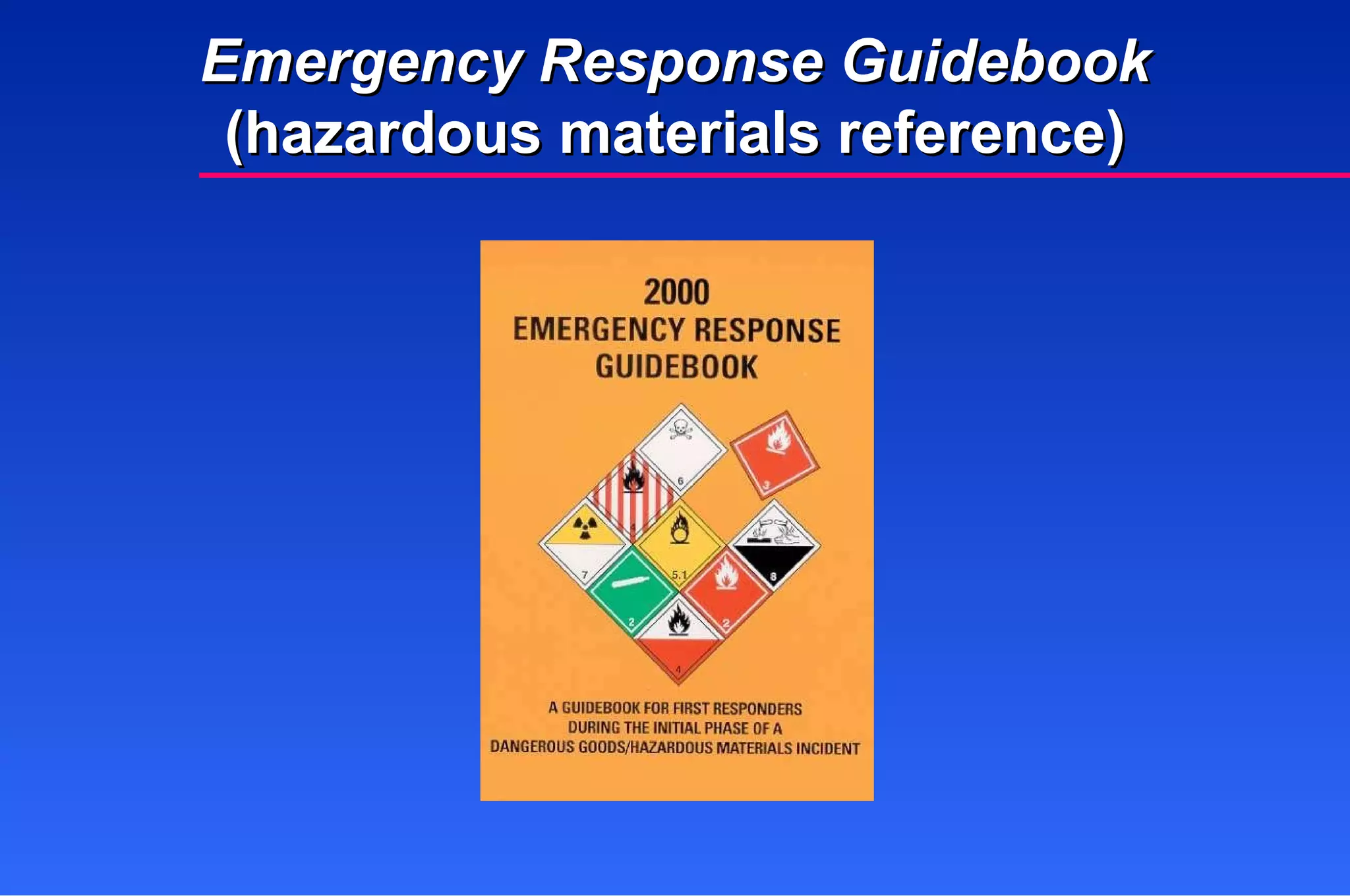
Placards help identify hazardous materials.
Emergency Response Guidebook (hazardous materials reference)
B ODY SUBSTANCE ISOLATION
Body Substance Isolation Protects EMT-B  and  patient. Assumes all body substances are    Procedures set by OSHA and local policy. infectious.
Since an exposure incident may be anxiety-provoking to new EMT-Bs, discuss with them your state laws and local policies regarding postexposure procedures. P RECEPTOR  P EARL
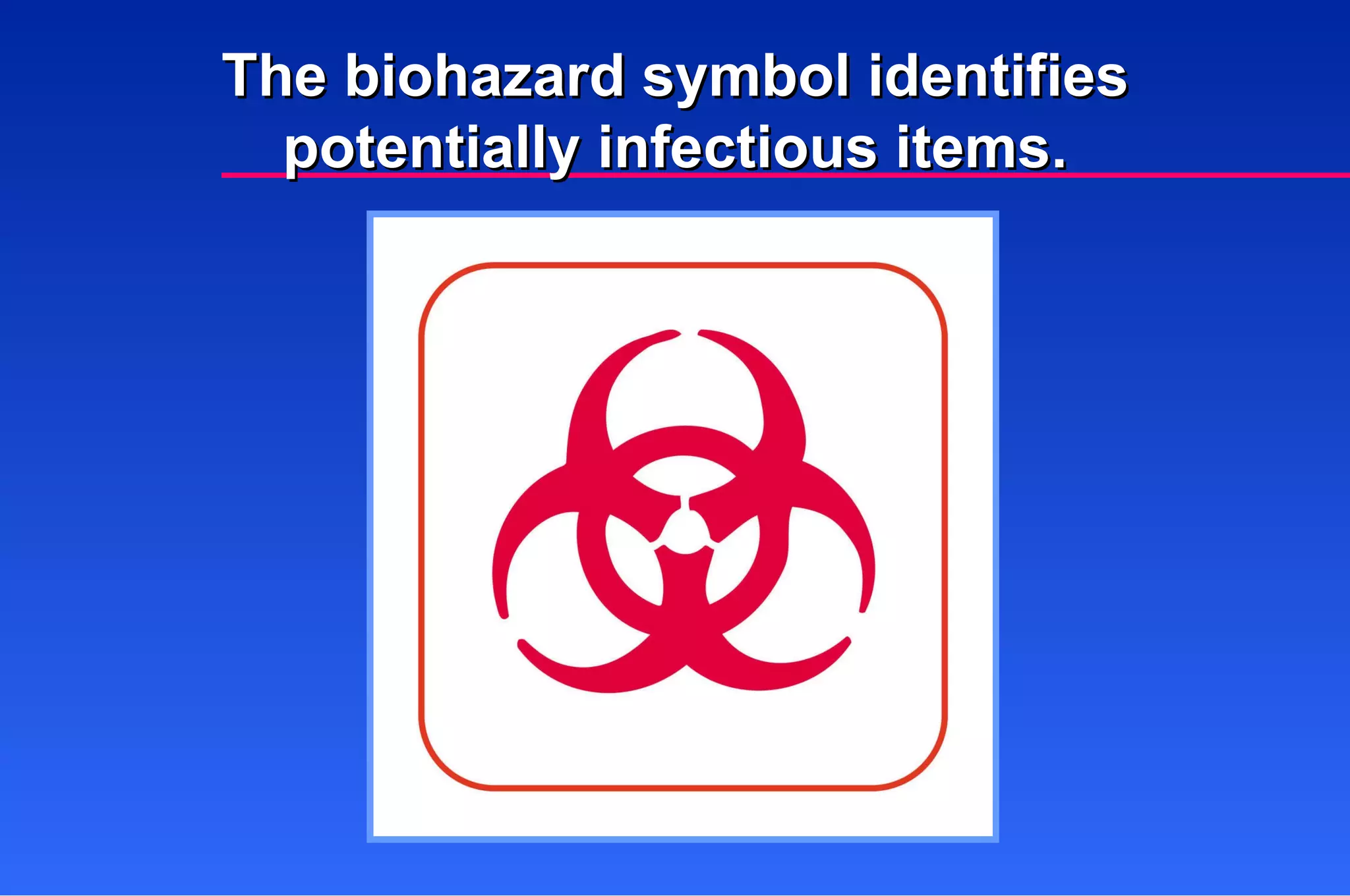
The biohazard symbol identifies potentially infectious items.
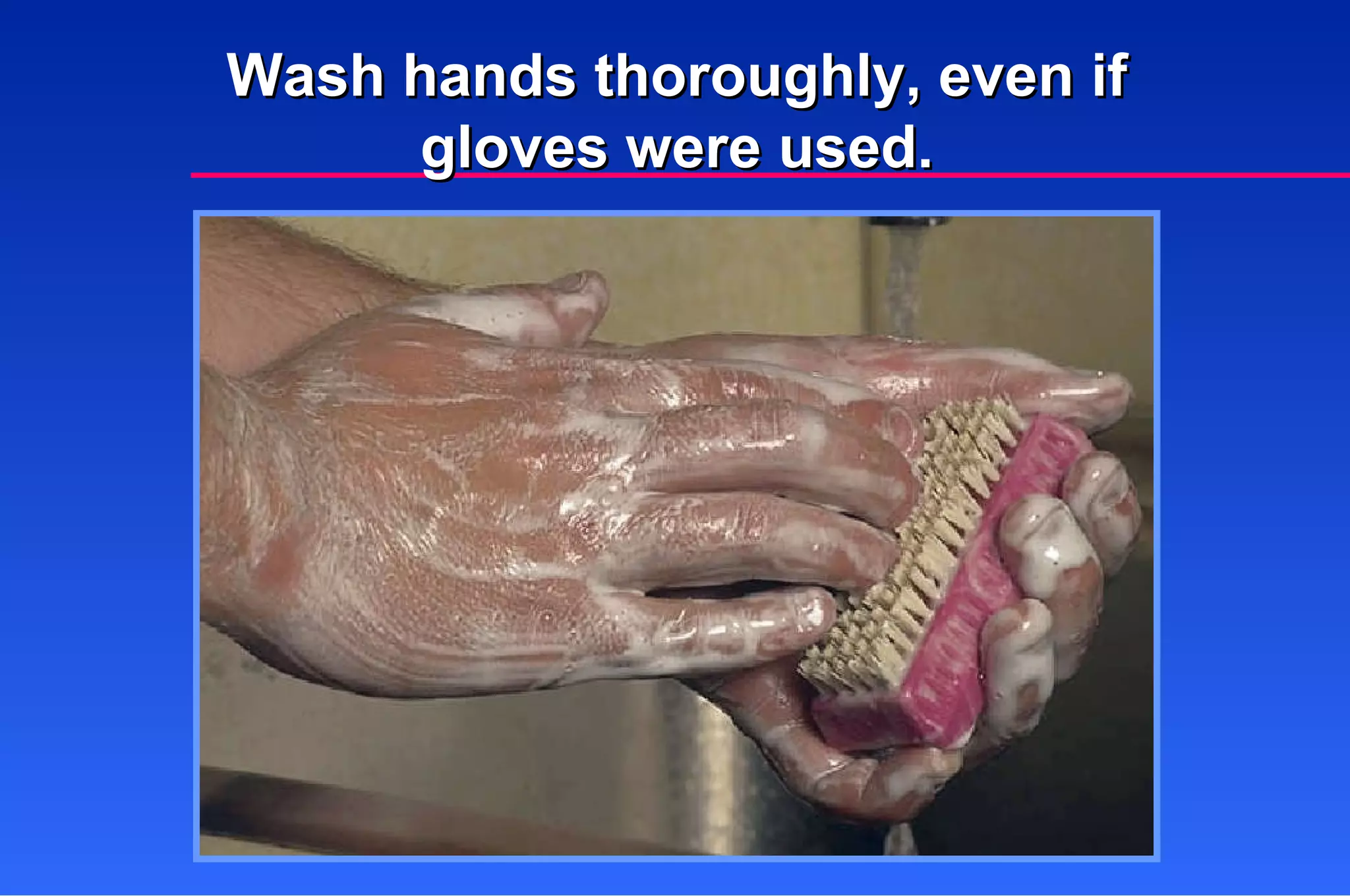
Wash hands thoroughly, even if gloves were used.
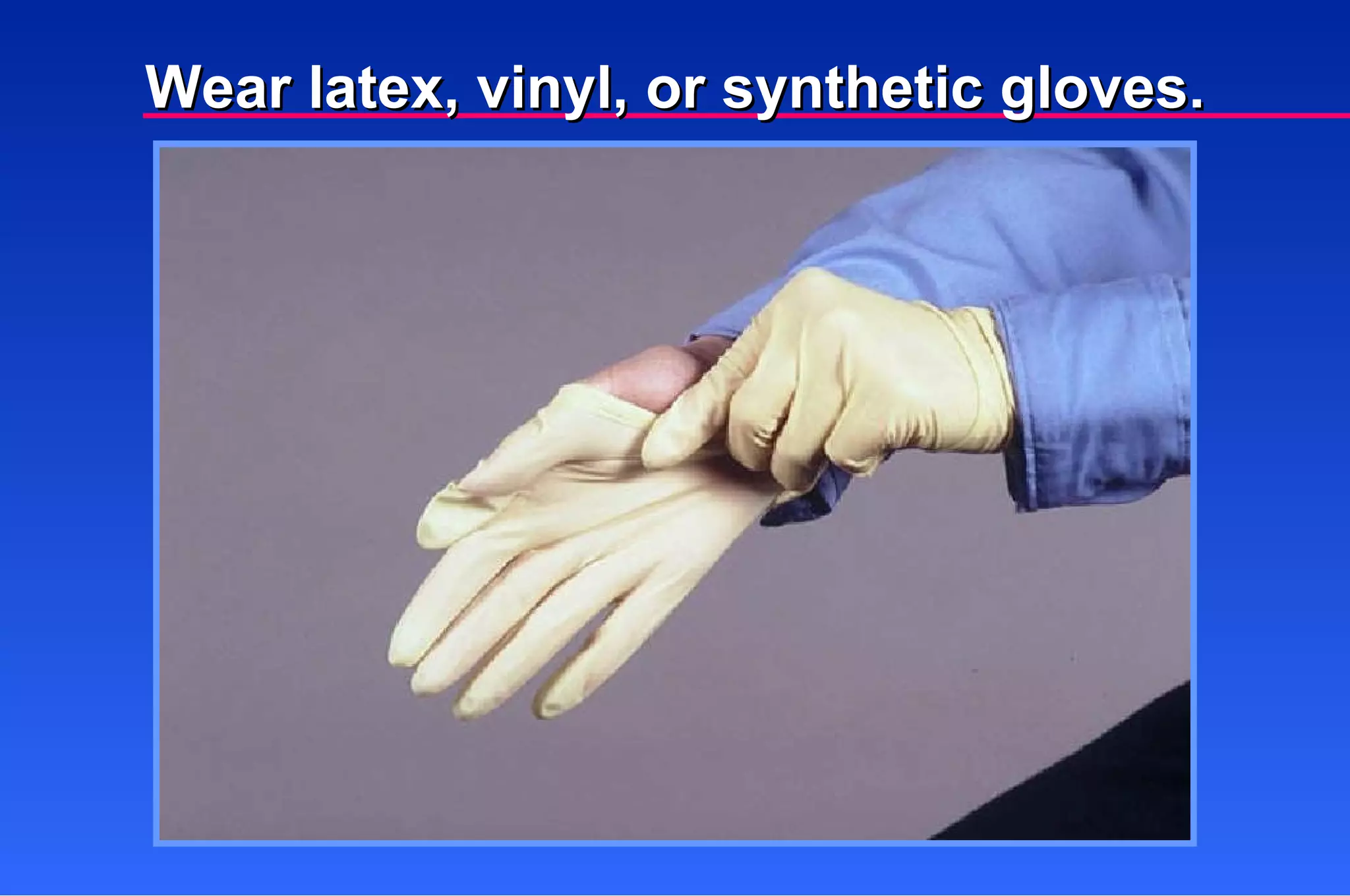
Wear latex, vinyl, or synthetic gloves.
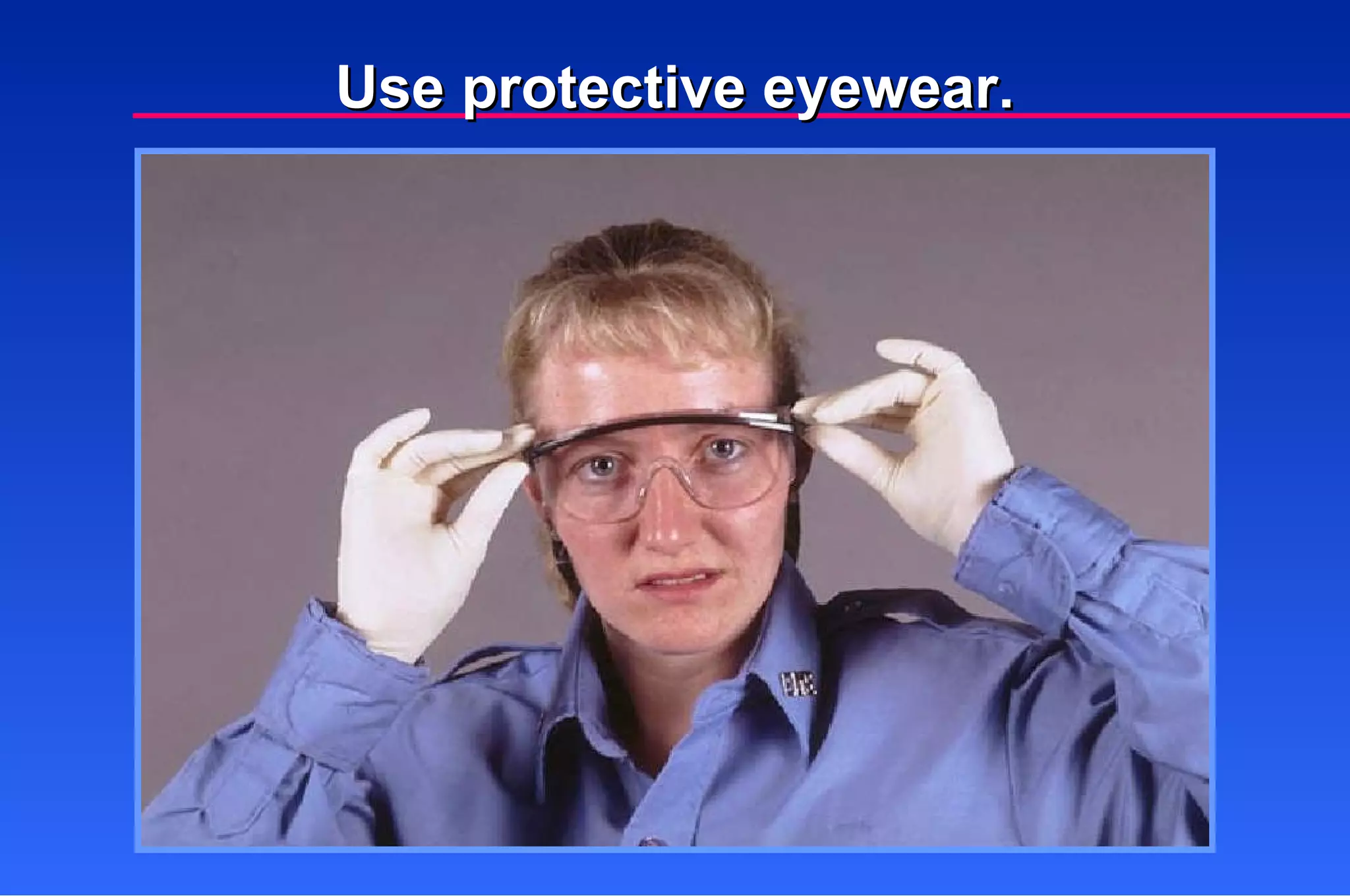
Use protective eyewear.
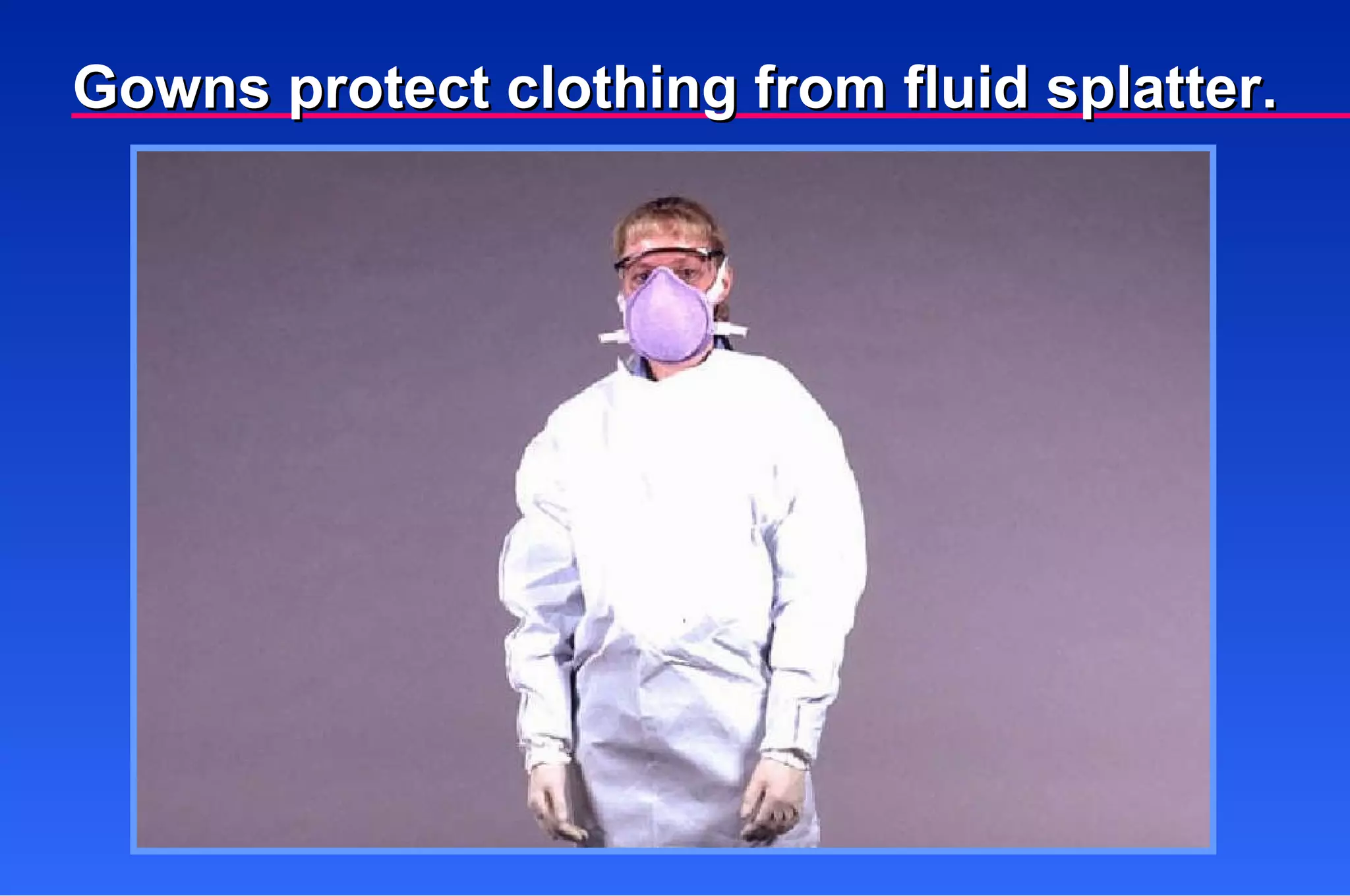
Gowns protect clothing from fluid splatter.
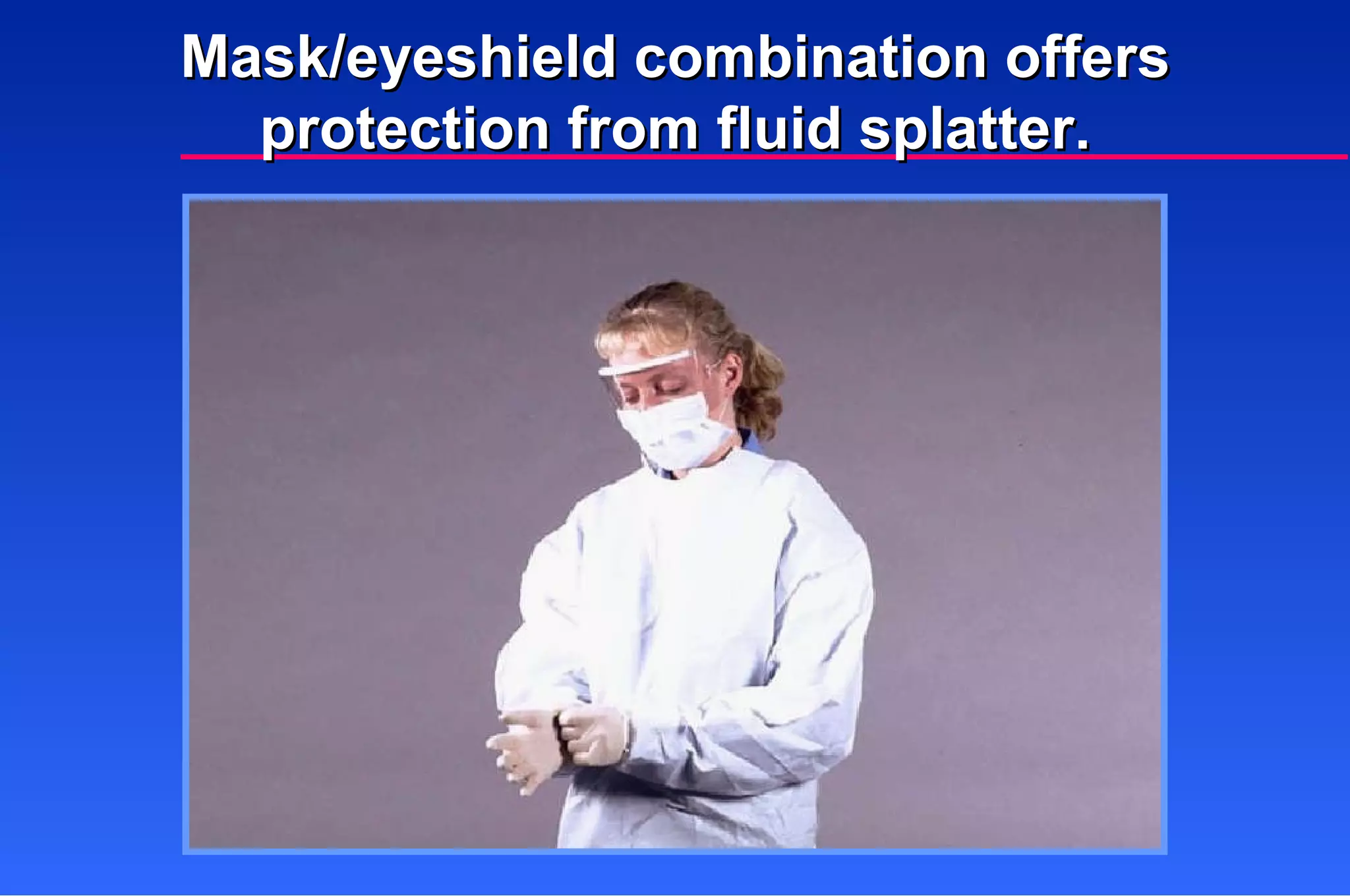
Mask/eyeshield combination offers protection from fluid splatter.
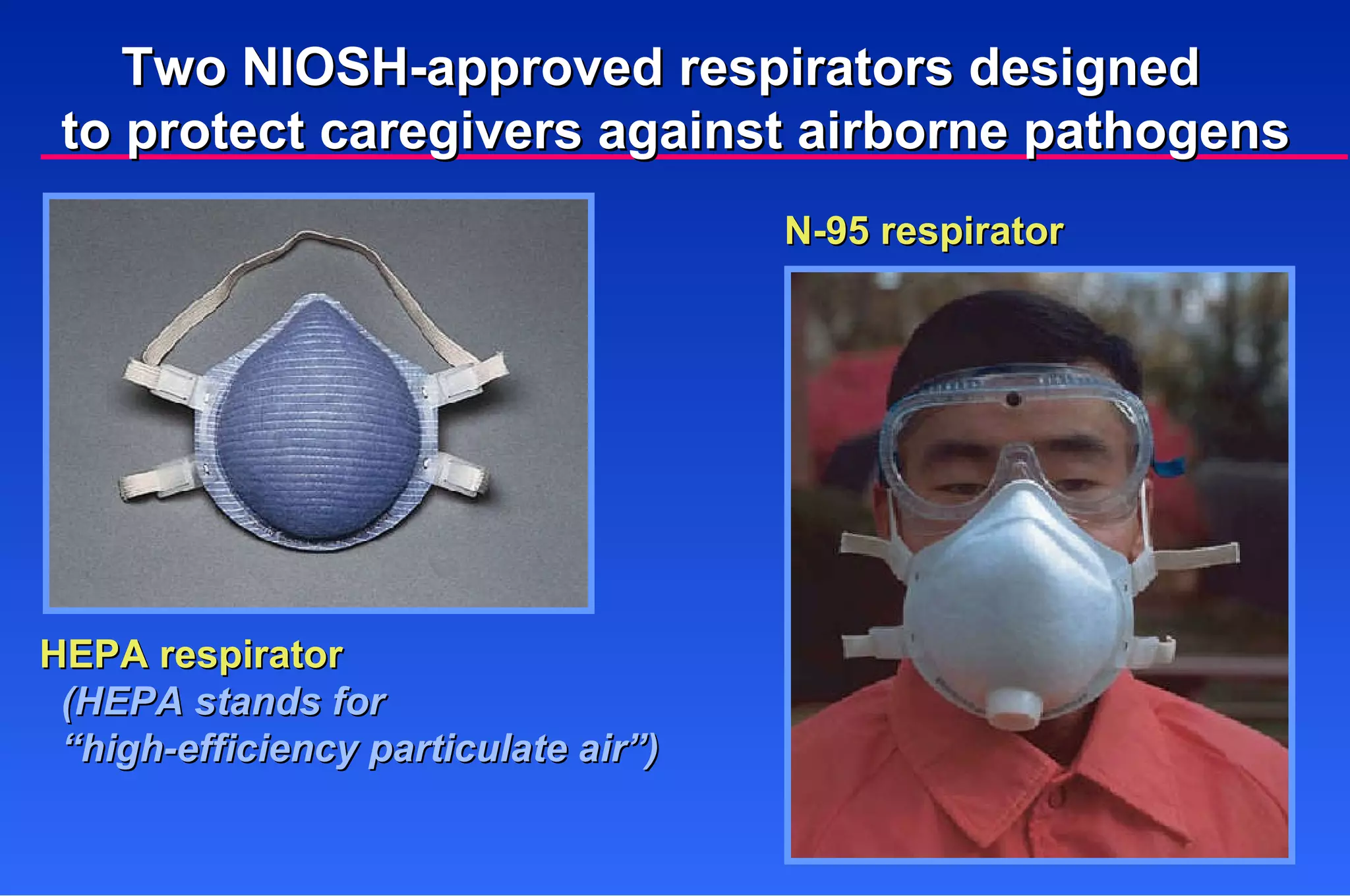
N-95 respirator HEPA respirator (HEPA stands for  “ high-efficiency particulate air”) Two NIOSH-approved respirators designed  to protect caregivers against airborne pathogens
Preventive vaccines Immune status verification  (titer) Testing  (tuberculin PPD) Infectious Disease Prevention
1. What are the effects of emotion and stress on the EMT-B? 2. What are the reactions of the family,  patient, and EMT-B to death and dying? 3. How can the EMT-B maintain a safe scene? 4. Discuss exposure control and how to take  BSI throughout the call.  R EVIEW QUESTIONS

Ch02 eec3