Gerald Ford
• 38th President 1974-1977
• July 14, 1913 December 26,
  2006.
• Grew up in Grand Rapids,
  Michigan.
• He starred on the
  University of Michigan
  football team, then went to
  Yale, where he served as
  assistant coach.
• During World War II he
  attained the rank of
  lieutenant commander in
  the Navy.
Jimmy Carter
• 39th President 1977-1981

• Born October 1, 1924 –
• Naval Academy
  – Served in Navy for 6 years
• Wealthy peanut farmer
• Senator and Governor
  from Georgia
1976 – Presidential
Election of 1976
Andrew Young

• 1st African-
  American to
  become United
  Nations
  Ambassador for
  the United States.
Mikhail Gorbachev

• Became the General
  Secretary of the
  Communist Party in
  the USSR in 1985.
• Began a new era of
  reform in the
  communist country.
Mikhail Gorbachev

• Glasnost
  – openness in discussing social problems


• Perestroika
  – “restructuring", referring to the
    restructuring of the Soviet political and
    economic system in 1987
INF Treaty - 1987
• The treaty eliminated nuclear and conventional ground-
   launched ballistic and cruise missiles with intermediate
  ranges. By the treaty's deadline of June 1, 1991, a total of
        2,692 of such weapons had been destroyed.
November 9, 1989
• After a
  misunderstanding, Gunther
  Schabowski famously
  announced in a live broadcast
  international press conference
  that (effectively) all rules for
  traveling abroad were lifted, in
  effect "immediately".
• Tens of thousands of people
  immediately went to the Berlin
  Wall where the vastly
  outnumbered border guards
  were forced to open access         East German Minister of Propaganda;
                                     famous for accidentally beginning the
  points and allow them
                                        destruction of the Berlin Wall!!
  through, which proved to be
  the end of the Berlin Wall.
East German Soldiers React

• Soldiers were not
  sure of their orders
  up until the very end.
Hands across the divide
• East German border policemen, refuse to shake hands
   with a Berliner who stretches out his hand over the
   border fence at the eastern site near the Checkpoint
              Charlie border crossing point.
Celebration!
• East Berlin citizens climb
  up the Berlin Wall near
  the Brandenburg
  Gate, November
  10, 1989, to reach the
  western part of the
  divided city.
December 25, 1989
• Leonard Bernstein
  gave a concert in
  Berlin celebrating the
  end of the
  Wall, including
  Beethoven's 9th
  symphony (Ode to
  Joy) with the word
  "Joy" (Freude)
  changed to
  "Freedom" (Freiheit)
  in the text sung.
Images from the End
Media Reaction
Importance
• The fall of the Wall
  was the first step
  toward German
  reunification, which
  was formally
  concluded on
  October 3, 1990.
• Major symbol of
  Cold War was gone.
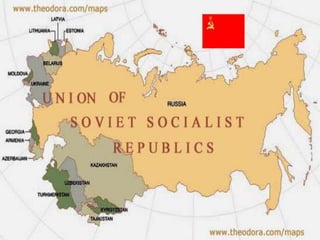
Break Up of the USSR
• After years of Soviet military buildup at
  the expense of domestic
  development, economic growth was at
  a standstill.
• Failed attempts at reform, a stagnant
  economy, and war in Afghanistan led to
  a general feeling of
  discontent, especially in the Baltic
  republics and Eastern Europe.
Boris Yeltsin
• The Soviet Union
  finally collapsed in
  1991 when Boris
  Yeltsin seized power in
  the aftermath of a
  failed coup that had
  attempted to topple
  reform-minded
  Gorbachev.
• Bosnia and
  Herzegovina
• Croatia
• Kosovo
• Macedonia
• Montenegro
• Serbia
• Slovenia
Tiananmen Square 1989

• A series of demonstrations in and near Tiananmen
  Square in Beijing in the Peoples Republic of China
  beginning on 14 April 1989.
• The protests were sparked by the death of a pro-
  democracy and anti-corruption official, Hu
  Yaobang, whom protesters wanted to mourn.
• Soldiers and tanks from the People's Liberation
  Army were sent to take control of the city.
• The number of deaths is not known.
Tiananmen Square 1989

• An intelligence report received by the
  Soviet politburo estimated that 3,000
  protesters were killed, according to a
  document found in the Soviet archive.
• Following the conflict, the government
  conducted widespread arrests of protesters
  and their supporters, cracked down on
  other protests around China, banned the
  foreign press from the country and strictly
  controlled coverage of the events in the
  PRC press.
“Tank Man”
Invasion of grenada

• October 25, 1983 and was
  the first major operation
  conducted by the US
  military since the
  Vietnam War.
• Codenamed Operation
  Urgent Fury.
• WHY? the lives of
  American medical
  students who were living
  on the island were
  endangered.
Operation Just Cause

• The United States invasion
  of Panama was launched
  on December 20, 1989 –
  WHY?
   – Safeguarding the lives
     of U.S. citizens in
     Panama.
   – Defending democracy
     and human rights in
     Panama.
   – Combating drug
     trafficking.
Operation nifty package
• The 1989 invasion of
  Panama by the United
  States removed him from
  power; he was captured,
  detained as a prisoner of
  war, and flown to the
  United States.
• Noriega was tried on eight
  counts of drug trafficking,
  racketeering, and money
  laundering in April 1992.
Iran-Contra Scandal

                    Israel would ship weapons to
                         a relatively moderate,
                    politically influential group of
                    Iranians, and the U.S. would
                       then resupply Israel and
                     receive the Israeli payment.


 A portion of the proceeds                         The Iranian recipients
from the weapon sales was                       promised to do everything
   diverted to fund anti-                        in their power to achieve
    Sandinista and anti-                           the release of six U.S.
   communist rebels, or                         hostages, who were being
  Contras, in Nicaragua –                       held by the Islamist terror
 Which was violation of the                          group Hezbollah.
    Boland Amendment
Persian Gulf War
The Conflict
• On August 2, 1990
  the country of
  Iraq invaded and
  occupied the tiny
  country of Kuwait
  over a “supposed”
  dispute over oil.
United States Responds
• President George W.
  Bush declared that the
  invasion “would not
  stand”.
• Bush decided to send
  American troops to
  protect Saudi Arabia
  (Desert Shield) and
  eventually liberate
  Kuwait (Desert Storm).
Outcome
• American forces led
  by Gen. Norman
  Schwarzkopf would
  eventually
  annihilate the Iraqi
  forces with the
  world’s most
  advanced weapons.
Air War Assessment
• Began January 17,
  1991 and lasted
  about 6 weeks until
  the ground attack
  began.
• Air power was then
  used to assist the
  ground assault.
• Air power gave the
                        Tomahawk destroying
  US an extreme
                           Iraqi postion
  advantage
The Ground War
• On Feb 24, 1991 Marine
  divisions launched the
  ground offensive.
• Gen. Schwarzkopf
  hatched his “Hail Mary”
  attack plan.
• The ground assault by
  the Allies precipitated a
  general rout on the part
  of Iraqi forces positioned
  in Kuwait.
Desert Storm - Ground
       Offensive
Ground War Assessment
• Operation Desert
                           4500
  Storm(ground) lasted     4000
  only 100 hours.          3500
• The Iraqi forces were    3000                       Iraqi (pre-
                                                      war)
  totally destroyed by     2500
                           2000                       Iraqi (lost)
  the American led
                           1500
  Coalition forces.        1000
• 100,000 Iraqis killed;    500
  148 Americans               0
                                  tanks   Airplanes

Unit 11 = 1970s -1980s

  • 2.
    Gerald Ford • 38thPresident 1974-1977 • July 14, 1913 December 26, 2006. • Grew up in Grand Rapids, Michigan. • He starred on the University of Michigan football team, then went to Yale, where he served as assistant coach. • During World War II he attained the rank of lieutenant commander in the Navy.
  • 3.
    Jimmy Carter • 39thPresident 1977-1981 • Born October 1, 1924 – • Naval Academy – Served in Navy for 6 years • Wealthy peanut farmer • Senator and Governor from Georgia
  • 4.
  • 5.
  • 8.
    Andrew Young • 1stAfrican- American to become United Nations Ambassador for the United States.
  • 13.
    Mikhail Gorbachev • Becamethe General Secretary of the Communist Party in the USSR in 1985. • Began a new era of reform in the communist country.
  • 14.
    Mikhail Gorbachev • Glasnost – openness in discussing social problems • Perestroika – “restructuring", referring to the restructuring of the Soviet political and economic system in 1987
  • 15.
    INF Treaty -1987 • The treaty eliminated nuclear and conventional ground- launched ballistic and cruise missiles with intermediate ranges. By the treaty's deadline of June 1, 1991, a total of 2,692 of such weapons had been destroyed.
  • 16.
    November 9, 1989 •After a misunderstanding, Gunther Schabowski famously announced in a live broadcast international press conference that (effectively) all rules for traveling abroad were lifted, in effect "immediately". • Tens of thousands of people immediately went to the Berlin Wall where the vastly outnumbered border guards were forced to open access East German Minister of Propaganda; famous for accidentally beginning the points and allow them destruction of the Berlin Wall!! through, which proved to be the end of the Berlin Wall.
  • 17.
    East German SoldiersReact • Soldiers were not sure of their orders up until the very end.
  • 18.
    Hands across thedivide • East German border policemen, refuse to shake hands with a Berliner who stretches out his hand over the border fence at the eastern site near the Checkpoint Charlie border crossing point.
  • 19.
    Celebration! • East Berlincitizens climb up the Berlin Wall near the Brandenburg Gate, November 10, 1989, to reach the western part of the divided city.
  • 20.
    December 25, 1989 •Leonard Bernstein gave a concert in Berlin celebrating the end of the Wall, including Beethoven's 9th symphony (Ode to Joy) with the word "Joy" (Freude) changed to "Freedom" (Freiheit) in the text sung.
  • 21.
  • 22.
  • 23.
    Importance • The fallof the Wall was the first step toward German reunification, which was formally concluded on October 3, 1990. • Major symbol of Cold War was gone.
  • 25.
    Break Up ofthe USSR • After years of Soviet military buildup at the expense of domestic development, economic growth was at a standstill. • Failed attempts at reform, a stagnant economy, and war in Afghanistan led to a general feeling of discontent, especially in the Baltic republics and Eastern Europe.
  • 26.
    Boris Yeltsin • TheSoviet Union finally collapsed in 1991 when Boris Yeltsin seized power in the aftermath of a failed coup that had attempted to topple reform-minded Gorbachev.
  • 30.
    • Bosnia and Herzegovina • Croatia • Kosovo • Macedonia • Montenegro • Serbia • Slovenia
  • 31.
    Tiananmen Square 1989 •A series of demonstrations in and near Tiananmen Square in Beijing in the Peoples Republic of China beginning on 14 April 1989. • The protests were sparked by the death of a pro- democracy and anti-corruption official, Hu Yaobang, whom protesters wanted to mourn. • Soldiers and tanks from the People's Liberation Army were sent to take control of the city. • The number of deaths is not known.
  • 32.
    Tiananmen Square 1989 •An intelligence report received by the Soviet politburo estimated that 3,000 protesters were killed, according to a document found in the Soviet archive. • Following the conflict, the government conducted widespread arrests of protesters and their supporters, cracked down on other protests around China, banned the foreign press from the country and strictly controlled coverage of the events in the PRC press.
  • 36.
  • 38.
    Invasion of grenada •October 25, 1983 and was the first major operation conducted by the US military since the Vietnam War. • Codenamed Operation Urgent Fury. • WHY? the lives of American medical students who were living on the island were endangered.
  • 40.
    Operation Just Cause •The United States invasion of Panama was launched on December 20, 1989 – WHY? – Safeguarding the lives of U.S. citizens in Panama. – Defending democracy and human rights in Panama. – Combating drug trafficking.
  • 41.
    Operation nifty package •The 1989 invasion of Panama by the United States removed him from power; he was captured, detained as a prisoner of war, and flown to the United States. • Noriega was tried on eight counts of drug trafficking, racketeering, and money laundering in April 1992.
  • 43.
    Iran-Contra Scandal Israel would ship weapons to a relatively moderate, politically influential group of Iranians, and the U.S. would then resupply Israel and receive the Israeli payment. A portion of the proceeds The Iranian recipients from the weapon sales was promised to do everything diverted to fund anti- in their power to achieve Sandinista and anti- the release of six U.S. communist rebels, or hostages, who were being Contras, in Nicaragua – held by the Islamist terror Which was violation of the group Hezbollah. Boland Amendment
  • 44.
  • 45.
    The Conflict • OnAugust 2, 1990 the country of Iraq invaded and occupied the tiny country of Kuwait over a “supposed” dispute over oil.
  • 46.
    United States Responds •President George W. Bush declared that the invasion “would not stand”. • Bush decided to send American troops to protect Saudi Arabia (Desert Shield) and eventually liberate Kuwait (Desert Storm).
  • 47.
    Outcome • American forcesled by Gen. Norman Schwarzkopf would eventually annihilate the Iraqi forces with the world’s most advanced weapons.
  • 48.
    Air War Assessment •Began January 17, 1991 and lasted about 6 weeks until the ground attack began. • Air power was then used to assist the ground assault. • Air power gave the Tomahawk destroying US an extreme Iraqi postion advantage
  • 49.
    The Ground War •On Feb 24, 1991 Marine divisions launched the ground offensive. • Gen. Schwarzkopf hatched his “Hail Mary” attack plan. • The ground assault by the Allies precipitated a general rout on the part of Iraqi forces positioned in Kuwait.
  • 50.
    Desert Storm -Ground Offensive
  • 51.
    Ground War Assessment •Operation Desert 4500 Storm(ground) lasted 4000 only 100 hours. 3500 • The Iraqi forces were 3000 Iraqi (pre- war) totally destroyed by 2500 2000 Iraqi (lost) the American led 1500 Coalition forces. 1000 • 100,000 Iraqis killed; 500 148 Americans 0 tanks Airplanes