CGIAR Capacity Development Framework :
Engaging with Partners
Celebrate FARA – Johannesburg, 27 Nov 2014
Presented by Dr. Iddo Dror, Head of Capacity Development, International Livestock Research Institute (ILRI)
Chair, CGIAR Capacity Development Community of Practice
Why a Capacity Development Framework?
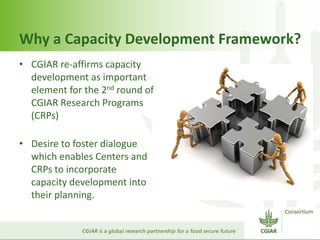
• CGIAR re-affirms capacity
development as important
element for the 2nd round of
CGIAR Research Programs
(CRPs)
• Desire to foster dialogue
which enables Centers and
CRPs to incorporate
capacity development into
their planning.
What it is (and isn’t)
• Short (the main text is only six pages long).
• A framework on how CGIAR and its partners can
successfully integrate capacity development into CRPs.
• NOT intended as a prescriptive “how-to” guide. Will
be followed by other supplementary materials
• An internal Document to help CRPs planning
• Developed through a consultative process (more in
Nicole’s presentation)
Context / Overview
• Need to leap from individual learning to demonstrating livelihood
outcomes and impacts through relevant science and partnerships
• Effective assessment and strategy formulation tailored to the
cultural, organizational and institutional contexts
• CapDev effective as a vehicle for sustainable development if it is
embedded within Impact Pathways (IPs) of CRPs
• NARS provide the unambiguous context and strategic framework for
its implementation.
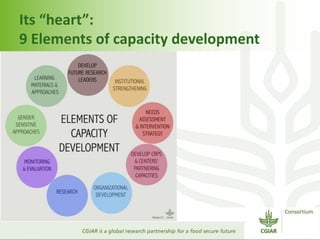
Its “heart”:
9 Elements of capacity development
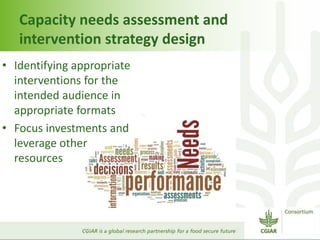
Capacity needs assessment and
intervention strategy design
• Identifying appropriate
interventions for the
intended audience in
appropriate formats
• Focus investments and
leverage other
resources
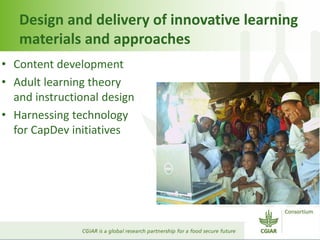
Design and delivery of innovative learning
materials and approaches
• Content development
• Adult learning theory
and instructional design
• Harnessing technology
for CapDev initiatives
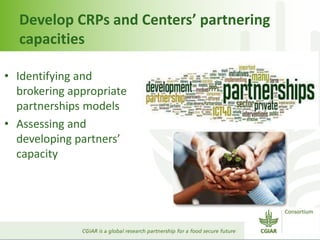
Develop CRPs and Centers’ partnering
capacities
• Identifying and
brokering appropriate
partnerships models
• Assessing and
developing partners’
capacity
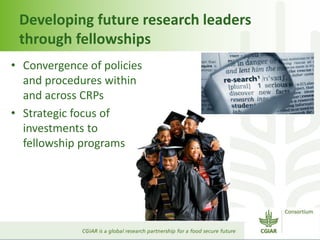
Developing future research leaders
through fellowships
• Convergence of policies
and procedures within
and across CRPs
• Strategic focus of
investments to
fellowship programs
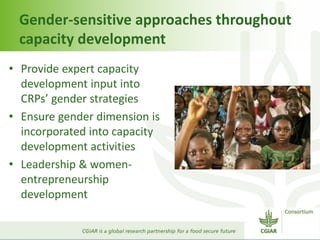
Gender-sensitive approaches throughout
capacity development
• Provide expert capacity
development input into
CRPs’ gender strategies
• Ensure gender dimension is
incorporated into capacity
development activities
• Leadership & women-
entrepreneurship
development
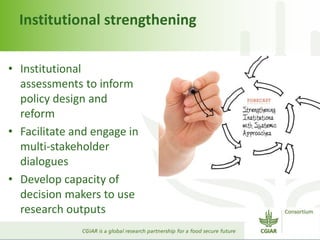
Institutional strengthening
• Institutional
assessments to inform
policy design and
reform
• Facilitate and engage in
multi-stakeholder
dialogues
• Develop capacity of
decision makers to use
research outputs
Monitoring and evaluation (M&E) of
capacity development
• Integrating capacity
development into
monitoring and
evaluation systems
across the CRP
ecosystem
• Capturing lessons
learned for replication
and upscaling
Organizational development
• Developing CRPs
organizational capacity
to move along the R4D
process
• Enhancing NARS
research and research
management capacity
• Strengthening boundary
partners for research
uptake
Research on capacity development
• Learning what worked
in what context
• Action research
Indicators of successful implementation
• will require adequate
levels of sustained
investment
• Integrate traditional
indicators with new
metrics and procedures
• Capture complexity and
activities across the
nine elements.
Thank you for your attention
And now over to Nicole -
for a summary of the process followed till date.

CGIAR Capacity Development Framework : Engaging with Partners

  • 1.
    CGIAR Capacity DevelopmentFramework : Engaging with Partners Celebrate FARA – Johannesburg, 27 Nov 2014 Presented by Dr. Iddo Dror, Head of Capacity Development, International Livestock Research Institute (ILRI) Chair, CGIAR Capacity Development Community of Practice
  • 2.
    Why a CapacityDevelopment Framework? • CGIAR re-affirms capacity development as important element for the 2nd round of CGIAR Research Programs (CRPs) • Desire to foster dialogue which enables Centers and CRPs to incorporate capacity development into their planning.
  • 3.
    What it is(and isn’t) • Short (the main text is only six pages long). • A framework on how CGIAR and its partners can successfully integrate capacity development into CRPs. • NOT intended as a prescriptive “how-to” guide. Will be followed by other supplementary materials • An internal Document to help CRPs planning • Developed through a consultative process (more in Nicole’s presentation)
  • 4.
    Context / Overview •Need to leap from individual learning to demonstrating livelihood outcomes and impacts through relevant science and partnerships • Effective assessment and strategy formulation tailored to the cultural, organizational and institutional contexts • CapDev effective as a vehicle for sustainable development if it is embedded within Impact Pathways (IPs) of CRPs • NARS provide the unambiguous context and strategic framework for its implementation.
  • 5.
    Its “heart”: 9 Elementsof capacity development
  • 6.
    Capacity needs assessmentand intervention strategy design • Identifying appropriate interventions for the intended audience in appropriate formats • Focus investments and leverage other resources
  • 7.
    Design and deliveryof innovative learning materials and approaches • Content development • Adult learning theory and instructional design • Harnessing technology for CapDev initiatives
  • 8.
    Develop CRPs andCenters’ partnering capacities • Identifying and brokering appropriate partnerships models • Assessing and developing partners’ capacity
  • 9.
    Developing future researchleaders through fellowships • Convergence of policies and procedures within and across CRPs • Strategic focus of investments to fellowship programs
  • 10.
    Gender-sensitive approaches throughout capacitydevelopment • Provide expert capacity development input into CRPs’ gender strategies • Ensure gender dimension is incorporated into capacity development activities • Leadership & women- entrepreneurship development
  • 11.
    Institutional strengthening • Institutional assessmentsto inform policy design and reform • Facilitate and engage in multi-stakeholder dialogues • Develop capacity of decision makers to use research outputs
  • 12.
    Monitoring and evaluation(M&E) of capacity development • Integrating capacity development into monitoring and evaluation systems across the CRP ecosystem • Capturing lessons learned for replication and upscaling
  • 13.
    Organizational development • DevelopingCRPs organizational capacity to move along the R4D process • Enhancing NARS research and research management capacity • Strengthening boundary partners for research uptake
  • 14.
    Research on capacitydevelopment • Learning what worked in what context • Action research
  • 15.
    Indicators of successfulimplementation • will require adequate levels of sustained investment • Integrate traditional indicators with new metrics and procedures • Capture complexity and activities across the nine elements.
  • 16.
    Thank you foryour attention And now over to Nicole - for a summary of the process followed till date.