Effective Capacity Development
for impactful and sustainable country level
implementation of
What is Capacity, Capacity Development
National Innovation Facilitator’s Training Programme
Strengthen Your and Our understanding for more
effective country level implementation
Overview Presentation
• What is Capacity / Capacity Development?
• Effective Capacity Development for CDAIS
Effective Development?
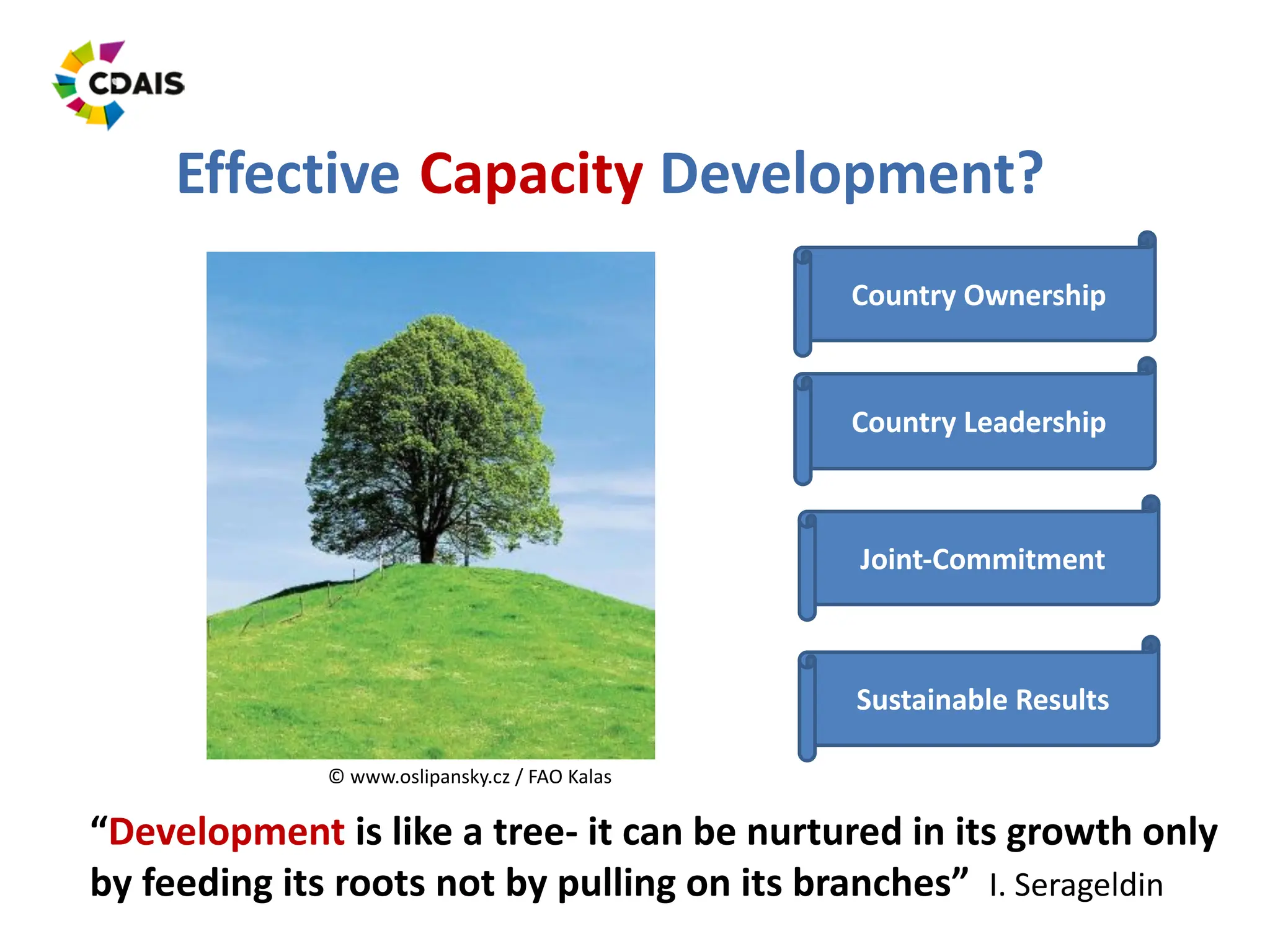
“Development is like a tree- it can be nurtured in its growth only
by feeding its roots not by pulling on its branches” I. Serageldin
Capacity
Country Ownership
Country Leadership
Joint-Commitment
© www.oslipansky.cz / FAO Kalas
Sustainable Results
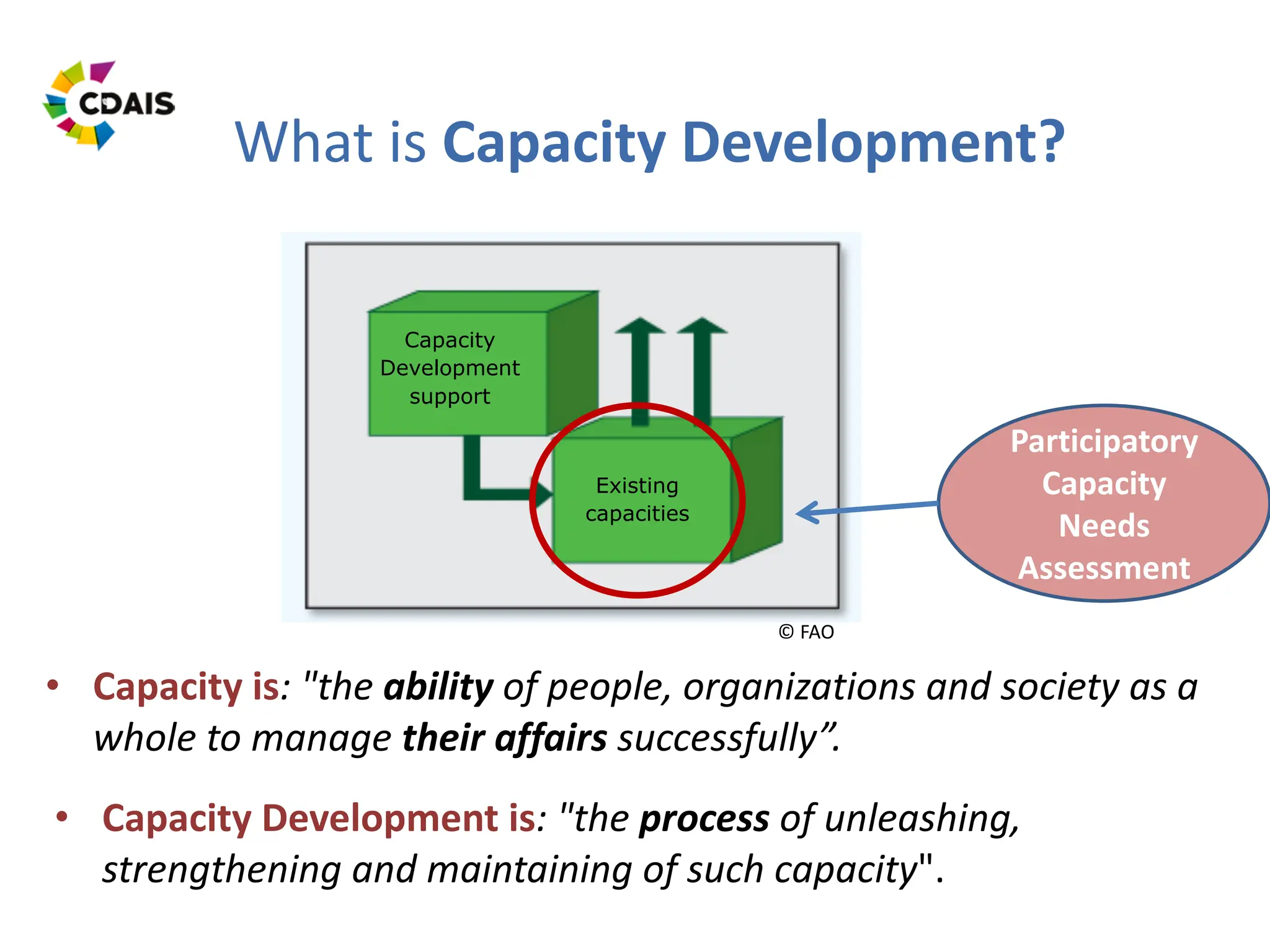
Capacity
Development
support
Existing
capacities
What is Capacity Development?
• Capacity is: "the ability of people, organizations and society as a
whole to manage their affairs successfully”.
• Capacity Development is: "the process of unleashing,
strengthening and maintaining of such capacity".
Participatory
Capacity
Needs
Assessment
© FAO
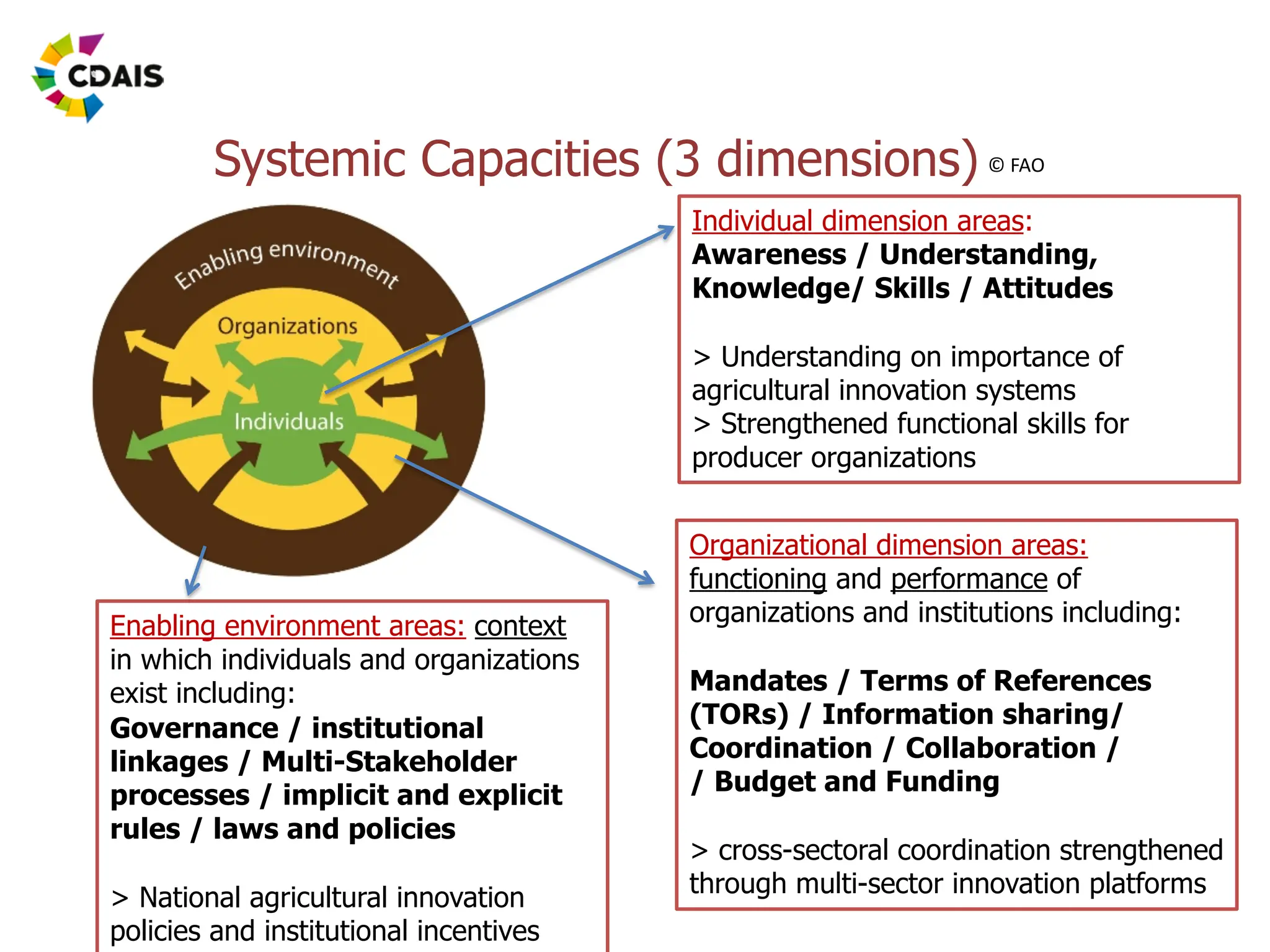
Systemic Capacities (3 dimensions)
Individual dimension areas:
Awareness / Understanding,
Knowledge/ Skills / Attitudes
> Understanding on importance of
agricultural innovation systems
> Strengthened functional skills for
producer organizations
Organizational dimension areas:
functioning and performance of
organizations and institutions including:
Mandates / Terms of References
(TORs) / Information sharing/
Coordination / Collaboration /
/ Budget and Funding
> cross-sectoral coordination strengthened
through multi-sector innovation platforms
Enabling environment areas: context
in which individuals and organizations
exist including:
Governance / institutional
linkages / Multi-Stakeholder
processes / implicit and explicit
rules / laws and policies
> National agricultural innovation
policies and institutional incentives
© FAO
How are Capacities Enhanced (Interventions)?
Combination of different CapDev options across three CD
dimensions is key
Important: capacity
development goes
beyond training
Formal training
based on
learning needs
assessment
Learning
on-the-job
Study-visits
Network
creation
South-South
Knowledge
exchanges
Strengthen
Cross-sectoral
committees
Policy
dialogue for
inclusive
innovation
policy
High-level
advocacy
Strengthen multi-
stakeholder
platforms for
agricultural
innovation
systems
Strategic planning support
(e.g. drawing action plan,
prioritization, goal setting)
Review
Organizational
Mandates
Drafting Cross-
Sectoral
Roadmaps for
Action
Explanation CD Interventions:
Black = Individual Level
Yellow = Organizational Level
Blue = Enabling environment
Step 1: Jointly Assess Capacities (human and institutional) with country ownership
…and Climate Change Example “Capacity Development for Climate Smart Agriculture”
http://www.fao.org/docrep/018/i3325e/i3325e17.pdf
Visit FAO’s New CD Portal
http://www.fao.org/capacity-development/en/
Step 2: Jointly Design appropriate CD Interventions to address needs
Step 3: Jointly Define Results and track CD progress
Generic Steps CNA Process
PPT-S3a.-What-is-capacity_definitionFAO.pdf

  • 1.
    Effective Capacity Development forimpactful and sustainable country level implementation of What is Capacity, Capacity Development National Innovation Facilitator’s Training Programme
  • 2.
    Strengthen Your andOur understanding for more effective country level implementation Overview Presentation • What is Capacity / Capacity Development? • Effective Capacity Development for CDAIS
  • 3.
    Effective Development? “Development islike a tree- it can be nurtured in its growth only by feeding its roots not by pulling on its branches” I. Serageldin Capacity Country Ownership Country Leadership Joint-Commitment © www.oslipansky.cz / FAO Kalas Sustainable Results
  • 4.
    Capacity Development support Existing capacities What is CapacityDevelopment? • Capacity is: "the ability of people, organizations and society as a whole to manage their affairs successfully”. • Capacity Development is: "the process of unleashing, strengthening and maintaining of such capacity". Participatory Capacity Needs Assessment © FAO
  • 5.
    Systemic Capacities (3dimensions) Individual dimension areas: Awareness / Understanding, Knowledge/ Skills / Attitudes > Understanding on importance of agricultural innovation systems > Strengthened functional skills for producer organizations Organizational dimension areas: functioning and performance of organizations and institutions including: Mandates / Terms of References (TORs) / Information sharing/ Coordination / Collaboration / / Budget and Funding > cross-sectoral coordination strengthened through multi-sector innovation platforms Enabling environment areas: context in which individuals and organizations exist including: Governance / institutional linkages / Multi-Stakeholder processes / implicit and explicit rules / laws and policies > National agricultural innovation policies and institutional incentives © FAO
  • 6.
    How are CapacitiesEnhanced (Interventions)? Combination of different CapDev options across three CD dimensions is key Important: capacity development goes beyond training Formal training based on learning needs assessment Learning on-the-job Study-visits Network creation South-South Knowledge exchanges Strengthen Cross-sectoral committees Policy dialogue for inclusive innovation policy High-level advocacy Strengthen multi- stakeholder platforms for agricultural innovation systems Strategic planning support (e.g. drawing action plan, prioritization, goal setting) Review Organizational Mandates Drafting Cross- Sectoral Roadmaps for Action Explanation CD Interventions: Black = Individual Level Yellow = Organizational Level Blue = Enabling environment
  • 7.
    Step 1: JointlyAssess Capacities (human and institutional) with country ownership …and Climate Change Example “Capacity Development for Climate Smart Agriculture” http://www.fao.org/docrep/018/i3325e/i3325e17.pdf Visit FAO’s New CD Portal http://www.fao.org/capacity-development/en/ Step 2: Jointly Design appropriate CD Interventions to address needs Step 3: Jointly Define Results and track CD progress Generic Steps CNA Process