Compassion
Focused therapy
Session 5
Compassionate Awareness
Cultivating Mindfulness
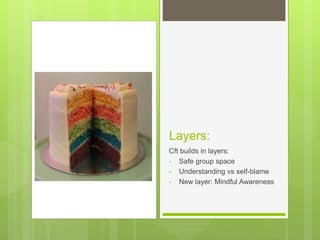
Layers:
Cft builds in layers:
• Safe group space
• Understanding vs self-blame
• New layer: Mindful Awareness
Mindfulness:
 If we are to work with our suffering, we must
be able to tolerate it, stay with it
 Mindfulness allows us to pay attention to the
present moment (outside and inside our
brains)
 We allow ourselves to just be with our
experience, to notice and observe without
judging, criticizing, or blaming
Mindful Awareness
 Useful for people who are haunted by self-
critical thoughts
 The problem is not that we have these
thoughts (most people do from time to time)
 The problem comes when we ruminate on
them, rehearse them and believe them
Mindfulness
 Mindfulness allows us to see thoughts and
feelings as mind objects instead of who we
are
Three Flower Pots
 Imagine three flower pots:
Mindfulness
 It doesn’t matter what you put in front of your
minds’ eye, it will always be you looking at it
The voice inside our head
 Ever notice what happens in our minds during
a lull in conversation? When we’re alone?
The Voice
 What is this voice? It never stops talking, and 70-80 % of
what is says is negative
 It gets really loud when we’re trying to sleep:
 “Omigod, I forgot to call Fred, what is he going to think?
I’ve got such a load tomorrow, I hate work, these kids are
driving me crazy, maybe I’d be better off alone, I hate
being alone, I’m going to be alone forever, what’s wrong
with you? Get your act together, what if? What if? Some
thing bad is going to happen, I just know it, I’m such an
idiot, how could it not. It’s not fair, why do things have to
be so unfair, I hate my life, what a disaster, my mother
was right, I’ll never be anything, no wonder everyone
leaves me… and on and on and on….
The Voice
 Is this voice you?
Who is this voice?
 This voice is not you
 You are the one who is hearing it
 Nothing it says is any more real than anything
else in your mind
 (remember the three flowerpots)
Why does it talk?
 The talking releases built up nervous, fearful
or desire-based energy.. Like a teakettle
whistling
 When you are angry with someone, how
many times do you tell them off inside of your
head?
 It talks because we are not okay inside and
talking releases stored energy
The Manic Roommate
 Imagine you spend the day just listening to
the voice
 Your inner voice never stops chattering,
observing, fortune-telling, criticizing. It
changes its mind, is conflicted, jumps from
one thing to another
 Now imagine this a person sitting next to you
on the couch, a roommate you take
everywhere
The Manic Roommate
 Image if you had to listen to the incessant,
neurotic, conflicting chatter all day from a real
person
 How long would we last?
 Would we pay this person money to advise us
on finances, relationships, our future?
The Maniac Roommate
 Why do we give it all of our attention, and
believe every word it says?
 Have we ever bothered to check it’s
credentials?
 How often is it right/wrong?
 Where will we put our attention?
Attention Practice
 Attention is like the spotlight of the mind
Let’s practice..
 Series of words
 When you hear the word, direct your attention
to where the word indicates
 So if I say “left elbow” direct your attention to
your left elbow….
Let’s discuss…
 How quickly could you shift your attention was
is fast or slow?
 Notice how you could switch from something
very narrow, like your elbow to something
very broad like world peace
Mindfulness Practice
 Mindful check-in
 Why?
 Develop the habit of bringing attention to body
experiences, get used to noticing
 Notice without judging
 Easy practice to transfer to life in general
 Thinking vs observing
 Thinking about your feet vs observing your feet
Practice: Tactile anchor point
 Choose a stone
 Just notice qualities.. Mindfulness practice pg
114 green book
Benefits of Mindful Practice
 Mindfulness can grow parts of the brain that
are involved with feelings of self-soothing and
emotional regulation
 After 8 weeks of practice the amygdala (or
fear center) shrinks
 Brain registers less physical pain (source:
Scientific American Website)
 Develops ability to pause and choose action,
instead of gut reacting
How Mindfulness affects the
brain:
 Video Sara Lazar, Harvard Universtiy
 8 weeks, 30-40 mins per day of Meditation
causes an increase in areas of:
 Thinking, planning and emotional control
 Compassion and understanding
 And a decrease in: fear and anxiety
Summary and Homework:
 Mindfulness allows us to observe without
judgment, developing compassion
 It allows us to tolerate and work with difficult
emotions
 It sets the stage for the rest of the CFT
program, cultivating compassionate strengths
 Homework Practice for two mins per day (set
timer) and record reaction in journal

Cft session 5

  • 1.
    Compassion Focused therapy Session 5 CompassionateAwareness Cultivating Mindfulness
  • 2.
    Layers: Cft builds inlayers: • Safe group space • Understanding vs self-blame • New layer: Mindful Awareness
  • 3.
    Mindfulness:  If weare to work with our suffering, we must be able to tolerate it, stay with it  Mindfulness allows us to pay attention to the present moment (outside and inside our brains)  We allow ourselves to just be with our experience, to notice and observe without judging, criticizing, or blaming
  • 4.
    Mindful Awareness  Usefulfor people who are haunted by self- critical thoughts  The problem is not that we have these thoughts (most people do from time to time)  The problem comes when we ruminate on them, rehearse them and believe them
  • 5.
    Mindfulness  Mindfulness allowsus to see thoughts and feelings as mind objects instead of who we are
  • 6.
    Three Flower Pots Imagine three flower pots:
  • 7.
    Mindfulness  It doesn’tmatter what you put in front of your minds’ eye, it will always be you looking at it
  • 8.
    The voice insideour head  Ever notice what happens in our minds during a lull in conversation? When we’re alone?
  • 9.
    The Voice  Whatis this voice? It never stops talking, and 70-80 % of what is says is negative  It gets really loud when we’re trying to sleep:  “Omigod, I forgot to call Fred, what is he going to think? I’ve got such a load tomorrow, I hate work, these kids are driving me crazy, maybe I’d be better off alone, I hate being alone, I’m going to be alone forever, what’s wrong with you? Get your act together, what if? What if? Some thing bad is going to happen, I just know it, I’m such an idiot, how could it not. It’s not fair, why do things have to be so unfair, I hate my life, what a disaster, my mother was right, I’ll never be anything, no wonder everyone leaves me… and on and on and on….
  • 10.
    The Voice  Isthis voice you?
  • 11.
    Who is thisvoice?  This voice is not you  You are the one who is hearing it  Nothing it says is any more real than anything else in your mind  (remember the three flowerpots)
  • 12.
    Why does ittalk?  The talking releases built up nervous, fearful or desire-based energy.. Like a teakettle whistling  When you are angry with someone, how many times do you tell them off inside of your head?  It talks because we are not okay inside and talking releases stored energy
  • 13.
    The Manic Roommate Imagine you spend the day just listening to the voice  Your inner voice never stops chattering, observing, fortune-telling, criticizing. It changes its mind, is conflicted, jumps from one thing to another  Now imagine this a person sitting next to you on the couch, a roommate you take everywhere
  • 14.
    The Manic Roommate Image if you had to listen to the incessant, neurotic, conflicting chatter all day from a real person  How long would we last?  Would we pay this person money to advise us on finances, relationships, our future?
  • 15.
    The Maniac Roommate Why do we give it all of our attention, and believe every word it says?  Have we ever bothered to check it’s credentials?  How often is it right/wrong?  Where will we put our attention?
  • 16.
    Attention Practice  Attentionis like the spotlight of the mind
  • 17.
    Let’s practice..  Seriesof words  When you hear the word, direct your attention to where the word indicates  So if I say “left elbow” direct your attention to your left elbow….
  • 18.
    Let’s discuss…  Howquickly could you shift your attention was is fast or slow?  Notice how you could switch from something very narrow, like your elbow to something very broad like world peace
  • 19.
    Mindfulness Practice  Mindfulcheck-in  Why?  Develop the habit of bringing attention to body experiences, get used to noticing  Notice without judging  Easy practice to transfer to life in general  Thinking vs observing  Thinking about your feet vs observing your feet
  • 20.
    Practice: Tactile anchorpoint  Choose a stone  Just notice qualities.. Mindfulness practice pg 114 green book
  • 21.
    Benefits of MindfulPractice  Mindfulness can grow parts of the brain that are involved with feelings of self-soothing and emotional regulation  After 8 weeks of practice the amygdala (or fear center) shrinks  Brain registers less physical pain (source: Scientific American Website)  Develops ability to pause and choose action, instead of gut reacting
  • 22.
    How Mindfulness affectsthe brain:  Video Sara Lazar, Harvard Universtiy  8 weeks, 30-40 mins per day of Meditation causes an increase in areas of:  Thinking, planning and emotional control  Compassion and understanding  And a decrease in: fear and anxiety
  • 23.
    Summary and Homework: Mindfulness allows us to observe without judgment, developing compassion  It allows us to tolerate and work with difficult emotions  It sets the stage for the rest of the CFT program, cultivating compassionate strengths  Homework Practice for two mins per day (set timer) and record reaction in journal

Editor's Notes

  • #7 Ask yourself two questions: does this object feel like the whole you or is it an object of your mind?
  • #17 Page 93 of CFT book
  • #18 Say: right ear, (wait two-three seconds in between each), left foot, your tongue, the feeling of your breath, the feel of light on your closed eyelids, your favorite color, popcorn!, justice, world peace, the beach, what you’d like to have for dinner, allow your face to form a smile… the body sensation that comes with smiling….
  • #20 Pg 94 CFT made simple
  • #23 Google video, How meditation effects the brain