

Presentation On


Cervical Cancer
Cervical Cancer

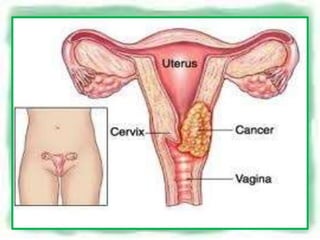
 Cancer in the cervix of the uterus is called cervical
  cancer.

 Cells change from normal to pre-cancer (dysplasia)
  and then to cancer

 Mainly occurs in the transitional zone.
 Affects 16 per 100,000 women per year and dies about 9 per
  100,000 per year in world Population.

 Every year 452,000 new cases of cervical cancer are
  detected, according to World Health Organization.

 More than 2000 new cases being detected each year
  in Nepal.
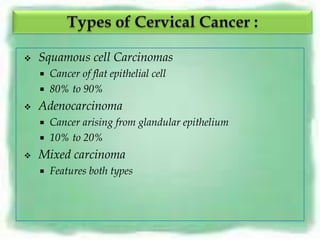
   Squamous cell Carcinomas
     Cancer of flat epithelial cell
     80% to 90%

   Adenocarcinoma
     Cancer arising from glandular epithelium
     10% to 20%

   Mixed carcinoma
       Features both types
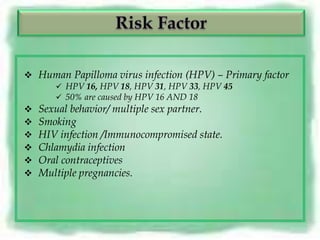
 Human Papilloma virus infection (HPV) – Primary factor
        HPV 16, HPV 18, HPV 31, HPV 33, HPV 45
        50% are caused by HPV 16 AND 18
   Sexual behavior/ multiple sex partner.
   Smoking
   HIV infection /Immunocompromised state.
   Chlamydia infection
   Oral contraceptives
   Multiple pregnancies.
 HPV causes the production of two proteins known
  as E6 and E7.

 When these proteins are produced, they turn off
  some tumor suppressor genes.

 This may allow the cervical lining cells to grow
  uncontrollably, which in some cases will lead to
  cancer
   Association of cervical cancer with               oral
    contraceptive use is likely to be indirect

   The hormones in oral contraceptives may change the
    susceptibility of cervical cells to HPV infection,
    affect their ability to clear the infection, or make it
    easier for HPV infection to cause changes that
    progress to cervical cancer.
Vaginal bleeding
Menstrual bleeding is longer and heavier
than usual
Bleeding after menopause or increased
vaginal
  discharge
Bleeding following intercourse or pelvic
exam
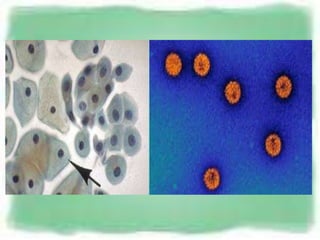
 Cervical Cytology (Pap Test):

      Cells are removed from the cervix and examined under the
       microscope.

      Can detect epithelial cell abnormalities
       • Atypical squamous cells
       • Squamous intraepithelial lesions
       • Squamous cell carcinoma (likely to be invasive)
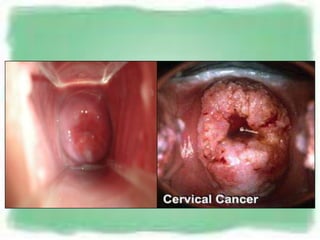
 Colposcopy:
    • Cervix is viewed through a colposcope and the surface of
       the cervix can be seen close and clear.

 Cervical  Biopsies:
      • Colposcopic biopsy – removal of small section of the
        abnormal area of the surface.

      • Endocervical curettage – removing some tissue lining
       from the endocervical canal.

      • Cone biopsy – cone-shaped piece of tissue is removed
       from the cervix
   Surgery
     Pre invasive cervical cancer
      • Cryosurgery
      • Laser surgery
      • Conization
     Invasive cervical cancer
      • Simple hysterectomy
           Removal of the body of the uterus and cervix.
      • Radical hysterectomy and pelvic lymph node
        dissection
           Removal of entire uterus, surrounding tissue , upper
          part of the vagina, and lymph nodes from the cervix.
   Radiation
   Chemotherapy
   Follow up after treatment.
   Avoiding the risk factors
     Especially HPV
       Long term use of OCP
   Having the Pap Test
    3  years after first vaginal intercourse or by
      age 21 years.
     Have test annually

   Use physical barrier for safe sex.
Together It Is Possible
Presentation on cervical cancer

Presentation on cervical cancer

  • 1.
  • 2.
    Cervical Cancer  Cancerin the cervix of the uterus is called cervical cancer.  Cells change from normal to pre-cancer (dysplasia) and then to cancer  Mainly occurs in the transitional zone.
  • 3.
     Affects 16per 100,000 women per year and dies about 9 per 100,000 per year in world Population.  Every year 452,000 new cases of cervical cancer are detected, according to World Health Organization.  More than 2000 new cases being detected each year in Nepal.
  • 6.
    Squamous cell Carcinomas  Cancer of flat epithelial cell  80% to 90%  Adenocarcinoma  Cancer arising from glandular epithelium  10% to 20%  Mixed carcinoma  Features both types
  • 7.
     Human Papillomavirus infection (HPV) – Primary factor  HPV 16, HPV 18, HPV 31, HPV 33, HPV 45  50% are caused by HPV 16 AND 18  Sexual behavior/ multiple sex partner.  Smoking  HIV infection /Immunocompromised state.  Chlamydia infection  Oral contraceptives  Multiple pregnancies.
  • 8.
     HPV causesthe production of two proteins known as E6 and E7.  When these proteins are produced, they turn off some tumor suppressor genes.  This may allow the cervical lining cells to grow uncontrollably, which in some cases will lead to cancer
  • 9.
    Association of cervical cancer with oral contraceptive use is likely to be indirect  The hormones in oral contraceptives may change the susceptibility of cervical cells to HPV infection, affect their ability to clear the infection, or make it easier for HPV infection to cause changes that progress to cervical cancer.
  • 10.
    Vaginal bleeding Menstrual bleedingis longer and heavier than usual Bleeding after menopause or increased vaginal discharge Bleeding following intercourse or pelvic exam
  • 11.
     Cervical Cytology(Pap Test):  Cells are removed from the cervix and examined under the microscope.  Can detect epithelial cell abnormalities • Atypical squamous cells • Squamous intraepithelial lesions • Squamous cell carcinoma (likely to be invasive)
  • 12.
     Colposcopy: • Cervix is viewed through a colposcope and the surface of the cervix can be seen close and clear.  Cervical Biopsies: • Colposcopic biopsy – removal of small section of the abnormal area of the surface. • Endocervical curettage – removing some tissue lining from the endocervical canal. • Cone biopsy – cone-shaped piece of tissue is removed from the cervix
  • 14.
    Surgery  Pre invasive cervical cancer • Cryosurgery • Laser surgery • Conization  Invasive cervical cancer • Simple hysterectomy Removal of the body of the uterus and cervix. • Radical hysterectomy and pelvic lymph node dissection Removal of entire uterus, surrounding tissue , upper part of the vagina, and lymph nodes from the cervix.  Radiation  Chemotherapy  Follow up after treatment.
  • 15.
    Avoiding the risk factors  Especially HPV  Long term use of OCP  Having the Pap Test 3 years after first vaginal intercourse or by age 21 years.  Have test annually  Use physical barrier for safe sex.
  • 16.