Downloaded 150 times

The document provides an overview of the Large Hadron Collider (LHC) at CERN, emphasizing its significance as a major engineering and physics undertaking aimed at exploring fundamental particles. It highlights safety concerns about micro black holes created in particle collisions, asserting their negligible threat to Earth based on existing theoretical calculations. The presentation also notes CERN's historical contributions, including the invention of the World Wide Web, and documents the LHC's operational challenges and successes up to 2011.
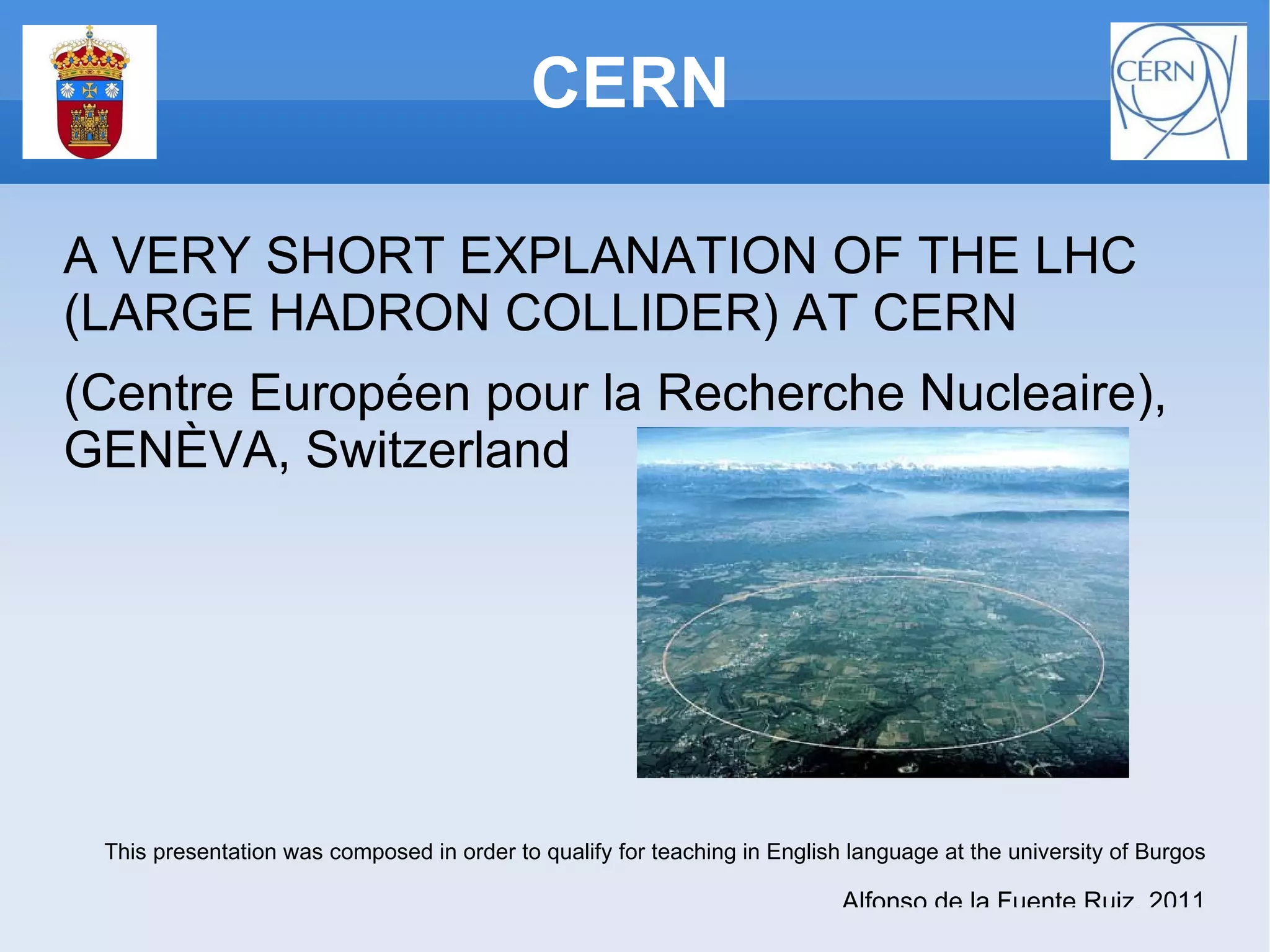
Overview of CERN and the LHC, explaining its significance for scientific research in Switzerland.
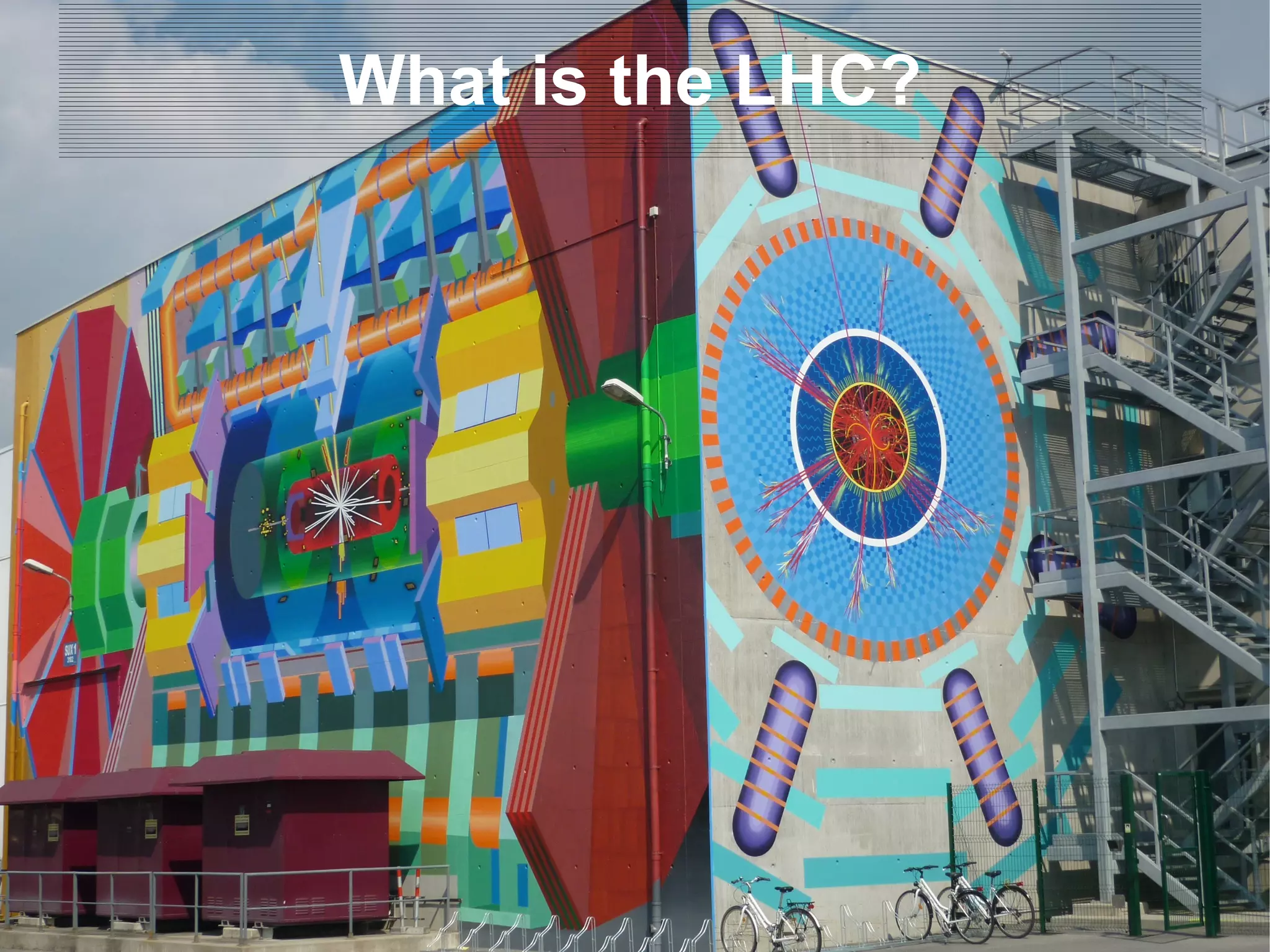
Presentation introduces the Large Hadron Collider, explaining its purpose and relevance.
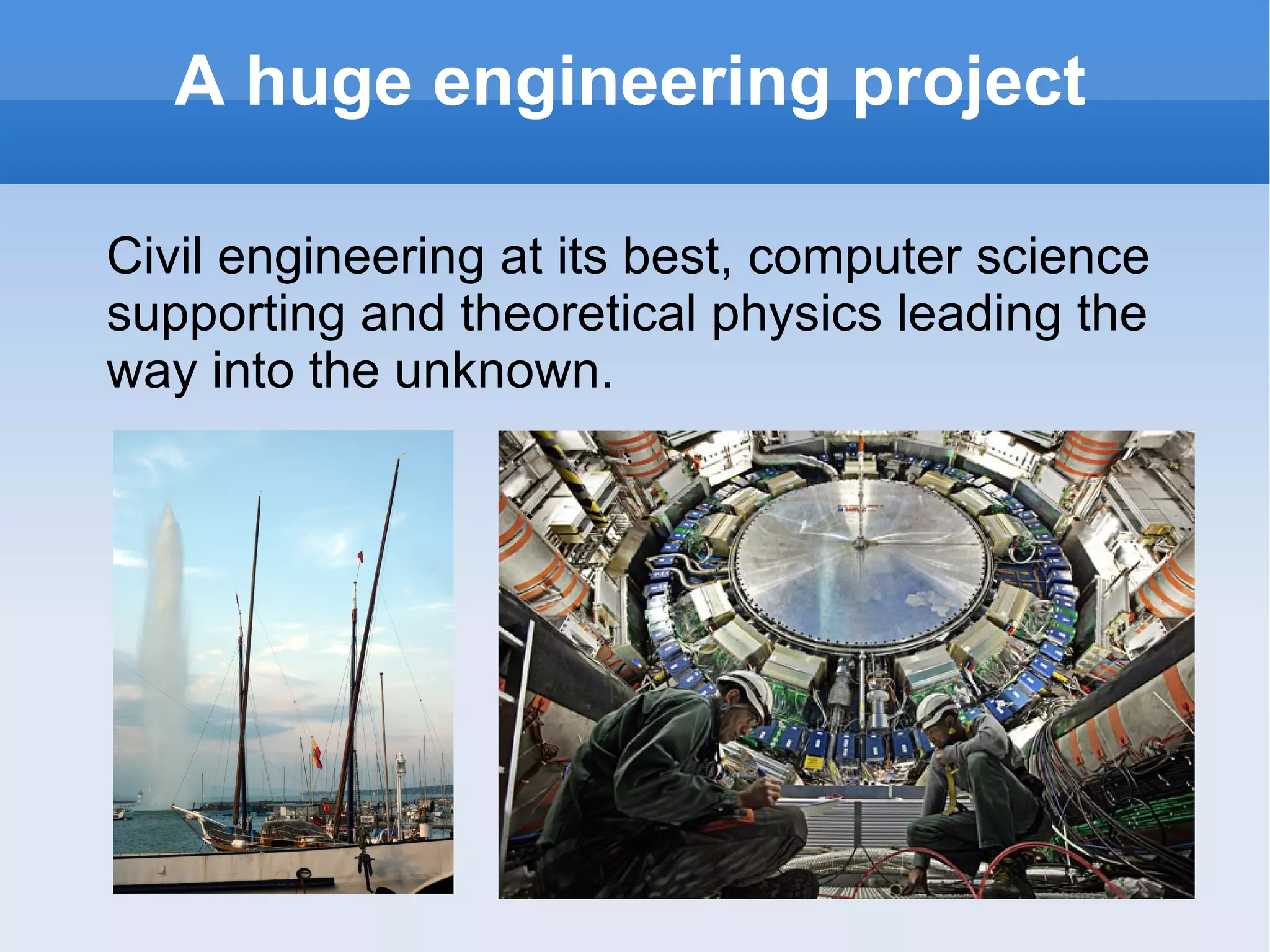
The LHC is highlighted as an exceptional engineering project combining civil engineering, computer science, and theoretical physics.
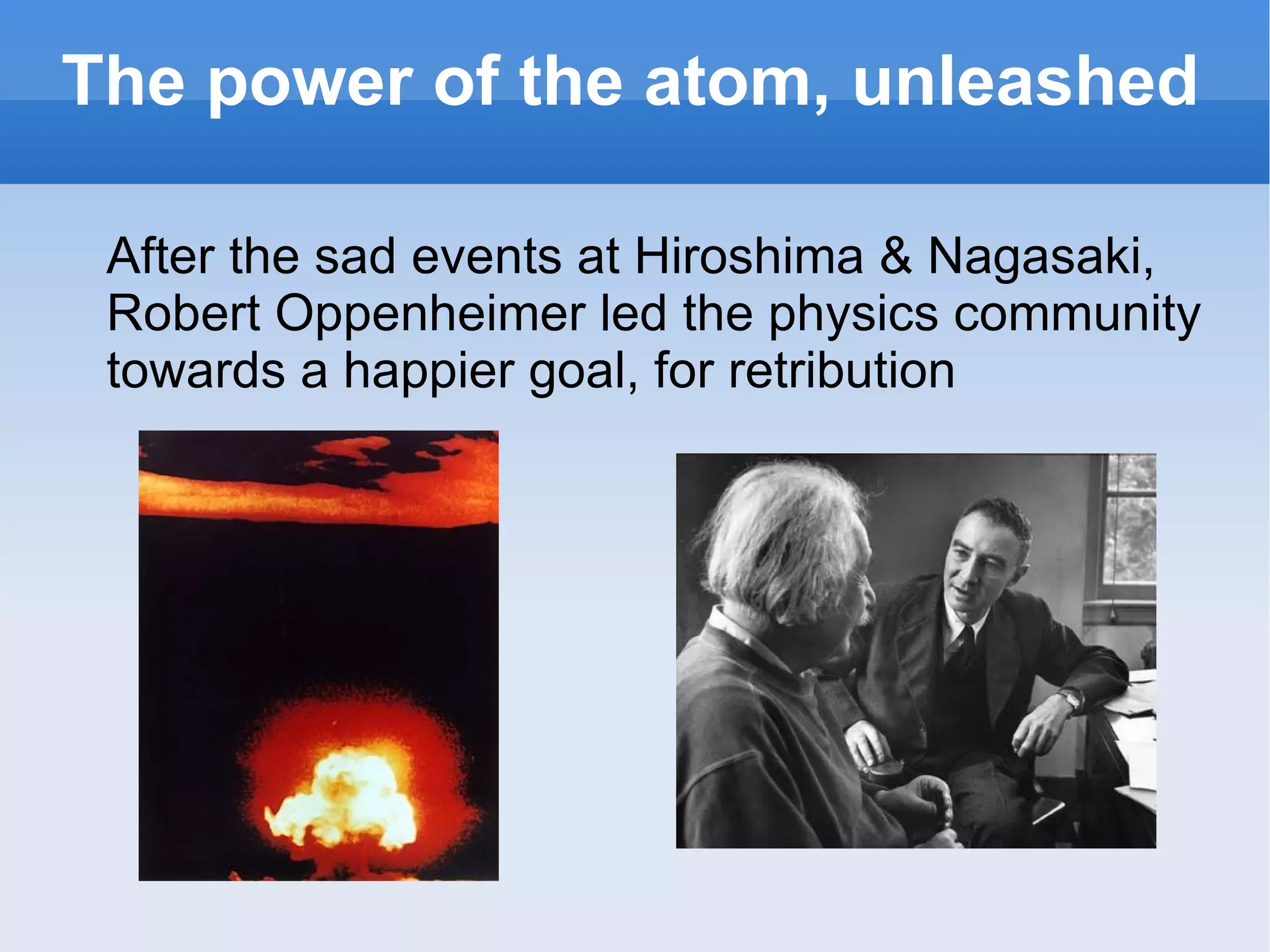
Discusses the transformation of atomic power perception post-Hiroshima, exploring the shift towards beneficial research.
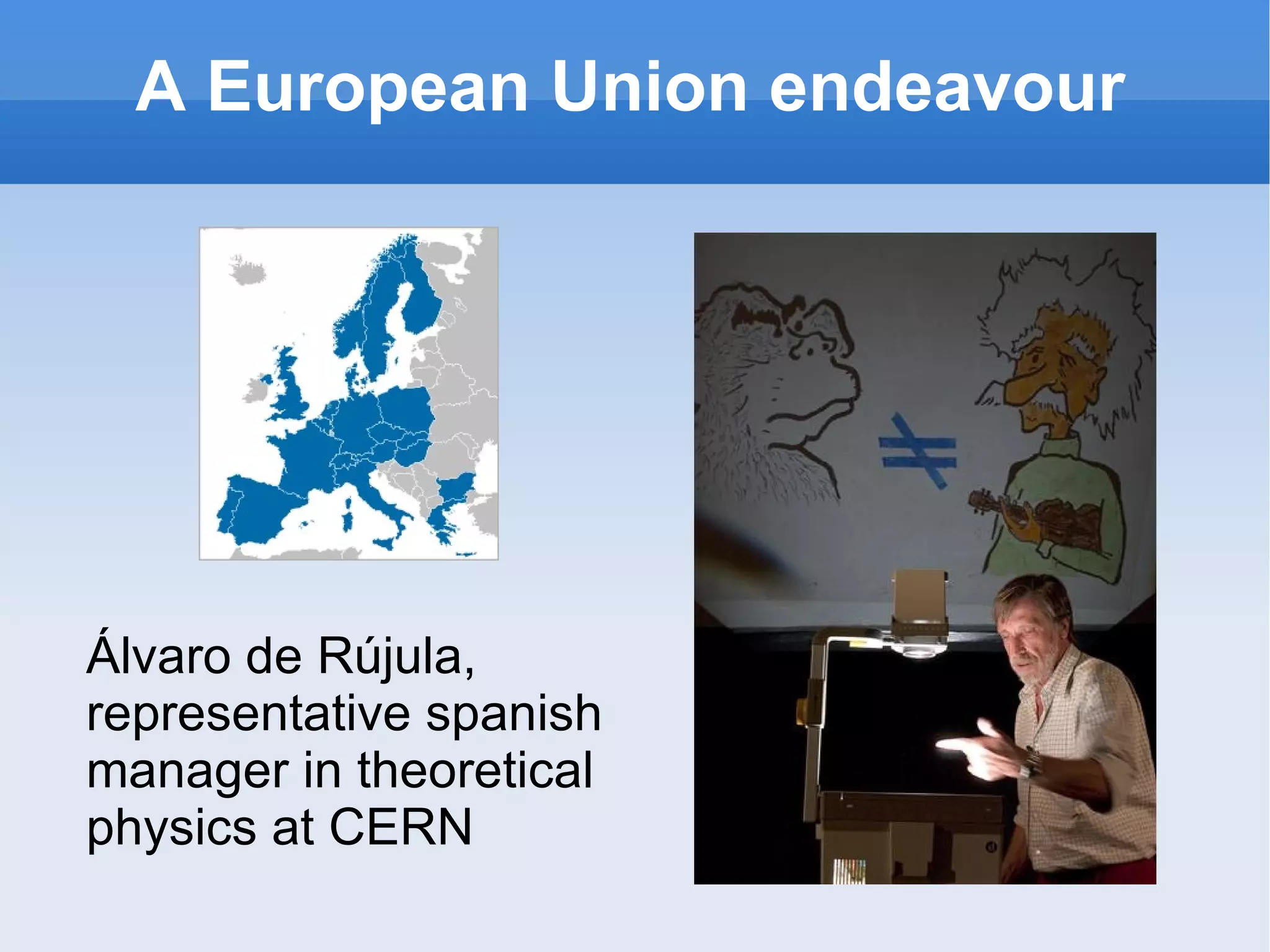
Introduces CERN's collective efforts within the European Union, highlighting significant figures like Álvaro de Rújula.
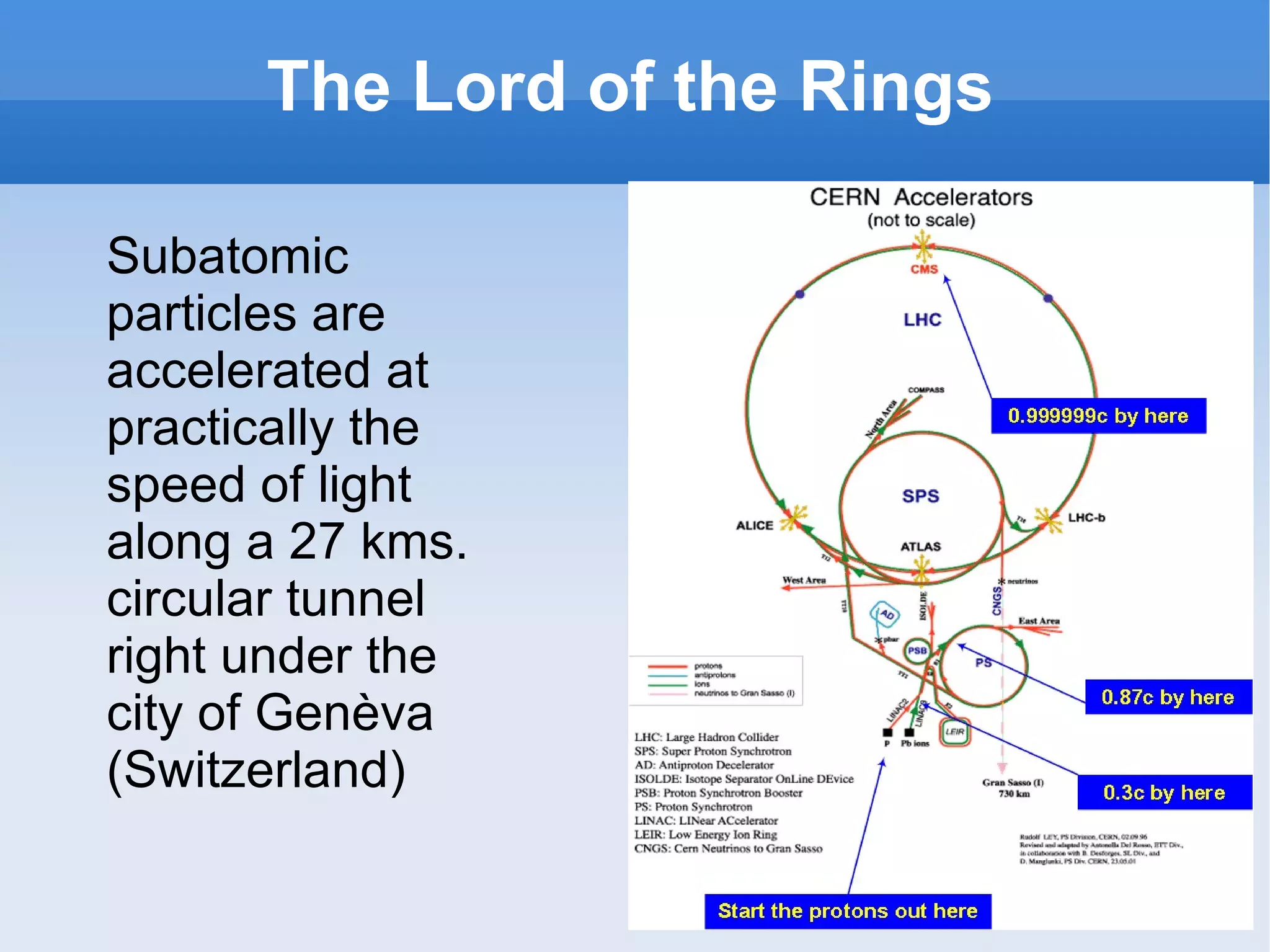
Describes the acceleration of particles at nearly light speed in a circular tunnel beneath Geneva, emphasizing scale.
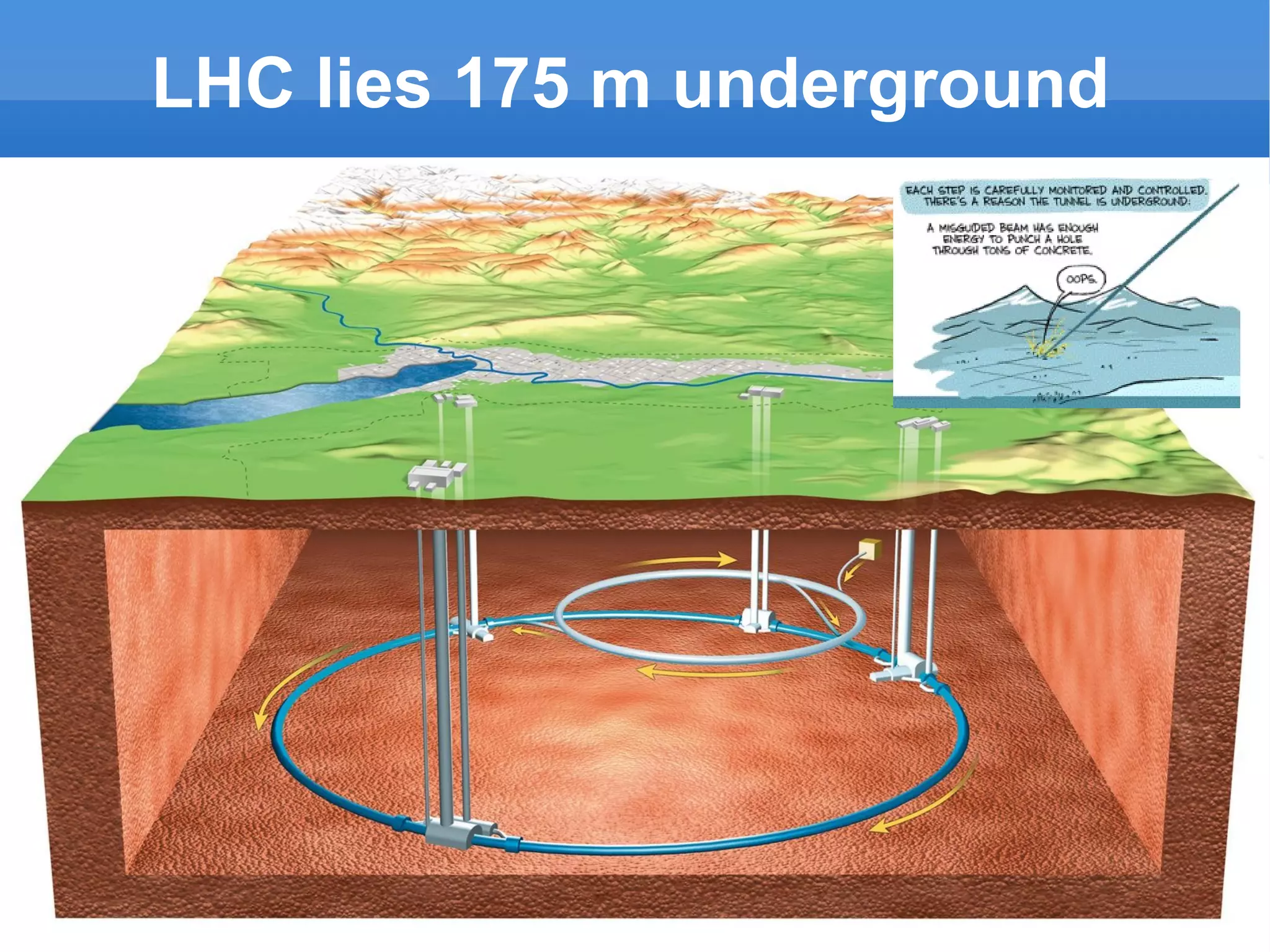
States that the LHC is situated 175 meters underground, indicating its vast size and engineering feat.
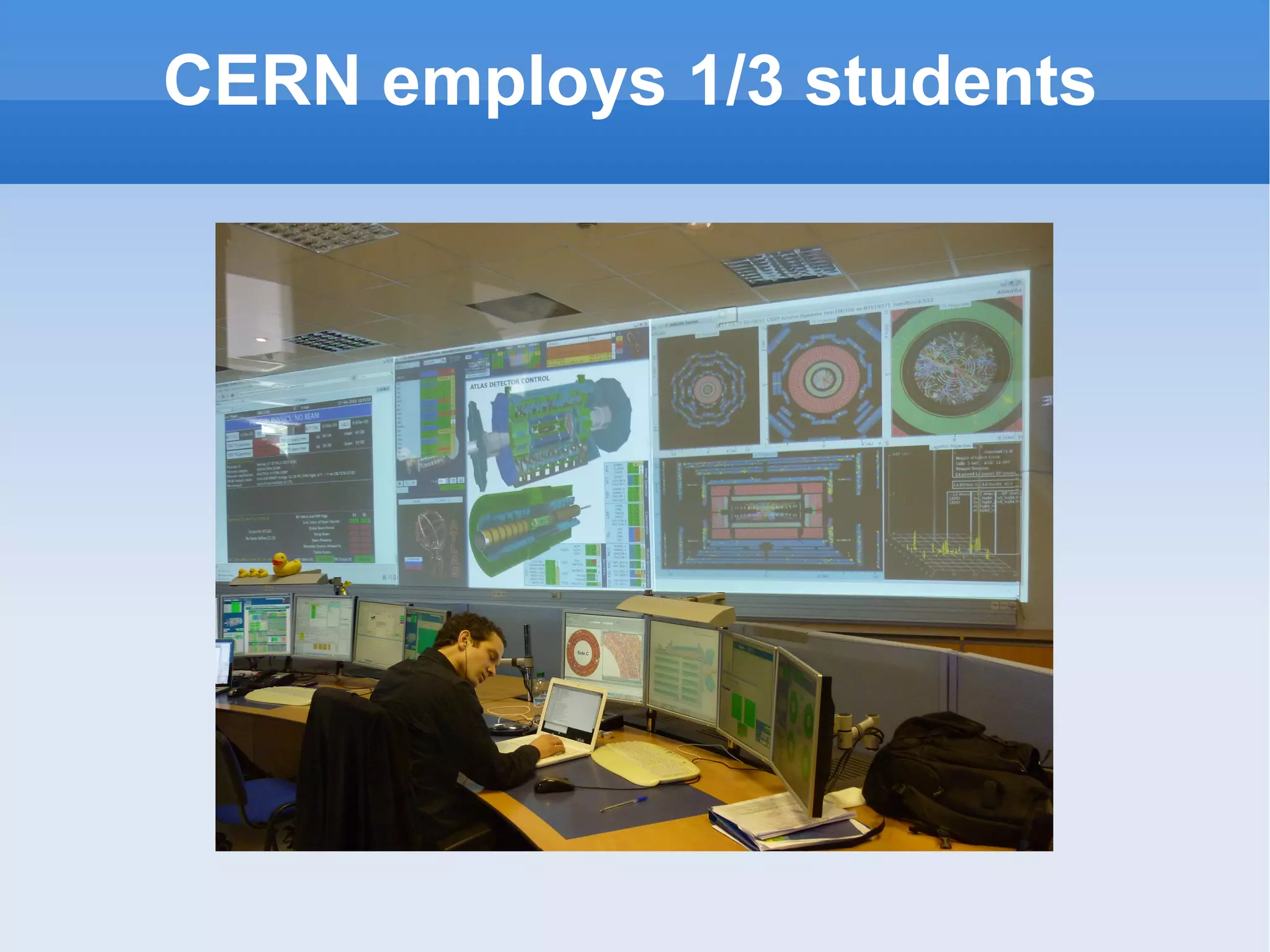
One-third of CERN's workforce comprises students, showcasing its role in education and research.
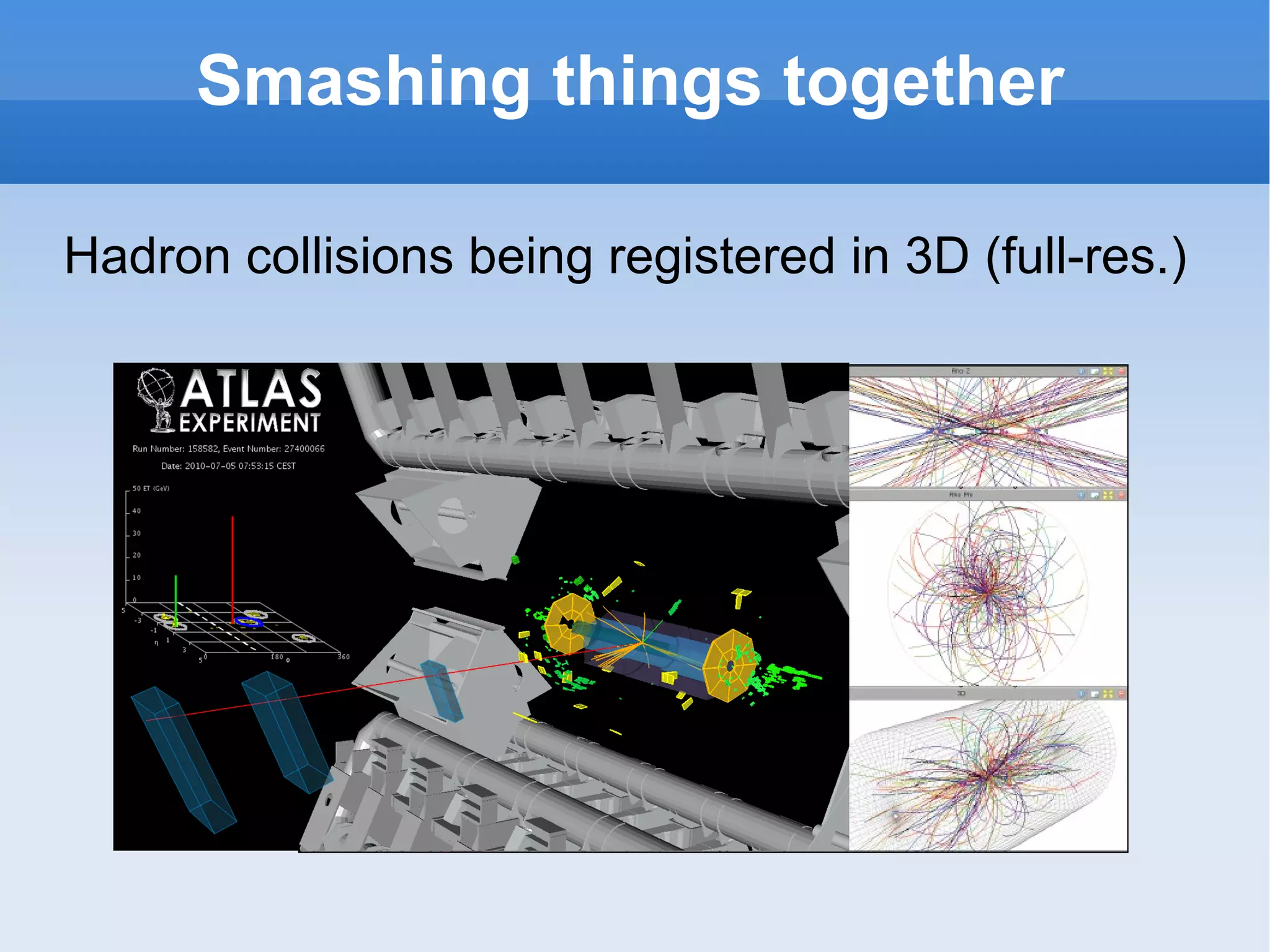
Details on the registration of hadron collisions, focusing on advanced 3D visualization technology.
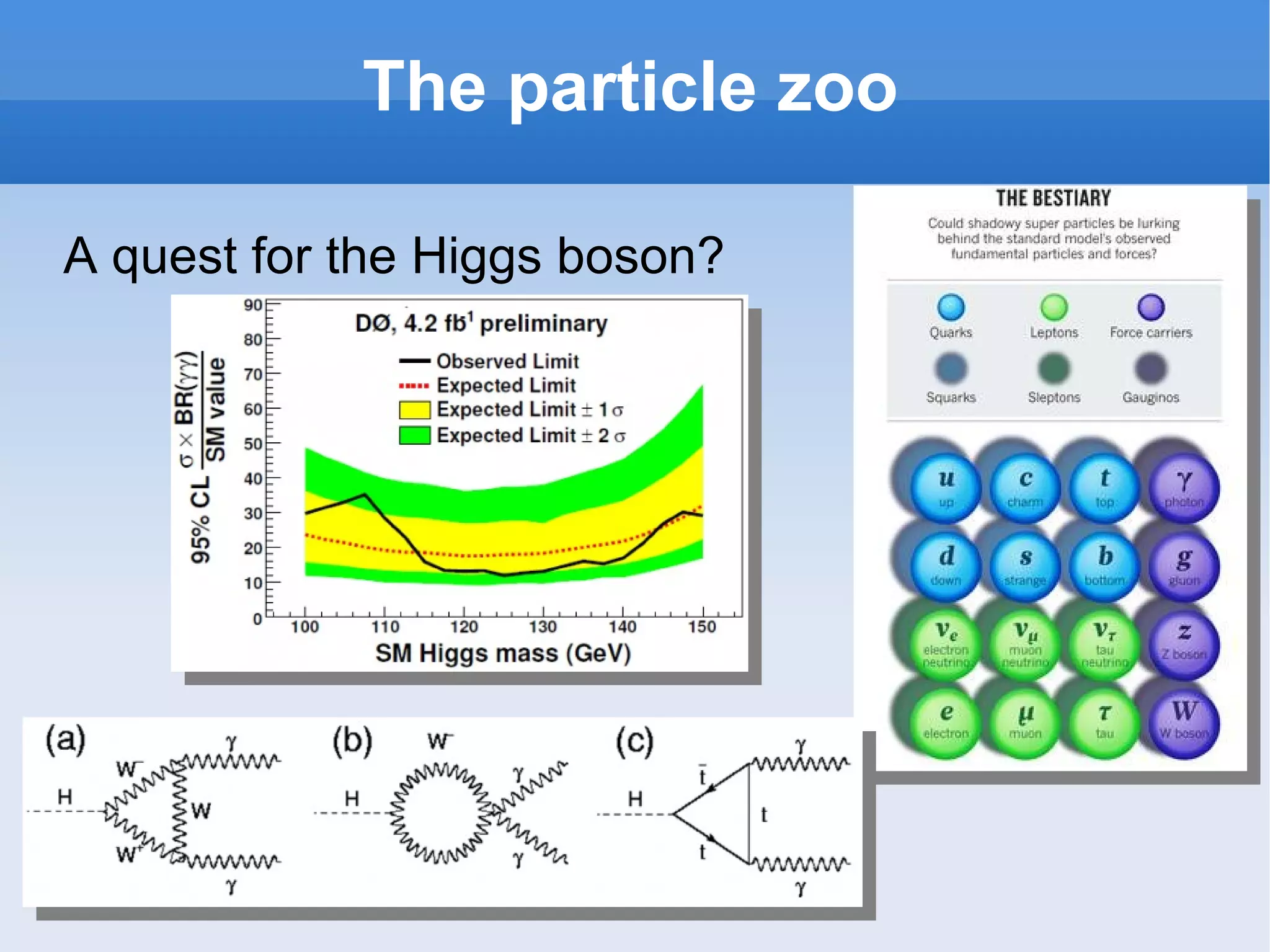
Introduces the concept of the 'particle zoo' and the ongoing search for the Higgs boson.
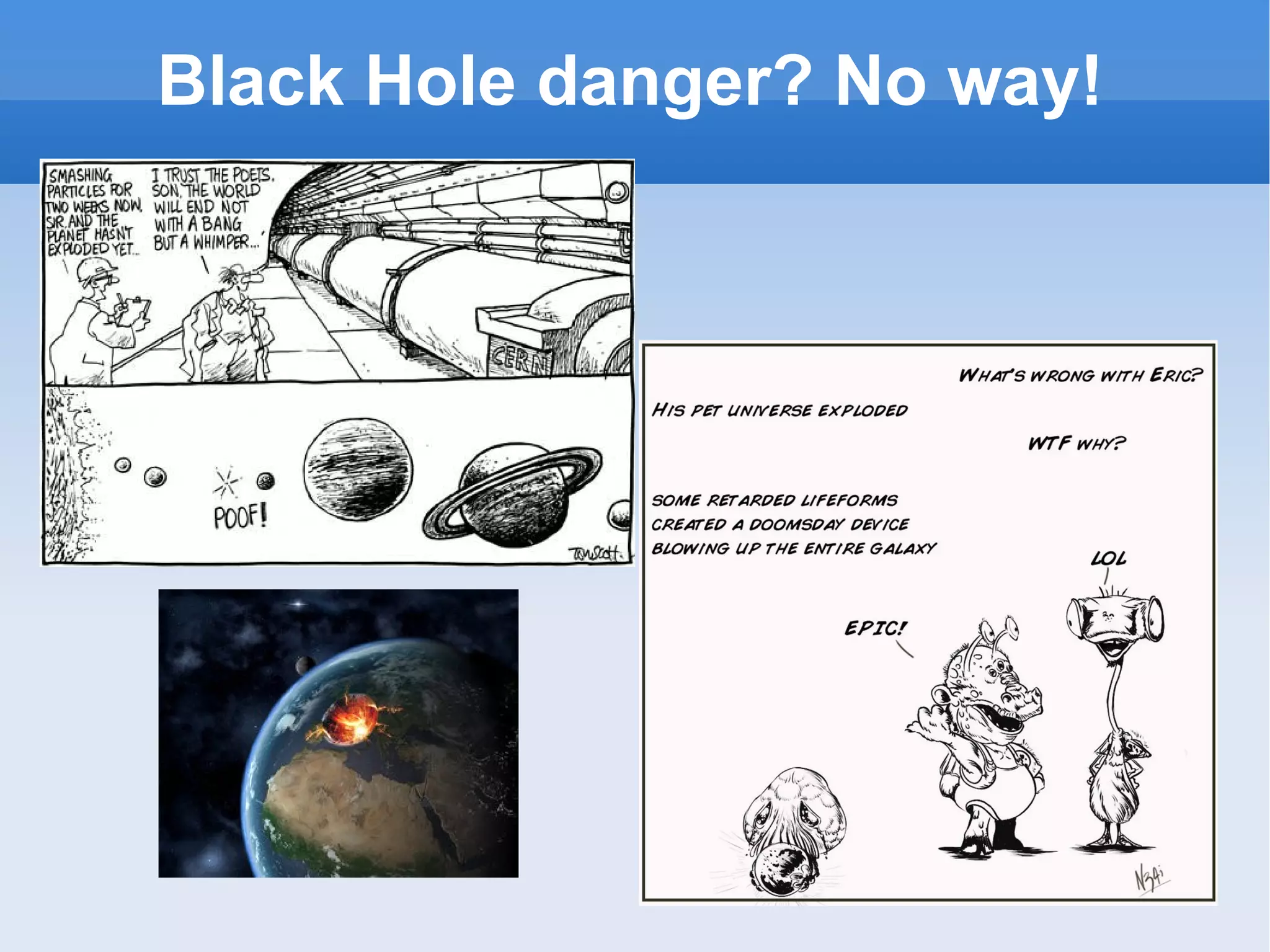
Debunks fears surrounding the formation of black holes during particle collisions.
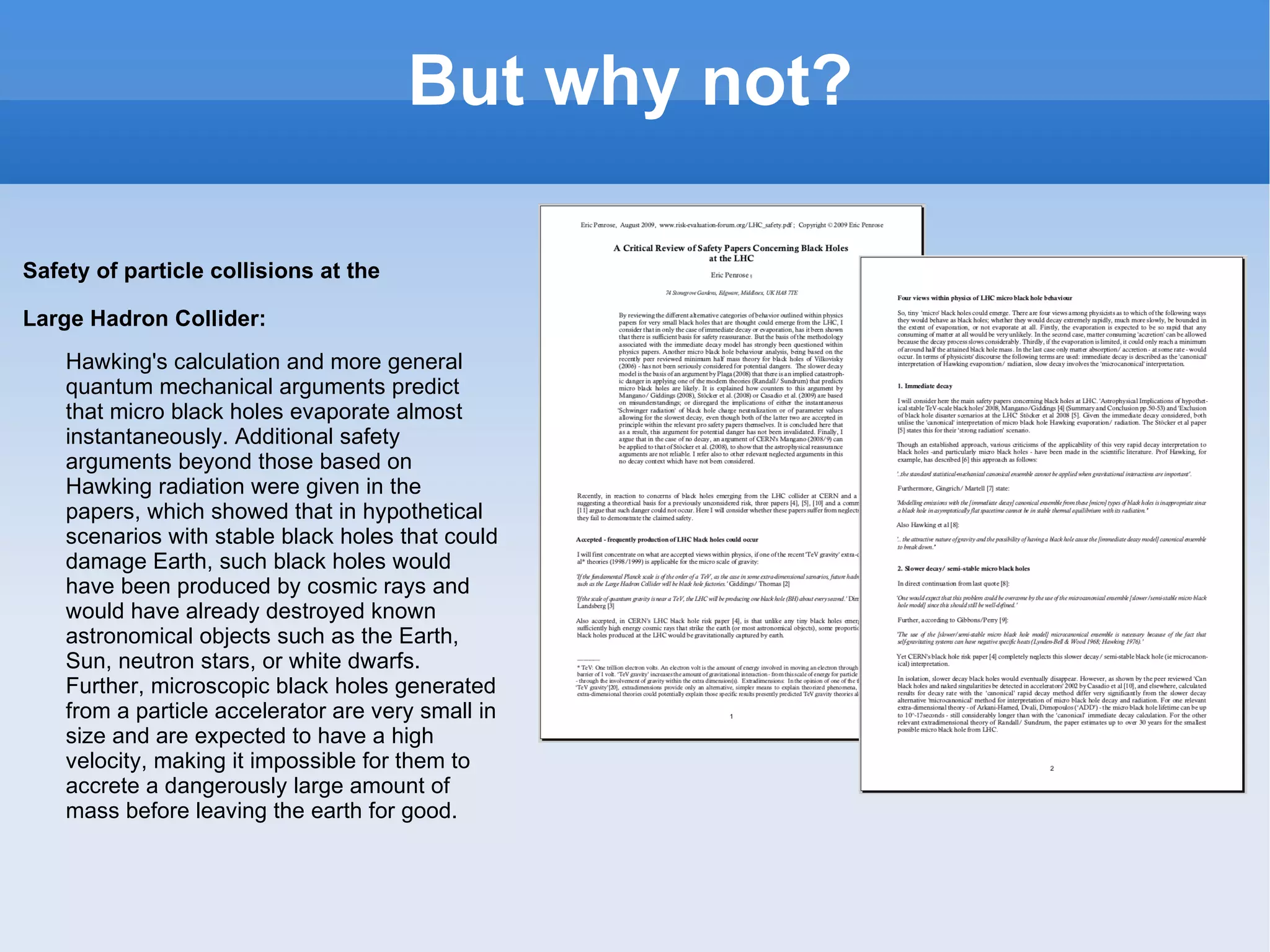
Explains safety measures and theories ensuring micro black holes from the LHC would not pose a risk to Earth.
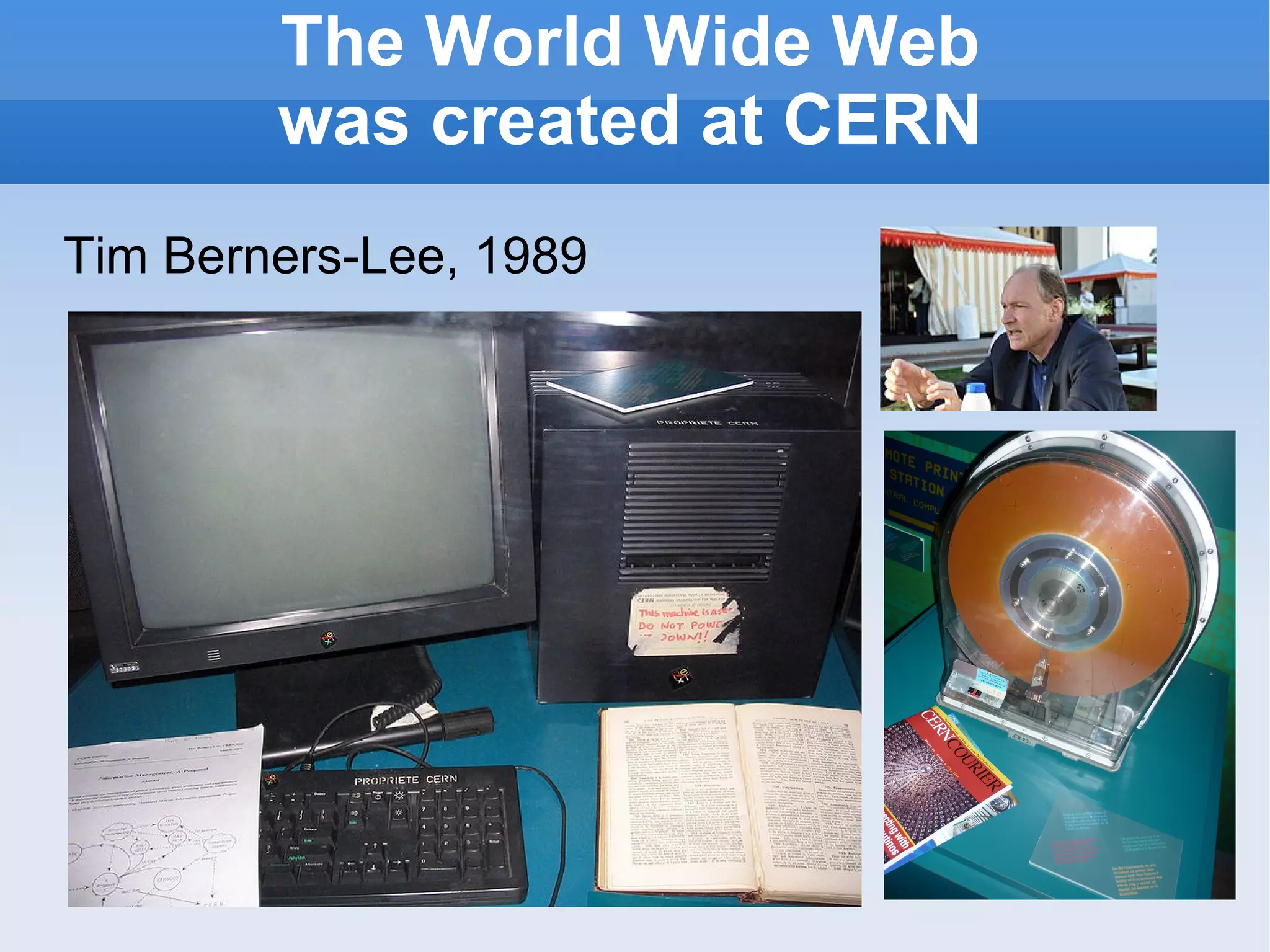
Highlights CERN's contribution to the internet, showcasing Tim Berners-Lee's pivotal role in its creation.
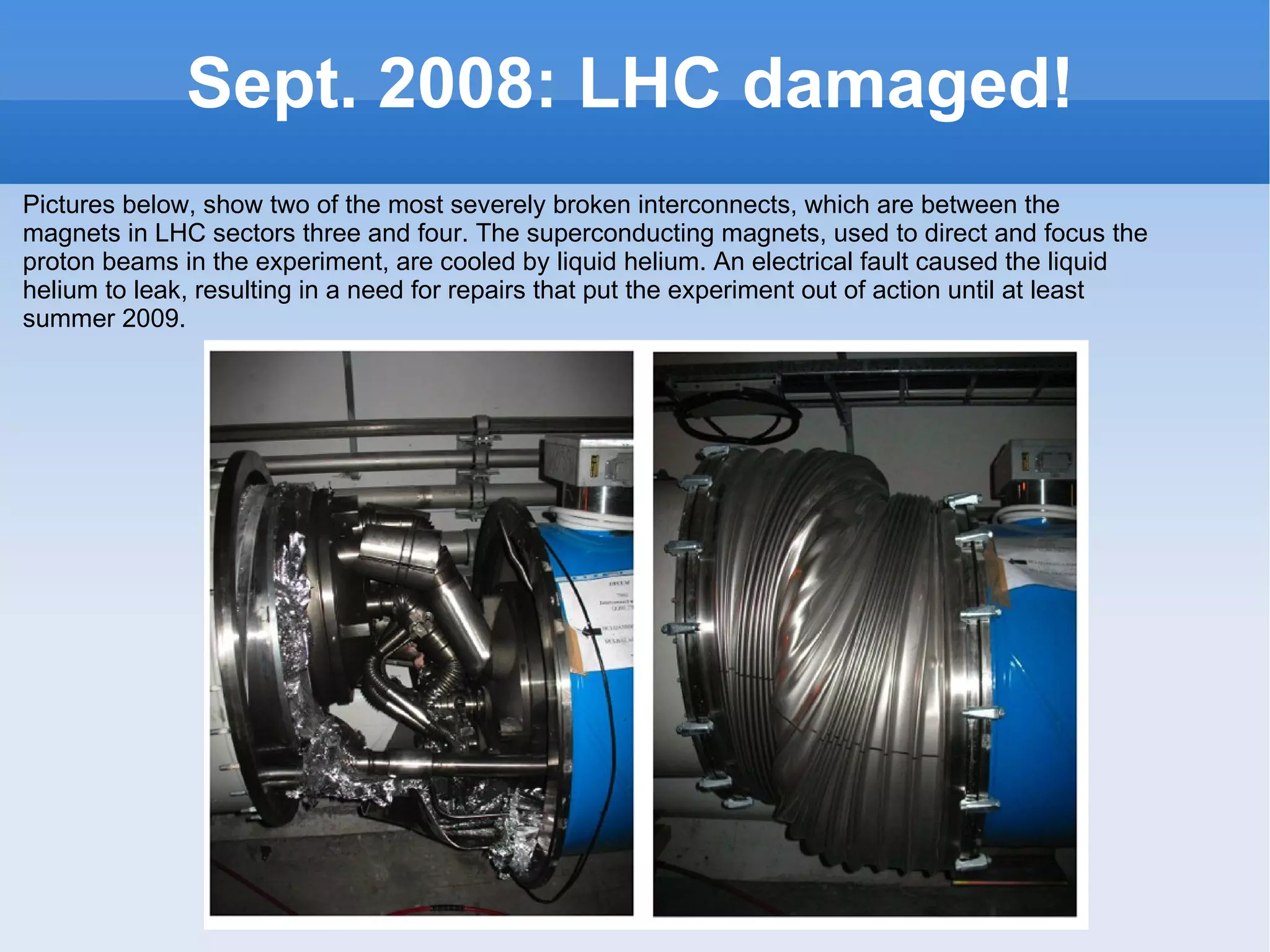
Reports on sustaining damage to the LHC in 2008, detailing repair efforts and implications for operations.
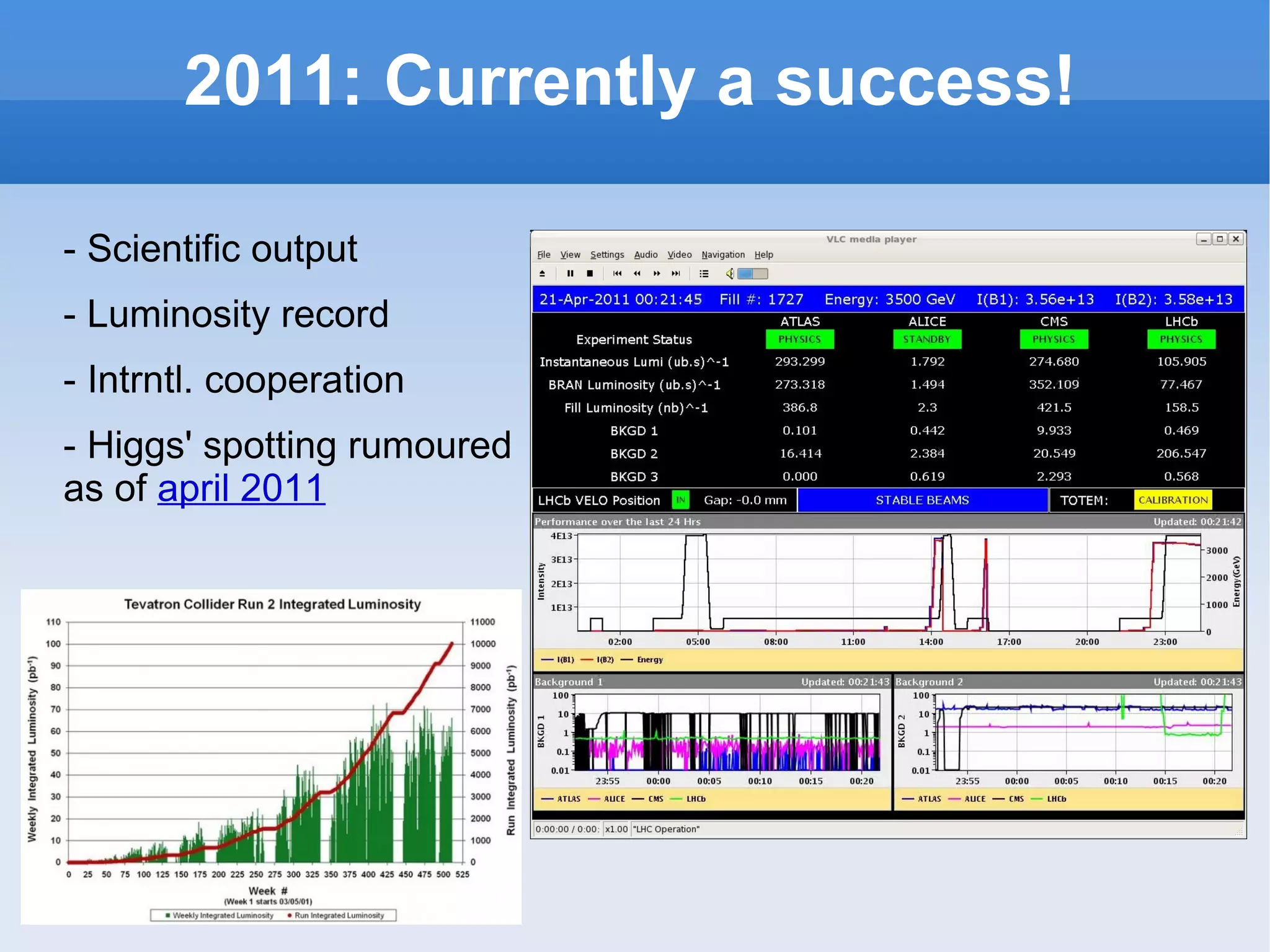
Shows the LHC's scientific achievements and international collaboration successes, hinting at Higgs boson discoveries.
Ends the presentation with a thank you, summarizing the importance of the information shared.


![Grid computing [2005]](https://cdn.slidesharecdn.com/ss_thumbnails/gridcomputing2005-120430023634-phpapp02-thumbnail.jpg?width=640&height=640&fit=bounds)


