




TABLE OF CONTENTS
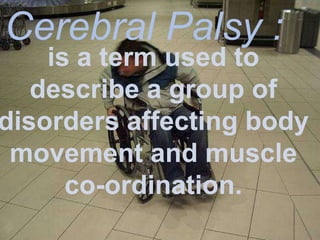
Cerebral Palsy :
    is a term used to
   describe a group of
disorders affecting body
 movement and muscle
      co-ordination.
HISTORY:
 CP,  formerly known as "Cerebral Paralysis," was
 first identified by English surgeon William Little
 in 1860.It was not until 1897 that Sigmund
 Freud, then a neurologist, suggested that a
 difficult birth was not the cause but rather only a
 symptom of other effects on fetal development.
 Research conducted during the 1980s
 suggested that only a small number of cases of
 CP are caused by lack of oxygen during birth.
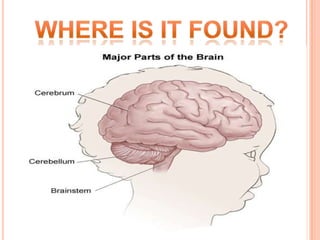
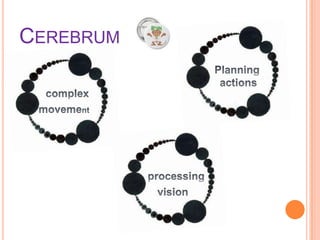
CEREBRUM

CEREBELLUM
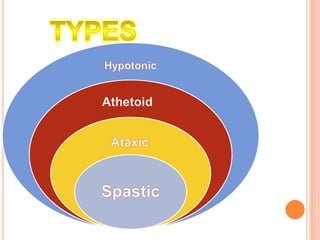
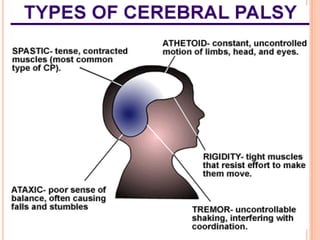
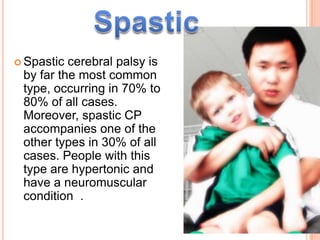
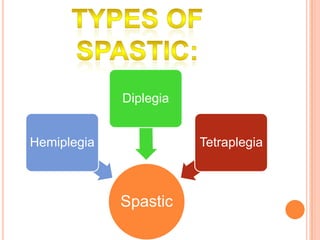
 Spastic cerebral palsy is
 by far the most common
 type, occurring in 70% to
 80% of all cases.
 Moreover, spastic CP
 accompanies one of the
 other types in 30% of all
 cases. People with this
 type are hypertonic and
 have a neuromuscular
 condition .
Diplegia


Hemiplegia              Tetraplegia


             Spastic
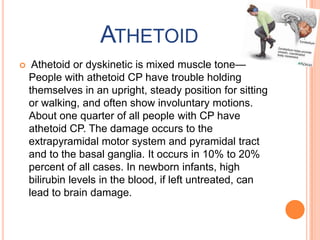
ATHETOID
    Athetoid or dyskinetic is mixed muscle tone—
    People with athetoid CP have trouble holding
    themselves in an upright, steady position for sitting
    or walking, and often show involuntary motions.
    About one quarter of all people with CP have
    athetoid CP. The damage occurs to the
    extrapyramidal motor system and pyramidal tract
    and to the basal ganglia. It occurs in 10% to 20%
    percent of all cases. In newborn infants, high
    bilirubin levels in the blood, if left untreated, can
    lead to brain damage.
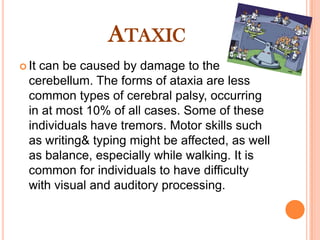
ATAXIC
 Itcan be caused by damage to the
  cerebellum. The forms of ataxia are less
  common types of cerebral palsy, occurring
  in at most 10% of all cases. Some of these
  individuals have tremors. Motor skills such
  as writing& typing might be affected, as well
  as balance, especially while walking. It is
  common for individuals to have difficulty
  with visual and auditory processing.
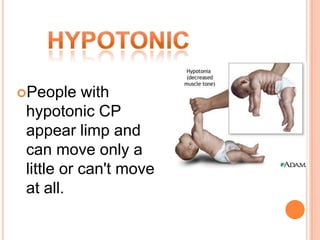
People    with
 hypotonic CP
 appear limp and
 can move only a
 little or can't move
 at all.
   (1) multiple births (e.g. twins, triplets)
    (2) sexually transmitted infectious diseases,
    e.g. AIDS
    (3) poor nutrition
    (4) exposure to toxic substances, including
    nicotine, alcohol and drugs
    (5) chromosome abnormalities
    (6) biochemical genetic disorders
    (7) Poor oxygen supply may destroy brain
    tissue.
    (8) premature delivery
    (9) caesarian or breech delivery
Causes during childhood:
(1) infections such as meningitis
(2) brain haemorrhages
(3) head injury following falls, car
accidents or abuse
(4) drowning accidents
(5) poisoning

             Symptoms:
(1) muscle tightness or spasms
(2) involuntary movement
(3) difficulty with "gross motor
skills such as walking or
running
(4) difficulty with "fine motor
skills" such as writing or doing
up buttons
(5) difficulty in perception and
sensation
IS THERE ANY TREATMENT?
Cerebral  palsy can’t be cured, but
 treatment will often improve a
 child's capabilities.

       OH..
       NO!

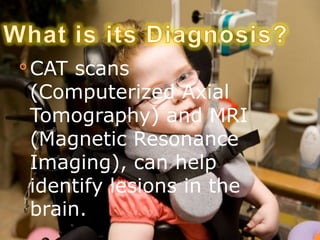
    CAT scans
    (Computerized Axial
    Tomography) and MRI
    (Magnetic Resonance
    Imaging), can help
    identify lesions in the
    brain.
•Doctors
   check for
      other
 diseases to
    try to fix
   things up
   •Doctors
  mainly wait
 for the baby
to develop to
    be sure
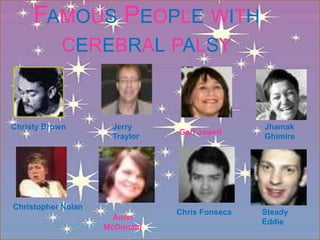
FAMOUS PEOPLE WITH
           CEREBRAL PALSY


Christy Brown        Jerry                     Jhamak
                               Geri Jewell
                     Traylor                   Ghimire


Christopher Nolan
                               Chris Fonseca   Steady
                      Anne
                                               Eddie
                    McDonald
Done By:
Noha Ghoniem
     &
 Ansam Amir

Cerebral palsy

  • 2.
  • 3.
    Cerebral Palsy : is a term used to describe a group of disorders affecting body movement and muscle co-ordination.
  • 4.
    HISTORY:  CP, formerly known as "Cerebral Paralysis," was first identified by English surgeon William Little in 1860.It was not until 1897 that Sigmund Freud, then a neurologist, suggested that a difficult birth was not the cause but rather only a symptom of other effects on fetal development. Research conducted during the 1980s suggested that only a small number of cases of CP are caused by lack of oxygen during birth.
  • 6.
  • 7.
  • 10.
     Spastic cerebralpalsy is by far the most common type, occurring in 70% to 80% of all cases. Moreover, spastic CP accompanies one of the other types in 30% of all cases. People with this type are hypertonic and have a neuromuscular condition .
  • 11.
    Diplegia Hemiplegia Tetraplegia Spastic
  • 12.
    ATHETOID  Athetoid or dyskinetic is mixed muscle tone— People with athetoid CP have trouble holding themselves in an upright, steady position for sitting or walking, and often show involuntary motions. About one quarter of all people with CP have athetoid CP. The damage occurs to the extrapyramidal motor system and pyramidal tract and to the basal ganglia. It occurs in 10% to 20% percent of all cases. In newborn infants, high bilirubin levels in the blood, if left untreated, can lead to brain damage.
  • 13.
    ATAXIC  Itcan becaused by damage to the cerebellum. The forms of ataxia are less common types of cerebral palsy, occurring in at most 10% of all cases. Some of these individuals have tremors. Motor skills such as writing& typing might be affected, as well as balance, especially while walking. It is common for individuals to have difficulty with visual and auditory processing.
  • 14.
    People with hypotonic CP appear limp and can move only a little or can't move at all.
  • 16.
    (1) multiple births (e.g. twins, triplets) (2) sexually transmitted infectious diseases, e.g. AIDS (3) poor nutrition (4) exposure to toxic substances, including nicotine, alcohol and drugs (5) chromosome abnormalities (6) biochemical genetic disorders (7) Poor oxygen supply may destroy brain tissue. (8) premature delivery (9) caesarian or breech delivery
  • 17.
    Causes during childhood: (1)infections such as meningitis (2) brain haemorrhages (3) head injury following falls, car accidents or abuse (4) drowning accidents (5) poisoning
  • 18.
    Symptoms: (1) muscle tightness or spasms (2) involuntary movement (3) difficulty with "gross motor skills such as walking or running (4) difficulty with "fine motor skills" such as writing or doing up buttons (5) difficulty in perception and sensation
  • 19.
    IS THERE ANYTREATMENT? Cerebral palsy can’t be cured, but treatment will often improve a child's capabilities. OH.. NO!
  • 20.
    CAT scans (Computerized Axial Tomography) and MRI (Magnetic Resonance Imaging), can help identify lesions in the brain.
  • 21.
    •Doctors check for other diseases to try to fix things up •Doctors mainly wait for the baby to develop to be sure
  • 23.
    FAMOUS PEOPLE WITH CEREBRAL PALSY Christy Brown Jerry Jhamak Geri Jewell Traylor Ghimire Christopher Nolan Chris Fonseca Steady Anne Eddie McDonald
  • 24.