CELLULAR EVOLUTION
Jyothi Kamble
M.Sc BioInformatics
INDEX
• Introduction
• Time flow of origin of cell
• Process
• Primordial soup
• RNA world hypothesis
• DNA world
• Organelles of cell
• Cell types
• Reference
• All the living organisms are made up of cells.
• A living cell may be defined as a compartment enclosed by a
membrane that consists of several chemical constituents and is capable
of propagating itself by division.
• Activity of an organism is dependent on the activities of its cells.
• There are two stages in evolution of the cell; chemical evolution and
biological evolution.
INTRODUCTION
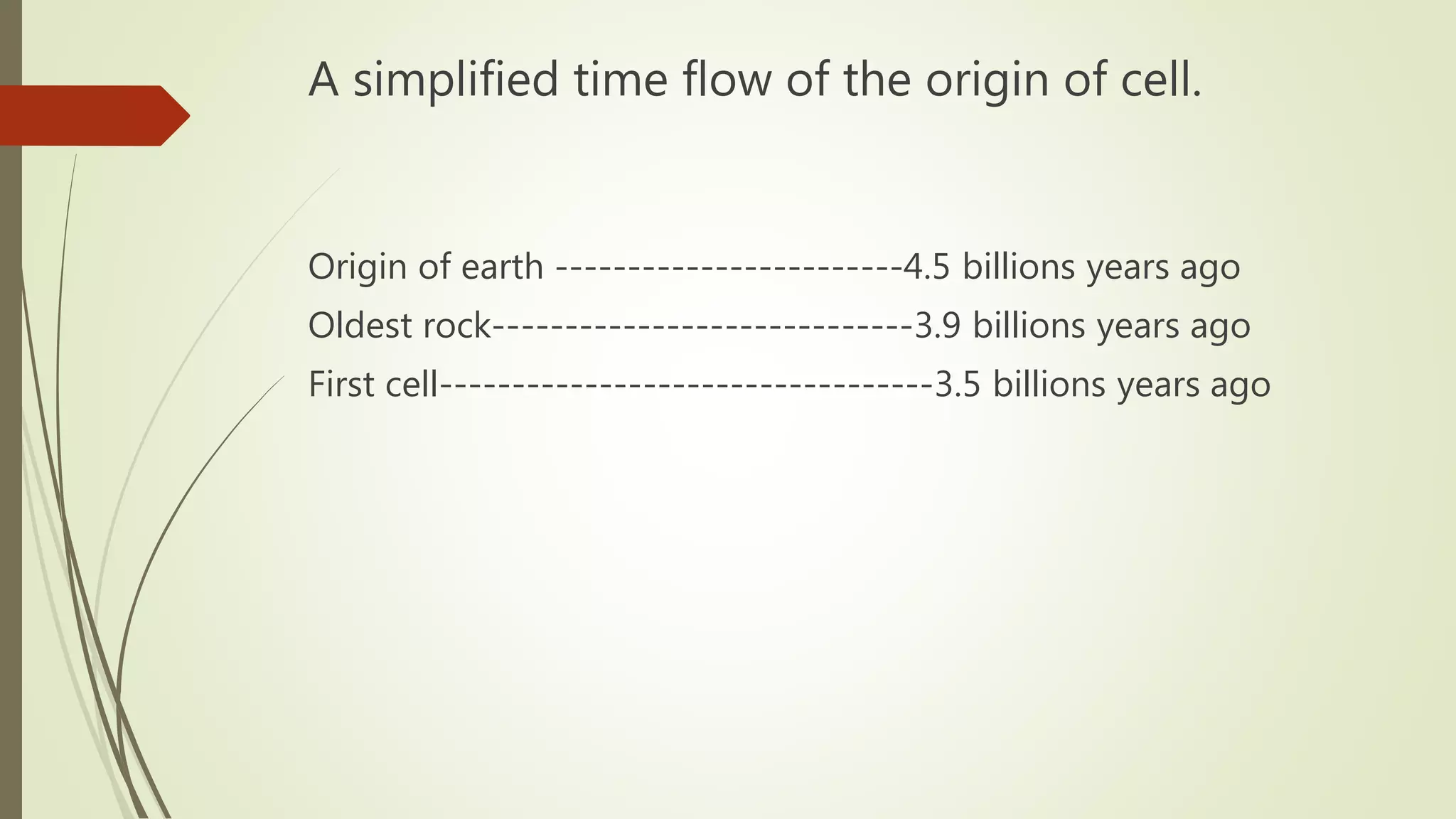
A simplified time flow of the origin of cell.
Origin of earth ------------------------4.5 billions years ago
Oldest rock-----------------------------3.9 billions years ago
First cell----------------------------------3.5 billions years ago
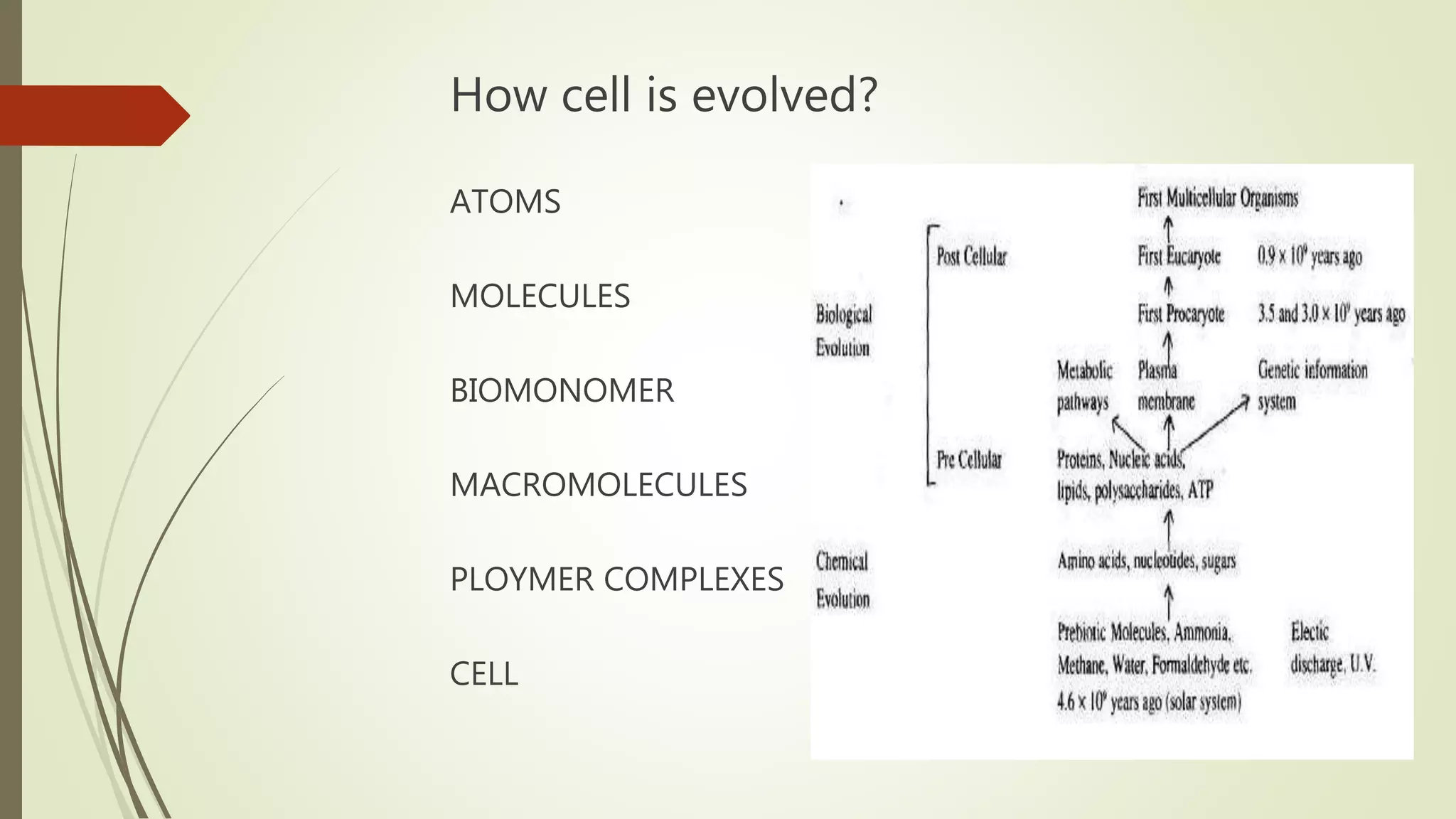
How cell is evolved?
ATOMS
MOLECULES
BIOMONOMER
MACROMOLECULES
PLOYMER COMPLEXES
CELL
PROCESS -
In early year after formation of solar
system, terrestrial planets continued to be
bombarded by smaller bodied of various
size at the last of particulate material
from the formation of planets, was swept
up by their gravitational pull.
Later planet cooled.
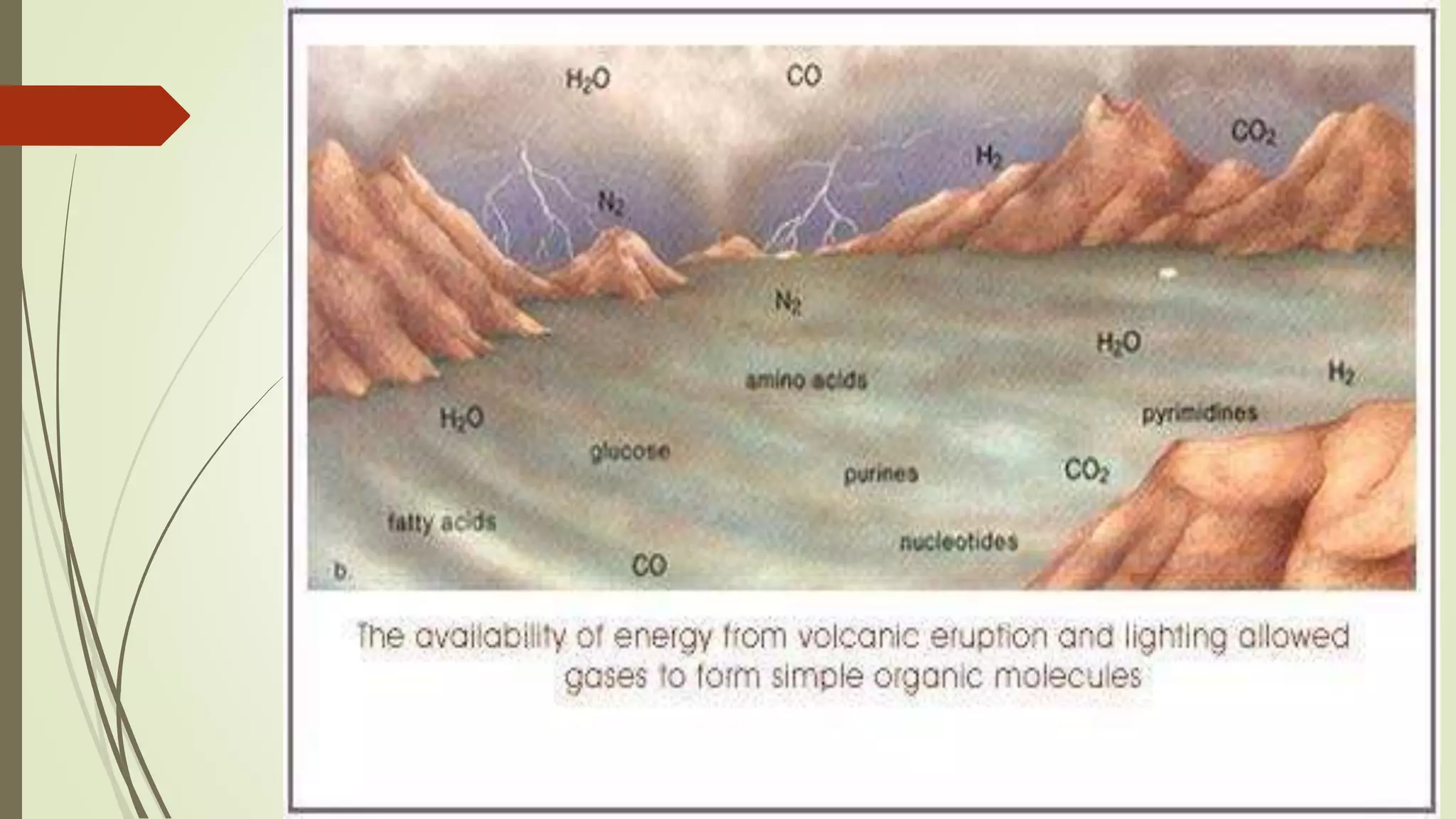
Primordial soup stage :-
 For the initial formation of primitive
living require a specific supporting
chemical environment
 Early earth have a chemically reducing
atmosphere, which when exposed to
energy in various forms.
 By that energy produced a variety of
simple organic compounds.
 Organic compounds accumulated in a
molecular ‘organic soup’.
 And aslo many building block of life
compound’s also formed
Formation of complex organic molecules :-
Nucleotide – compounds of 3 subunit molecule
 Nitrogen containing base
 5 carbon sugar
 Phosphate
Nucleotide :- it has many important functions
and forms nucleic acid
nucleotide bounded together to form RNA.
Nucleic acid :-
It has many important functions and role to formation of RNA
and DNA
RNA were made using free floating nucleotides that in
primordial soup of molecules.
Protein :-
On the other hand,
 Proteins are formed., and aslo hasve many functions .
 And work great as molecular machines.
 But it store information and copy them selves.
 So they need DNA for that.
 And helps in translation.
So, which came first ? (DNA/RNA/Protein)
What is RNA World hypothesis ?
Survival of the Fittest Game ,
Gradually, RNA enclosed by membrane and other molecules
also reacted to form first cell .
DNA :-
In other hand somewhere along the life DNA is formed by RNA.
Here, DNA become stable archive of genetic information that stored
blue print for most successful RNA and protein molecules.
Organelles of cell
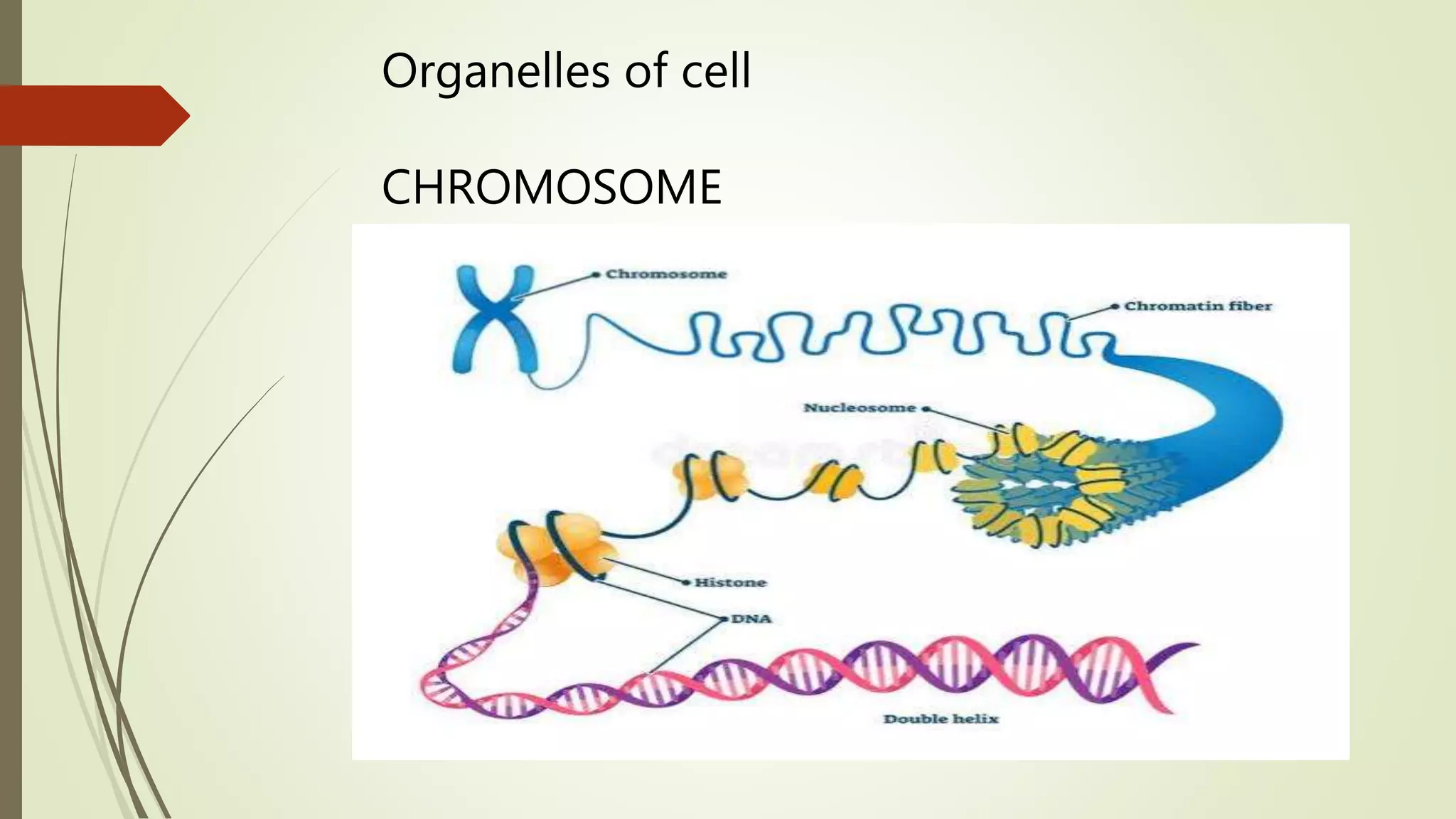
CHROMOSOME
RIBOSOME
LYSOSOMAL APPARATUS
GOLGI APPARATUS
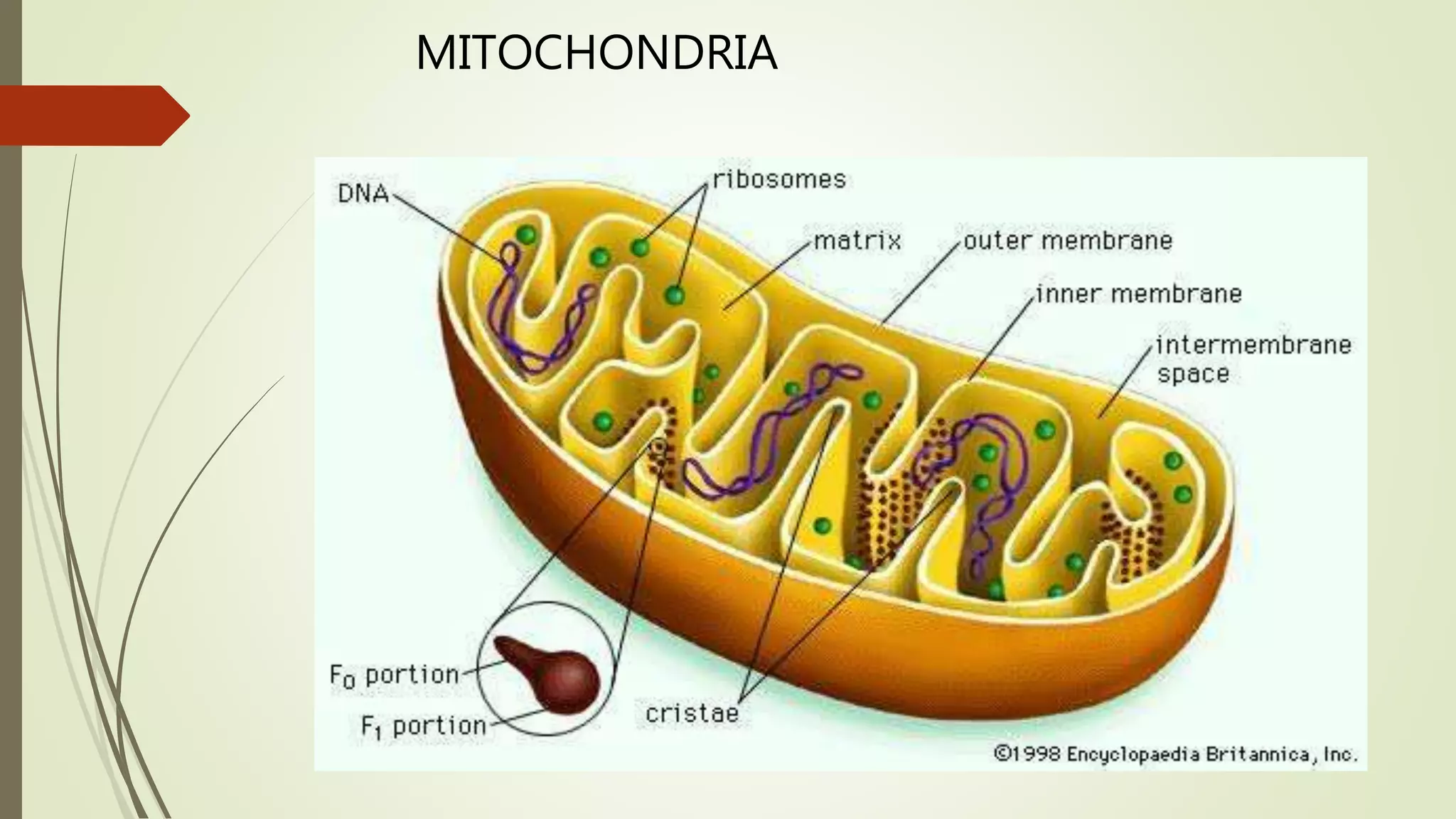
MITOCHONDRIA
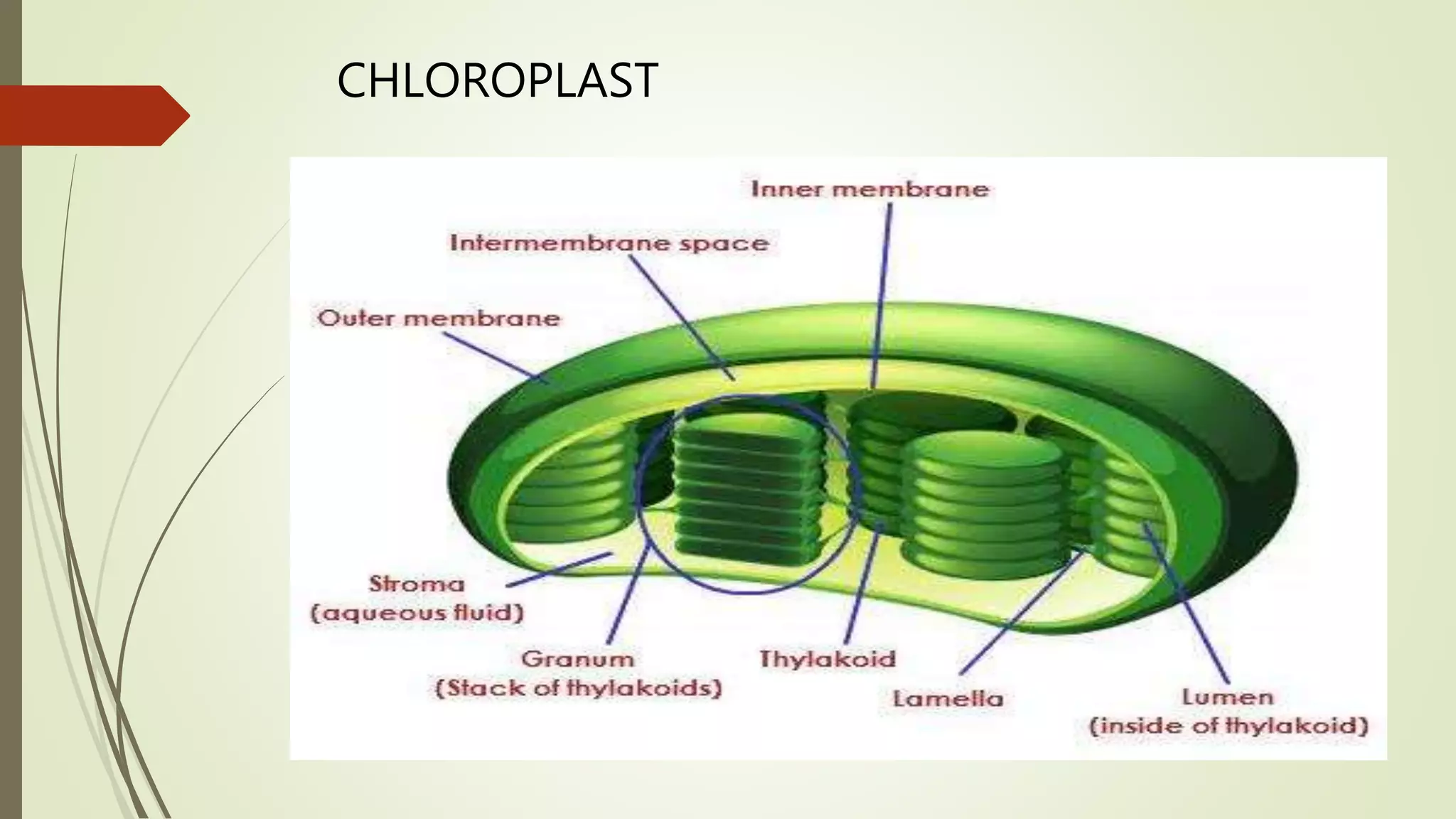
CHLOROPLAST
Cell types
Prokaryotic cell
Eukaryotic cell
REFERENCES :-
1. Khan Academy app
2. Byjus app
3. https://www2.gwu.edu/~darwin/BiSc151/Origin/origin.html
4. Ncert book
5. https://www.scribd.com/document/435794235/Unit1-pdf ( IGNOU book )
6. https://www.slideshare.net/mobile/EranEarland/ib-topic-15-cell-origins
THANK YOU

Cellular evolution

  • 1.
  • 2.
    INDEX • Introduction • Timeflow of origin of cell • Process • Primordial soup • RNA world hypothesis • DNA world • Organelles of cell • Cell types • Reference
  • 3.
    • All theliving organisms are made up of cells. • A living cell may be defined as a compartment enclosed by a membrane that consists of several chemical constituents and is capable of propagating itself by division. • Activity of an organism is dependent on the activities of its cells. • There are two stages in evolution of the cell; chemical evolution and biological evolution. INTRODUCTION
  • 4.
    A simplified timeflow of the origin of cell. Origin of earth ------------------------4.5 billions years ago Oldest rock-----------------------------3.9 billions years ago First cell----------------------------------3.5 billions years ago
  • 5.
    How cell isevolved? ATOMS MOLECULES BIOMONOMER MACROMOLECULES PLOYMER COMPLEXES CELL
  • 6.
    PROCESS - In earlyyear after formation of solar system, terrestrial planets continued to be bombarded by smaller bodied of various size at the last of particulate material from the formation of planets, was swept up by their gravitational pull. Later planet cooled.
  • 8.
    Primordial soup stage:-  For the initial formation of primitive living require a specific supporting chemical environment  Early earth have a chemically reducing atmosphere, which when exposed to energy in various forms.  By that energy produced a variety of simple organic compounds.  Organic compounds accumulated in a molecular ‘organic soup’.  And aslo many building block of life compound’s also formed
  • 9.
    Formation of complexorganic molecules :- Nucleotide – compounds of 3 subunit molecule  Nitrogen containing base  5 carbon sugar  Phosphate
  • 10.
    Nucleotide :- ithas many important functions and forms nucleic acid nucleotide bounded together to form RNA. Nucleic acid :- It has many important functions and role to formation of RNA and DNA RNA were made using free floating nucleotides that in primordial soup of molecules.
  • 11.
    Protein :- On theother hand,  Proteins are formed., and aslo hasve many functions .  And work great as molecular machines.  But it store information and copy them selves.  So they need DNA for that.  And helps in translation.
  • 12.
    So, which camefirst ? (DNA/RNA/Protein)
  • 13.
    What is RNAWorld hypothesis ?
  • 14.
    Survival of theFittest Game ,
  • 15.
    Gradually, RNA enclosedby membrane and other molecules also reacted to form first cell .
  • 16.
    DNA :- In otherhand somewhere along the life DNA is formed by RNA. Here, DNA become stable archive of genetic information that stored blue print for most successful RNA and protein molecules.
  • 17.
  • 18.
  • 19.
  • 20.
  • 21.
  • 22.
  • 23.
  • 24.
  • 25.
  • 26.
    REFERENCES :- 1. KhanAcademy app 2. Byjus app 3. https://www2.gwu.edu/~darwin/BiSc151/Origin/origin.html 4. Ncert book 5. https://www.scribd.com/document/435794235/Unit1-pdf ( IGNOU book ) 6. https://www.slideshare.net/mobile/EranEarland/ib-topic-15-cell-origins
  • 27.