Pituitary Gland
DANISH HASSAN
LECTURER, UNIVERSITY OF SARGODHA
Pituitary Gland (Anatomy)
 Also called the hypophesis
 Measures about 1 centimeter in diameter and 0.5
to 1 gram in weight
 Lies in the sella turcica, connected to the
hypothalamus by the pituitary/hypophysial stalk.
 Physiologically, divided into two distinct portions:
1. Anterior pituitary (Adenohypophysis)
2. Posterior pituitary (Neurohypophysis)
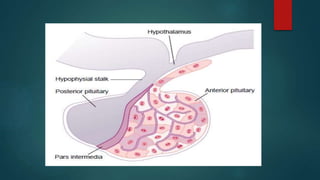
 Between these is a small, relatively avascular zone
called the pars intermedia
 Almost absent in the human being but is much
larger and much more functional in some lower
animals
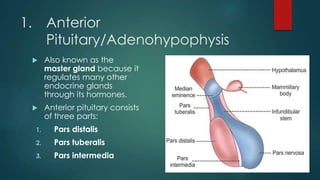
1. Anterior
Pituitary/Adenohypophysis
 Also known as the
master gland because it
regulates many other
endocrine glands
through its hormones.
 Anterior pituitary consists
of three parts:
1. Pars distalis
2. Pars tuberalis
3. Pars intermedia
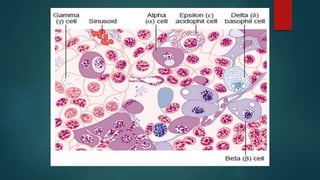
 Anterior pituitary has two types of cells, which
have different staining properties:
1. Chromophobe cells
2. Chromophil cells
1. Chromophobe Cells
 Do not possess granules and stain poorly.
 Form 50% of total cells in anterior
 Are not secretory in nature, but are the precursors of
chromophil cells
2. Chromophil Cells
 Contain large number of granules and are darkly
stained
 Form rest of 50% of anterior pitutary.
 Types:
1. Basis of staining property
2. Basis of secretory nature
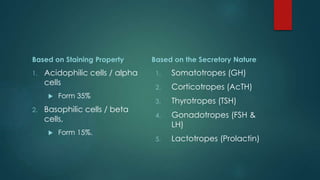
Based on Staining Property
1. Acidophilic cells / alpha
cells
 Form 35%
2. Basophilic cells / beta
cells,
 Form 15%.
Based on the Secretory Nature
1. Somatotropes (GH)
2. Corticotropes (AcTH)
3. Thyrotropes (TSH)
4. Gonadotropes (FSH &
LH)
5. Lactotropes (Prolactin)
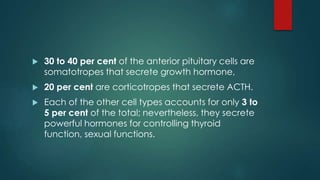
 30 to 40 per cent of the anterior pituitary cells are
somatotropes that secrete growth hormone,
 20 per cent are corticotropes that secrete ACTH.
 Each of the other cell types accounts for only 3 to
5 per cent of the total; nevertheless, they secrete
powerful hormones for controlling thyroid
function, sexual functions.
Regulation Of Anterior Pituitary
Secretion
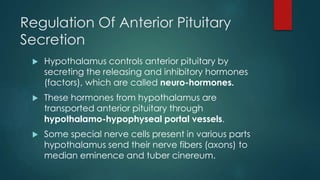
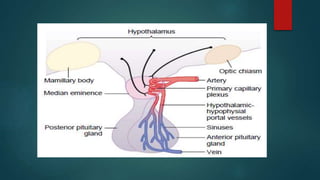
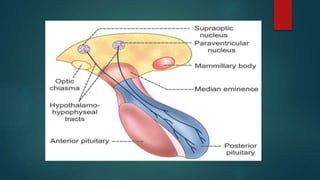
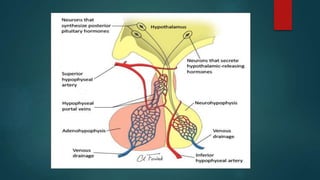
 Hypothalamus controls anterior pituitary by
secreting the releasing and inhibitory hormones
(factors), which are called neuro-hormones.
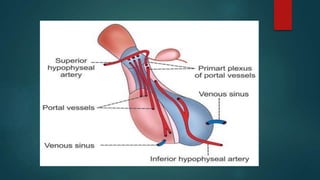
 These hormones from hypothalamus are
transported anterior pituitary through
hypothalamo-hypophyseal portal vessels.
 Some special nerve cells present in various parts
hypothalamus send their nerve fibers (axons) to
median eminence and tuber cinereum.
 These nerve cells synthesize the hormones and
release them into median eminence.
 From here, the hormones are transported by
blood via hypothalamo-hypophyseal portal
vessels to anterior pituitary.
Releasing and Inhibitory Hormones
Secreted by Hypothalamus
 Growth hormone-releasing hormone (GHRH)
 Stimulates the release of growth hormone
 Growth hormone-releasing polypeptide (GHRP)
 Stimulates the release of GHRH and growth hormone
 Growth hormone-inhibitory hormone
(GHIH)/Somatostatin
 Inhibits the growth hormone release
 Thyrotropic-releasing hormone (TRH)
 Stimulates the release of thyroid stimulating hormone
 Corticotropin-releasing hormone (CRH)
 Stimulatesthe release of adrenocorticotropin
 Gonadotropin-releasing hormone (GnRH)
 Stimulatesthe release of gonadotropins, FSH and LH
 Prolactin-inhibitory hormone (PIH)
 Inhibits prolactin secretion
2. Posterior
Pituitary/Neurohypophysis
 Bodies of the cells that secrete the posterior pituitary
hormones are not located in the pituitary gland.
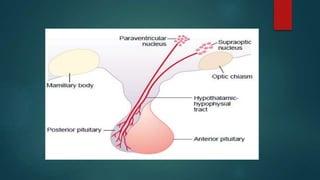
 Large neurons, called magnocellular neurons,
located in the supraoptic and paraventricular nuclei
of the hypothalamus synthesise post pitutary
hormones.
 Hormones are then transported in the axoplasm of
the neurons
 Nerve fibers passing from the hypothalamus to the
posterior pituitary gland carry the hormones.
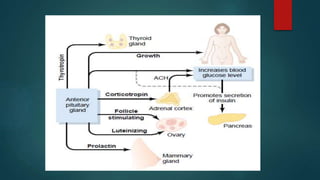
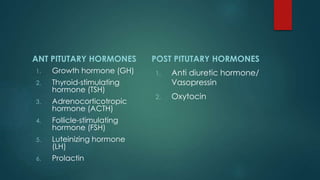
ANT PITUTARY HORMONES
1. Growth hormone (GH)
2. Thyroid-stimulating
hormone (TSH)
3. Adrenocorticotropic
hormone (ACTH)
4. Follicle-stimulating
hormone (FSH)
5. Luteinizing hormone
(LH)
6. Prolactin
POST PITUTARY HORMONES
1. Anti diuretic hormone/
Vasopressin
2. Oxytocin
pituitaryglandanatomy.pdf

pituitaryglandanatomy.pdf

  • 1.
  • 2.
    Pituitary Gland (Anatomy) Also called the hypophesis  Measures about 1 centimeter in diameter and 0.5 to 1 gram in weight  Lies in the sella turcica, connected to the hypothalamus by the pituitary/hypophysial stalk.  Physiologically, divided into two distinct portions: 1. Anterior pituitary (Adenohypophysis) 2. Posterior pituitary (Neurohypophysis)
  • 3.
     Between theseis a small, relatively avascular zone called the pars intermedia  Almost absent in the human being but is much larger and much more functional in some lower animals
  • 5.
    1. Anterior Pituitary/Adenohypophysis  Alsoknown as the master gland because it regulates many other endocrine glands through its hormones.  Anterior pituitary consists of three parts: 1. Pars distalis 2. Pars tuberalis 3. Pars intermedia
  • 6.
     Anterior pituitaryhas two types of cells, which have different staining properties: 1. Chromophobe cells 2. Chromophil cells
  • 7.
    1. Chromophobe Cells Do not possess granules and stain poorly.  Form 50% of total cells in anterior  Are not secretory in nature, but are the precursors of chromophil cells
  • 8.
    2. Chromophil Cells Contain large number of granules and are darkly stained  Form rest of 50% of anterior pitutary.  Types: 1. Basis of staining property 2. Basis of secretory nature
  • 9.
    Based on StainingProperty 1. Acidophilic cells / alpha cells  Form 35% 2. Basophilic cells / beta cells,  Form 15%. Based on the Secretory Nature 1. Somatotropes (GH) 2. Corticotropes (AcTH) 3. Thyrotropes (TSH) 4. Gonadotropes (FSH & LH) 5. Lactotropes (Prolactin)
  • 11.
     30 to40 per cent of the anterior pituitary cells are somatotropes that secrete growth hormone,  20 per cent are corticotropes that secrete ACTH.  Each of the other cell types accounts for only 3 to 5 per cent of the total; nevertheless, they secrete powerful hormones for controlling thyroid function, sexual functions.
  • 13.
    Regulation Of AnteriorPituitary Secretion  Hypothalamus controls anterior pituitary by secreting the releasing and inhibitory hormones (factors), which are called neuro-hormones.  These hormones from hypothalamus are transported anterior pituitary through hypothalamo-hypophyseal portal vessels.  Some special nerve cells present in various parts hypothalamus send their nerve fibers (axons) to median eminence and tuber cinereum.
  • 14.
     These nervecells synthesize the hormones and release them into median eminence.  From here, the hormones are transported by blood via hypothalamo-hypophyseal portal vessels to anterior pituitary.
  • 17.
    Releasing and InhibitoryHormones Secreted by Hypothalamus  Growth hormone-releasing hormone (GHRH)  Stimulates the release of growth hormone  Growth hormone-releasing polypeptide (GHRP)  Stimulates the release of GHRH and growth hormone  Growth hormone-inhibitory hormone (GHIH)/Somatostatin  Inhibits the growth hormone release  Thyrotropic-releasing hormone (TRH)  Stimulates the release of thyroid stimulating hormone
  • 18.
     Corticotropin-releasing hormone(CRH)  Stimulatesthe release of adrenocorticotropin  Gonadotropin-releasing hormone (GnRH)  Stimulatesthe release of gonadotropins, FSH and LH  Prolactin-inhibitory hormone (PIH)  Inhibits prolactin secretion
  • 19.
    2. Posterior Pituitary/Neurohypophysis  Bodiesof the cells that secrete the posterior pituitary hormones are not located in the pituitary gland.  Large neurons, called magnocellular neurons, located in the supraoptic and paraventricular nuclei of the hypothalamus synthesise post pitutary hormones.  Hormones are then transported in the axoplasm of the neurons  Nerve fibers passing from the hypothalamus to the posterior pituitary gland carry the hormones.
  • 22.
    ANT PITUTARY HORMONES 1.Growth hormone (GH) 2. Thyroid-stimulating hormone (TSH) 3. Adrenocorticotropic hormone (ACTH) 4. Follicle-stimulating hormone (FSH) 5. Luteinizing hormone (LH) 6. Prolactin POST PITUTARY HORMONES 1. Anti diuretic hormone/ Vasopressin 2. Oxytocin