October 30, 2006 Objective: Cell Respiration (detailed) Procedure: 1. PP lecture   2. Cell Respiration card activity (work on your   reading comprehension!) Homework: Continue working on your in-class activity if you did not finish.  If you did finish, study with the cards.  You will be randomly called on tomorrow to put the squares in the right order.  Test on Friday over chapter 7. Bell-work: How many non-school books do you read each month?  What kind of books do you read?  How important do you think reading comprehension is to your learning in this class?
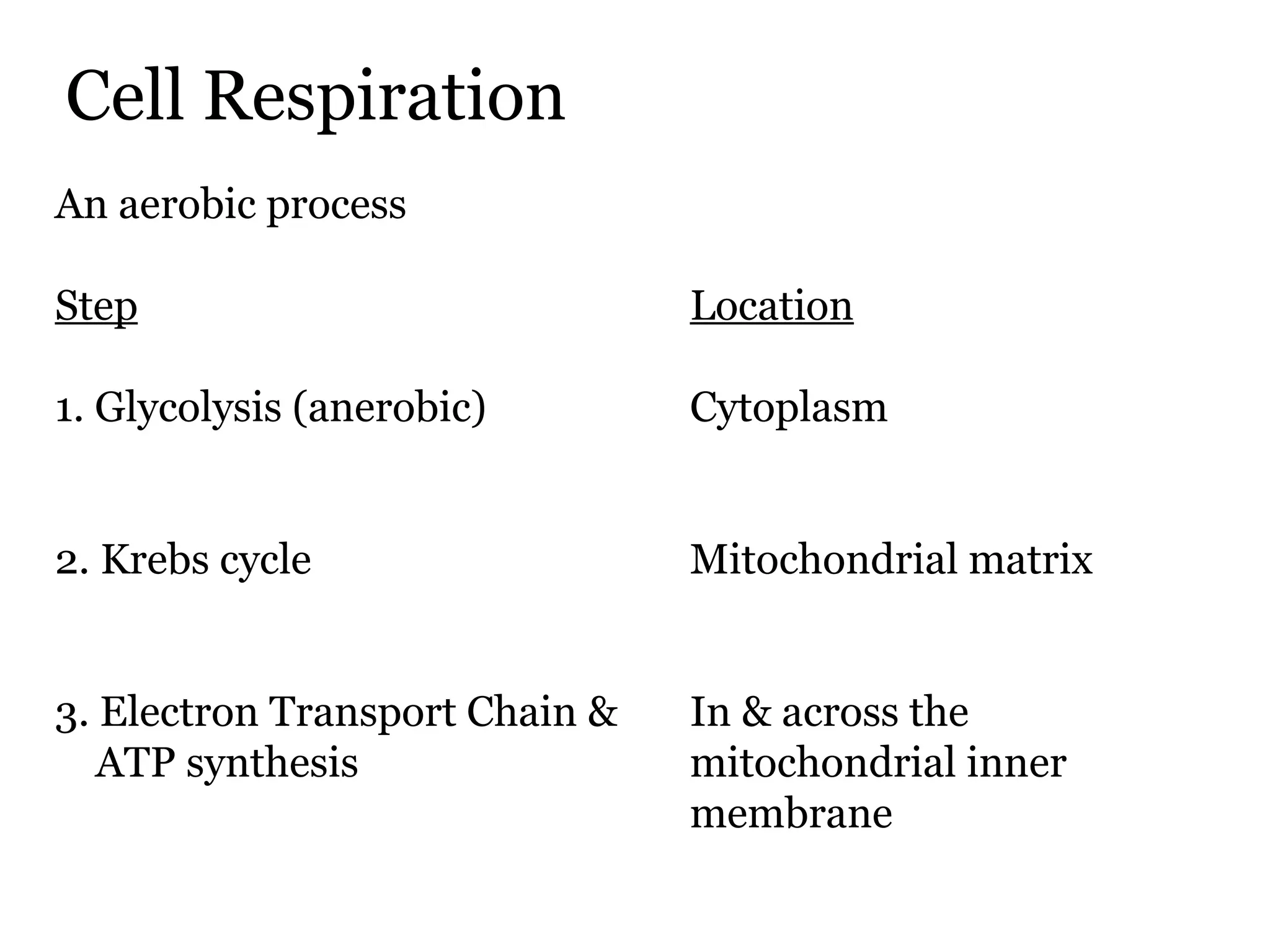
Cell Respiration An aerobic process Step   Location 1. Glycolysis (anerobic)   Cytoplasm 2. Krebs cycle   Mitochondrial matrix 3. Electron Transport Chain & In & across the ATP synthesis mitochondrial inner membrane
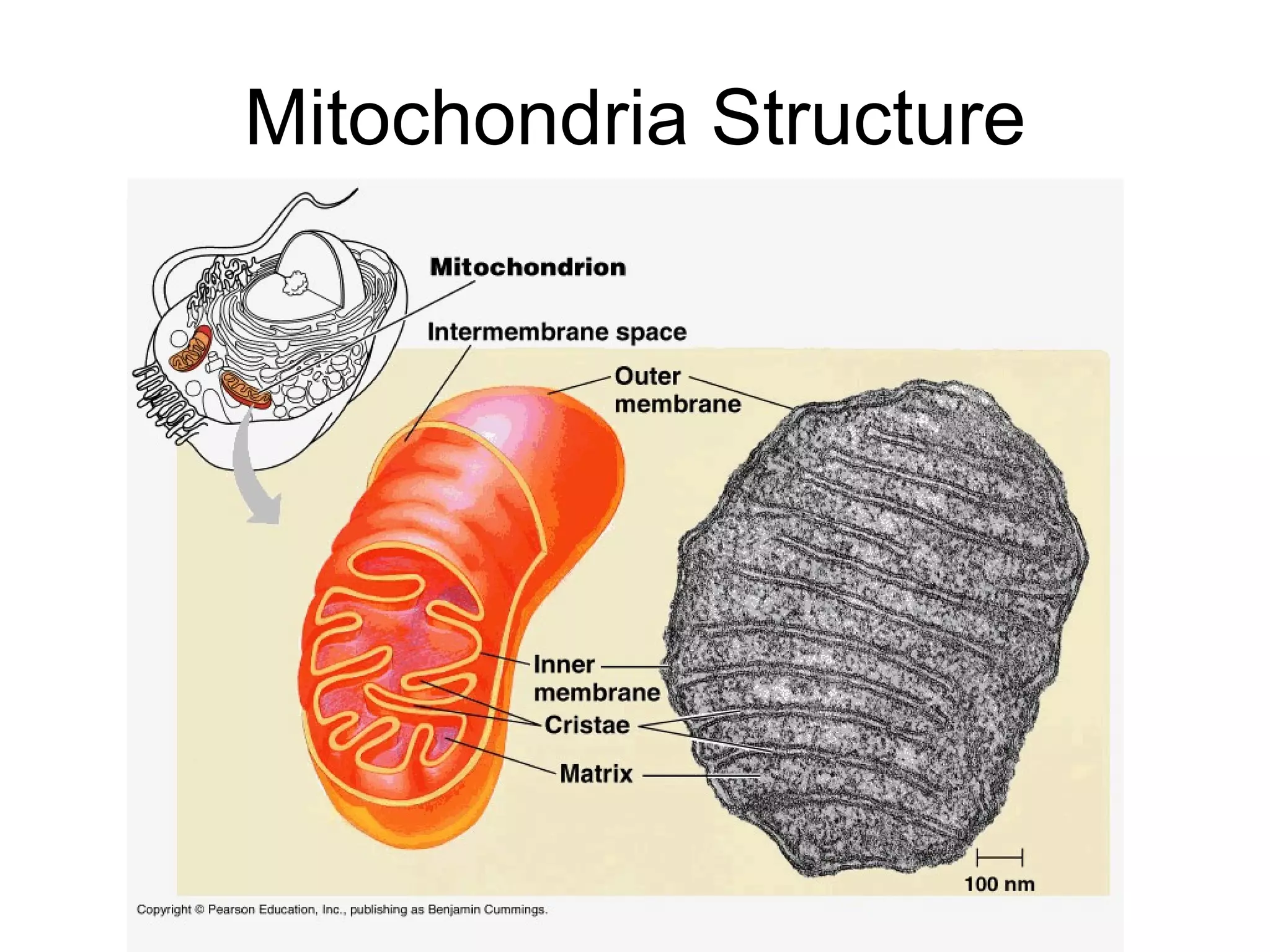
Mitochondria Structure
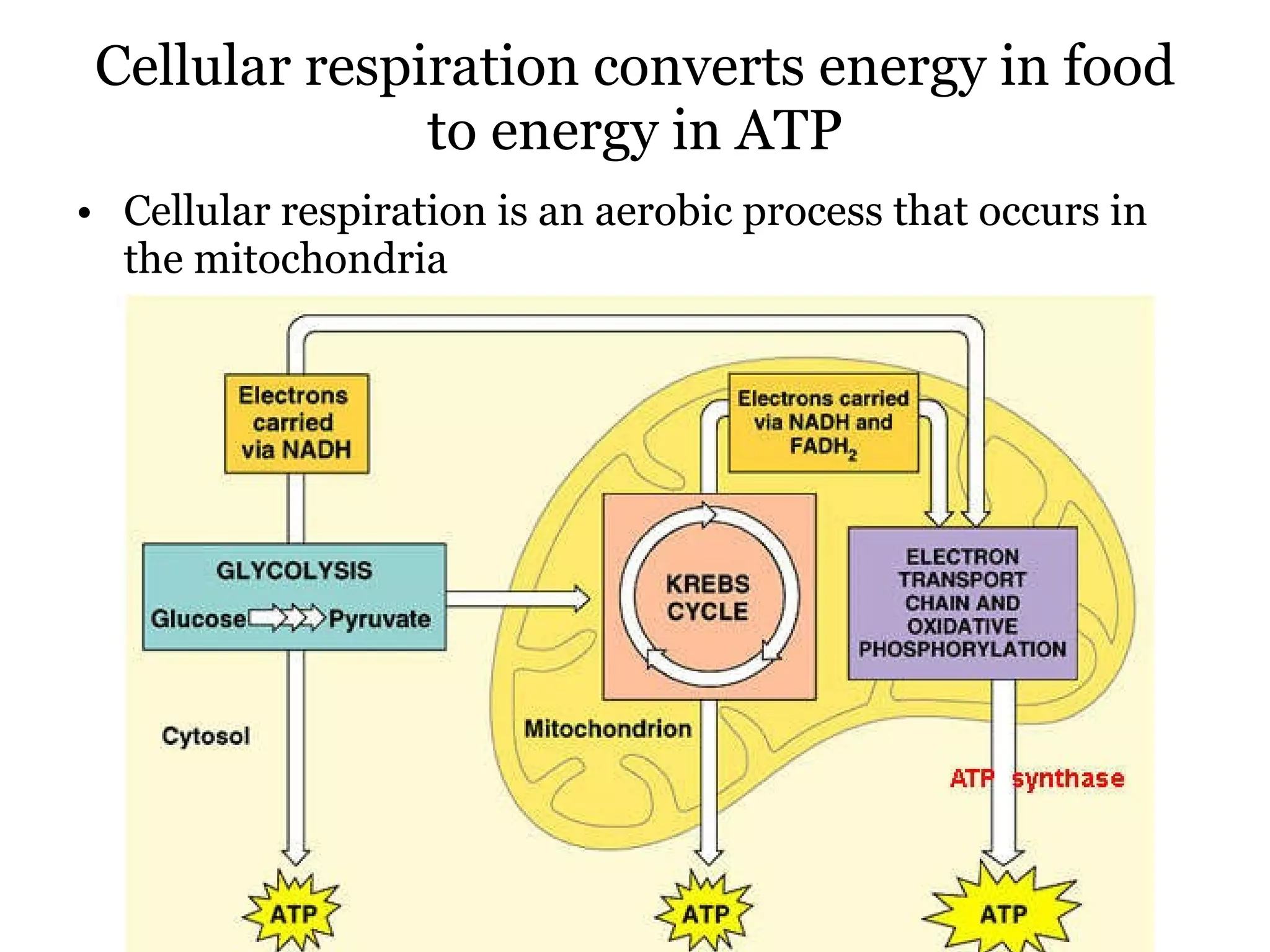
Cellular respiration converts energy in food to energy in ATP Cellular respiration is an aerobic process that occurs in the mitochondria
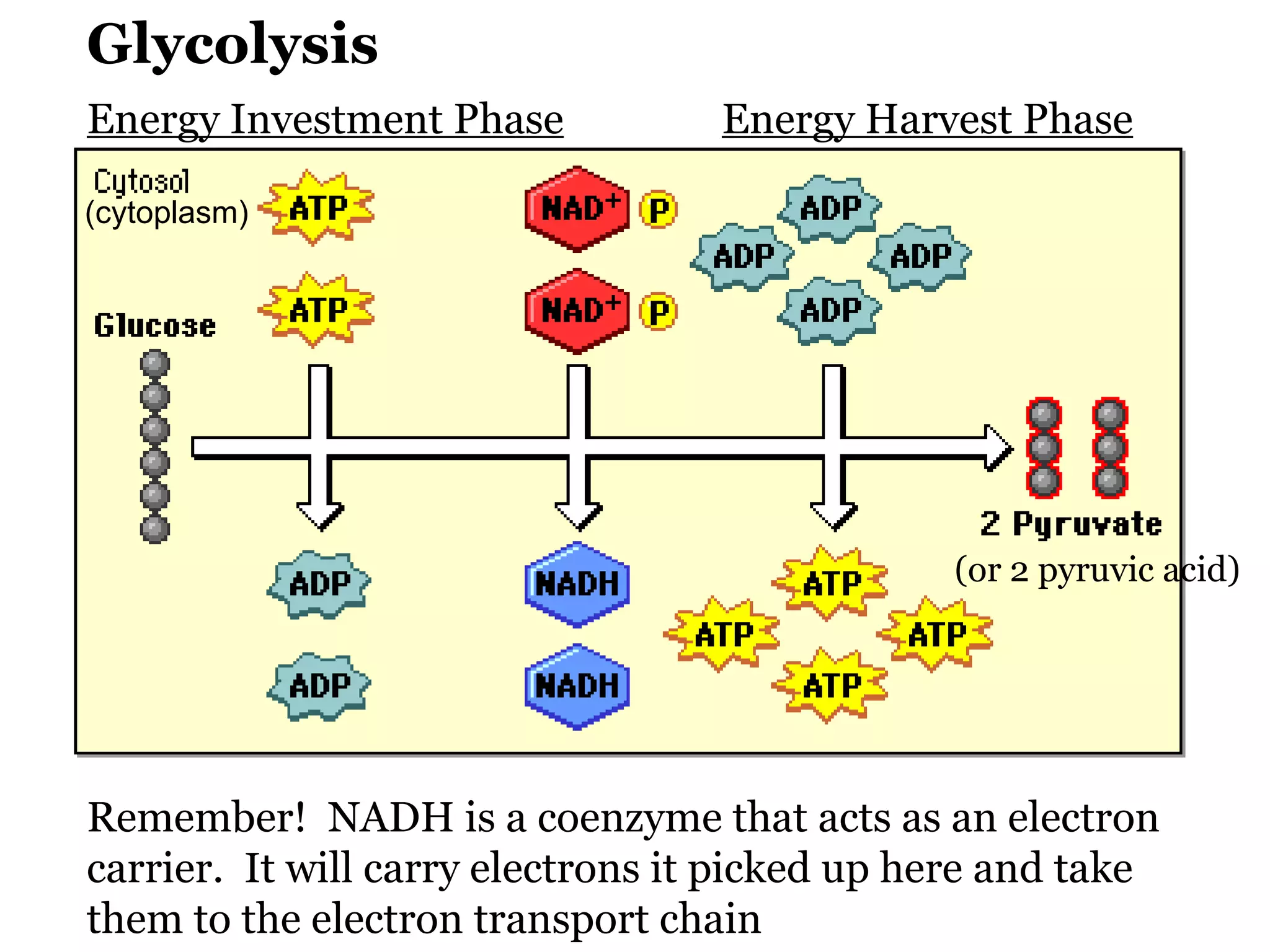
Glycolysis Energy Investment Phase Energy Harvest Phase Remember!  NADH is a coenzyme that acts as an electron carrier.  It will carry electrons it picked up here and take them to the electron transport chain (or 2 pyruvic acid) (cytoplasm)
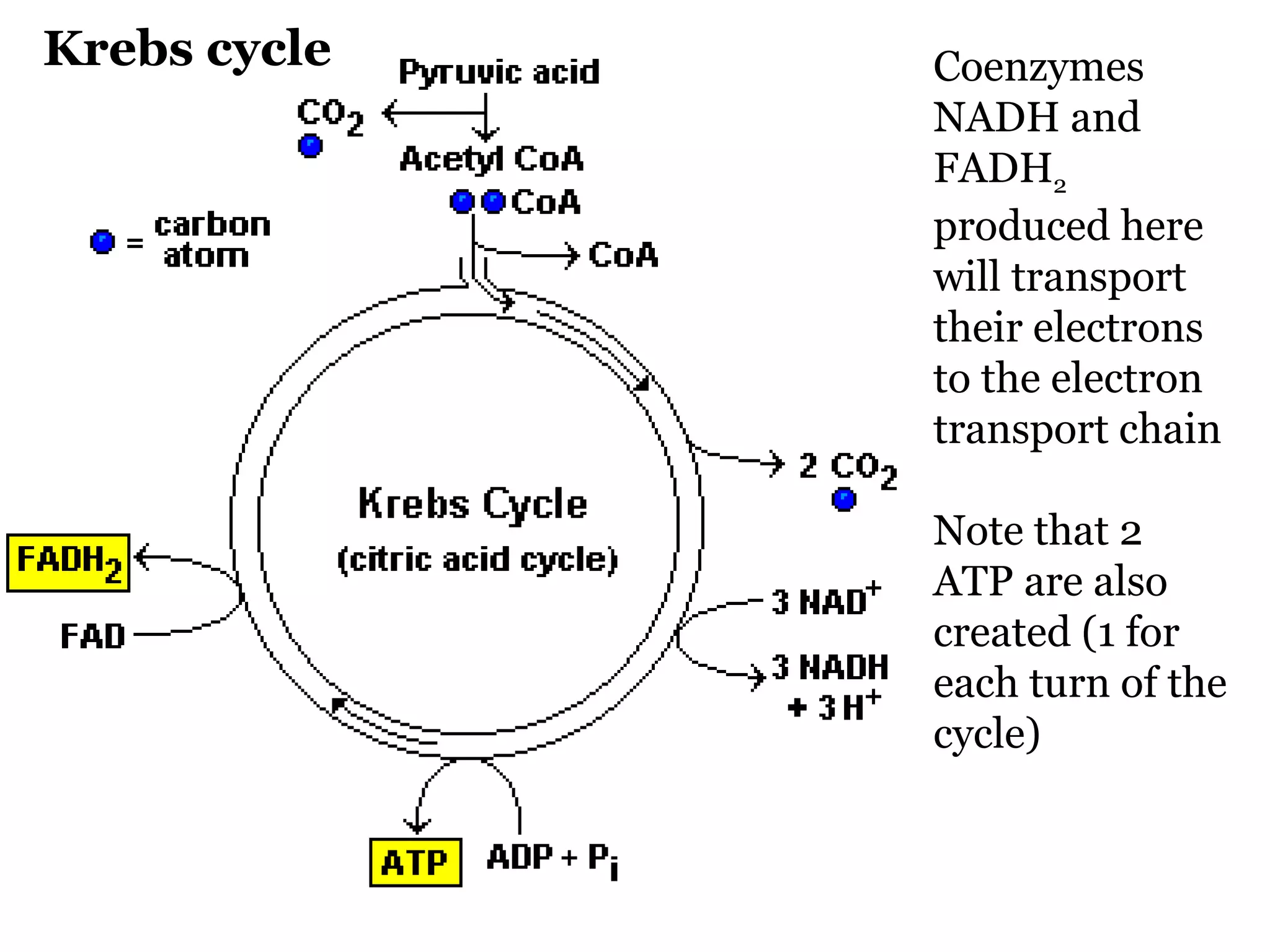
Krebs cycle Coenzymes NADH and FADH 2  produced here will transport their electrons to the electron transport chain Note that 2 ATP are also created (1 for each turn of the cycle)
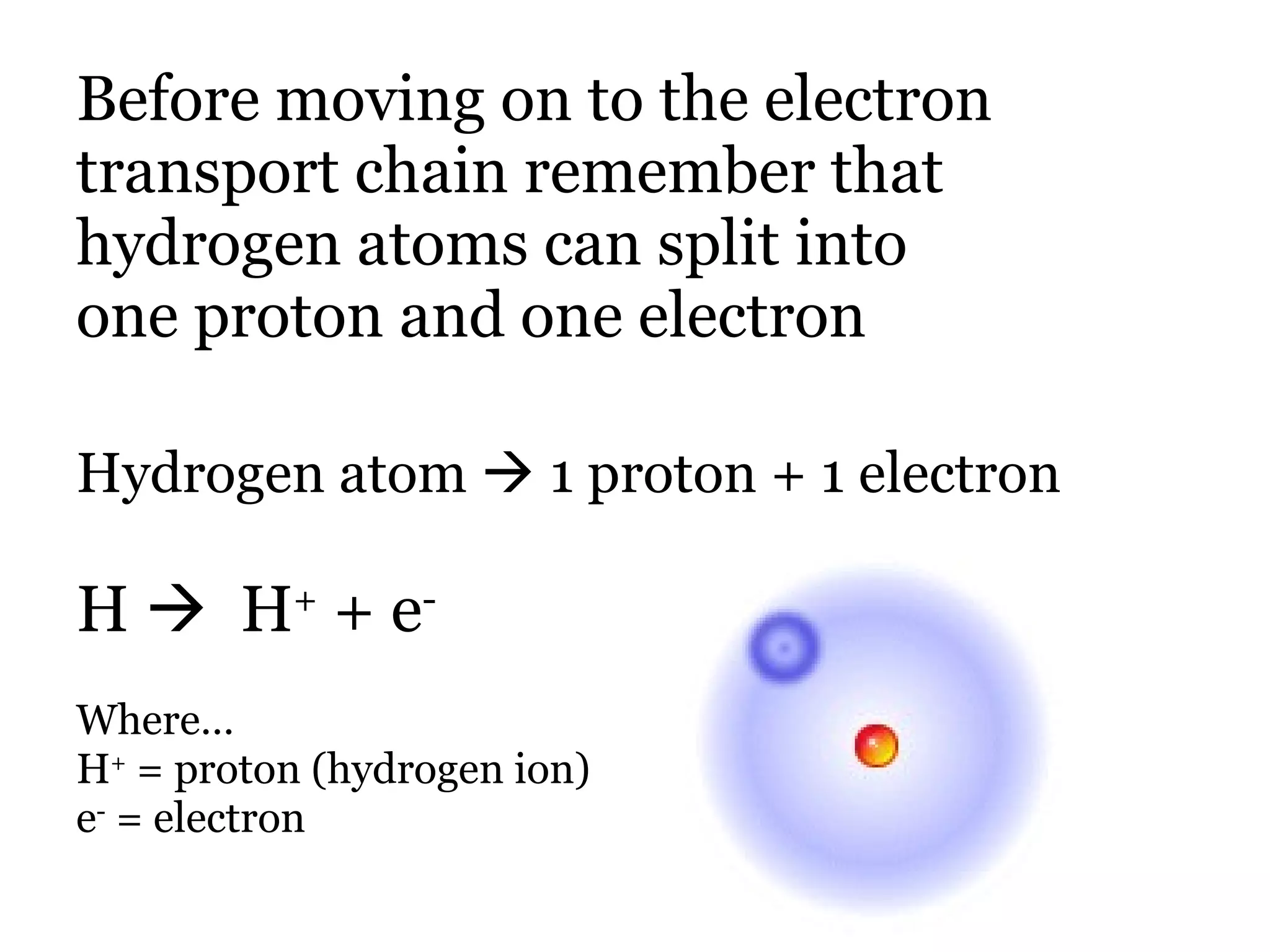
Before moving on to the electron transport chain remember that hydrogen atoms can split into one proton and one electron Hydrogen atom    1 proton + 1 electron H     H +  + e - Where… H +  = proton (hydrogen ion) e -  = electron
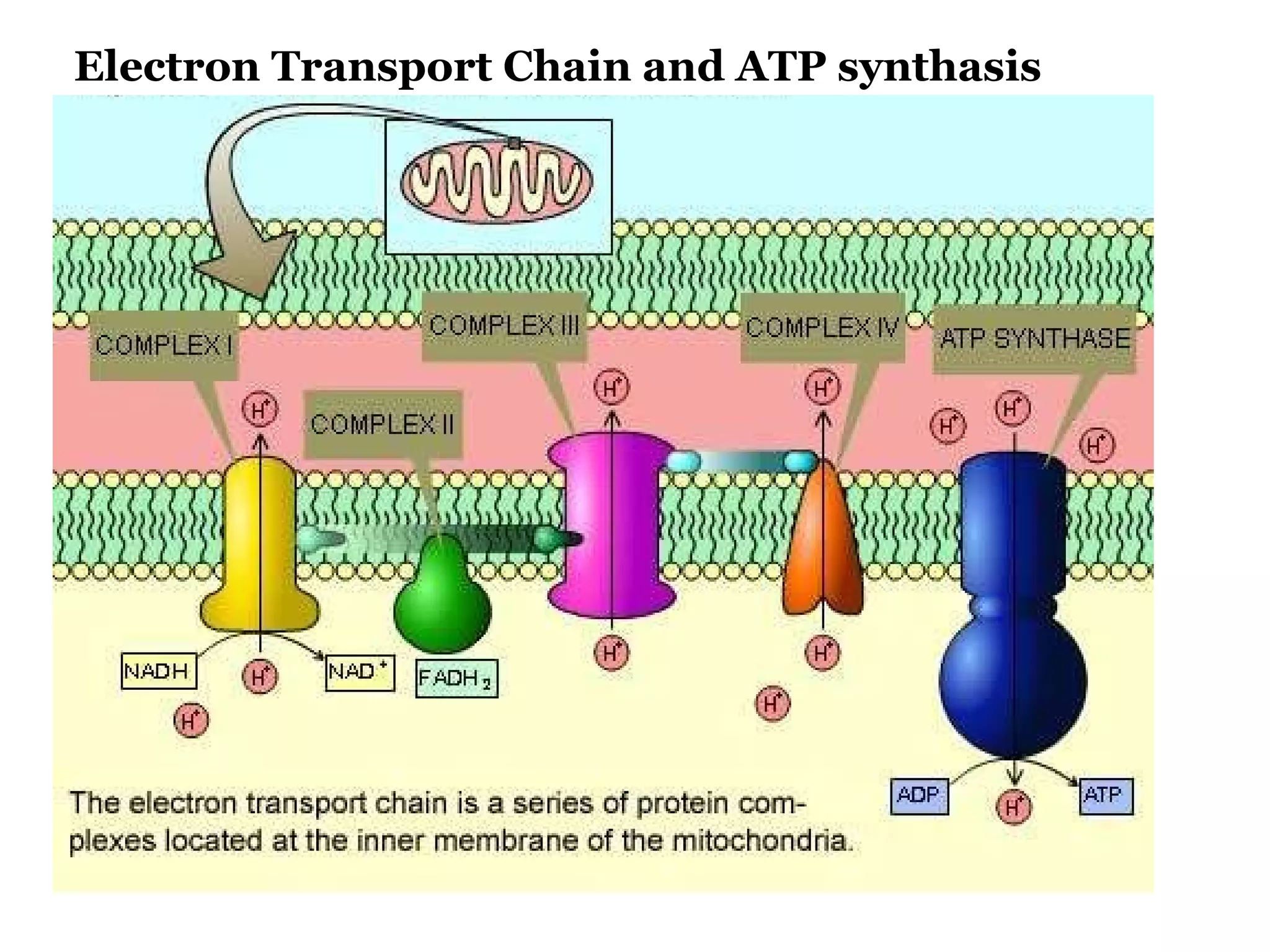
Electron Transport Chain and ATP synthasis
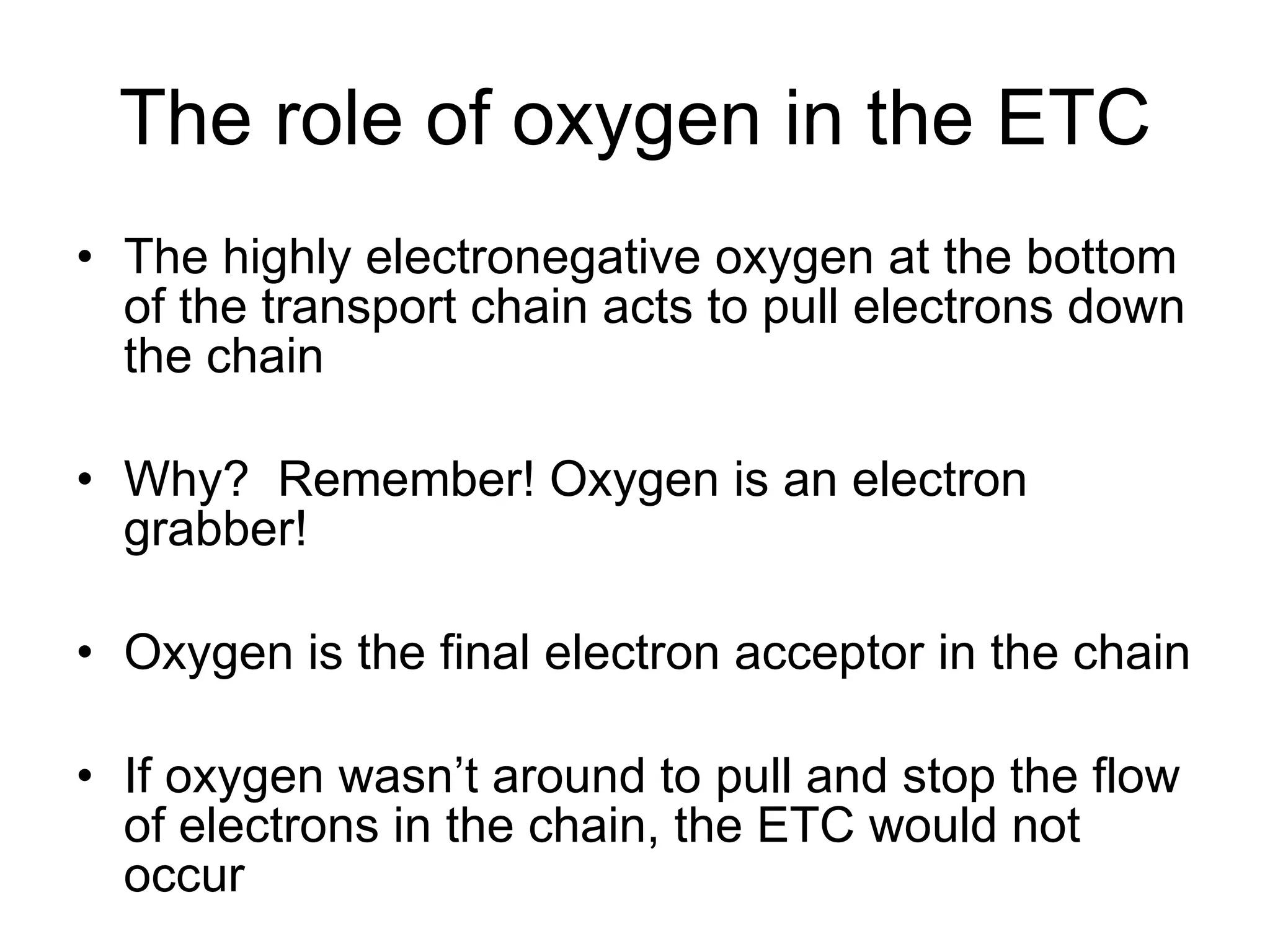
The role of oxygen in the ETC The highly electronegative oxygen at the bottom of the transport chain acts to pull electrons down the chain Why?  Remember! Oxygen is an electron grabber! Oxygen is the final electron acceptor in the chain If oxygen wasn’t around to pull and stop the flow of electrons in the chain, the ETC would not occur
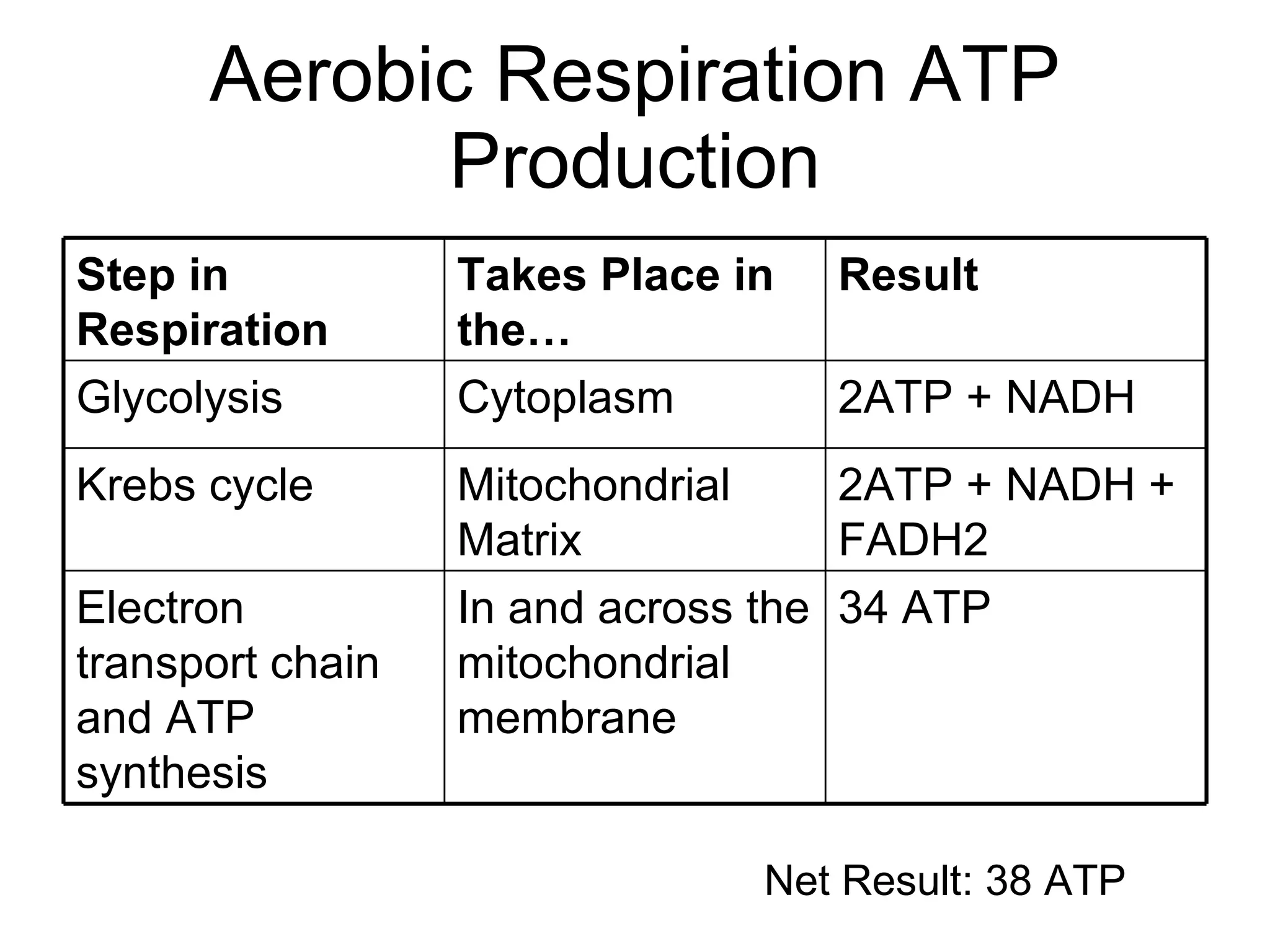
Aerobic Respiration ATP Production Net Result: 38 ATP 34 ATP In and across the mitochondrial membrane Electron transport chain and ATP synthesis 2ATP + NADH + FADH2 Mitochondrial Matrix Krebs cycle 2ATP + NADH Cytoplasm Glycolysis Result Takes Place in the… Step in Respiration
Cell Respiration Card Activity Read pages 148-152 and… Cut out the squares and place the steps of aerobic respiration in order from beginning to end Hint!  Remember to look at and read the pictures/diagrams Once you are  100%  positive you have them in the right order, number/color the squares You will be randomly called on tomorrow to put the squares in the right order (for your homework grade!)

Cell Respiration (part 2)

  • 1.
    October 30, 2006Objective: Cell Respiration (detailed) Procedure: 1. PP lecture 2. Cell Respiration card activity (work on your reading comprehension!) Homework: Continue working on your in-class activity if you did not finish. If you did finish, study with the cards. You will be randomly called on tomorrow to put the squares in the right order. Test on Friday over chapter 7. Bell-work: How many non-school books do you read each month? What kind of books do you read? How important do you think reading comprehension is to your learning in this class?
  • 2.
    Cell Respiration Anaerobic process Step Location 1. Glycolysis (anerobic) Cytoplasm 2. Krebs cycle Mitochondrial matrix 3. Electron Transport Chain & In & across the ATP synthesis mitochondrial inner membrane
  • 3.
  • 4.
    Cellular respiration convertsenergy in food to energy in ATP Cellular respiration is an aerobic process that occurs in the mitochondria
  • 5.
    Glycolysis Energy InvestmentPhase Energy Harvest Phase Remember! NADH is a coenzyme that acts as an electron carrier. It will carry electrons it picked up here and take them to the electron transport chain (or 2 pyruvic acid) (cytoplasm)
  • 6.
    Krebs cycle CoenzymesNADH and FADH 2 produced here will transport their electrons to the electron transport chain Note that 2 ATP are also created (1 for each turn of the cycle)
  • 7.
    Before moving onto the electron transport chain remember that hydrogen atoms can split into one proton and one electron Hydrogen atom  1 proton + 1 electron H  H + + e - Where… H + = proton (hydrogen ion) e - = electron
  • 8.
    Electron Transport Chainand ATP synthasis
  • 9.
    The role ofoxygen in the ETC The highly electronegative oxygen at the bottom of the transport chain acts to pull electrons down the chain Why? Remember! Oxygen is an electron grabber! Oxygen is the final electron acceptor in the chain If oxygen wasn’t around to pull and stop the flow of electrons in the chain, the ETC would not occur
  • 10.
    Aerobic Respiration ATPProduction Net Result: 38 ATP 34 ATP In and across the mitochondrial membrane Electron transport chain and ATP synthesis 2ATP + NADH + FADH2 Mitochondrial Matrix Krebs cycle 2ATP + NADH Cytoplasm Glycolysis Result Takes Place in the… Step in Respiration
  • 11.
    Cell Respiration CardActivity Read pages 148-152 and… Cut out the squares and place the steps of aerobic respiration in order from beginning to end Hint! Remember to look at and read the pictures/diagrams Once you are 100% positive you have them in the right order, number/color the squares You will be randomly called on tomorrow to put the squares in the right order (for your homework grade!)