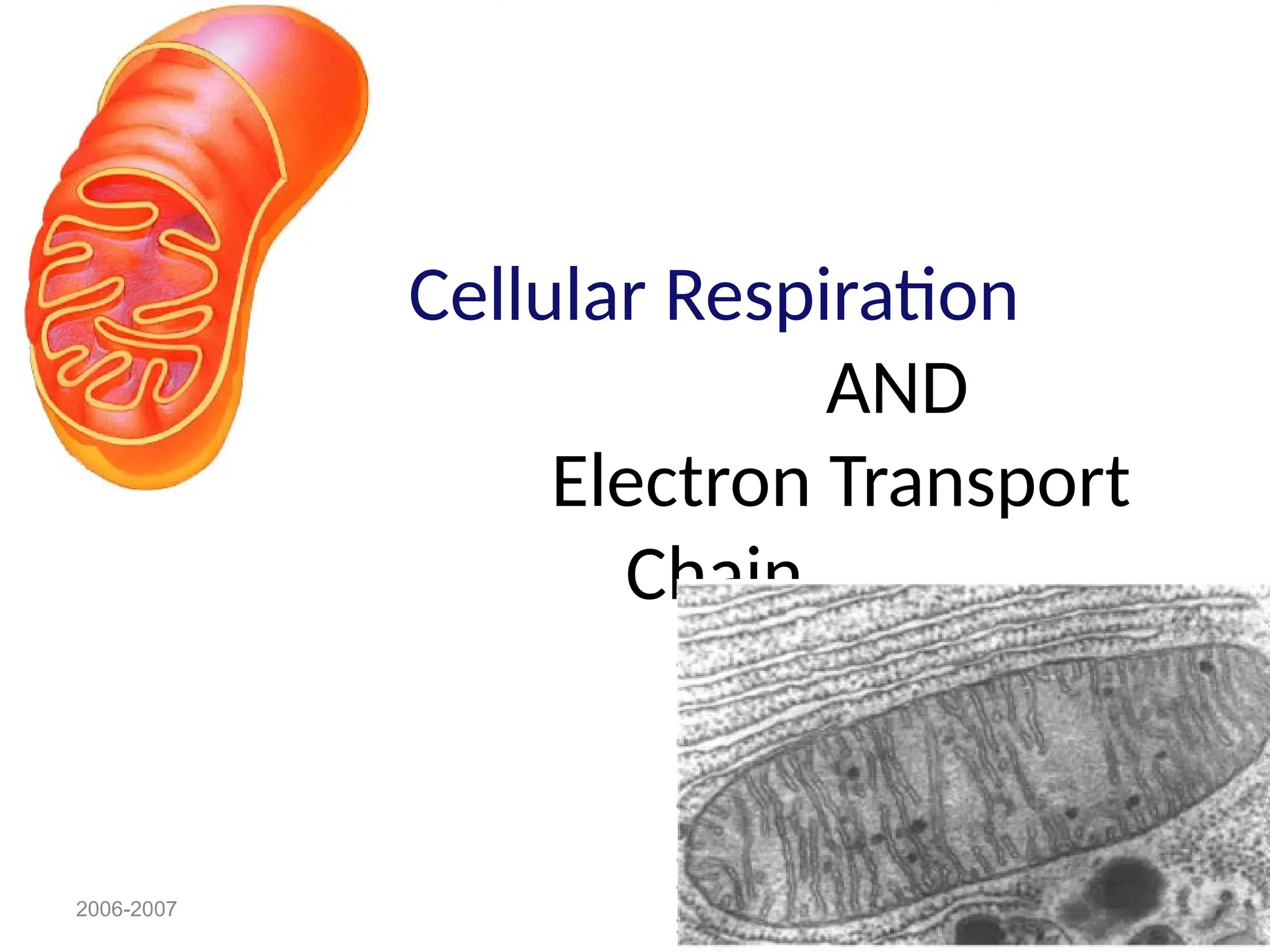
Cellular Respiration
AND
Electron Transport
Chain
2006-2007
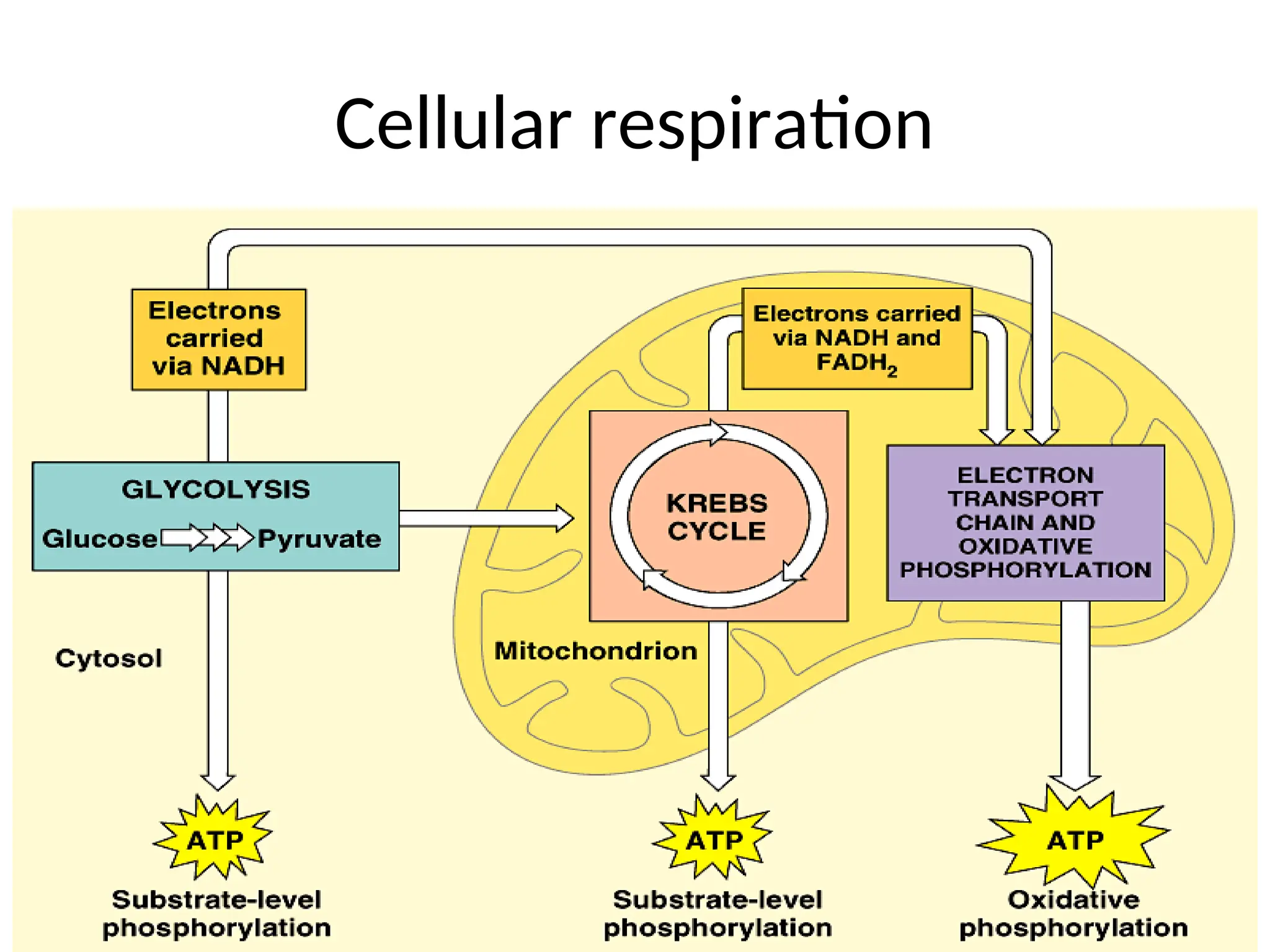
Cellular respiration
2006-2007
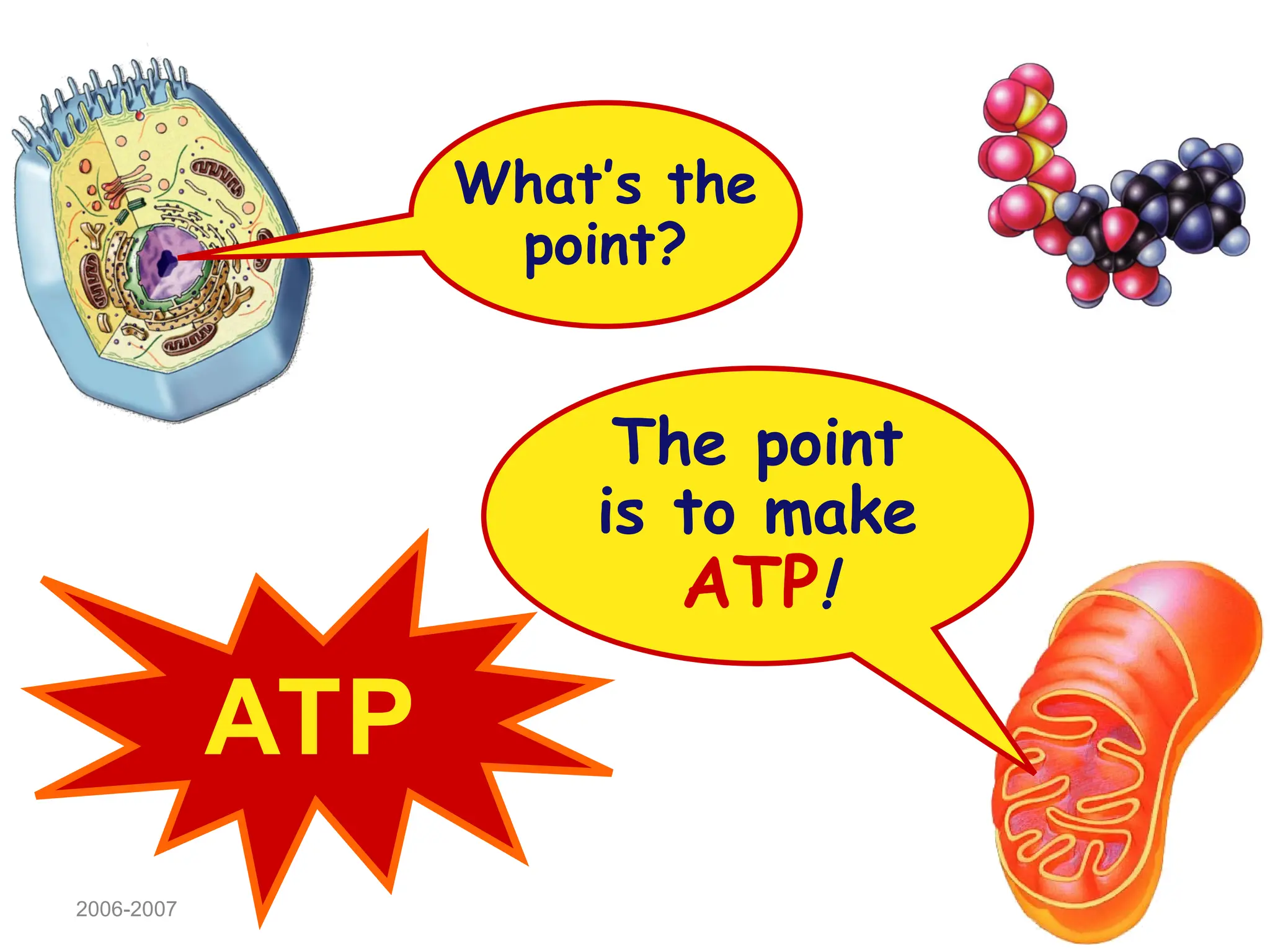
What’s the
point?
The point
is to make
ATP!
ATP
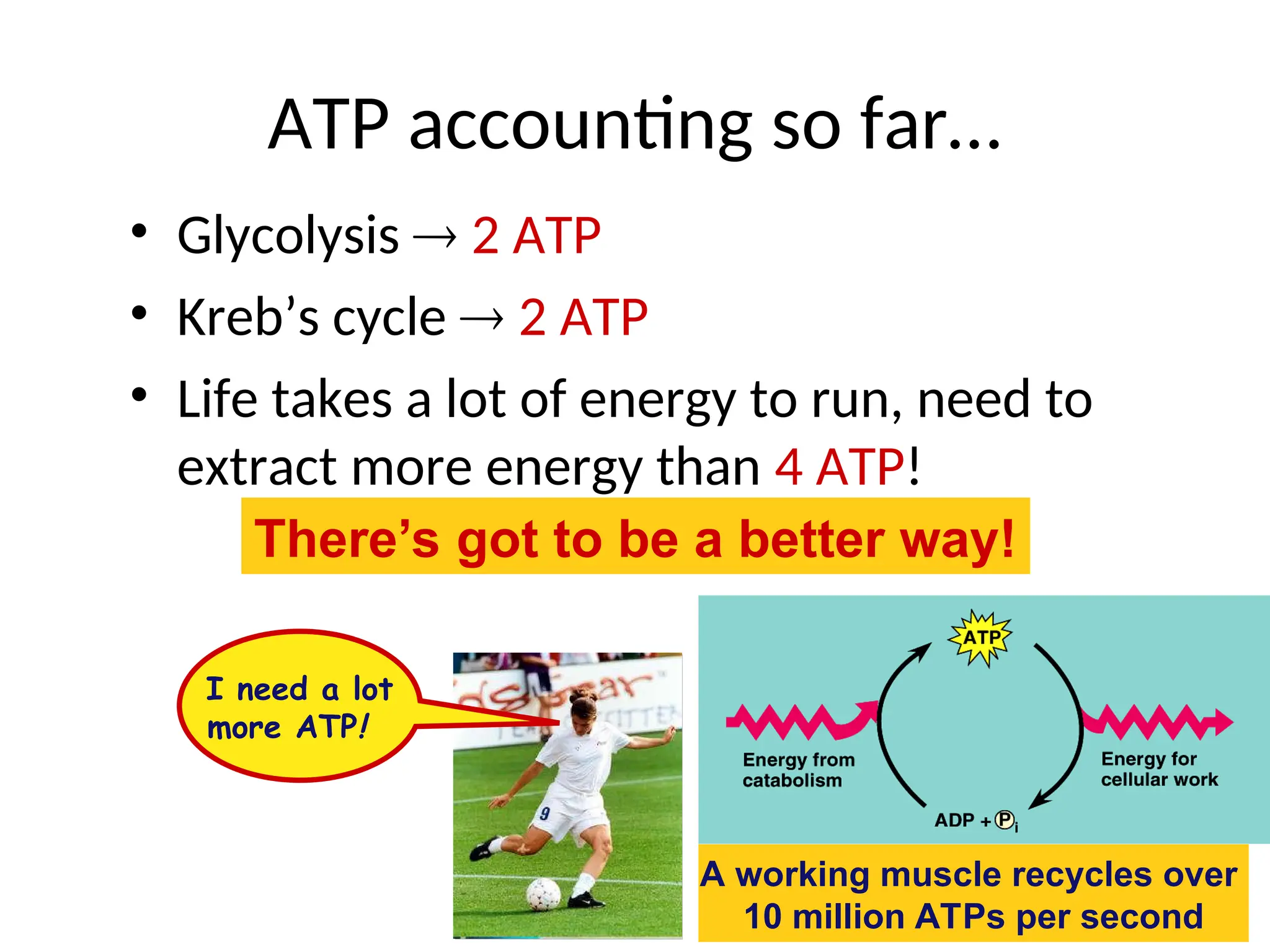
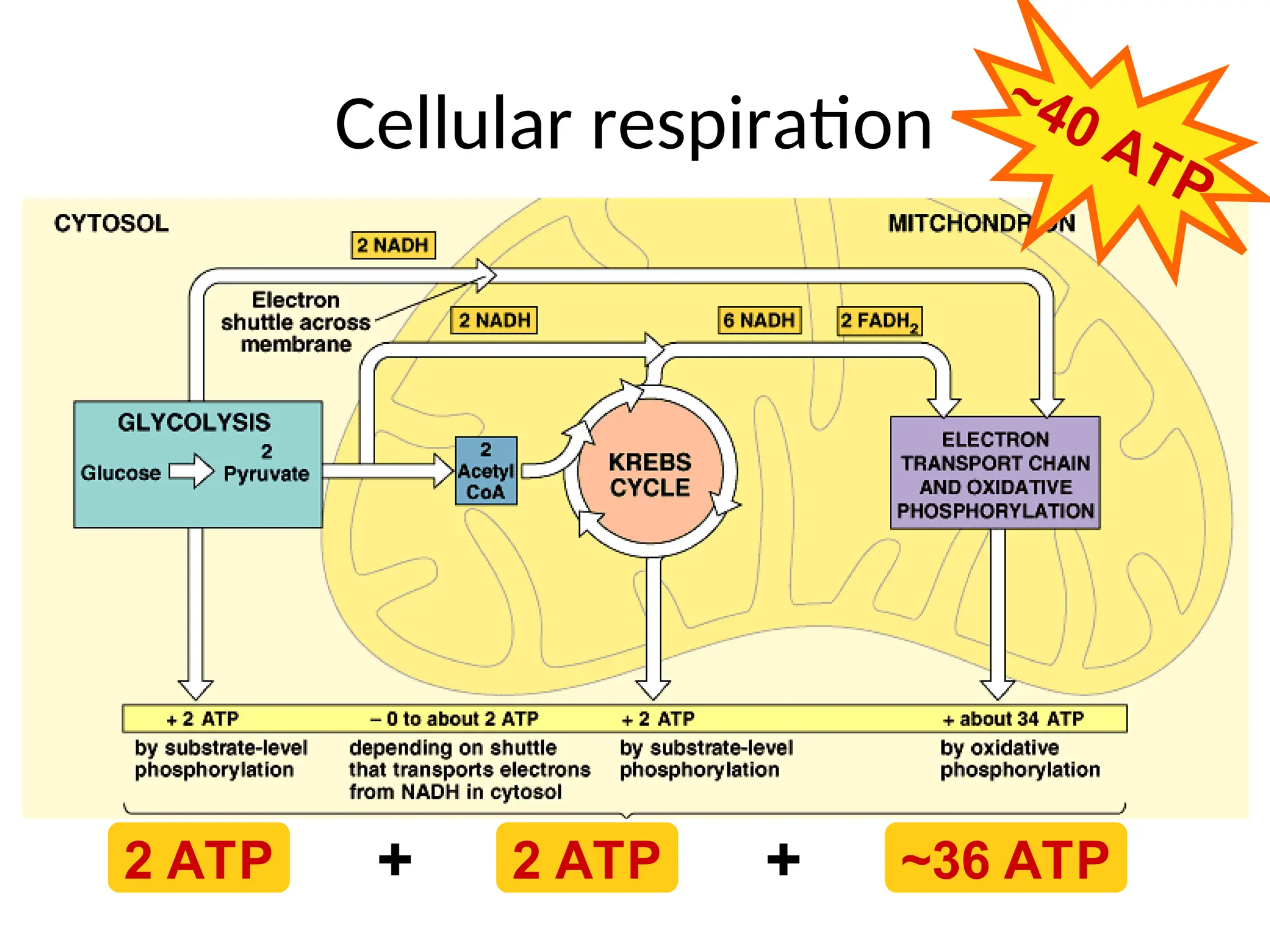
ATP accounting so far…
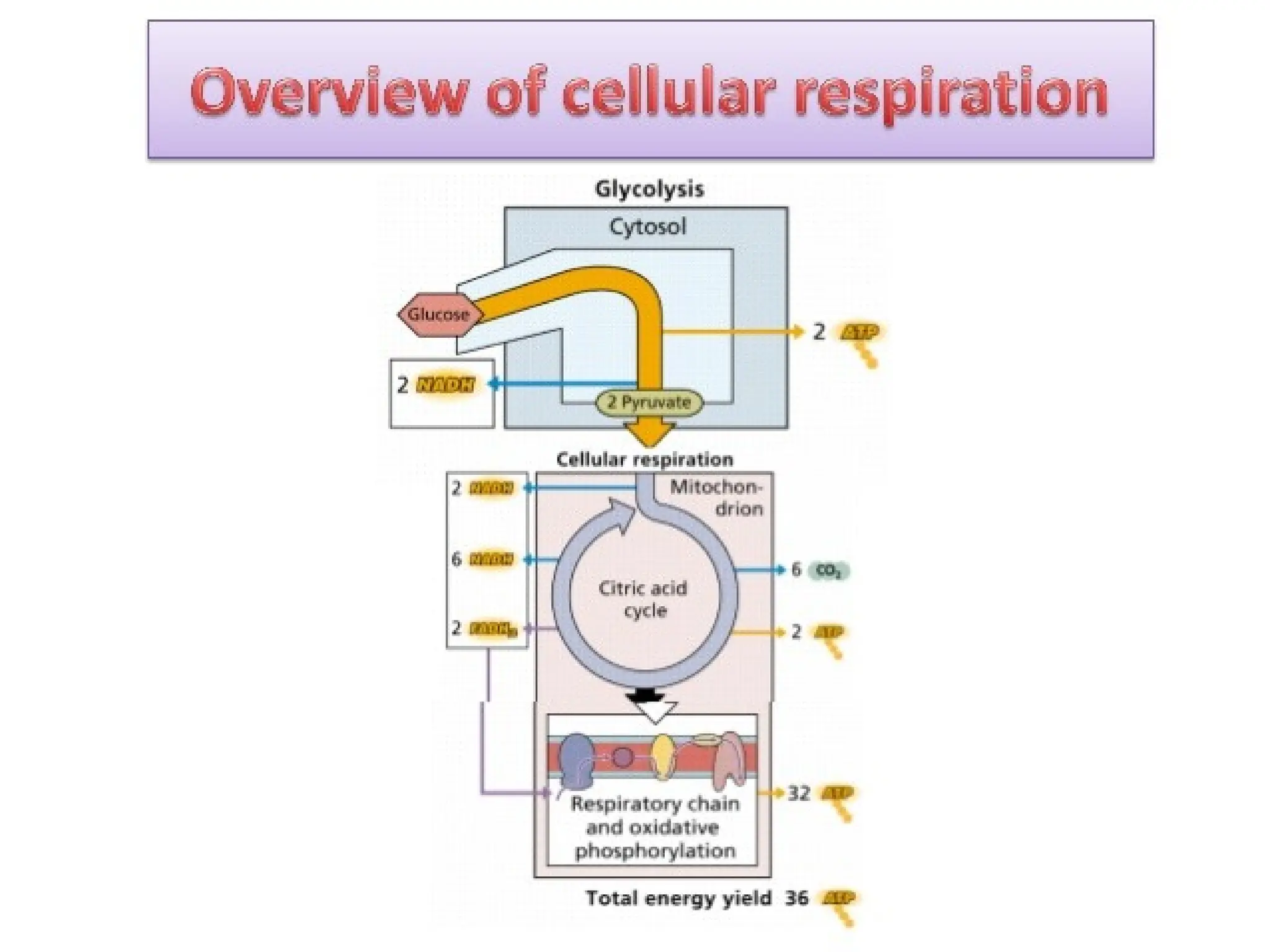
• Glycolysis  2 ATP
• Kreb’s cycle  2 ATP
• Life takes a lot of energy to run, need to
extract more energy than 4 ATP!
A working muscle recycles over
10 million ATPs per second
There’s got to be a better way!
I need a lot
more ATP!
There is a better way!
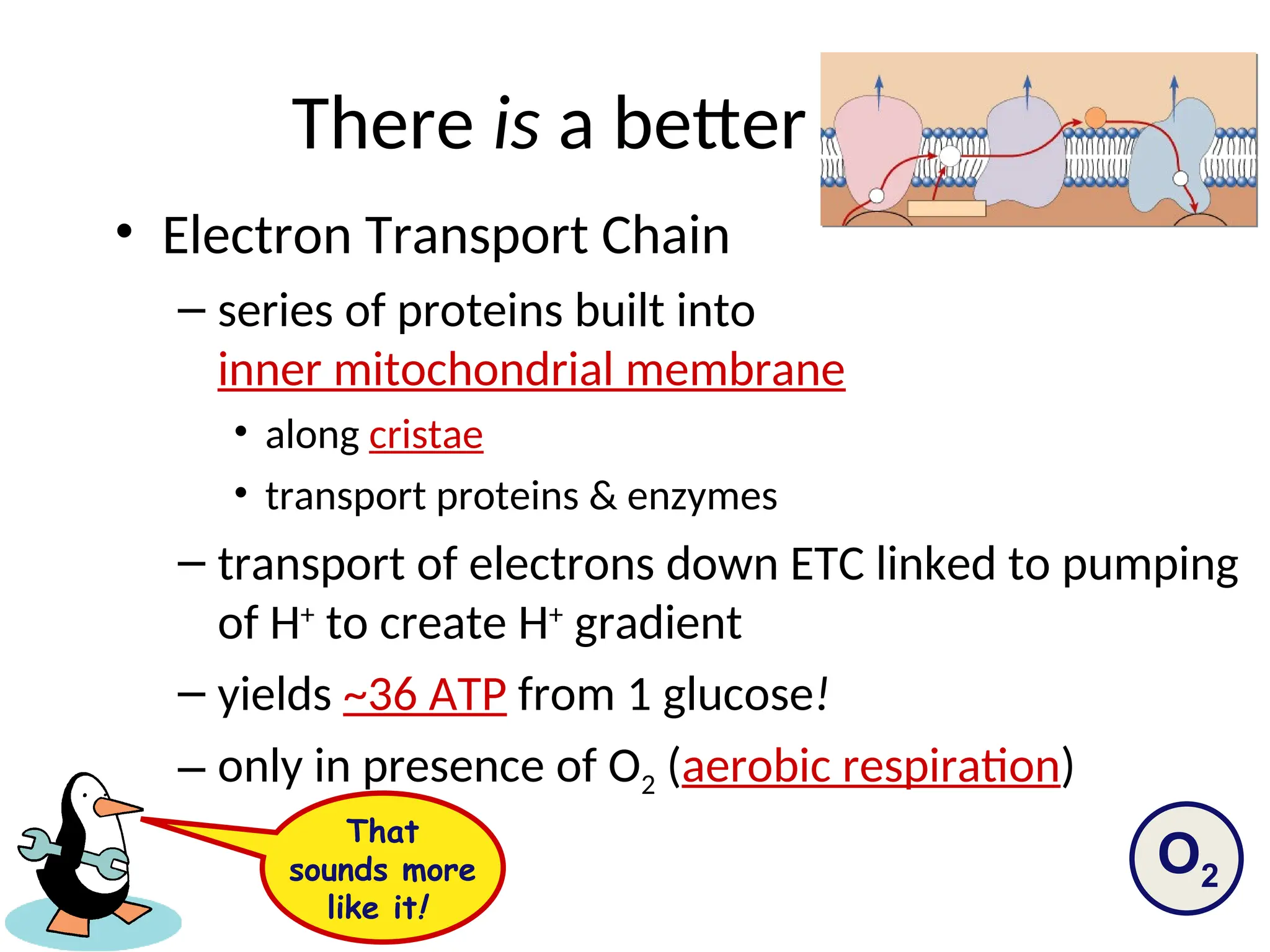
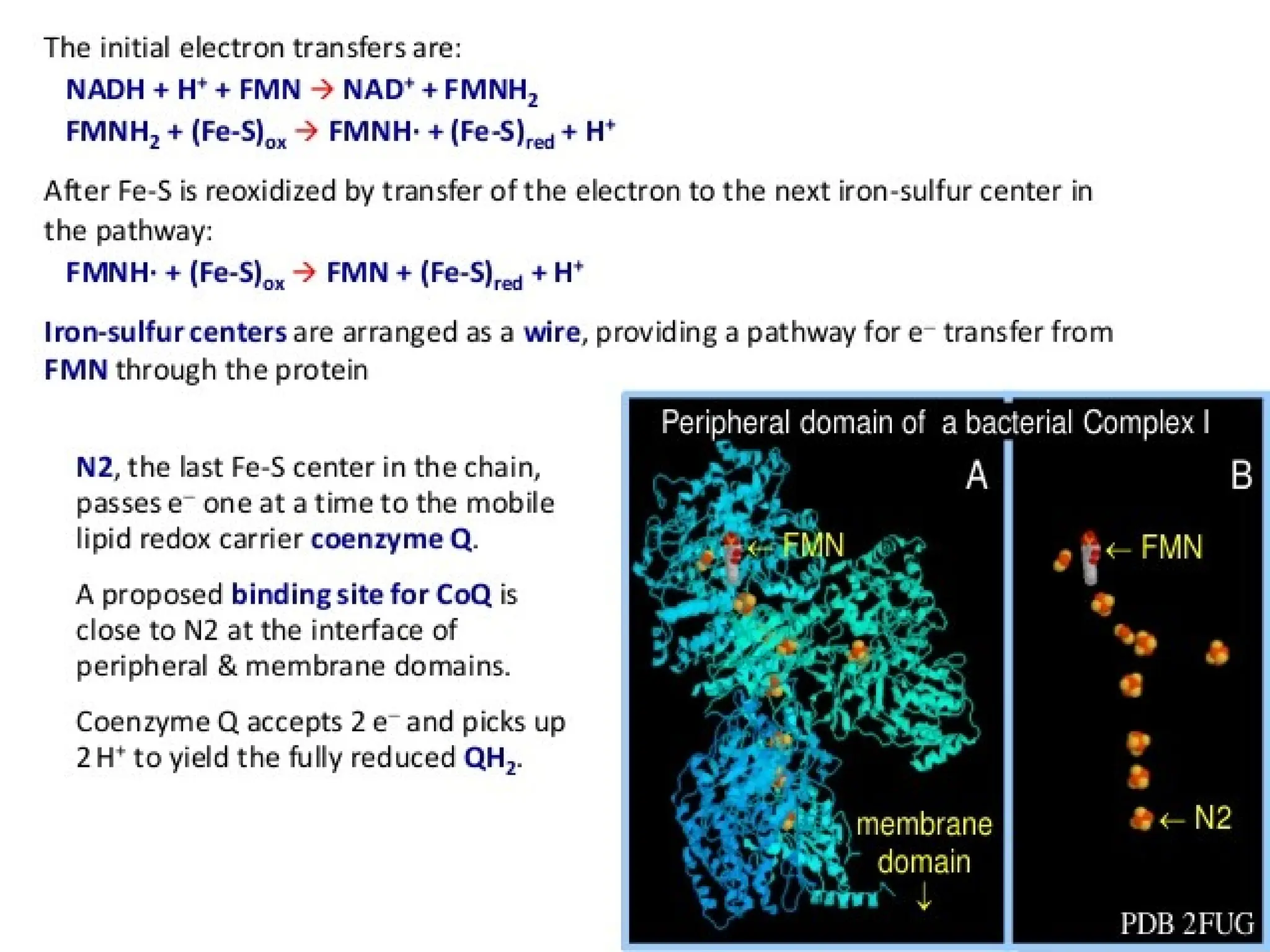
• Electron Transport Chain
– series of proteins built into
inner mitochondrial membrane
• along cristae
• transport proteins & enzymes
– transport of electrons down ETC linked to pumping
of H+
to create H+
gradient
– yields ~36 ATP from 1 glucose!
– only in presence of O2 (aerobic respiration)
O2
That
sounds more
like it!
Mitochondria
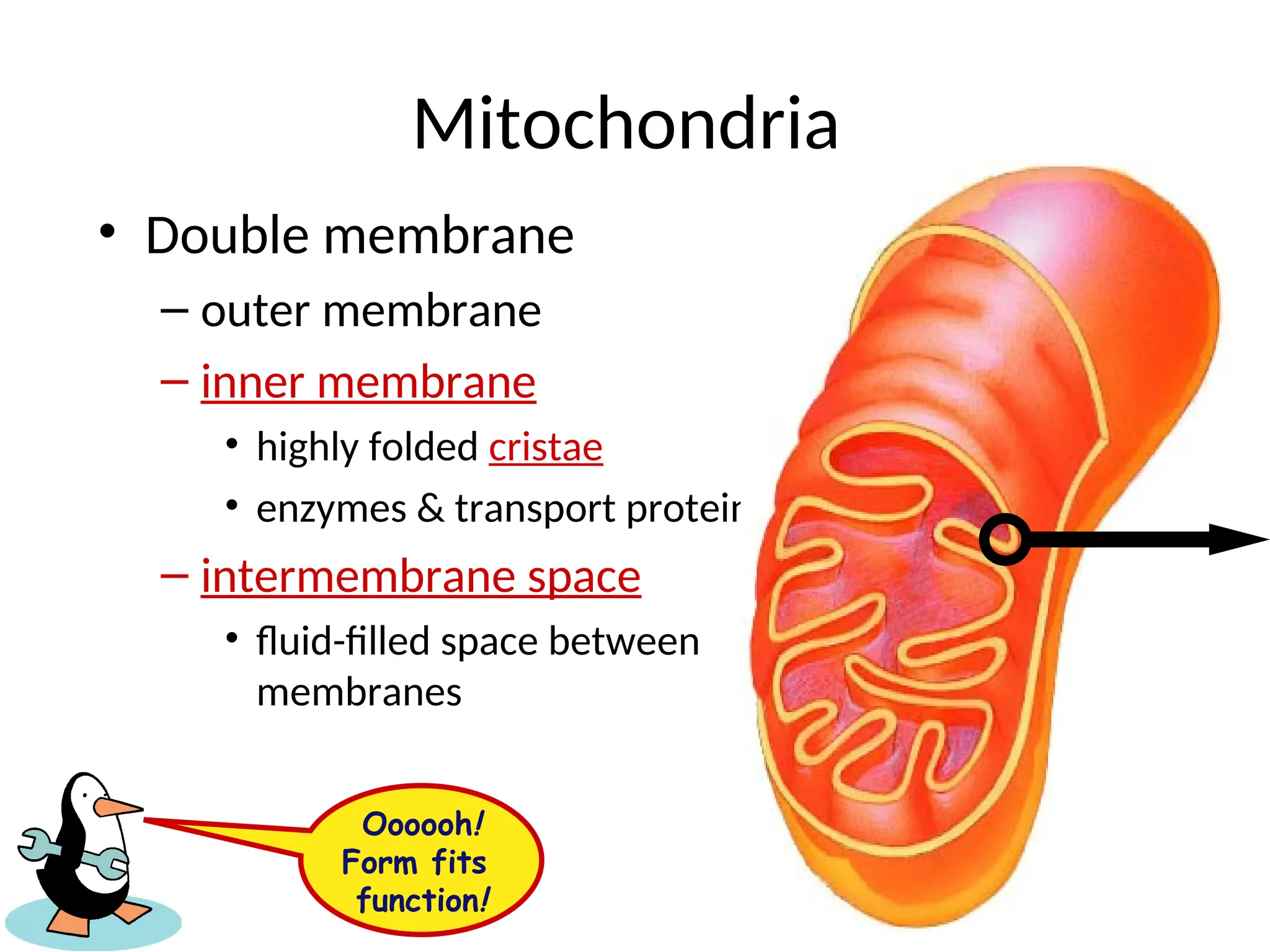
• Double membrane
– outer membrane
– inner membrane
• highly folded cristae
• enzymes & transport proteins
– intermembrane space
• fluid-filled space between
membranes
Oooooh!
Form fits
function!
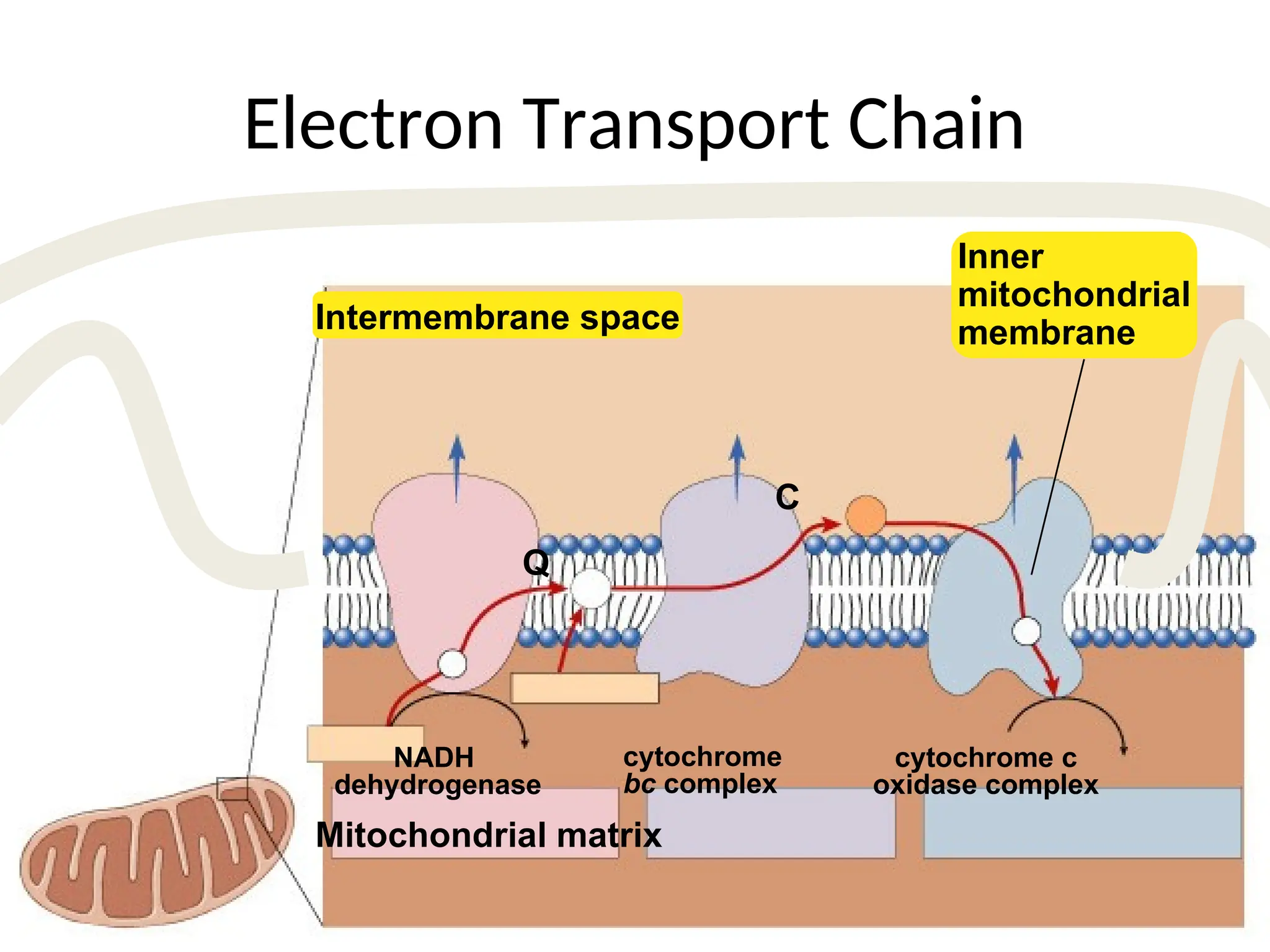
Electron Transport Chain
Intermembrane space
Mitochondrial matrix
Q
C
NADH
dehydrogenase
cytochrome
bc complex
cytochrome c
oxidase complex
Inner
mitochondrial
membrane
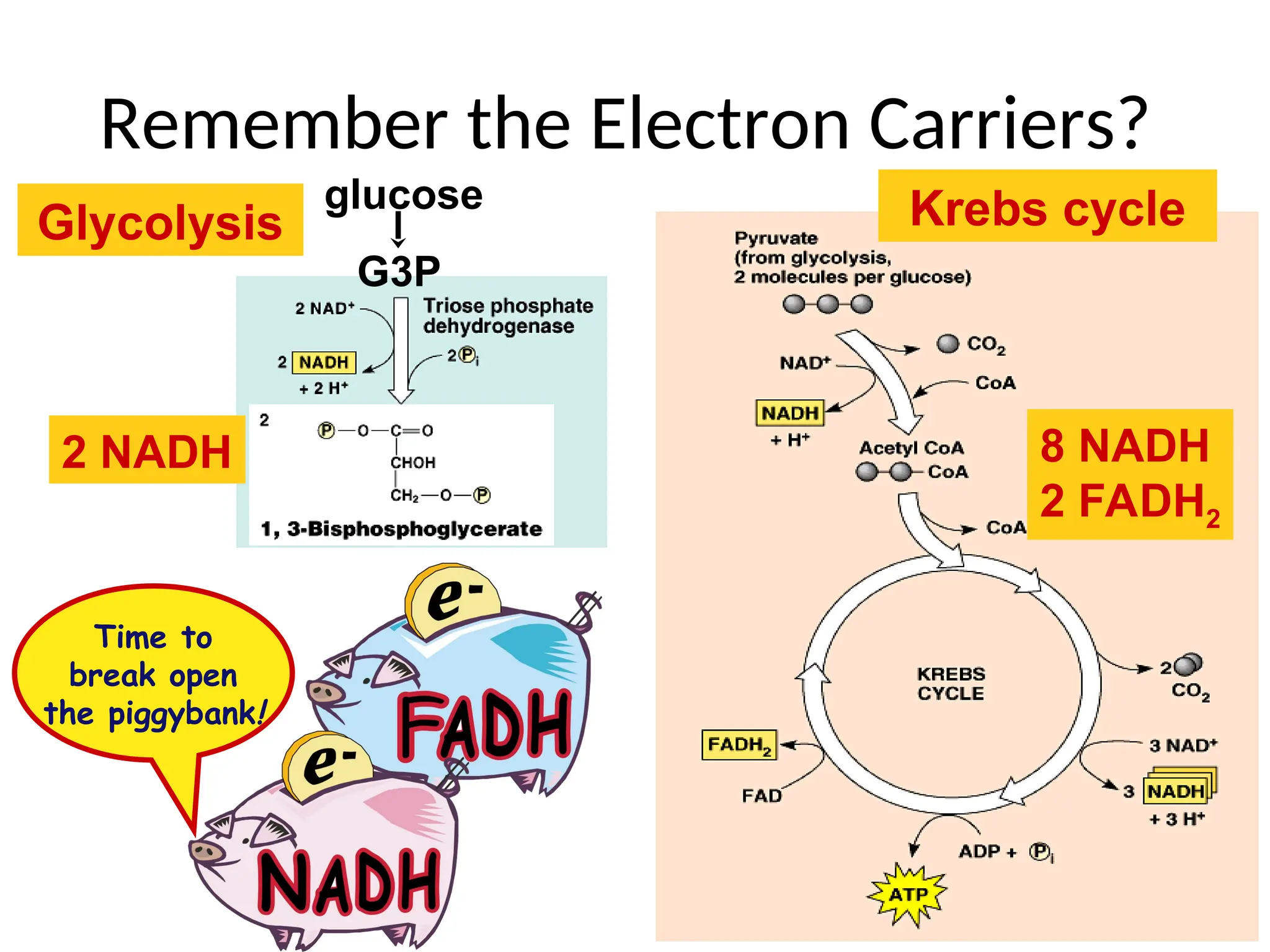
G3P
Glycolysis Krebs cycle
8 NADH
2 FADH2
Remember the Electron Carriers?
2 NADH
Time to
break open
the piggybank!
glucose
Electron Transport Chain
intermembrane
space
mitochondrial
matrix
inner
mitochondrial
membrane
NAD+
Q
C
NADH H2O
H+
e–
2H+
+ O2
H+
H+
e–
FADH2
1
2
NADH
dehydrogenase
cytochrome
bc complex
cytochrome c
oxidase complex
FAD
e–
H
H  e- + H+
NADH  NAD+
+ H
H
p
e
Building proton gradient!
What powers the proton (H+
) pumps?…
H+
H+
H+
H+
H+ H+
H+
H+
H+
ATP
NAD+
Q
C
NADH H2O
H+
e–
2H+
+ O2
H+
H+
e–
FADH2
1
2
NADH
dehydrogenase
cytochrome
bc complex
cytochrome c
oxidase complex
FAD
e–
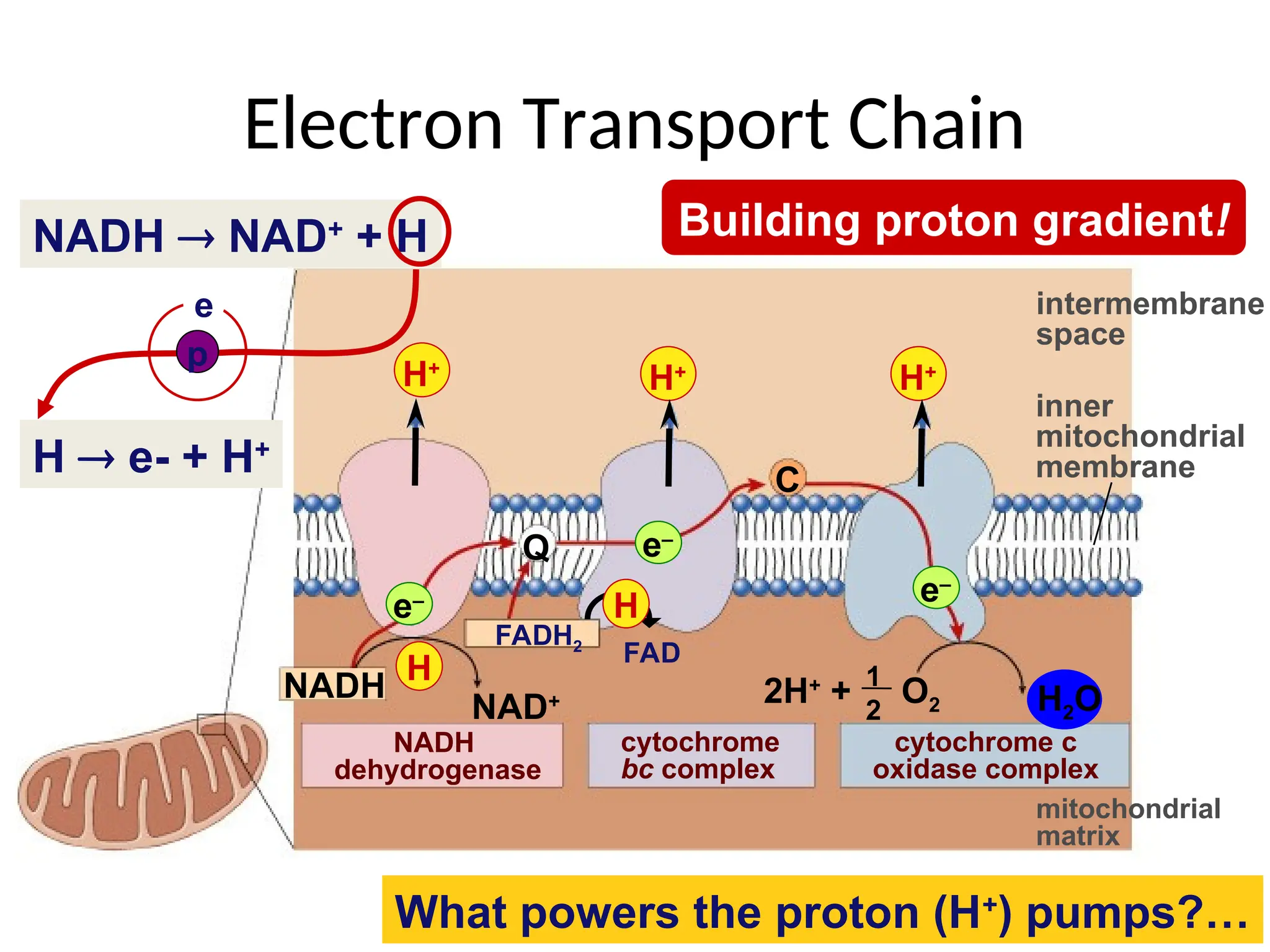
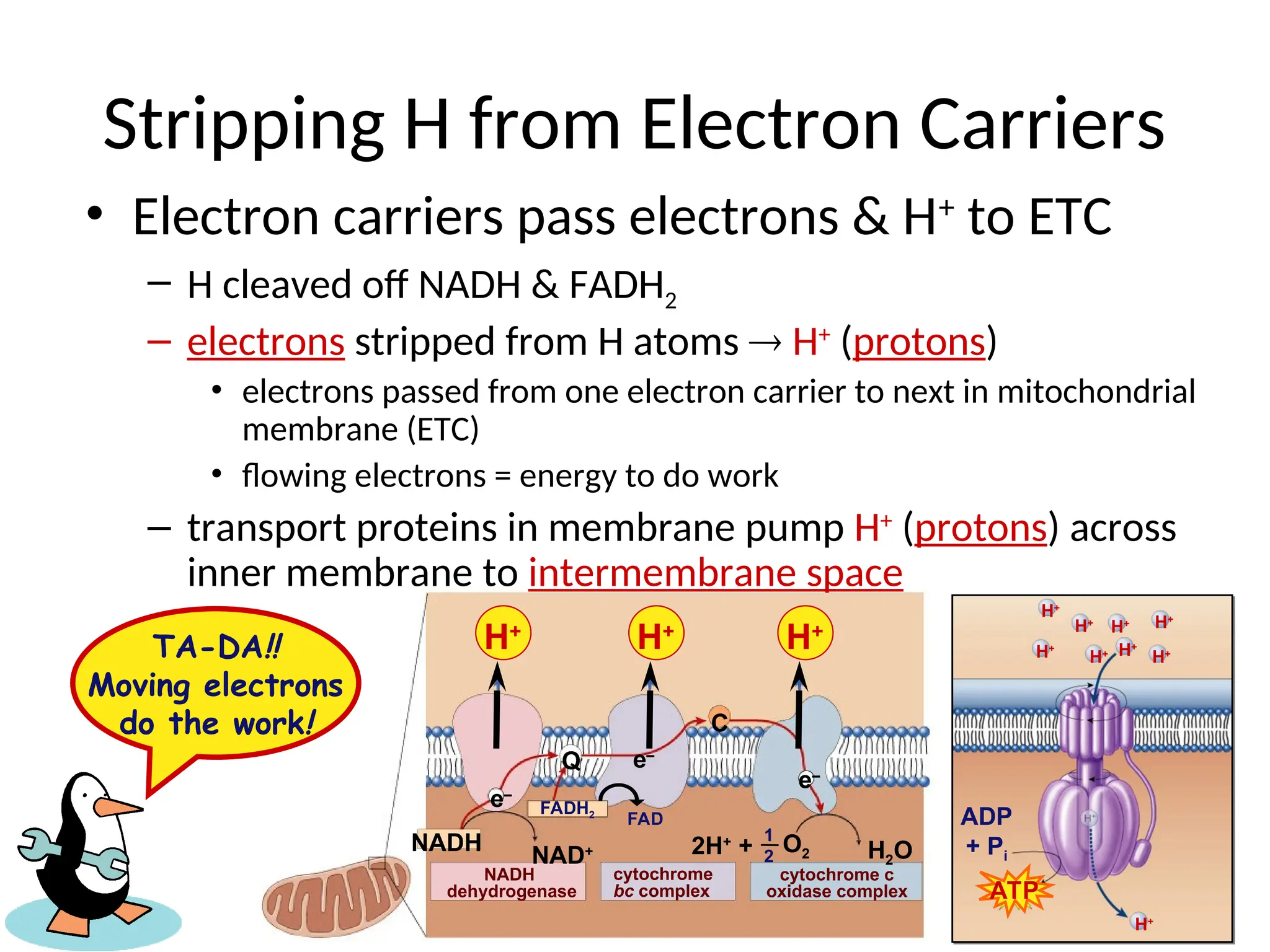
Stripping H from Electron Carriers
• Electron carriers pass electrons & H+
to ETC
– H cleaved off NADH & FADH2
– electrons stripped from H atoms  H+
(protons)
• electrons passed from one electron carrier to next in mitochondrial
membrane (ETC)
• flowing electrons = energy to do work
– transport proteins in membrane pump H+
(protons) across
inner membrane to intermembrane space
ADP
+ Pi
TA-DA!!
Moving electrons
do the work!
H+
H+
H+
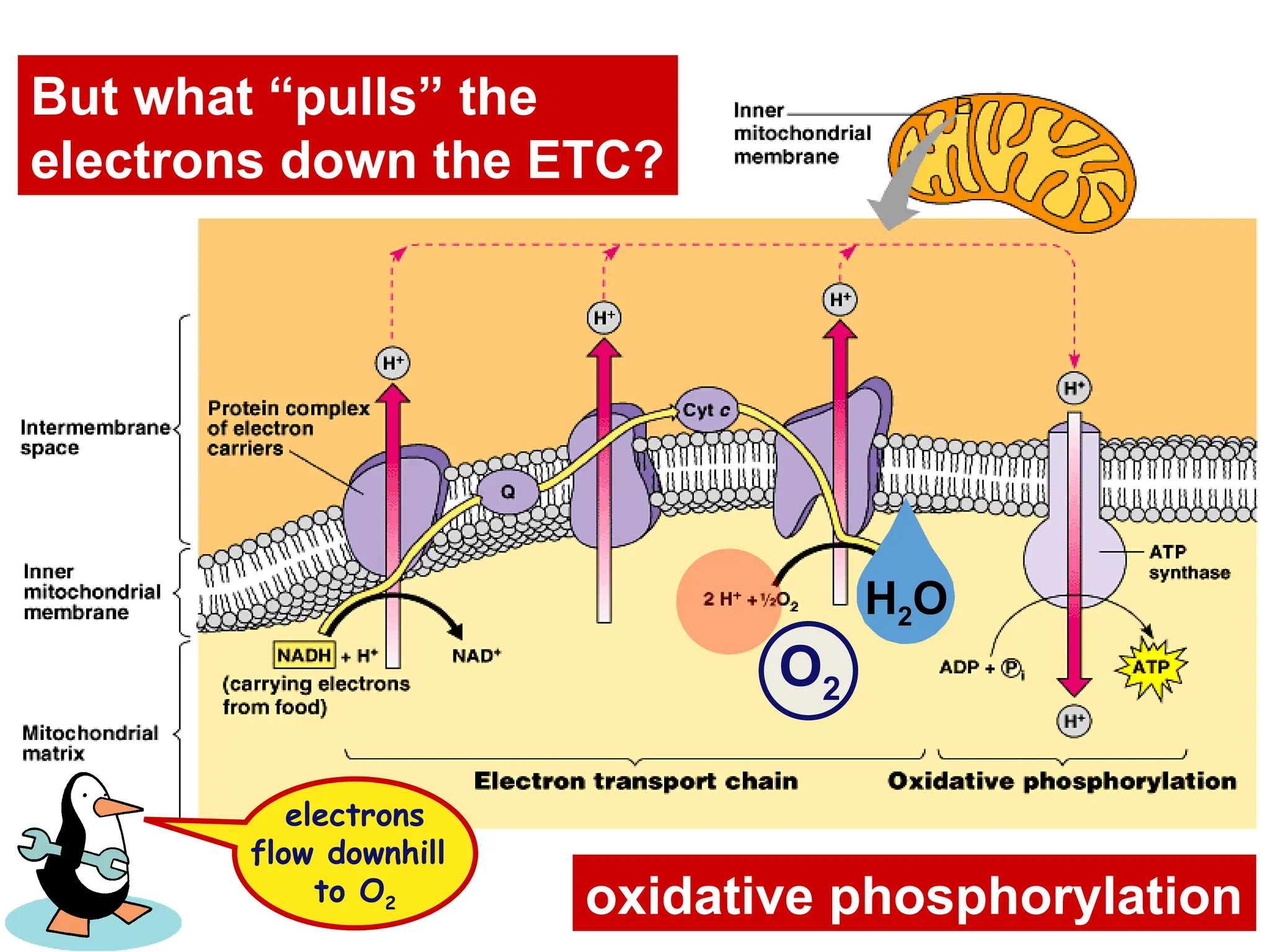
But what “pulls” the
electrons down the ETC?
electrons
flow downhill
to O2 oxidative phosphorylation
O2
H2O
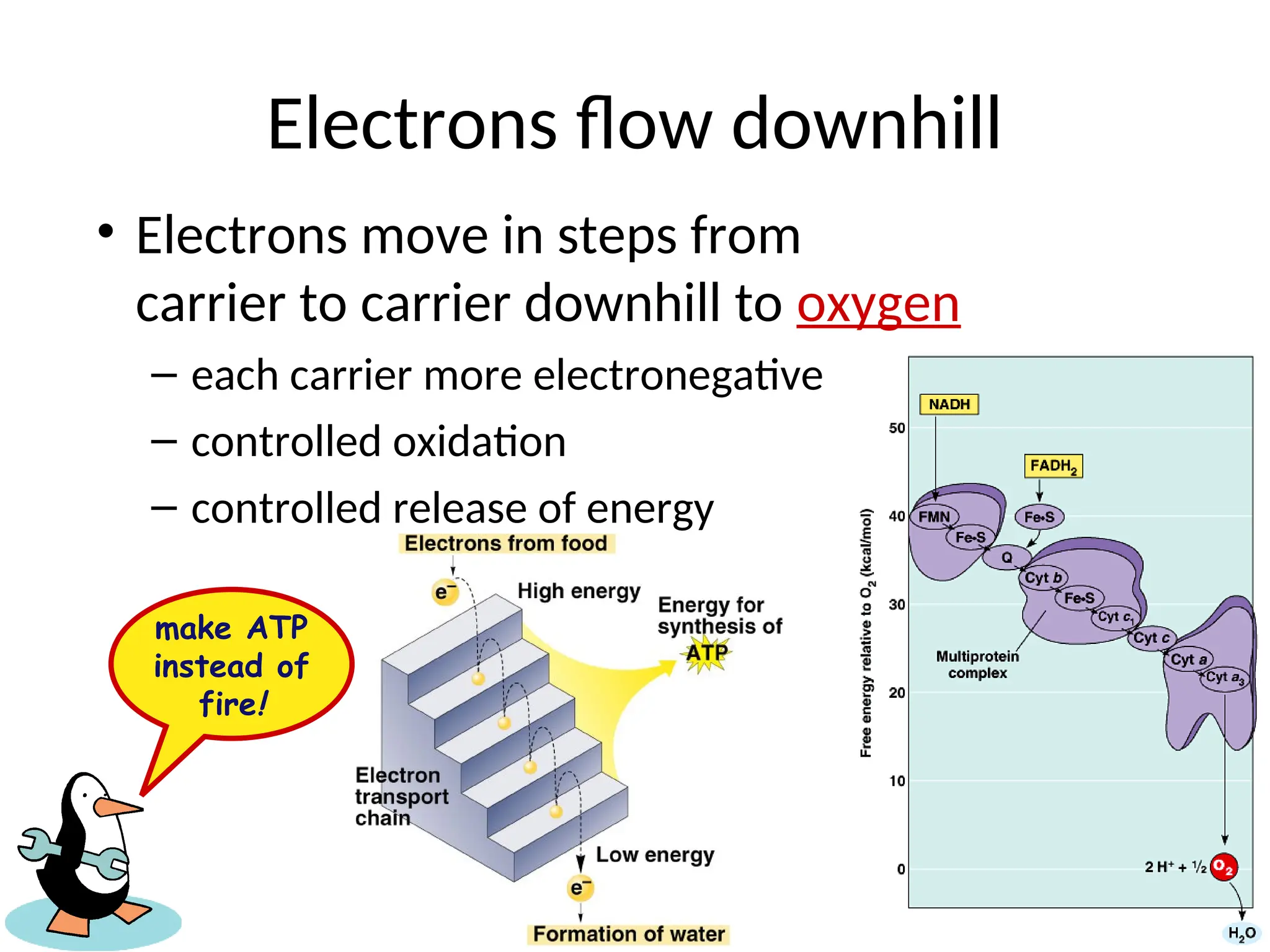
Electrons flow downhill
• Electrons move in steps from
carrier to carrier downhill to oxygen
– each carrier more electronegative
– controlled oxidation
– controlled release of energy
make ATP
instead of
fire!
H+
ADP + Pi
H+
H+
H+
H+ H+
H+
H+
H+
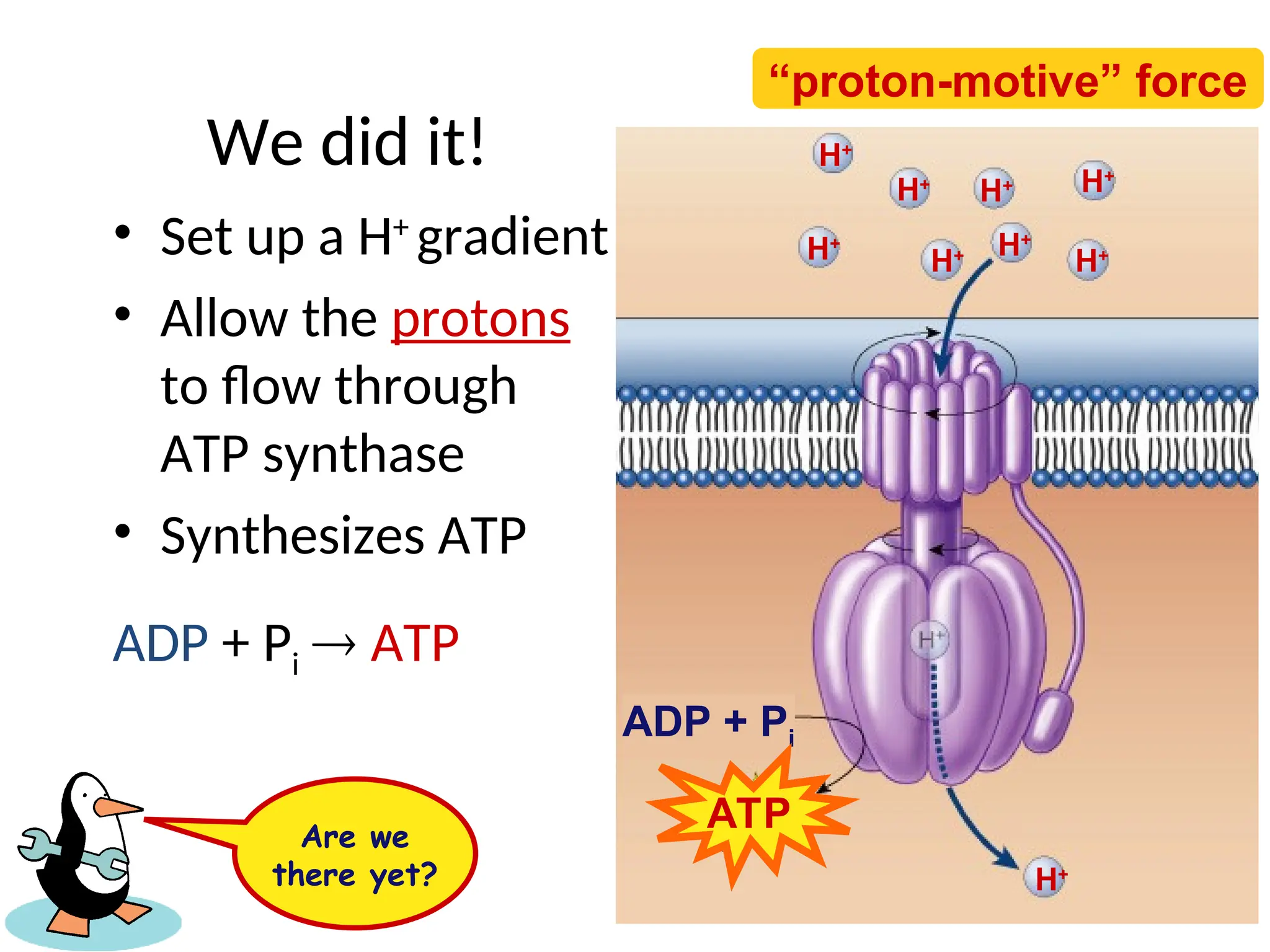
We did it!
• Set up a H+
gradient
• Allow the protons
to flow through
ATP synthase
• Synthesizes ATP
ADP + Pi  ATP
ATP
Are we
there yet?
“proton-motive” force
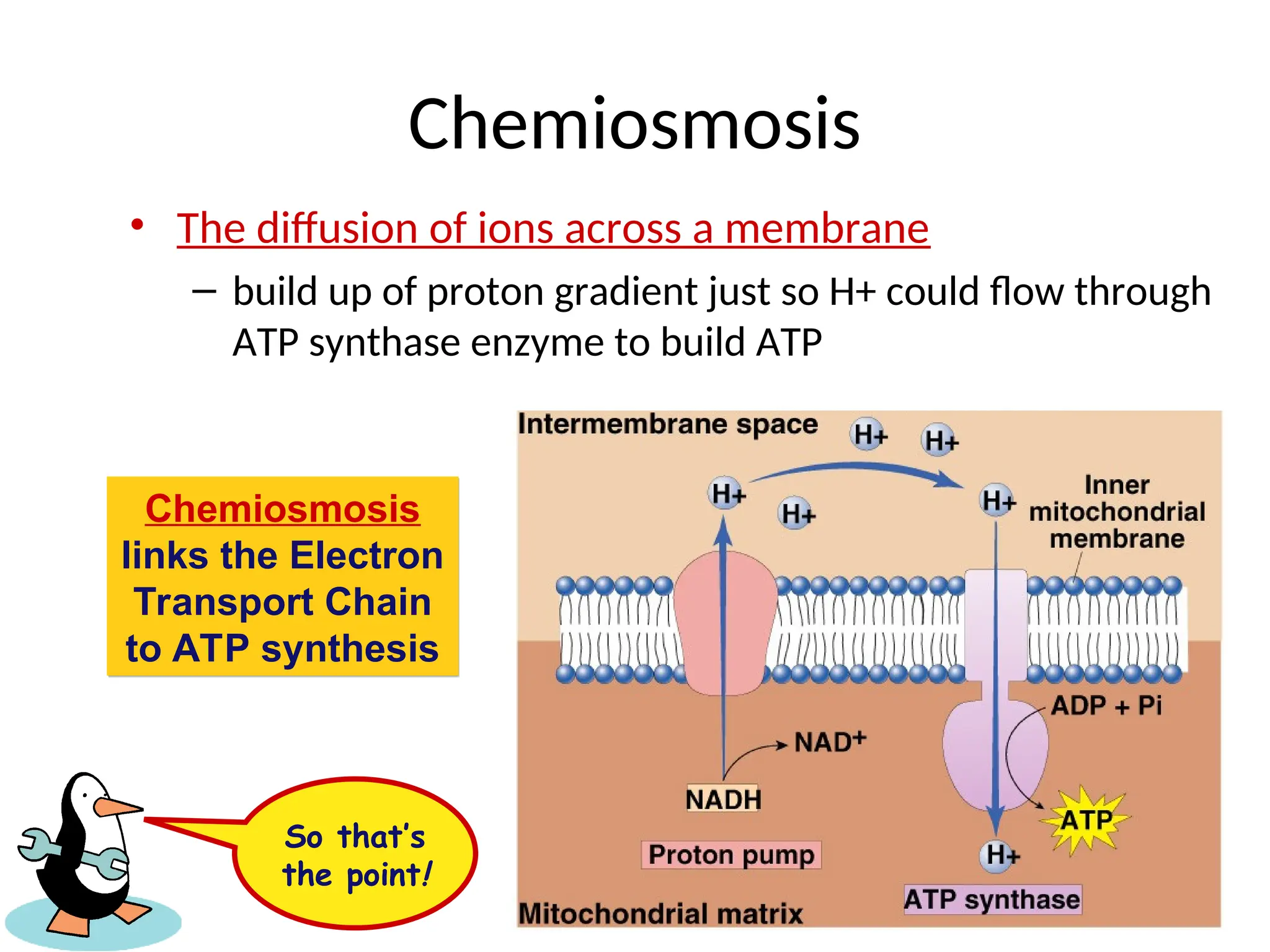
Chemiosmosis
• The diffusion of ions across a membrane
– build up of proton gradient just so H+ could flow through
ATP synthase enzyme to build ATP
Chemiosmosis
links the Electron
Transport Chain
to ATP synthesis
So that’s
the point!
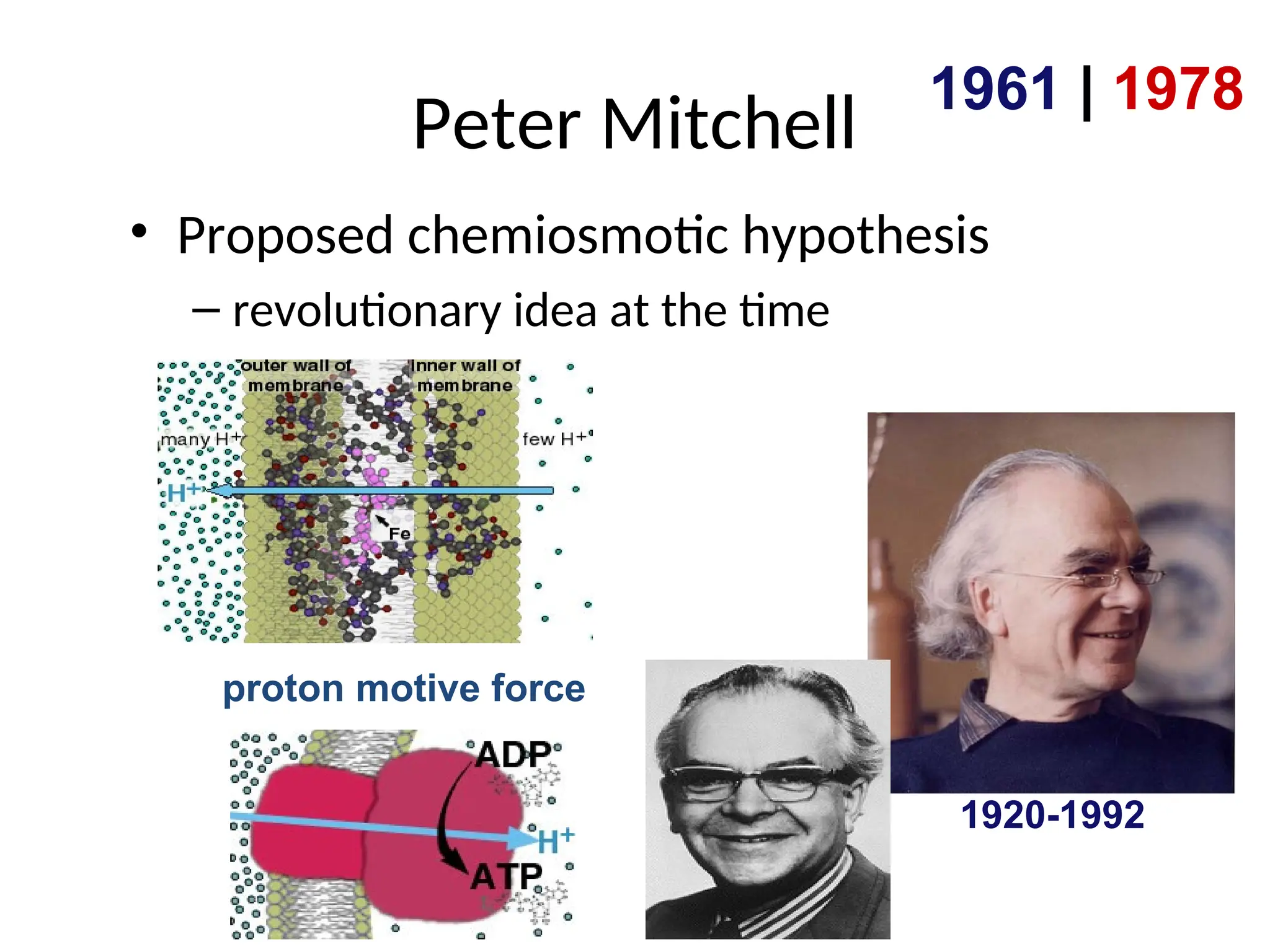
Peter Mitchell
• Proposed chemiosmotic hypothesis
– revolutionary idea at the time
1961 | 1978
1920-1992
proton motive force
H+
H+
O2
+
Q
C
ATP
Pyruvate from
cytoplasm
Electron
transport
system
ATP
synthase
H2O
CO2
Krebs
cycle
Intermembrane
space
Inner
mitochondrial
membrane
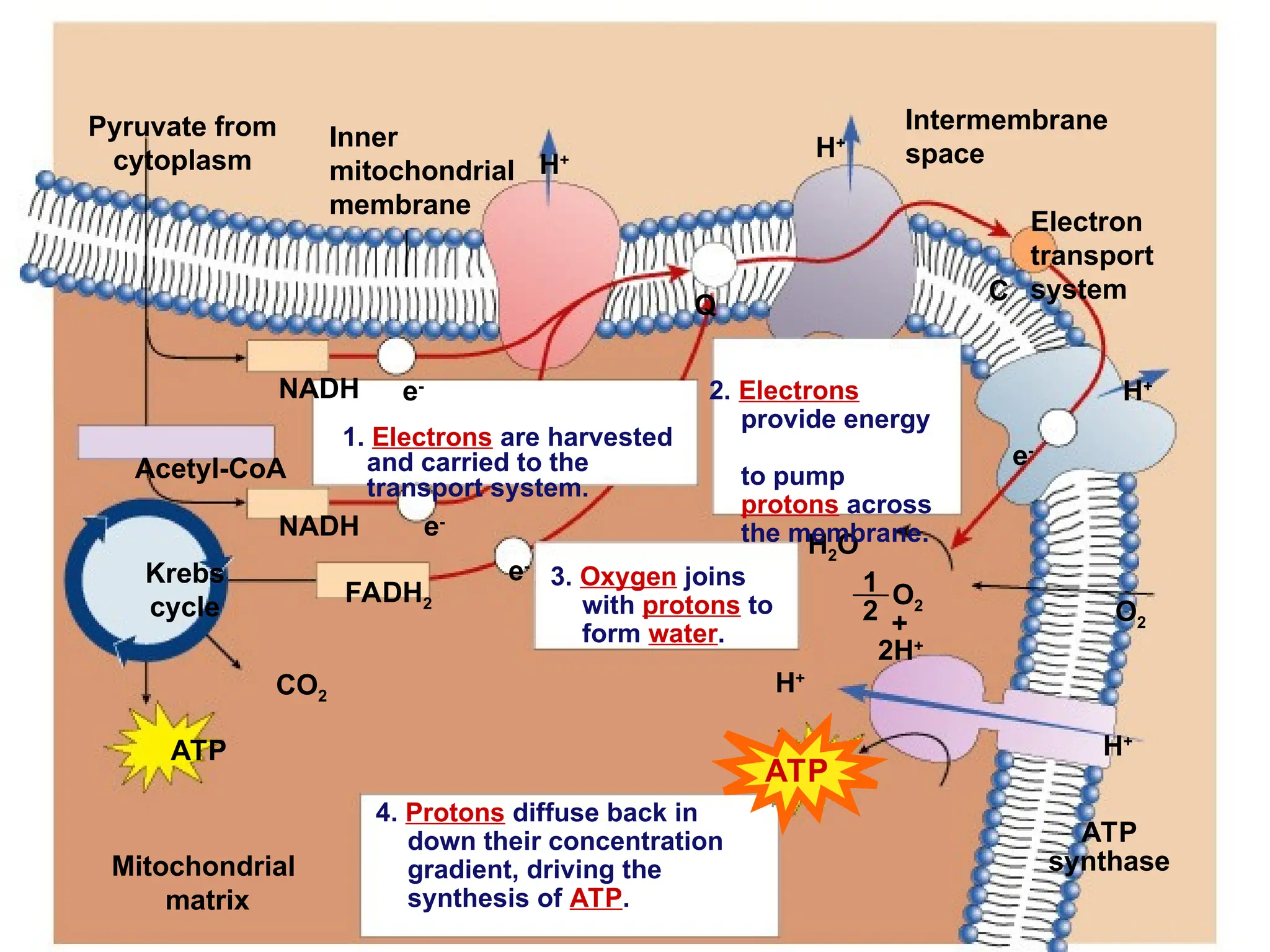
1. Electrons are harvested
and carried to the
transport system.
2. Electrons
provide energy
to pump
protons across
the membrane.
3. Oxygen joins
with protons to
form water.
2H+
NADH
NADH
Acetyl-CoA
FADH2
ATP
4. Protons diffuse back in
down their concentration
gradient, driving the
synthesis of ATP.
Mitochondrial
matrix
2
1
H+
H+
O2
H+
e-
e-
e-
e-
ATP
Cellular respiration
2 ATP 2 ATP ~36 ATP
+ +
~40 ATP
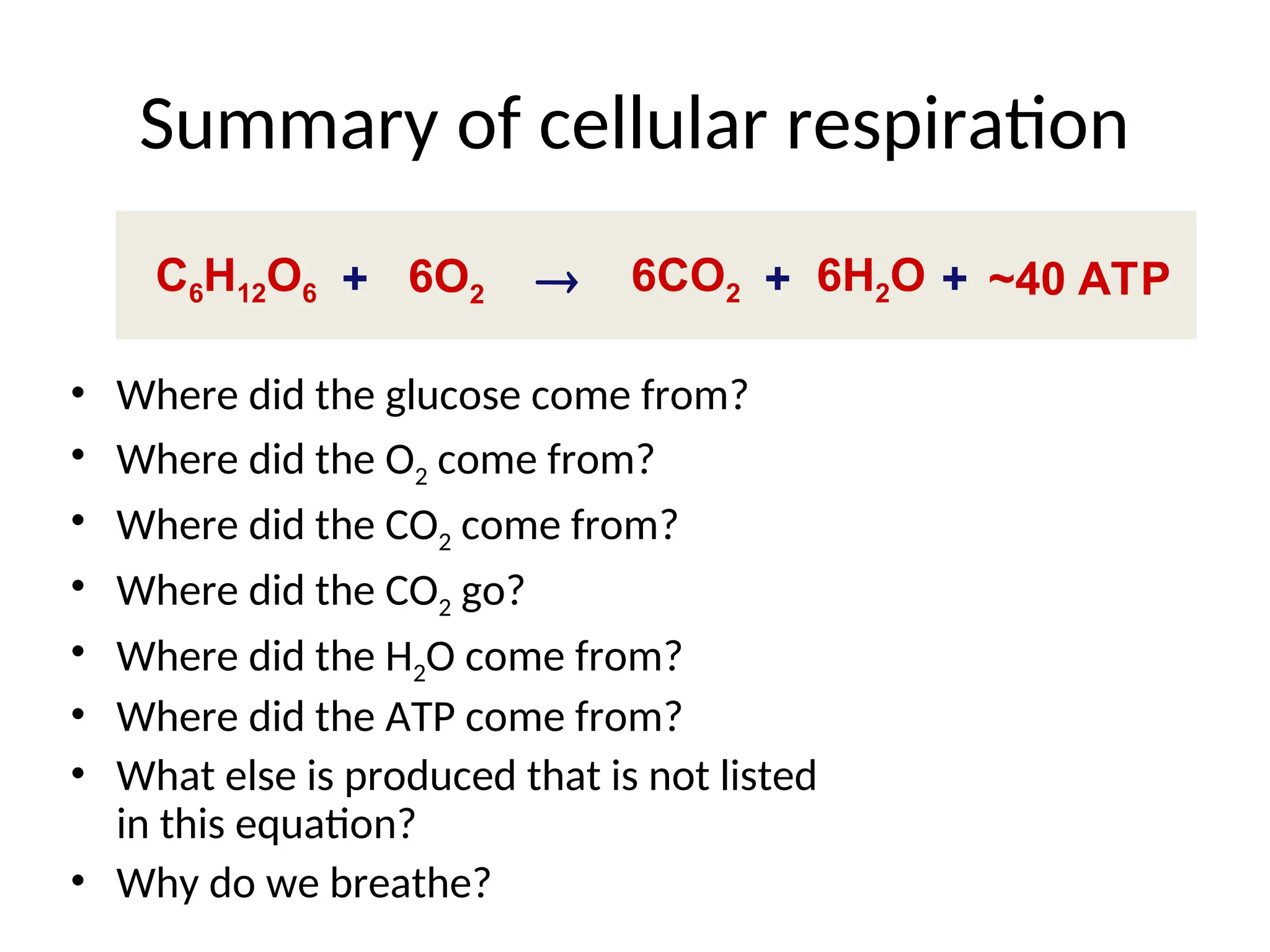
Summary of cellular respiration
• Where did the glucose come from?
• Where did the O2 come from?
• Where did the CO2 come from?
• Where did the CO2 go?
• Where did the H2O come from?
• Where did the ATP come from?
• What else is produced that is not listed
in this equation?
• Why do we breathe?
C6H12O6 6O2 6CO2 6H2O ~40 ATP

+ + +
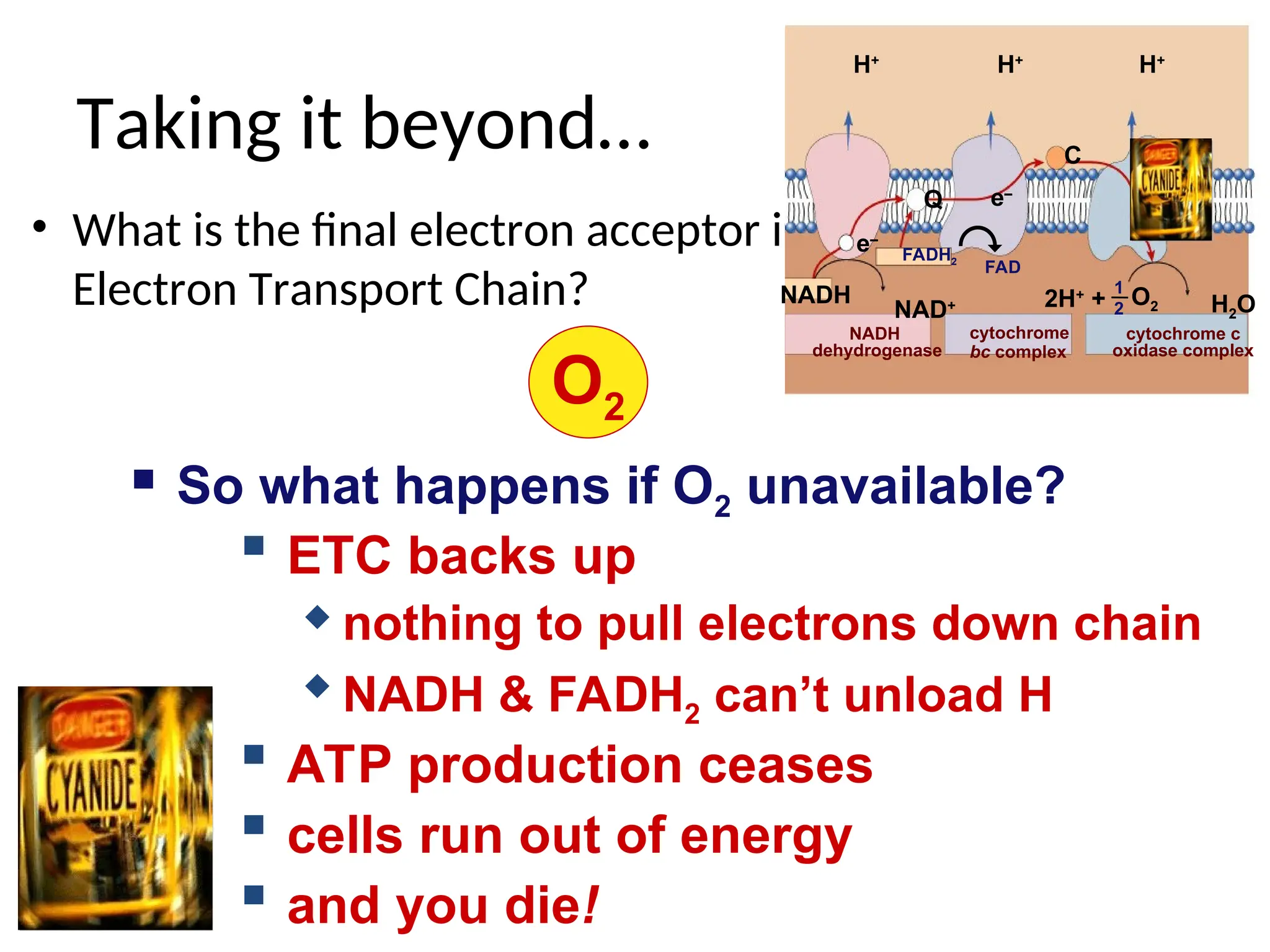
 ETC backs up
 nothing to pull electrons down chain
 NADH & FADH2 can’t unload H
 ATP production ceases
 cells run out of energy
 and you die!
Taking it beyond…
• What is the final electron acceptor in
Electron Transport Chain?
O2
 So what happens if O2 unavailable?
NAD+
Q
C
NADH H2O
H+
e–
2H+
+ O2
H+
H+
e–
FADH2
1
2
NADH
dehydrogenase
cytochrome
bc complex
cytochrome c
oxidase complex
FAD
e–
2006-2007
What’s the
point?
The point
is to make
ATP!
ATP

cellular respiration and mitochondria .ppt

  • 1.
  • 2.
  • 3.
  • 4.
    ATP accounting sofar… • Glycolysis  2 ATP • Kreb’s cycle  2 ATP • Life takes a lot of energy to run, need to extract more energy than 4 ATP! A working muscle recycles over 10 million ATPs per second There’s got to be a better way! I need a lot more ATP!
  • 5.
    There is abetter way! • Electron Transport Chain – series of proteins built into inner mitochondrial membrane • along cristae • transport proteins & enzymes – transport of electrons down ETC linked to pumping of H+ to create H+ gradient – yields ~36 ATP from 1 glucose! – only in presence of O2 (aerobic respiration) O2 That sounds more like it!
  • 6.
    Mitochondria • Double membrane –outer membrane – inner membrane • highly folded cristae • enzymes & transport proteins – intermembrane space • fluid-filled space between membranes Oooooh! Form fits function!
  • 7.
    Electron Transport Chain Intermembranespace Mitochondrial matrix Q C NADH dehydrogenase cytochrome bc complex cytochrome c oxidase complex Inner mitochondrial membrane
  • 8.
    G3P Glycolysis Krebs cycle 8NADH 2 FADH2 Remember the Electron Carriers? 2 NADH Time to break open the piggybank! glucose
  • 9.
    Electron Transport Chain intermembrane space mitochondrial matrix inner mitochondrial membrane NAD+ Q C NADHH2O H+ e– 2H+ + O2 H+ H+ e– FADH2 1 2 NADH dehydrogenase cytochrome bc complex cytochrome c oxidase complex FAD e– H H  e- + H+ NADH  NAD+ + H H p e Building proton gradient! What powers the proton (H+ ) pumps?…
  • 22.
    H+ H+ H+ H+ H+ H+ H+ H+ H+ ATP NAD+ Q C NADH H2O H+ e– 2H+ +O2 H+ H+ e– FADH2 1 2 NADH dehydrogenase cytochrome bc complex cytochrome c oxidase complex FAD e– Stripping H from Electron Carriers • Electron carriers pass electrons & H+ to ETC – H cleaved off NADH & FADH2 – electrons stripped from H atoms  H+ (protons) • electrons passed from one electron carrier to next in mitochondrial membrane (ETC) • flowing electrons = energy to do work – transport proteins in membrane pump H+ (protons) across inner membrane to intermembrane space ADP + Pi TA-DA!! Moving electrons do the work! H+ H+ H+
  • 23.
    But what “pulls”the electrons down the ETC? electrons flow downhill to O2 oxidative phosphorylation O2 H2O
  • 24.
    Electrons flow downhill •Electrons move in steps from carrier to carrier downhill to oxygen – each carrier more electronegative – controlled oxidation – controlled release of energy make ATP instead of fire!
  • 25.
    H+ ADP + Pi H+ H+ H+ H+H+ H+ H+ H+ We did it! • Set up a H+ gradient • Allow the protons to flow through ATP synthase • Synthesizes ATP ADP + Pi  ATP ATP Are we there yet? “proton-motive” force
  • 26.
    Chemiosmosis • The diffusionof ions across a membrane – build up of proton gradient just so H+ could flow through ATP synthase enzyme to build ATP Chemiosmosis links the Electron Transport Chain to ATP synthesis So that’s the point!
  • 27.
    Peter Mitchell • Proposedchemiosmotic hypothesis – revolutionary idea at the time 1961 | 1978 1920-1992 proton motive force
  • 28.
    H+ H+ O2 + Q C ATP Pyruvate from cytoplasm Electron transport system ATP synthase H2O CO2 Krebs cycle Intermembrane space Inner mitochondrial membrane 1. Electronsare harvested and carried to the transport system. 2. Electrons provide energy to pump protons across the membrane. 3. Oxygen joins with protons to form water. 2H+ NADH NADH Acetyl-CoA FADH2 ATP 4. Protons diffuse back in down their concentration gradient, driving the synthesis of ATP. Mitochondrial matrix 2 1 H+ H+ O2 H+ e- e- e- e- ATP
  • 29.
    Cellular respiration 2 ATP2 ATP ~36 ATP + + ~40 ATP
  • 30.
    Summary of cellularrespiration • Where did the glucose come from? • Where did the O2 come from? • Where did the CO2 come from? • Where did the CO2 go? • Where did the H2O come from? • Where did the ATP come from? • What else is produced that is not listed in this equation? • Why do we breathe? C6H12O6 6O2 6CO2 6H2O ~40 ATP  + + +
  • 31.
     ETC backsup  nothing to pull electrons down chain  NADH & FADH2 can’t unload H  ATP production ceases  cells run out of energy  and you die! Taking it beyond… • What is the final electron acceptor in Electron Transport Chain? O2  So what happens if O2 unavailable? NAD+ Q C NADH H2O H+ e– 2H+ + O2 H+ H+ e– FADH2 1 2 NADH dehydrogenase cytochrome bc complex cytochrome c oxidase complex FAD e–
  • 32.

Editor's Notes

  • #22 Oxidation refers to the loss of electrons to any electron acceptor, not just to oxygen. Uses exergonic flow of electrons through ETC to pump H+ across membrane.
  • #23 Pumping H+ across membrane … what is energy to fuel that? Can’t be ATP! that would cost you what you want to make! Its like cutting off your leg to buy a new pair of shoes. :-( Flow of electrons powers pumping of H+ O2 is 2 oxygen atoms both looking for electrons
  • #24 Electrons move from molecule to molecule until they combine with O & H ions to form H2O It’s like pumping water behind a dam -- if released, it can do work
  • #26 Chemiosmosis is the diffusion of ions across a membrane. More specifically, it relates to the generation of ATP by the movement of hydrogen ions across a membrane. Hydrogen ions (protons) will diffuse from an area of high proton concentration to an area of lower proton concentration. Peter Mitchell proposed that an electrochemical concentration gradient of protons across a membrane could be harnessed to make ATP. He likened this process to osmosis, the diffusion of water across a membrane, which is why it is called chemiosmosis.
  • #30 Where did the glucose come from? from food eaten Where did the O2 come from? breathed in Where did the CO2 come from? oxidized carbons cleaved off of the sugars (Krebs Cycle) Where did the CO2 go? exhaled Where did the H2O come from? from O2 after it accepts electrons in ETC Where did the ATP come from? mostly from ETC What else is produced that is not listed in this equation? NAD, FAD, heat!
  • #31 What if you have a chemical that punches holes in the inner mitochondrial membrane?