Presented By
U.Aishwarya
ROLL NO-21M1310
2nd Msc Biotechnology
INTRODUCTION
IMMUNE RESPONSE
FUNCTIONS OF IMMUNE SYSTEM
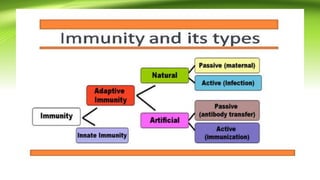
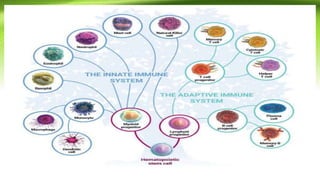
TYPES AND CELLS OF IMMUNE SYSTEM
ACQUIRED IMMUNITY
HUMORAL RESPONSES
B-CELL ACTIVATION
PROLIFERATION
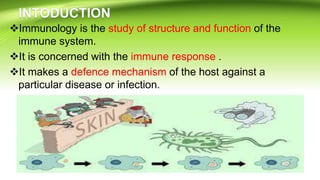
Immunology is the study of structure and function of the
immune system.
It is concerned with the immune response .
It makes a defence mechanism of the host against a
particular disease or infection.
Collective and co-ordinated response to the introduction
of foreign substances in an individual mediated by the
cells and molecules of the immune system.
It recognizes foreign substances or microbes and acts to
neutralize or destroy them.
It is composed of widely distributed cells ,tissues and
organs.
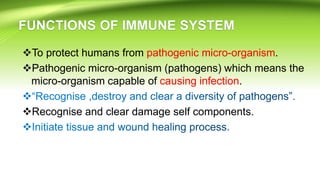
To protect humans from pathogenic micro-organism.
Pathogenic micro-organism (pathogens) which means the
micro-organism capable of causing infection.
Recognise and clear damage self components.
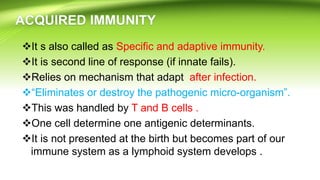
It s also called as Specific and adaptive immunity.
It is second line of response (if innate fails).
Relies on mechanism that adapt after infection.
“Eliminates or destroy the pathogenic micro-organism”.
This was handled by T and B cells .
One cell determine one antigenic determinants.
It is not presented at the birth but becomes part of our
immune system as a lymphoid system develops .
Acquired immunity creates immunological memory after
initial response.
It leads to an enhanced response yo subsequent
encounters with that pathogen.
.
The phagocytic cells crucial to non-specific immune
responces are intimately involved in activating the specific
immune responses.
Lymphocytes are one of many types of
produced in the bone marrowby the proces of
haematopoesis.
Lymphocytes leave the bone marrow ,circulate in the
blood and the lymphatic system.
The immune system is a complex network of cells known
as immune cells that include lymphocytes.
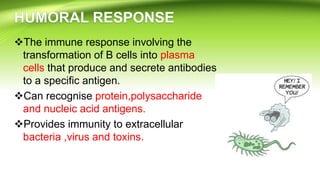
The immune response involving the
transformation of B cells into plasma
cells that produce and secrete antibodies
to a specific antigen.
Can recognise protein,polysaccharide
and nucleic acid antigens.
Provides immunity to extracellular
bacteria ,virus and toxins.
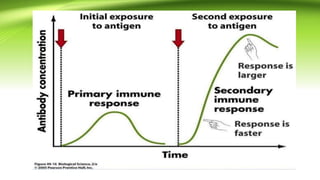
• The humoral response differ considerably depending on
whether the humoral reponse results from activations of
native lymphocytes(primary response) or memory
lymphocytes(secondary response).
• In both cases activation leads to production of secreted
antibodies of various isotypes ,which differ in their ability
to mediate specific effector functions.
• Primary immune response refers to any immune response
of the immune system that includes the production of
antibodies .
• Occurs in response to the primary contact of the antigen.
• Native B cells and T cells respond to the antigen.
• Lag phase is long(4-7 days)
• Takes a longer time to establish the immune response .
• Appears mainly in the lymph nodes and spleen.
• Secondary immune response refers to any immune
response of the immune system that occur in response to
the subsequent exposure to a particular antigen.
• Occurs in response to the second and subsequent
exposure to the same antigen.'
• Memory B cells respond to the antigens .
• Lag phase is short (1-4 days )
• Takes a short time to establish the immune response.
• Appears mainly in the bone marrow and then in the
spleen and the lymp nodes.
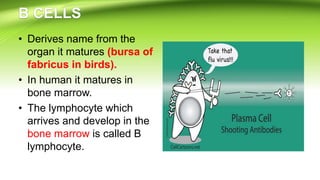
• Derives name from the
organ it matures (bursa of
fabricus in birds).
• In human it matures in
bone marrow.
• The lymphocyte which
arrives and develop in the
bone marrow is called B
lymphocyte.
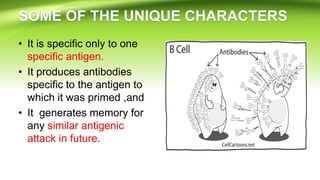
• It is specific only to one
specific antigen.
• It produces antibodies
specific to the antigen to
which it was primed ,and
• It generates memory for
any similar antigenic
attack in future.
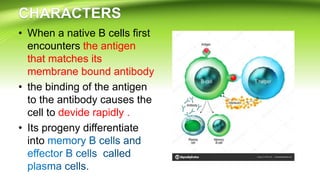
• When a native B cells first
encounters the antigen
that matches its
membrane bound antibody
• the binding of the antigen
to the antibody causes the
cell to devide rapidly .
• Its progeny differentiate
into
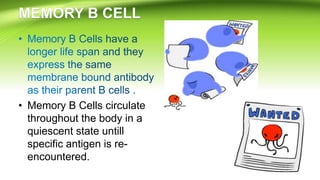
• Memory B Cells circulate
throughout the body in a
quiescent state untill
specific antigen is re-
encountered.
Plasma cells produce the antibody in a form that can be
secreted and have little or no membrane bound antibody.
Although plasma cells live only a few days .
They secrete enormous amounts of antibody during this
time.
It has been estimated that a single plasma cell can
secrete more than 2000 molecules of antibody per
second.
• Occurs in the peripheral lymphoid organ.
• Generation of plasma cells and memory B cells .
• In absence of antigen-induced activation ,native B cells
die within few weeks by apoptosis.
• The generation of mature B cells first occurs in the
embryo and continues throughout life.
• At the earliest developement stage pro-B Cells require
direct contact with stromal cells in the bone marrow.
Mature within the bone marrow.
The basic B cell function is to bind to an antigen receive
help from a coginate helper T cell and differentiate into a
plasma cell that secrete large amounts of antibodies.
B cell receptor allow the B cell to bind to a specific
antigen,against which it will initiate an antibody response.
The B Cell activation occurs in the secondary lymphoid
organ such as spleen and lymph nodes.
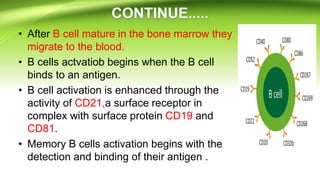
• After B cell mature in the bone marrow they
migrate to the blood.
• B cells actvatiob begins when the B cell
binds to an antigen.
• B cell activation is enhanced through the
activity of CD21,a surface receptor in
complex with surface protein CD19 and
CD81.
• Memory B cells activation begins with the
detection and binding of their antigen .
THANK YOU

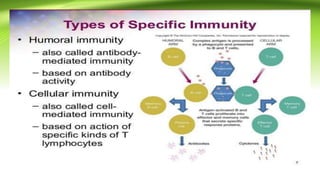
Humoral response

  • 1.
  • 2.
    INTRODUCTION IMMUNE RESPONSE FUNCTIONS OFIMMUNE SYSTEM TYPES AND CELLS OF IMMUNE SYSTEM ACQUIRED IMMUNITY HUMORAL RESPONSES B-CELL ACTIVATION PROLIFERATION
  • 3.
    Immunology is thestudy of structure and function of the immune system. It is concerned with the immune response . It makes a defence mechanism of the host against a particular disease or infection.
  • 4.
    Collective and co-ordinatedresponse to the introduction of foreign substances in an individual mediated by the cells and molecules of the immune system. It recognizes foreign substances or microbes and acts to neutralize or destroy them. It is composed of widely distributed cells ,tissues and organs.
  • 5.
    To protect humansfrom pathogenic micro-organism. Pathogenic micro-organism (pathogens) which means the micro-organism capable of causing infection. Recognise and clear damage self components.
  • 8.
    It s alsocalled as Specific and adaptive immunity. It is second line of response (if innate fails). Relies on mechanism that adapt after infection. “Eliminates or destroy the pathogenic micro-organism”. This was handled by T and B cells . One cell determine one antigenic determinants. It is not presented at the birth but becomes part of our immune system as a lymphoid system develops .
  • 9.
    Acquired immunity createsimmunological memory after initial response. It leads to an enhanced response yo subsequent encounters with that pathogen. . The phagocytic cells crucial to non-specific immune responces are intimately involved in activating the specific immune responses.
  • 11.
    Lymphocytes are oneof many types of produced in the bone marrowby the proces of haematopoesis. Lymphocytes leave the bone marrow ,circulate in the blood and the lymphatic system. The immune system is a complex network of cells known as immune cells that include lymphocytes.
  • 12.
    The immune responseinvolving the transformation of B cells into plasma cells that produce and secrete antibodies to a specific antigen. Can recognise protein,polysaccharide and nucleic acid antigens. Provides immunity to extracellular bacteria ,virus and toxins.
  • 13.
    • The humoralresponse differ considerably depending on whether the humoral reponse results from activations of native lymphocytes(primary response) or memory lymphocytes(secondary response). • In both cases activation leads to production of secreted antibodies of various isotypes ,which differ in their ability to mediate specific effector functions.
  • 14.
    • Primary immuneresponse refers to any immune response of the immune system that includes the production of antibodies . • Occurs in response to the primary contact of the antigen. • Native B cells and T cells respond to the antigen. • Lag phase is long(4-7 days) • Takes a longer time to establish the immune response . • Appears mainly in the lymph nodes and spleen.
  • 15.
    • Secondary immuneresponse refers to any immune response of the immune system that occur in response to the subsequent exposure to a particular antigen. • Occurs in response to the second and subsequent exposure to the same antigen.' • Memory B cells respond to the antigens . • Lag phase is short (1-4 days ) • Takes a short time to establish the immune response. • Appears mainly in the bone marrow and then in the spleen and the lymp nodes.
  • 17.
    • Derives namefrom the organ it matures (bursa of fabricus in birds). • In human it matures in bone marrow. • The lymphocyte which arrives and develop in the bone marrow is called B lymphocyte.
  • 18.
    • It isspecific only to one specific antigen. • It produces antibodies specific to the antigen to which it was primed ,and • It generates memory for any similar antigenic attack in future.
  • 19.
    • When anative B cells first encounters the antigen that matches its membrane bound antibody • the binding of the antigen to the antibody causes the cell to devide rapidly . • Its progeny differentiate into
  • 20.
    • Memory BCells circulate throughout the body in a quiescent state untill specific antigen is re- encountered.
  • 21.
    Plasma cells producethe antibody in a form that can be secreted and have little or no membrane bound antibody. Although plasma cells live only a few days . They secrete enormous amounts of antibody during this time. It has been estimated that a single plasma cell can secrete more than 2000 molecules of antibody per second.
  • 22.
    • Occurs inthe peripheral lymphoid organ. • Generation of plasma cells and memory B cells . • In absence of antigen-induced activation ,native B cells die within few weeks by apoptosis. • The generation of mature B cells first occurs in the embryo and continues throughout life. • At the earliest developement stage pro-B Cells require direct contact with stromal cells in the bone marrow.
  • 23.
    Mature within thebone marrow. The basic B cell function is to bind to an antigen receive help from a coginate helper T cell and differentiate into a plasma cell that secrete large amounts of antibodies. B cell receptor allow the B cell to bind to a specific antigen,against which it will initiate an antibody response. The B Cell activation occurs in the secondary lymphoid organ such as spleen and lymph nodes.
  • 24.
    • After Bcell mature in the bone marrow they migrate to the blood. • B cells actvatiob begins when the B cell binds to an antigen. • B cell activation is enhanced through the activity of CD21,a surface receptor in complex with surface protein CD19 and CD81. • Memory B cells activation begins with the detection and binding of their antigen .
  • 25.