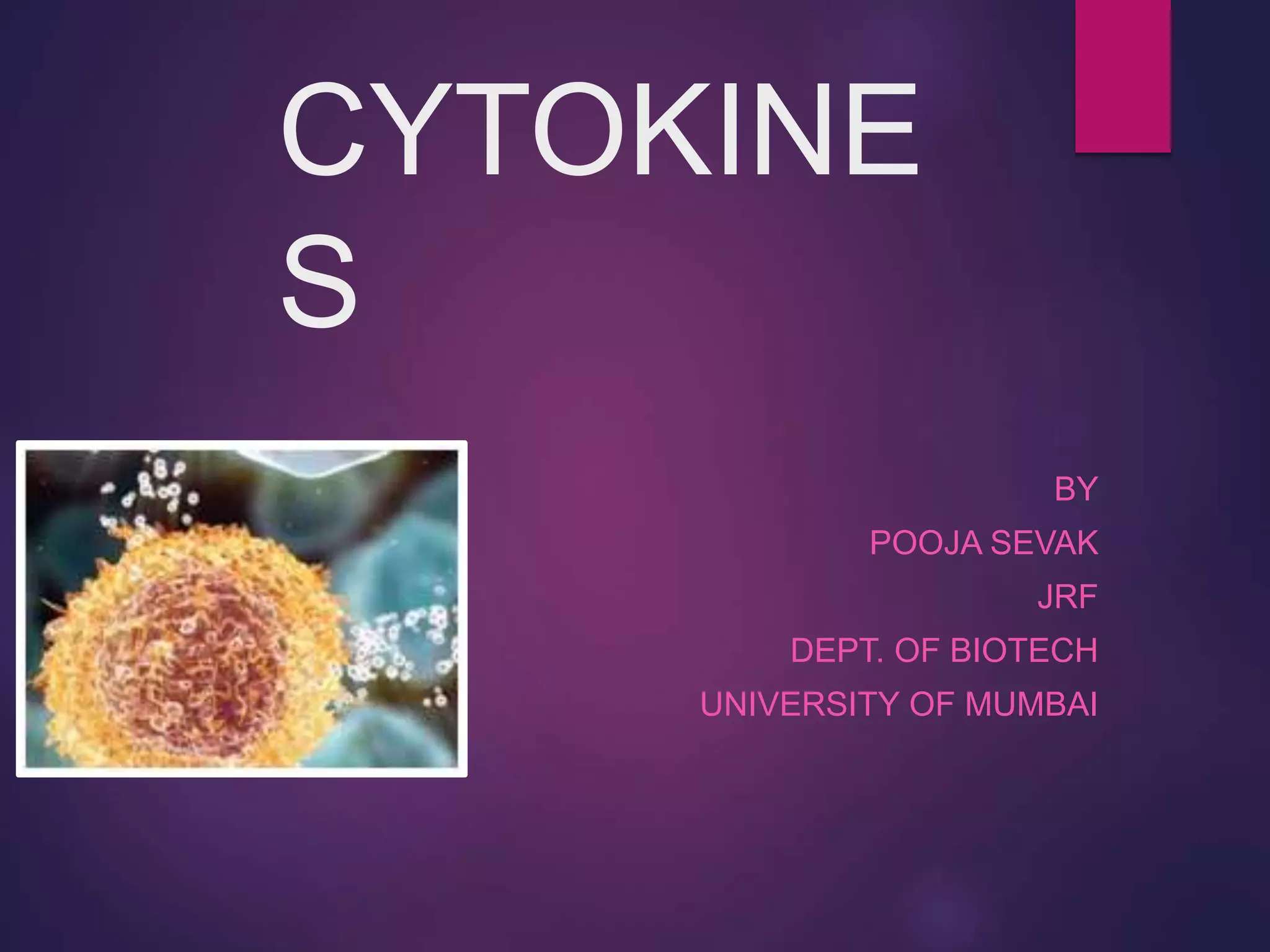
CYTOKINE
S
BY
POOJA SEVAK
JRF
DEPT. OF BIOTECH
UNIVERSITY OF MUMBAI
What is Cytokine ???
• Low molecular weight proteins (30 KDa)
• Bind receptors, alter gene expression
• Very low Kd receptors (10-10-10-12 M)
• Cytokines regulate immune responses
•Decide intensity and duration of immune response
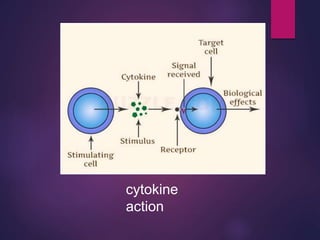
How cytokine act ????
cytokine
action
Cytokine
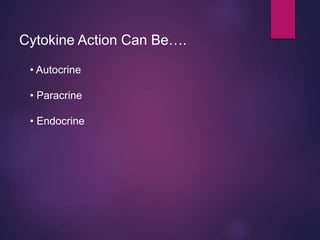
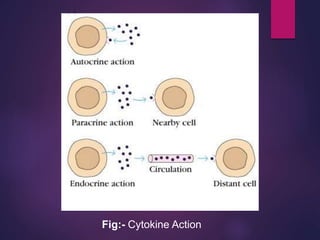
Cytokine Action Can Be….
• Autocrine
• Paracrine
• Endocrine
Fig:- Cytokine Action
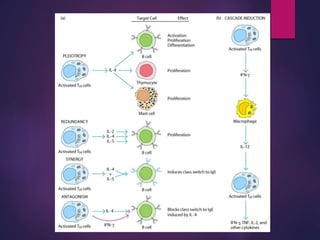
Cytokine activity
•Pleiotropy
•Redundancy
•Synergy
•Antagonism
•Cascade induction
Cytokine Assay
-The biological activities of cytokines can be measured by a
variety of bioassays which may employ factor-dependent
cell lines, or antibodies (ELISA)
-RT-PCR quantitation of cytokines detects the presence of
mRNA encoding specific cytokines
Cytokine Belong to Four Structural Families
• Hematopoietin Receptor Family (Class I)
•Interferon Receptor Family (Class II)
•TNF Receptor Family
•Chemokine Receptor Family
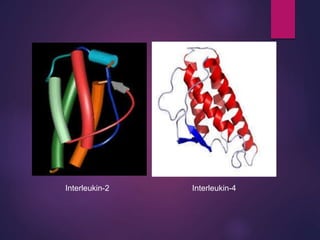
Interleukin-2 Interleukin-4
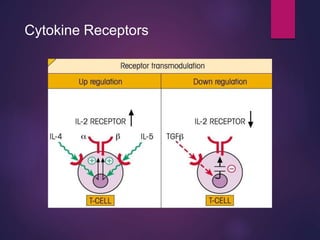
Cytokine Receptors
Type of Cytokine Receptor
• Immunolglobulin superfamily receptors
• Class I cytokine receptor family (also known as
hematopoietin receptors family)
• Class II cytokine receptor family (also known as
Interferon receptors family)
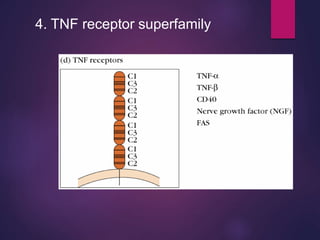
• TNF receptor superfamily
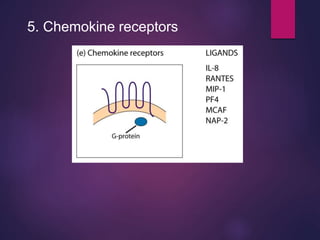
• Chemokine receptors
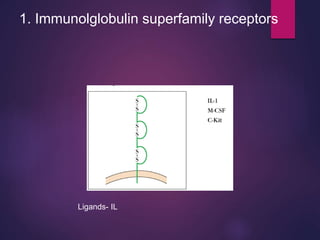
1. Immunolglobulin superfamily receptors
Ligands- IL
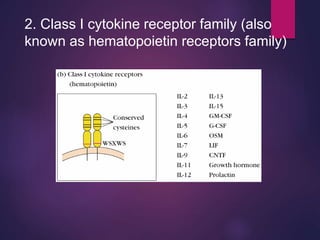
2. Class I cytokine receptor family (also
known as hematopoietin receptors family)
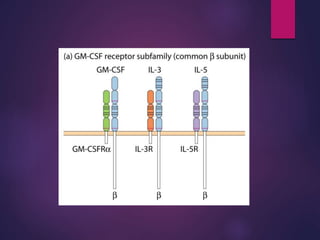
Three subfamilies of the class I
cytokine receptor family
(hematopoietin)
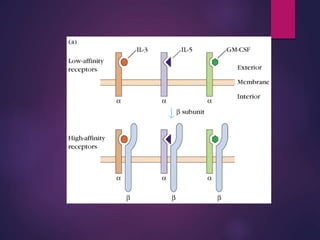
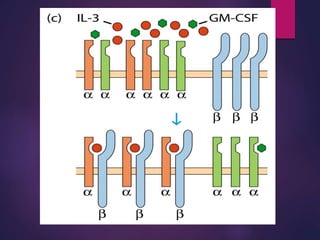
• GM-CSF has antagonistic effect
• GM-CSF is inhibited by IL-3
• Low affinity
• Low affinity subunit associated with beta subunit
• Induce eosinophil proliferation and basophil
degranulation
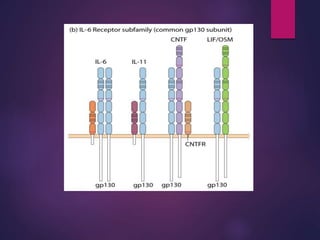
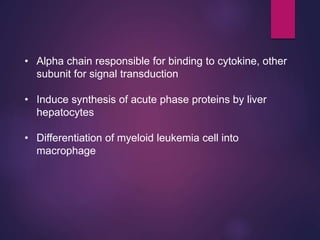
• Alpha chain responsible for binding to cytokine, other
subunit for signal transduction
• Induce synthesis of acute phase proteins by liver
hepatocytes
• Differentiation of myeloid leukemia cell into
macrophage
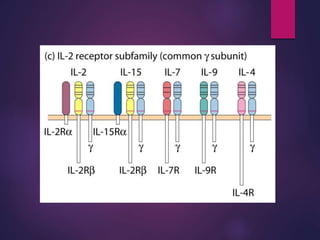
• Common gamma subunit
• Alpha for cytokine binding and beta and gamma for signal
transduction
• X- linked severe combined immunodeficiency due to defect
in
gamma chain
• Most widely studied cytokine receptor as responsible for T
cell activation
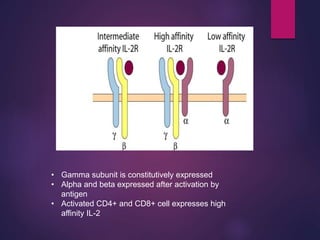
• IL-2 receptor is present in 3 forms: low, medium, and high
affinity
• The low affinity (monomeric, IL-2Ra), medium affinity
(dimeric, IL-2Ra), and high affinity (trimeric, IL-2Rag)
• Gamma subunit is constitutively expressed
• Alpha and beta expressed after activation by
antigen
• Activated CD4+ and CD8+ cell expresses high
affinity IL-2
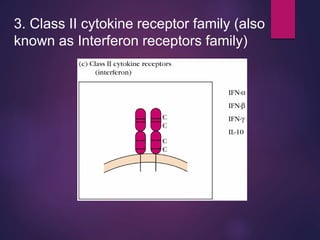
3. Class II cytokine receptor family (also
known as Interferon receptors family)
4. TNF receptor superfamily
5. Chemokine receptors
Activation of Signal Transduction Pathway by
Cytokine
• Mostly involved class I and class II receptors
• Activation of protein tyrosine kinase
• INF-у is mostly studies example of signal transduction
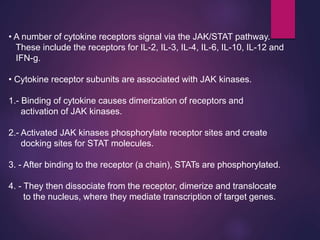
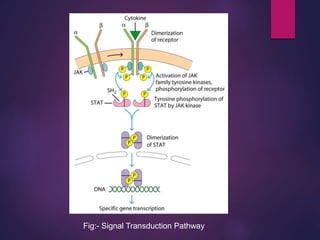
• A number of cytokine receptors signal via the JAK/STAT pathway.
These include the receptors for IL-2, IL-3, IL-4, IL-6, IL-10, IL-12 and
IFN-g.
• Cytokine receptor subunits are associated with JAK kinases.
1.- Binding of cytokine causes dimerization of receptors and
activation of JAK kinases.
2.- Activated JAK kinases phosphorylate receptor sites and create
docking sites for STAT molecules.
3. - After binding to the receptor (a chain), STATs are phosphorylated.
4. - They then dissociate from the receptor, dimerize and translocate
to the nucleus, where they mediate transcription of target genes.
Fig:- Signal Transduction Pathway
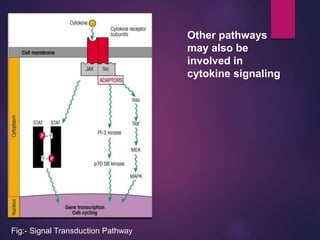
Other pathways
may also be
involved in
cytokine signaling
Fig:- Signal Transduction Pathway
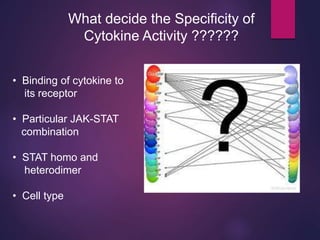
What decide the Specificity of
Cytokine Activity ??????
• Binding of cytokine to
its receptor
• Particular JAK-STAT
combination
• STAT homo and
heterodimer
• Cell type
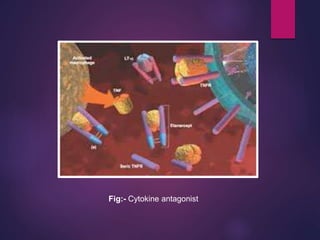
Cytokine Antagonists
– Inhibit the biological activity of cytokines
•Bind to the cytokine receptor
•Bind to the cytokine
– Be found in the bloodstream and extracellular fluid
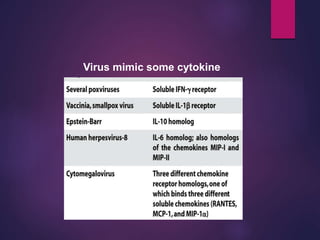
– Some virus can produce cytokine-binding protein
or cytokine mimics
– Determine the intensity of the response
– IL-1Ra and sIL-2R (Biomarker for various diseases)
Virus mimic some cytokine
Fig:- Cytokine antagonist
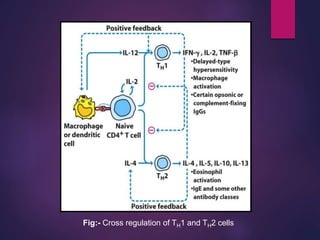
Cytokine by TH1 and TH2 cells
• TH1 induces cell mediated functions and opsonization
promoting IgG antibody
• TH1 involve excessive inflammation and tissue injury
• TH2 eosinophil activation, IgM and IgE production and
also noncomplement activating IgG isotype
• Support allergic reaction
Fig:- Cross regulation of TH1 and TH2 cells
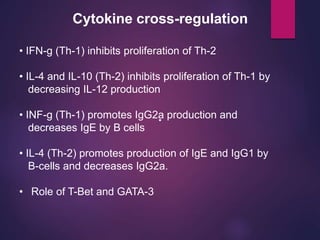
Cytokine cross-regulation
•
• IFN-g (Th-1) inhibits proliferation of Th-2
• IL-4 and IL-10 (Th-2) inhibits proliferation of Th-1 by
decreasing IL-12 production
• INF-g (Th-1) promotes IgG2a production and
decreases IgE by B cells
• IL-4 (Th-2) promotes production of IgE and IgG1 by
B-cells and decreases IgG2a.
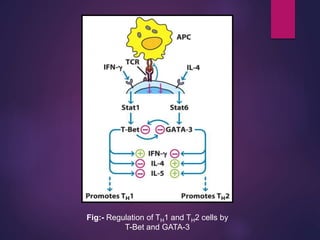
• Role of T-Bet and GATA-3
Fig:- Regulation of TH1 and TH2 cells by
T-Bet and GATA-3
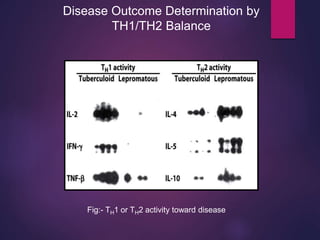
Disease Outcome Determination by
TH1/TH2 Balance
Fig:- TH1 or TH2 activity toward disease
Cytokine –Related Diseases
• Bacterial septic shock
 Cytokine overproduction
 Bacterial cell-wall endotoxins marcophage to overproduce
IL-1 and TNF-alpha
• Bacterial toxic shock and similar diseases
 Bacteria produce toxins that act as superantigens
 The large number of T cells activated which result in
excessive production of cytokines
 Antigen bind to V-beta domain of TCR
 Enterotoxin, Exfoliating toxins, toxic shock syndrome
toxin from S. aureus
• Lymphoid and myeloid cancers
 Cytokines and their receptors abnormally produced
 IL-6 overproduction lead to plasmacytosis which
result in cancer
Chagas’s Disease
• Caused by Trypanosoma cruzi
• Decrease inalpha subunit of IL-2 receptor
Therapeutic Use of Cytokines
Used in treatment of
• Inflammation
• Cancer therapy
• During organ transplant
• Allergy
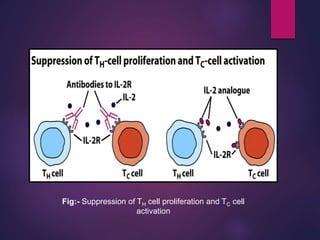
Fig:- Suppression of TH cell proliferation and TC cell
activation
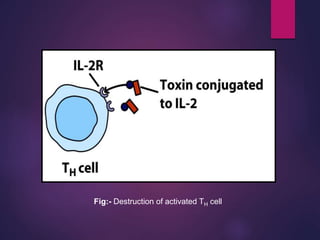
Fig:- Destruction of activated TH cell
Problems Associated with
Cytokine therapy
• To achieve local concentration
• Short half life of cytokine
• Unpredicted and undesirble side effects
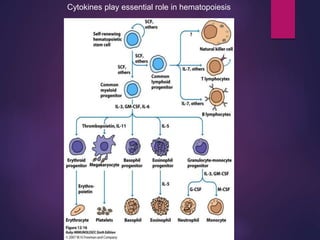
Cytokines play essential role in hematopoiesis
Thank You

Cytokines

  • 1.
    CYTOKINE S BY POOJA SEVAK JRF DEPT. OFBIOTECH UNIVERSITY OF MUMBAI
  • 2.
    What is Cytokine??? • Low molecular weight proteins (30 KDa) • Bind receptors, alter gene expression • Very low Kd receptors (10-10-10-12 M) • Cytokines regulate immune responses •Decide intensity and duration of immune response
  • 3.
  • 4.
  • 5.
  • 6.
    Cytokine Action CanBe…. • Autocrine • Paracrine • Endocrine
  • 7.
  • 8.
  • 10.
    Cytokine Assay -The biologicalactivities of cytokines can be measured by a variety of bioassays which may employ factor-dependent cell lines, or antibodies (ELISA) -RT-PCR quantitation of cytokines detects the presence of mRNA encoding specific cytokines
  • 11.
    Cytokine Belong toFour Structural Families • Hematopoietin Receptor Family (Class I) •Interferon Receptor Family (Class II) •TNF Receptor Family •Chemokine Receptor Family
  • 12.
  • 13.
  • 14.
    Type of CytokineReceptor • Immunolglobulin superfamily receptors • Class I cytokine receptor family (also known as hematopoietin receptors family) • Class II cytokine receptor family (also known as Interferon receptors family) • TNF receptor superfamily • Chemokine receptors
  • 15.
    1. Immunolglobulin superfamilyreceptors Ligands- IL
  • 16.
    2. Class Icytokine receptor family (also known as hematopoietin receptors family)
  • 17.
    Three subfamilies ofthe class I cytokine receptor family (hematopoietin)
  • 19.
    • GM-CSF hasantagonistic effect • GM-CSF is inhibited by IL-3 • Low affinity • Low affinity subunit associated with beta subunit • Induce eosinophil proliferation and basophil degranulation
  • 23.
    • Alpha chainresponsible for binding to cytokine, other subunit for signal transduction • Induce synthesis of acute phase proteins by liver hepatocytes • Differentiation of myeloid leukemia cell into macrophage
  • 25.
    • Common gammasubunit • Alpha for cytokine binding and beta and gamma for signal transduction • X- linked severe combined immunodeficiency due to defect in gamma chain • Most widely studied cytokine receptor as responsible for T cell activation • IL-2 receptor is present in 3 forms: low, medium, and high affinity • The low affinity (monomeric, IL-2Ra), medium affinity (dimeric, IL-2Ra), and high affinity (trimeric, IL-2Rag)
  • 26.
    • Gamma subunitis constitutively expressed • Alpha and beta expressed after activation by antigen • Activated CD4+ and CD8+ cell expresses high affinity IL-2
  • 27.
    3. Class IIcytokine receptor family (also known as Interferon receptors family)
  • 28.
    4. TNF receptorsuperfamily
  • 29.
  • 30.
    Activation of SignalTransduction Pathway by Cytokine • Mostly involved class I and class II receptors • Activation of protein tyrosine kinase • INF-у is mostly studies example of signal transduction
  • 31.
    • A numberof cytokine receptors signal via the JAK/STAT pathway. These include the receptors for IL-2, IL-3, IL-4, IL-6, IL-10, IL-12 and IFN-g. • Cytokine receptor subunits are associated with JAK kinases. 1.- Binding of cytokine causes dimerization of receptors and activation of JAK kinases. 2.- Activated JAK kinases phosphorylate receptor sites and create docking sites for STAT molecules. 3. - After binding to the receptor (a chain), STATs are phosphorylated. 4. - They then dissociate from the receptor, dimerize and translocate to the nucleus, where they mediate transcription of target genes.
  • 32.
  • 33.
    Other pathways may alsobe involved in cytokine signaling Fig:- Signal Transduction Pathway
  • 34.
    What decide theSpecificity of Cytokine Activity ?????? • Binding of cytokine to its receptor • Particular JAK-STAT combination • STAT homo and heterodimer • Cell type
  • 35.
    Cytokine Antagonists – Inhibitthe biological activity of cytokines •Bind to the cytokine receptor •Bind to the cytokine – Be found in the bloodstream and extracellular fluid – Some virus can produce cytokine-binding protein or cytokine mimics – Determine the intensity of the response – IL-1Ra and sIL-2R (Biomarker for various diseases)
  • 36.
  • 37.
  • 38.
    Cytokine by TH1and TH2 cells • TH1 induces cell mediated functions and opsonization promoting IgG antibody • TH1 involve excessive inflammation and tissue injury • TH2 eosinophil activation, IgM and IgE production and also noncomplement activating IgG isotype • Support allergic reaction
  • 39.
    Fig:- Cross regulationof TH1 and TH2 cells
  • 40.
    Cytokine cross-regulation • • IFN-g(Th-1) inhibits proliferation of Th-2 • IL-4 and IL-10 (Th-2) inhibits proliferation of Th-1 by decreasing IL-12 production • INF-g (Th-1) promotes IgG2a production and decreases IgE by B cells • IL-4 (Th-2) promotes production of IgE and IgG1 by B-cells and decreases IgG2a. • Role of T-Bet and GATA-3
  • 41.
    Fig:- Regulation ofTH1 and TH2 cells by T-Bet and GATA-3
  • 42.
    Disease Outcome Determinationby TH1/TH2 Balance Fig:- TH1 or TH2 activity toward disease
  • 43.
    Cytokine –Related Diseases •Bacterial septic shock  Cytokine overproduction  Bacterial cell-wall endotoxins marcophage to overproduce IL-1 and TNF-alpha
  • 44.
    • Bacterial toxicshock and similar diseases  Bacteria produce toxins that act as superantigens  The large number of T cells activated which result in excessive production of cytokines  Antigen bind to V-beta domain of TCR  Enterotoxin, Exfoliating toxins, toxic shock syndrome toxin from S. aureus
  • 45.
    • Lymphoid andmyeloid cancers  Cytokines and their receptors abnormally produced  IL-6 overproduction lead to plasmacytosis which result in cancer
  • 46.
    Chagas’s Disease • Causedby Trypanosoma cruzi • Decrease inalpha subunit of IL-2 receptor
  • 47.
    Therapeutic Use ofCytokines Used in treatment of • Inflammation • Cancer therapy • During organ transplant • Allergy
  • 48.
    Fig:- Suppression ofTH cell proliferation and TC cell activation
  • 49.
    Fig:- Destruction ofactivated TH cell
  • 50.
    Problems Associated with Cytokinetherapy • To achieve local concentration • Short half life of cytokine • Unpredicted and undesirble side effects
  • 51.
    Cytokines play essentialrole in hematopoiesis
  • 52.