BY k.Saraswathi
What is cell cycle?
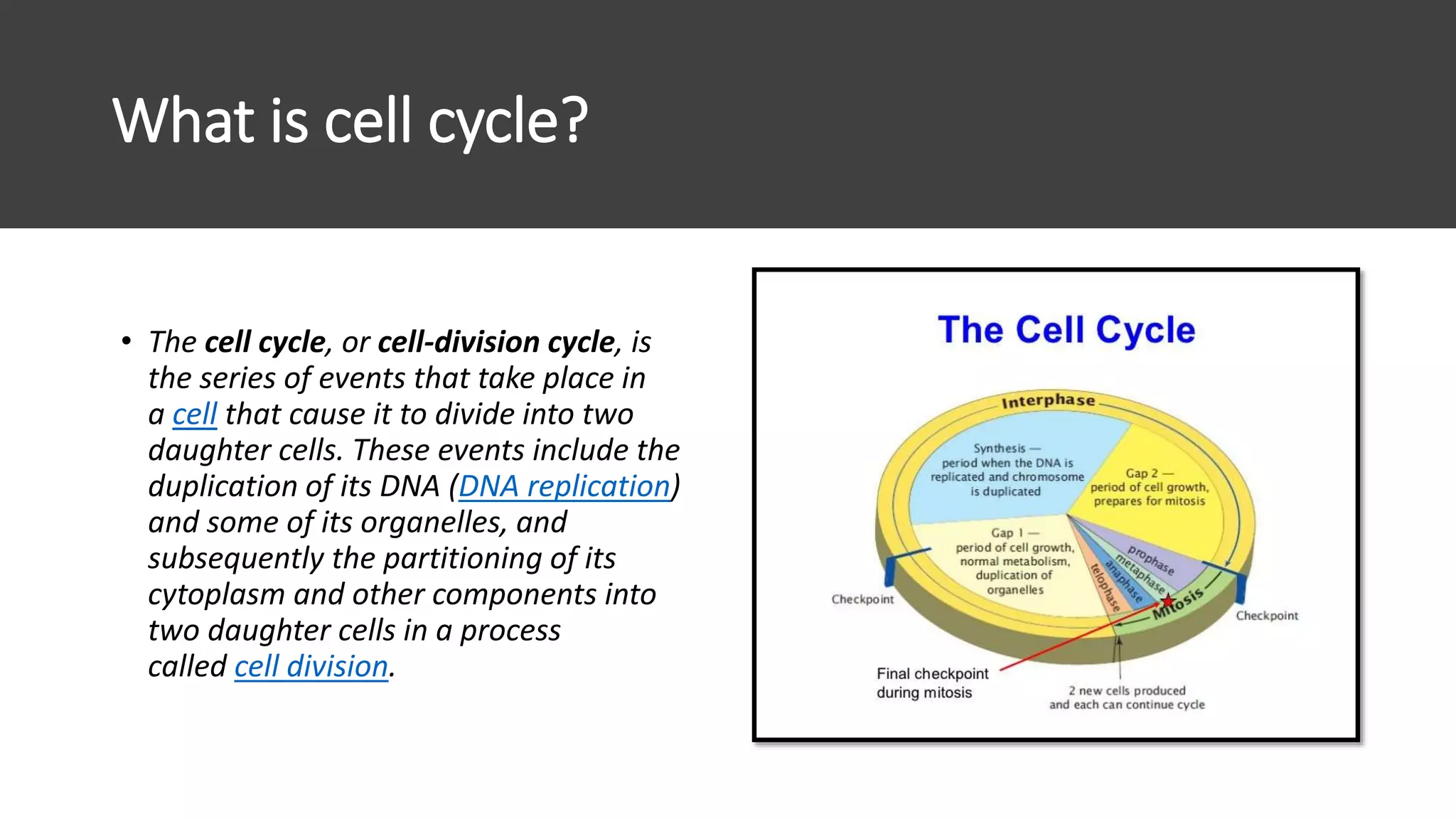
• The cell cycle, or cell-division cycle, is
the series of events that take place in
a cell that cause it to divide into two
daughter cells. These events include the
duplication of its DNA (DNA replication)
and some of its organelles, and
subsequently the partitioning of its
cytoplasm and other components into
two daughter cells in a process
called cell division.
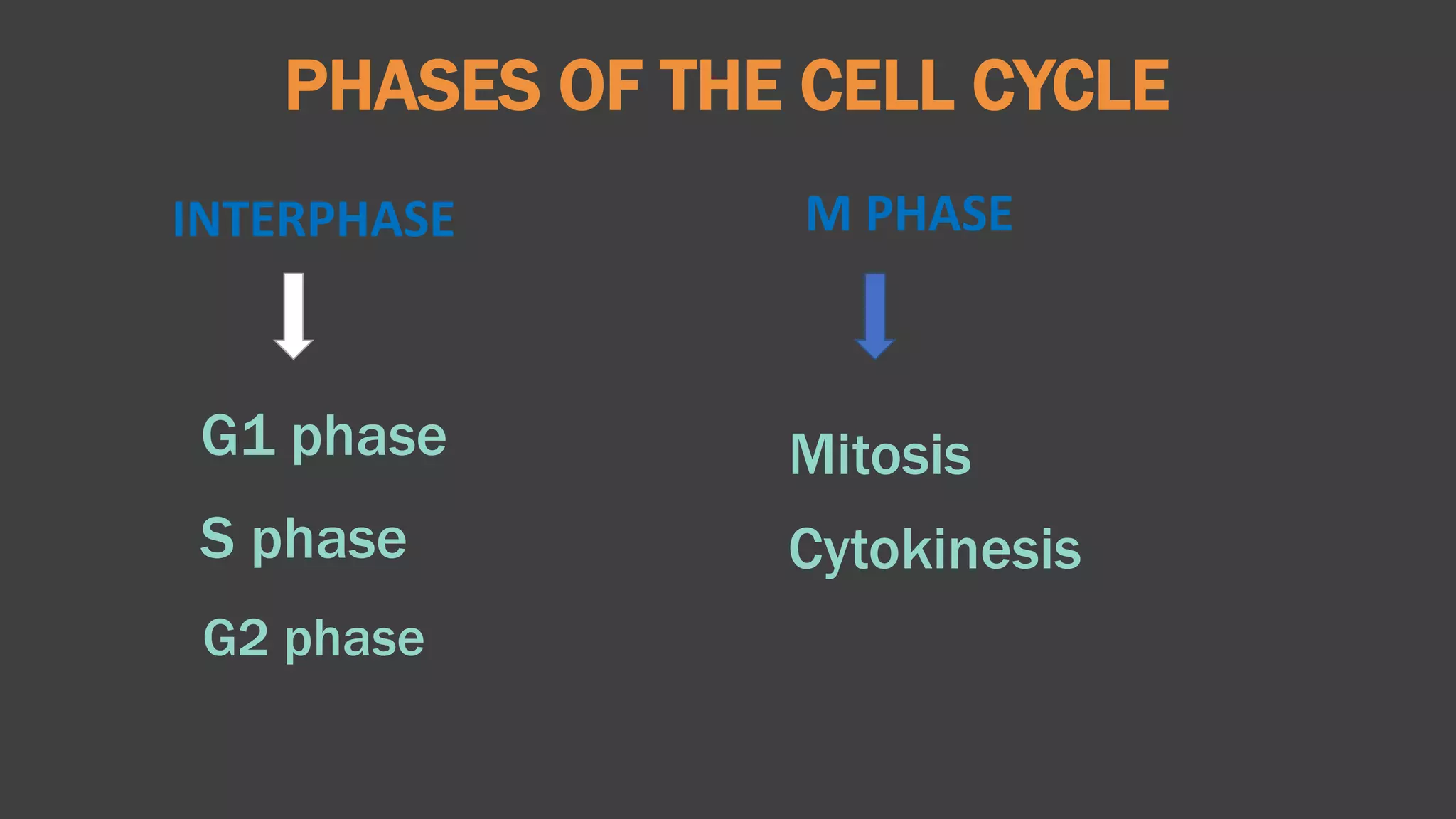
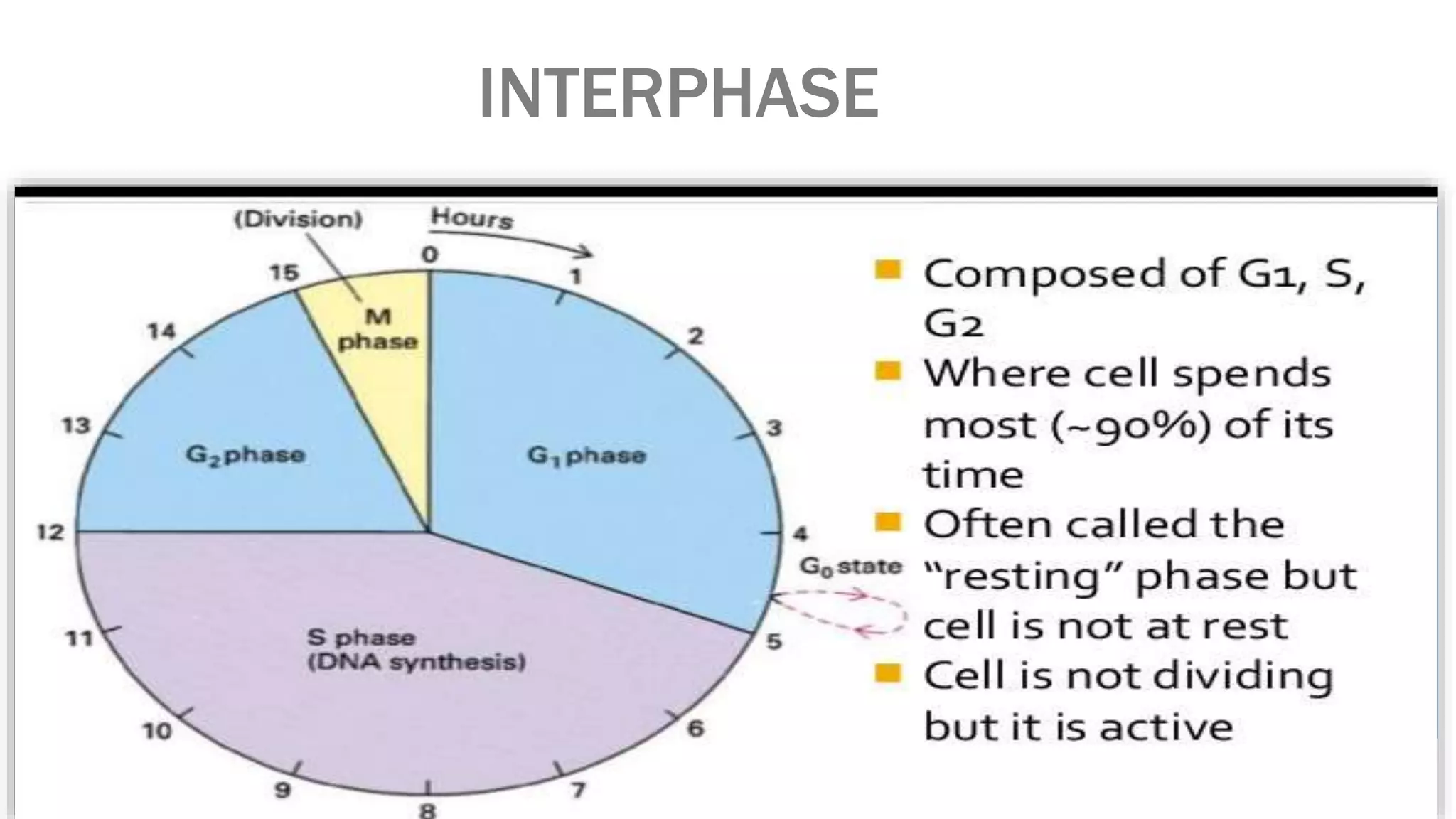
PHASES OF THE CELL CYCLE
M PHASEINTERPHASE
G1 phase
S phase
G2 phase
Mitosis
Cytokinesis
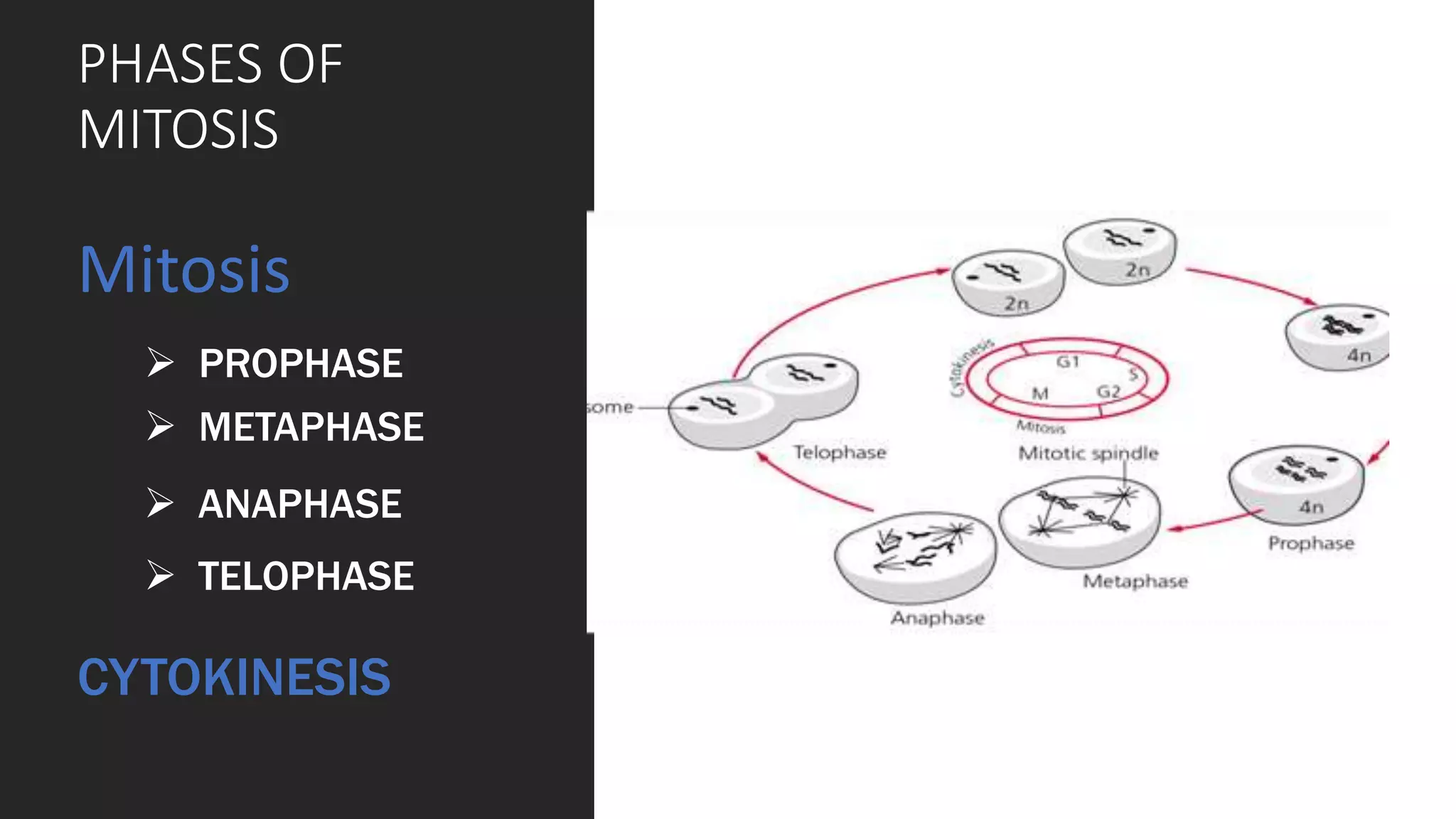
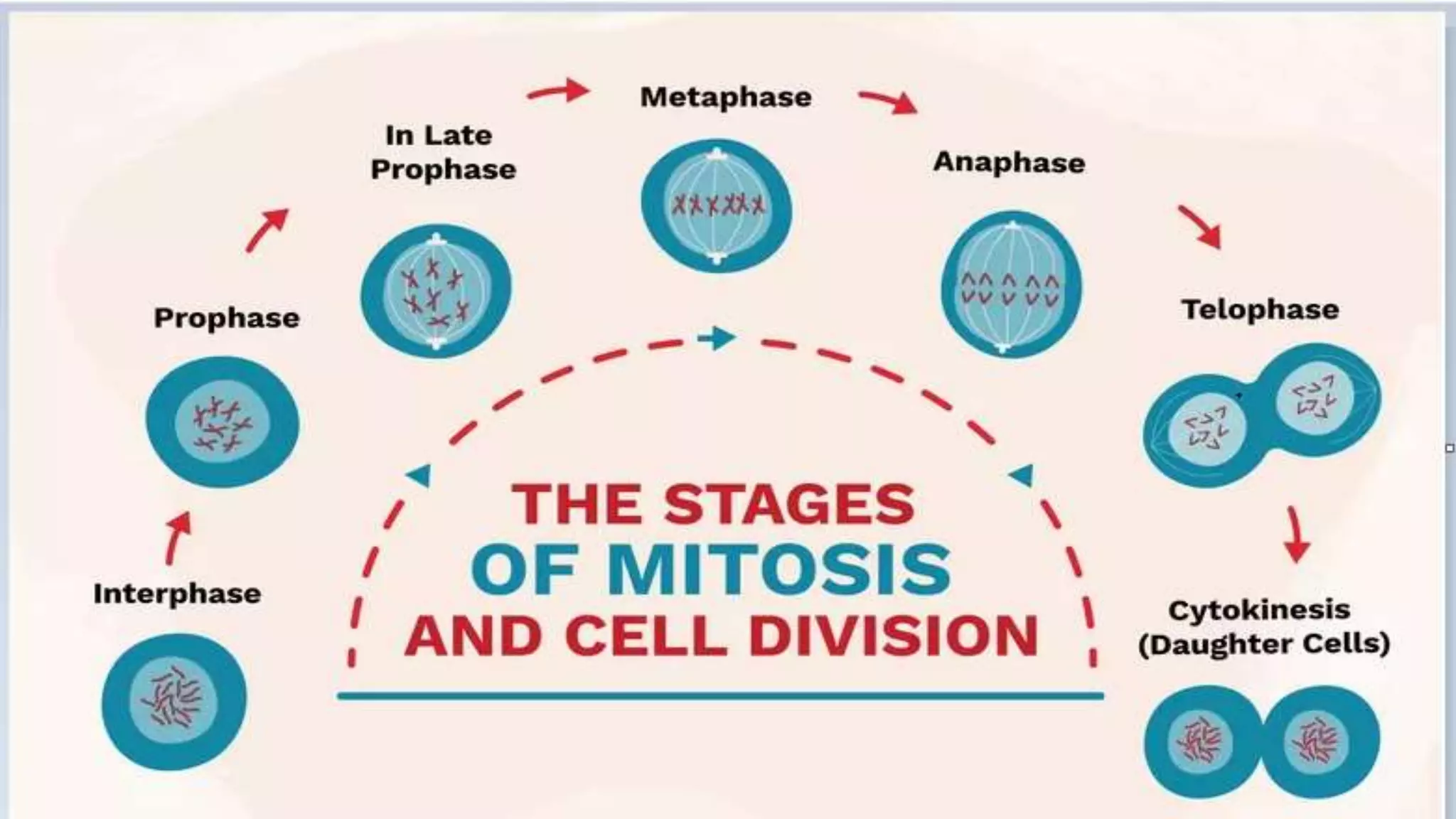
PHASES OF
MITOSIS
Mitosis
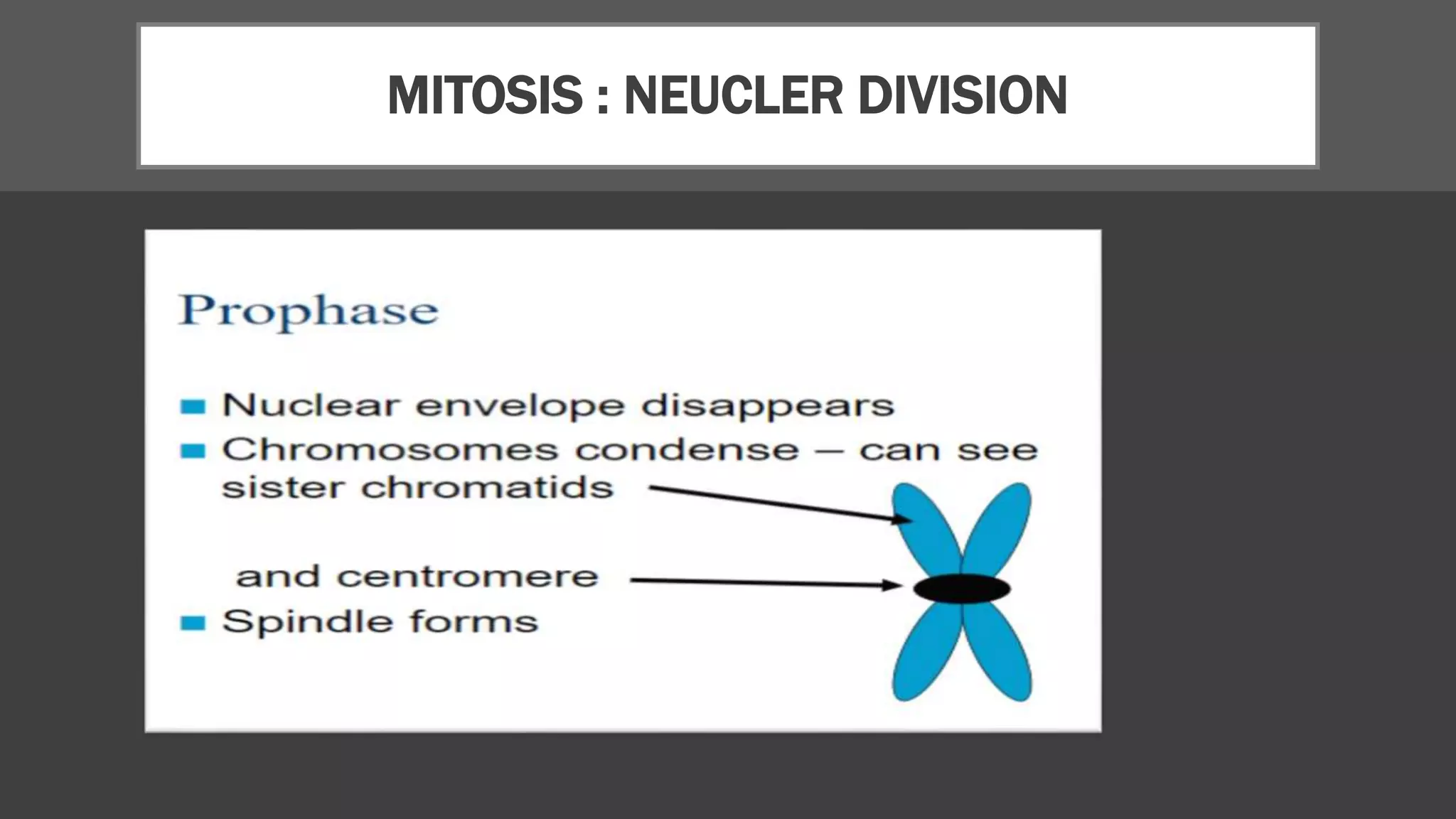
 PROPHASE
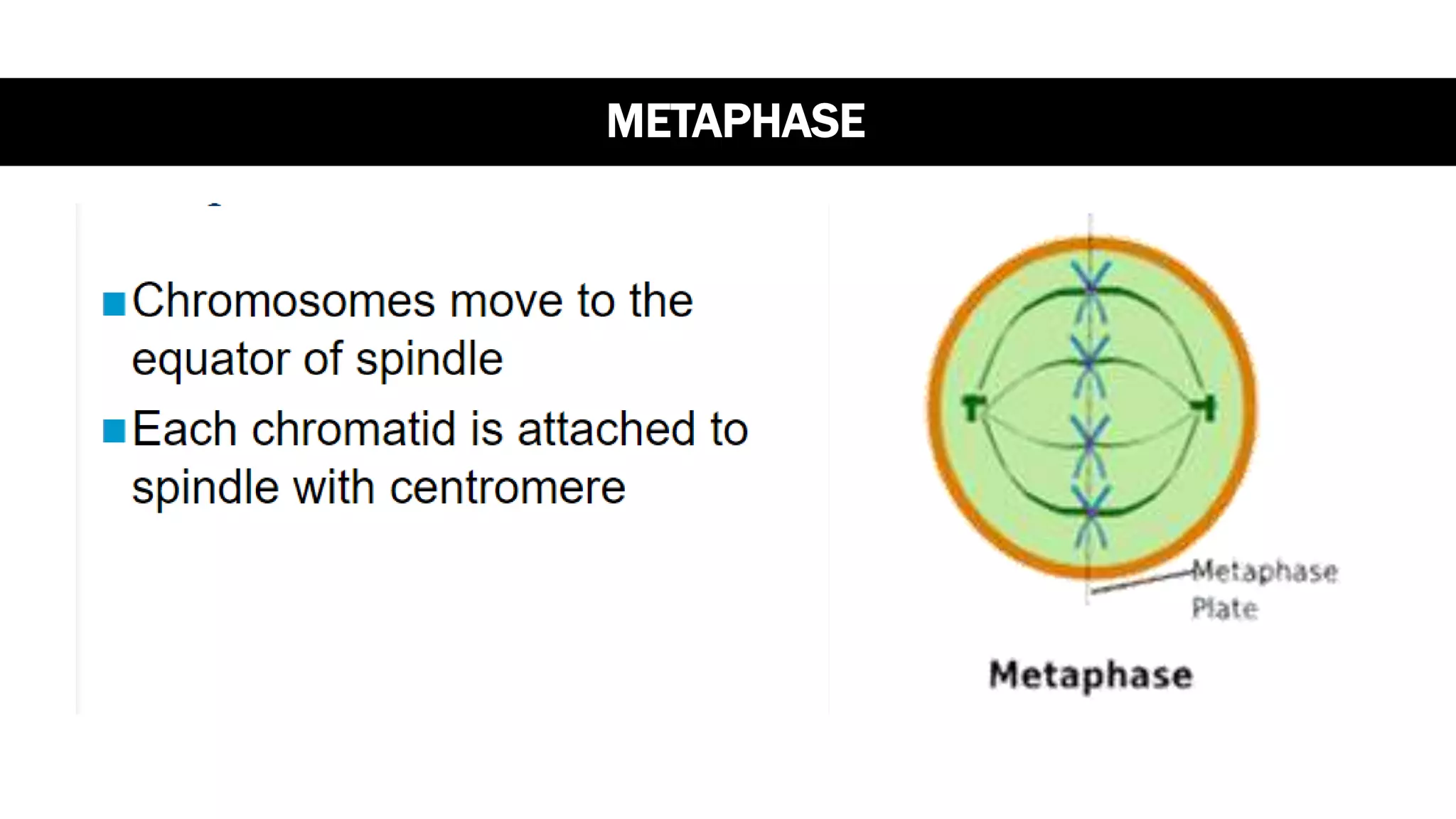
 METAPHASE
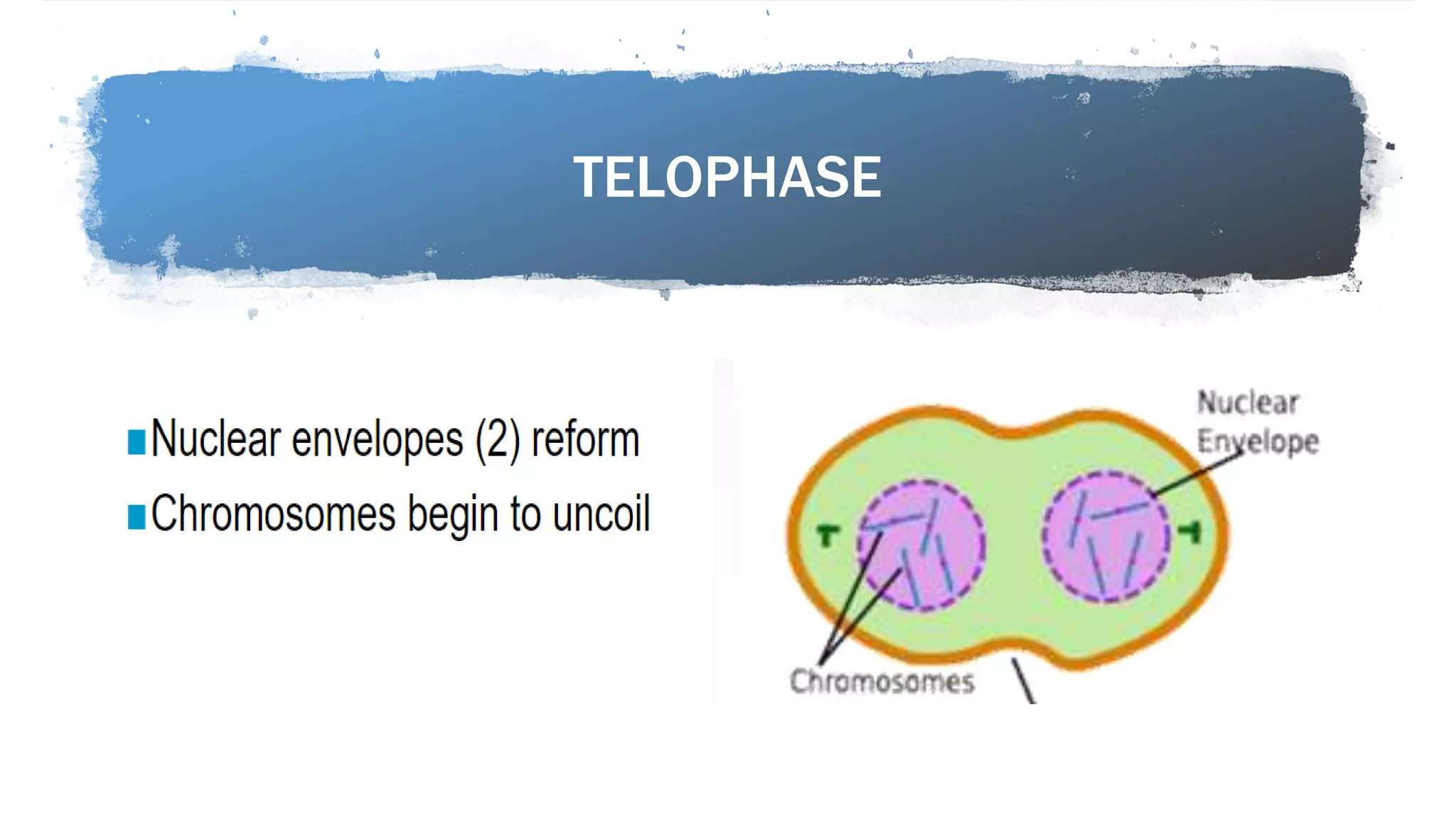
 TELOPHASE
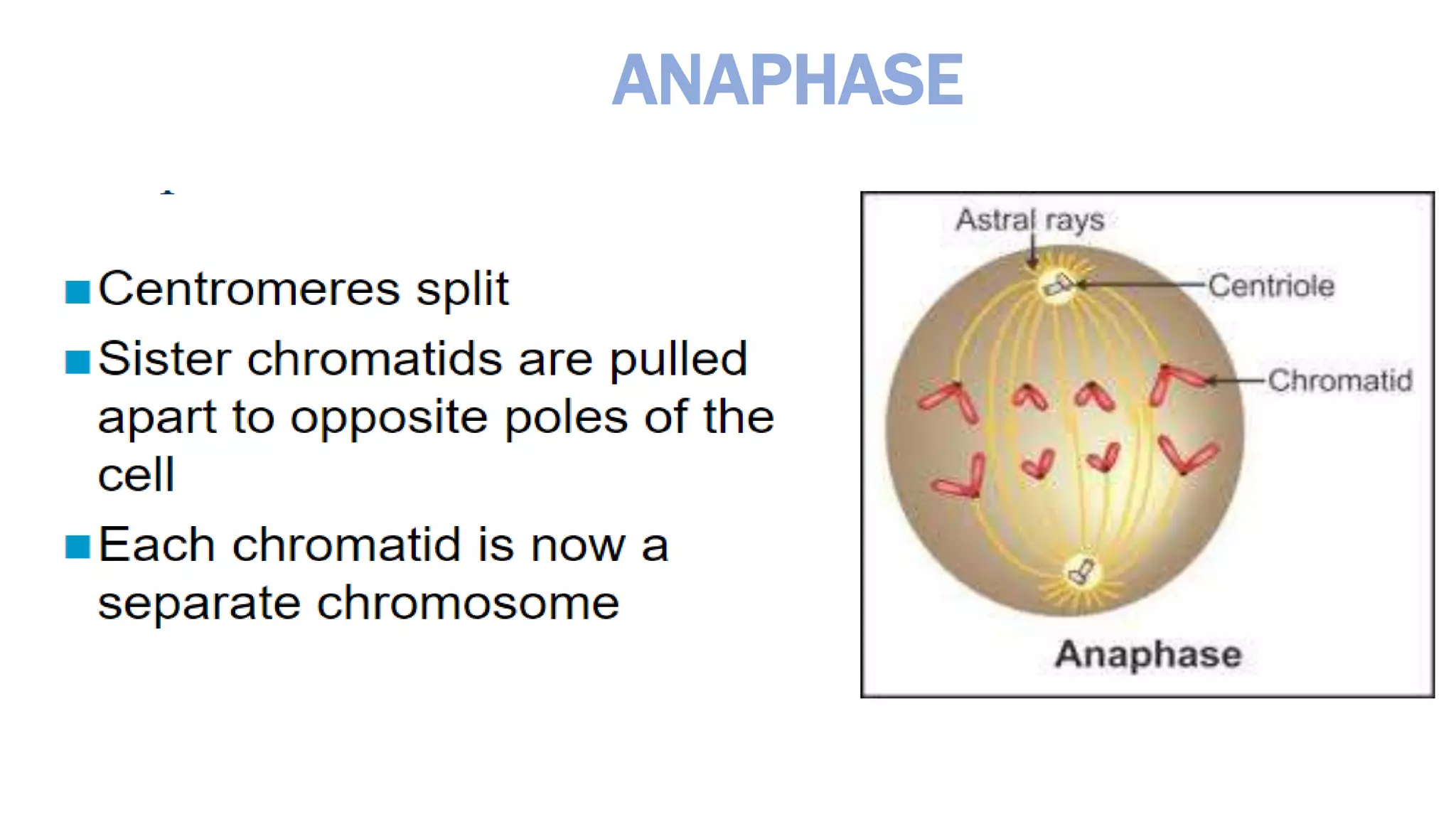
 ANAPHASE
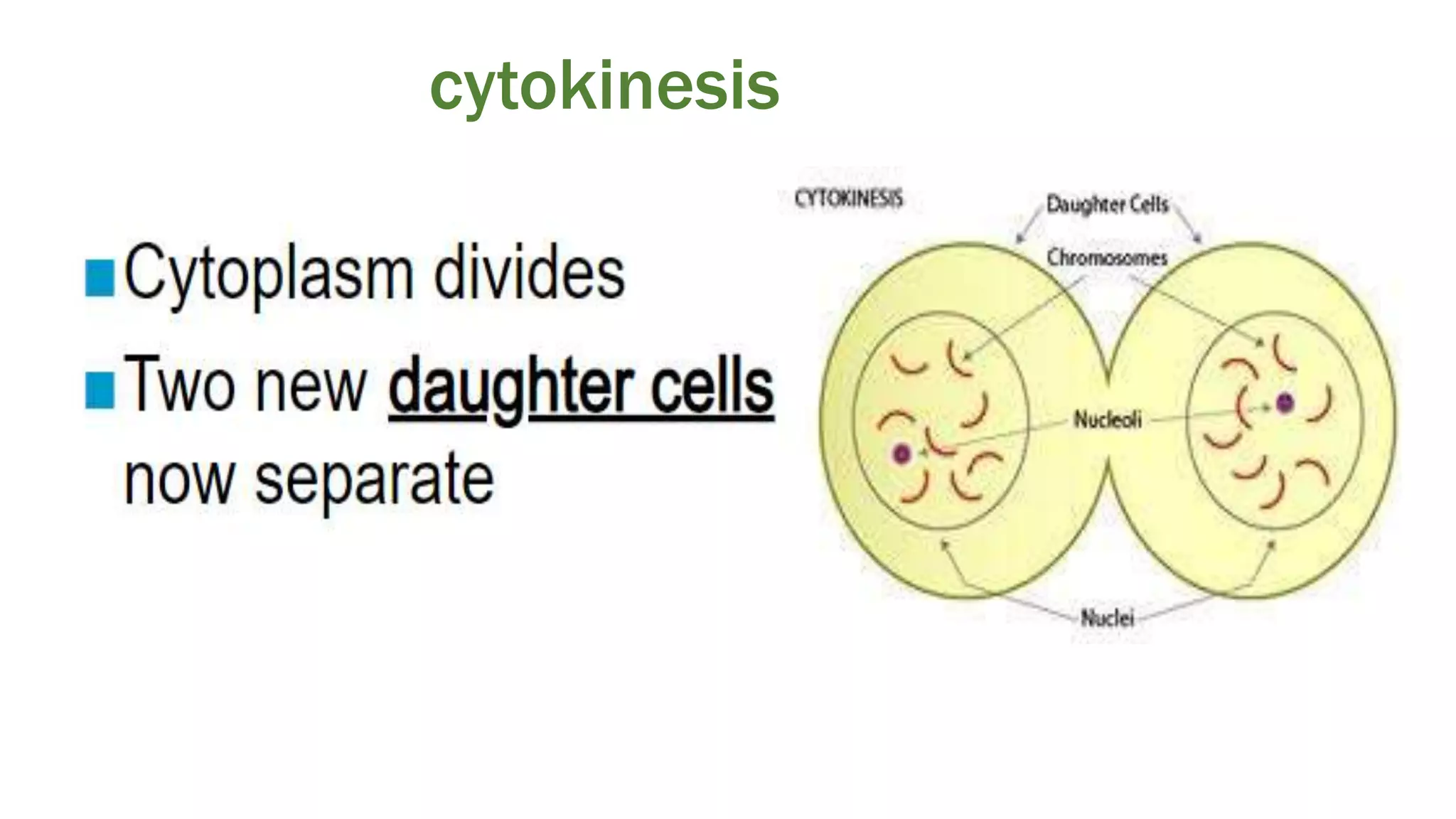
CYTOKINESIS
INTERPHASE
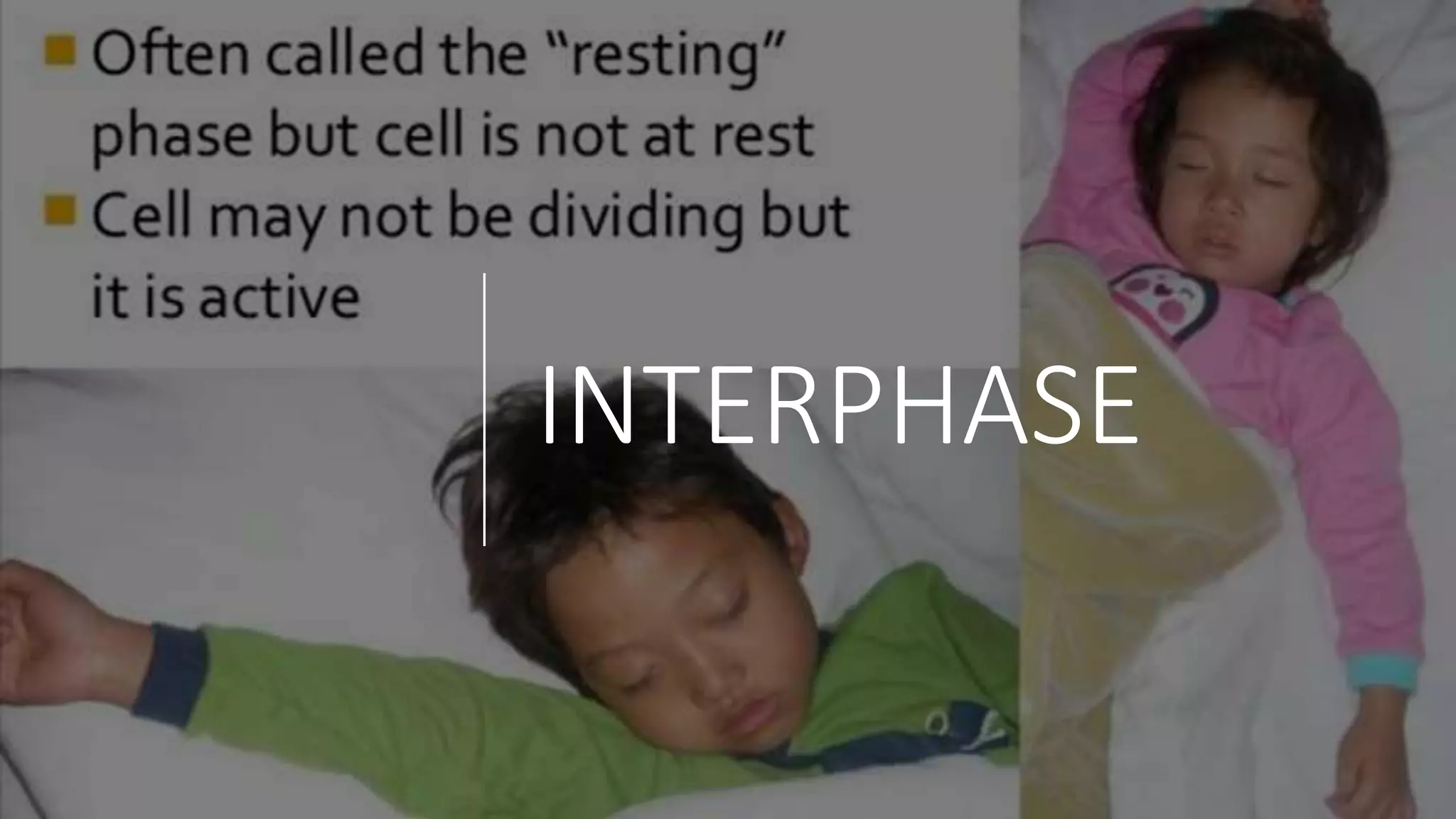
INTERPHASE
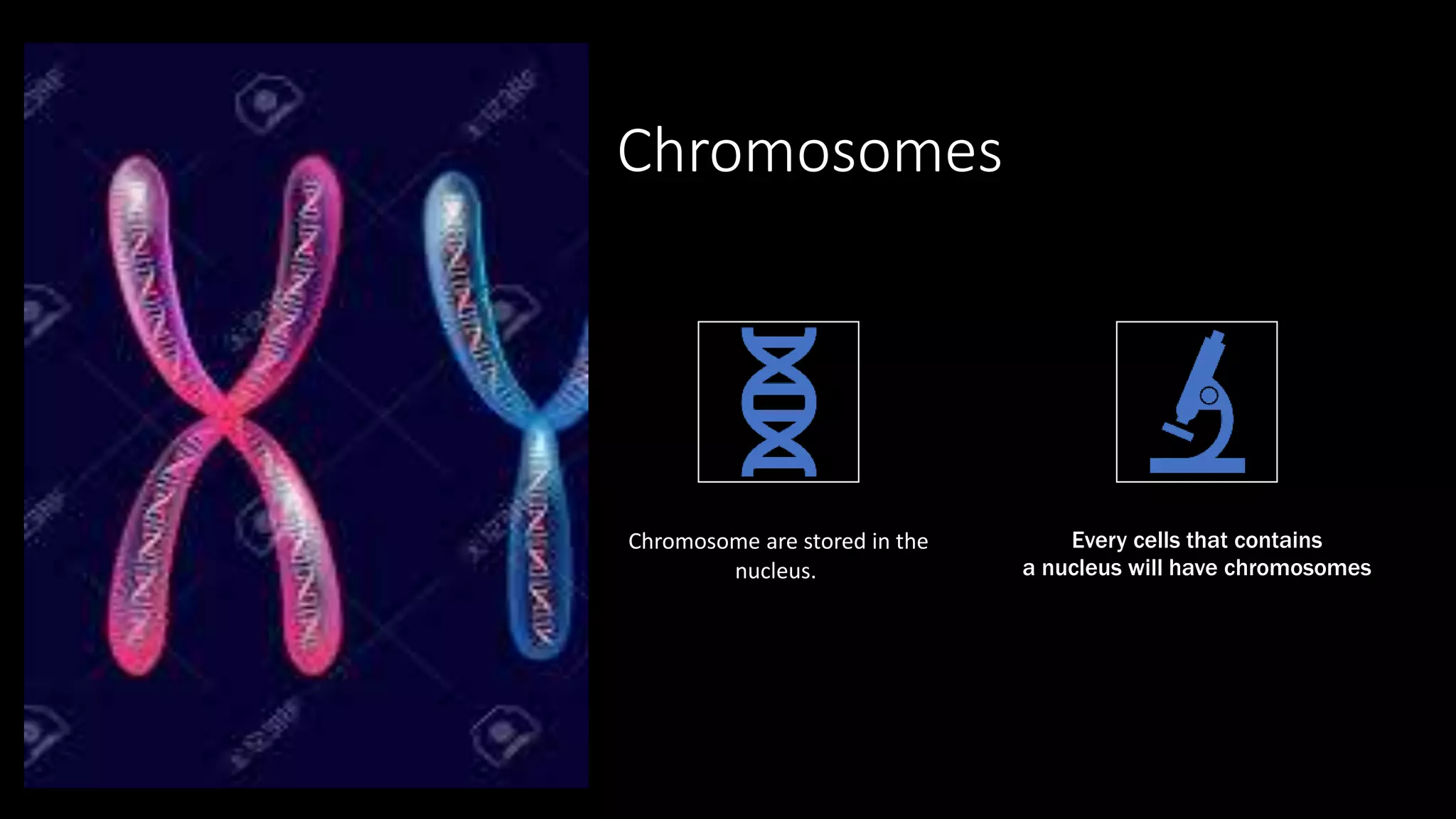
Chromosomes
Chromosome are stored in the
nucleus.
Every cells that contains
a nucleus will have chromosomes
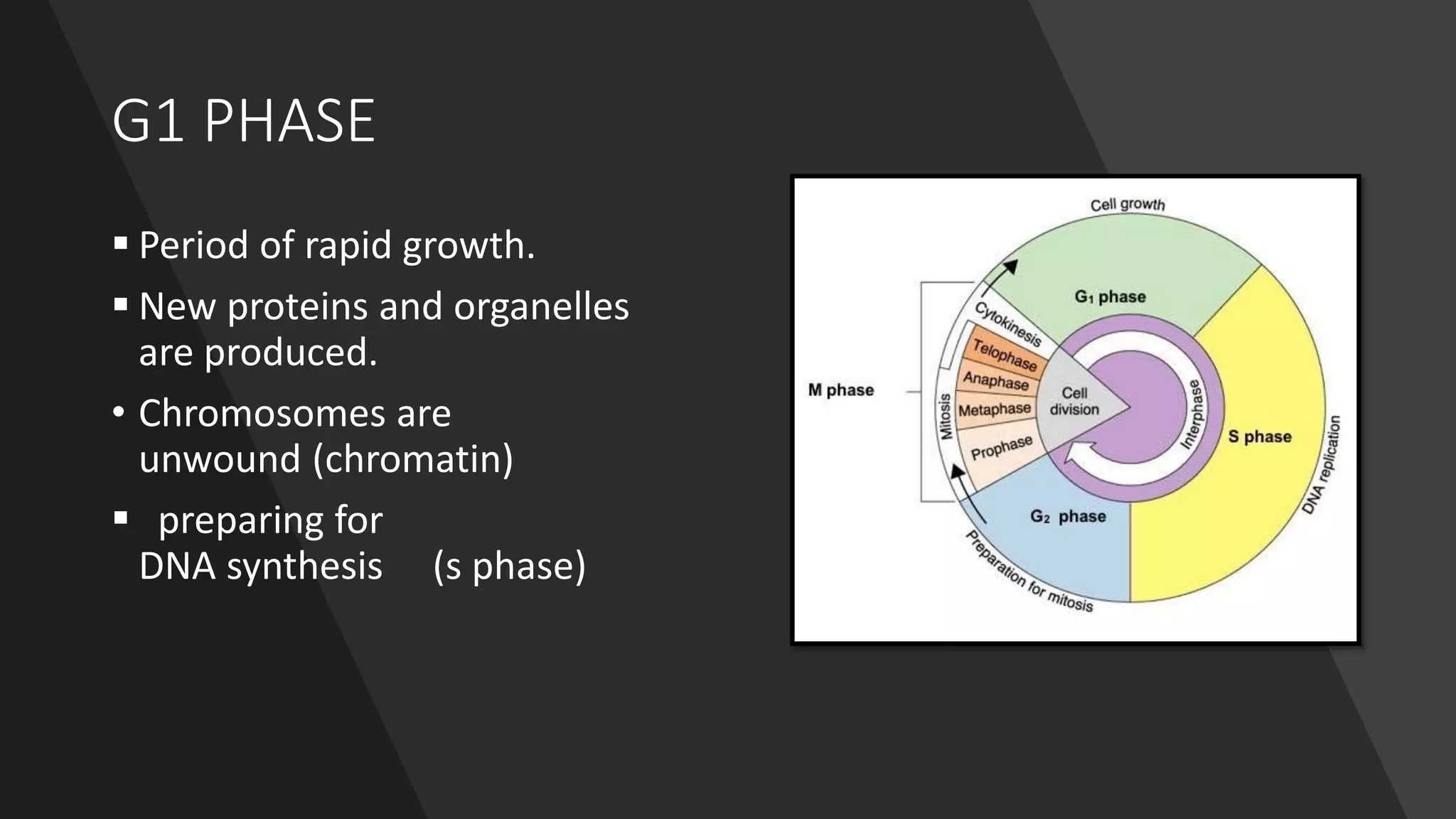
G1 PHASE
 Period of rapid growth.
 New proteins and organelles
are produced.
• Chromosomes are
unwound (chromatin)
 preparing for
DNA synthesis (s phase)
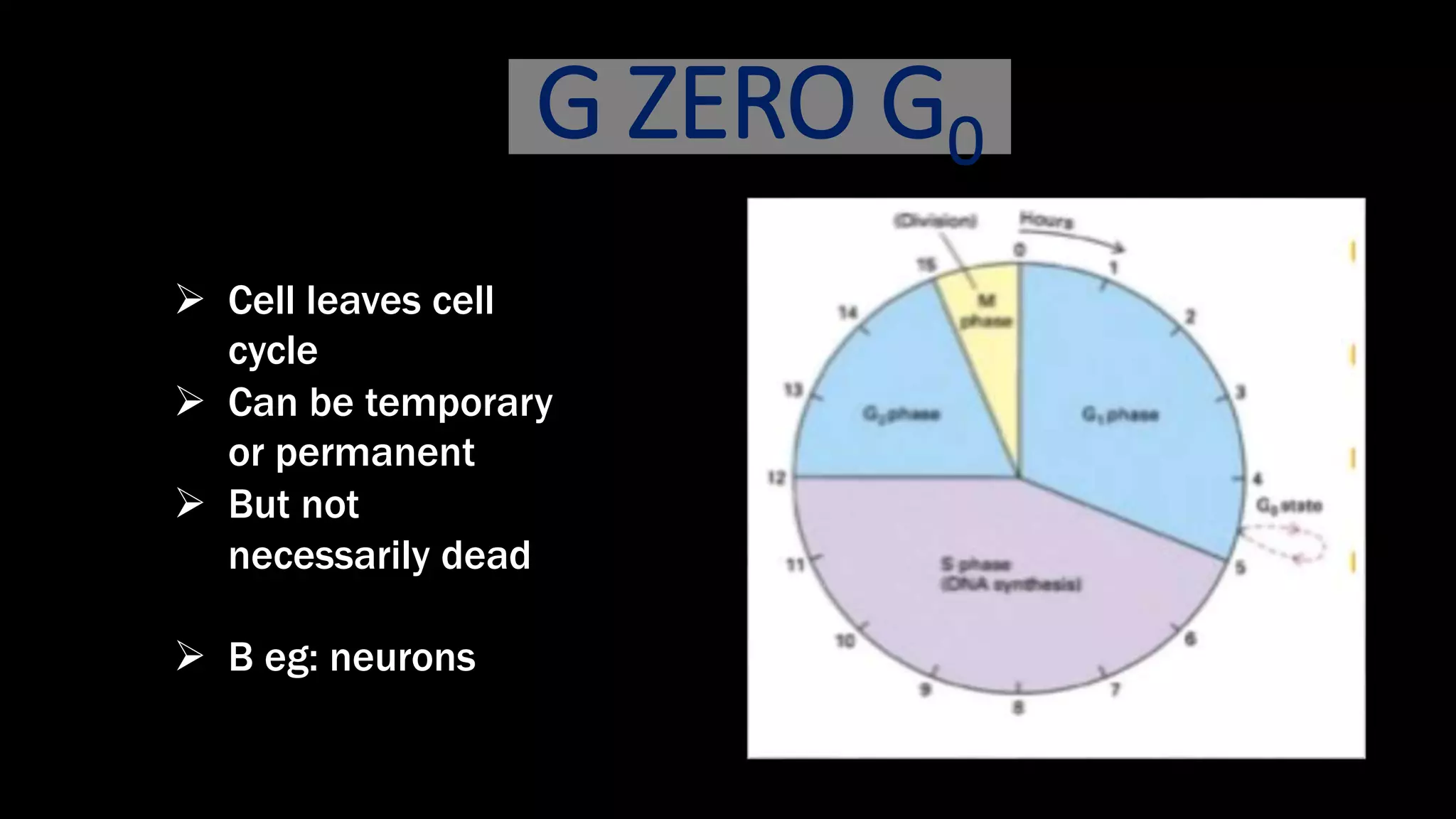
G ZERO G0
 Cell leaves cell
cycle
 Can be temporary
or permanent
 But not
necessarily dead
 B eg: neurons
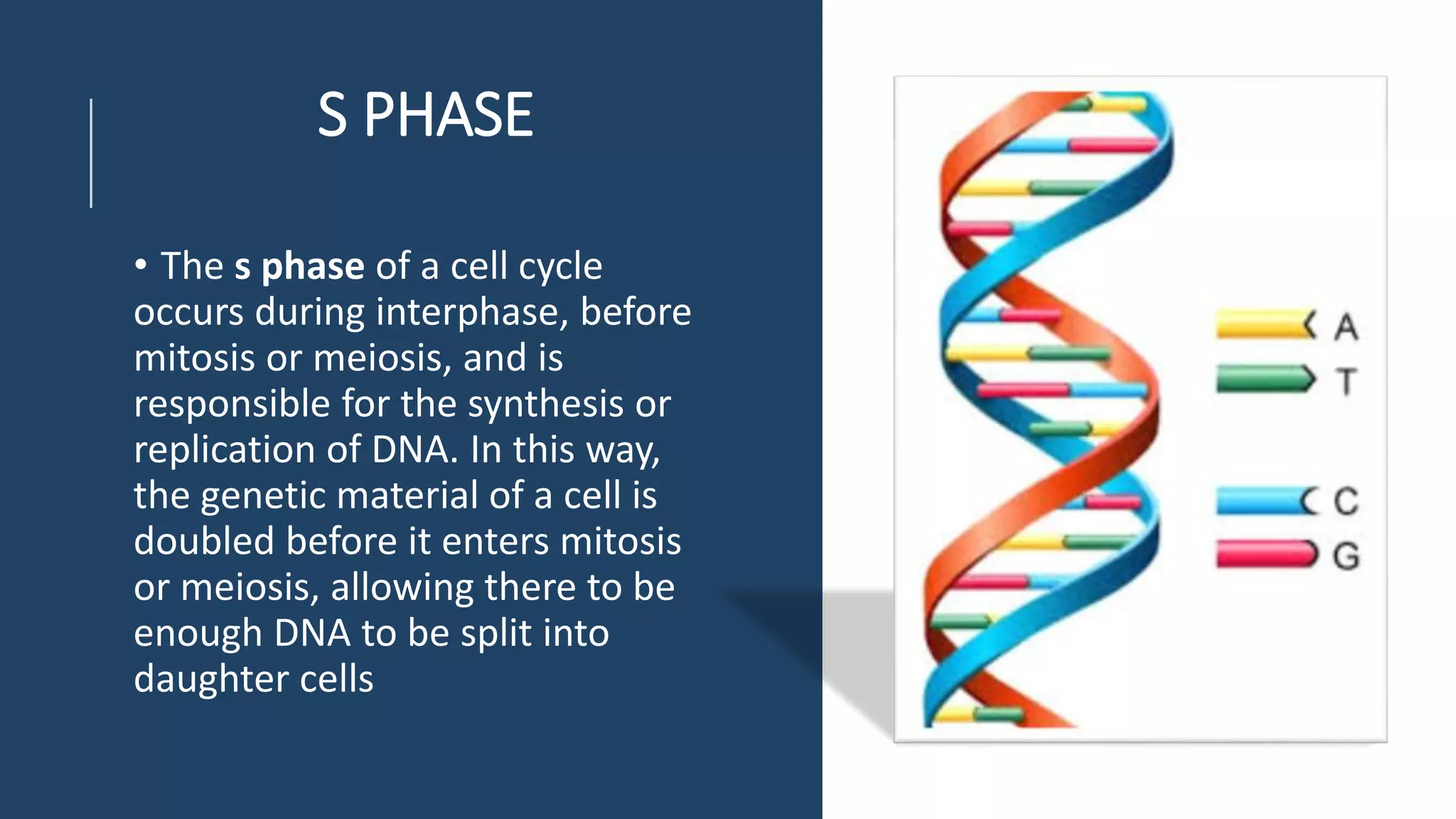
S PHASE
• The s phase of a cell cycle
occurs during interphase, before
mitosis or meiosis, and is
responsible for the synthesis or
replication of DNA. In this way,
the genetic material of a cell is
doubled before it enters mitosis
or meiosis, allowing there to be
enough DNA to be split into
daughter cells
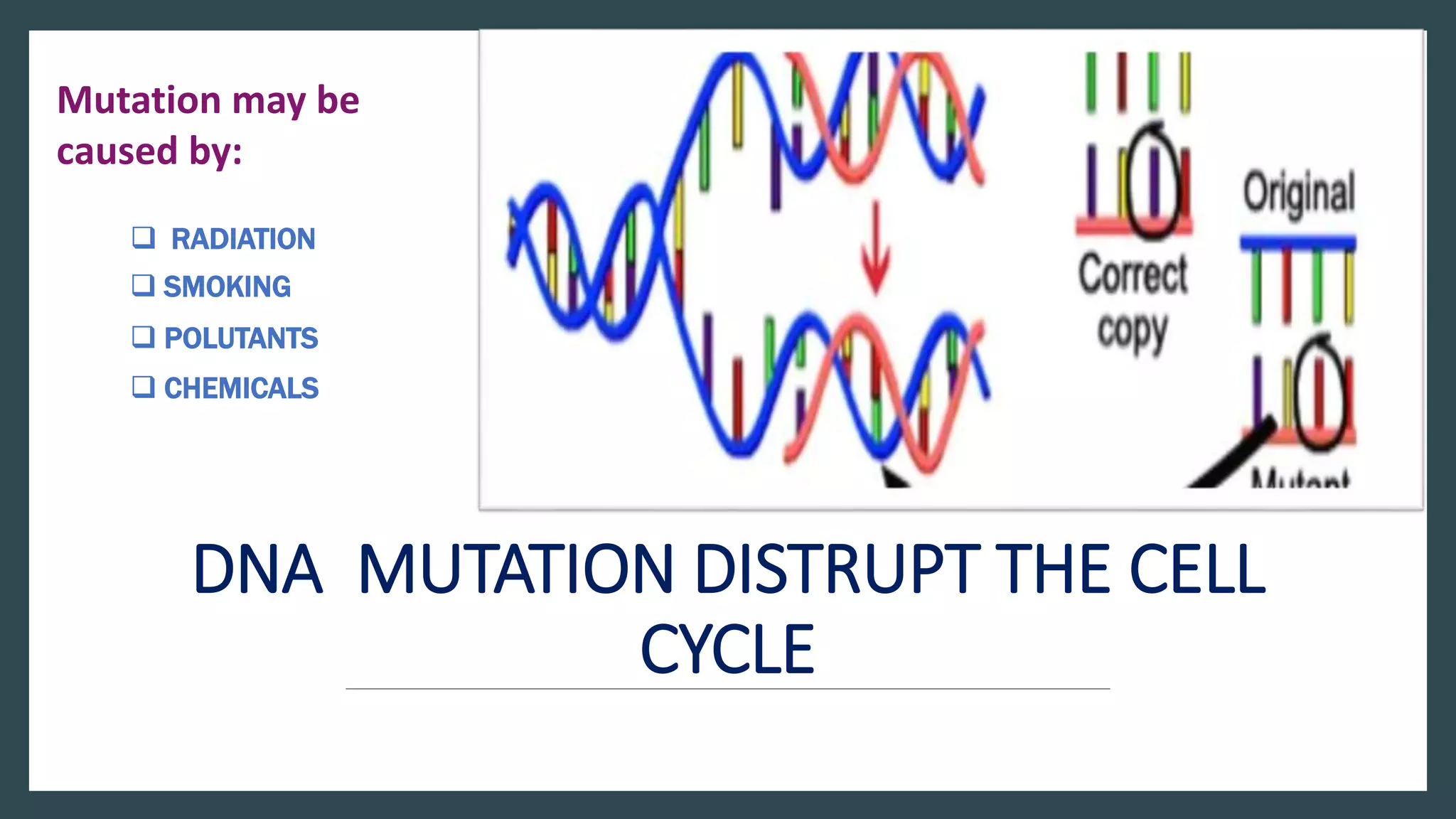
DNA MUTATION DISTRUPT THE CELL
CYCLE
Mutation may be
caused by:
 RADIATION
 CHEMICALS
 POLUTANTS
 SMOKING
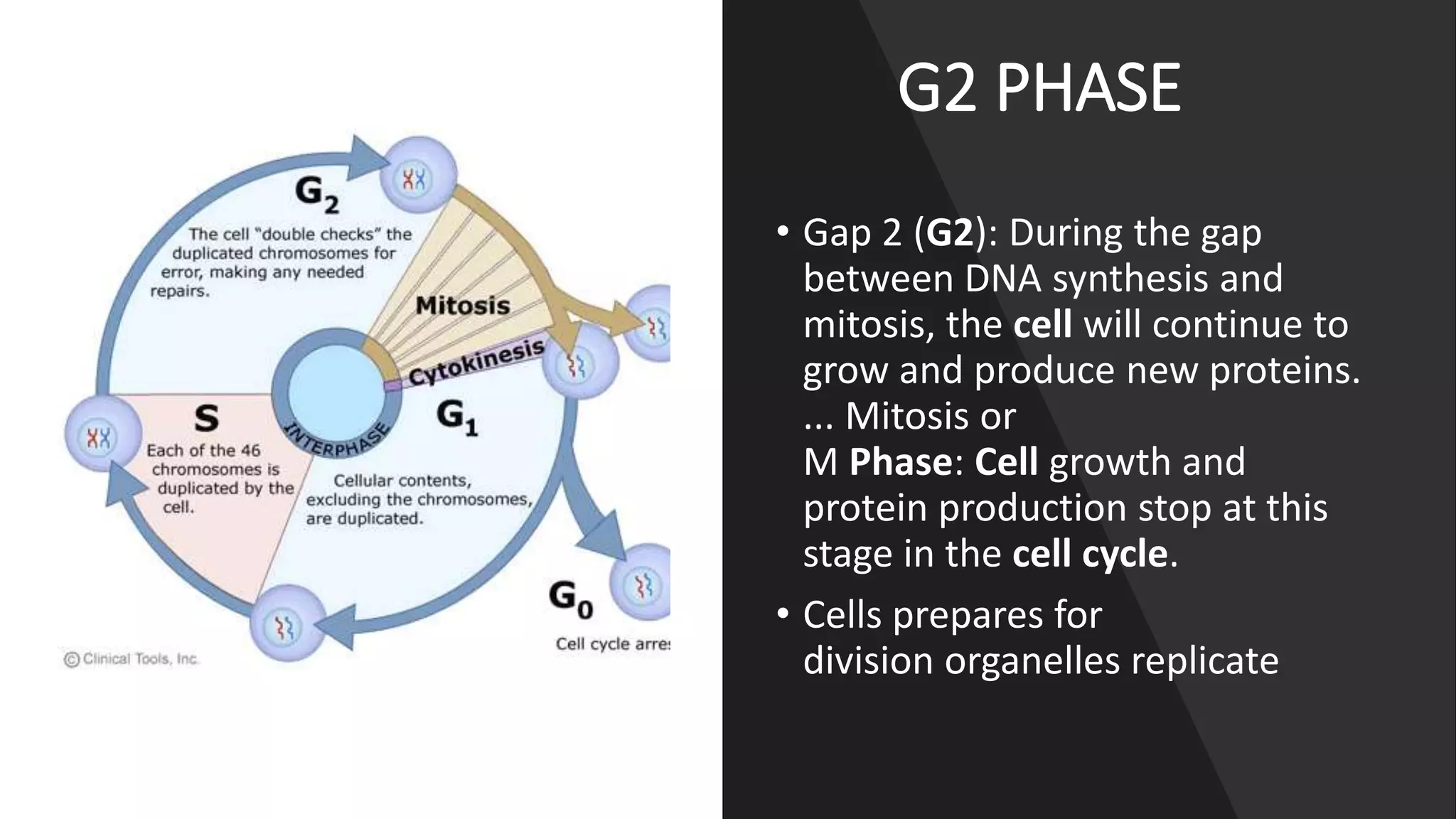
G2 PHASE
• Gap 2 (G2): During the gap
between DNA synthesis and
mitosis, the cell will continue to
grow and produce new proteins.
... Mitosis or
M Phase: Cell growth and
protein production stop at this
stage in the cell cycle.
• Cells prepares for
division organelles replicate
MITOSIS : NEUCLER DIVISION
METAPHASE
ANAPHASE
TELOPHASE
cytokinesis
Thank You

Cell cycle presentation (1)

  • 1.
  • 2.
    What is cellcycle? • The cell cycle, or cell-division cycle, is the series of events that take place in a cell that cause it to divide into two daughter cells. These events include the duplication of its DNA (DNA replication) and some of its organelles, and subsequently the partitioning of its cytoplasm and other components into two daughter cells in a process called cell division.
  • 3.
    PHASES OF THECELL CYCLE M PHASEINTERPHASE G1 phase S phase G2 phase Mitosis Cytokinesis
  • 4.
    PHASES OF MITOSIS Mitosis  PROPHASE METAPHASE  TELOPHASE  ANAPHASE CYTOKINESIS
  • 6.
  • 7.
  • 8.
    Chromosomes Chromosome are storedin the nucleus. Every cells that contains a nucleus will have chromosomes
  • 9.
    G1 PHASE  Periodof rapid growth.  New proteins and organelles are produced. • Chromosomes are unwound (chromatin)  preparing for DNA synthesis (s phase)
  • 10.
    G ZERO G0 Cell leaves cell cycle  Can be temporary or permanent  But not necessarily dead  B eg: neurons
  • 11.
    S PHASE • Thes phase of a cell cycle occurs during interphase, before mitosis or meiosis, and is responsible for the synthesis or replication of DNA. In this way, the genetic material of a cell is doubled before it enters mitosis or meiosis, allowing there to be enough DNA to be split into daughter cells
  • 12.
    DNA MUTATION DISTRUPTTHE CELL CYCLE Mutation may be caused by:  RADIATION  CHEMICALS  POLUTANTS  SMOKING
  • 13.
    G2 PHASE • Gap2 (G2): During the gap between DNA synthesis and mitosis, the cell will continue to grow and produce new proteins. ... Mitosis or M Phase: Cell growth and protein production stop at this stage in the cell cycle. • Cells prepares for division organelles replicate
  • 14.
  • 15.
  • 16.
  • 17.
  • 18.
  • 19.