CELLADHESION MOLECULES AND
MATRIX PROTEINS
BY
SHIHANA.S
FIRST YEAR M.PHARM
DEPARTMENT OF PHARMACOLOGY
1
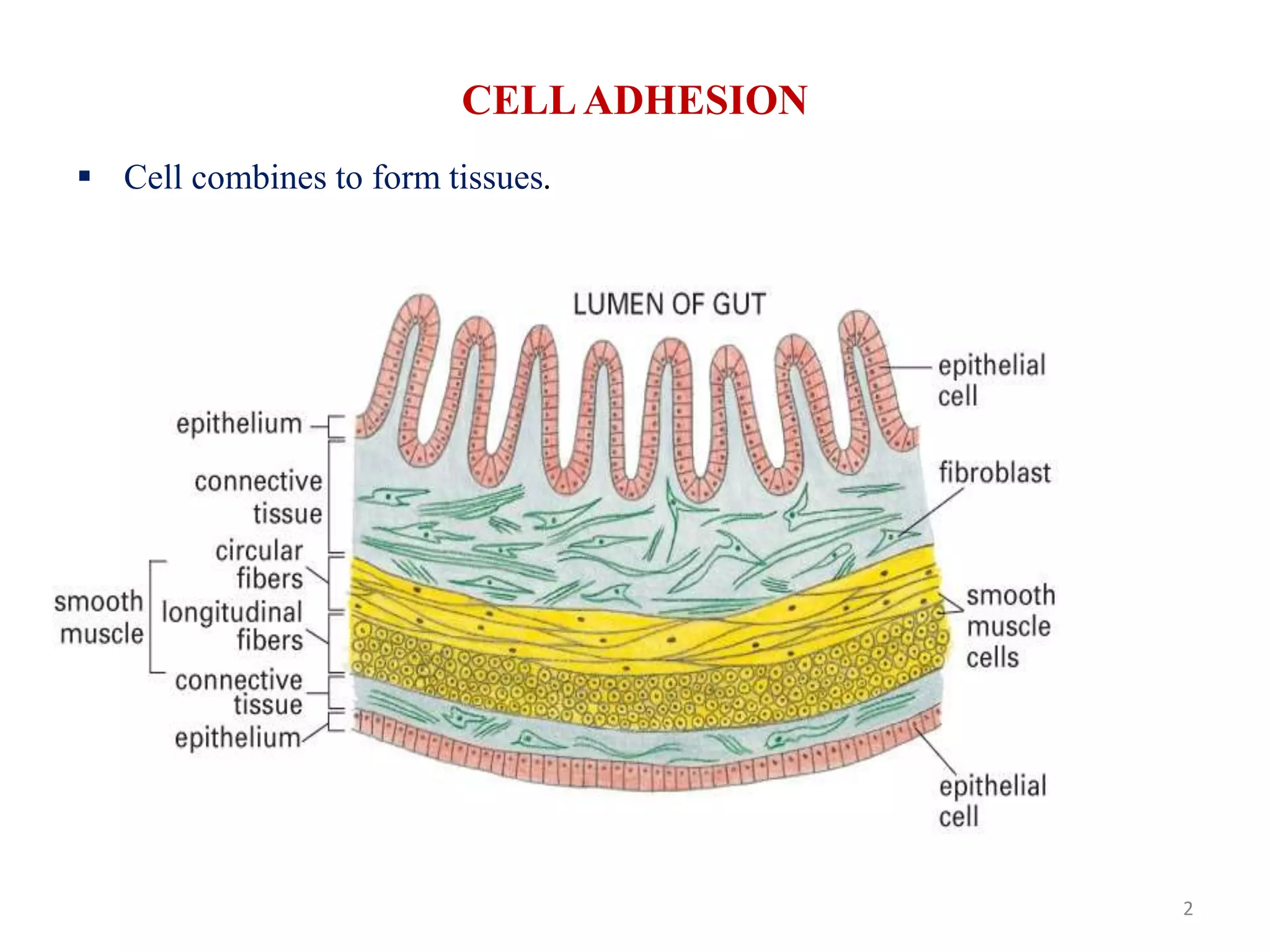
CELLADHESION
 Cell combines to form tissues.
2
TYPES OF CELLADHESION
• CELL-CELLADHESION • CELL-MATRIX ADHESION
3
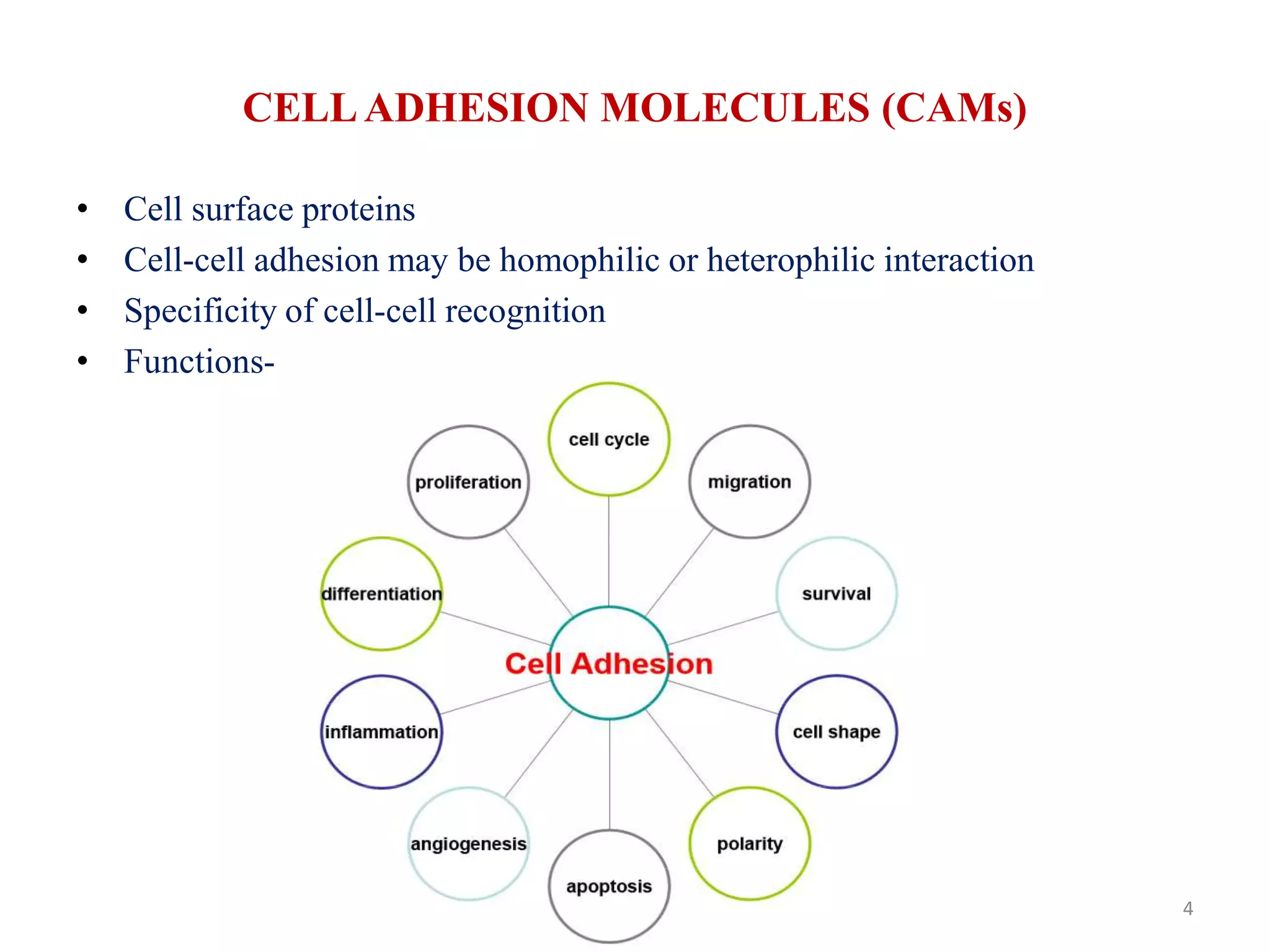
CELLADHESION MOLECULES (CAMs)
• Cell surface proteins
• Cell-cell adhesion may be homophilic or heterophilic interaction
• Specificity of cell-cell recognition
• Functions-
4
BIOLOGY OF CAMs
• An intracellular domain
• A transmembrane domain
• An extracellular domain
STRUCTURE OF CAMs
5
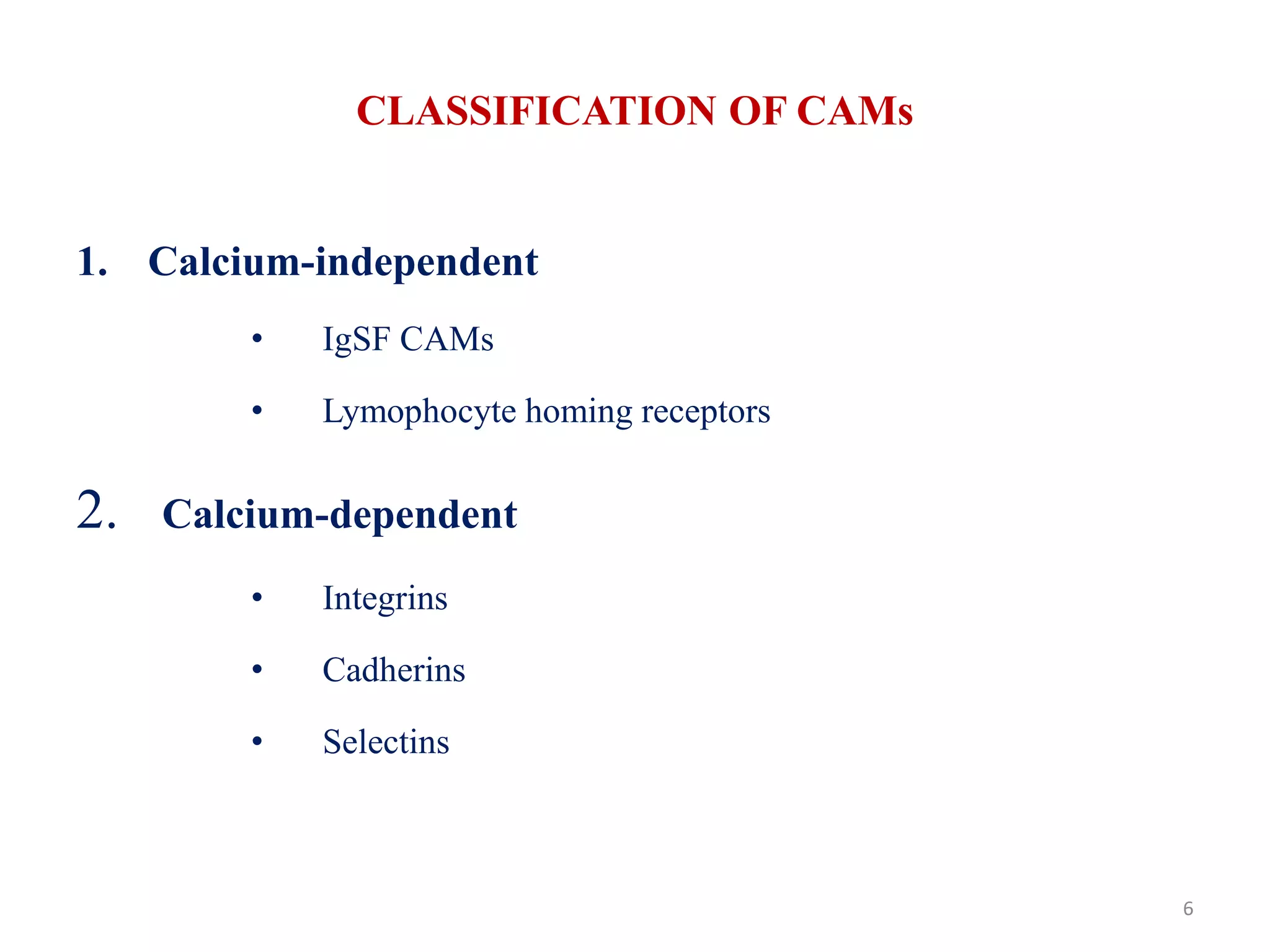
CLASSIFICATION OF CAMs
1. Calcium-independent
• IgSF CAMs
• Lymophocyte homing receptors
2. Calcium-dependent
• Integrins
• Cadherins
• Selectins
6
CALCIUM-INDEPENDENT CAMs
1. IgSF CAMs
• Homophilic or heterophilic-70-110 amino acids.
• Large group of cell surface molecules-VCAM, NCAM, ICAM,
Nectins and Necl.
2. Lymphocyte homing receptors
• Addressins
7
CALCIUM-DEPENDENT CAMs
• Integrins
o Heterodimeric proteins
o Structure
o Physiological role
8
• Cadherins
o Homophilic interaction-150 aminoacids.
o E,N,P
o ECD
9
• Selectins
o Heterophilic, bind with mucins
o E,L,P
o PSGL-1
1010
ROLE OF CELLADHESION MOLECULES IN VARIOUS
DISEASES
• Inflammation
• Ischemic stroke
• Leukocyte adhesion deficiency
• Alzheimer’s disease
• Coronary artery disease
• Cancer-metastasis,prostate cancer
11
MATRIX PROTEINS
12
• Cell shapes, migration, proliferation, cell survival and metabolism.
• Consists of protein-carbohydrate complexes.
• Biology
CLASSIFICATION
1. Proteoglycans
2. Glycoproteins
• Structural proteins- Collagen and Elastin
• Adhesive proteins- Fibronectin and laminin
13
1. Proteoglycans
• Core proteins-covalently attached to long non-branched chains of GAGs.
• Hyaluronic acids, chondroitin sulfates, dermatan sulfates, heparin sulfate.
• Polysaccharide content 95%.
2. Glycoproteins
• Short branched oligosaccharides.
• Carbohydrate content less than 10%.
• Different types of glycoproteins.
14
STRUCTURAL GLYCOPROTEINS
15
 Collagen
• 25% of total content, 29 types.
• Stiff triple helix-3 peptide chains.
• Monosaccharides and disaccharides.
• Fibrillar collgens.
Elastin
16
• Does not form stiff triple helix.
• Consists of flexible polypeptides.
• Microfibrils 10-20nm in diameter-fibrillins.
ADHESIVE GLYCOPROTEINS
17
 Fibronectins
o Bind with other matrix proteins(strongest binding with collagen-III).
o Guide cellular movement.
o 20 types
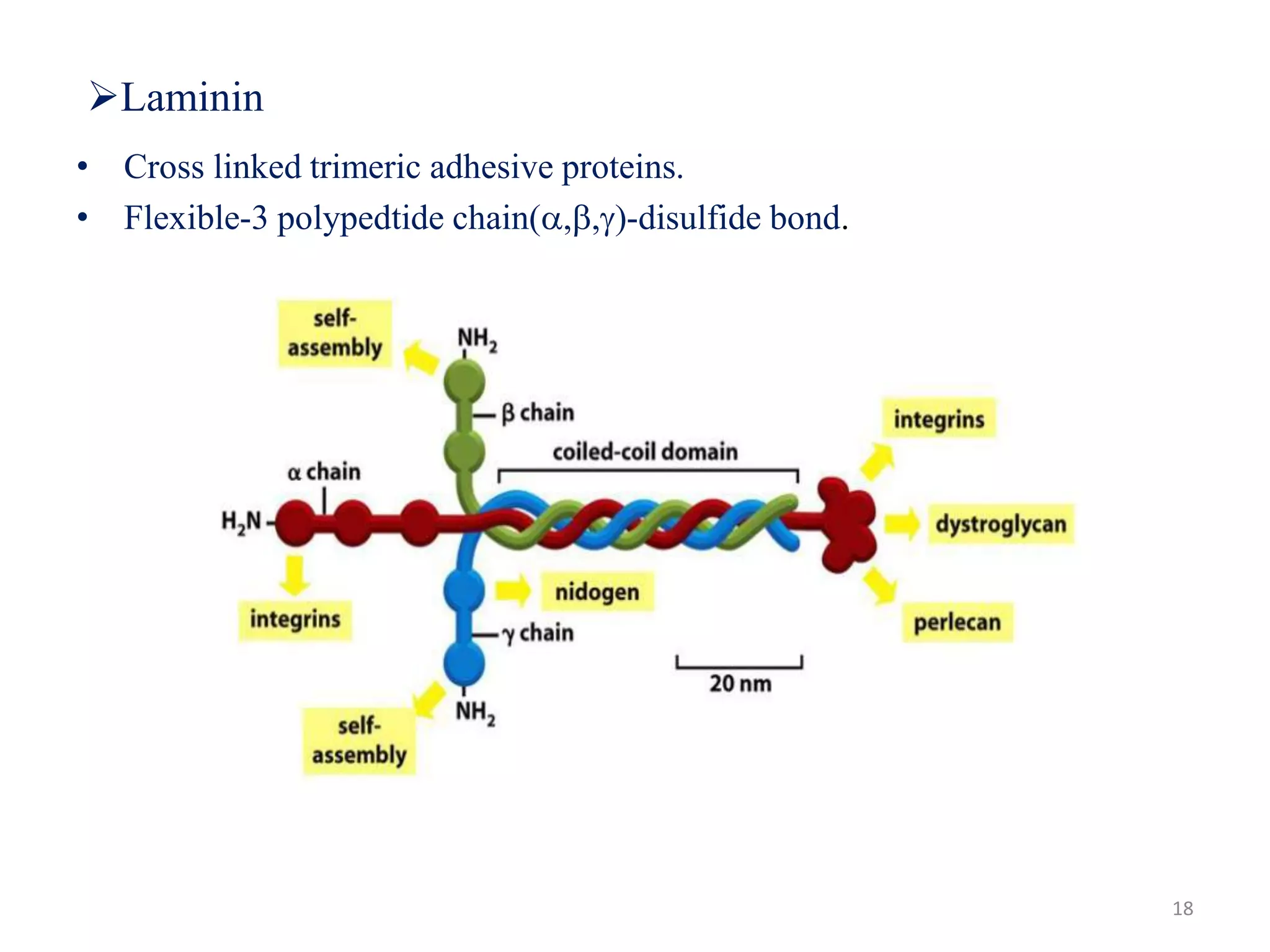
Laminin
18
• Cross linked trimeric adhesive proteins.
• Flexible-3 polypedtide chain(,,)-disulfide bond.
ROLE OF MATRIX PROTEINS IN VARIOUS DISEASES
1. Endocrine diseases
• Chronic pancreatitis- pancreatic fibrosis, chronic inflammatory
disease.
• Renal hypertrophy
2. Collagenosis
3. Cancer
4. COPD
5. Infectious diseases
19
REFERENCE
1. Harsh Mohan. Text book of Pathology. 5th edition: 31,137-138.
2. Robbins and Cortan. Pathologic Basis of Disease. 9th edition:72-77.
3. Cyrus C, Jones EY. The Molecular Structure of Cell Adhesion Molecules.
Annual Review of Biochemistry. 1997; 66: 823–62.
4. Alexandros D, Athanasios GP, Michael C, Eleni E, Meletios AD. The Role
of Cell Adhesion Molecules (integrins / cadherins) in Prostate Cancer.
International Brazilian Society of Urology. 2011; 37(3): 302-306.
5. Zerrin S University of Anatolia, Department of Pharmacology. Cellular
Adhesion and Adhesion Molecules. Turkish Journal of Biology. 2001; 25: 1-
15.
6. https://en.wikipedia.org/wiki/Cell_adhesion_molecule.
20
THANK YOU
21

CELL ADHESION MOLECULES AND MATRIX PROTEINS

  • 1.
    CELLADHESION MOLECULES AND MATRIXPROTEINS BY SHIHANA.S FIRST YEAR M.PHARM DEPARTMENT OF PHARMACOLOGY 1
  • 2.
  • 3.
    TYPES OF CELLADHESION •CELL-CELLADHESION • CELL-MATRIX ADHESION 3
  • 4.
    CELLADHESION MOLECULES (CAMs) •Cell surface proteins • Cell-cell adhesion may be homophilic or heterophilic interaction • Specificity of cell-cell recognition • Functions- 4
  • 5.
    BIOLOGY OF CAMs •An intracellular domain • A transmembrane domain • An extracellular domain STRUCTURE OF CAMs 5
  • 6.
    CLASSIFICATION OF CAMs 1.Calcium-independent • IgSF CAMs • Lymophocyte homing receptors 2. Calcium-dependent • Integrins • Cadherins • Selectins 6
  • 7.
    CALCIUM-INDEPENDENT CAMs 1. IgSFCAMs • Homophilic or heterophilic-70-110 amino acids. • Large group of cell surface molecules-VCAM, NCAM, ICAM, Nectins and Necl. 2. Lymphocyte homing receptors • Addressins 7
  • 8.
    CALCIUM-DEPENDENT CAMs • Integrins oHeterodimeric proteins o Structure o Physiological role 8
  • 9.
    • Cadherins o Homophilicinteraction-150 aminoacids. o E,N,P o ECD 9
  • 10.
    • Selectins o Heterophilic,bind with mucins o E,L,P o PSGL-1 1010
  • 11.
    ROLE OF CELLADHESIONMOLECULES IN VARIOUS DISEASES • Inflammation • Ischemic stroke • Leukocyte adhesion deficiency • Alzheimer’s disease • Coronary artery disease • Cancer-metastasis,prostate cancer 11
  • 12.
    MATRIX PROTEINS 12 • Cellshapes, migration, proliferation, cell survival and metabolism. • Consists of protein-carbohydrate complexes. • Biology
  • 13.
    CLASSIFICATION 1. Proteoglycans 2. Glycoproteins •Structural proteins- Collagen and Elastin • Adhesive proteins- Fibronectin and laminin 13
  • 14.
    1. Proteoglycans • Coreproteins-covalently attached to long non-branched chains of GAGs. • Hyaluronic acids, chondroitin sulfates, dermatan sulfates, heparin sulfate. • Polysaccharide content 95%. 2. Glycoproteins • Short branched oligosaccharides. • Carbohydrate content less than 10%. • Different types of glycoproteins. 14
  • 15.
    STRUCTURAL GLYCOPROTEINS 15  Collagen •25% of total content, 29 types. • Stiff triple helix-3 peptide chains. • Monosaccharides and disaccharides. • Fibrillar collgens.
  • 16.
    Elastin 16 • Does notform stiff triple helix. • Consists of flexible polypeptides. • Microfibrils 10-20nm in diameter-fibrillins.
  • 17.
    ADHESIVE GLYCOPROTEINS 17  Fibronectins oBind with other matrix proteins(strongest binding with collagen-III). o Guide cellular movement. o 20 types
  • 18.
    Laminin 18 • Cross linkedtrimeric adhesive proteins. • Flexible-3 polypedtide chain(,,)-disulfide bond.
  • 19.
    ROLE OF MATRIXPROTEINS IN VARIOUS DISEASES 1. Endocrine diseases • Chronic pancreatitis- pancreatic fibrosis, chronic inflammatory disease. • Renal hypertrophy 2. Collagenosis 3. Cancer 4. COPD 5. Infectious diseases 19
  • 20.
    REFERENCE 1. Harsh Mohan.Text book of Pathology. 5th edition: 31,137-138. 2. Robbins and Cortan. Pathologic Basis of Disease. 9th edition:72-77. 3. Cyrus C, Jones EY. The Molecular Structure of Cell Adhesion Molecules. Annual Review of Biochemistry. 1997; 66: 823–62. 4. Alexandros D, Athanasios GP, Michael C, Eleni E, Meletios AD. The Role of Cell Adhesion Molecules (integrins / cadherins) in Prostate Cancer. International Brazilian Society of Urology. 2011; 37(3): 302-306. 5. Zerrin S University of Anatolia, Department of Pharmacology. Cellular Adhesion and Adhesion Molecules. Turkish Journal of Biology. 2001; 25: 1- 15. 6. https://en.wikipedia.org/wiki/Cell_adhesion_molecule. 20
  • 21.