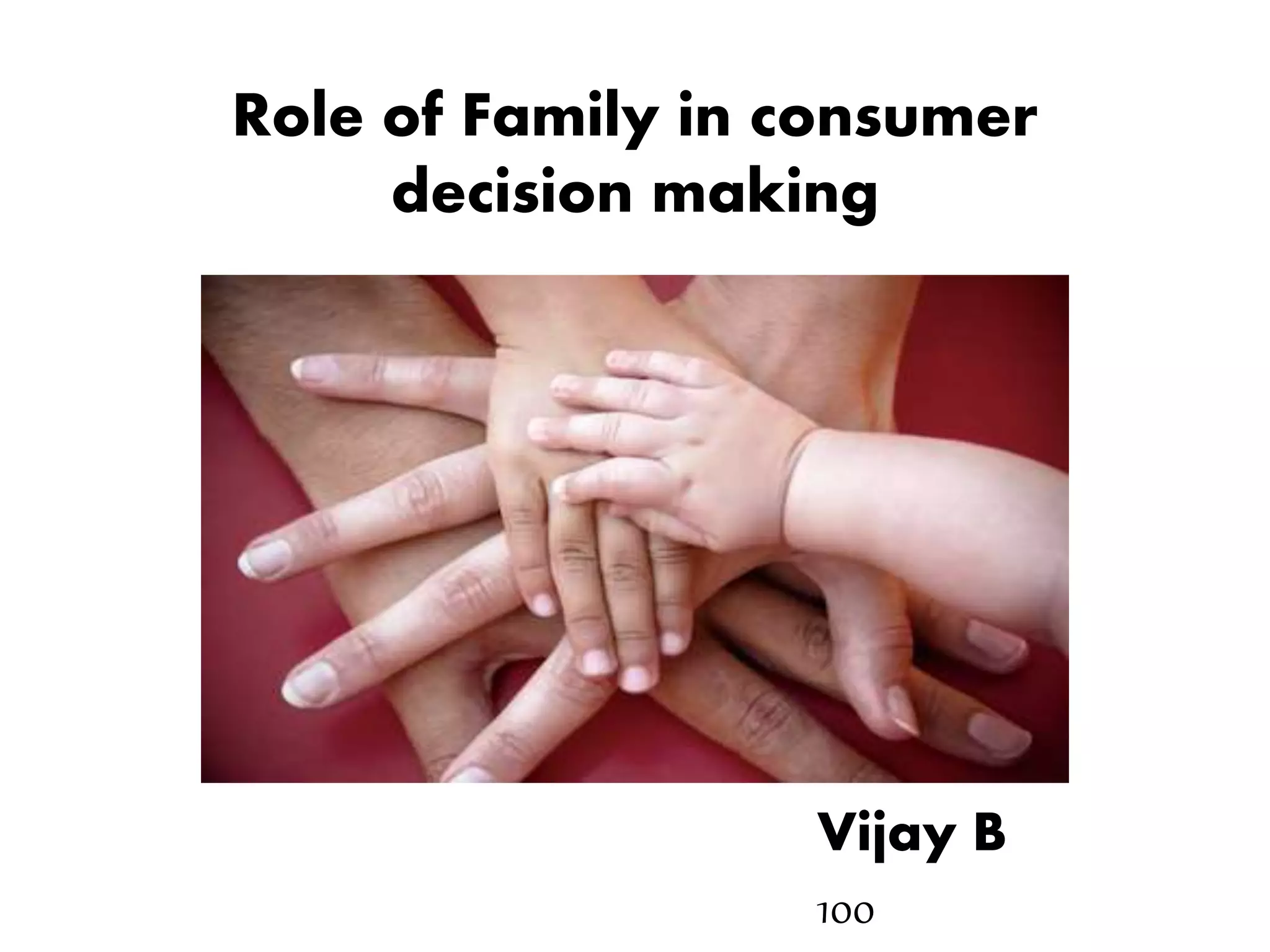
Role of Family in consumer
decision making
Vijay B
100
Why is it Important ?
 Influential in consumption decisions
 Influential in purchase decisions
 Make several joint purchase decisions
 Prime target market for goods and services
 It helps to devise our marketing strategies
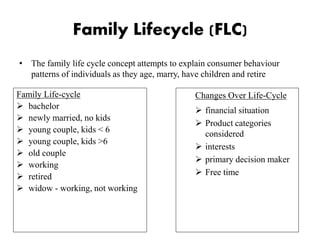
Family Lifecycle (FLC)
• The family life cycle concept attempts to explain consumer behaviour
patterns of individuals as they age, marry, have children and retire
Changes Over Life-Cycle
 financial situation
 Product categories
considered
 interests
 primary decision maker
 Free time
Family Life-cycle
 bachelor
 newly married, no kids
 young couple, kids < 6
 young couple, kids >6
 old couple
 working
 retired
 widow - working, not working
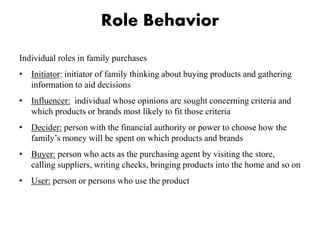
Role Behavior
Individual roles in family purchases
• Initiator: initiator of family thinking about buying products and gathering
information to aid decisions
• Influencer: individual whose opinions are sought concerning criteria and
which products or brands most likely to fit those criteria
• Decider: person with the financial authority or power to choose how the
family’s money will be spent on which products and brands
• Buyer: person who acts as the purchasing agent by visiting the store,
calling suppliers, writing checks, bringing products into the home and so on
• User: person or persons who use the product
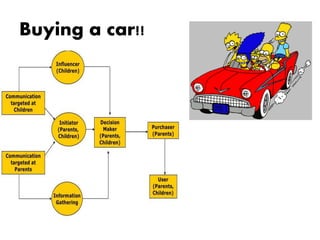
Buying a car!!
Identifying different purchaser-
consumer relationships
• Who’s buying for whom?
• Who are the principal characters?
• What’s the plot for the purchase?
• What can we assume?
Changing Roles of Women
Marketing to Women
• Appealing to the “mother” category
• Different segments exist and they look at advertising, the
Internet, products, time, and brands differently
• Depending on career orientation, responsibilities in and out of
the home, time pressures, messages, and ads need to be
adapted
• Retailers can appeal to women with special services or
extended hours
Example!!
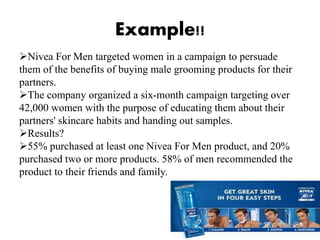
Nivea For Men targeted women in a campaign to persuade
them of the benefits of buying male grooming products for their
partners.
The company organized a six-month campaign targeting over
42,000 women with the purpose of educating them about their
partners' skincare habits and handing out samples.
Results?
55% purchased at least one Nivea For Men product, and 20%
purchased two or more products. 58% of men recommended the
product to their friends and family.
Changing Masculine Roles
• Roles of men in families are changing substantially as well
• Men are more involved in family functions and household
activities
• Men may buy items traditionally purchased by women
(groceries)
• Many men are achieving gender role transcendence and use
products previously seen as “feminine”
Children and Household Consumer
Behavior
Children and Household
Consumer Behavior
• Children change dramatically how the family functions, in terms of
relationships, employment, and purchases
• Children reduce parents’ participation in the labor force, change how
families spend their money and reduce the amount of time and
money available for leisure
• Children influence about $1.88 trillion of purchases globally each
year
• Children exert direct influence over parental spending when they
request specific products and brands
• They exert indirect influence when parents buy products and brands
that they know children prefer without being asked or told to make a
specific purchase
Advertising and children
• Children’s TV watching Behavior :
• Children ages 2-11 watch an average of
22 hours of TV per week and see 30,000 commercials per year
• 80% of all advertising targeted to children falls in four product
categories: Toys, cereal, candy & fast food restaurants
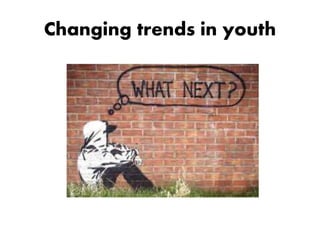
Changing trends in youth
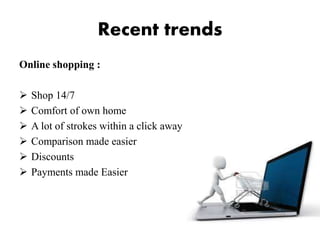
Recent trends
Online shopping :
 Shop 14/7
 Comfort of own home
 A lot of strokes within a click away
 Comparison made easier
 Discounts
 Payments made Easier
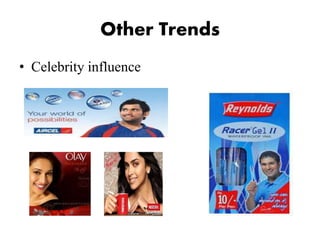
Other Trends
• Celebrity influence
Other Trends
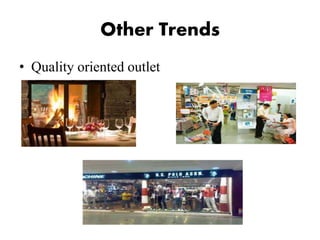
• Quality oriented outlet
Other Trends
• Eco friendly products
THANK YOU

Role of family in consumer decision making

  • 1.
    Role of Familyin consumer decision making Vijay B 100
  • 2.
    Why is itImportant ?  Influential in consumption decisions  Influential in purchase decisions  Make several joint purchase decisions  Prime target market for goods and services  It helps to devise our marketing strategies
  • 3.
    Family Lifecycle (FLC) •The family life cycle concept attempts to explain consumer behaviour patterns of individuals as they age, marry, have children and retire Changes Over Life-Cycle  financial situation  Product categories considered  interests  primary decision maker  Free time Family Life-cycle  bachelor  newly married, no kids  young couple, kids < 6  young couple, kids >6  old couple  working  retired  widow - working, not working
  • 4.
    Role Behavior Individual rolesin family purchases • Initiator: initiator of family thinking about buying products and gathering information to aid decisions • Influencer: individual whose opinions are sought concerning criteria and which products or brands most likely to fit those criteria • Decider: person with the financial authority or power to choose how the family’s money will be spent on which products and brands • Buyer: person who acts as the purchasing agent by visiting the store, calling suppliers, writing checks, bringing products into the home and so on • User: person or persons who use the product
  • 5.
  • 6.
    Identifying different purchaser- consumerrelationships • Who’s buying for whom? • Who are the principal characters? • What’s the plot for the purchase? • What can we assume?
  • 7.
    Changing Roles ofWomen Marketing to Women • Appealing to the “mother” category • Different segments exist and they look at advertising, the Internet, products, time, and brands differently • Depending on career orientation, responsibilities in and out of the home, time pressures, messages, and ads need to be adapted • Retailers can appeal to women with special services or extended hours
  • 8.
    Example!! Nivea For Mentargeted women in a campaign to persuade them of the benefits of buying male grooming products for their partners. The company organized a six-month campaign targeting over 42,000 women with the purpose of educating them about their partners' skincare habits and handing out samples. Results? 55% purchased at least one Nivea For Men product, and 20% purchased two or more products. 58% of men recommended the product to their friends and family.
  • 9.
    Changing Masculine Roles •Roles of men in families are changing substantially as well • Men are more involved in family functions and household activities • Men may buy items traditionally purchased by women (groceries) • Many men are achieving gender role transcendence and use products previously seen as “feminine”
  • 10.
    Children and HouseholdConsumer Behavior
  • 11.
    Children and Household ConsumerBehavior • Children change dramatically how the family functions, in terms of relationships, employment, and purchases • Children reduce parents’ participation in the labor force, change how families spend their money and reduce the amount of time and money available for leisure • Children influence about $1.88 trillion of purchases globally each year • Children exert direct influence over parental spending when they request specific products and brands • They exert indirect influence when parents buy products and brands that they know children prefer without being asked or told to make a specific purchase
  • 12.
    Advertising and children •Children’s TV watching Behavior : • Children ages 2-11 watch an average of 22 hours of TV per week and see 30,000 commercials per year • 80% of all advertising targeted to children falls in four product categories: Toys, cereal, candy & fast food restaurants
  • 13.
  • 14.
    Recent trends Online shopping:  Shop 14/7  Comfort of own home  A lot of strokes within a click away  Comparison made easier  Discounts  Payments made Easier
  • 15.
  • 16.
    Other Trends • Qualityoriented outlet
  • 17.
    Other Trends • Ecofriendly products
  • 18.