Case Studies/Problem-Based Learning Mini-presentation Physics 11 (Concept and System) Tonight’s topic of case studies and problem-based learning
FUSION
Energy Inside the Atom e=mc 2  (audio file) The Big Bang Theory Fusion and the creation of the elements How does this compare to Fission? (note: a neutron is electrically neutral)
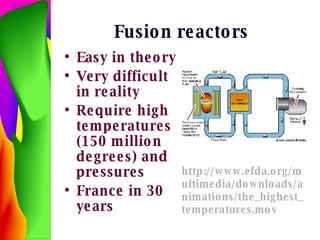
Fusion reactors Easy in theory Very difficult in reality Require high temperatures (150 million degrees) and pressures France in 30 years http://www.efda.org/multimedia/downloads/animations/the_highest_temperatures.mov
Case Method /  Project-Based Learning
A Personal Case Study
- a student-centred,  problem-based, interdisciplinary approach to learning - has been adopted by universities around the world. The McMaster Model
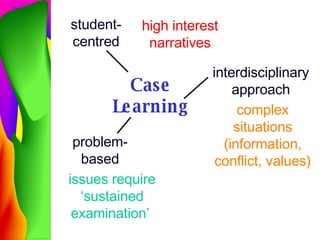
Case Learning student-centred problem-based high interest narratives interdisciplinary approach issues require ‘sustained examination’   complex situations (information, conflict, values)
A  case  is a story or narrative of a real life situation that sets up a problem or unresolved tension for the students to analyze and resolve.  Go to Case Study… C. Roland (Chris) Christensen
How to Create Cases Select the theme you want to teach. Ask yourself if there is a current story on this topic. Collect:  newspaper articles,  storybooks from the library, internet blogs,  online journal entries,  photos, anything to make the story more real. Create your story.
Project-Based Learning Watch Project Videos
Philosophy Behind  Case-Method/Project-Based Learning Students can see  science in context . Students learn better if there is an overarching theme that they can  observe, question and interact  with. Students are far more interested in  real learning environments  than ones that are abstract, artificial or contrived.   Students can  construct their own knowledge  more easily if it’s based on their life experience. Real projects present unstaged and unexpected situations that promote  critical thinking . Teachers cannot provide  experiences   without limits  the way projects do. Projects stimulate  multiple intelligences .
Websites Case Method http://www.educ.sfu.ca/case/cases/gen_sci.html http://ublib.buffalo.edu/libraries/projects/cases/teaching/novel.html George Lucas Educational Foundation Project Based Learning http://www.edutopia.org/php/keyword.php?id=037 Citizen Science http://dev.stewardshipcanada.ca/communities/citizenScience/home/csnIndex.asp?lang=en

Case Method Teaching

  • 1.
    Case Studies/Problem-Based LearningMini-presentation Physics 11 (Concept and System) Tonight’s topic of case studies and problem-based learning
  • 2.
  • 3.
    Energy Inside theAtom e=mc 2 (audio file) The Big Bang Theory Fusion and the creation of the elements How does this compare to Fission? (note: a neutron is electrically neutral)
  • 4.
    Fusion reactors Easyin theory Very difficult in reality Require high temperatures (150 million degrees) and pressures France in 30 years http://www.efda.org/multimedia/downloads/animations/the_highest_temperatures.mov
  • 5.
    Case Method / Project-Based Learning
  • 6.
  • 7.
    - a student-centred, problem-based, interdisciplinary approach to learning - has been adopted by universities around the world. The McMaster Model
  • 8.
    Case Learning student-centredproblem-based high interest narratives interdisciplinary approach issues require ‘sustained examination’ complex situations (information, conflict, values)
  • 9.
    A case is a story or narrative of a real life situation that sets up a problem or unresolved tension for the students to analyze and resolve. Go to Case Study… C. Roland (Chris) Christensen
  • 10.
    How to CreateCases Select the theme you want to teach. Ask yourself if there is a current story on this topic. Collect: newspaper articles, storybooks from the library, internet blogs, online journal entries, photos, anything to make the story more real. Create your story.
  • 11.
  • 12.
    Philosophy Behind Case-Method/Project-Based Learning Students can see science in context . Students learn better if there is an overarching theme that they can observe, question and interact with. Students are far more interested in real learning environments than ones that are abstract, artificial or contrived. Students can construct their own knowledge more easily if it’s based on their life experience. Real projects present unstaged and unexpected situations that promote critical thinking . Teachers cannot provide experiences without limits the way projects do. Projects stimulate multiple intelligences .
  • 13.
    Websites Case Methodhttp://www.educ.sfu.ca/case/cases/gen_sci.html http://ublib.buffalo.edu/libraries/projects/cases/teaching/novel.html George Lucas Educational Foundation Project Based Learning http://www.edutopia.org/php/keyword.php?id=037 Citizen Science http://dev.stewardshipcanada.ca/communities/citizenScience/home/csnIndex.asp?lang=en