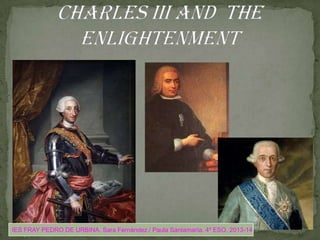
IES FRAY PEDRO DE URBINA. Sara Fernández / Paula Santamaría. 4º ESO, 2013-14
CHARLES III
ENLIGHTENMENT
FLORIDABLANACA
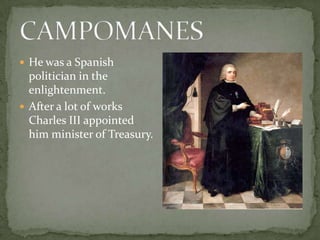
CAMPOMANES
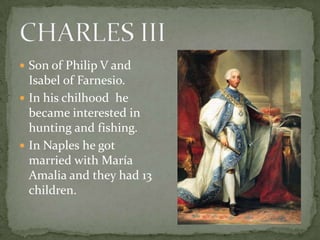
 Son of Philip V and
Isabel of Farnesio.
 In his chilhood he
became interested in
hunting and fishing.
 In Naples he got
married with María
Amalia and they had 13
children.
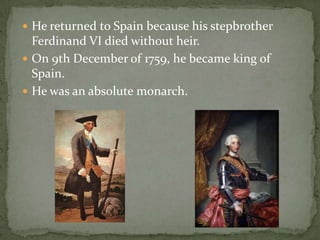
 He returned to Spain because his stepbrother
Ferdinand VI died without heir.
 On 9th December of 1759, he became king of
Spain.
 He was an absolute monarch.
 During his reign he was helped by politicians:
Wall, Grimaldi, Esquilache, Campomanes, Floridabl
anca o Aranda.
 He wasn't very learned but he was interested in
culture and he wanted to help the peasants.
 His son, Charles IV, will be king of Spain and he was
worried because his son wasn´t prepared.
 When his wife died he suffered a depression.
 After the death of his son Gabriel he died five years
later.
 It was a intellectual
movement in the 18th
century that wanted to
use reason, science and
education to reform
society.
 They criticized the
traditional structures so
they wanted to reform
the Ancien Régime.
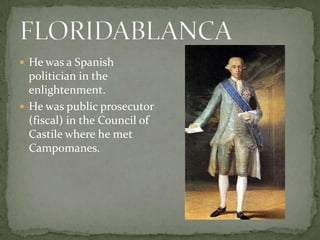
 He was a Spanish
politician in the
enlightenment.
 He was public prosecutor
(fiscal) in the Council of
Castile where he met
Campomanes.
 He was ambassador in Rome, so he had to solved the
problems between Charles III and the Papacy. The
king gave him the title of count of Floridablanca.
 WITH CHARLES III:
- He supported the American colonies in the War of
Independence against England.
- He recovered Menorca and Florida, but he didn´t
recover Gibraltar.
- After the death of Charles III and with the French
Revolution, he imposed new laws to protect the
country against the revolution.
 He was a Spanish
politician in the
enlightenment.
 After a lot of works
Charles III appointed
him minister of Treasury.
 He applied some measures to reform the Spanish
economy.
 He wanted to give the free lands of the Church to the
farmers.
 He released the taxes on trade and agriculture, so they
grew.
 With Olavide and Aranda (ministers) he organized the
repopulation of Sierra Morena.
 He was appointed president of the Royal Council of
Castile.
 In the Spanish Cortes he suggested a law that
prohibited women to reign.

Carlos iii and_the_enlightenment.2003

  • 1.
    IES FRAY PEDRODE URBINA. Sara Fernández / Paula Santamaría. 4º ESO, 2013-14
  • 2.
  • 3.
     Son ofPhilip V and Isabel of Farnesio.  In his chilhood he became interested in hunting and fishing.  In Naples he got married with María Amalia and they had 13 children.
  • 4.
     He returnedto Spain because his stepbrother Ferdinand VI died without heir.  On 9th December of 1759, he became king of Spain.  He was an absolute monarch.
  • 5.
     During hisreign he was helped by politicians: Wall, Grimaldi, Esquilache, Campomanes, Floridabl anca o Aranda.  He wasn't very learned but he was interested in culture and he wanted to help the peasants.  His son, Charles IV, will be king of Spain and he was worried because his son wasn´t prepared.  When his wife died he suffered a depression.  After the death of his son Gabriel he died five years later.
  • 6.
     It wasa intellectual movement in the 18th century that wanted to use reason, science and education to reform society.  They criticized the traditional structures so they wanted to reform the Ancien Régime.
  • 7.
     He wasa Spanish politician in the enlightenment.  He was public prosecutor (fiscal) in the Council of Castile where he met Campomanes.
  • 8.
     He wasambassador in Rome, so he had to solved the problems between Charles III and the Papacy. The king gave him the title of count of Floridablanca.  WITH CHARLES III: - He supported the American colonies in the War of Independence against England. - He recovered Menorca and Florida, but he didn´t recover Gibraltar. - After the death of Charles III and with the French Revolution, he imposed new laws to protect the country against the revolution.
  • 9.
     He wasa Spanish politician in the enlightenment.  After a lot of works Charles III appointed him minister of Treasury.
  • 10.
     He appliedsome measures to reform the Spanish economy.  He wanted to give the free lands of the Church to the farmers.  He released the taxes on trade and agriculture, so they grew.  With Olavide and Aranda (ministers) he organized the repopulation of Sierra Morena.  He was appointed president of the Royal Council of Castile.  In the Spanish Cortes he suggested a law that prohibited women to reign.