Cardiovascular system
Heart
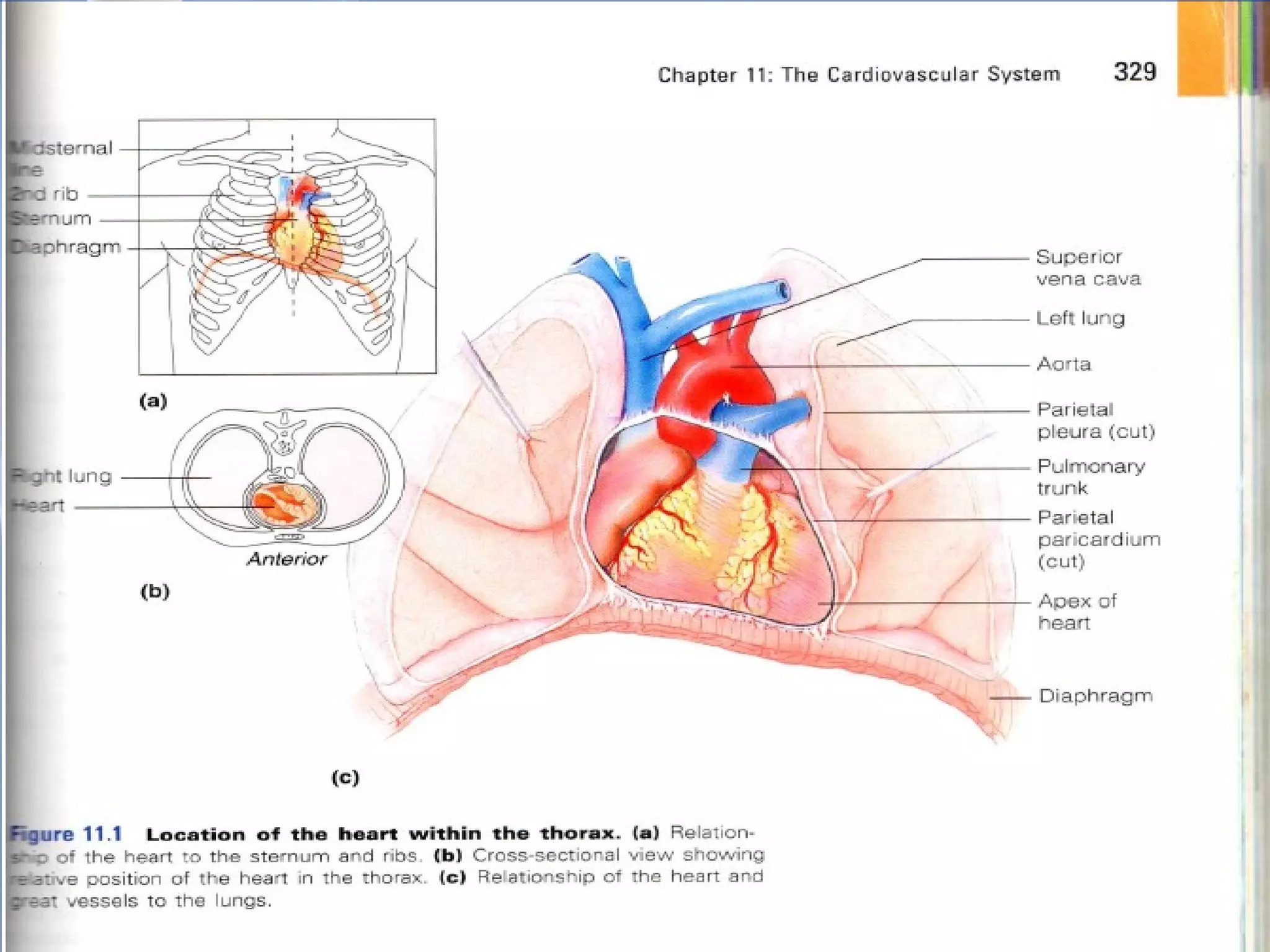
The size of persons fist
Less than 500 gm in weight.
Apex at the level of 5th
intercostals space
Base is where great vessels emerge, beneath 2nd
rib
Receive 5% of cardiac output.
Pericardium
Serous membrane, formed of two layers
Visceral layer: thin layer on external surface of
the heart, tightly hugs the heart.
Parietal thick layer, protect heart, anchor it to
surrounding structures like diaphragm,
reinforced superficially by dense connective
tissue
Lubricating serous fluid secreted by visceral
layer is present in pericardial membrane
The wall of the heart
Is formed by three layers
Outer layer epicardium (visceral pericardium)
Middle layer myocardium which is thick bundle of
cardiac muscle twisted into ring like arrangements
It is reinforced internally by dense fibrous connective
tissue called skeleton of the heart
Deep layer endocardium thin glistening sheet of
endothelium enclose the heart and continuous with
great vessels in and out
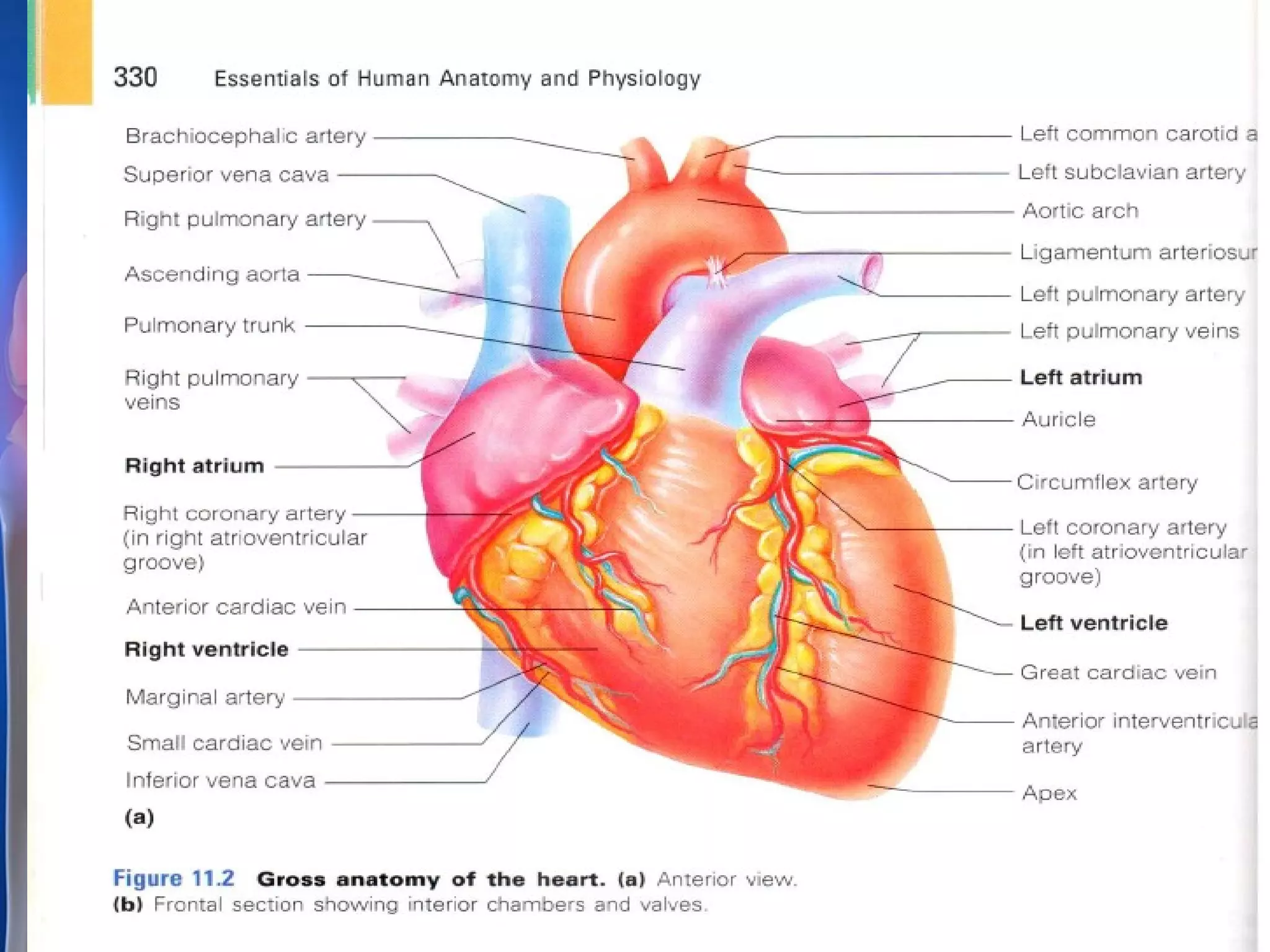
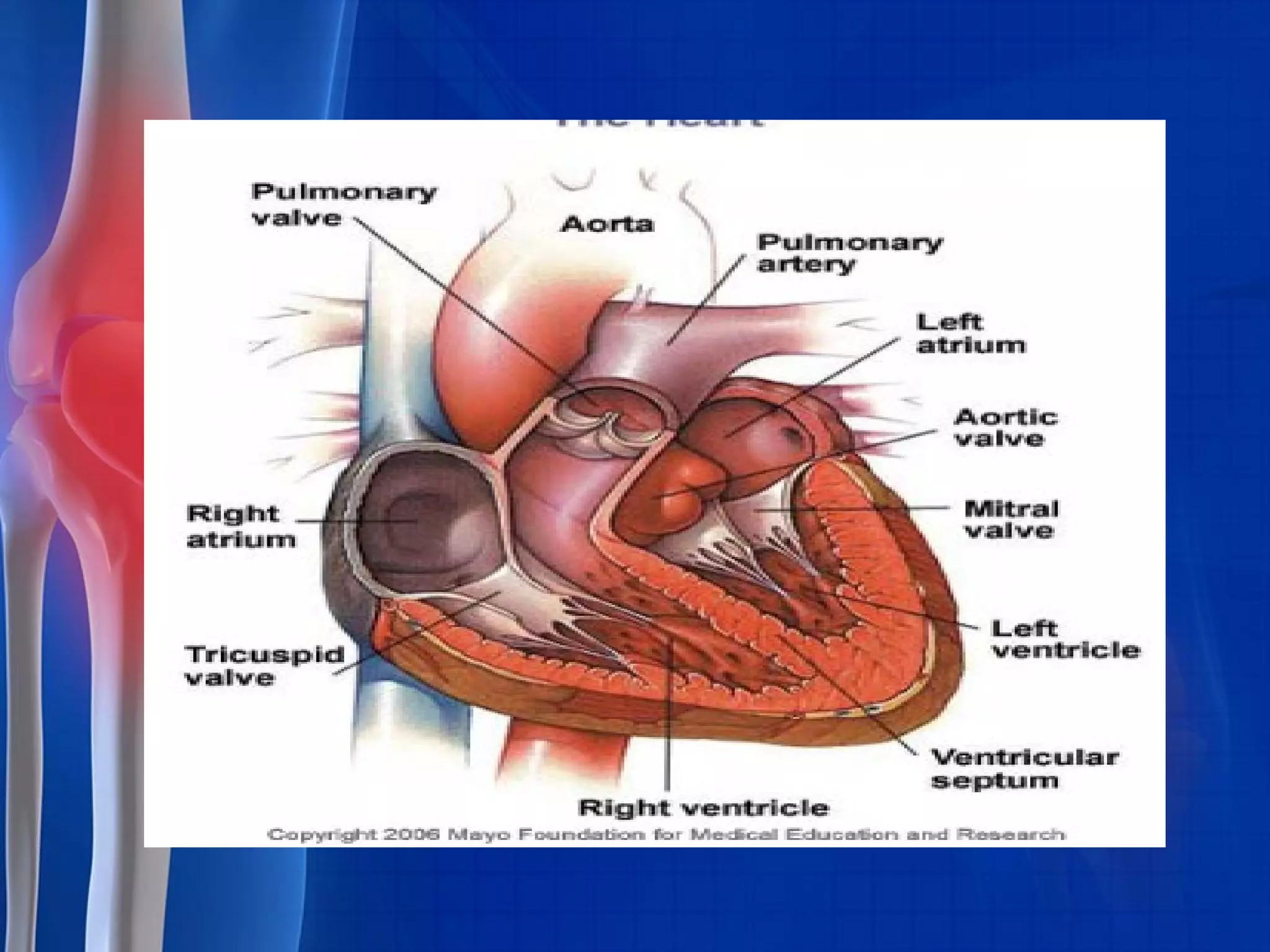
Chambers of the heart
Two atria, receiving chambers, thin
wall.
Two ventricles are discharging
chambers, thick wall
The left ventricle form the apex
The right ventricle form anterior
surface.
Septum divides heart to RT, lt
halves.
Interatrial, interventricular septum.
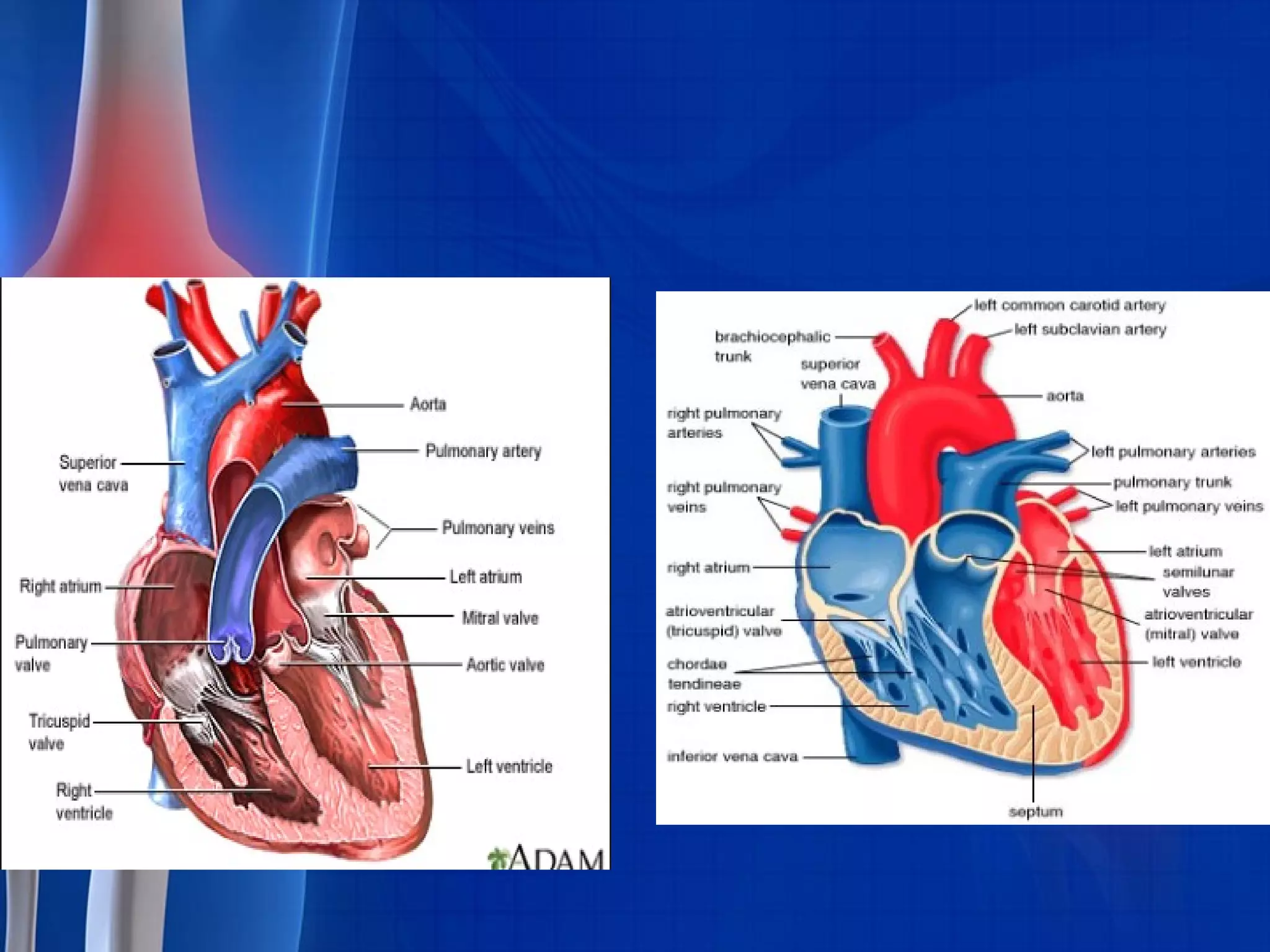
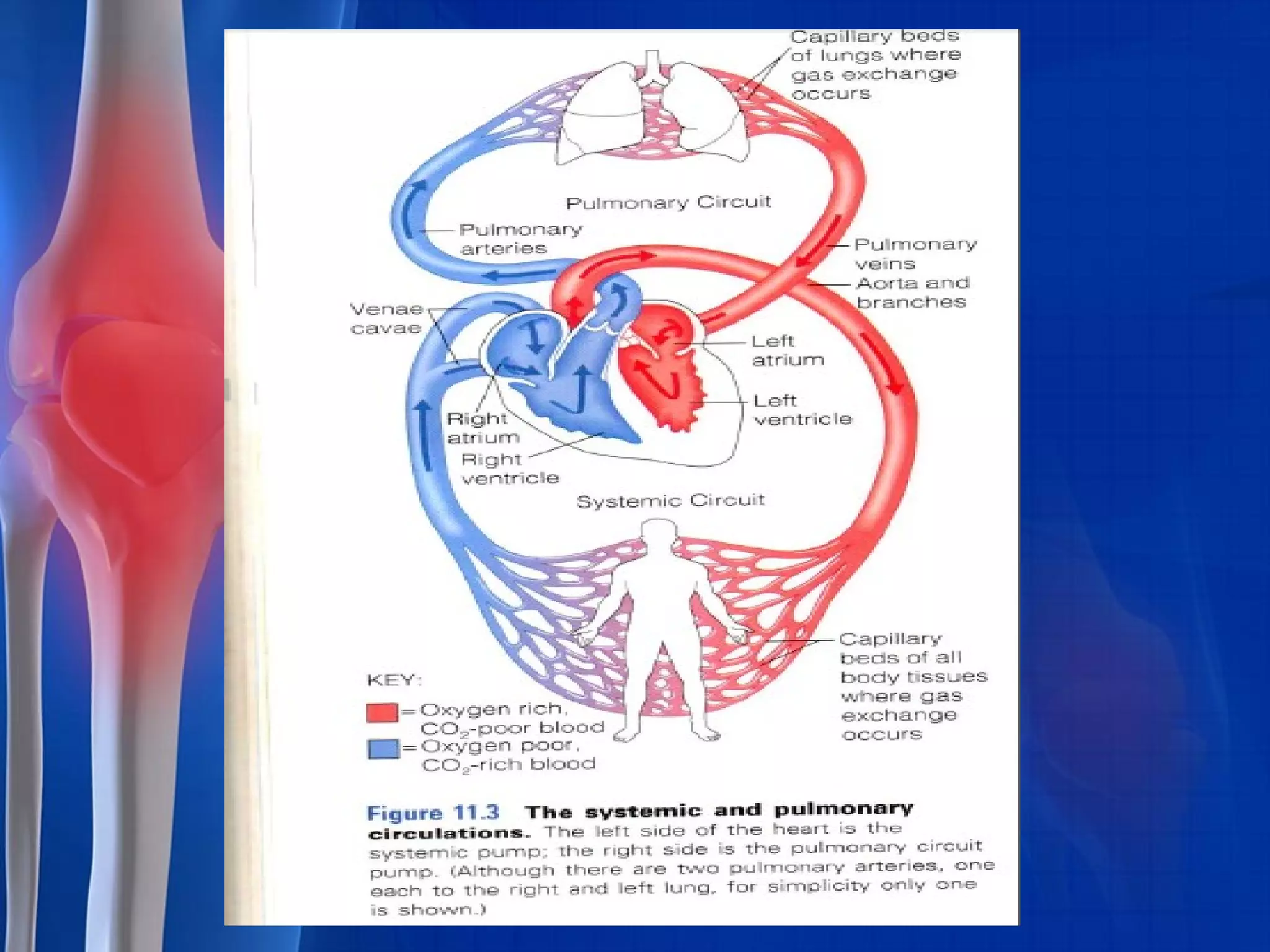
• Heart is double pump
• RT is the pulmonary circuit. It
receives oxygen poor blood by
superior and inferior vena cava,
and pumps it through pulmonary
trunk, which divides into RT, lt
pulmonary arteries.
• The four pulmonary veins return
blood to the heart.
Aorta: pump blood through systemic circulation to the
body.
Heart Body Heart
A left ventricle is thicker than right ventricles.
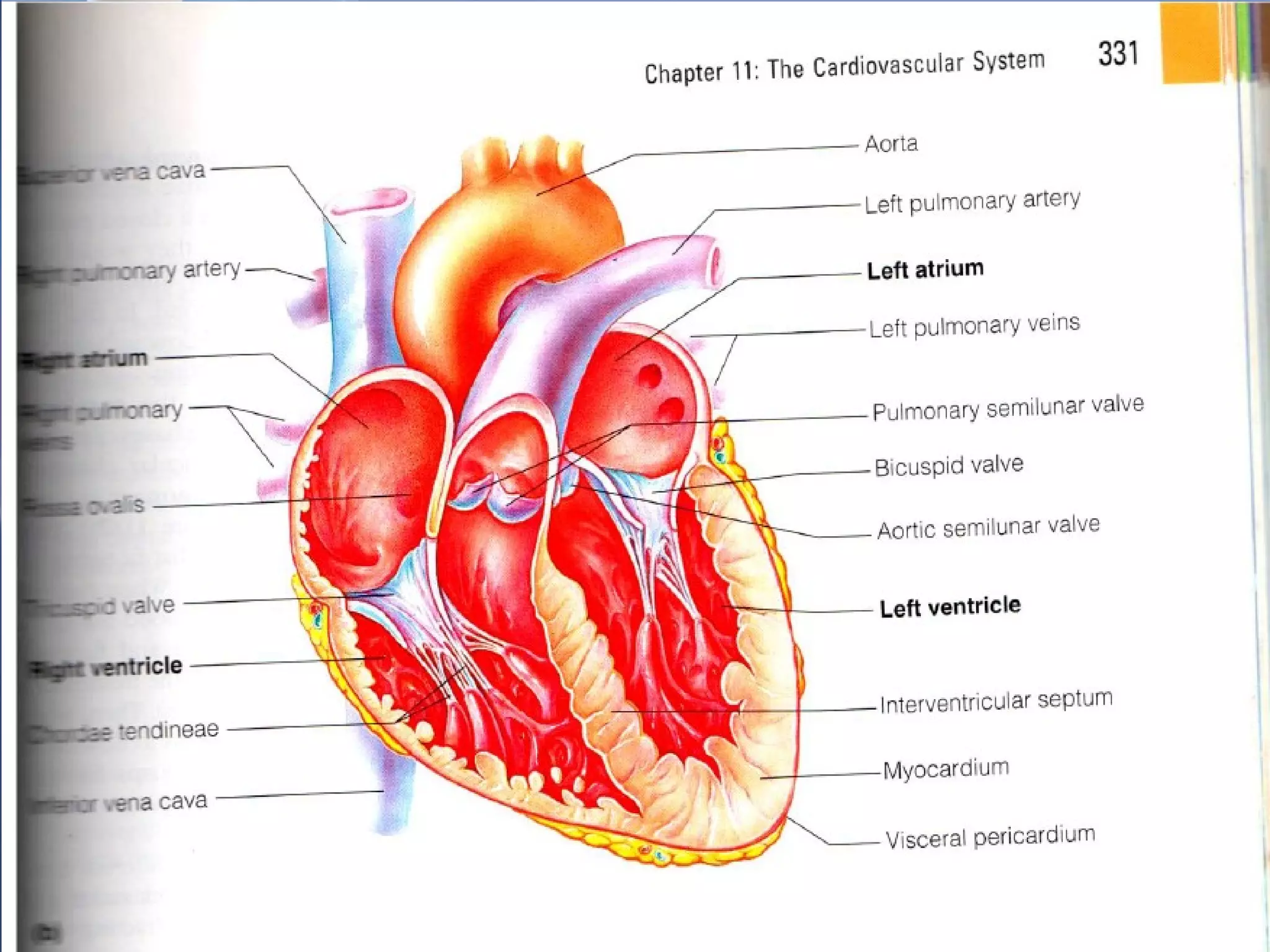
Atrioventricular valves
Tricuspid between RT atrium, and RT ventricle
Mitral between lt atrium and ventricle
They prevent back flow of blood to atria as they are one
way valve,mitral valve have two cusps (bicuspid)
Chordae tendineae (heart strings):Tiny white cords anchor
the valve to wall of ventricles
Semilunar valves: guard the arteries which leave the heart
They are tricuspid valves
Pulmonary valve: guard pulmonary
artery which leave RT ventricle
Aortic valve: guard the aortic artery
which leave lt ventricle
Blood supply to the heart
The right and left coronary arteries
They arise from ascending aorta
The right coronary give posterior
interventricular, and marginal
The left coronary give anterior
interventricular and circumflex
arteries
Angina pectoris
Myocardial infarction
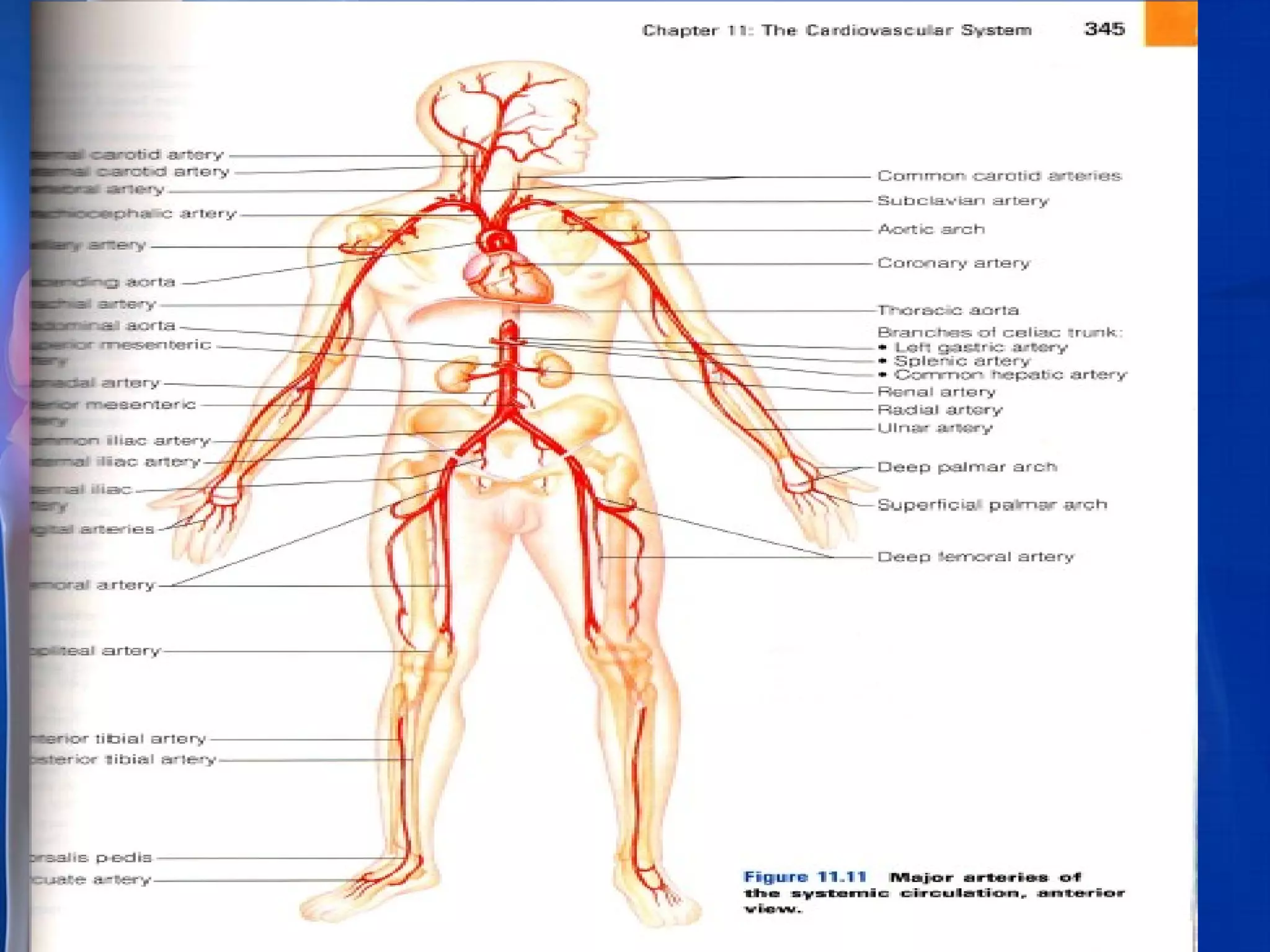
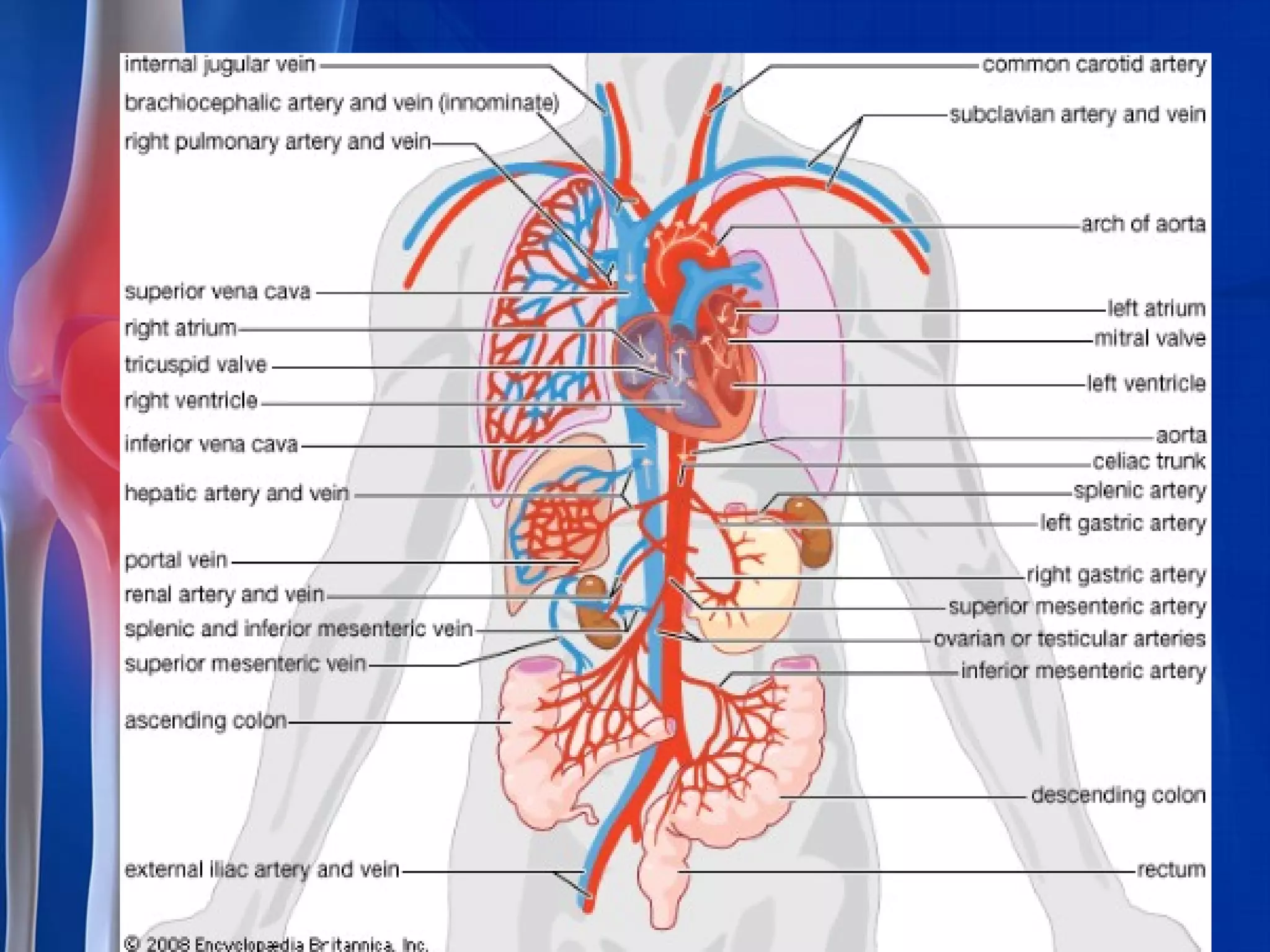
Major arteries of systemic
circulation
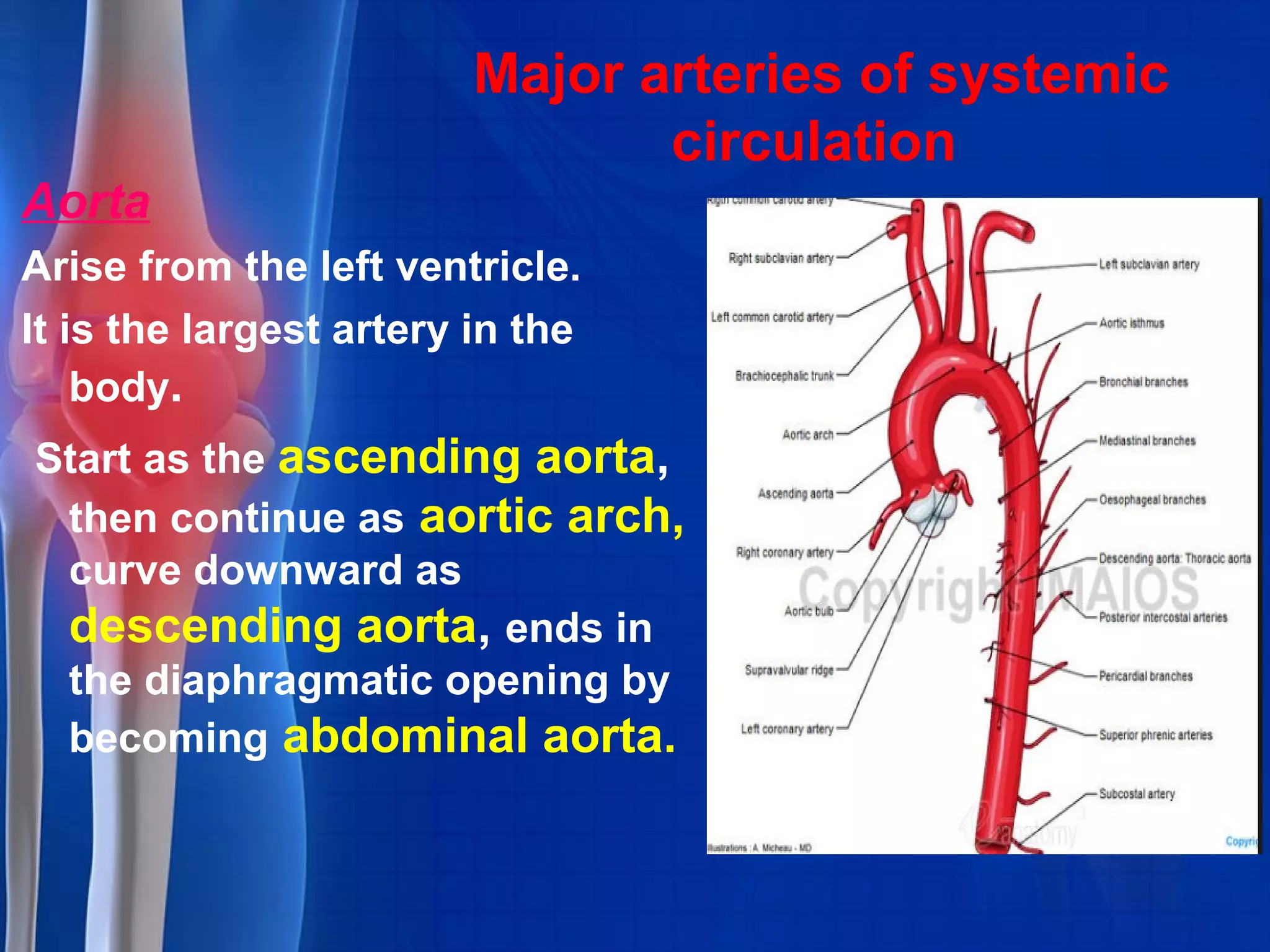
Aorta
Arise from the left ventricle.
It is the largest artery in the
body.
Start as the ascending aorta,
then continue as aortic arch,
curve downward as
descending aorta, ends in
the diaphragmatic opening by
becoming abdominal aorta.
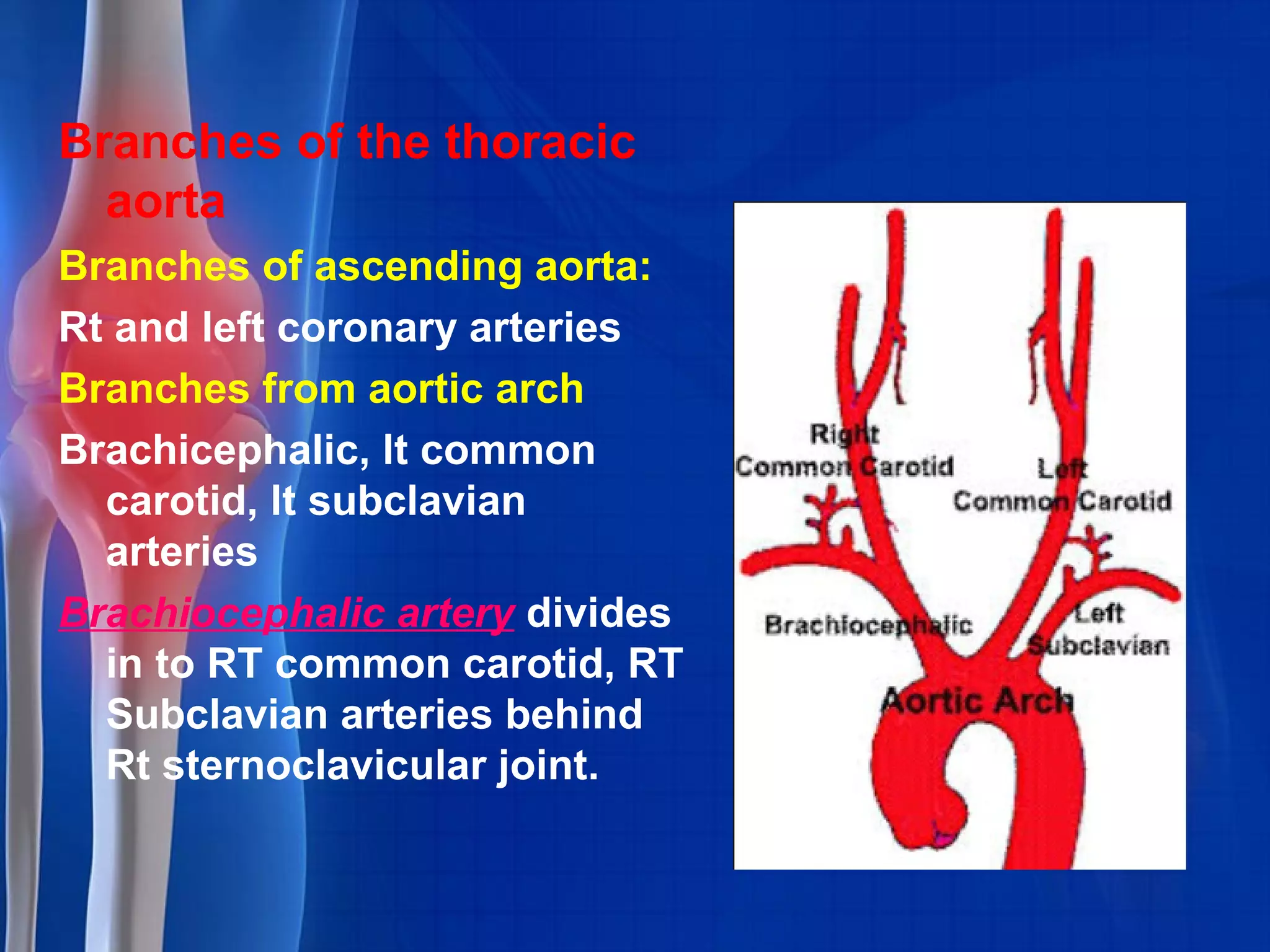
Branches of the thoracic
aorta
Branches of ascending aorta:
Rt and left coronary arteries
Branches from aortic arch
Brachicephalic, lt common
carotid, lt subclavian
arteries
Brachiocephalic artery divides
in to RT common carotid, RT
Subclavian arteries behind
Rt sternoclavicular joint.
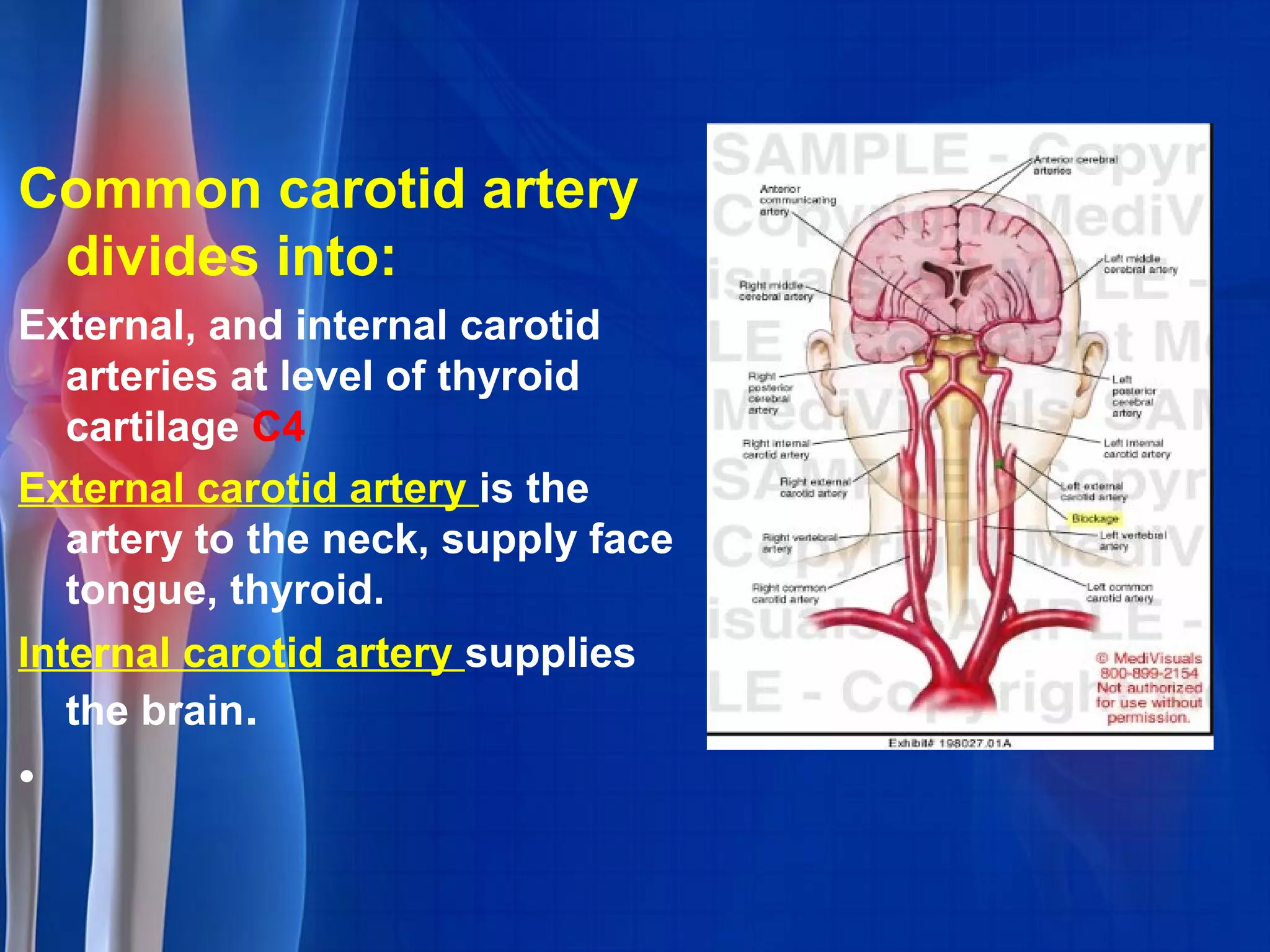
Common carotid artery
divides into:
External, and internal carotid
arteries at level of thyroid
cartilage C4
External carotid artery is the
artery to the neck, supply face
tongue, thyroid.
Internal carotid artery supplies
the brain.
•
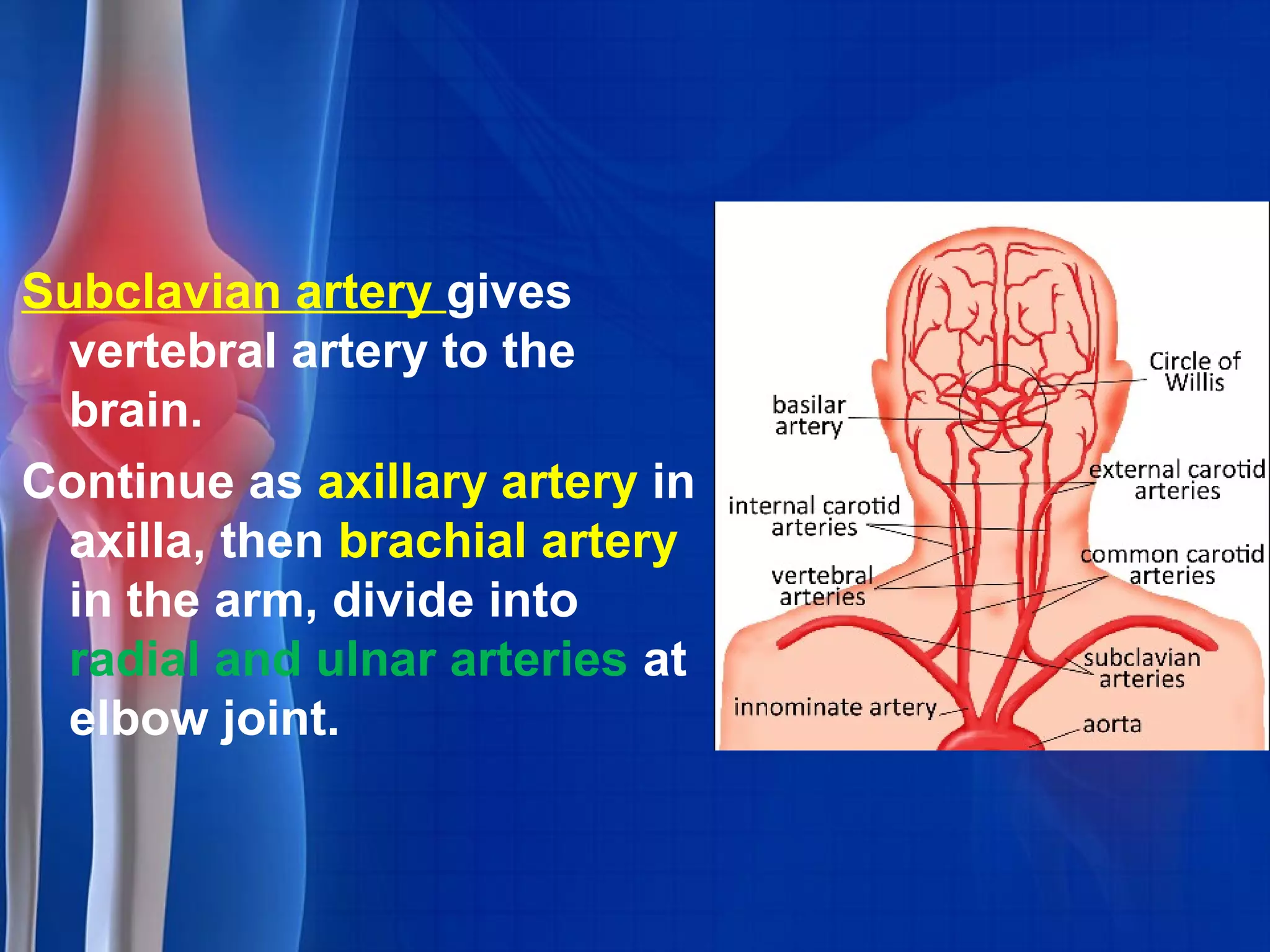
Subclavian artery gives
vertebral artery to the
brain.
Continue as axillary artery in
axilla, then brachial artery
in the arm, divide into
radial and ulnar arteries at
elbow joint.
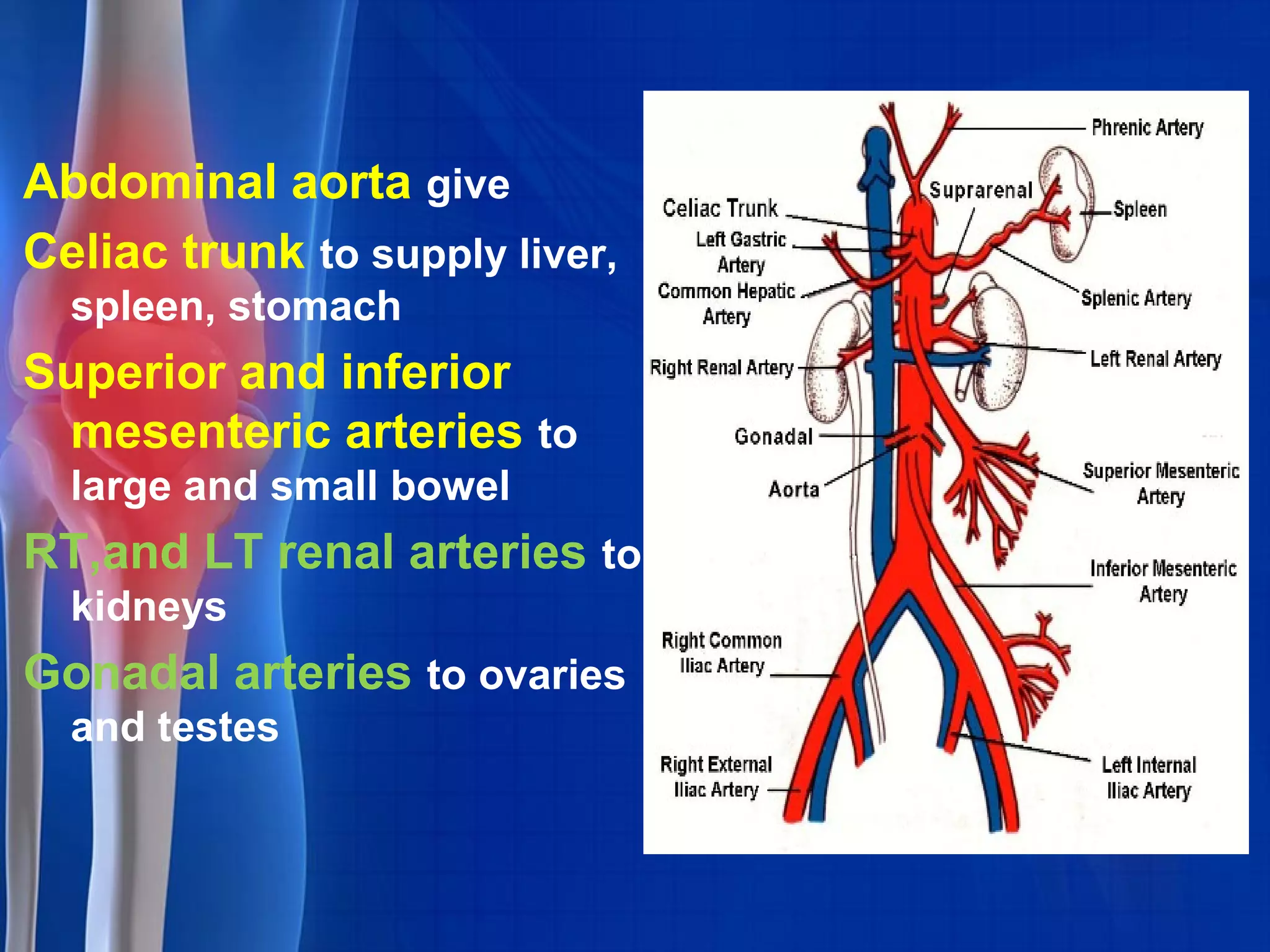
Abdominal aorta give
Celiac trunk to supply liver,
spleen, stomach
Superior and inferior
mesenteric arteries to
large and small bowel
RT,and LT renal arteries to
kidneys
Gonadal arteries to ovaries
and testes
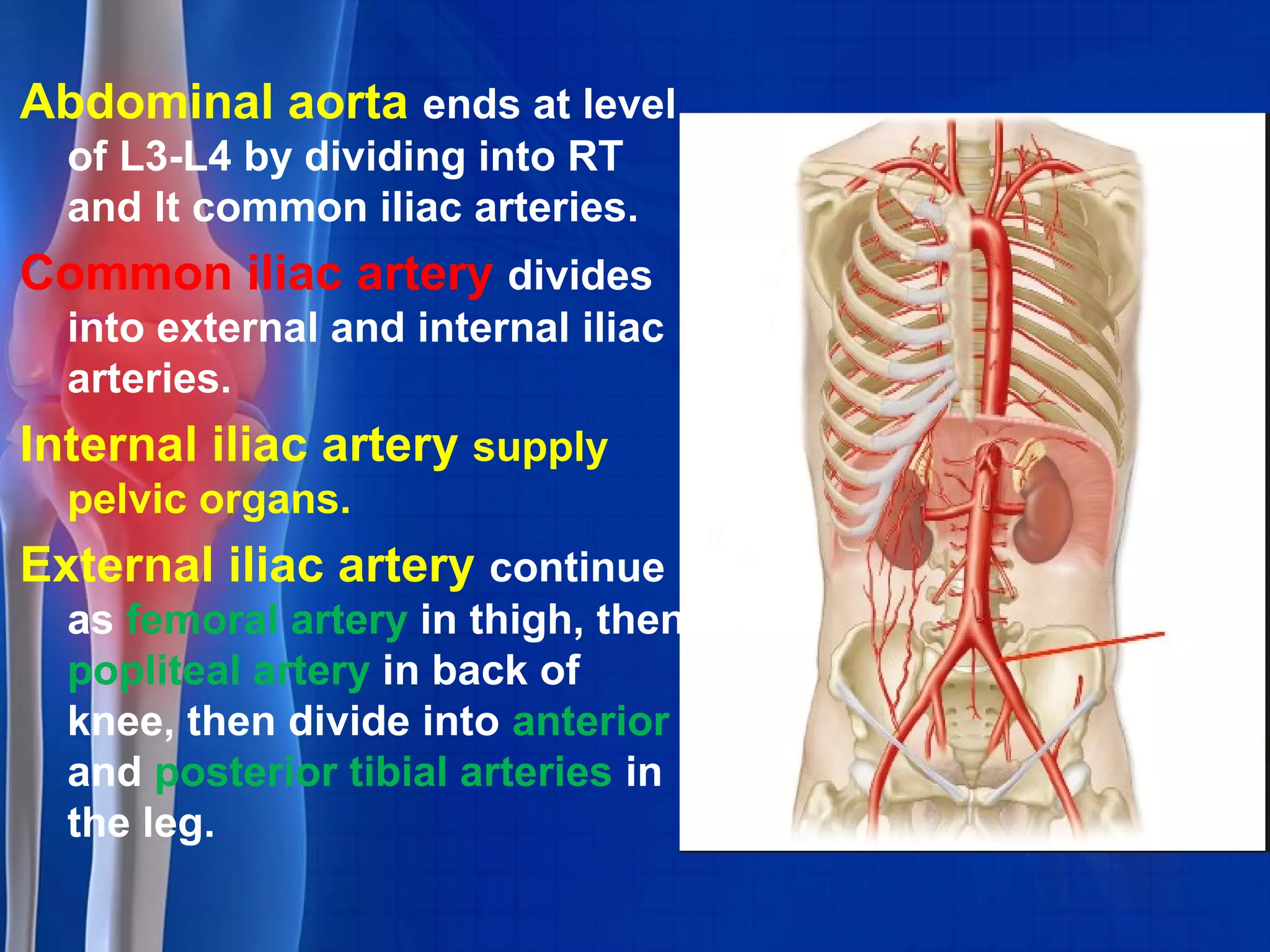
Abdominal aorta ends at level
of L3-L4 by dividing into RT
and lt common iliac arteries.
Common iliac artery divides
into external and internal iliac
arteries.
Internal iliac artery supply
pelvic organs.
External iliac artery continue
as femoral artery in thigh, then
popliteal artery in back of
knee, then divide into anterior
and posterior tibial arteries in
the leg.
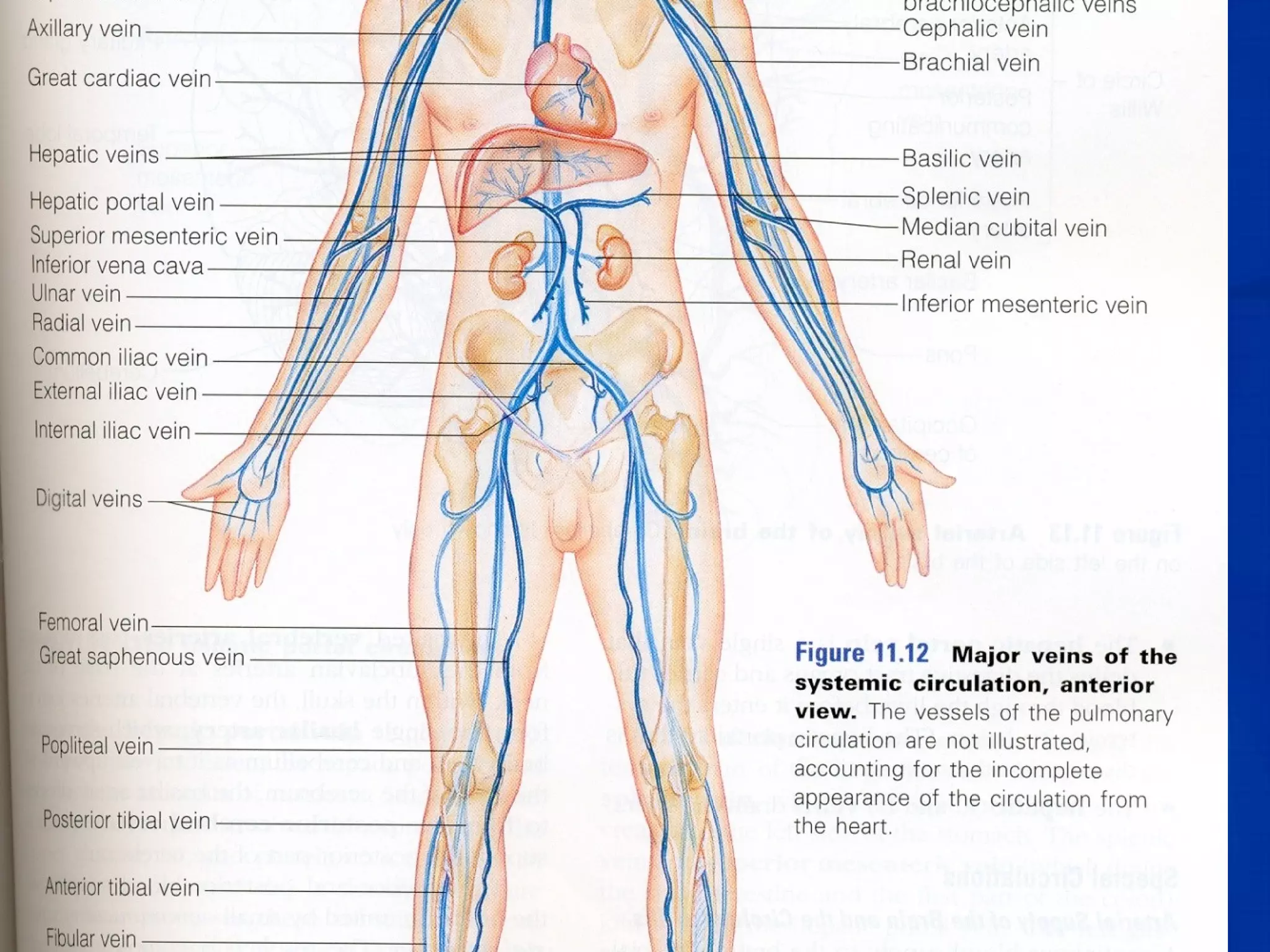
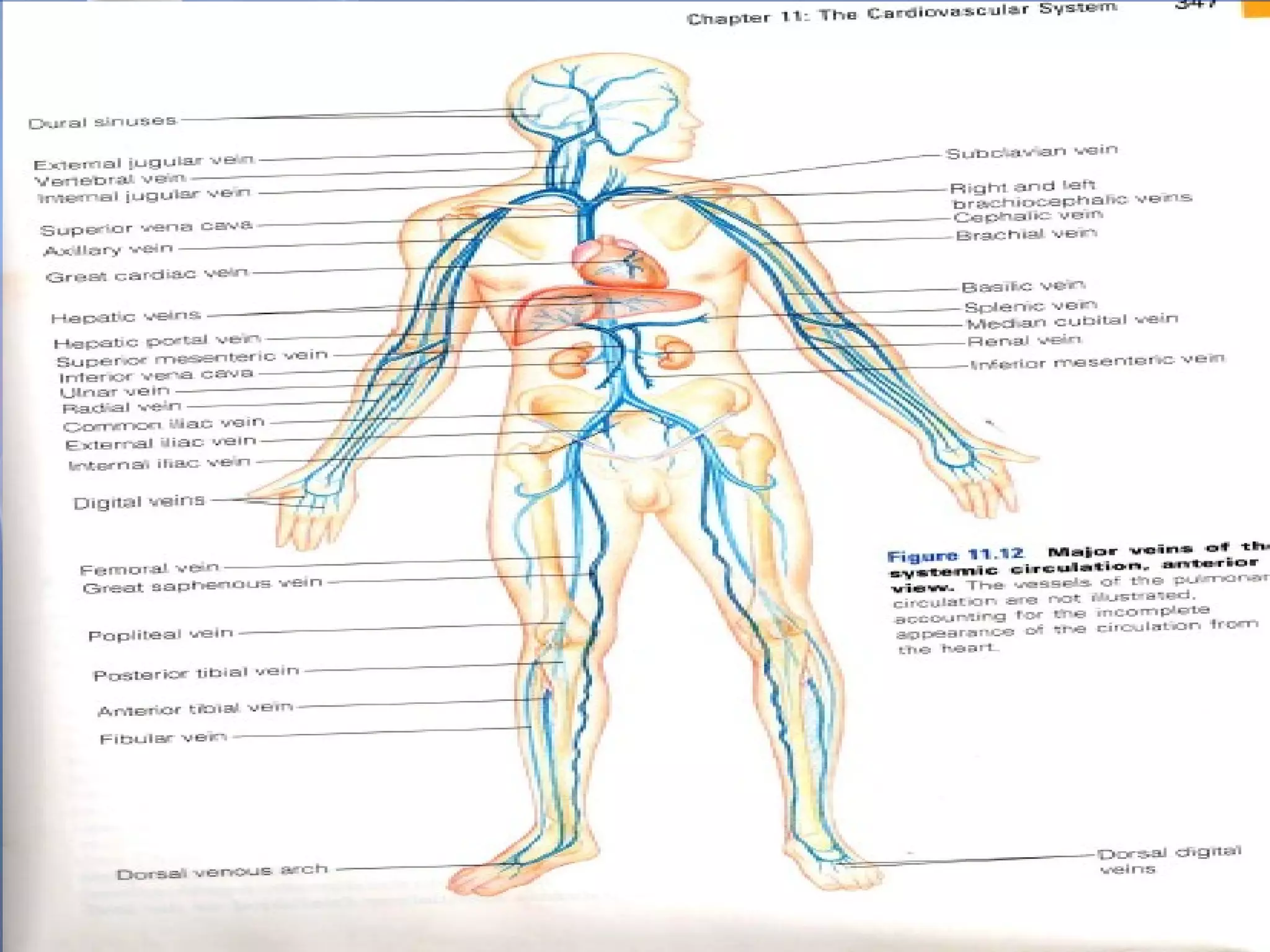
Major veins of systemic
circulation
Superior vena cava for upper part of
the body, head neck, and upper
limb
Inferior vena cava for lower part of
the body, abdomen pelvis and
lower limb.
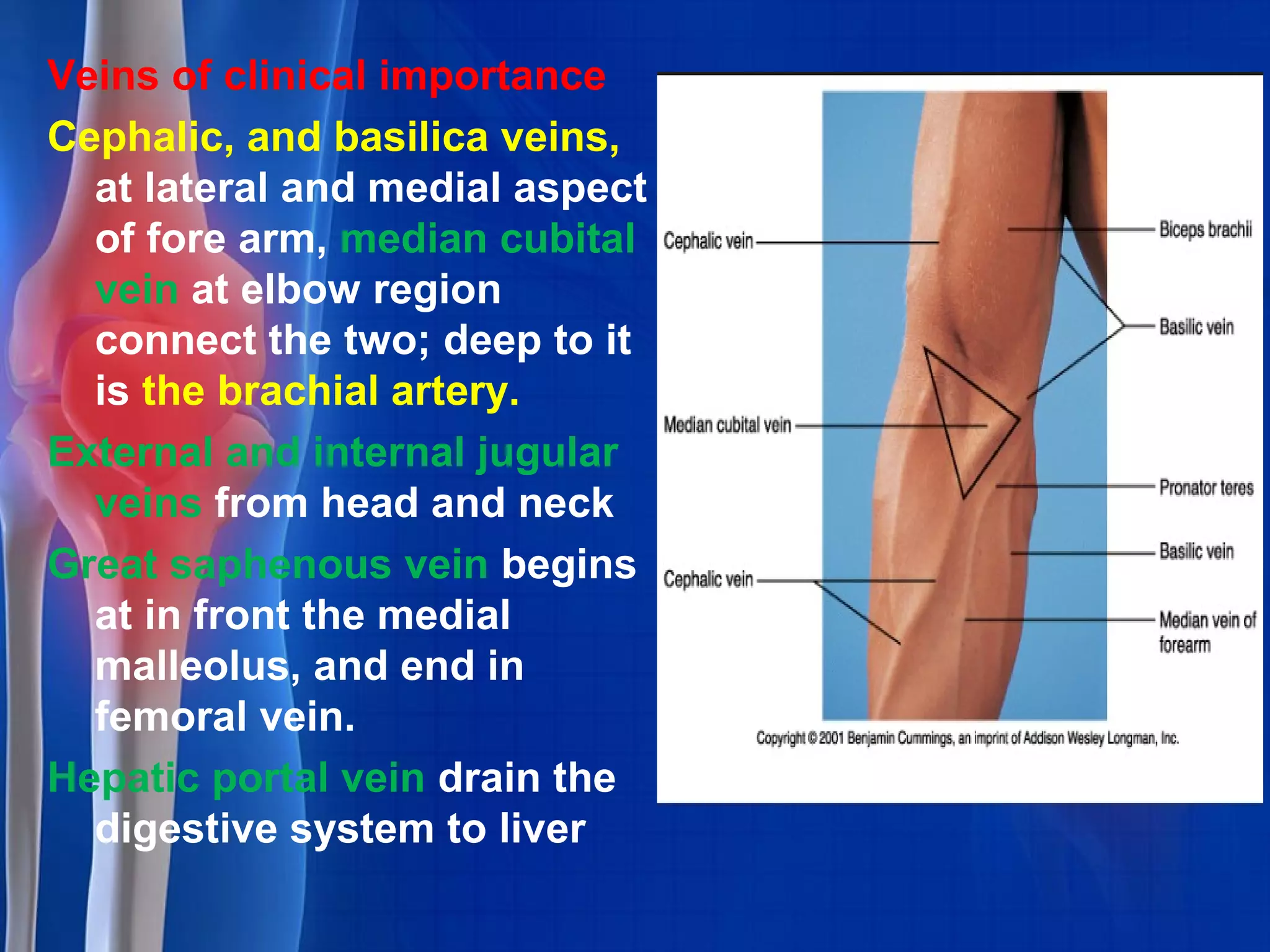
Veins of clinical importance
Cephalic, and basilica veins,
at lateral and medial aspect
of fore arm, median cubital
vein at elbow region
connect the two; deep to it
is the brachial artery.
External and internal jugular
veins from head and neck
Great saphenous vein begins
at in front the medial
malleolus, and end in
femoral vein.
Hepatic portal vein drain the
digestive system to liver
Circle of Willis
Arterial blood supply to the brain
15% of cardiac output
The grey matter contain more
capillaries than white matter
Formed by
• Internal carotid artery
• Vertebral artery
Internal carotid artery, of common
carotid artery inter the skull
through temporal bone (carotid
canal)
ICA divides into
• Anterior cerebral artery
• Middle cerebral artery
• Vertebral arteries, enter skull
through foramen magnum
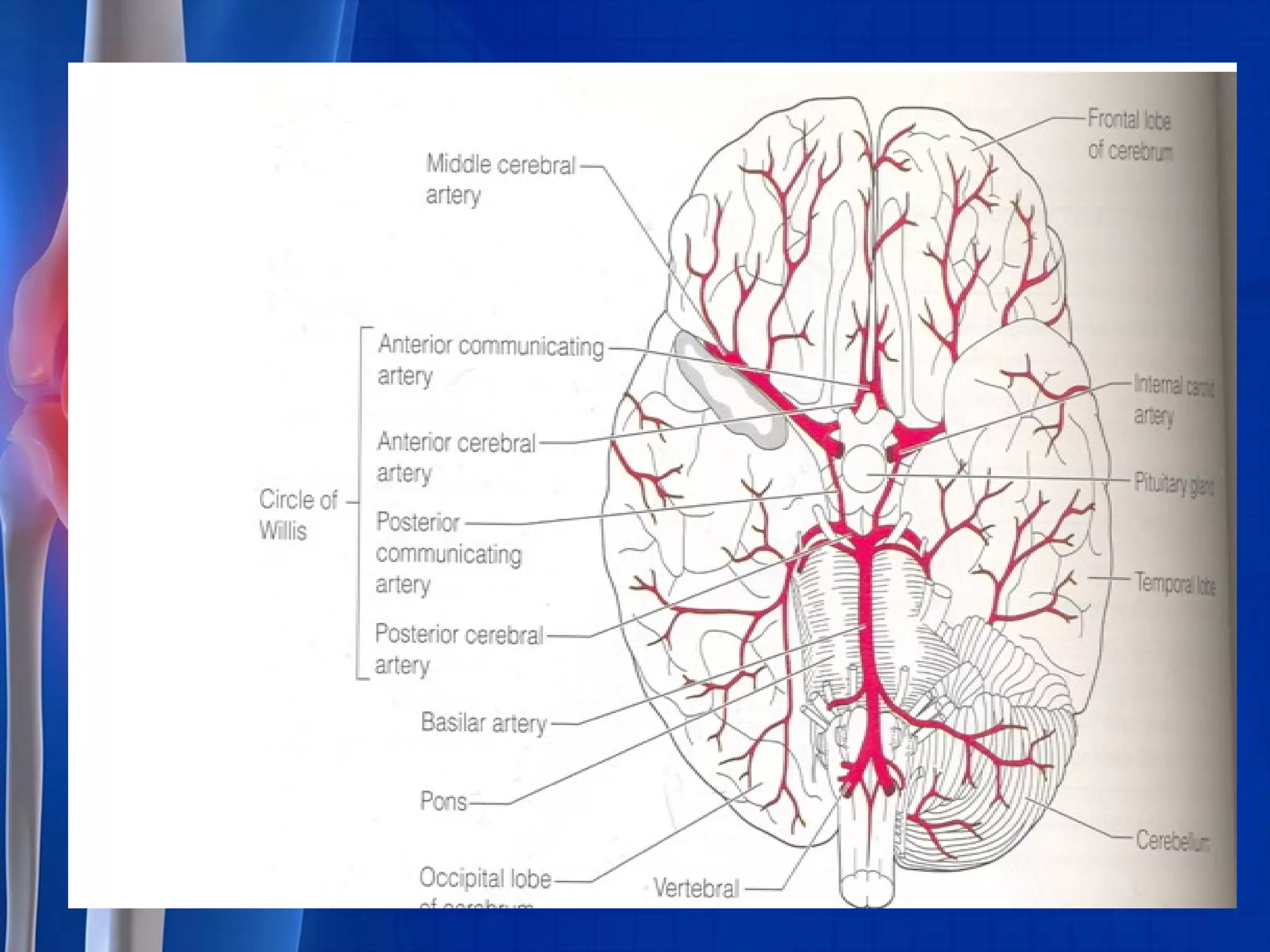
Right and left vertebral arteries,
which are branches of subclavian
arteries, join to form basilar
artery, which divide into two
posterior cerebral arteries
Basilar artery supply blood to
cerebellum, and brain stem
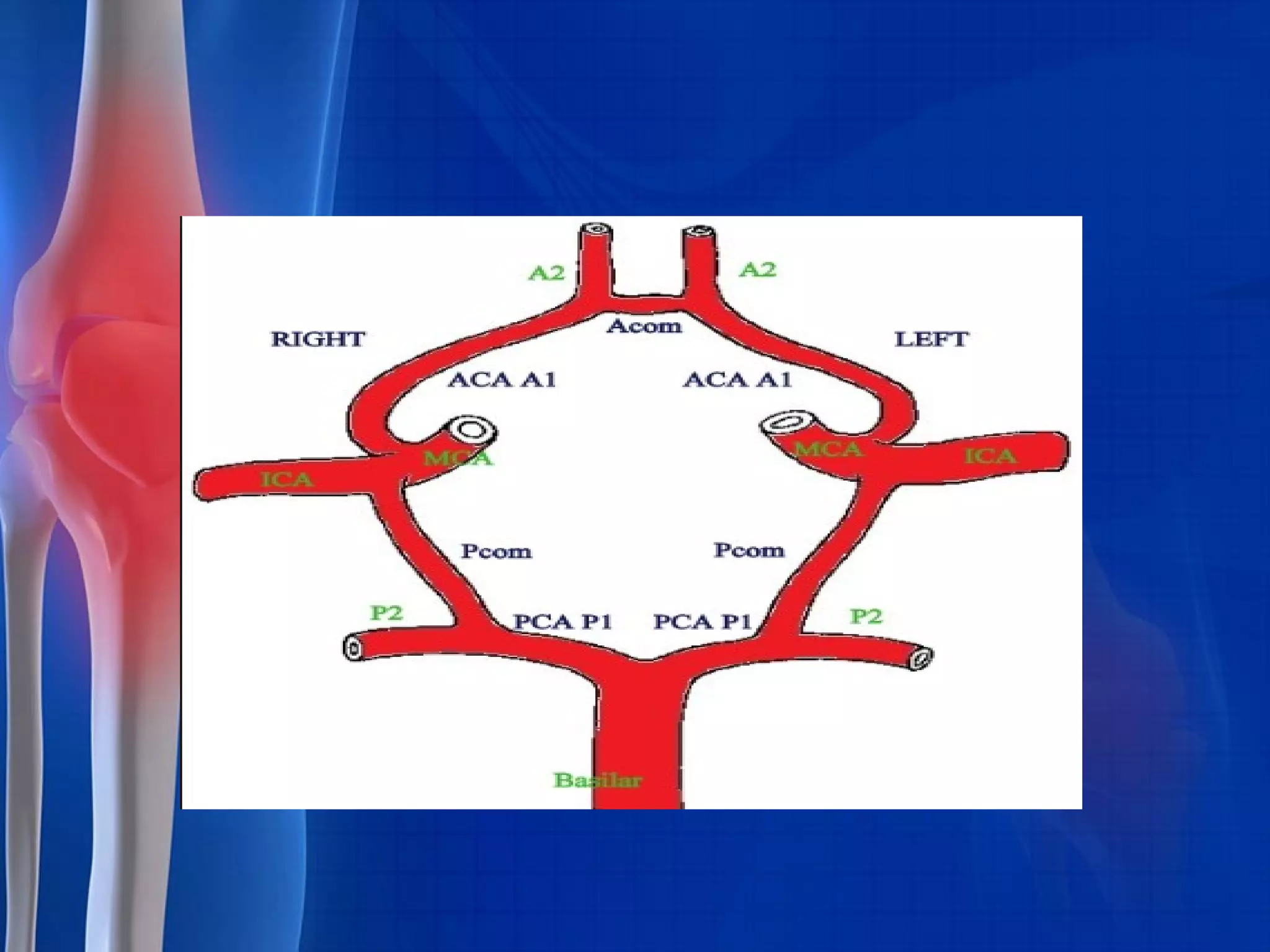
The anterior and posterior blood
supply are united by small
communicating arteries
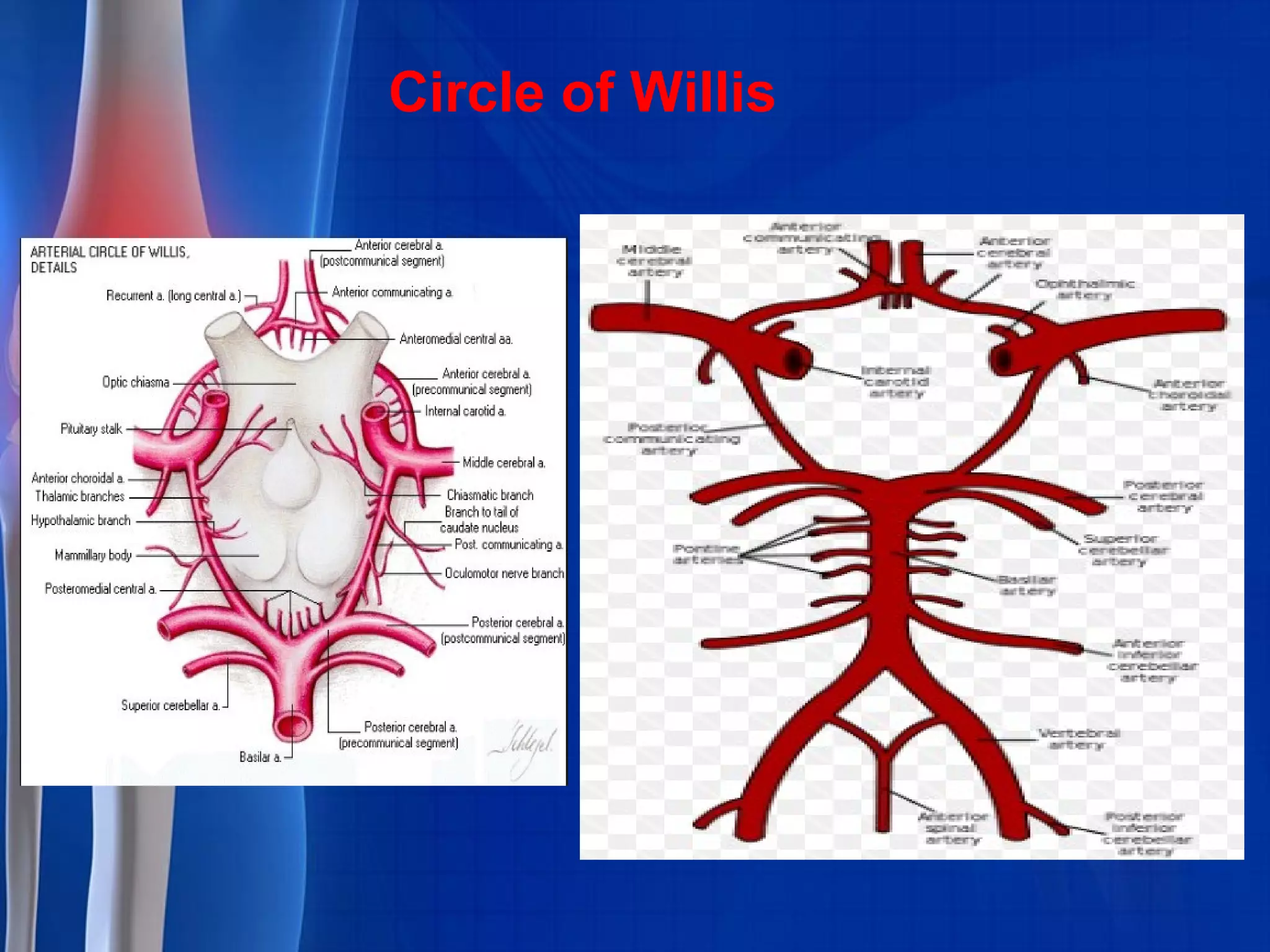
Circle of Willis
Posterior cerebral artery supply,
center of vision, smell, thalamus,
and mid brain
Anterior cerebral artery supply
motor and sensory areas of lower
limbs
Middle cerebral artery supply motor
and sensory areas of rest of the
body
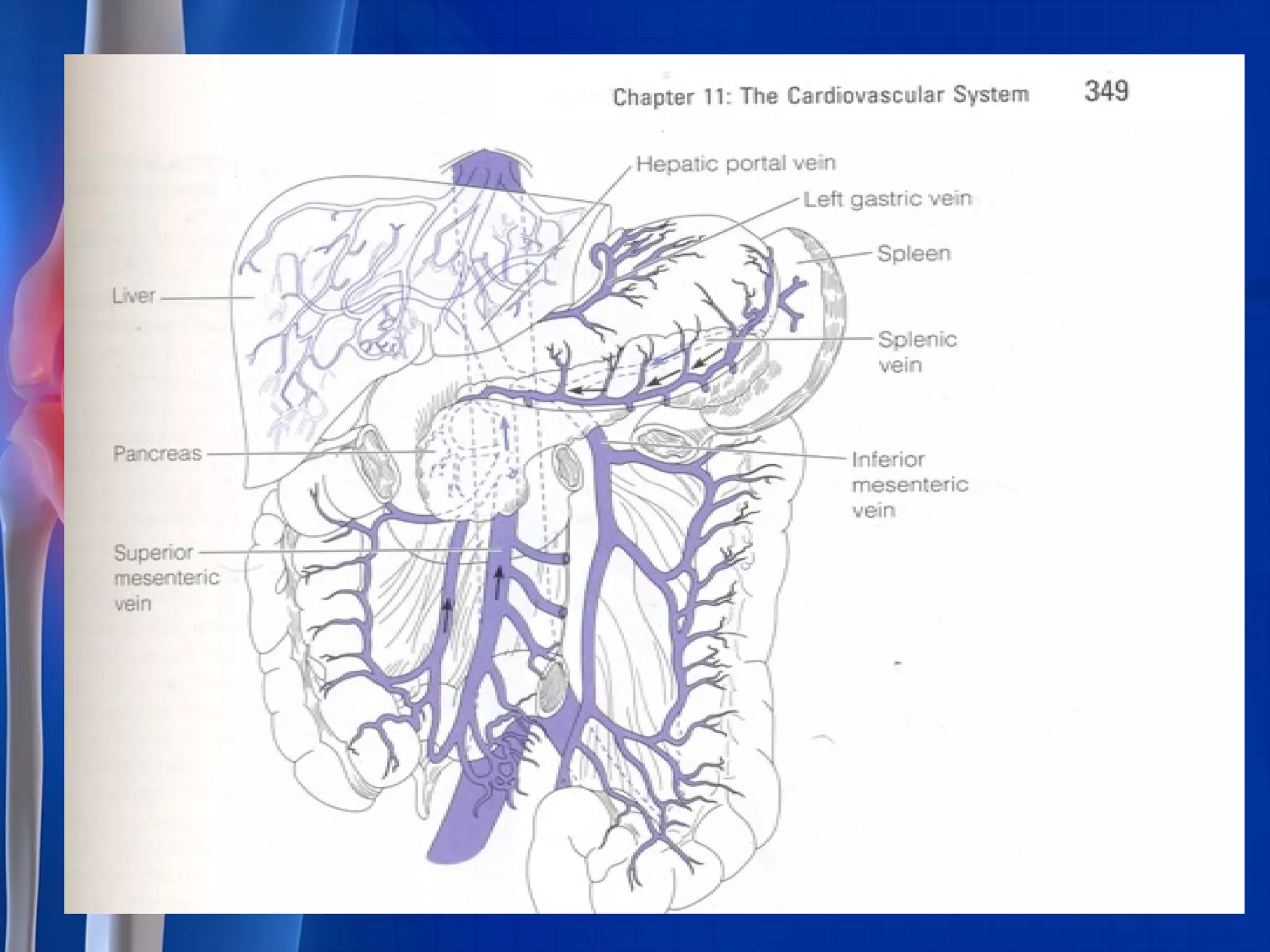
Hepatic portal circulation
Portal vein
 Is formed by union of
Superior mesenteric vein and Splenic vein
behind neck of pancreas
 Portal vein blood contain nutrients from
digestion in the gut, and deliver them to
liver, some of nutrients are stored or
processed
 Blood leave the liver through hepatic
veins which drain into inferior vena cava.
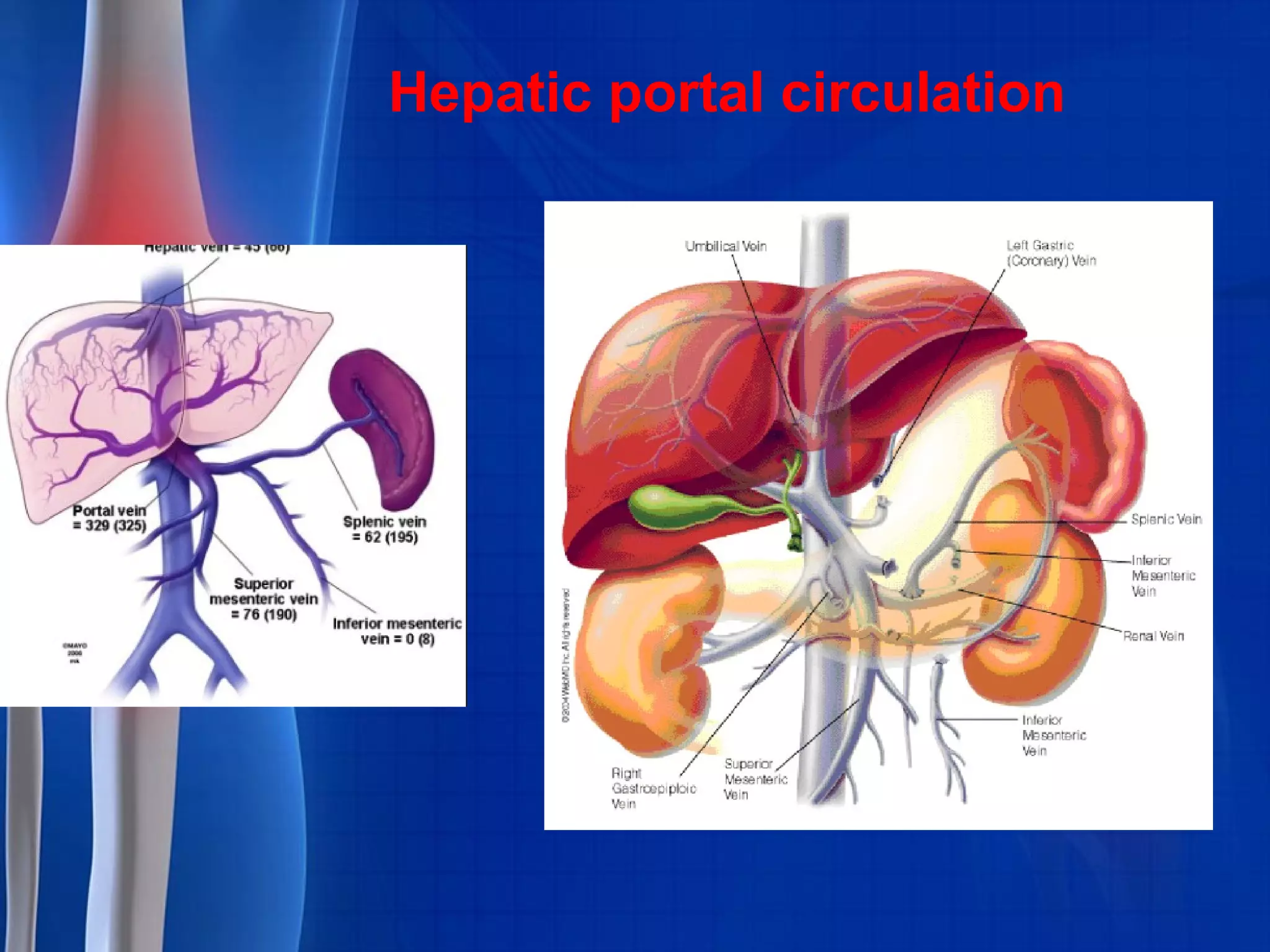
Hepatic portal circulation
Superior mesenteric vein drain
blood from small bowel
Inferior mesenteric vein drain the
colon in to Splenic vein.
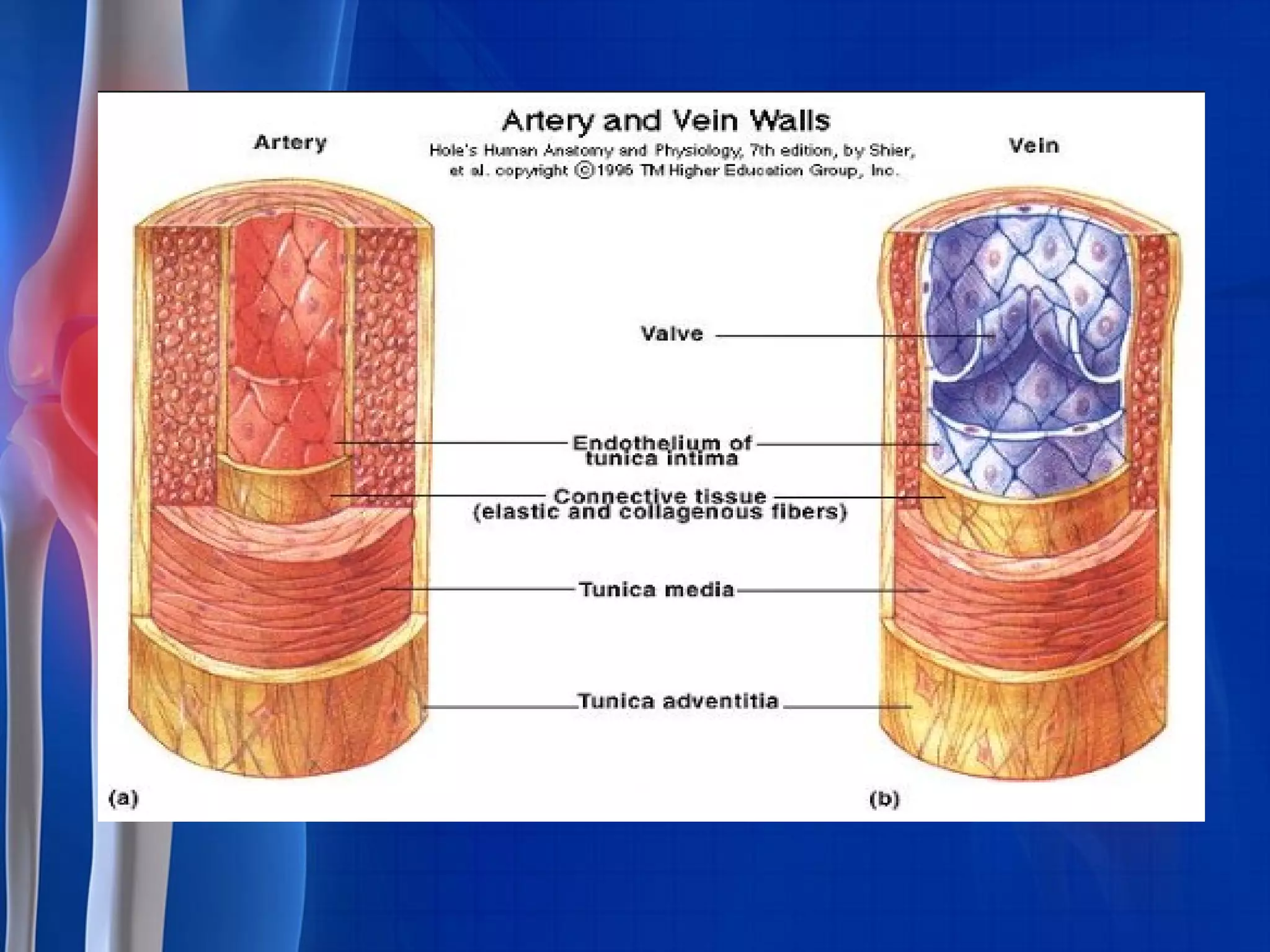
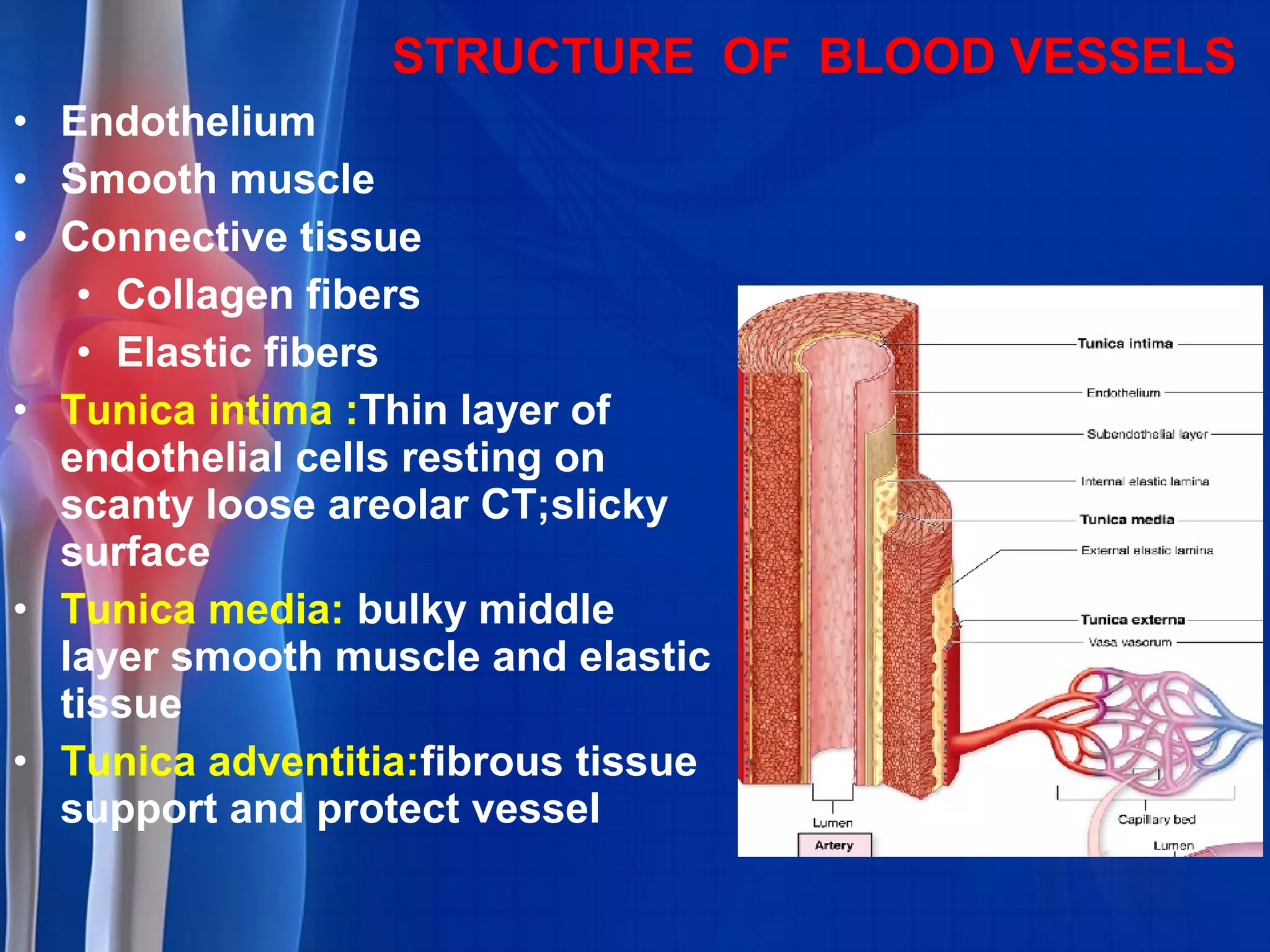
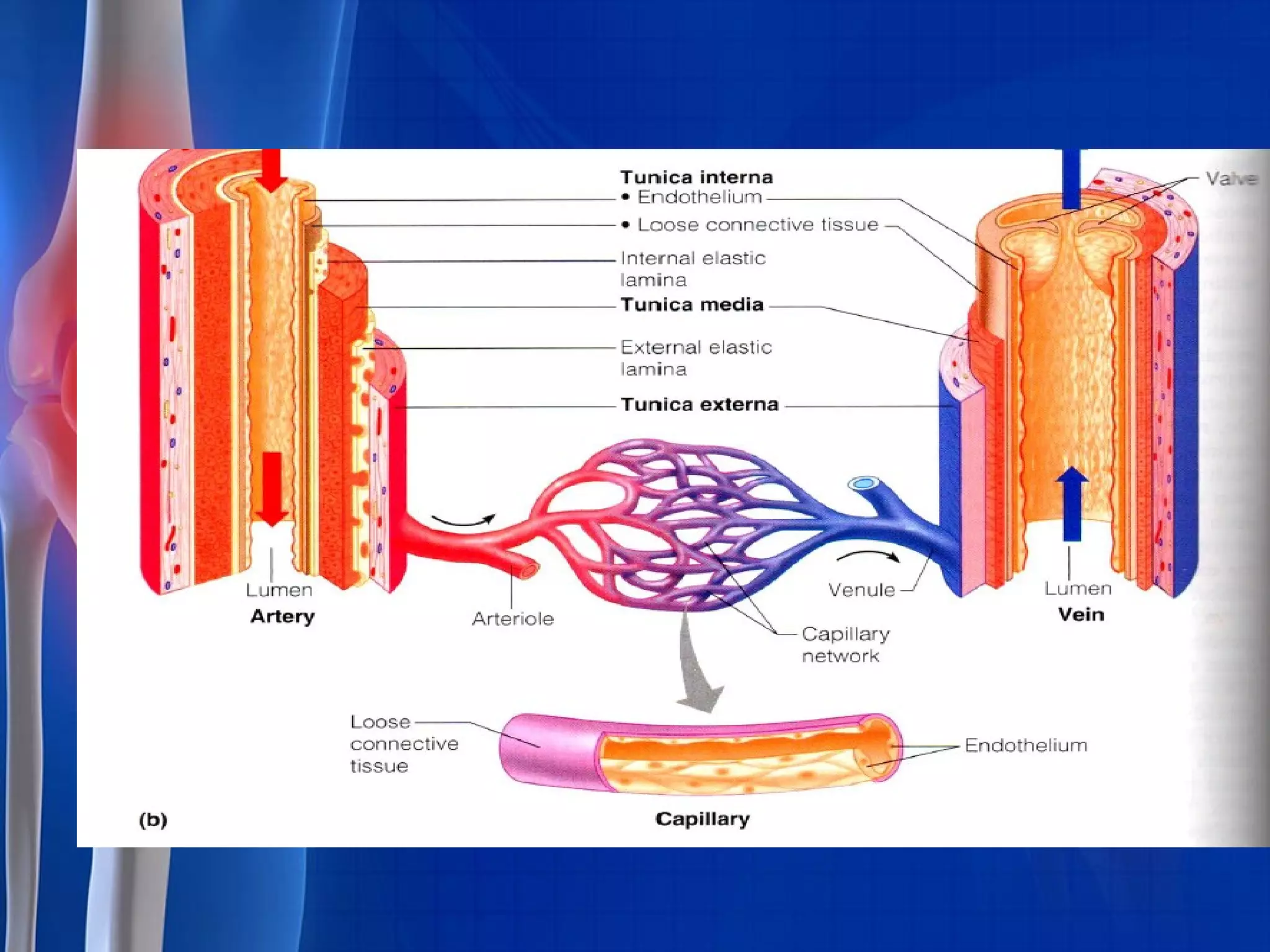
STRUCTURE OF BLOOD VESSELS
• Endothelium
• Smooth muscle
• Connective tissue
• Collagen fibers
• Elastic fibers
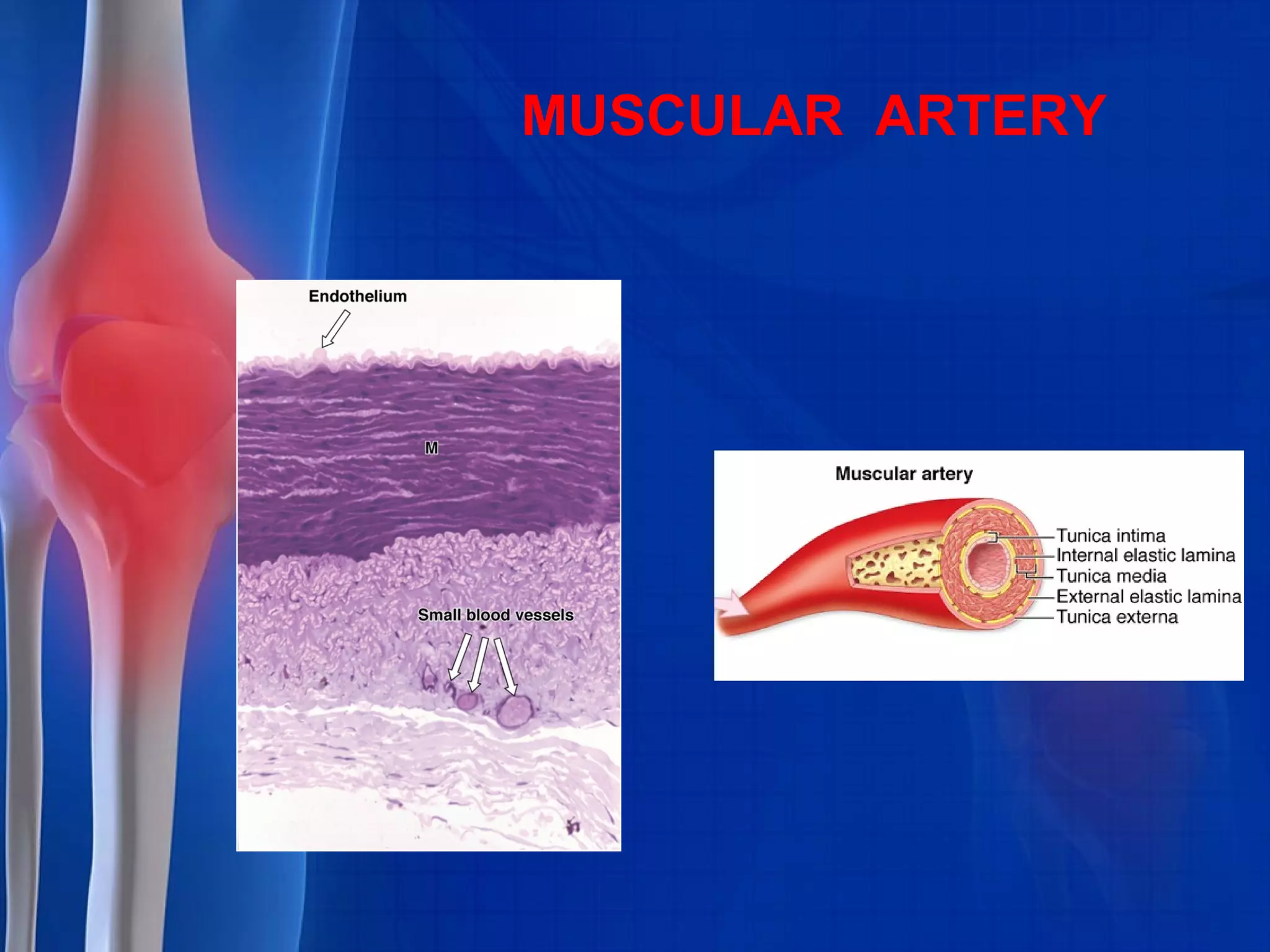
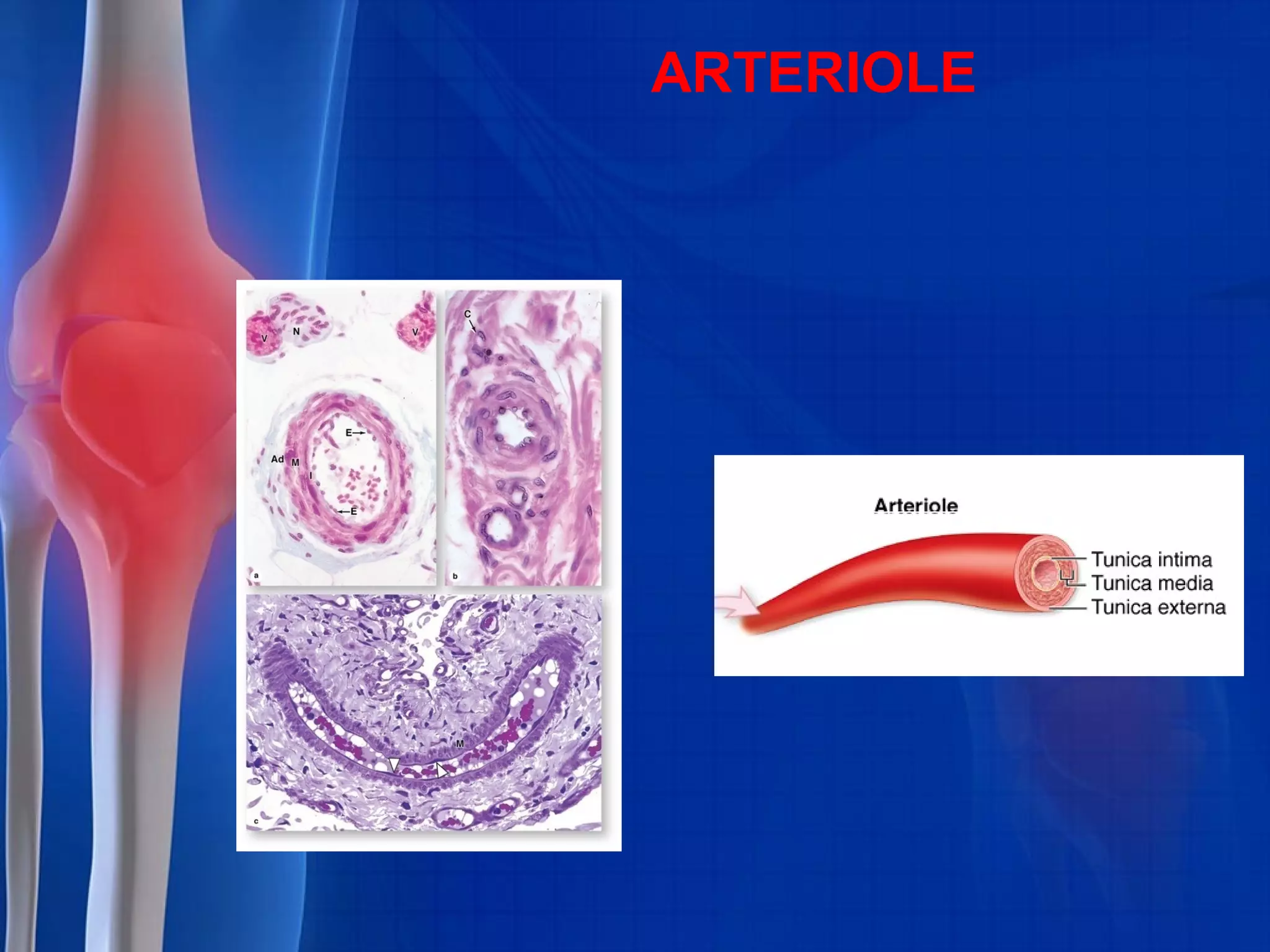
• Tunica intima :Thin layer of
endothelial cells resting on
scanty loose areolar CT;slicky
surface
• Tunica media: bulky middle
layer smooth muscle and elastic
tissue
• Tunica adventitia:fibrous tissue
support and protect vessel
MUSCULAR ARTERY
ARTERIOLE
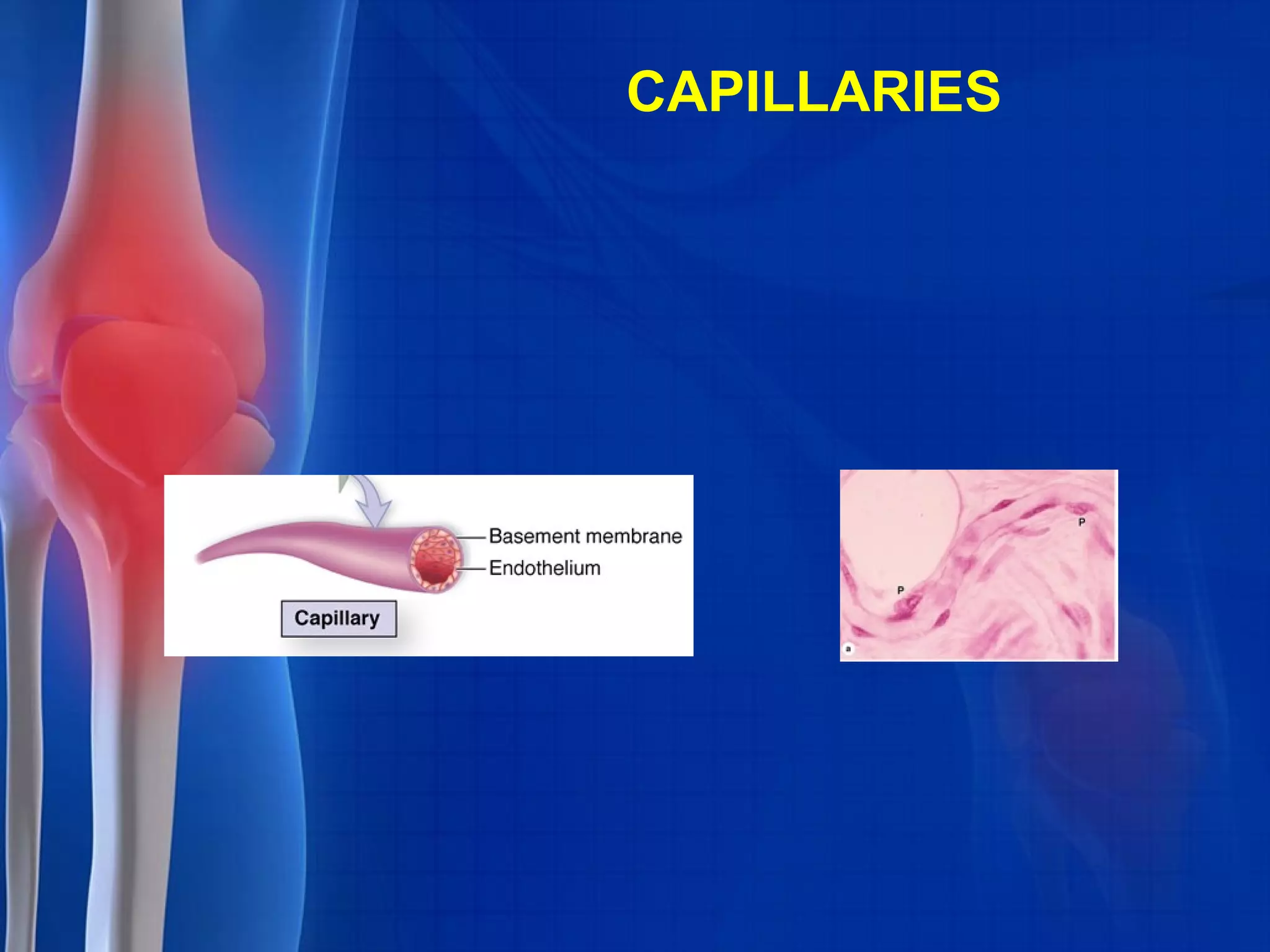
CAPILLARIES
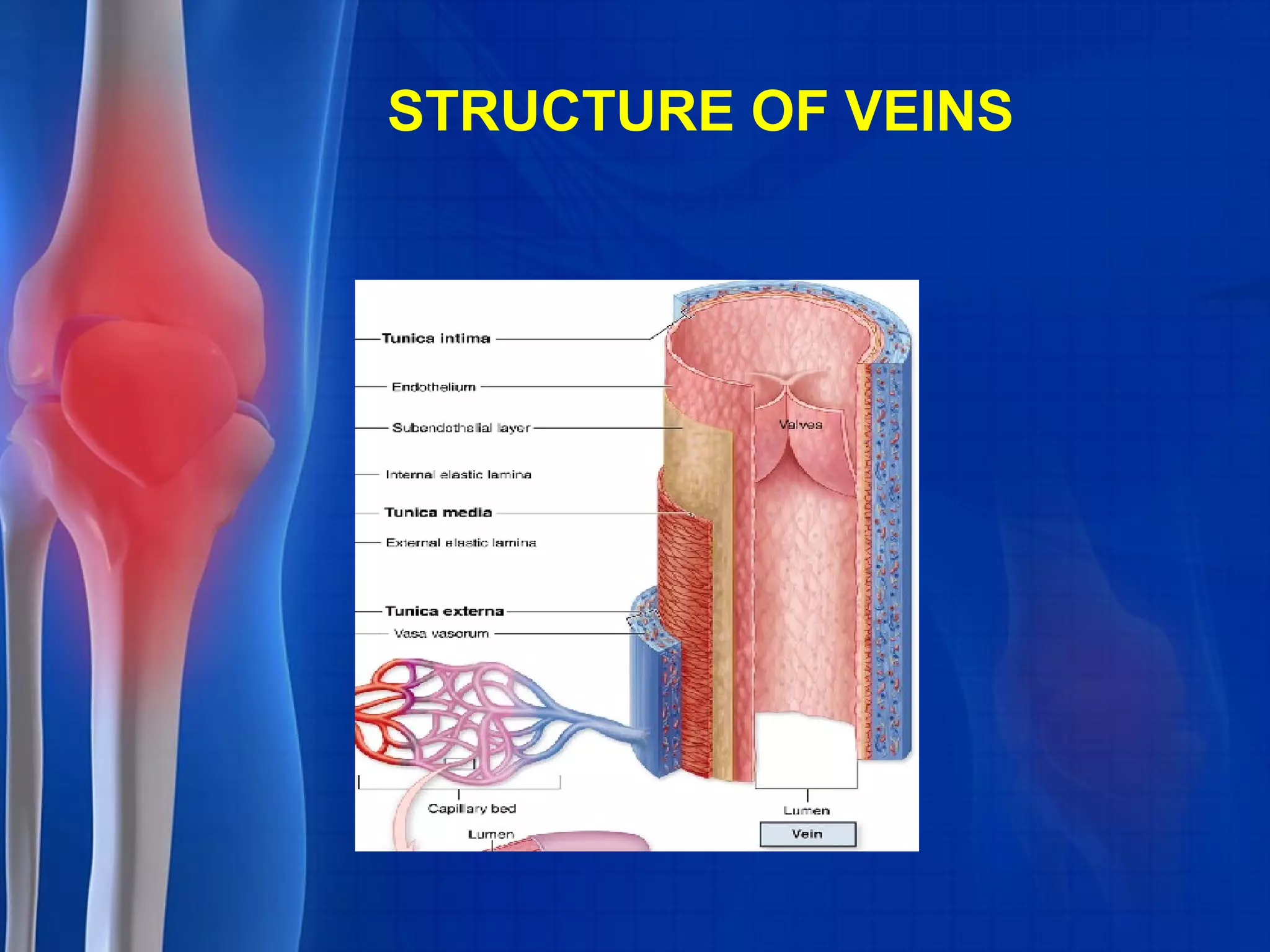
STRUCTURE OF VEINS

Cardiovascular system[1]

  • 1.
    Cardiovascular system Heart The sizeof persons fist Less than 500 gm in weight. Apex at the level of 5th intercostals space Base is where great vessels emerge, beneath 2nd rib Receive 5% of cardiac output.
  • 3.
    Pericardium Serous membrane, formedof two layers Visceral layer: thin layer on external surface of the heart, tightly hugs the heart. Parietal thick layer, protect heart, anchor it to surrounding structures like diaphragm, reinforced superficially by dense connective tissue Lubricating serous fluid secreted by visceral layer is present in pericardial membrane
  • 4.
    The wall ofthe heart Is formed by three layers Outer layer epicardium (visceral pericardium) Middle layer myocardium which is thick bundle of cardiac muscle twisted into ring like arrangements It is reinforced internally by dense fibrous connective tissue called skeleton of the heart Deep layer endocardium thin glistening sheet of endothelium enclose the heart and continuous with great vessels in and out
  • 5.
    Chambers of theheart Two atria, receiving chambers, thin wall. Two ventricles are discharging chambers, thick wall The left ventricle form the apex The right ventricle form anterior surface. Septum divides heart to RT, lt halves. Interatrial, interventricular septum.
  • 10.
    • Heart isdouble pump • RT is the pulmonary circuit. It receives oxygen poor blood by superior and inferior vena cava, and pumps it through pulmonary trunk, which divides into RT, lt pulmonary arteries. • The four pulmonary veins return blood to the heart.
  • 12.
    Aorta: pump bloodthrough systemic circulation to the body. Heart Body Heart A left ventricle is thicker than right ventricles. Atrioventricular valves Tricuspid between RT atrium, and RT ventricle Mitral between lt atrium and ventricle They prevent back flow of blood to atria as they are one way valve,mitral valve have two cusps (bicuspid) Chordae tendineae (heart strings):Tiny white cords anchor the valve to wall of ventricles Semilunar valves: guard the arteries which leave the heart They are tricuspid valves
  • 13.
    Pulmonary valve: guardpulmonary artery which leave RT ventricle Aortic valve: guard the aortic artery which leave lt ventricle
  • 14.
    Blood supply tothe heart The right and left coronary arteries They arise from ascending aorta The right coronary give posterior interventricular, and marginal The left coronary give anterior interventricular and circumflex arteries Angina pectoris Myocardial infarction
  • 15.
    Major arteries ofsystemic circulation Aorta Arise from the left ventricle. It is the largest artery in the body. Start as the ascending aorta, then continue as aortic arch, curve downward as descending aorta, ends in the diaphragmatic opening by becoming abdominal aorta.
  • 17.
    Branches of thethoracic aorta Branches of ascending aorta: Rt and left coronary arteries Branches from aortic arch Brachicephalic, lt common carotid, lt subclavian arteries Brachiocephalic artery divides in to RT common carotid, RT Subclavian arteries behind Rt sternoclavicular joint.
  • 18.
    Common carotid artery dividesinto: External, and internal carotid arteries at level of thyroid cartilage C4 External carotid artery is the artery to the neck, supply face tongue, thyroid. Internal carotid artery supplies the brain. •
  • 19.
    Subclavian artery gives vertebralartery to the brain. Continue as axillary artery in axilla, then brachial artery in the arm, divide into radial and ulnar arteries at elbow joint.
  • 20.
    Abdominal aorta give Celiactrunk to supply liver, spleen, stomach Superior and inferior mesenteric arteries to large and small bowel RT,and LT renal arteries to kidneys Gonadal arteries to ovaries and testes
  • 22.
    Abdominal aorta endsat level of L3-L4 by dividing into RT and lt common iliac arteries. Common iliac artery divides into external and internal iliac arteries. Internal iliac artery supply pelvic organs. External iliac artery continue as femoral artery in thigh, then popliteal artery in back of knee, then divide into anterior and posterior tibial arteries in the leg.
  • 23.
    Major veins ofsystemic circulation Superior vena cava for upper part of the body, head neck, and upper limb Inferior vena cava for lower part of the body, abdomen pelvis and lower limb.
  • 24.
    Veins of clinicalimportance Cephalic, and basilica veins, at lateral and medial aspect of fore arm, median cubital vein at elbow region connect the two; deep to it is the brachial artery. External and internal jugular veins from head and neck Great saphenous vein begins at in front the medial malleolus, and end in femoral vein. Hepatic portal vein drain the digestive system to liver
  • 27.
    Circle of Willis Arterialblood supply to the brain 15% of cardiac output The grey matter contain more capillaries than white matter Formed by • Internal carotid artery • Vertebral artery
  • 28.
    Internal carotid artery,of common carotid artery inter the skull through temporal bone (carotid canal) ICA divides into • Anterior cerebral artery • Middle cerebral artery • Vertebral arteries, enter skull through foramen magnum
  • 29.
    Right and leftvertebral arteries, which are branches of subclavian arteries, join to form basilar artery, which divide into two posterior cerebral arteries Basilar artery supply blood to cerebellum, and brain stem The anterior and posterior blood supply are united by small communicating arteries
  • 32.
  • 33.
    Posterior cerebral arterysupply, center of vision, smell, thalamus, and mid brain Anterior cerebral artery supply motor and sensory areas of lower limbs Middle cerebral artery supply motor and sensory areas of rest of the body
  • 34.
    Hepatic portal circulation Portalvein  Is formed by union of Superior mesenteric vein and Splenic vein behind neck of pancreas  Portal vein blood contain nutrients from digestion in the gut, and deliver them to liver, some of nutrients are stored or processed  Blood leave the liver through hepatic veins which drain into inferior vena cava.
  • 36.
  • 37.
    Superior mesenteric veindrain blood from small bowel Inferior mesenteric vein drain the colon in to Splenic vein.
  • 38.
    STRUCTURE OF BLOODVESSELS • Endothelium • Smooth muscle • Connective tissue • Collagen fibers • Elastic fibers • Tunica intima :Thin layer of endothelial cells resting on scanty loose areolar CT;slicky surface • Tunica media: bulky middle layer smooth muscle and elastic tissue • Tunica adventitia:fibrous tissue support and protect vessel
  • 40.
  • 42.
  • 43.
  • 44.