By Krystal Kimble
      This system is composed of the heart and
  blood vessels that distribute blood, oxygen, and
  nutrients all through the body.
      The heart has four chambers and beats 60
  to 100 beats per minute. It is located directly
  behind the sternum, about the size of a fist its
  shaped like an upside down pear.
      There are three types of blood vessels:
  arteries, capillaries, and veins. Theses vessels
  are shaped like pipes that circulate blood
  through out the body
There are procedures used in cardiovascular
conditions that are used to prevent and diagnose
different medical issues. Sometimes there are no
signs or reasons for an Illness but catching it
early can save a life or help someone from
ending their life too soon. After years of
studying, trials and error doctors and scientist
have many ways of saving lives, diagnosing
conditions and preventing further declining
health issues. Here are a few procedures.
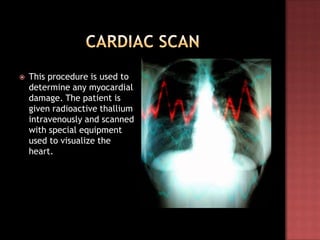
   This procedure is used to
    determine any myocardial
    damage. The patient is
    given radioactive thallium
    intravenously and scanned
    with special equipment
    used to visualize the
    heart.
This is the process of
recording the
electrical activity of
the heart. Its used to
diagnosis the
abnormal cardiac
rhythm and heart
muscle damage.
This is a method for evaluating cardiovascular fitness. The
patient is placed on a treadmill or a bicycle and then
subject to steadily increasing levels of work. EKG and
oxygen levels are taken while the patient exercises. The
test is stopped if abnormalities occur on the EKG. Its also
called an exercise test or a treadmill test.
By using these procedures such as a cardiac
scan, electrocardiography, or stress testing
preventing and diagnosing cardiovascular
health issues are manageable. Heart and
blood vessel problems are fixable and
preventable. With just a few easy steps a life
can be saved as well as prolonged.
By Krystal Kimble

Cardiovascular system

  • 1.
  • 2.
    This system is composed of the heart and blood vessels that distribute blood, oxygen, and nutrients all through the body.  The heart has four chambers and beats 60 to 100 beats per minute. It is located directly behind the sternum, about the size of a fist its shaped like an upside down pear.  There are three types of blood vessels: arteries, capillaries, and veins. Theses vessels are shaped like pipes that circulate blood through out the body
  • 3.
    There are proceduresused in cardiovascular conditions that are used to prevent and diagnose different medical issues. Sometimes there are no signs or reasons for an Illness but catching it early can save a life or help someone from ending their life too soon. After years of studying, trials and error doctors and scientist have many ways of saving lives, diagnosing conditions and preventing further declining health issues. Here are a few procedures.
  • 4.
    This procedure is used to determine any myocardial damage. The patient is given radioactive thallium intravenously and scanned with special equipment used to visualize the heart.
  • 5.
    This is theprocess of recording the electrical activity of the heart. Its used to diagnosis the abnormal cardiac rhythm and heart muscle damage.
  • 6.
    This is amethod for evaluating cardiovascular fitness. The patient is placed on a treadmill or a bicycle and then subject to steadily increasing levels of work. EKG and oxygen levels are taken while the patient exercises. The test is stopped if abnormalities occur on the EKG. Its also called an exercise test or a treadmill test.
  • 7.
    By using theseprocedures such as a cardiac scan, electrocardiography, or stress testing preventing and diagnosing cardiovascular health issues are manageable. Heart and blood vessel problems are fixable and preventable. With just a few easy steps a life can be saved as well as prolonged.
  • 8.