A heart attack happens when there is a sudden complete blockage
of an artery that supplies blood to an area of your heart.
A heart is a muscle, and it needs a good blood supply to keep it
healthy.
As we get older, the smooth inner walls of the arteries that supply
the blood to the heart can become damaged and narrow due to
the build up of fatty materials, called plaque.
The underlying cause of a heart attack is coronary
heart disease.
Some people may not know they have coronary
heart disease until they have a heart attack. For
others, a heart attack can happen after weeks,
months or years of having coronary heart disease.
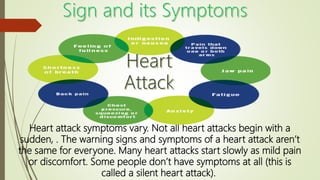
Heart attack symptoms vary. Not all heart attacks begin with a
sudden, . The warning signs and symptoms of a heart attack aren’t
the same for everyone. Many heart attacks start slowly as mild pain
or discomfort. Some people don’t have symptoms at all (this is
called a silent heart attack).
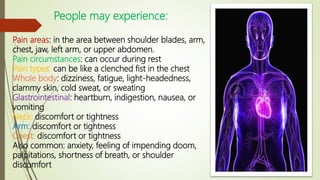
People may experience:
Pain areas: in the area between shoulder blades, arm,
chest, jaw, left arm, or upper abdomen.
Pain circumstances: can occur during rest
Pain types: can be like a clenched fist in the chest
Whole body: dizziness, fatigue, light-headedness,
clammy skin, cold sweat, or sweating
Glastrointestinal: heartburn, indigestion, nausea, or
vomiting
Neck: discomfort or tightness
Arm: discomfort or tightness
Chest: discomfort or tightness
Also common: anxiety, feeling of impending doom,
palpitations, shortness of breath, or shoulder
discomfort
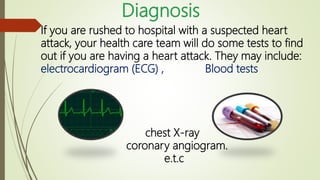
If you are rushed to hospital with a suspected heart
attack, your health care team will do some tests to find
out if you are having a heart attack. They may include:
electrocardiogram (ECG) , Blood tests
chest X-ray
coronary angiogram.
e.t.c
How is a heart attack treated?
When you arrive at hospital you will receive treatment for your blocked artery.
Either you will have a Primary Percutaneous Coronary Intervention (PPCI)
which is an emergency coronary angioplasty. It involves reopening your
blocked coronary artery, restoring the blood supply to the part of your heart
that is starved of blood, which helps to save as much of your heart muscle as
possible.
Or you will have Thrombolysis, also called a ‘clot buster’. This involves injecting
a medicine into a vein to dissolve the blood clot and restore the blood supply
to your heart. Sometimes this may be given to you in the ambulance.
In some types of heart attack people do not receive either of these two
treatments because they will not benefit from them.
Living a healthy lifestyle can help prevent you from
developing coronary heart disease and having a heart attack.
If you have had a heart attack you can dramatically reduce the risk of
having another heart attack and future heart problems by keeping your
heart healthy and taking your medicines.
If you're over 40 you should ask your doctor or nurse for a heart health
check to assess your risk of having a heart attack in the next 10 years.
A heart attack can be a frightening experience and it can
take time to come to terms with what has happened. It's
natural to be worried about your recovery and future.
Many people make a full recovery and within a few
months are able to return to their normal
activities. However some people may find that they are
not able to do as much as they previously did. Attending
a cardiac rehabilitation course will increase your chances
of getting back to normal as quickly as possible.
Heart Attack Symptoms and its Causes

Heart Attack Symptoms and its Causes

  • 2.
    A heart attackhappens when there is a sudden complete blockage of an artery that supplies blood to an area of your heart. A heart is a muscle, and it needs a good blood supply to keep it healthy. As we get older, the smooth inner walls of the arteries that supply the blood to the heart can become damaged and narrow due to the build up of fatty materials, called plaque.
  • 3.
    The underlying causeof a heart attack is coronary heart disease. Some people may not know they have coronary heart disease until they have a heart attack. For others, a heart attack can happen after weeks, months or years of having coronary heart disease.
  • 4.
    Heart attack symptomsvary. Not all heart attacks begin with a sudden, . The warning signs and symptoms of a heart attack aren’t the same for everyone. Many heart attacks start slowly as mild pain or discomfort. Some people don’t have symptoms at all (this is called a silent heart attack).
  • 5.
    People may experience: Painareas: in the area between shoulder blades, arm, chest, jaw, left arm, or upper abdomen. Pain circumstances: can occur during rest Pain types: can be like a clenched fist in the chest Whole body: dizziness, fatigue, light-headedness, clammy skin, cold sweat, or sweating Glastrointestinal: heartburn, indigestion, nausea, or vomiting Neck: discomfort or tightness Arm: discomfort or tightness Chest: discomfort or tightness Also common: anxiety, feeling of impending doom, palpitations, shortness of breath, or shoulder discomfort
  • 6.
    If you arerushed to hospital with a suspected heart attack, your health care team will do some tests to find out if you are having a heart attack. They may include: electrocardiogram (ECG) , Blood tests chest X-ray coronary angiogram. e.t.c
  • 7.
    How is aheart attack treated? When you arrive at hospital you will receive treatment for your blocked artery. Either you will have a Primary Percutaneous Coronary Intervention (PPCI) which is an emergency coronary angioplasty. It involves reopening your blocked coronary artery, restoring the blood supply to the part of your heart that is starved of blood, which helps to save as much of your heart muscle as possible. Or you will have Thrombolysis, also called a ‘clot buster’. This involves injecting a medicine into a vein to dissolve the blood clot and restore the blood supply to your heart. Sometimes this may be given to you in the ambulance. In some types of heart attack people do not receive either of these two treatments because they will not benefit from them.
  • 8.
    Living a healthylifestyle can help prevent you from developing coronary heart disease and having a heart attack. If you have had a heart attack you can dramatically reduce the risk of having another heart attack and future heart problems by keeping your heart healthy and taking your medicines. If you're over 40 you should ask your doctor or nurse for a heart health check to assess your risk of having a heart attack in the next 10 years.
  • 9.
    A heart attackcan be a frightening experience and it can take time to come to terms with what has happened. It's natural to be worried about your recovery and future. Many people make a full recovery and within a few months are able to return to their normal activities. However some people may find that they are not able to do as much as they previously did. Attending a cardiac rehabilitation course will increase your chances of getting back to normal as quickly as possible.