Cardiovascular System Procedures Deanna Shippee
Cardiac Procedures Diagnostic Cardiac Enzymes Holter Monitor Therapeutic Ligation and Stripping
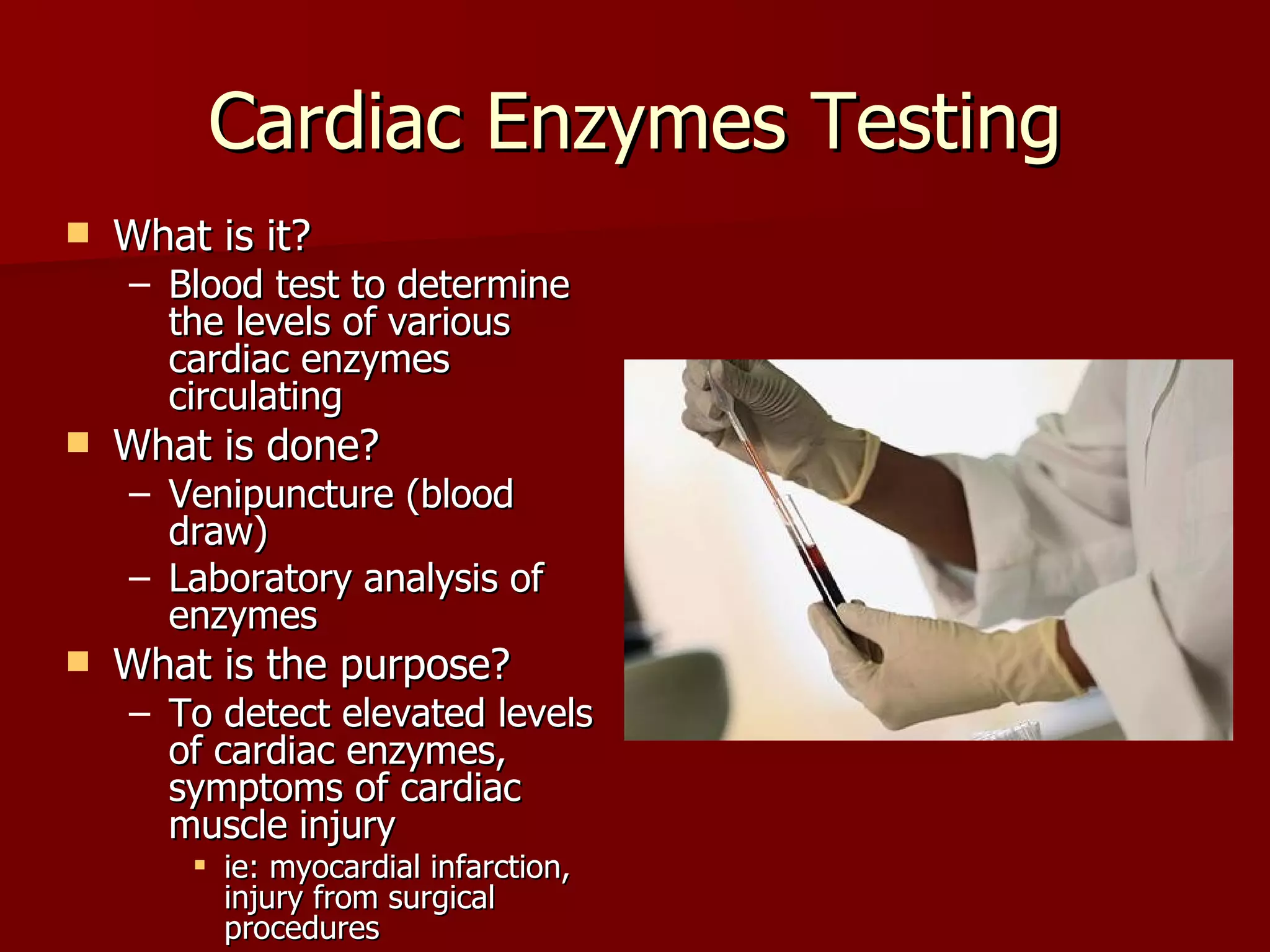
Cardiac Enzymes Testing What is it? Blood test to determine the levels of various cardiac enzymes circulating What is done? Venipuncture (blood draw) Laboratory analysis of enzymes What is the purpose? To detect elevated levels of cardiac enzymes, symptoms of cardiac muscle injury ie: myocardial infarction, injury from surgical procedures
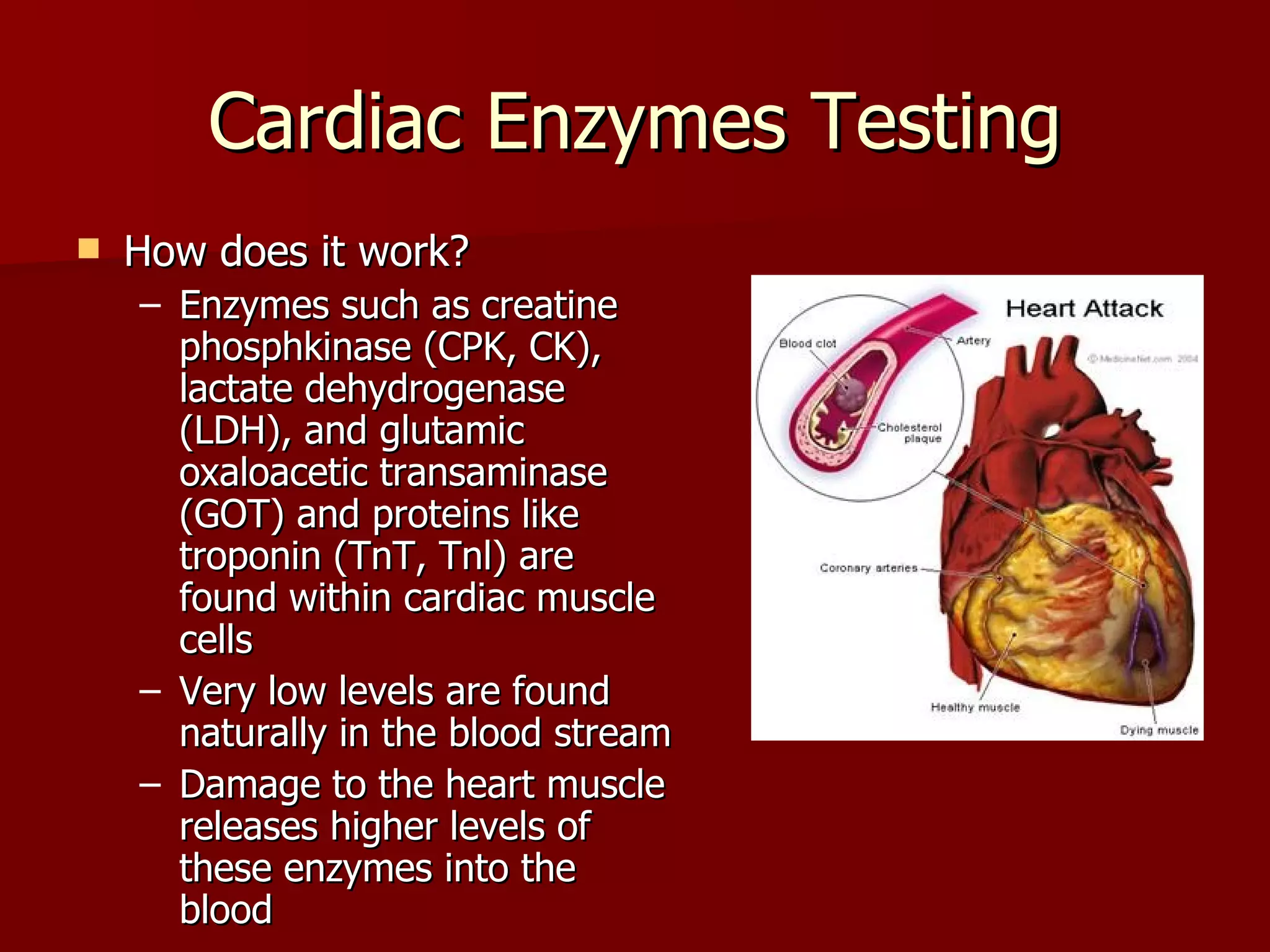
Cardiac Enzymes Testing How does it work? Enzymes such as creatine phosphkinase (CPK, CK), lactate dehydrogenase (LDH), and glutamic oxaloacetic transaminase (GOT) and proteins like troponin (TnT, Tnl) are found within cardiac muscle cells Very low levels are found naturally in the blood stream Damage to the heart muscle releases higher levels of these enzymes into the blood
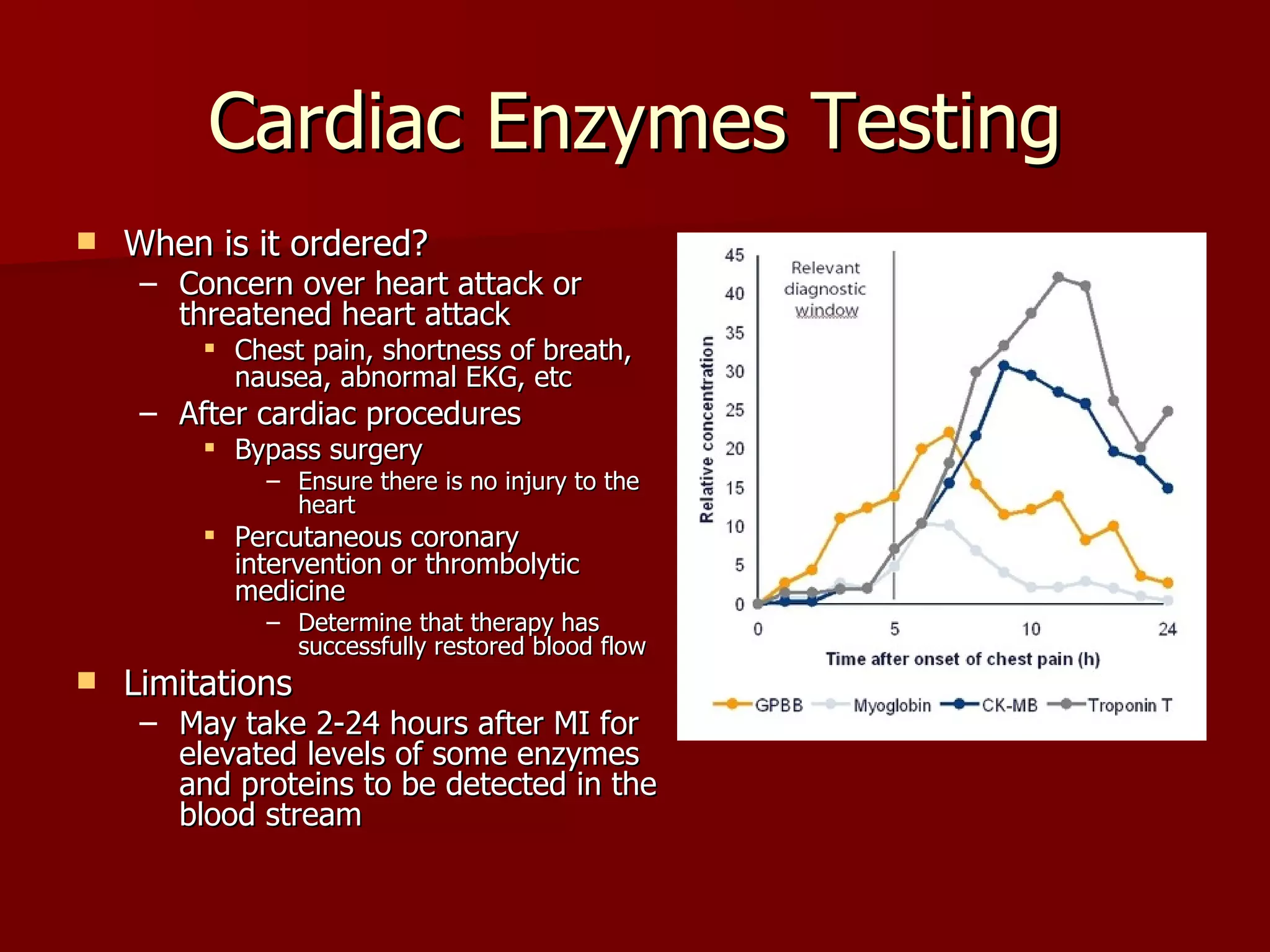
Cardiac Enzymes Testing When is it ordered? Concern over heart attack or threatened heart attack Chest pain, shortness of breath, nausea, abnormal EKG, etc After cardiac procedures Bypass surgery  Ensure there is no injury to the heart Percutaneous coronary intervention or thrombolytic medicine  Determine that therapy has successfully restored blood flow Limitations May take 2-24 hours after MI for elevated levels of some enzymes and proteins to be detected in the blood stream
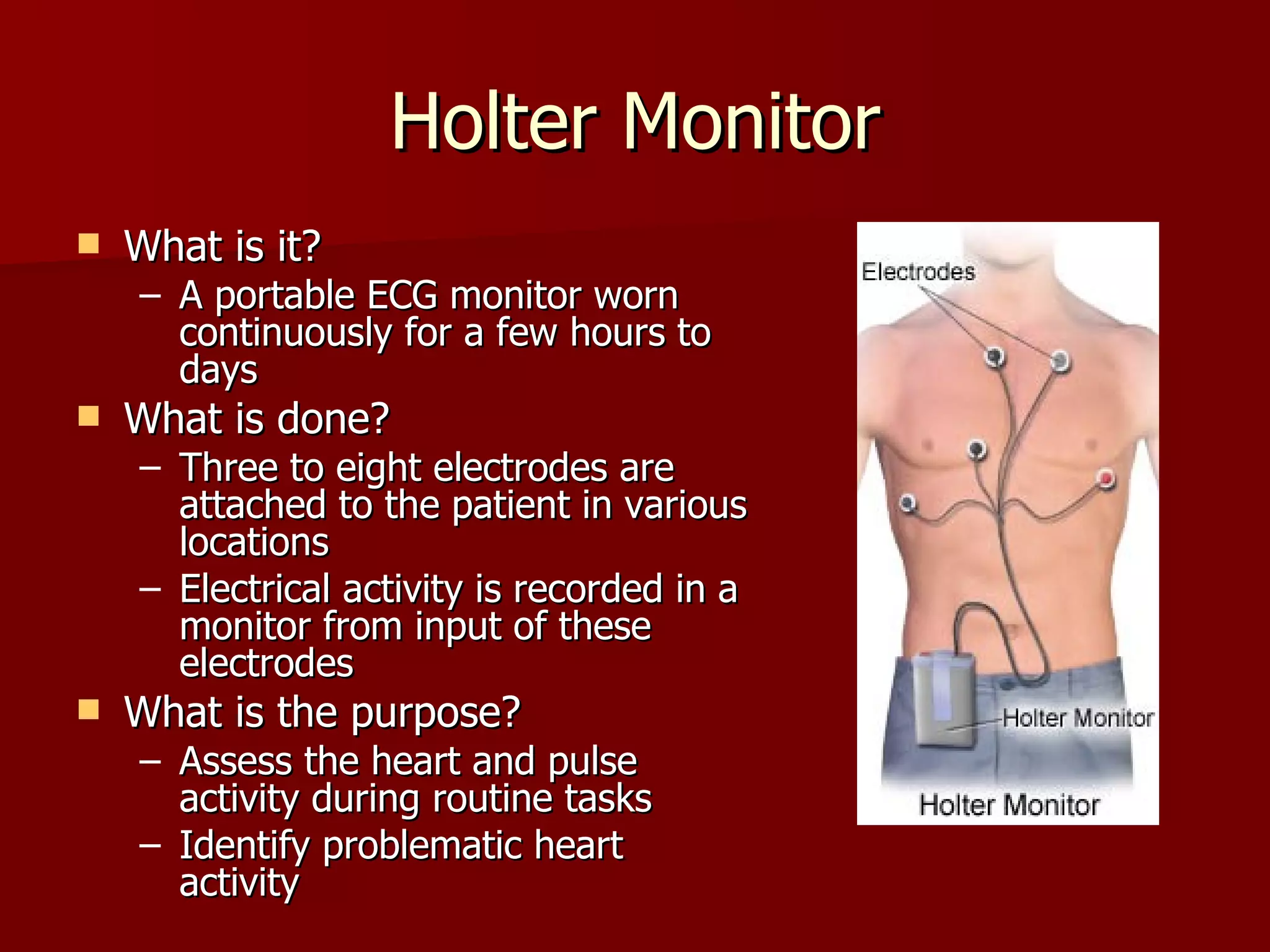
Holter Monitor What is it? A portable ECG monitor worn continuously for a few hours to days What is done? Three to eight electrodes are attached to the patient in various locations Electrical activity is recorded in a monitor from input of these electrodes What is the purpose? Assess the heart and pulse activity during routine tasks Identify problematic heart activity
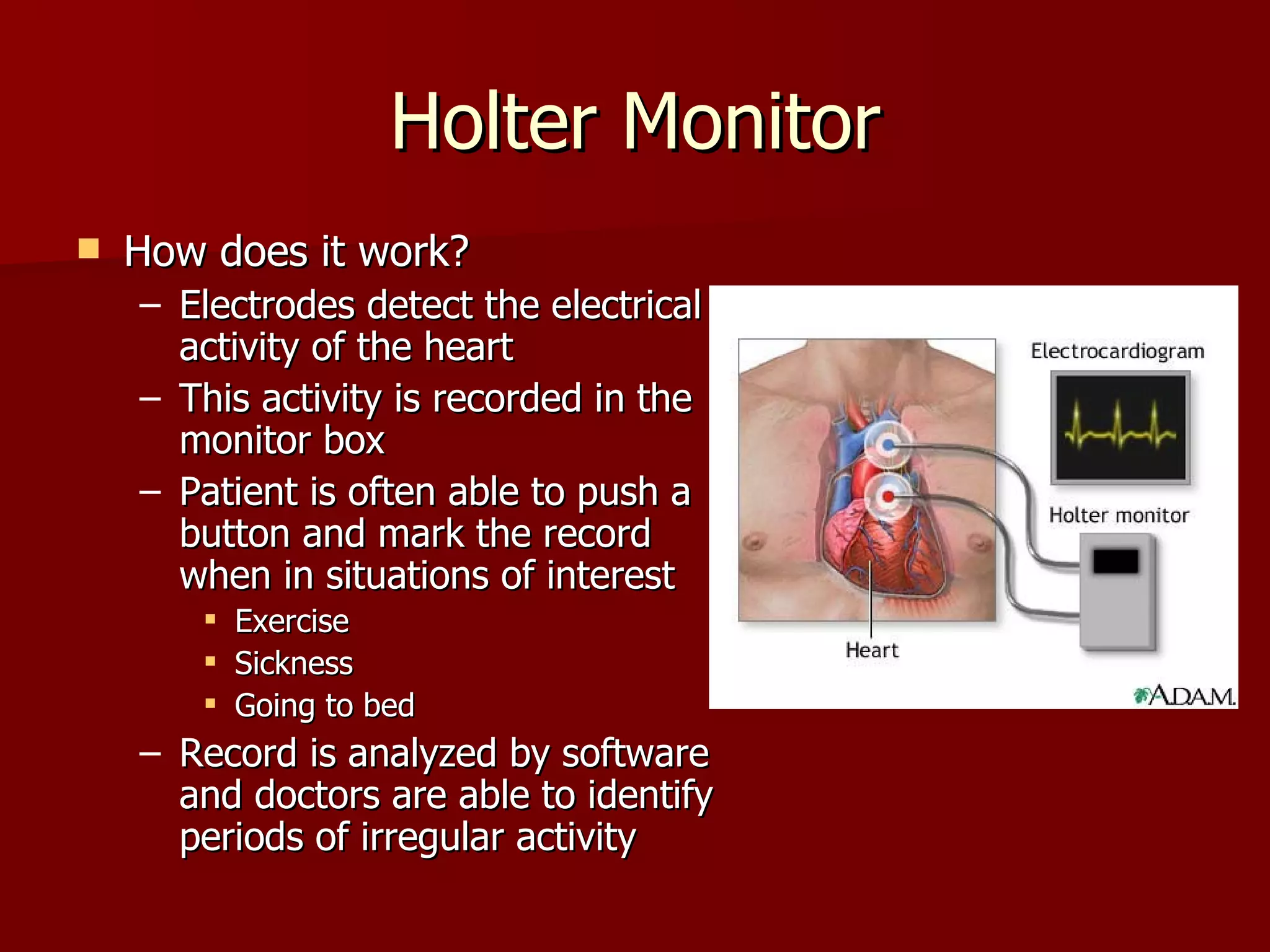
Holter Monitor How does it work? Electrodes detect the electrical activity of the heart This activity is recorded in the monitor box Patient is often able to push a button and mark the record when in situations of interest Exercise Sickness Going to bed Record is analyzed by software and doctors are able to identify periods of irregular activity
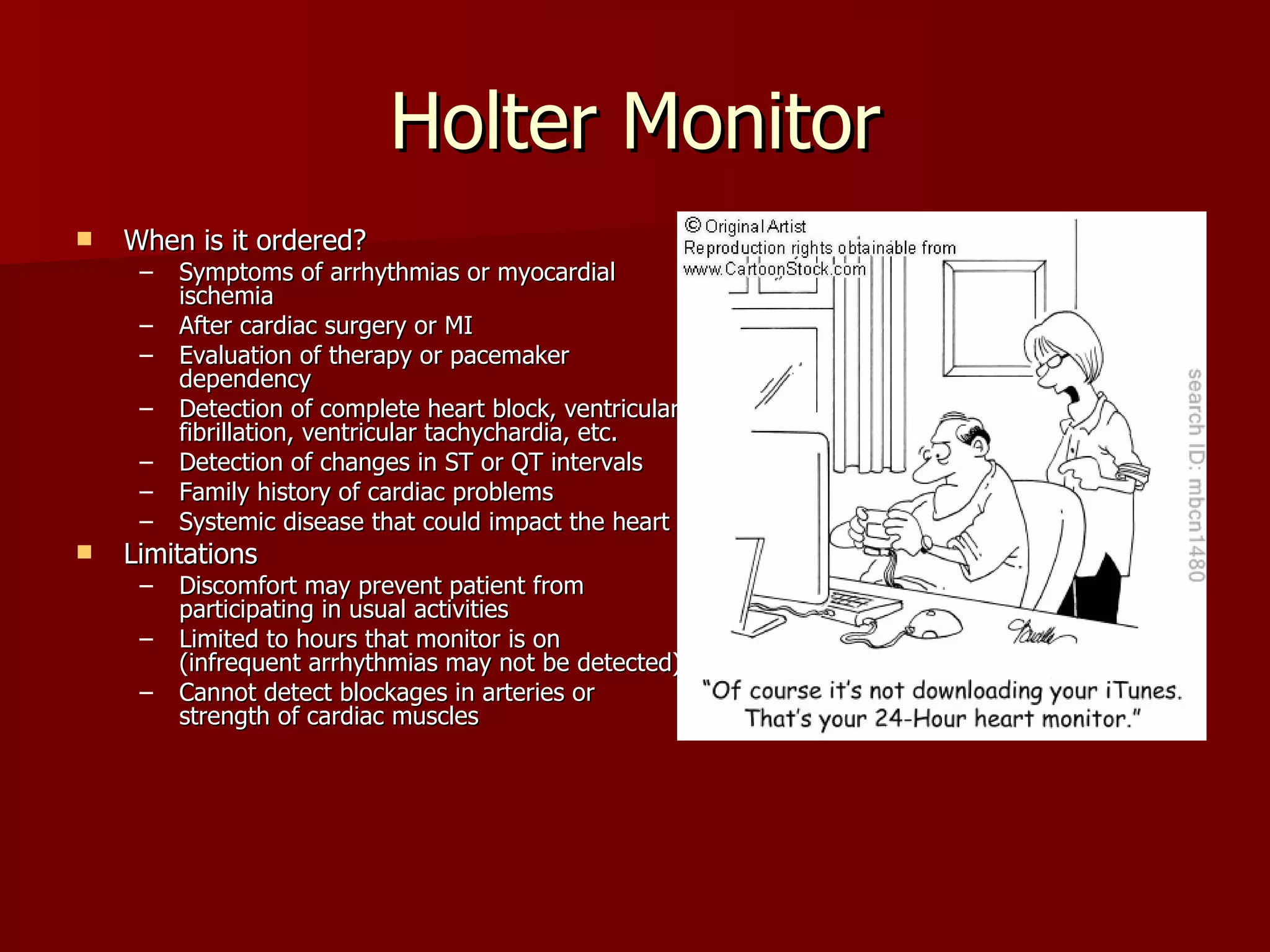
Holter Monitor When is it ordered? Symptoms of arrhythmias or myocardial ischemia After cardiac surgery or MI Evaluation of therapy or pacemaker dependency Detection of complete heart block, ventricular fibrillation, ventricular tachychardia, etc. Detection of changes in ST or QT intervals Family history of cardiac problems Systemic disease that could impact the heart Limitations Discomfort may prevent patient from participating in usual activities Limited to hours that monitor is on (infrequent arrhythmias may not be detected) Cannot detect blockages in arteries or strength of cardiac muscles
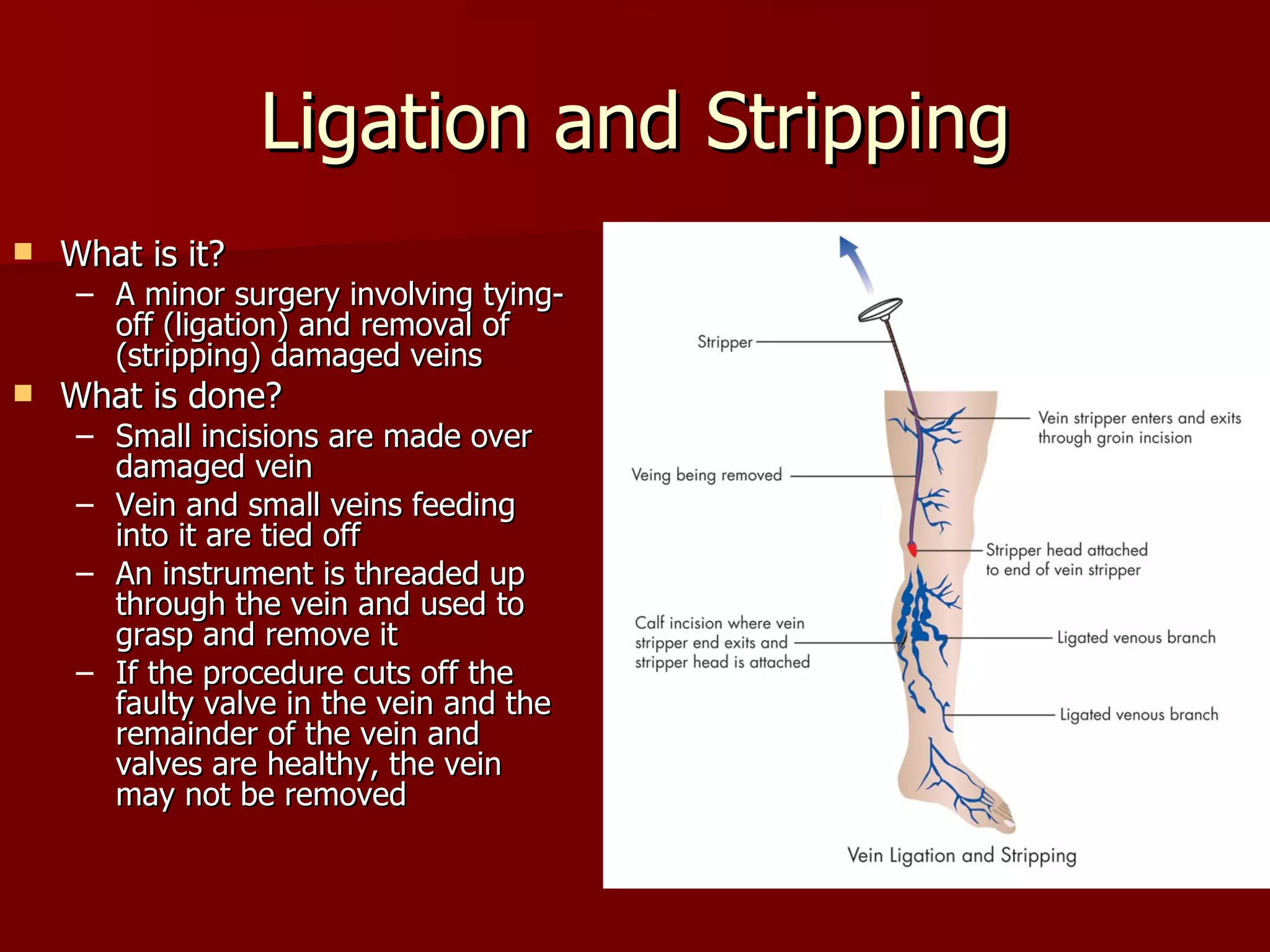
Ligation and Stripping What is it? A minor surgery involving tying-off (ligation) and removal of (stripping) damaged veins What is done? Small incisions are made over damaged vein Vein and small veins feeding into it are tied off An instrument is threaded up through the vein and used to grasp and remove it If the procedure cuts off the faulty valve in the vein and the remainder of the vein and valves are healthy, the vein may not be removed
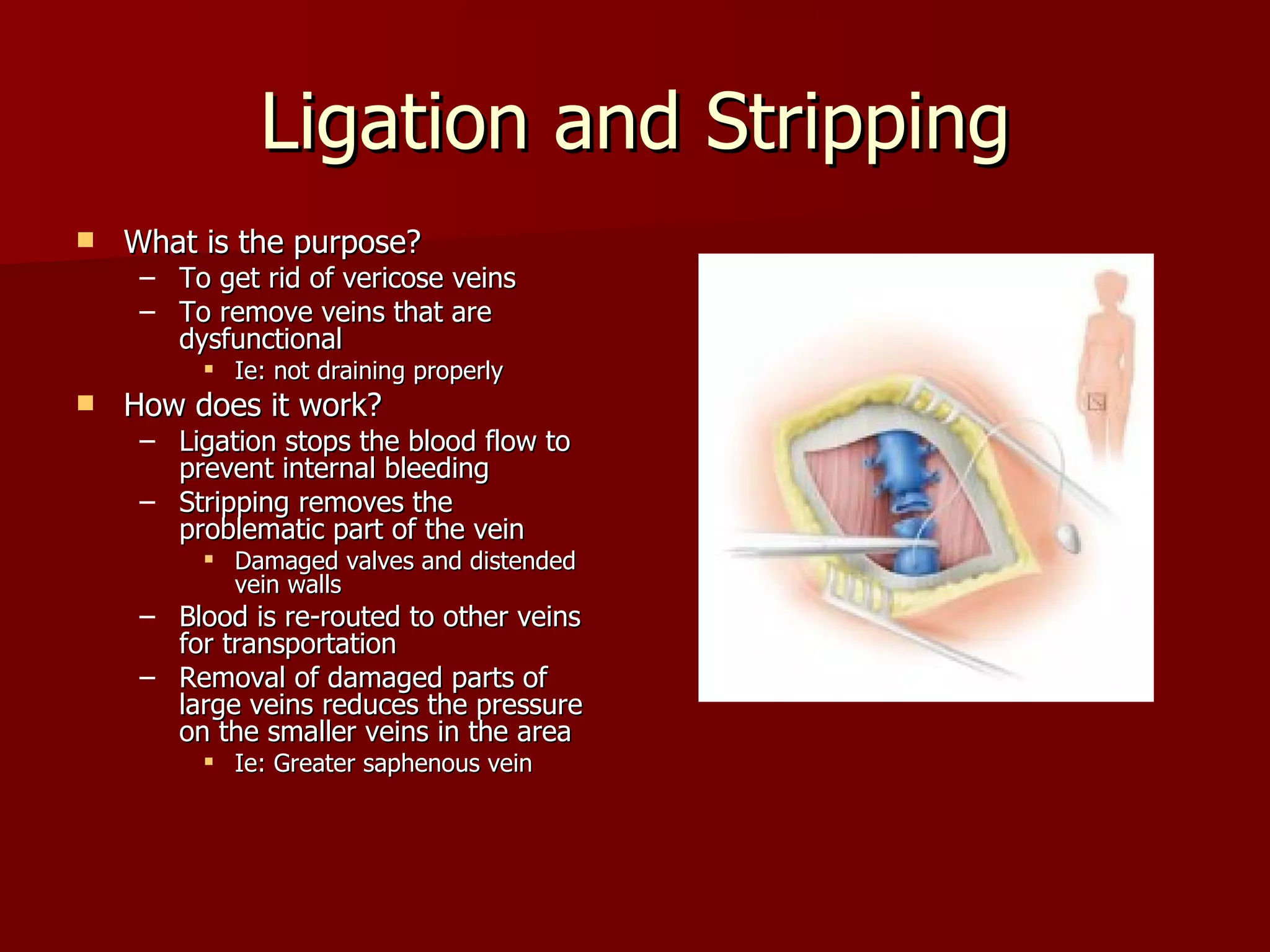
Ligation and Stripping What is the purpose? To get rid of vericose veins To remove veins that are dysfunctional Ie: not draining properly How does it work? Ligation stops the blood flow to prevent internal bleeding Stripping removes the problematic part of the vein Damaged valves and distended vein walls Blood is re-routed to other veins for transportation Removal of damaged parts of large veins reduces the pressure on the smaller veins in the area Ie: Greater saphenous vein
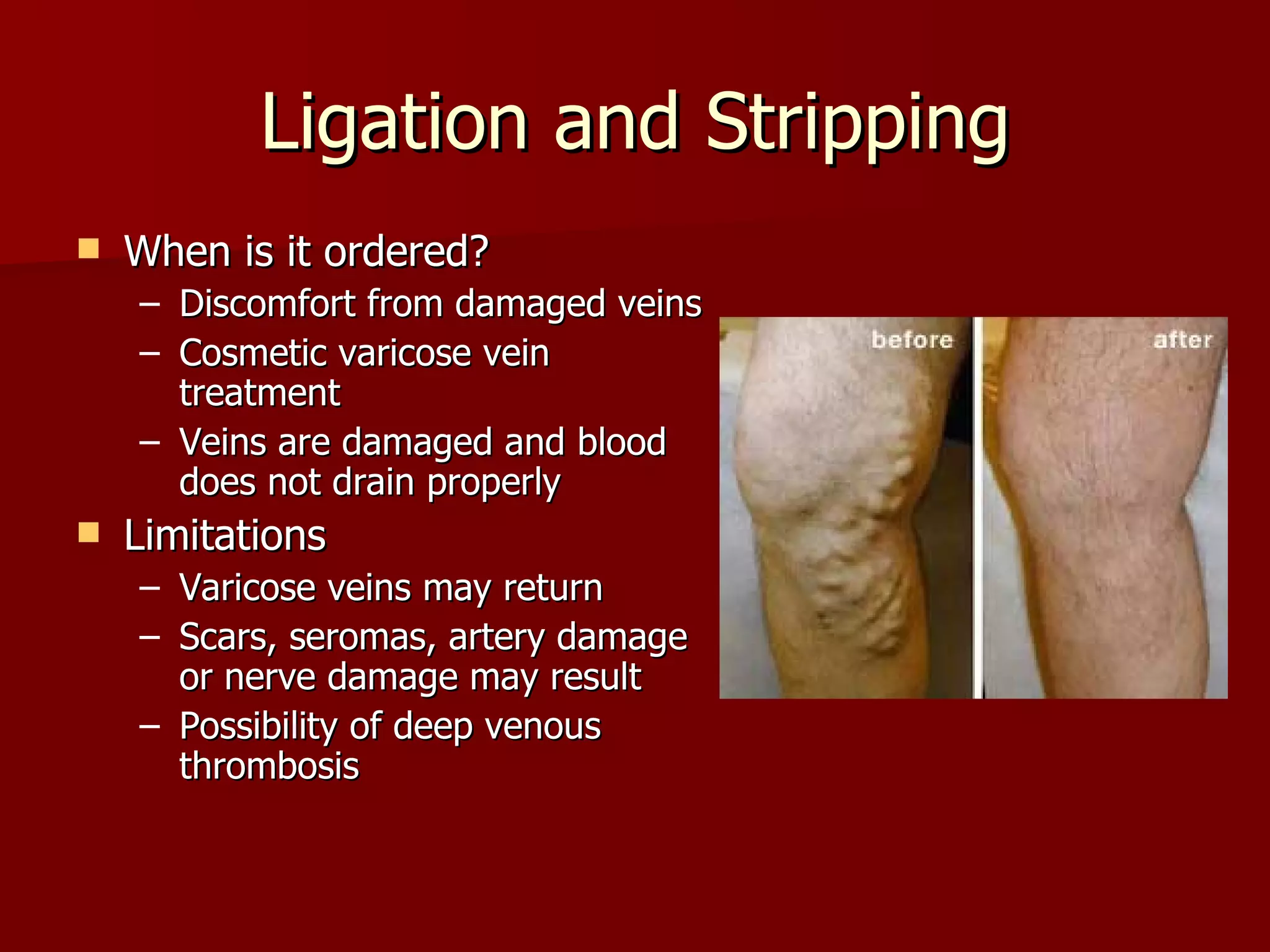
Ligation and Stripping When is it ordered? Discomfort from damaged veins Cosmetic varicose vein treatment Veins are damaged and blood does not drain properly Limitations Varicose veins may return Scars, seromas, artery damage or nerve damage may result Possibility of deep venous thrombosis

Cardiovascular system procedures

  • 1.
  • 2.
    Cardiac Procedures DiagnosticCardiac Enzymes Holter Monitor Therapeutic Ligation and Stripping
  • 3.
    Cardiac Enzymes TestingWhat is it? Blood test to determine the levels of various cardiac enzymes circulating What is done? Venipuncture (blood draw) Laboratory analysis of enzymes What is the purpose? To detect elevated levels of cardiac enzymes, symptoms of cardiac muscle injury ie: myocardial infarction, injury from surgical procedures
  • 4.
    Cardiac Enzymes TestingHow does it work? Enzymes such as creatine phosphkinase (CPK, CK), lactate dehydrogenase (LDH), and glutamic oxaloacetic transaminase (GOT) and proteins like troponin (TnT, Tnl) are found within cardiac muscle cells Very low levels are found naturally in the blood stream Damage to the heart muscle releases higher levels of these enzymes into the blood
  • 5.
    Cardiac Enzymes TestingWhen is it ordered? Concern over heart attack or threatened heart attack Chest pain, shortness of breath, nausea, abnormal EKG, etc After cardiac procedures Bypass surgery Ensure there is no injury to the heart Percutaneous coronary intervention or thrombolytic medicine Determine that therapy has successfully restored blood flow Limitations May take 2-24 hours after MI for elevated levels of some enzymes and proteins to be detected in the blood stream
  • 6.
    Holter Monitor Whatis it? A portable ECG monitor worn continuously for a few hours to days What is done? Three to eight electrodes are attached to the patient in various locations Electrical activity is recorded in a monitor from input of these electrodes What is the purpose? Assess the heart and pulse activity during routine tasks Identify problematic heart activity
  • 7.
    Holter Monitor Howdoes it work? Electrodes detect the electrical activity of the heart This activity is recorded in the monitor box Patient is often able to push a button and mark the record when in situations of interest Exercise Sickness Going to bed Record is analyzed by software and doctors are able to identify periods of irregular activity
  • 8.
    Holter Monitor Whenis it ordered? Symptoms of arrhythmias or myocardial ischemia After cardiac surgery or MI Evaluation of therapy or pacemaker dependency Detection of complete heart block, ventricular fibrillation, ventricular tachychardia, etc. Detection of changes in ST or QT intervals Family history of cardiac problems Systemic disease that could impact the heart Limitations Discomfort may prevent patient from participating in usual activities Limited to hours that monitor is on (infrequent arrhythmias may not be detected) Cannot detect blockages in arteries or strength of cardiac muscles
  • 9.
    Ligation and StrippingWhat is it? A minor surgery involving tying-off (ligation) and removal of (stripping) damaged veins What is done? Small incisions are made over damaged vein Vein and small veins feeding into it are tied off An instrument is threaded up through the vein and used to grasp and remove it If the procedure cuts off the faulty valve in the vein and the remainder of the vein and valves are healthy, the vein may not be removed
  • 10.
    Ligation and StrippingWhat is the purpose? To get rid of vericose veins To remove veins that are dysfunctional Ie: not draining properly How does it work? Ligation stops the blood flow to prevent internal bleeding Stripping removes the problematic part of the vein Damaged valves and distended vein walls Blood is re-routed to other veins for transportation Removal of damaged parts of large veins reduces the pressure on the smaller veins in the area Ie: Greater saphenous vein
  • 11.
    Ligation and StrippingWhen is it ordered? Discomfort from damaged veins Cosmetic varicose vein treatment Veins are damaged and blood does not drain properly Limitations Varicose veins may return Scars, seromas, artery damage or nerve damage may result Possibility of deep venous thrombosis