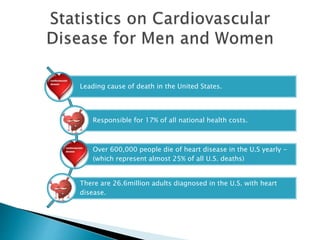
Leading cause of death in the United States.
Responsible for 17% of all national health costs.
Over 600,000 people die of heart disease in the U.S yearly -
(which represent almost 25% of all U.S. deaths)
There are 26.6million adults diagnosed in the U.S. with heart
disease.
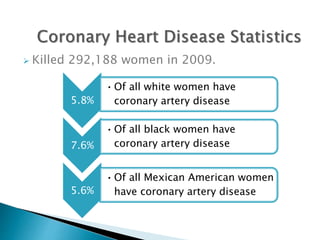
 Killed 292,188 women in 2009.
5.8%
•Of all white women have
coronary artery disease
7.6%
•Of all black women have
coronary artery disease
5.6%
•Of all Mexican American women
have coronary artery disease
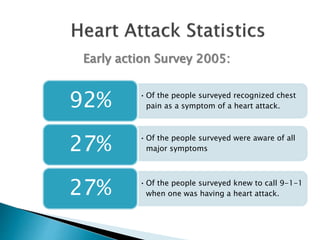
• Of the people surveyed recognized chest
pain as a symptom of a heart attack.92%
• Of the people surveyed were aware of all
major symptoms27%
• Of the people surveyed knew to call 9-1-1
when one was having a heart attack.27%
Early action Survey 2005:
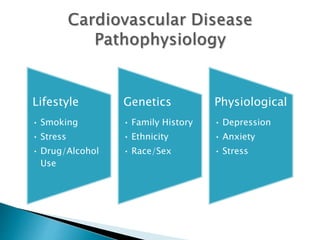
Lifestyle
• Smoking
• Stress
• Drug/Alcohol
Use
Genetics
• Family History
• Ethnicity
• Race/Sex
Physiological
• Depression
• Anxiety
• Stress
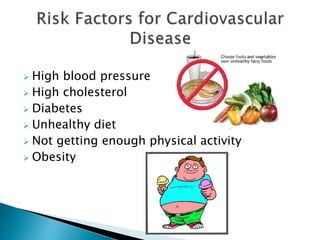
 High blood pressure
 High cholesterol
 Diabetes
 Unhealthy diet
 Not getting enough physical activity
 Obesity
 Drinking too much alcohol
 Tobacco use
 Family genetics
 Family history
 Age – risk as we get older
 Heart disease was the number one killer of
both men and women
 Anemia
 Diabetes mellitus
 Hyperlipidemia
 Hypertension
 Hyperthyroidism
 Myocardial infarction
 Obesity
 Renal failure
 Thyrotoxicosis
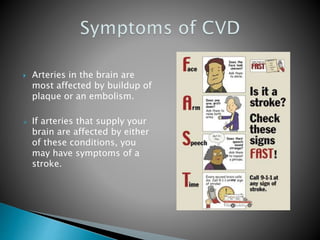
 Arteries in the brain are
most affected by buildup of
plaque or an embolism.
 If arteries that supply your
brain are affected by either
of these conditions, you
may have symptoms of a
stroke.
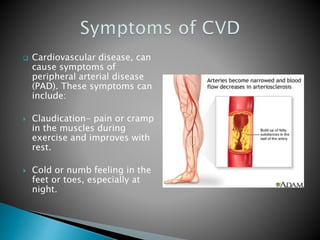
 Cardiovascular disease, can
cause symptoms of
peripheral arterial disease
(PAD). These symptoms can
include:
 Claudication- pain or cramp
in the muscles during
exercise and improves with
rest.
 Cold or numb feeling in the
feet or toes, especially at
night.
 Diet and exercise
 Be active your way
 Healthy eating makes a difference
 Maintain healthy body weight.
 Eat more fresh fruits and vegetables
 Decrease intake of fatty food
 Cut down on salty snacks and canned food
 Discontinue use of tobacco products
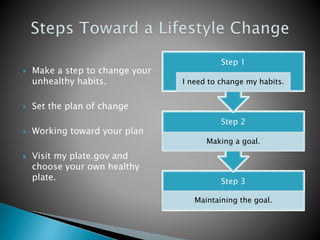
 Make a step to change your
unhealthy habits.
 Set the plan of change
 Working toward your plan
 Visit my plate.gov and
choose your own healthy
plate. Step 3
Maintaining the goal.
Step 2
Making a goal.
Step 1
I need to change my habits.
 CDC. (2015, April 30). Women and Heart Disease Fact Sheet. Retrieved October 25,
2015, from
http://www.cdc.gov/dhdsp/data_statistics/fact_sheets/fs_womenheart.htm
 Elyubaeva, MD, PhD, I. (2010). Clinical benefits of pure heart rate reduction with
Corlentor: Evidence and perspectives. Retrieved October 25, 2015, from
http://www.medicographia.com/2010/07/clinical-benefits-of-pure-heart-rate-
reduction-with-corlentor-evidence-and-perspectives/
 Heart Disease. (2015, May 14). Retrieved October 26, 2015, from
http://www.cdc.gov/nchs/fastats/heart-disease.htm
 http://www.heart.org/HEARTORG/Conditions/Answers-by-Heart-Fact-
Sheets_UCM_300330_Article.jsp#.VizfWGvXvlc
 https://www.thedacare.org/HealthLibraryandConditions/Cardiology/Understandin
gHeartandVascularProblems/RisksandWarningSigns.aspx
 Women and Heart Disease Fact Sheet. (2015, April 30). Retrieved October 22,
2015.

Cardiovascular Diseases

  • 2.
    Leading cause ofdeath in the United States. Responsible for 17% of all national health costs. Over 600,000 people die of heart disease in the U.S yearly - (which represent almost 25% of all U.S. deaths) There are 26.6million adults diagnosed in the U.S. with heart disease.
  • 3.
     Killed 292,188women in 2009. 5.8% •Of all white women have coronary artery disease 7.6% •Of all black women have coronary artery disease 5.6% •Of all Mexican American women have coronary artery disease
  • 4.
    • Of thepeople surveyed recognized chest pain as a symptom of a heart attack.92% • Of the people surveyed were aware of all major symptoms27% • Of the people surveyed knew to call 9-1-1 when one was having a heart attack.27% Early action Survey 2005:
  • 5.
    Lifestyle • Smoking • Stress •Drug/Alcohol Use Genetics • Family History • Ethnicity • Race/Sex Physiological • Depression • Anxiety • Stress
  • 6.
     High bloodpressure  High cholesterol  Diabetes  Unhealthy diet  Not getting enough physical activity  Obesity
  • 7.
     Drinking toomuch alcohol  Tobacco use  Family genetics  Family history  Age – risk as we get older  Heart disease was the number one killer of both men and women
  • 8.
     Anemia  Diabetesmellitus  Hyperlipidemia  Hypertension  Hyperthyroidism  Myocardial infarction  Obesity  Renal failure  Thyrotoxicosis
  • 10.
     Arteries inthe brain are most affected by buildup of plaque or an embolism.  If arteries that supply your brain are affected by either of these conditions, you may have symptoms of a stroke.
  • 11.
     Cardiovascular disease,can cause symptoms of peripheral arterial disease (PAD). These symptoms can include:  Claudication- pain or cramp in the muscles during exercise and improves with rest.  Cold or numb feeling in the feet or toes, especially at night.
  • 12.
     Diet andexercise  Be active your way  Healthy eating makes a difference  Maintain healthy body weight.  Eat more fresh fruits and vegetables  Decrease intake of fatty food  Cut down on salty snacks and canned food  Discontinue use of tobacco products
  • 13.
     Make astep to change your unhealthy habits.  Set the plan of change  Working toward your plan  Visit my plate.gov and choose your own healthy plate. Step 3 Maintaining the goal. Step 2 Making a goal. Step 1 I need to change my habits.
  • 14.
     CDC. (2015,April 30). Women and Heart Disease Fact Sheet. Retrieved October 25, 2015, from http://www.cdc.gov/dhdsp/data_statistics/fact_sheets/fs_womenheart.htm  Elyubaeva, MD, PhD, I. (2010). Clinical benefits of pure heart rate reduction with Corlentor: Evidence and perspectives. Retrieved October 25, 2015, from http://www.medicographia.com/2010/07/clinical-benefits-of-pure-heart-rate- reduction-with-corlentor-evidence-and-perspectives/  Heart Disease. (2015, May 14). Retrieved October 26, 2015, from http://www.cdc.gov/nchs/fastats/heart-disease.htm  http://www.heart.org/HEARTORG/Conditions/Answers-by-Heart-Fact- Sheets_UCM_300330_Article.jsp#.VizfWGvXvlc  https://www.thedacare.org/HealthLibraryandConditions/Cardiology/Understandin gHeartandVascularProblems/RisksandWarningSigns.aspx  Women and Heart Disease Fact Sheet. (2015, April 30). Retrieved October 22, 2015.