PRESENTED BY :- RAMANPREET KAUR
POST BASIC BSC 1ST YEAR
ROLL NO.-23
CARDIAC TAMPONADE
CARDIAC TAMPONADE
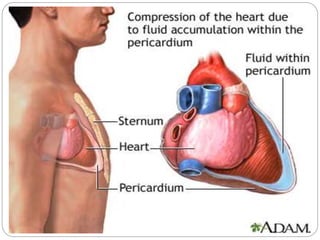
“Cardiac Tamponade is compression of the
heart resulting from fluid or blood within the
pericardial sac.”
(Brunner)
Cardiac tamponade is pressure on the heart
that occurs when blood or fluid builds up in
the space between the heart
muscle(myocardium) and the outer covering
sac of the heart(pericardium).
NORMAL FUNCTIONS OF
PERICARDIUM
 An optimal Cardiac Shape
 Reducing the friction between beating
heart and adjacent structure.
 Protecting the heart from other disease
which are caused by other organs. E.g
T.B , cancer etc.
 Preventing the overfilling of the heart
ETIOLOGY
 Exact Etiology is idiopathic.
 Viral Pericarditis
 Heart Failure
 Acute MI
 Chest trauma
 Cancer
 Kidney Failure
 Tuberculosis
 Hypothyroidism
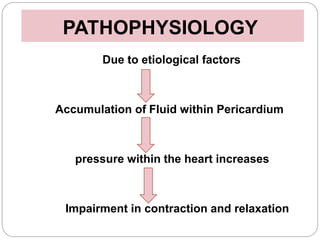
PATHOPHYSIOLOGY
Due to etiological factors
Accumulation of Fluid within Pericardium
pressure within the heart increases
Impairment in contraction and relaxation
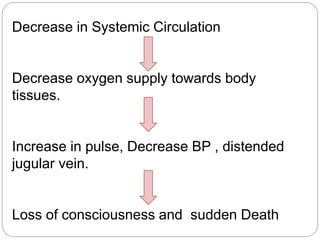
Decrease in Systemic Circulation
Decrease oxygen supply towards body
tissues.
Increase in pulse, Decrease BP , distended
jugular vein.
Loss of consciousness and sudden Death
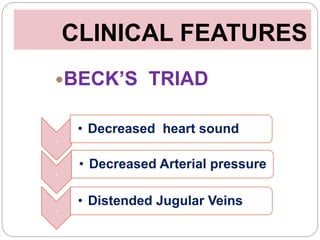
CLINICAL FEATURES
BECK’S TRIAD
.
• Decreased heart sound
.
• Decreased Arterial pressure
.
• Distended Jugular Veins
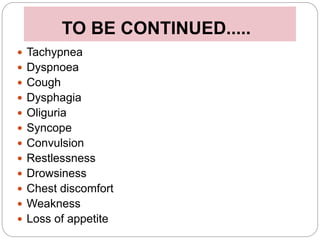
TO BE CONTINUED.....
 Tachypnea
 Dyspnoea
 Cough
 Dysphagia
 Oliguria
 Syncope
 Convulsion
 Restlessness
 Drowsiness
 Chest discomfort
 Weakness
 Loss of appetite
DIAGNOSTIC EVALUATION
 HISTORY COLLECTION
-Cardiovascular diseases eg CAD, MI,
Cardiomyopathy
-Medication History
 GENERAL PHYSICAL EXAMINATION
 BLOOD EXAMINATION
 ECG
 CHEST X-RAY
 ECHOCARDIOGRAM
TO BE CONTINUED......
 CT- Scan
 MRI
 Coronary angiography.
MEDICAL MANAGEMENT
 Supplemental oxygen to reduce
work load on the heart.
 IV fluids to maintain normal BP
 Antibiotics
 Inotropic drugs if patient is severely
hypotensive drugs eg Dopamine,
Dorbutamine.
 Avoid diuretics or vasodilator.
TO BE CONTINUED........
 Bed rest with leg elevation : helps
to return venous return
 Positive pressure ventilation should
avoided. ( It may decrease venous
return and aggravate the symptoms
of tamponade
SURGICAL MANAGEMENT
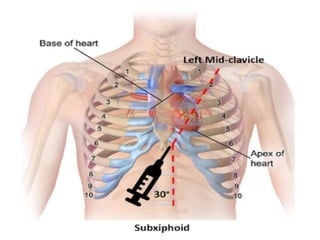
PERICARDIOCENTESIS
Pericardiocentesis, also called a
pericardial tap, is a surgical invasive
procedure ( use both diagnostic and
therapeutic purpose) in which abnormal
or excessive fluid is removed from the
pericardium sac ,the sac around your
heart.
TO BE CONTINUED......
 The treatment of cardiac
tamponade is drainage of the
pericardial contents, preferably by
needle paracentesis, with the use of
echocardiography or another type
of imaging, such as fluoroscopy or
CT.
NURSING MANAGEMENT
 Ineffective Breathing Pattern related to:
hyperventilation .
 Decreased cardiac output related to
reduced ventricular filling secondary to
increased intrapericardial pressure.
 Activity intolerance related to
restlessness, fatigue .
 Knowledge deficiet related to disease
condition.
cardiac tamponade.pptx

cardiac tamponade.pptx

  • 2.
    PRESENTED BY :-RAMANPREET KAUR POST BASIC BSC 1ST YEAR ROLL NO.-23 CARDIAC TAMPONADE
  • 3.
    CARDIAC TAMPONADE “Cardiac Tamponadeis compression of the heart resulting from fluid or blood within the pericardial sac.” (Brunner) Cardiac tamponade is pressure on the heart that occurs when blood or fluid builds up in the space between the heart muscle(myocardium) and the outer covering sac of the heart(pericardium).
  • 5.
    NORMAL FUNCTIONS OF PERICARDIUM An optimal Cardiac Shape  Reducing the friction between beating heart and adjacent structure.  Protecting the heart from other disease which are caused by other organs. E.g T.B , cancer etc.  Preventing the overfilling of the heart
  • 6.
    ETIOLOGY  Exact Etiologyis idiopathic.  Viral Pericarditis  Heart Failure  Acute MI  Chest trauma  Cancer  Kidney Failure  Tuberculosis  Hypothyroidism
  • 7.
    PATHOPHYSIOLOGY Due to etiologicalfactors Accumulation of Fluid within Pericardium pressure within the heart increases Impairment in contraction and relaxation
  • 8.
    Decrease in SystemicCirculation Decrease oxygen supply towards body tissues. Increase in pulse, Decrease BP , distended jugular vein. Loss of consciousness and sudden Death
  • 9.
    CLINICAL FEATURES BECK’S TRIAD . •Decreased heart sound . • Decreased Arterial pressure . • Distended Jugular Veins
  • 10.
    TO BE CONTINUED..... Tachypnea  Dyspnoea  Cough  Dysphagia  Oliguria  Syncope  Convulsion  Restlessness  Drowsiness  Chest discomfort  Weakness  Loss of appetite
  • 11.
    DIAGNOSTIC EVALUATION  HISTORYCOLLECTION -Cardiovascular diseases eg CAD, MI, Cardiomyopathy -Medication History  GENERAL PHYSICAL EXAMINATION  BLOOD EXAMINATION  ECG  CHEST X-RAY  ECHOCARDIOGRAM
  • 12.
    TO BE CONTINUED...... CT- Scan  MRI  Coronary angiography.
  • 13.
    MEDICAL MANAGEMENT  Supplementaloxygen to reduce work load on the heart.  IV fluids to maintain normal BP  Antibiotics  Inotropic drugs if patient is severely hypotensive drugs eg Dopamine, Dorbutamine.  Avoid diuretics or vasodilator.
  • 14.
    TO BE CONTINUED........ Bed rest with leg elevation : helps to return venous return  Positive pressure ventilation should avoided. ( It may decrease venous return and aggravate the symptoms of tamponade
  • 15.
    SURGICAL MANAGEMENT PERICARDIOCENTESIS Pericardiocentesis, alsocalled a pericardial tap, is a surgical invasive procedure ( use both diagnostic and therapeutic purpose) in which abnormal or excessive fluid is removed from the pericardium sac ,the sac around your heart.
  • 17.
    TO BE CONTINUED...... The treatment of cardiac tamponade is drainage of the pericardial contents, preferably by needle paracentesis, with the use of echocardiography or another type of imaging, such as fluoroscopy or CT.
  • 18.
    NURSING MANAGEMENT  IneffectiveBreathing Pattern related to: hyperventilation .  Decreased cardiac output related to reduced ventricular filling secondary to increased intrapericardial pressure.  Activity intolerance related to restlessness, fatigue .  Knowledge deficiet related to disease condition.