






IN ACUTE 
MYOCARDI 
AL 
INFRACTIO 
N
1. MYOCARDIAL INFRACTION IS THE 
MEDICAL TERM FOR AN EVENT 
COMMONLY KNOWN AS HEART 
ATTACK. 
2. IT OCCURS WHEN BLOOD STOPS 
FLOWING PROPERLY TO A PART OF 
THE HEART AND THE HEART MUSCLE 
IS INJURED DUE TO INSUFFICIENT 
OXYGEN. 
3. THERE IS BLOCKAGE IN CORONARY 
ARTERIES DUE TO UNSTABLE BUILDUP 
OF WBC , CHOLESTEROL AND FAT 
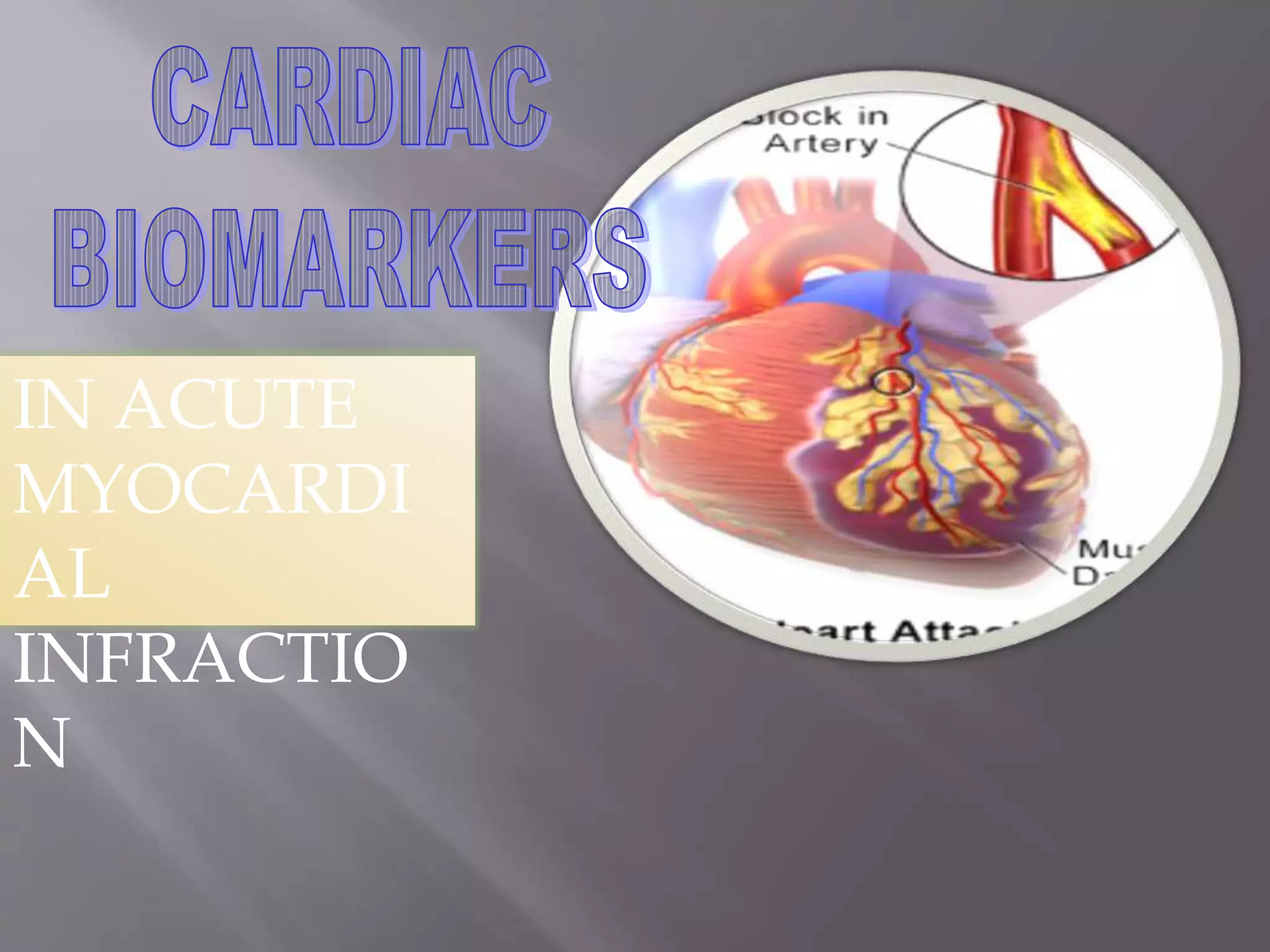
Diagram of a myocardial infarction 
(2) of the tip of the anterior wall of 
the heart (an apical infarct) after 
occlusion (1) of a branch of the left 
coronary artery (LCA).
 1. SUDDEN CHEST PAIN 
 2. SHORTNESS OF THE BREATH 
 3.SWEATING 
 4.NAUSEA 
 5. VOMITING 
 6. ABNORMAL HEART BEATS 
 ANXIETY
 A PATIENT IS DIAGNOSED WITH MI IF 2 
OR 3 OF THE FOLLOWING CRITERIA ARE 
SATISFIED 
 1. CHEST PAIN LASTING FOR MORE THAN 
20 MINUTES 
 2 . CHANGES IN SERIAL ECG TRACING 
 3. RISE AND FALL OF SERUM CARDIAC 
BIOMARKERS
 ischemia to myocardial muscles (with low O2 supply) 
 anaerobic glycolysis 
 increased accumulation of Lactate 
 decrease in pH 
 activate lysosomal enzymes 
 disintegration of myocardial proteins 
 cell death & necrosis 
CLINICALmanifestations BIOMARKERS ECG CHANGES
 A BIOMARKER is 
measurable and quantifiable 
biological parameter which 
serve as indices for health-and 
physiology-related 
assessments such as disease 
risk, psychiatric disorder, 
environmental exposure and 
its effects, disease diagnosis, 
metabolic processes, 
substance abuse, pregnancy, 
cell line development, 
epidemiologic studies, etc
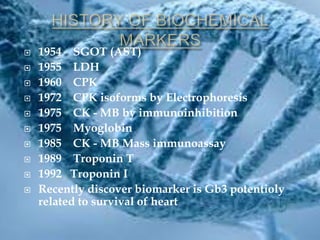
 1954 SGOT (AST) 
 1955 LDH 
 1960 CPK 
 1972 CPK isoforms by Electrophoresis 
 1975 CK - MB by immunoinhibition 
 1975 Myoglobin 
 1985 CK - MB Mass immunoassay 
 1989 Troponin T 
 1992 Troponin I 
 Recently discover biomarker is Gb3 potentioly 
related to survival of heart
 Diagnostically has; 
1. High sensitivity (detection of MI positive cases) 
2. High specificity (absent in non-myocardial injury) Rapidly release at a 
detectible concentration 
3. Correlate efficiently with the extent of MI 
4. Persists in blood for valuable time (long 1/2 life) 
 Analytically has; 
1. High sensitivity (low detectable limit) 
2. High specificity (less interferences) 
3. Easy, inexpensive and rapidly tested ( short TAT)
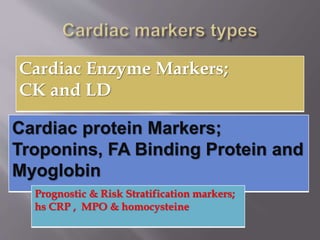
Cardiac Enzyme Markers; 
CK and LD 
Cardiac protein Markers; 
Troponins, FA Binding Protein and 
Myoglobin 
Prognostic & Risk Stratification markers; 
hs CRP , MPO & homocysteine
 1.MUSELE CREATINE KINASE CATALAYSES THE 
TRANSFER OF PHOSPHATE BETWEEN AND ATP 
 2. CK IN SERUM IS UNSTABLE AS A RESULT OF 
OXYDATION OF SULFHYDRYL GROUP 
 3.IT IS RELATAVILY SPECIFIC WHEN SKELETAL 
MUSCLE DAMAGE IS NOT PRESENT 
 4. THE CKMB ISOFORM OF CK IS EXPRESSED IN 
HEART MUSCLE 
 5 SINCE IT HAS SHORT DURATION IT CAN NOT BE 
USED FOR LATE DIAGNOSIS OF ACUTE MI BUT 
CAN BE USED TO SUGGEST INFRACT EXTENTION 
IF LEVEL RISE AGAIN
cardiology

cardiology

  • 1.
    IN ACUTE MYOCARDI AL INFRACTIO N
  • 2.
    1. MYOCARDIAL INFRACTIONIS THE MEDICAL TERM FOR AN EVENT COMMONLY KNOWN AS HEART ATTACK. 2. IT OCCURS WHEN BLOOD STOPS FLOWING PROPERLY TO A PART OF THE HEART AND THE HEART MUSCLE IS INJURED DUE TO INSUFFICIENT OXYGEN. 3. THERE IS BLOCKAGE IN CORONARY ARTERIES DUE TO UNSTABLE BUILDUP OF WBC , CHOLESTEROL AND FAT Diagram of a myocardial infarction (2) of the tip of the anterior wall of the heart (an apical infarct) after occlusion (1) of a branch of the left coronary artery (LCA).
  • 3.
     1. SUDDENCHEST PAIN  2. SHORTNESS OF THE BREATH  3.SWEATING  4.NAUSEA  5. VOMITING  6. ABNORMAL HEART BEATS  ANXIETY
  • 5.
     A PATIENTIS DIAGNOSED WITH MI IF 2 OR 3 OF THE FOLLOWING CRITERIA ARE SATISFIED  1. CHEST PAIN LASTING FOR MORE THAN 20 MINUTES  2 . CHANGES IN SERIAL ECG TRACING  3. RISE AND FALL OF SERUM CARDIAC BIOMARKERS
  • 6.
     ischemia tomyocardial muscles (with low O2 supply)  anaerobic glycolysis  increased accumulation of Lactate  decrease in pH  activate lysosomal enzymes  disintegration of myocardial proteins  cell death & necrosis CLINICALmanifestations BIOMARKERS ECG CHANGES
  • 7.
     A BIOMARKERis measurable and quantifiable biological parameter which serve as indices for health-and physiology-related assessments such as disease risk, psychiatric disorder, environmental exposure and its effects, disease diagnosis, metabolic processes, substance abuse, pregnancy, cell line development, epidemiologic studies, etc
  • 8.
     1954 SGOT(AST)  1955 LDH  1960 CPK  1972 CPK isoforms by Electrophoresis  1975 CK - MB by immunoinhibition  1975 Myoglobin  1985 CK - MB Mass immunoassay  1989 Troponin T  1992 Troponin I  Recently discover biomarker is Gb3 potentioly related to survival of heart
  • 9.
     Diagnostically has; 1. High sensitivity (detection of MI positive cases) 2. High specificity (absent in non-myocardial injury) Rapidly release at a detectible concentration 3. Correlate efficiently with the extent of MI 4. Persists in blood for valuable time (long 1/2 life)  Analytically has; 1. High sensitivity (low detectable limit) 2. High specificity (less interferences) 3. Easy, inexpensive and rapidly tested ( short TAT)
  • 10.
    Cardiac Enzyme Markers; CK and LD Cardiac protein Markers; Troponins, FA Binding Protein and Myoglobin Prognostic & Risk Stratification markers; hs CRP , MPO & homocysteine
  • 11.
     1.MUSELE CREATINEKINASE CATALAYSES THE TRANSFER OF PHOSPHATE BETWEEN AND ATP  2. CK IN SERUM IS UNSTABLE AS A RESULT OF OXYDATION OF SULFHYDRYL GROUP  3.IT IS RELATAVILY SPECIFIC WHEN SKELETAL MUSCLE DAMAGE IS NOT PRESENT  4. THE CKMB ISOFORM OF CK IS EXPRESSED IN HEART MUSCLE  5 SINCE IT HAS SHORT DURATION IT CAN NOT BE USED FOR LATE DIAGNOSIS OF ACUTE MI BUT CAN BE USED TO SUGGEST INFRACT EXTENTION IF LEVEL RISE AGAIN