EUROPEAN BIOFUEL STANDARDS
                           AND REGULATIONS


                           BARRY CAHILL (PSA PEUGEOT CITROEN)
                            CONVENOR CEN TASK FORCE ETHANOL
                           CONVENOR CEN TASK FORCE BIODIESEL

                                                    27 February 2007
PSA Peugeot Citroën              1
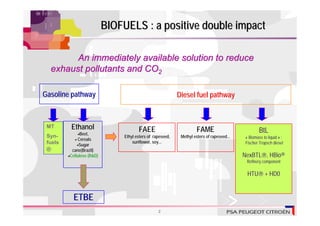
BIOFUELS : a positive double impact

        An immediately available solution to reduce
  exhaust pollutants and CO2

Gasoline pathway                                            Diesel fuel pathway


 MT      Ethanol                       FAEE                          FAME                           BtL
              Beet,
 Syn-                           Ethyl esters of rapeseed,    Methyl esters of rapeseed...   « Biomass to liquid » :
             Cereals
 fuels                              sunflower, soy...                                       Fischer Tropsch diesel
              Sugar
 ®        cane(Brazil)
         Cellulose (R&D)                                                                    NexBTL®, HBio®
                                                                                             Refinery component

                                                                                             HTU® + HD0


          ETBE
                                                  2
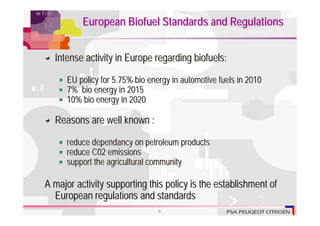
European Biofuel Standards and Regulations


  Intense activity in Europe regarding biofuels:

      EU policy for 5.75% bio energy in automotive fuels in 2010
      7% bio energy in 2015
      10% bio energy in 2020

  Reasons are well known :

      reduce dependancy on petroleum products
      reduce C02 emissions
      support the agricultural community

A major activity supporting this policy is the establishment of
  European regulations and standards
                                 3
European Biofuel Standards and Regulations

In Europe, fuel specifications are established by three means:

  By EU Directive: the parameters and limits are those that
  influence the environment
     e.g. lead, sulphur, volatility, PAH...

   Generally a Directive is obligatory in all EU member states.

  By CEN standards: these are full standards drawn up by
  industry experts, incorporating Directive elements (when
  they exist) and incorporated into National Regulations

  Additionally, national standards apply for special cases,
  e.g. France allows B30 for captive fleets
       Sweden allows E95 for diesel bus fleets
                                    4
STANDARDS PROGRESS TO DATE
What have we achieved so far?
 A CEN Task Force worked on a Biodiesel specification that is
 now the Standard EN 14214:
 methyl ester based on knowledge of existing oils, mainly
 rapeseed, sunflower
 involved experts from Auto, Oil, Agricultural industries
 fuel can be used at 100% in adapted vehicles, or as a blend
 component in conventional diesel fuel
 working well in market, 3.2 MT in 2005, will double soon.
 component at 5% in EN590 diesel fuel
 component at 30% in captive fleet fuel
 finished fuel at 100% in Germany for adapted vehicles
                             5
STANDARDS PROGRESS TO DATE


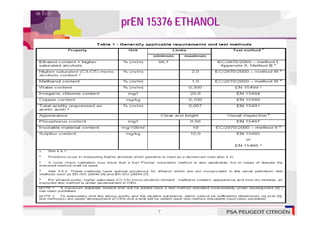
CEN Taskforce working on European ethanol standard
since 2004, now practically finished:
  known as prEN 15376
  involves experts from Auto, Oil, Agricultural industries
  specifies ethanol as a blending component at up to 5%
  many new measurement standards developed
  takes into account specific requirements of ethanol distribution
  and use in Europe:
     low water content
     range of non-harmful denaturants
     level of impurities that will not harm exhaust gas treatment systems
     when used at up to 5%
  draft standard will be voted this year


                               6
prEN 15376 ETHANOL


      7
TRENDS FOR THE FUTURE


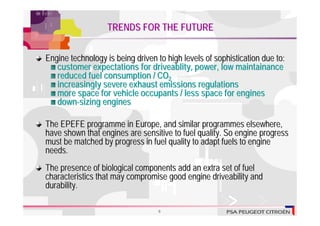
Engine technology is being driven to high levels of sophistication due to:
   customer expectations for driveablity, power, low maintainance
   reduced fuel consumption / CO2
   increasingly severe exhaust emissions regulations
   more space for vehicle occupants / less space for engines
   down-sizing engines

The EPEFE programme in Europe, and similar programmes elsewhere,
have shown that engines are sensitive to fuel quality. So engine progress
must be matched by progress in fuel quality to adapt fuels to engine
needs.
The presence of biological components add an extra set of fuel
characteristics that may compromise good engine driveability and
durability.

                                  8
Recent progress in Diesel engines

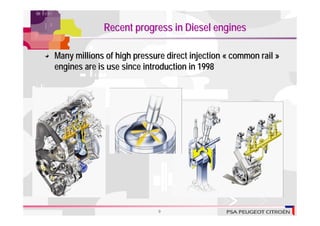
Many millions of high pressure direct injection « common rail »
engines are is use since introduction in 1998


                             9
Diesel Particulate Filter System
                                                                   Injector +
                                                                   régulator

               High pressure                                 Fuel tank
 HDi           pump                Calculator
 engine                                                            Feed pump
                               1     2    3        1. Pilot injection
                                                                                ADDITIVE TANK
                                                   2. Principal injection
                                                   3. Secondary injection

 Common rail                                           Sensors : P and T
 injectionl
                                                                                      Exhaust gas

                                                  DPF              silencer
                                         Oxydation
                                         catalyst               DPF


Engine fuel          COMMON RAIL
system
                               The particule is intercepted
                               and burned

                                              10
Effects of Biofuels on Engines

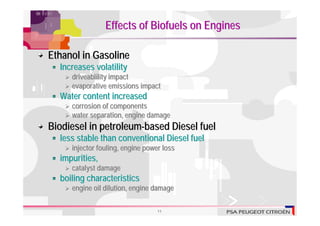
Ethanol in Gasoline
  Increases volatility
     driveablility impact
     evaporative emissions impact
  Water content increased
     corrosion of components
     water separation, engine damage
Biodiesel in petroleum-based Diesel fuel
  less stable than conventional Diesel fuel
     injector fouling, engine power loss
  impurities,
     catalyst damage
  boiling characteristics
     engine oil dilution, engine damage

                                  11
Next Steps


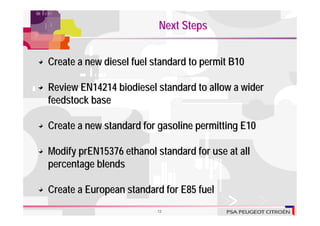
Create a new diesel fuel standard to permit B10

Review EN14214 biodiesel standard to allow a wider
feedstock base

Create a new standard for gasoline permitting E10

Modify prEN15376 ethanol standard for use at all
percentage blends

Create a European standard for E85 fuel
                          12
World Biofuel Standards?

Engine requirements in terms of fuel are the same the
world over - see World Wide Fuel Charter
The engine constraints mentioned earlier incite engine
makers to demand fuels of very high quality
Biofuel producers must recognise and follow this trend if
they wish to access the market. If automobile owners
associate biofuel with vehicle problems, there is not any
future for biofuels
World biofuel standards may be possible, but only at high
quality levels consistent with engine requirements


                          13
Conclusion / Perspectives


The internal combustion engine will remain as the
automotive power source for many years to come.

Fossil fuels with renewable energy forms, including
biofuels blends, will contribute to sustainability.

Fuels of high quality, including biofuel blends with
backwards compatibility, are essential for trouble-free
vehicle operation.

Good fuel standards and market quality monitoring are an
essential components of this scenario
                           14

European Biofuel Standards & Regulations

  • 1.
    EUROPEAN BIOFUEL STANDARDS AND REGULATIONS BARRY CAHILL (PSA PEUGEOT CITROEN) CONVENOR CEN TASK FORCE ETHANOL CONVENOR CEN TASK FORCE BIODIESEL 27 February 2007 PSA Peugeot Citroën 1
  • 2.
    BIOFUELS : apositive double impact An immediately available solution to reduce exhaust pollutants and CO2 Gasoline pathway Diesel fuel pathway MT Ethanol FAEE FAME BtL Beet, Syn- Ethyl esters of rapeseed, Methyl esters of rapeseed... « Biomass to liquid » : Cereals fuels sunflower, soy... Fischer Tropsch diesel Sugar ® cane(Brazil) Cellulose (R&D) NexBTL®, HBio® Refinery component HTU® + HD0 ETBE 2
  • 3.
    European Biofuel Standardsand Regulations Intense activity in Europe regarding biofuels: EU policy for 5.75% bio energy in automotive fuels in 2010 7% bio energy in 2015 10% bio energy in 2020 Reasons are well known : reduce dependancy on petroleum products reduce C02 emissions support the agricultural community A major activity supporting this policy is the establishment of European regulations and standards 3
  • 4.
    European Biofuel Standardsand Regulations In Europe, fuel specifications are established by three means: By EU Directive: the parameters and limits are those that influence the environment e.g. lead, sulphur, volatility, PAH... Generally a Directive is obligatory in all EU member states. By CEN standards: these are full standards drawn up by industry experts, incorporating Directive elements (when they exist) and incorporated into National Regulations Additionally, national standards apply for special cases, e.g. France allows B30 for captive fleets Sweden allows E95 for diesel bus fleets 4
  • 5.
    STANDARDS PROGRESS TODATE What have we achieved so far? A CEN Task Force worked on a Biodiesel specification that is now the Standard EN 14214: methyl ester based on knowledge of existing oils, mainly rapeseed, sunflower involved experts from Auto, Oil, Agricultural industries fuel can be used at 100% in adapted vehicles, or as a blend component in conventional diesel fuel working well in market, 3.2 MT in 2005, will double soon. component at 5% in EN590 diesel fuel component at 30% in captive fleet fuel finished fuel at 100% in Germany for adapted vehicles 5
  • 6.
    STANDARDS PROGRESS TODATE CEN Taskforce working on European ethanol standard since 2004, now practically finished: known as prEN 15376 involves experts from Auto, Oil, Agricultural industries specifies ethanol as a blending component at up to 5% many new measurement standards developed takes into account specific requirements of ethanol distribution and use in Europe: low water content range of non-harmful denaturants level of impurities that will not harm exhaust gas treatment systems when used at up to 5% draft standard will be voted this year 6
  • 7.
  • 8.
    TRENDS FOR THEFUTURE Engine technology is being driven to high levels of sophistication due to: customer expectations for driveablity, power, low maintainance reduced fuel consumption / CO2 increasingly severe exhaust emissions regulations more space for vehicle occupants / less space for engines down-sizing engines The EPEFE programme in Europe, and similar programmes elsewhere, have shown that engines are sensitive to fuel quality. So engine progress must be matched by progress in fuel quality to adapt fuels to engine needs. The presence of biological components add an extra set of fuel characteristics that may compromise good engine driveability and durability. 8
  • 9.
    Recent progress inDiesel engines Many millions of high pressure direct injection « common rail » engines are is use since introduction in 1998 9
  • 10.
    Diesel Particulate FilterSystem Injector + régulator High pressure Fuel tank HDi pump Calculator engine Feed pump 1 2 3 1. Pilot injection ADDITIVE TANK 2. Principal injection 3. Secondary injection Common rail Sensors : P and T injectionl Exhaust gas DPF silencer Oxydation catalyst DPF Engine fuel COMMON RAIL system The particule is intercepted and burned 10
  • 11.
    Effects of Biofuelson Engines Ethanol in Gasoline Increases volatility driveablility impact evaporative emissions impact Water content increased corrosion of components water separation, engine damage Biodiesel in petroleum-based Diesel fuel less stable than conventional Diesel fuel injector fouling, engine power loss impurities, catalyst damage boiling characteristics engine oil dilution, engine damage 11
  • 12.
    Next Steps Create anew diesel fuel standard to permit B10 Review EN14214 biodiesel standard to allow a wider feedstock base Create a new standard for gasoline permitting E10 Modify prEN15376 ethanol standard for use at all percentage blends Create a European standard for E85 fuel 12
  • 13.
    World Biofuel Standards? Enginerequirements in terms of fuel are the same the world over - see World Wide Fuel Charter The engine constraints mentioned earlier incite engine makers to demand fuels of very high quality Biofuel producers must recognise and follow this trend if they wish to access the market. If automobile owners associate biofuel with vehicle problems, there is not any future for biofuels World biofuel standards may be possible, but only at high quality levels consistent with engine requirements 13
  • 14.
    Conclusion / Perspectives Theinternal combustion engine will remain as the automotive power source for many years to come. Fossil fuels with renewable energy forms, including biofuels blends, will contribute to sustainability. Fuels of high quality, including biofuel blends with backwards compatibility, are essential for trouble-free vehicle operation. Good fuel standards and market quality monitoring are an essential components of this scenario 14