CARDIAC OUTPUT
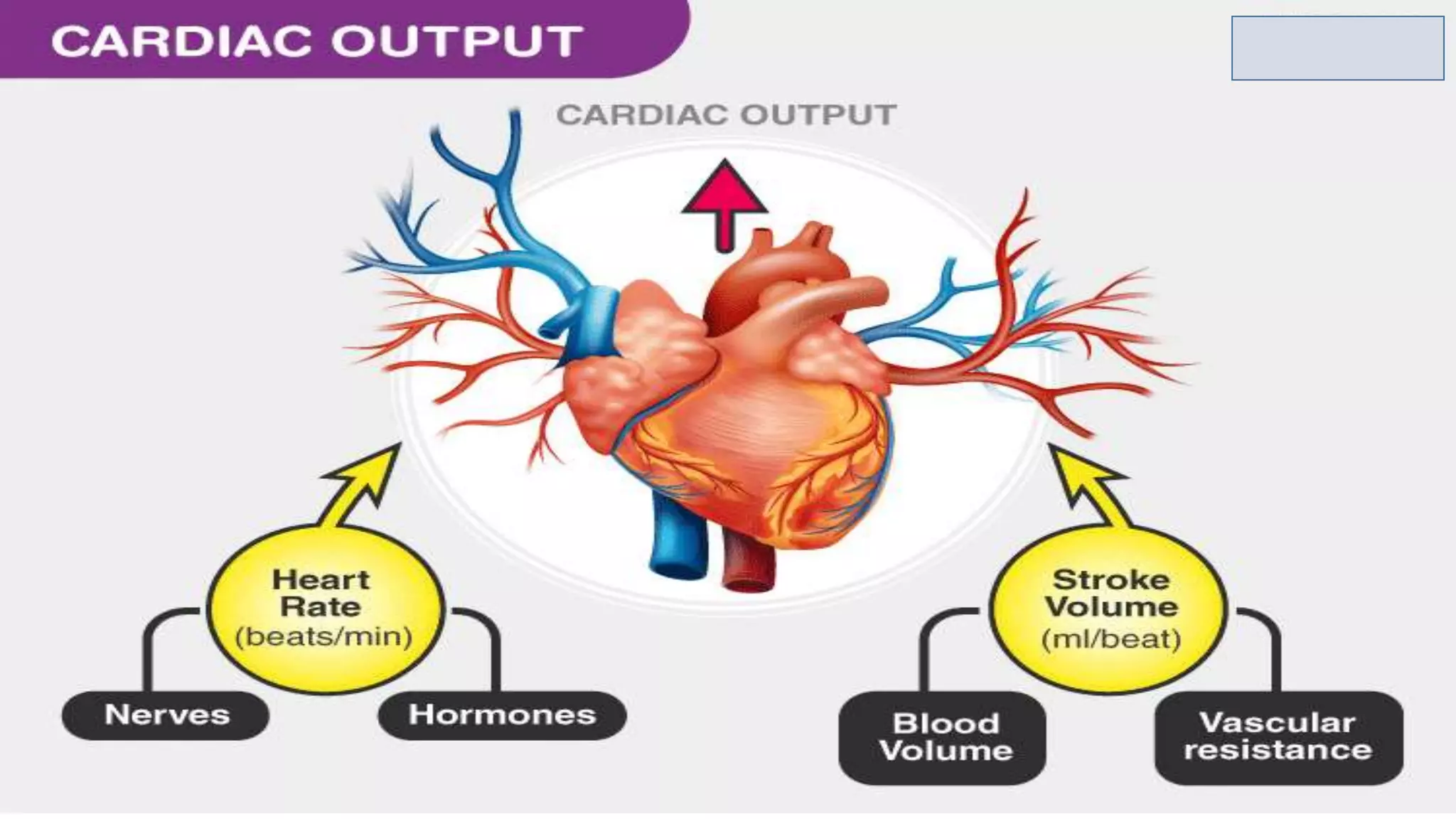
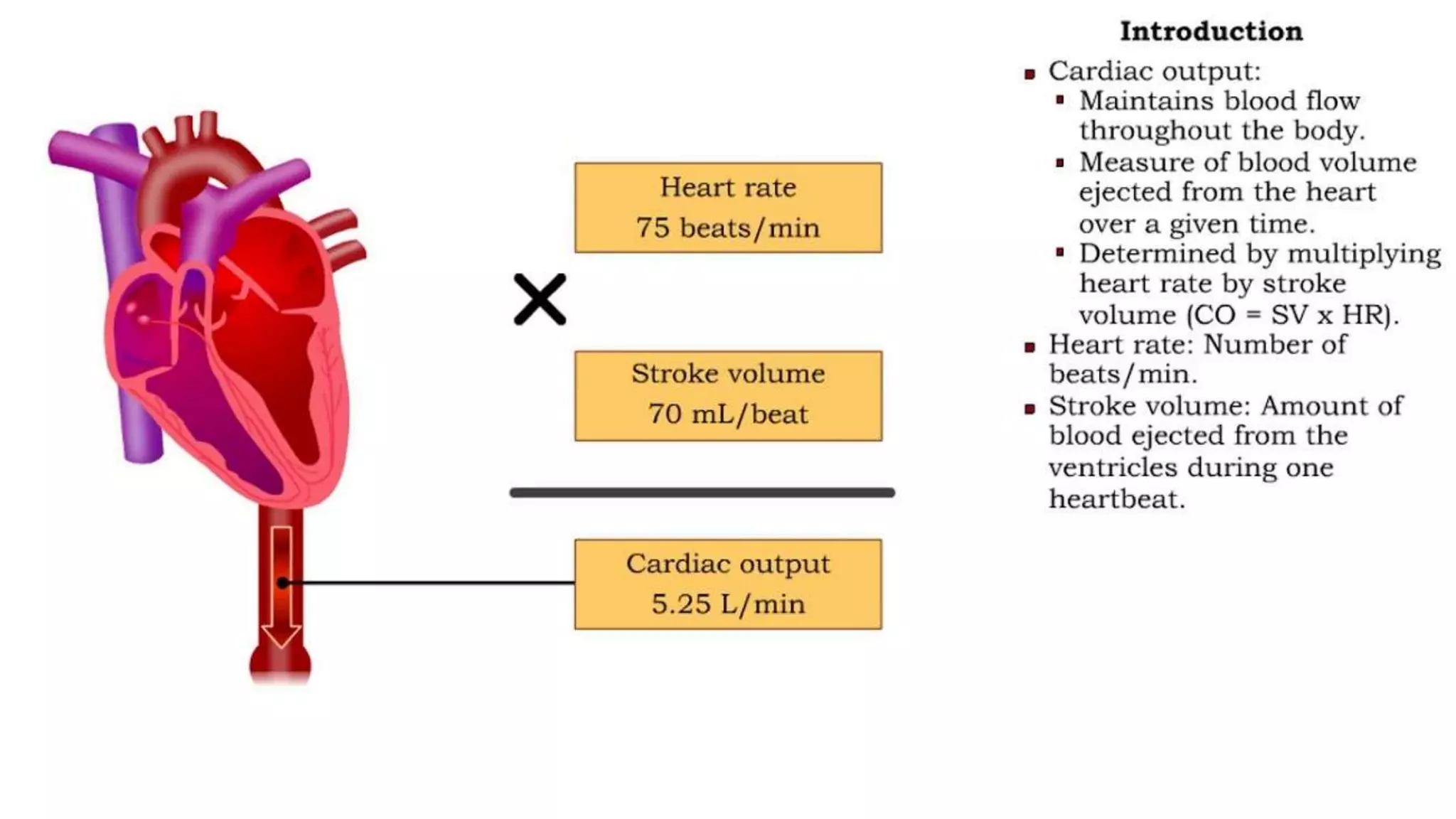
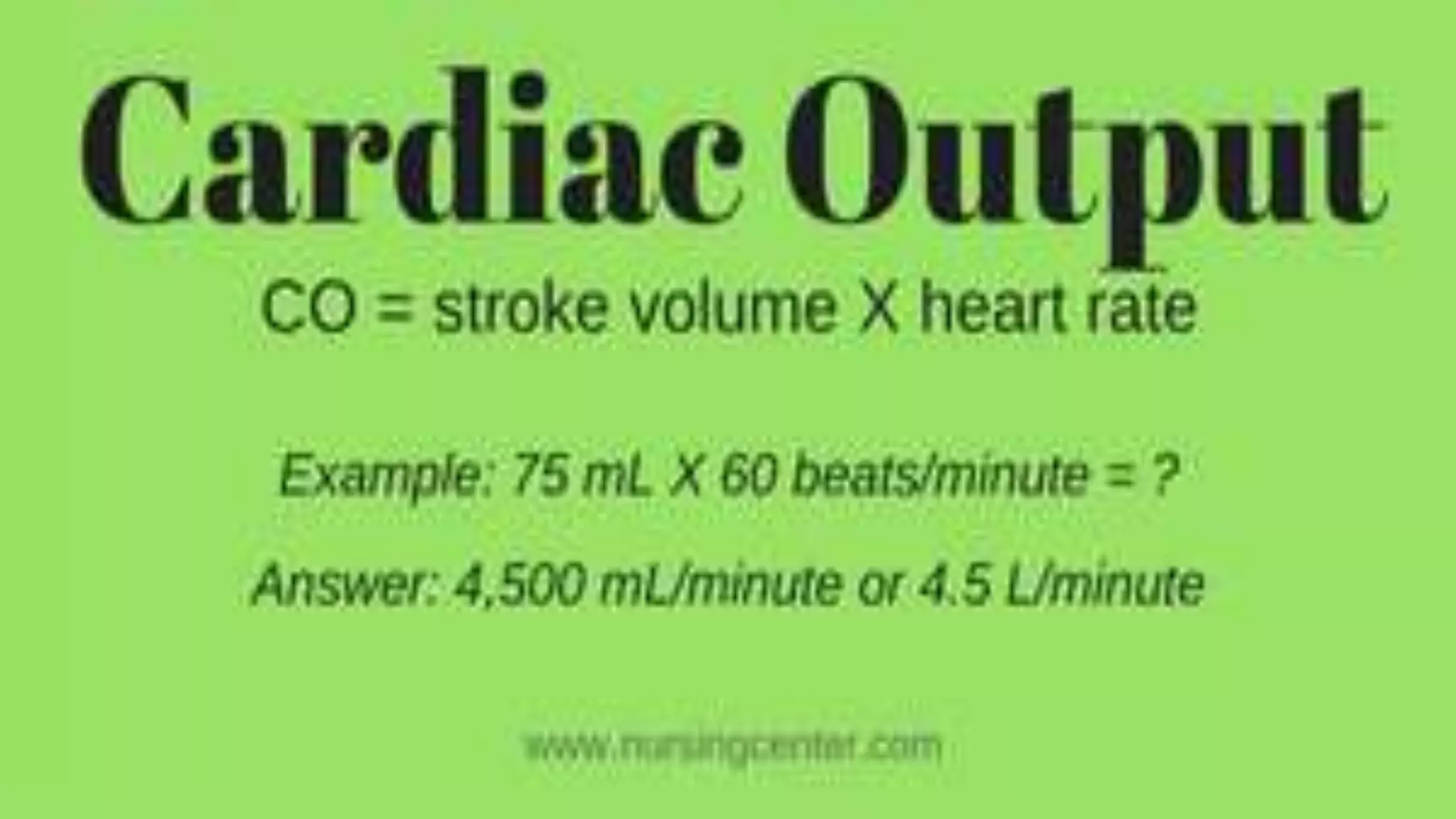
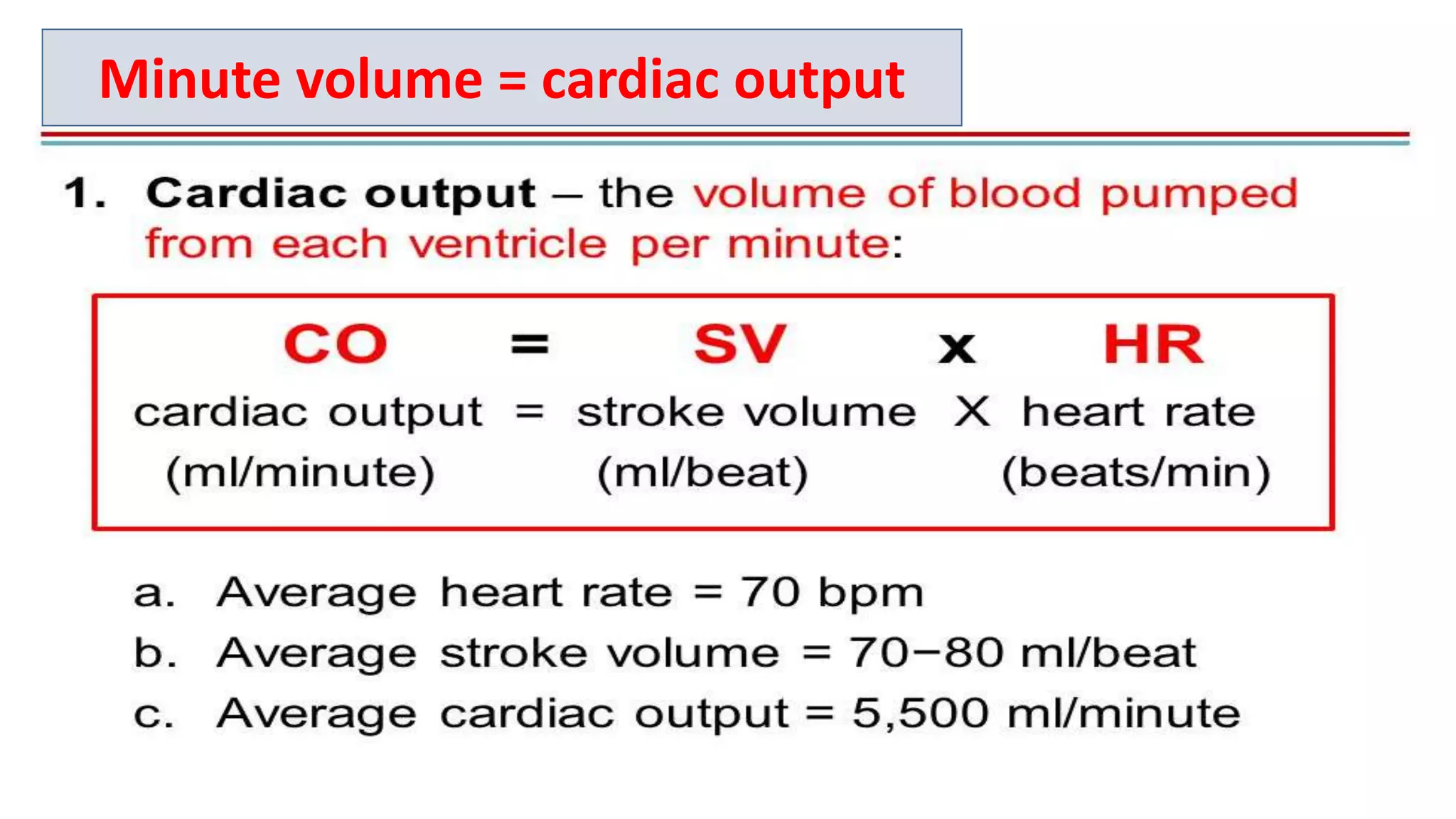
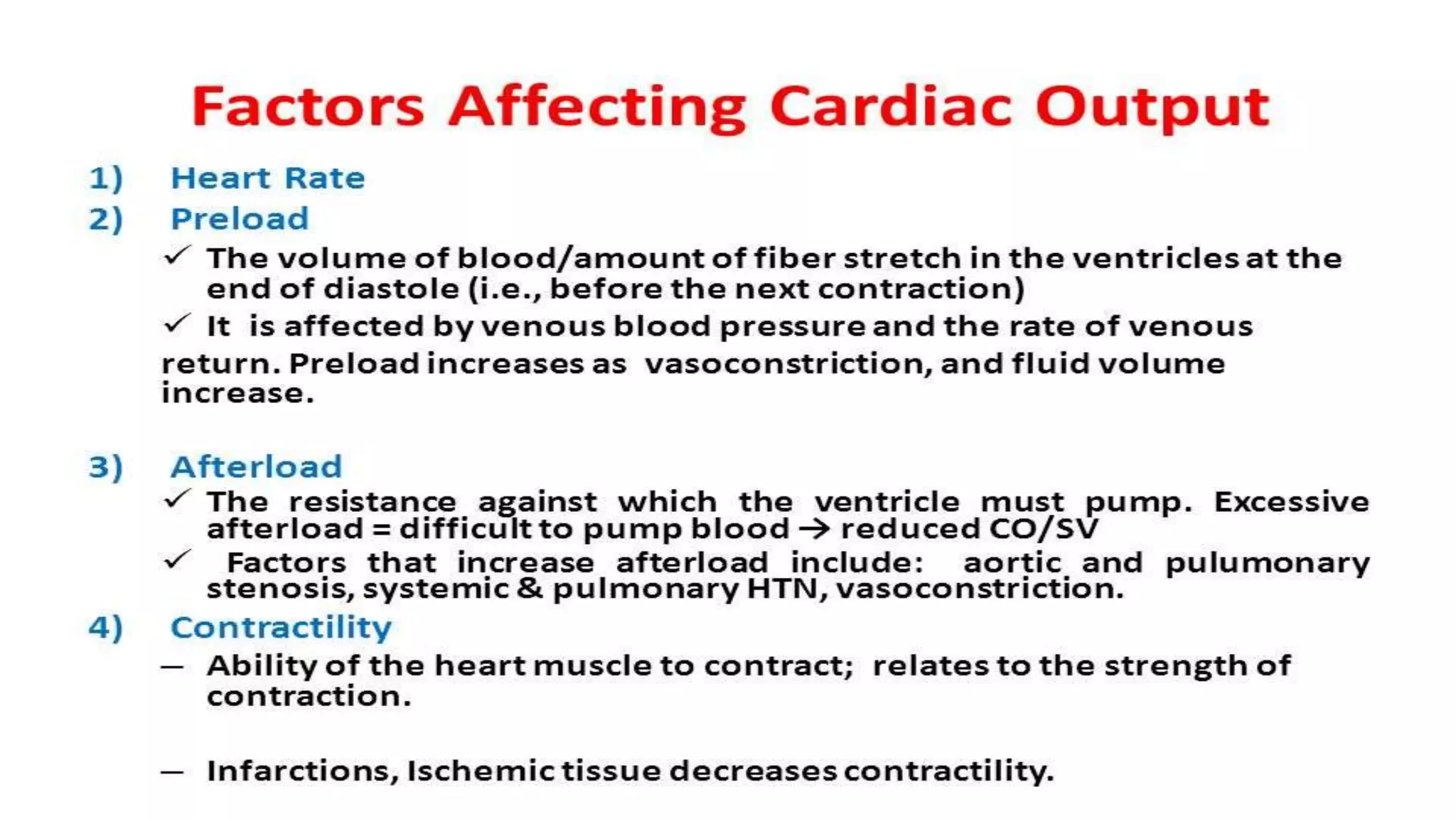
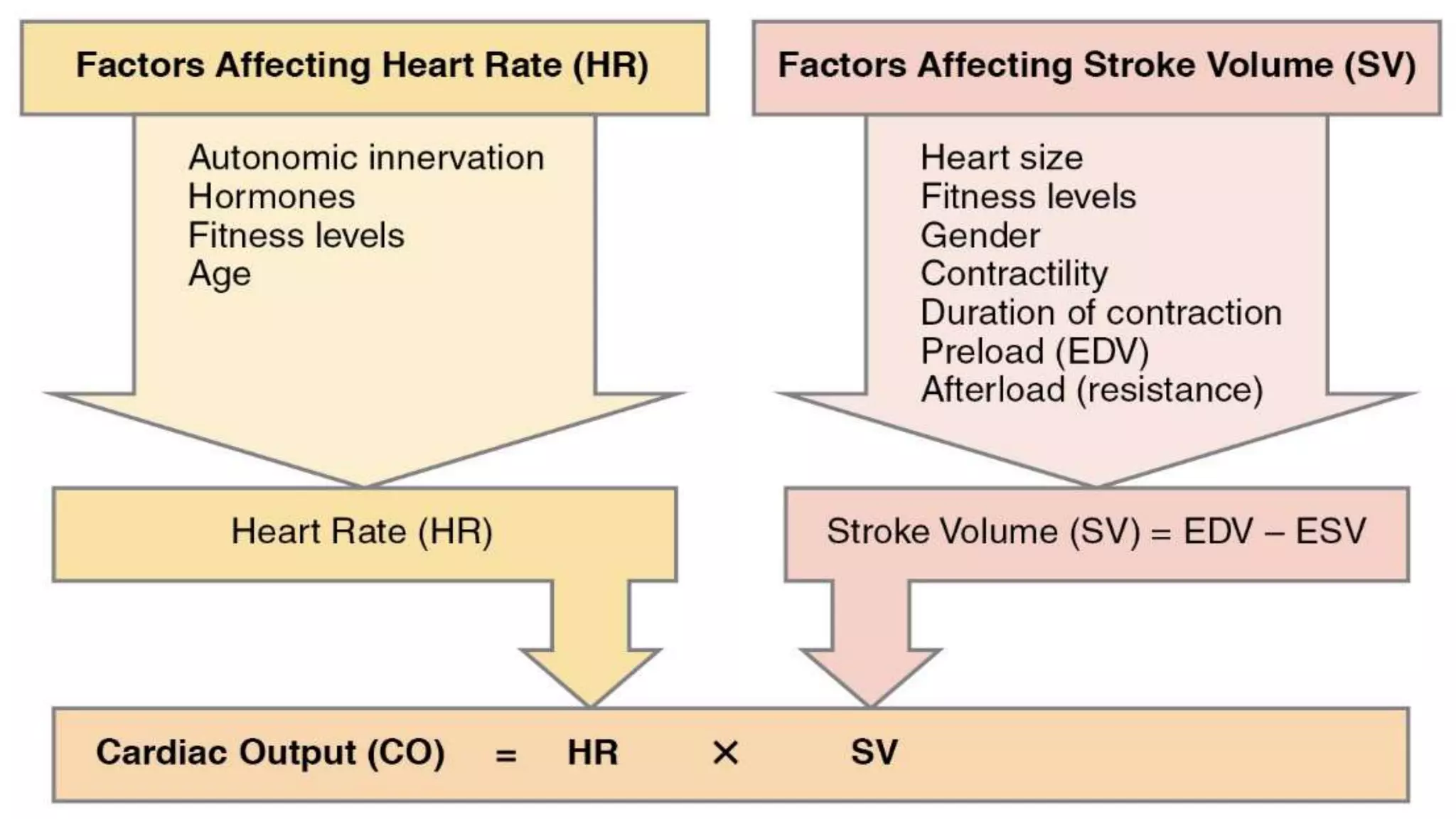
Cardiac output is the product of heart rate (HR) and stroke
volume (SV) and is measured in liters per minute. HR is most
commonly defined as the number of times the heart beats in
one minute. SV is the volume of blood ejected during
ventricular contraction or for each stroke of the heart.
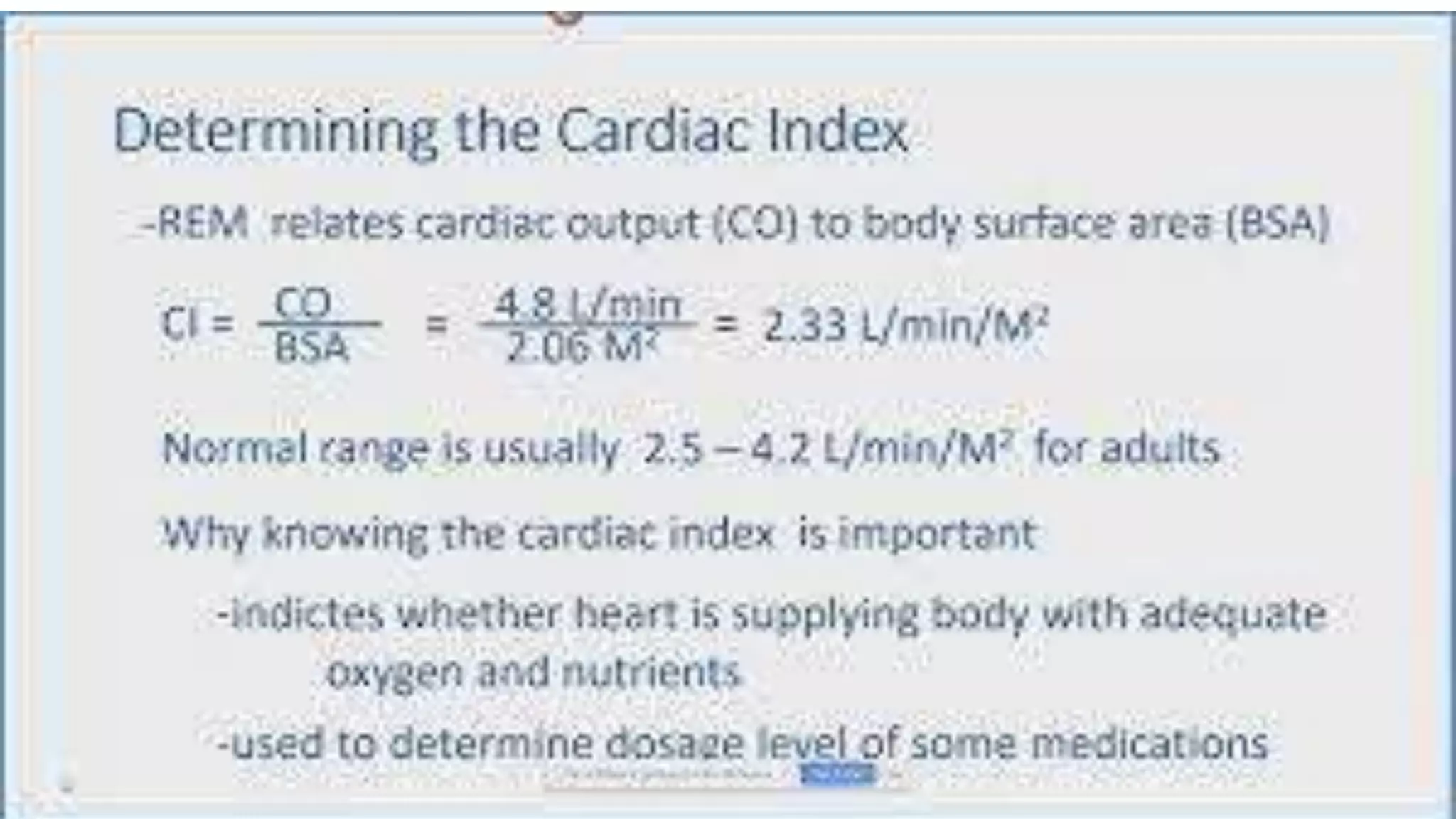
• Usually, cardiac output is expressed in three ways:
• 1. Stroke volume
• 2. Minute volume
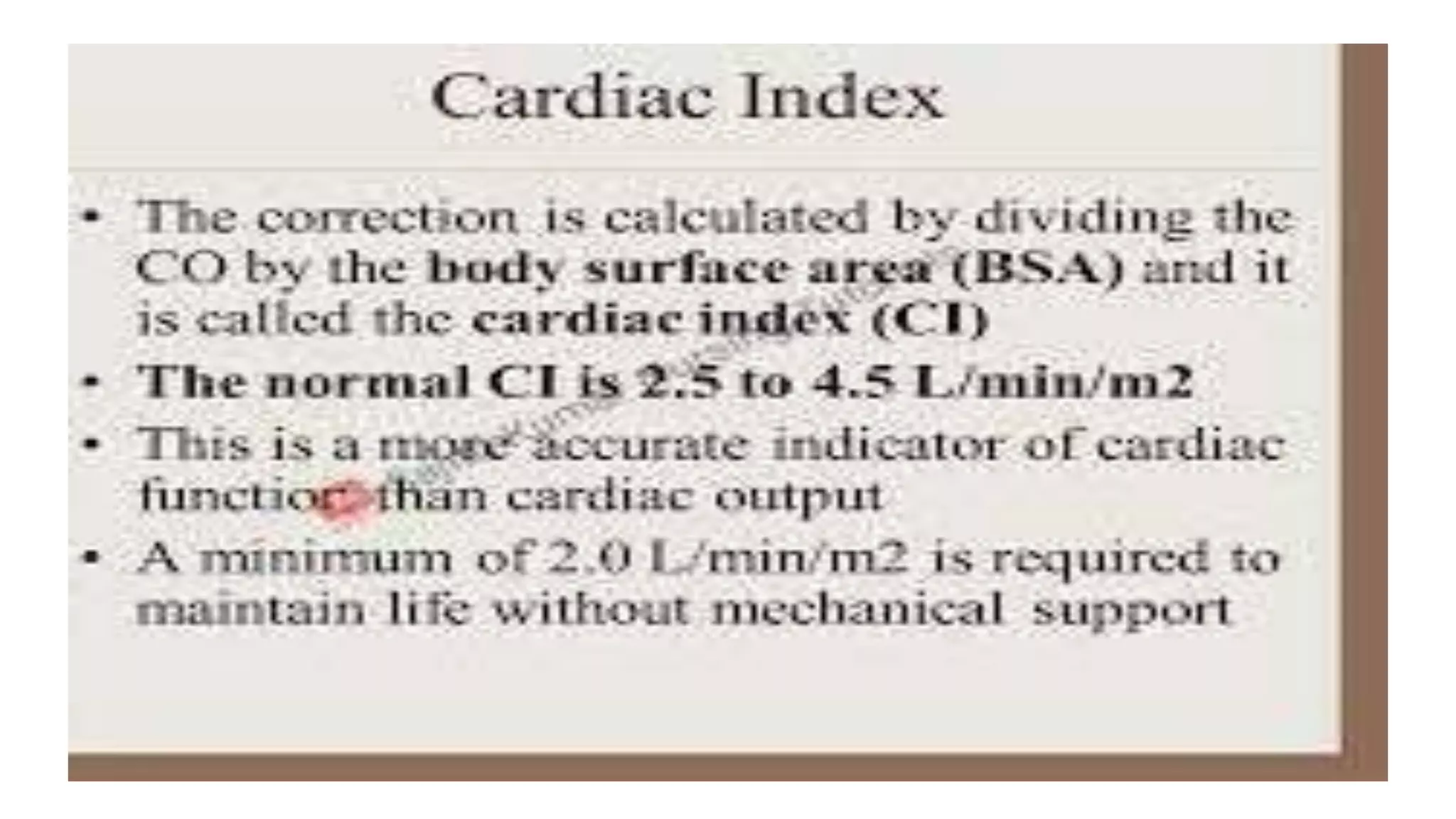
• 3. Cardiac index.
• However, in routine clinical practice, cardiac output refers to
minute volume.
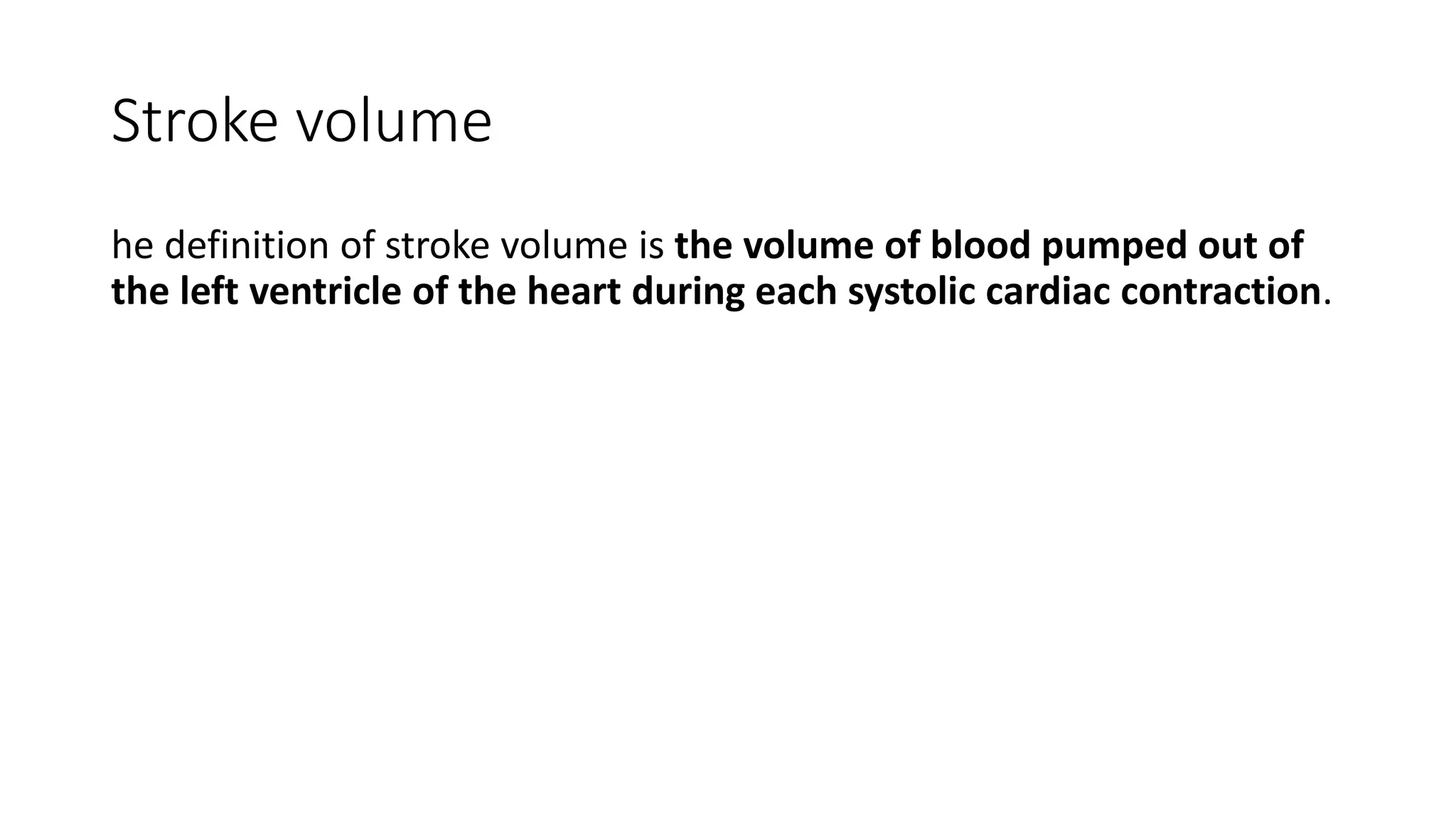
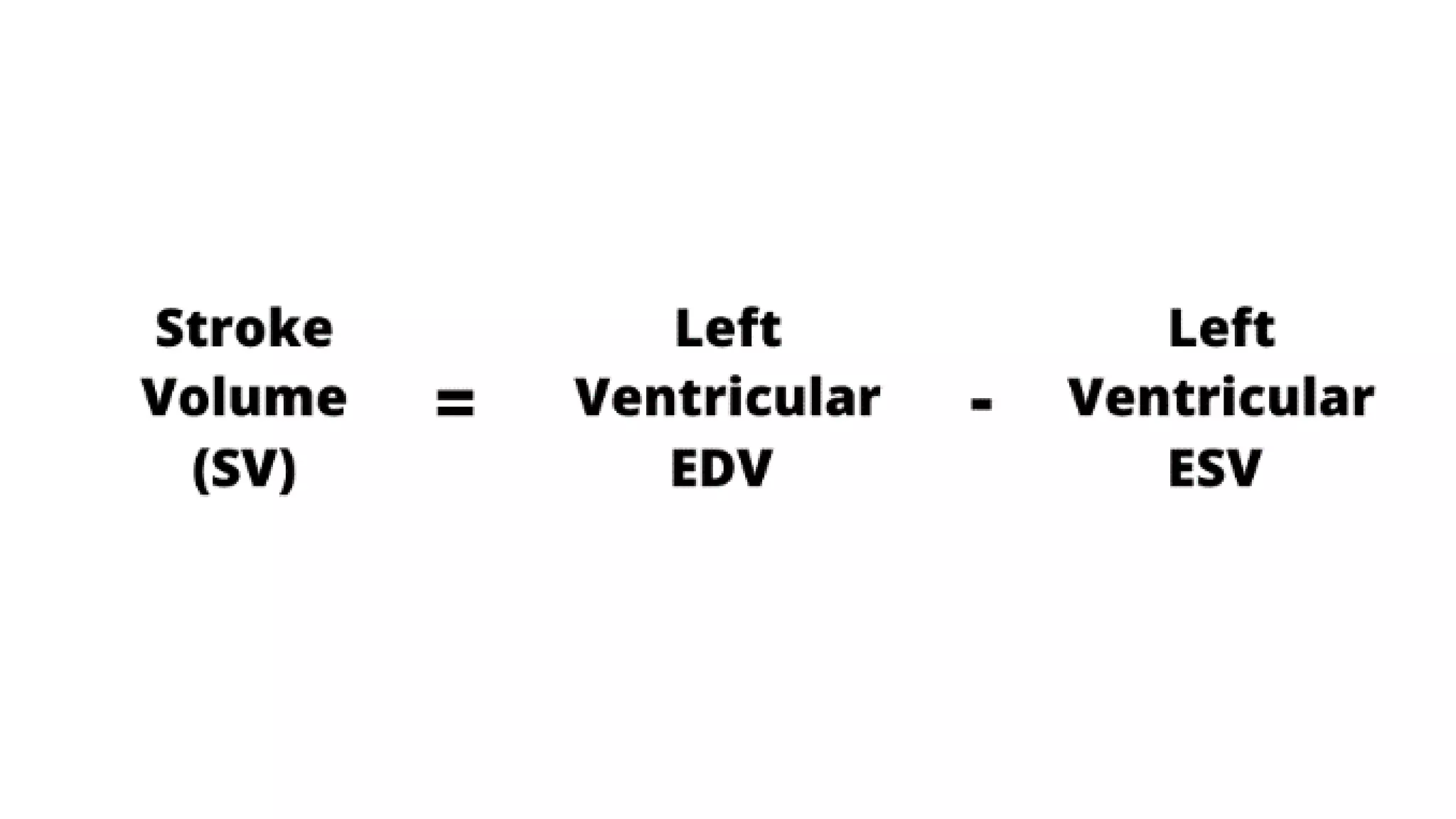
Stroke volume
he definition of stroke volume is the volume of blood pumped out of
the left ventricle of the heart during each systolic cardiac contraction.
Minute volume = cardiac output
EJECTION FRACTION
Ejection fraction is the fraction of end diastolic
volume that is ejected out by each ventricle. Normal
ejection fraction is 60% to 65%.
CARDIAC RESERVE
Cardiac reserve is the maximum amount of blood that
can be pumped out by heart above the normal value.
Cardiac reserve plays an important role in increasing
the cardiac output during the conditions like exercise.
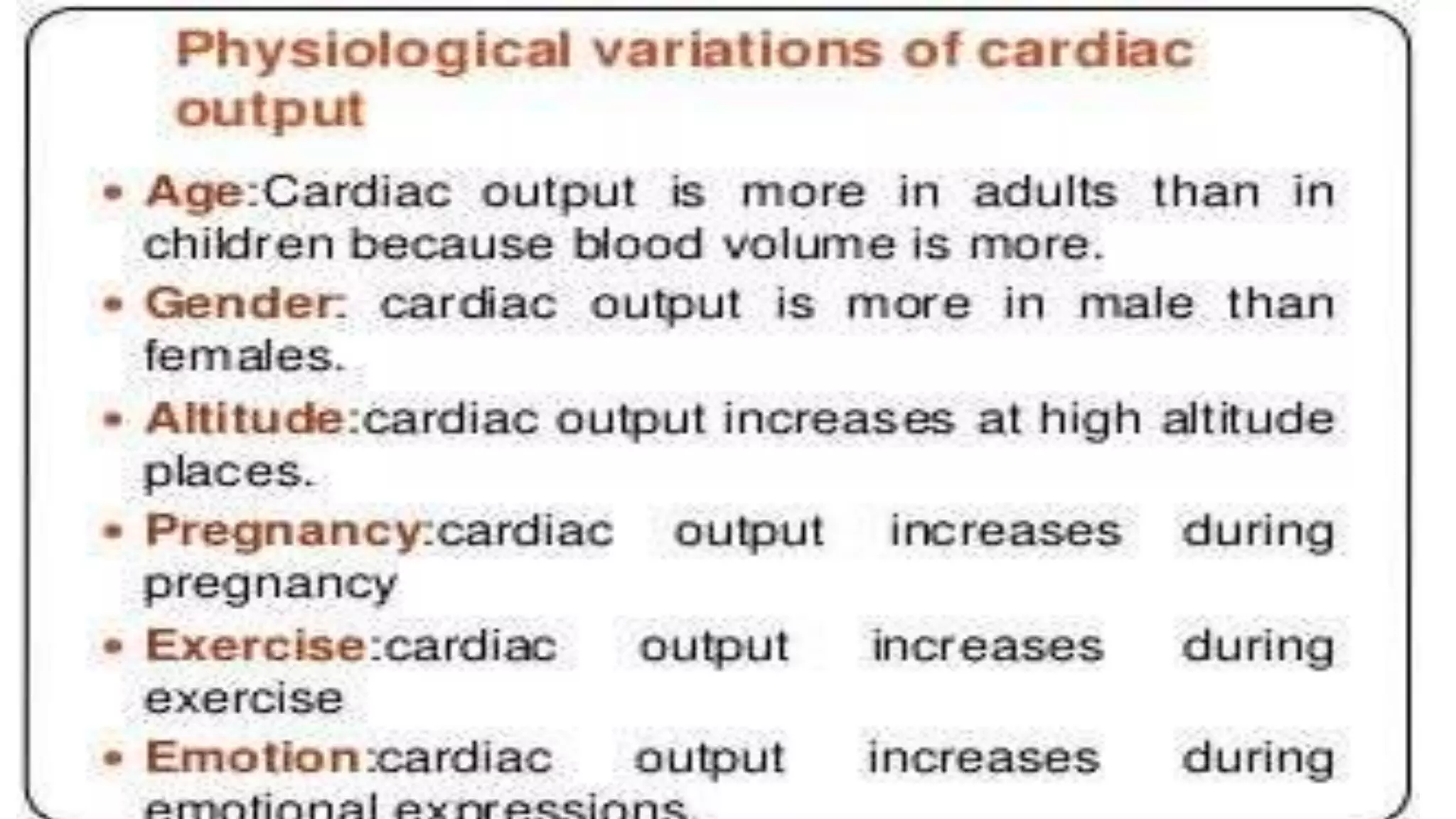
In a normal young healthy adult, the cardiac reserve is
300% to 400%.
In old age, it is about 200% to 250%.
It increases to 500% to 600% in athletes.
In cardiac diseases, the cardiac reserve is minimum or
nil.
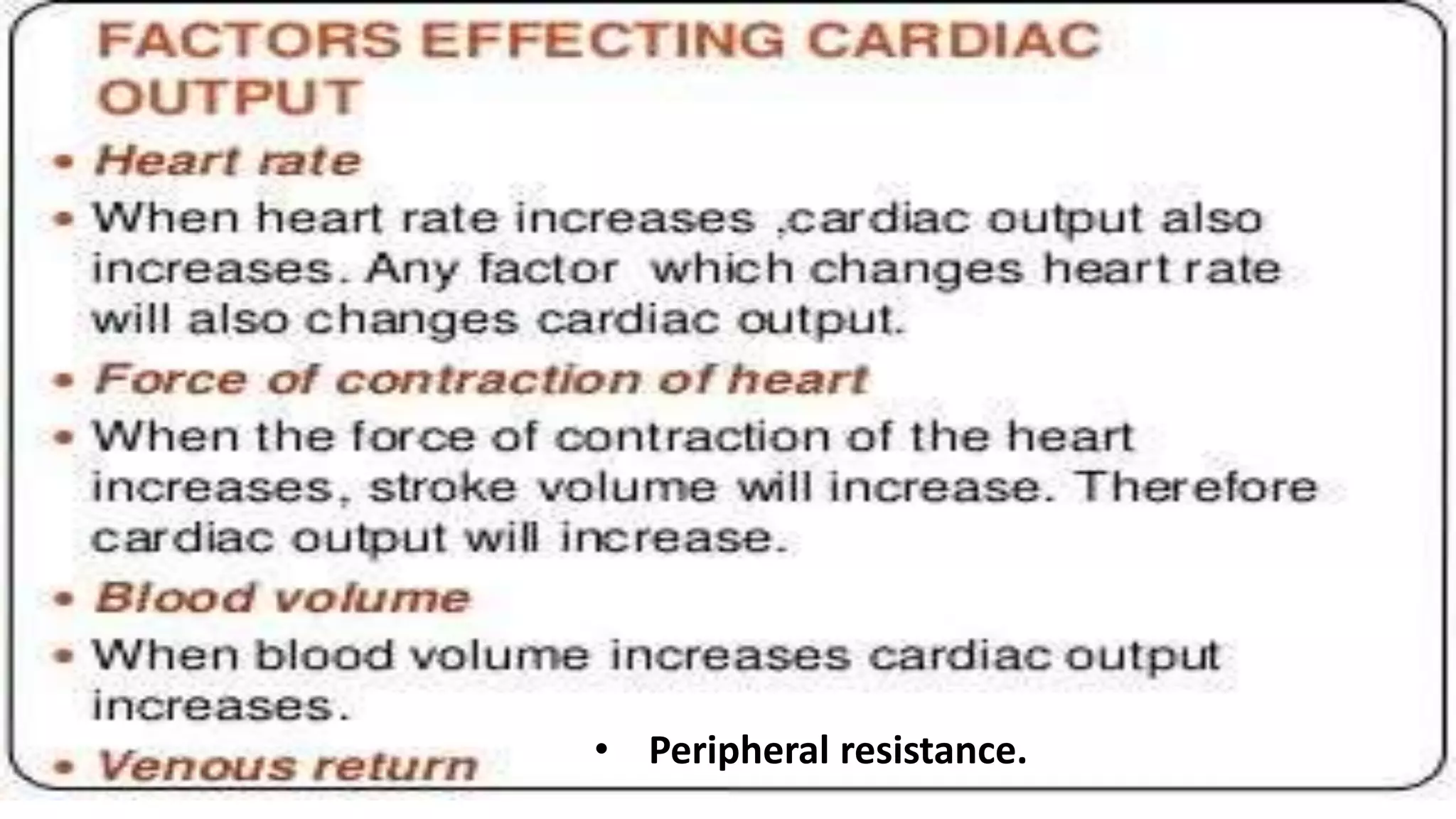
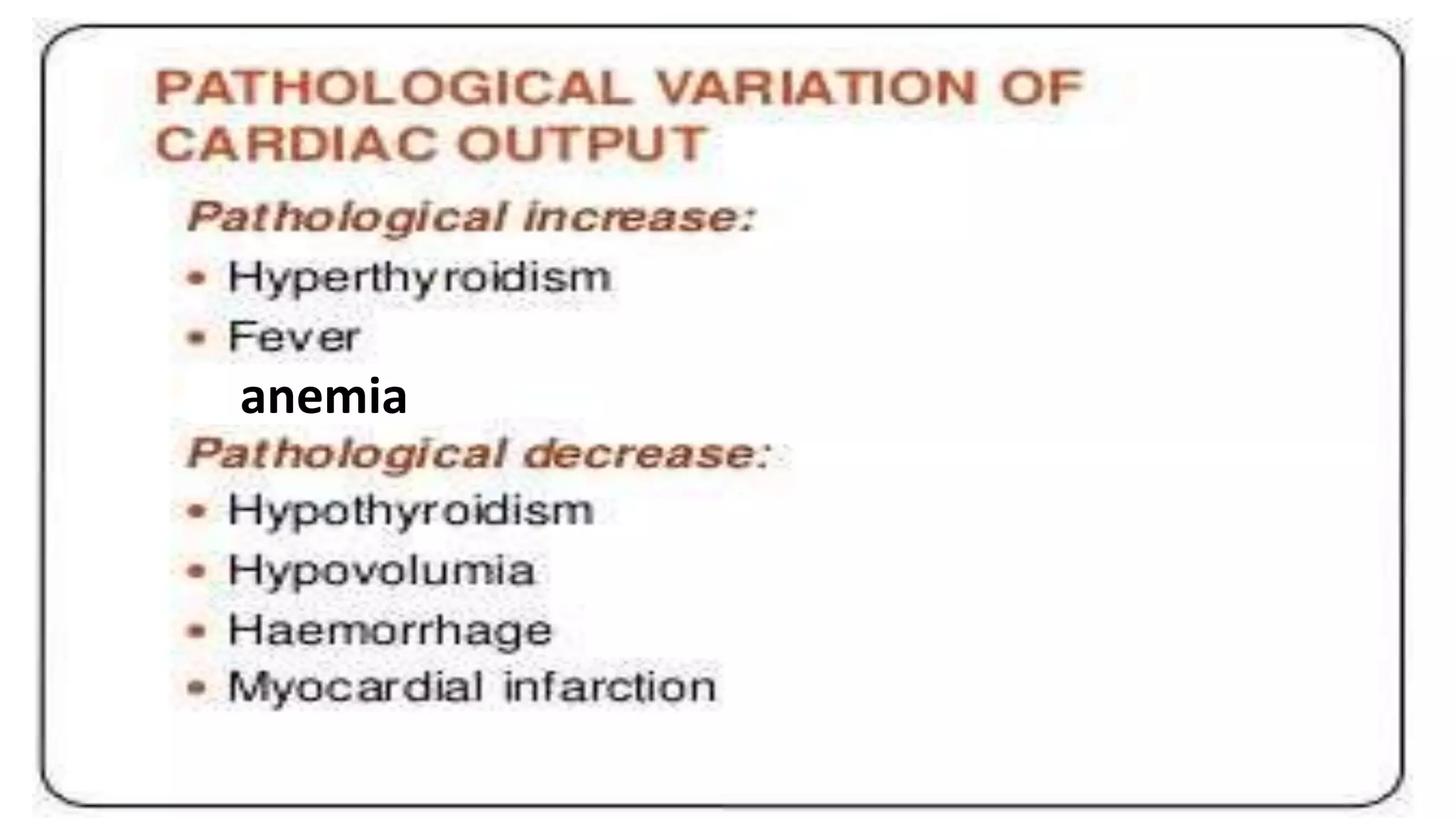
anemia
• Peripheral resistance.
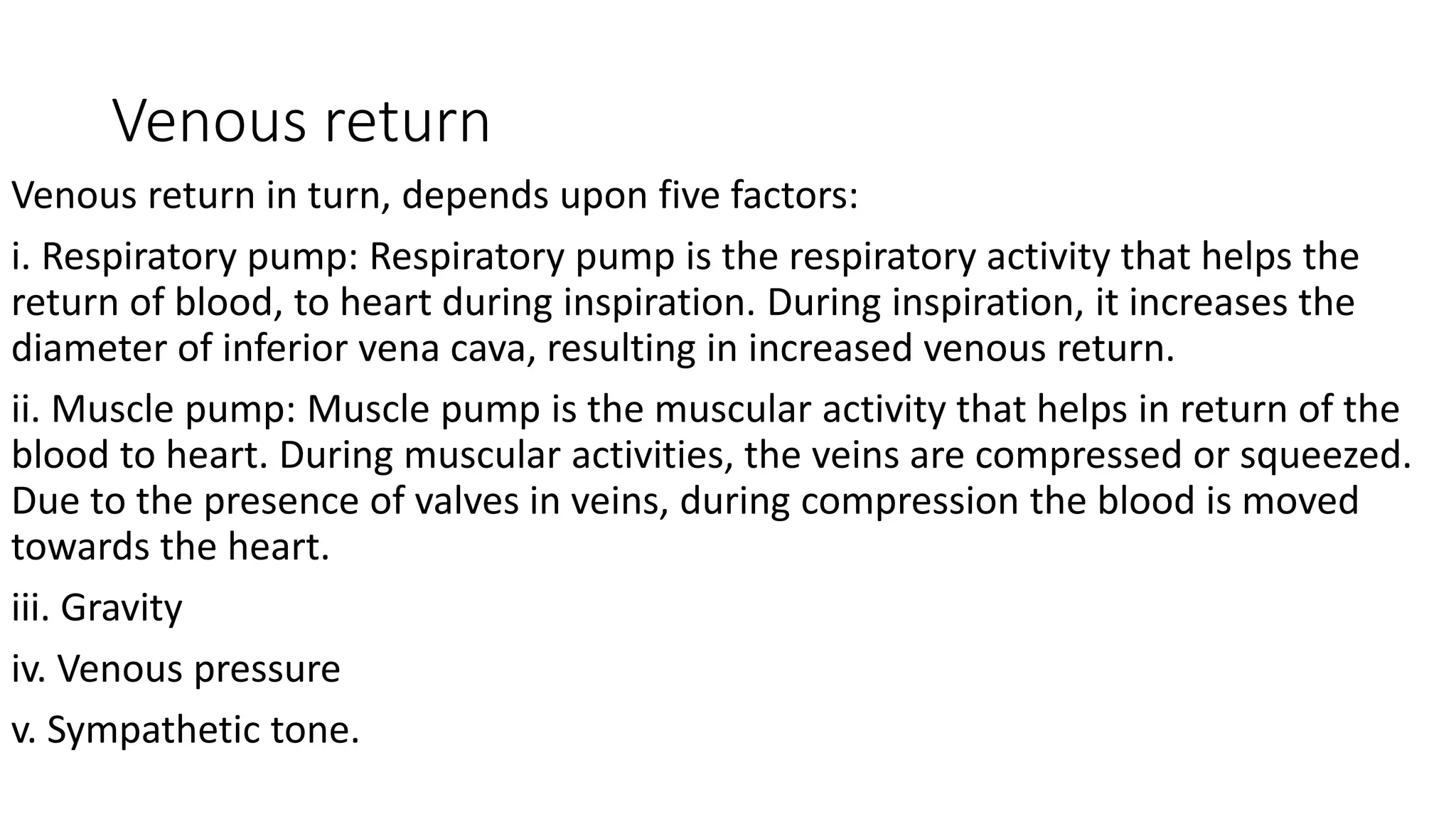
Venous return
Venous return in turn, depends upon five factors:
i. Respiratory pump: Respiratory pump is the respiratory activity that helps the
return of blood, to heart during inspiration. During inspiration, it increases the
diameter of inferior vena cava, resulting in increased venous return.
ii. Muscle pump: Muscle pump is the muscular activity that helps in return of the
blood to heart. During muscular activities, the veins are compressed or squeezed.
Due to the presence of valves in veins, during compression the blood is moved
towards the heart.
iii. Gravity
iv. Venous pressure
v. Sympathetic tone.
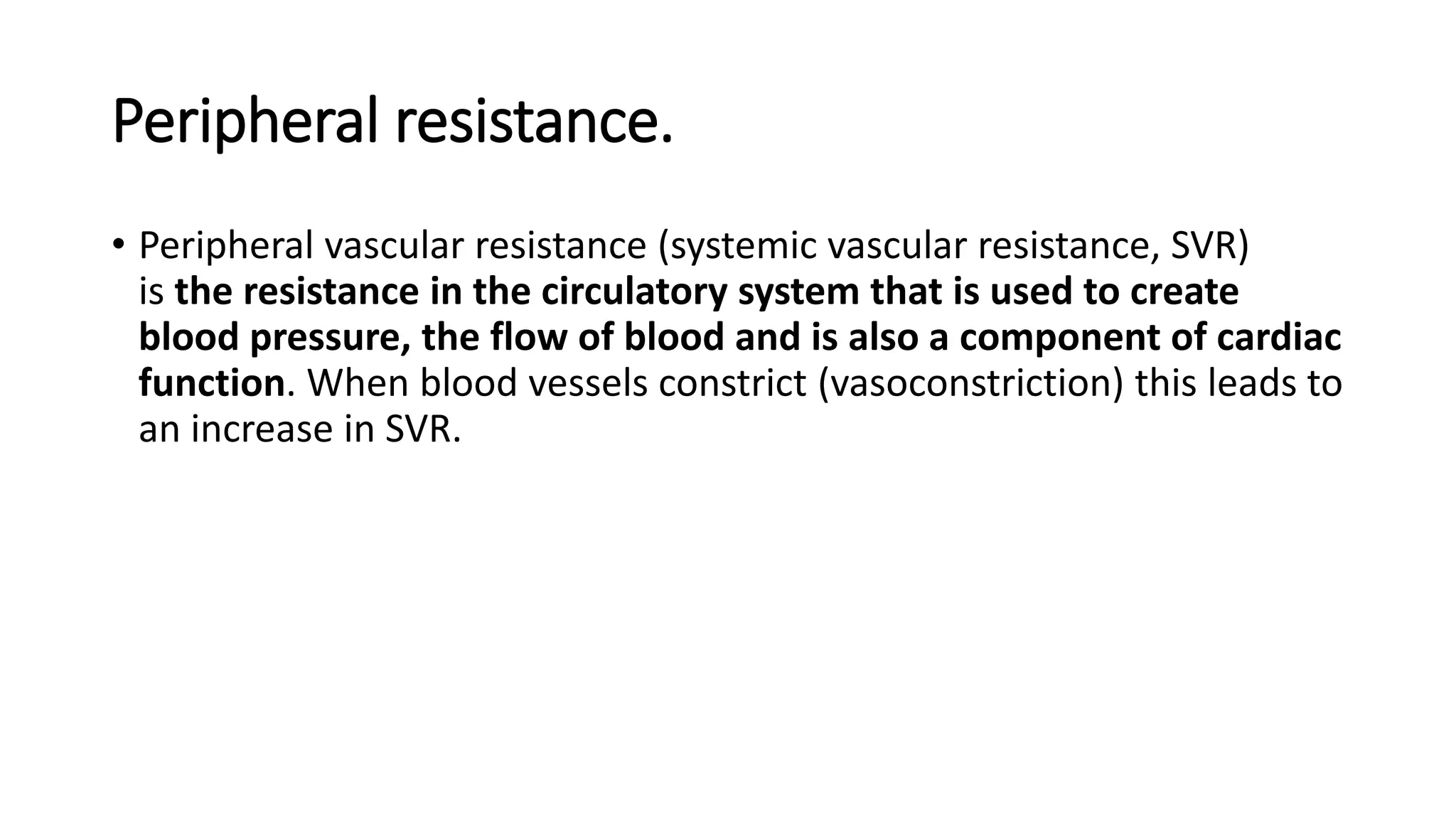
Peripheral resistance.
• Peripheral vascular resistance (systemic vascular resistance, SVR)
is the resistance in the circulatory system that is used to create
blood pressure, the flow of blood and is also a component of cardiac
function. When blood vessels constrict (vasoconstriction) this leads to
an increase in SVR.
cardiac output.pptx

cardiac output.pptx

  • 1.
  • 2.
    Cardiac output isthe product of heart rate (HR) and stroke volume (SV) and is measured in liters per minute. HR is most commonly defined as the number of times the heart beats in one minute. SV is the volume of blood ejected during ventricular contraction or for each stroke of the heart. • Usually, cardiac output is expressed in three ways: • 1. Stroke volume • 2. Minute volume • 3. Cardiac index. • However, in routine clinical practice, cardiac output refers to minute volume.
  • 6.
    Stroke volume he definitionof stroke volume is the volume of blood pumped out of the left ventricle of the heart during each systolic cardiac contraction.
  • 9.
    Minute volume =cardiac output
  • 12.
    EJECTION FRACTION Ejection fractionis the fraction of end diastolic volume that is ejected out by each ventricle. Normal ejection fraction is 60% to 65%.
  • 13.
    CARDIAC RESERVE Cardiac reserveis the maximum amount of blood that can be pumped out by heart above the normal value. Cardiac reserve plays an important role in increasing the cardiac output during the conditions like exercise. In a normal young healthy adult, the cardiac reserve is 300% to 400%. In old age, it is about 200% to 250%. It increases to 500% to 600% in athletes. In cardiac diseases, the cardiac reserve is minimum or nil.
  • 15.
  • 16.
  • 18.
    Venous return Venous returnin turn, depends upon five factors: i. Respiratory pump: Respiratory pump is the respiratory activity that helps the return of blood, to heart during inspiration. During inspiration, it increases the diameter of inferior vena cava, resulting in increased venous return. ii. Muscle pump: Muscle pump is the muscular activity that helps in return of the blood to heart. During muscular activities, the veins are compressed or squeezed. Due to the presence of valves in veins, during compression the blood is moved towards the heart. iii. Gravity iv. Venous pressure v. Sympathetic tone.
  • 19.
    Peripheral resistance. • Peripheralvascular resistance (systemic vascular resistance, SVR) is the resistance in the circulatory system that is used to create blood pressure, the flow of blood and is also a component of cardiac function. When blood vessels constrict (vasoconstriction) this leads to an increase in SVR.