EXPLAIN THE CONCEPT
OF CARDIAC OUTPUT IN
RELATION TO PRELOAD
AND AFTERLOAD
MUHAMMAD ADNAN BIN SALIM
ADVANCED DIPLOMA CADIOVASCULAR
ADCV 2/2024(10)-0007
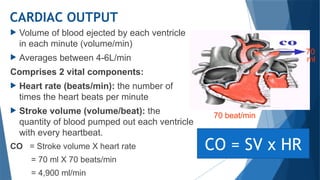
CARDIAC OUTPUT
 Volume of blood ejected by each ventricle
in each minute (volume/min)
 Averages between 4-6L/min
Comprises 2 vital components:
 Heart rate (beats/min): the number of
times the heart beats per minute
 Stroke volume (volume/beat): the
quantity of blood pumped out each ventricle
with every heartbeat.
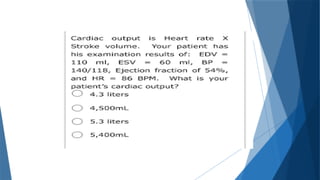
CO = Stroke volume X heart rate
= 70 ml X 70 beats/min
= 4,900 ml/min
CO = SV x HR
70
70 beat/min
ml
STROKE VOLUME
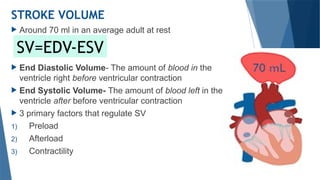
 Around 70 ml in an average adult at rest
 End Diastolic Volume- The amount of blood in the
ventricle right before ventricular contraction
 End Systolic Volume- The amount of blood left in the
ventricle after before ventricular contraction
 3 primary factors that regulate SV
1) Preload
2) Afterload
3) Contractility
SV=EDV-ESV
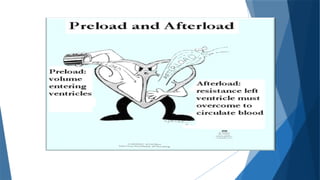
PRELOAD
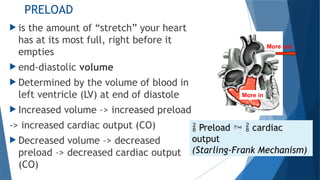
 is the amount of “stretch” your heart
has at its most full, right before it
empties
 end-diastolic volume
 Determined by the volume of blood in
left ventricle (LV) at end of diastole
 Increased volume –> increased preload
-> increased cardiac output (CO)
 Decreased volume –> decreased
preload –> decreased cardiac output
(CO)
More out
More in
 Preload   cardiac
output
(Starling-Frank Mechanism)
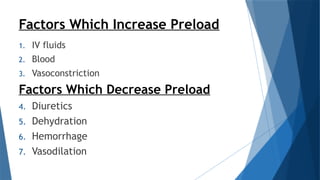
Factors Which Increase Preload
1. IV fluids
2. Blood
3. Vasoconstriction
Factors Which Decrease Preload
4. Diuretics
5. Dehydration
6. Hemorrhage
7. Vasodilation
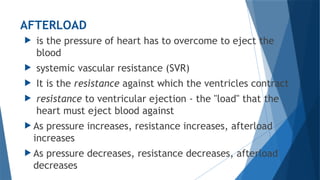
AFTERLOAD
 is the pressure of heart has to overcome to eject the
blood
 systemic vascular resistance (SVR)
 It is the resistance against which the ventricles contract
 resistance to ventricular ejection - the "load" that the
heart must eject blood against
 As pressure increases, resistance increases, afterload
increases
 As pressure decreases, resistance decreases, afterload
decreases
Factors Which Increase Afterload
1. Systolic hypertension (HTN)
2. Pulmonary hypertension (PH)
3. Aortic insufficiency (Aortic Regurgitation)
Factors Which Increase Afterload
4. Mitral regurgitation (MR)
CONTRACTILITY
Force generated by the myocardium
when it contracts – inotropic property
Ejection fraction (EF) - percentage of LV
end-diastolic volume that is ejected with
each contraction
EF - normally approximately 50-55%

Cardiac output preload afterload in heart

  • 1.
    EXPLAIN THE CONCEPT OFCARDIAC OUTPUT IN RELATION TO PRELOAD AND AFTERLOAD MUHAMMAD ADNAN BIN SALIM ADVANCED DIPLOMA CADIOVASCULAR ADCV 2/2024(10)-0007
  • 2.
    CARDIAC OUTPUT  Volumeof blood ejected by each ventricle in each minute (volume/min)  Averages between 4-6L/min Comprises 2 vital components:  Heart rate (beats/min): the number of times the heart beats per minute  Stroke volume (volume/beat): the quantity of blood pumped out each ventricle with every heartbeat. CO = Stroke volume X heart rate = 70 ml X 70 beats/min = 4,900 ml/min CO = SV x HR 70 70 beat/min ml
  • 3.
    STROKE VOLUME  Around70 ml in an average adult at rest  End Diastolic Volume- The amount of blood in the ventricle right before ventricular contraction  End Systolic Volume- The amount of blood left in the ventricle after before ventricular contraction  3 primary factors that regulate SV 1) Preload 2) Afterload 3) Contractility SV=EDV-ESV
  • 5.
    PRELOAD  is theamount of “stretch” your heart has at its most full, right before it empties  end-diastolic volume  Determined by the volume of blood in left ventricle (LV) at end of diastole  Increased volume –> increased preload -> increased cardiac output (CO)  Decreased volume –> decreased preload –> decreased cardiac output (CO) More out More in  Preload   cardiac output (Starling-Frank Mechanism)
  • 6.
    Factors Which IncreasePreload 1. IV fluids 2. Blood 3. Vasoconstriction Factors Which Decrease Preload 4. Diuretics 5. Dehydration 6. Hemorrhage 7. Vasodilation
  • 7.
    AFTERLOAD  is thepressure of heart has to overcome to eject the blood  systemic vascular resistance (SVR)  It is the resistance against which the ventricles contract  resistance to ventricular ejection - the "load" that the heart must eject blood against  As pressure increases, resistance increases, afterload increases  As pressure decreases, resistance decreases, afterload decreases
  • 8.
    Factors Which IncreaseAfterload 1. Systolic hypertension (HTN) 2. Pulmonary hypertension (PH) 3. Aortic insufficiency (Aortic Regurgitation) Factors Which Increase Afterload 4. Mitral regurgitation (MR)
  • 10.
    CONTRACTILITY Force generated bythe myocardium when it contracts – inotropic property Ejection fraction (EF) - percentage of LV end-diastolic volume that is ejected with each contraction EF - normally approximately 50-55%