 Definition
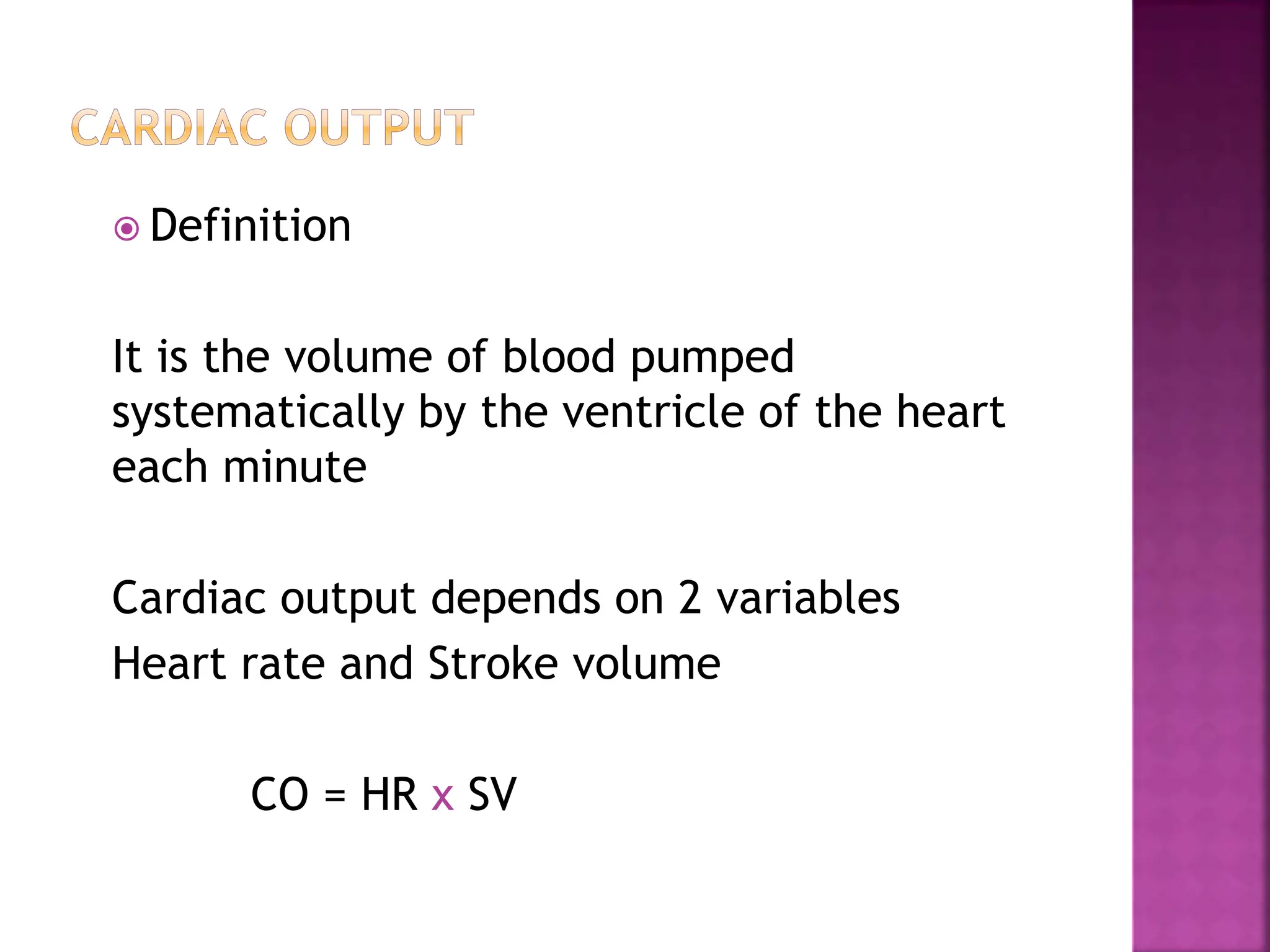
It is the volume of blood pumped
systematically by the ventricle of the heart
each minute
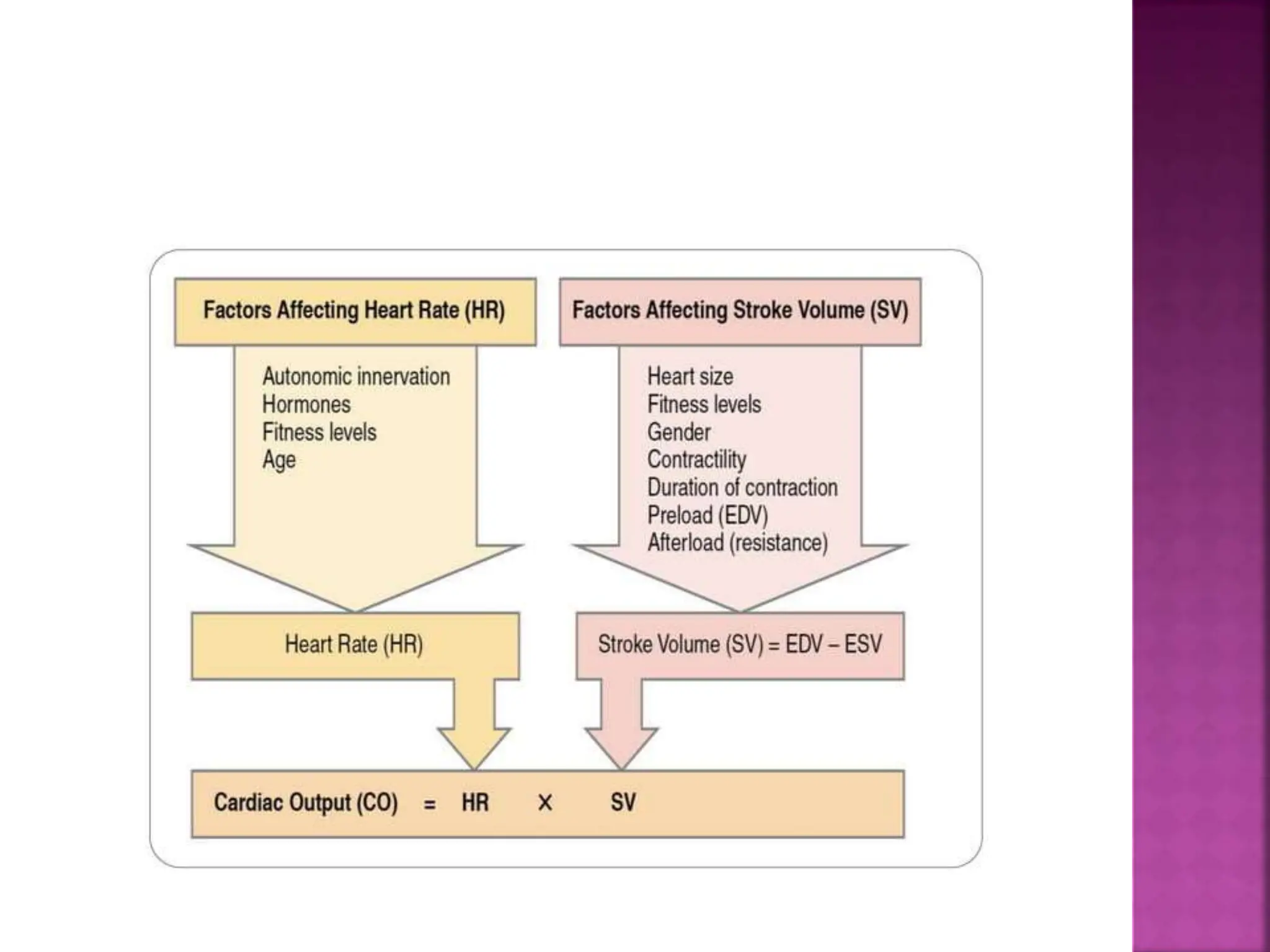
Cardiac output depends on 2 variables
Heart rate and Stroke volume
CO = HR x SV
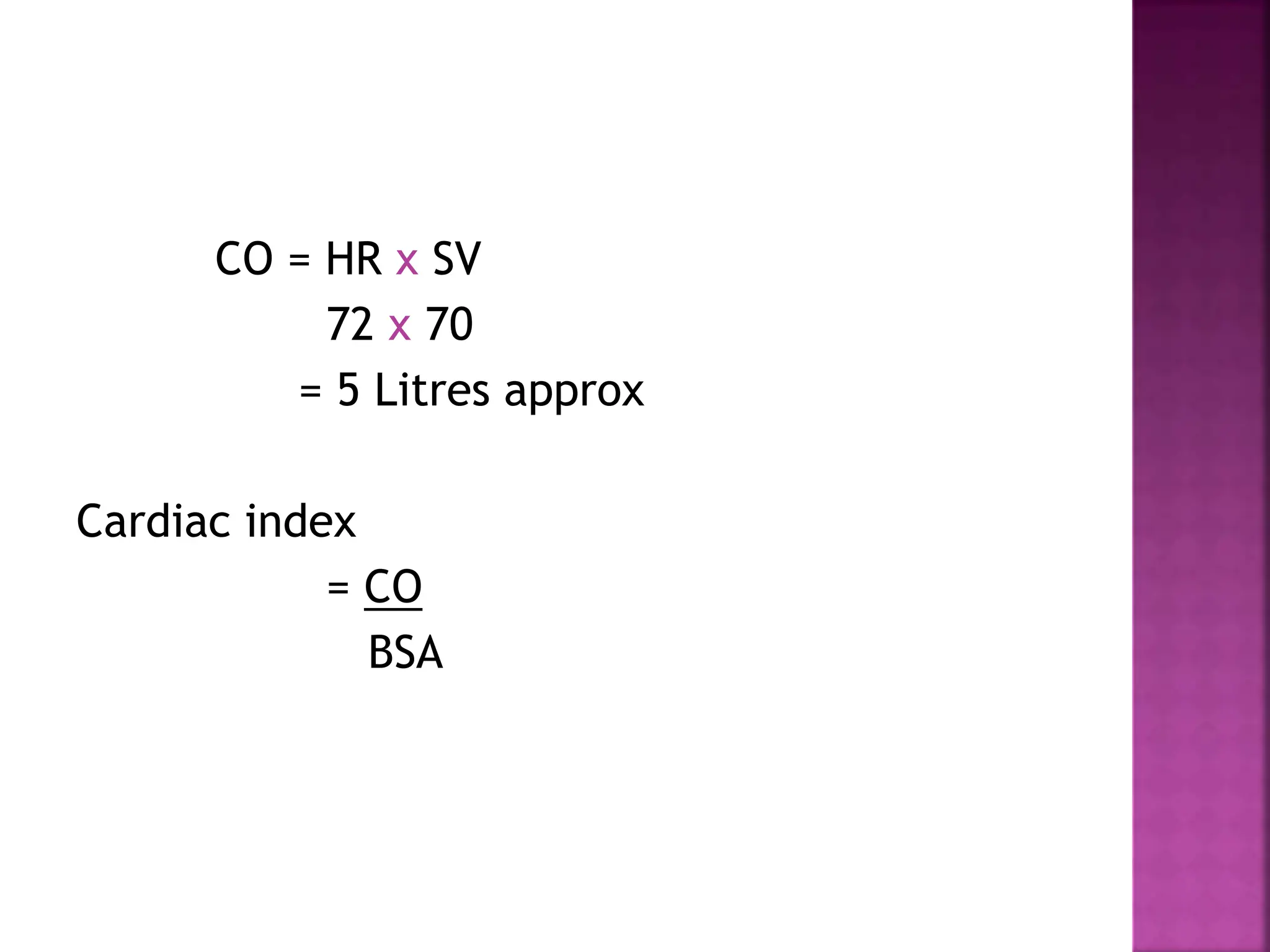
CO = HR x SV
72 x 70
= 5 Litres approx
Cardiac index
= CO
BSA
 Autonomic nervous system controls
automaticity and rate of spontaneous
depolarization of SA Node
Sympathetic system increases heart rate
Parasympathetic system decreases heart rate
 It is the difference between the ventricular
End Diastolic Volume (EDV) and the End
Systolic Volume (ESV)
SV = EDV – ESV
= 120 – 50ml
=70 ml of blood
EDV is the volume of blood in the ventricle at
the beginning of contraction and
ESV is the volume of blood in the ventricle at
the end of contraction
Increase:
-Stronger atrial contraction.
-Increased total blood volume
-Increased venous tone.
-Increased sk m pump.
-Increased negative intrathoracic pressure.
Decrease:
Standing
Increased intrapericardial pressure.
Decreased ventricular compliance
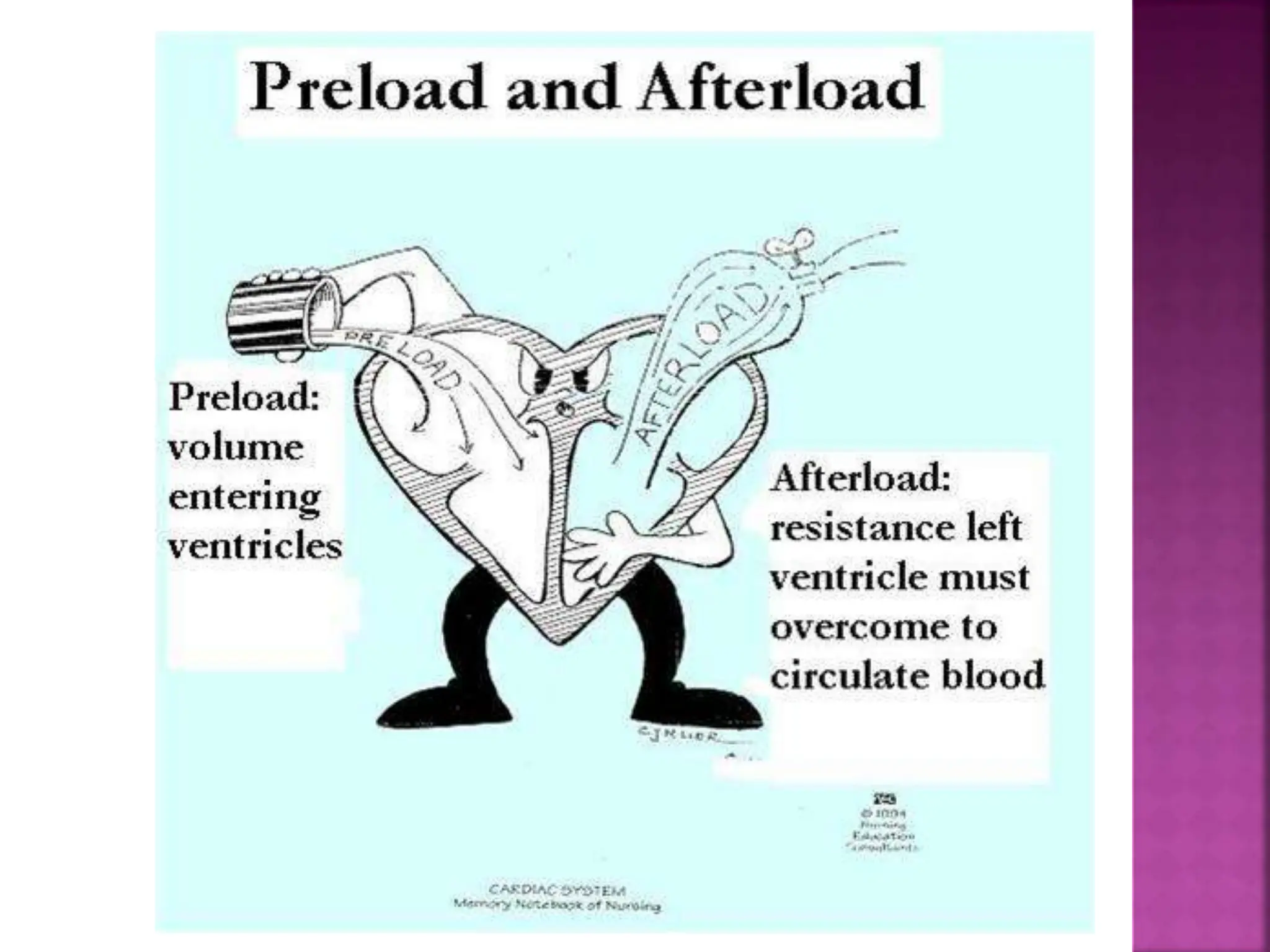
 Pre load
 After load
 Contractility
 Wall motion abnormalities
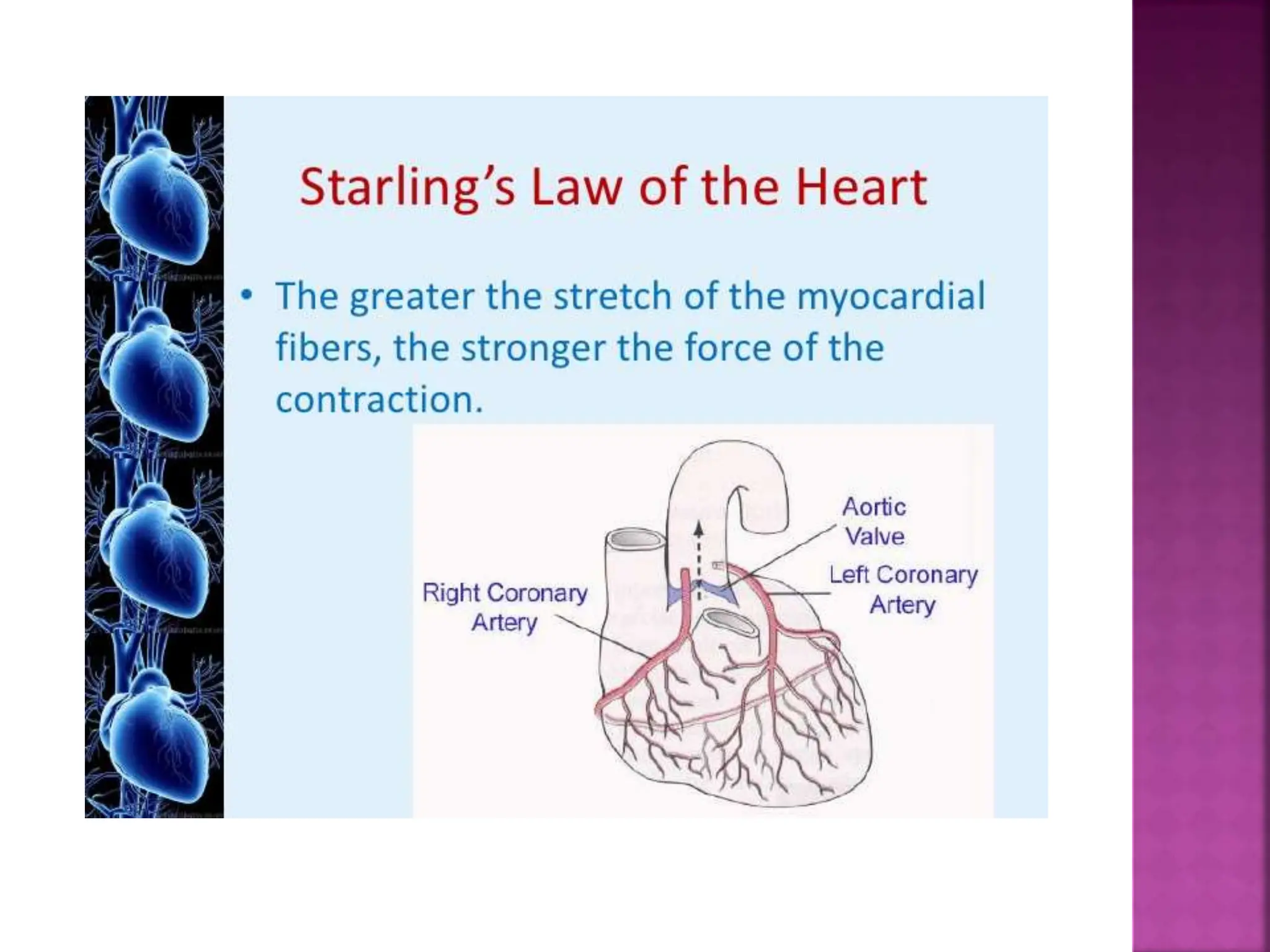
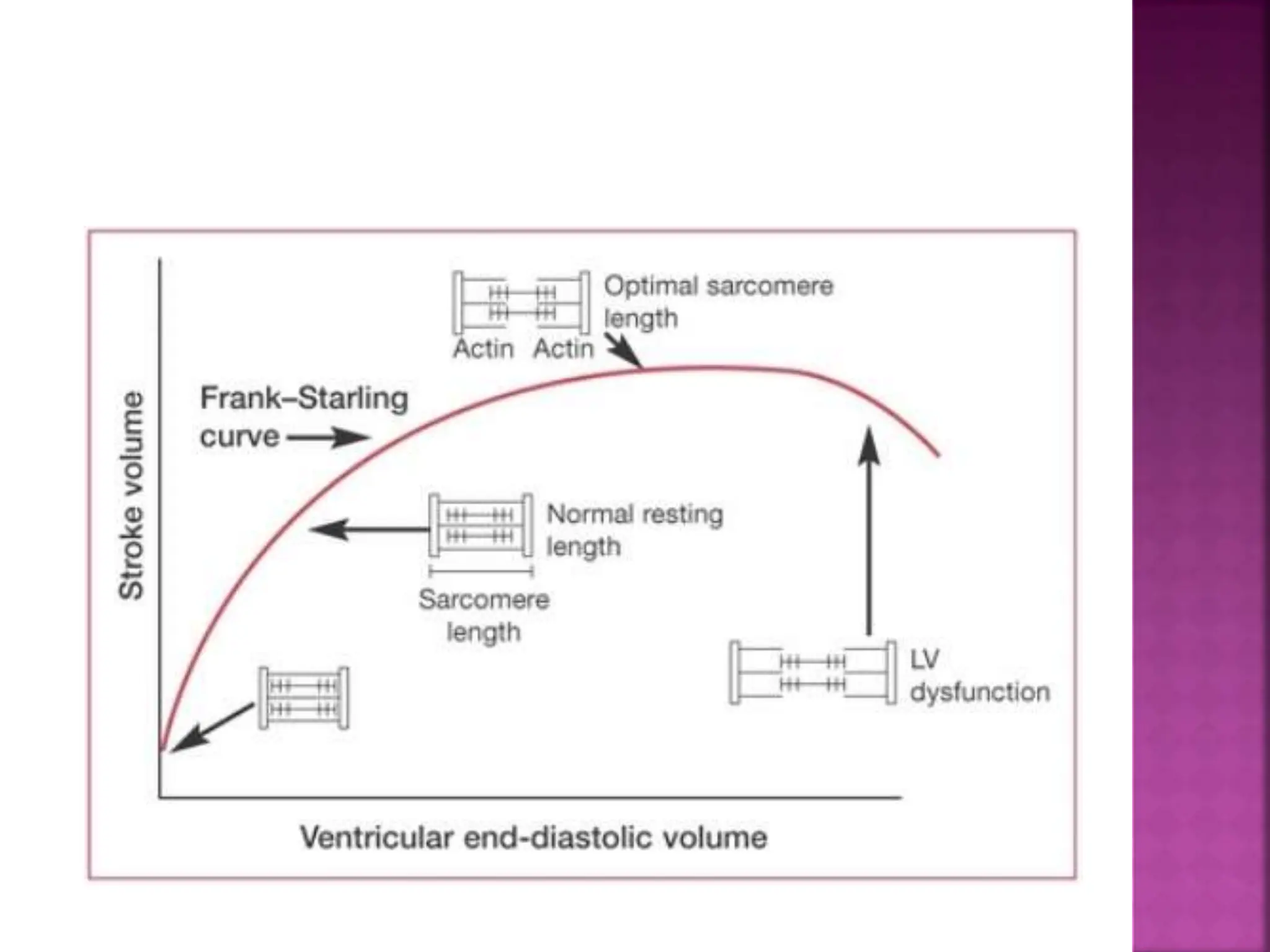
 Ability of the heart to change its force of
contraction and therefore stroke volume
in response to changes in venous return .
 Also defined as the ability of the heart to
pump all blood coming to it without
allowing systemic stasis, within limits.
Mechanism of Starling Law:
An increase in preload lead to an increase
in the sarcomere length and increases
troponin C calcium sensitivity, which
increases the rate of cross-bridge
attachment and detachment, and the
amount of tension developed by the
muscle fiber. This increases SV.
Afterload can be defined as the
"load" that the heart must eject
blood against.
 The afterload is closely related to
the aortic pressure.
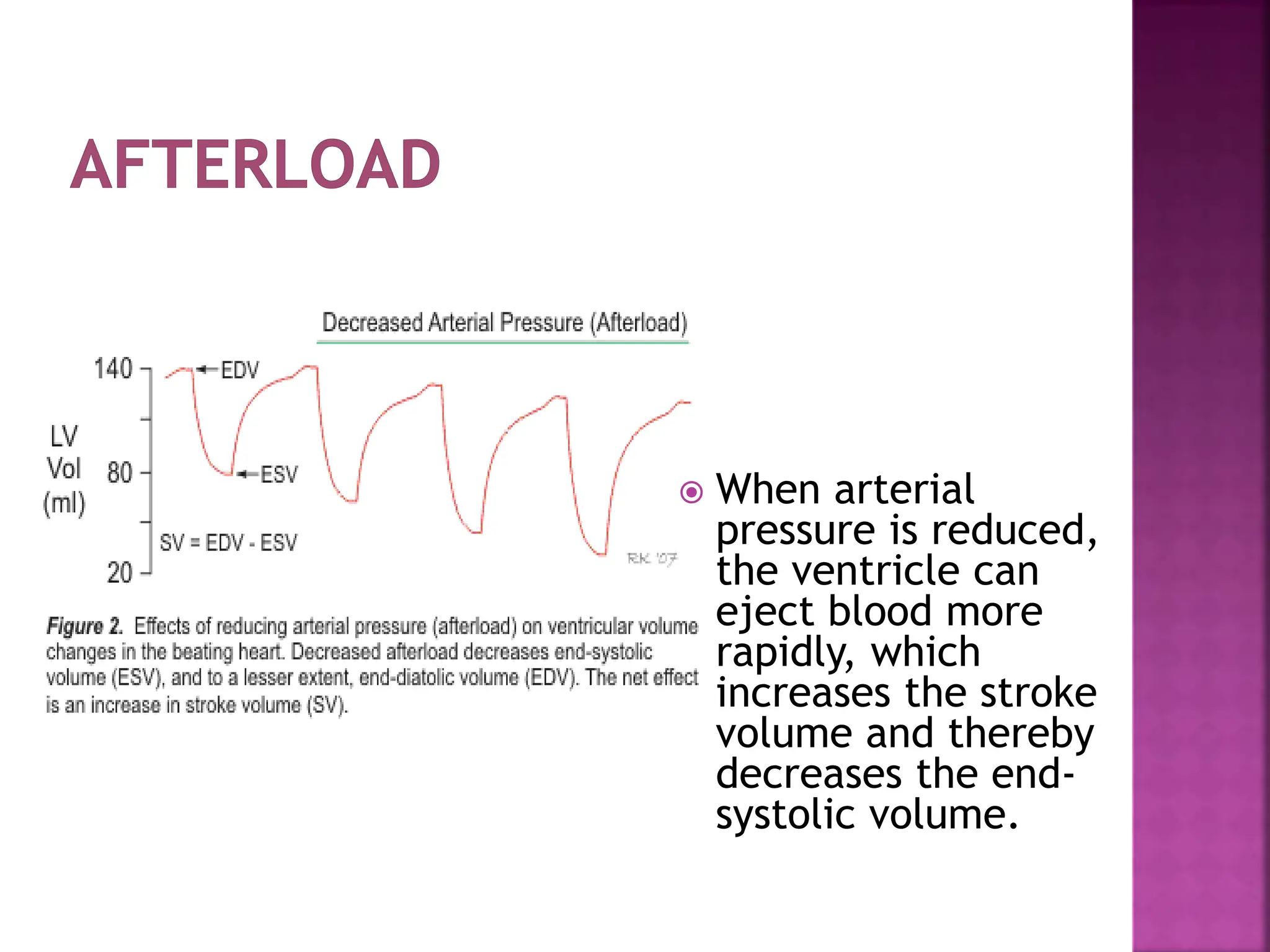
 When arterial
pressure is reduced,
the ventricle can
eject blood more
rapidly, which
increases the stroke
volume and thereby
decreases the end-
systolic volume.
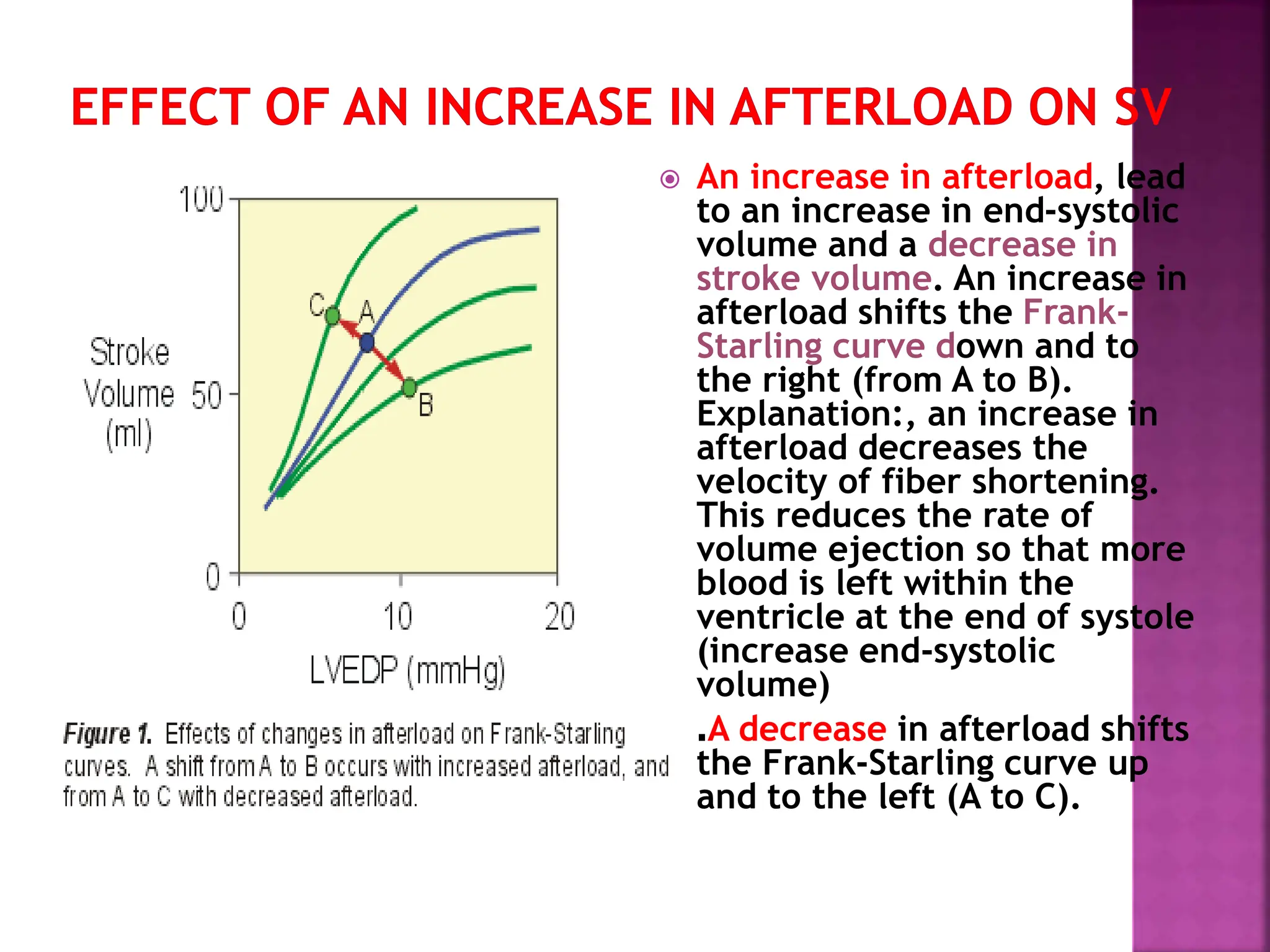
 An increase in afterload, lead
to an increase in end-systolic
volume and a decrease in
stroke volume. An increase in
afterload shifts the Frank-
Starling curve down and to
the right (from A to B).
Explanation:, an increase in
afterload decreases the
velocity of fiber shortening.
This reduces the rate of
volume ejection so that more
blood is left within the
ventricle at the end of systole
(increase end-systolic
volume)
.A decrease in afterload shifts
the Frank-Starling curve up
and to the left (A to C).
Vascular tone (and therefore blood
pressure)
Aortic stiffness
Myocardial tension (affected by
hypoxia, volume overload)
Preload
Valvular regurgitation
 Aortic stenosis.
 Arterial hypertension
 Almost all anaesthetic drugs have actions on
cardiovascular system
 They act as vasodialators and decrease both
pre load and afterload
 They are negatively inotropic , reduce
contractility
 This is the reason for a fall in Blood pressure
during induction and maintenance of
anesthesia
 Management?

Cardiac output factors responsible and effecting

  • 2.
     Definition It isthe volume of blood pumped systematically by the ventricle of the heart each minute Cardiac output depends on 2 variables Heart rate and Stroke volume CO = HR x SV
  • 3.
    CO = HRx SV 72 x 70 = 5 Litres approx Cardiac index = CO BSA
  • 5.
     Autonomic nervoussystem controls automaticity and rate of spontaneous depolarization of SA Node Sympathetic system increases heart rate Parasympathetic system decreases heart rate
  • 6.
     It isthe difference between the ventricular End Diastolic Volume (EDV) and the End Systolic Volume (ESV) SV = EDV – ESV = 120 – 50ml =70 ml of blood EDV is the volume of blood in the ventricle at the beginning of contraction and ESV is the volume of blood in the ventricle at the end of contraction
  • 7.
    Increase: -Stronger atrial contraction. -Increasedtotal blood volume -Increased venous tone. -Increased sk m pump. -Increased negative intrathoracic pressure. Decrease: Standing Increased intrapericardial pressure. Decreased ventricular compliance
  • 8.
     Pre load After load  Contractility  Wall motion abnormalities
  • 11.
     Ability ofthe heart to change its force of contraction and therefore stroke volume in response to changes in venous return .  Also defined as the ability of the heart to pump all blood coming to it without allowing systemic stasis, within limits.
  • 12.
    Mechanism of StarlingLaw: An increase in preload lead to an increase in the sarcomere length and increases troponin C calcium sensitivity, which increases the rate of cross-bridge attachment and detachment, and the amount of tension developed by the muscle fiber. This increases SV.
  • 14.
    Afterload can bedefined as the "load" that the heart must eject blood against.  The afterload is closely related to the aortic pressure.
  • 15.
     When arterial pressureis reduced, the ventricle can eject blood more rapidly, which increases the stroke volume and thereby decreases the end- systolic volume.
  • 16.
     An increasein afterload, lead to an increase in end-systolic volume and a decrease in stroke volume. An increase in afterload shifts the Frank- Starling curve down and to the right (from A to B). Explanation:, an increase in afterload decreases the velocity of fiber shortening. This reduces the rate of volume ejection so that more blood is left within the ventricle at the end of systole (increase end-systolic volume) .A decrease in afterload shifts the Frank-Starling curve up and to the left (A to C).
  • 17.
    Vascular tone (andtherefore blood pressure) Aortic stiffness Myocardial tension (affected by hypoxia, volume overload) Preload Valvular regurgitation
  • 18.
     Aortic stenosis. Arterial hypertension
  • 19.
     Almost allanaesthetic drugs have actions on cardiovascular system  They act as vasodialators and decrease both pre load and afterload  They are negatively inotropic , reduce contractility  This is the reason for a fall in Blood pressure during induction and maintenance of anesthesia  Management?