































Car Technology and Head-up Displays
Modern advances in car technology have come a long way.
A Head-up Display, or HUD, first appeared in military
aircraft.
Around 1994, I played a flight combat simulator named
Strike Commander.
It allowed flying F-16s in mercenary fashion.
One of the unique features of the aircraft included a Head-
up Display.
At that time, the HUD for the game flights only stretched
roughly about a foot long and high.
Modern luxury sedans now sport their own versions of the
HUDs, boasting about their apparent benefits.
Modern Car Technology on Windshields
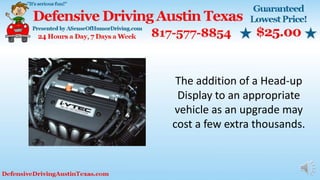
The addition of a Head-up
Display to an appropriate
vehicle as an upgrade may
cost a few extra thousands.
With budgets in mind, vehicles manufactured for economy
as a focus may obviously not incorporate this feature.
The HUD car technology requires a special type of projector
and a windshield specifically treated for exposure to the
imagery.
The top feature sought for in vehicle purchases consists of
reliability.
A HUD may seem like a nice option for individuals seeking a
new car.
However, most buyers of used cars just want them to work
right.
Safety exists as another top component.
Companies, such as Lexus, BMW, Cadillac and Audi, claim
that the car technology of a Head-up Display helps keep
drivers safe.
Currently, the GPS capability tied into HUDs does offer
commuter eyes to stay on the road.
In a slow fashion, more pieces of useful data creep into the
graphics on windshields as time goes on.
Car manufacturer Jaguar presents a benefit that comes
across to me as neat.
It factors in the aspect of
a fake car to follow on the
road.
The Land Rover remains as Jaguar’s first vehicle type to
sport the technique.
If desired, a built-in dashboard GPS still provides
information at a glance.
In an act of keeping attention on the road, a traveler can
just follow the fake car on the road.
Of course, other safety facts still stay active.
A Bit of History With Car Technology as It Affects
Windshields
Head-up Displays made a first debut in road vehicles by
General Motors in the late 1980s.
In the late 1990s, the car technology made an appearance
in Corvettes meant for racing environments.
It basically displayed engine speed and heat.
Modern HUDs now inform of car speed and extra settings
as well.
Finally, they also expose navigation knowledge, thanks to
the courtesy of Global Positioning Systems.
While unnecessary, a HUD can prove as a useful ingredient
of the driving experience.
The primary down-side continues in the area of cost, and
this eliminates the detail in many automobile models,
limiting it to luxury designs.
In my opinion, this car technology serves as a safety
feature, which can relieve danger off a driver in a number of
situations together with the cooperation of other devices.

Car technology and head up displays

  • 1.
    Car Technology andHead-up Displays
  • 2.
    Modern advances incar technology have come a long way.
  • 3.
    A Head-up Display,or HUD, first appeared in military aircraft.
  • 4.
    Around 1994, Iplayed a flight combat simulator named Strike Commander.
  • 5.
    It allowed flyingF-16s in mercenary fashion.
  • 6.
    One of theunique features of the aircraft included a Head- up Display.
  • 7.
    At that time,the HUD for the game flights only stretched roughly about a foot long and high.
  • 8.
    Modern luxury sedansnow sport their own versions of the HUDs, boasting about their apparent benefits.
  • 9.
    Modern Car Technologyon Windshields
  • 10.
    The addition ofa Head-up Display to an appropriate vehicle as an upgrade may cost a few extra thousands.
  • 11.
    With budgets inmind, vehicles manufactured for economy as a focus may obviously not incorporate this feature.
  • 12.
    The HUD cartechnology requires a special type of projector and a windshield specifically treated for exposure to the imagery.
  • 13.
    The top featuresought for in vehicle purchases consists of reliability.
  • 14.
    A HUD mayseem like a nice option for individuals seeking a new car.
  • 15.
    However, most buyersof used cars just want them to work right.
  • 16.
    Safety exists asanother top component.
  • 17.
    Companies, such asLexus, BMW, Cadillac and Audi, claim that the car technology of a Head-up Display helps keep drivers safe.
  • 18.
    Currently, the GPScapability tied into HUDs does offer commuter eyes to stay on the road.
  • 19.
    In a slowfashion, more pieces of useful data creep into the graphics on windshields as time goes on.
  • 20.
    Car manufacturer Jaguarpresents a benefit that comes across to me as neat.
  • 21.
    It factors inthe aspect of a fake car to follow on the road.
  • 22.
    The Land Roverremains as Jaguar’s first vehicle type to sport the technique.
  • 23.
    If desired, abuilt-in dashboard GPS still provides information at a glance.
  • 24.
    In an actof keeping attention on the road, a traveler can just follow the fake car on the road.
  • 25.
    Of course, othersafety facts still stay active.
  • 26.
    A Bit ofHistory With Car Technology as It Affects Windshields
  • 27.
    Head-up Displays madea first debut in road vehicles by General Motors in the late 1980s.
  • 28.
    In the late1990s, the car technology made an appearance in Corvettes meant for racing environments.
  • 29.
    It basically displayedengine speed and heat.
  • 30.
    Modern HUDs nowinform of car speed and extra settings as well.
  • 31.
    Finally, they alsoexpose navigation knowledge, thanks to the courtesy of Global Positioning Systems.
  • 32.
    While unnecessary, aHUD can prove as a useful ingredient of the driving experience.
  • 33.
    The primary down-sidecontinues in the area of cost, and this eliminates the detail in many automobile models, limiting it to luxury designs.
  • 34.
    In my opinion,this car technology serves as a safety feature, which can relieve danger off a driver in a number of situations together with the cooperation of other devices.