Capturing the Real Value of IT
Service Management
Stew Hogg & James Alderson
14th Feb 2014
Scope
•
•
•
•
•

What is IT Service Management (ITSM)?
Service Management: A Journey
The Business and IT Alignment
Getting Started with ITSM
A New View of IT
What is IT Service
Management?
Why do we need IT Service
Management?
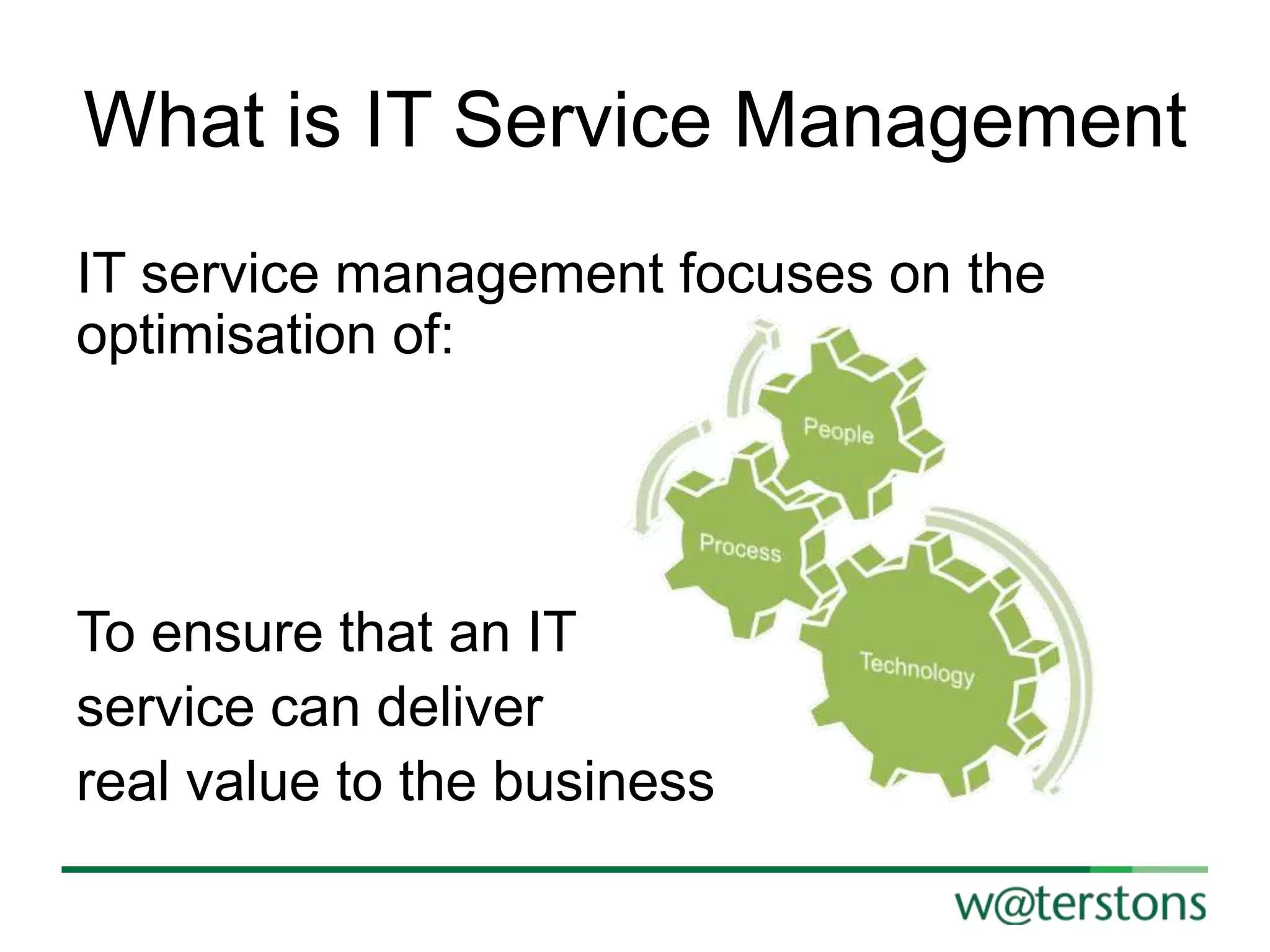
What is IT Service Management
IT service management focuses on the
optimisation of:

To ensure that an IT
service can deliver
real value to the business
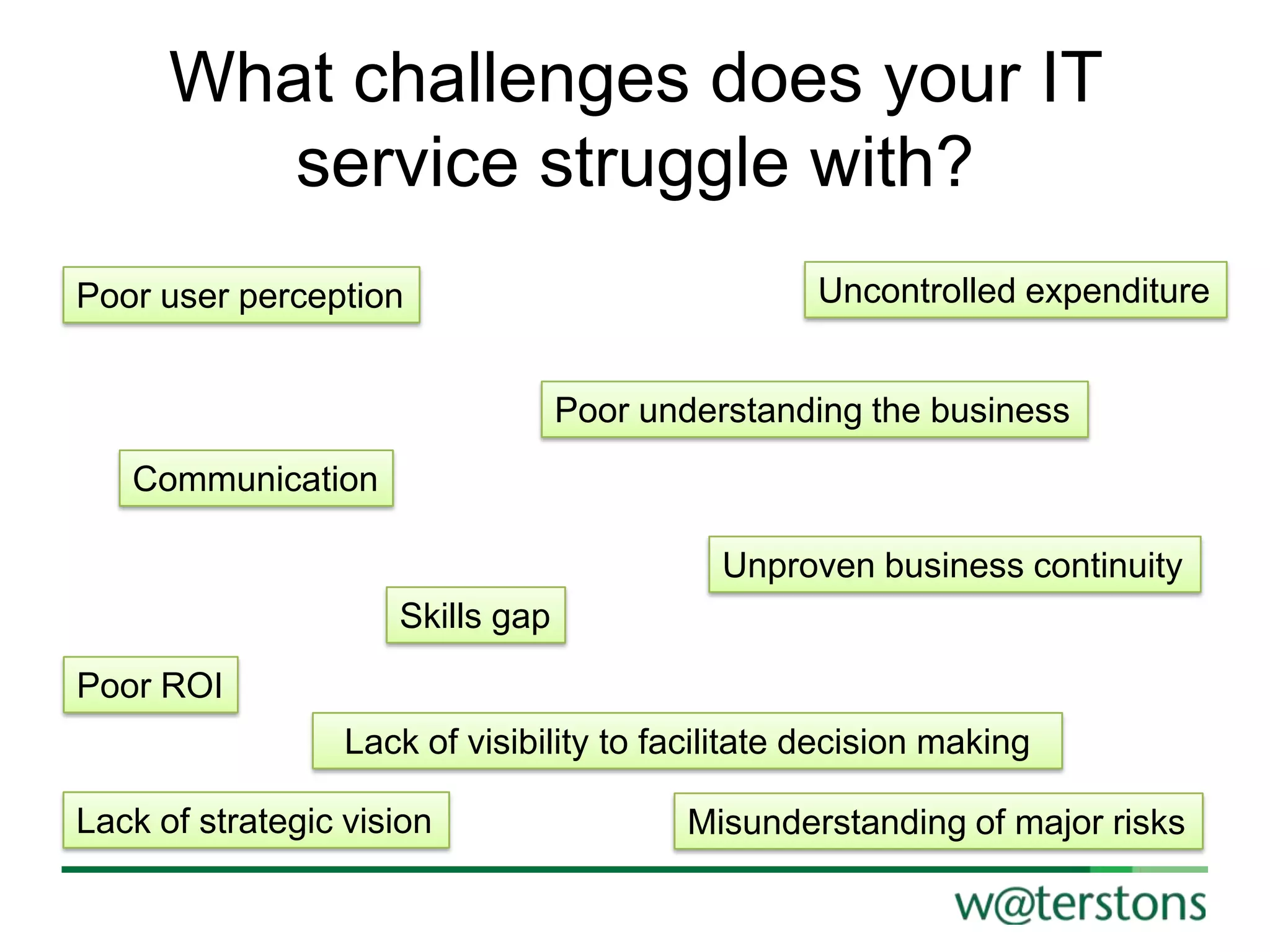
What challenges does your IT
service struggle with?
Poor user perception

Uncontrolled expenditure
Poor understanding the business

Communication
Unproven business continuity
Skills gap
Poor ROI
Lack of visibility to facilitate decision making
Lack of strategic vision

Misunderstanding of major risks
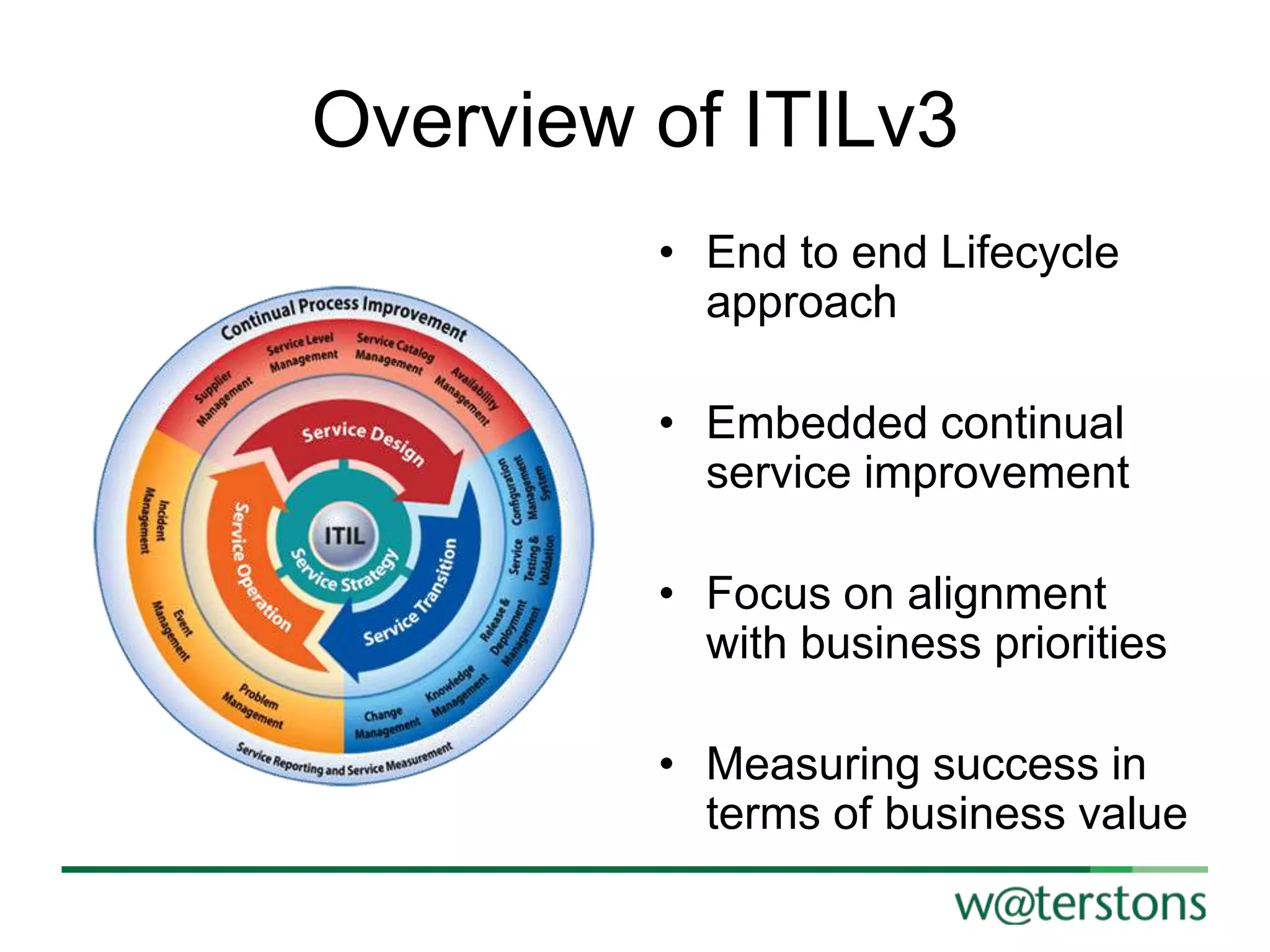
Overview of ITILv3
• End to end Lifecycle
approach
• Embedded continual
service improvement
• Focus on alignment
with business priorities

• Measuring success in
terms of business value
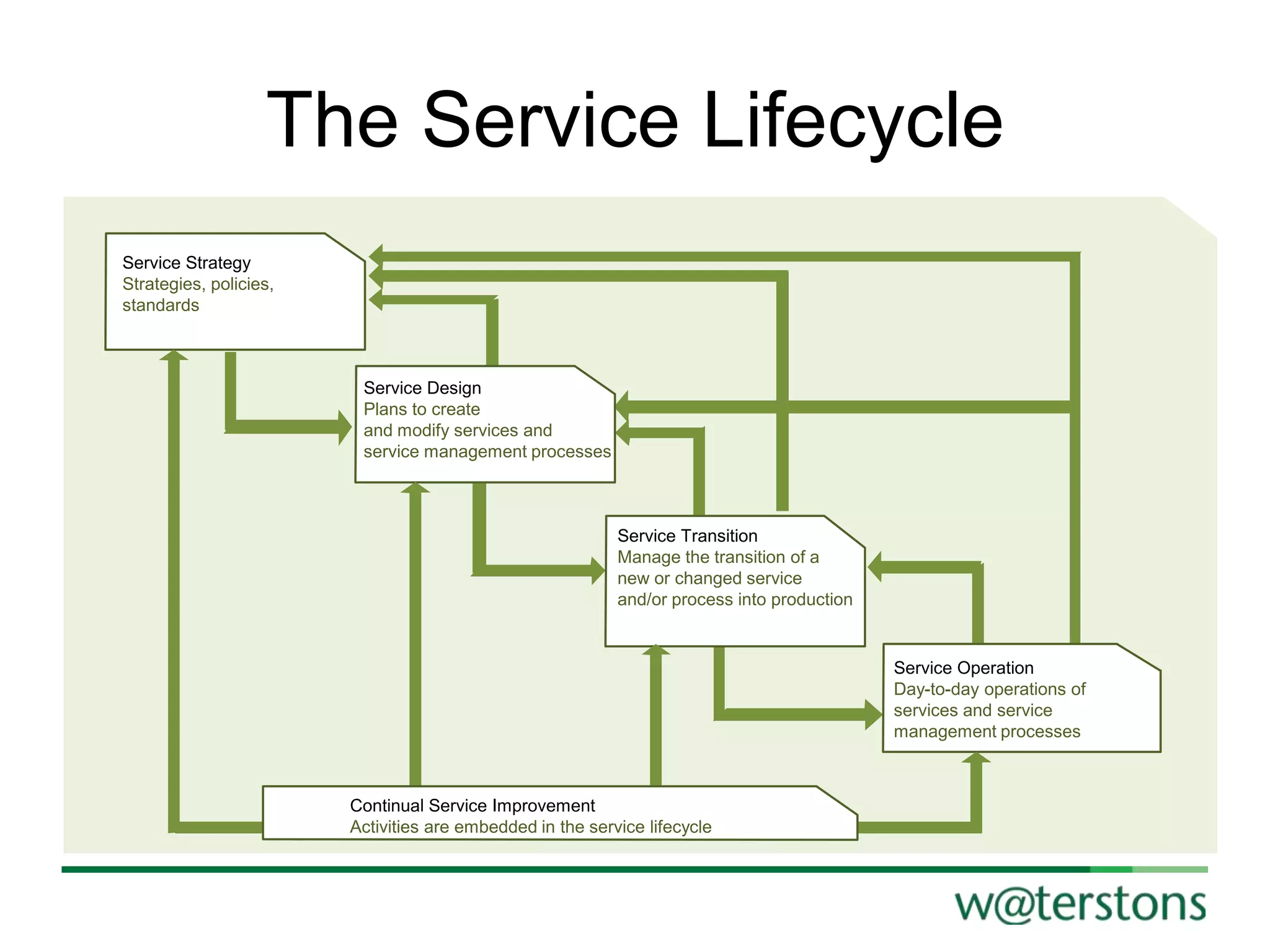
The Service Lifecycle
Service Strategy
Strategies, policies,
standards

Service Design
Plans to create
and modify services and
service management processes

Service Transition
Manage the transition of a
new or changed service
and/or process into production

Service Operation
Day-to-day operations of
services and service
management processes

Continual Service Improvement
Activities are embedded in the service lifecycle
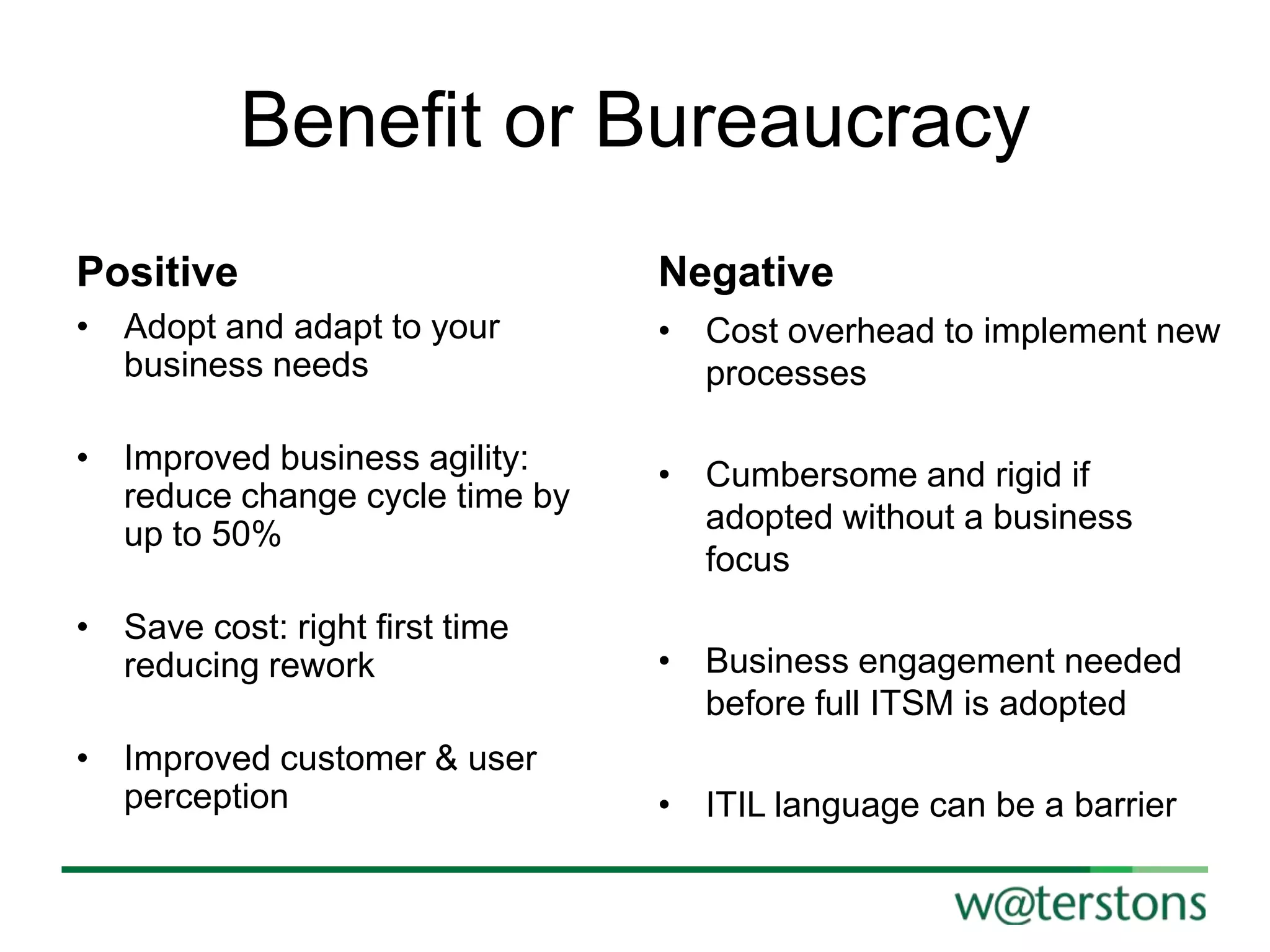
Benefit or Bureaucracy
Positive

Negative

• Adopt and adapt to your
business needs

• Cost overhead to implement new
processes

• Improved business agility:
reduce change cycle time by
up to 50%

• Cumbersome and rigid if
adopted without a business
focus

• Save cost: right first time
reducing rework
• Improved customer & user
perception

• Business engagement needed
before full ITSM is adopted
• ITIL language can be a barrier
The ITSM Journey
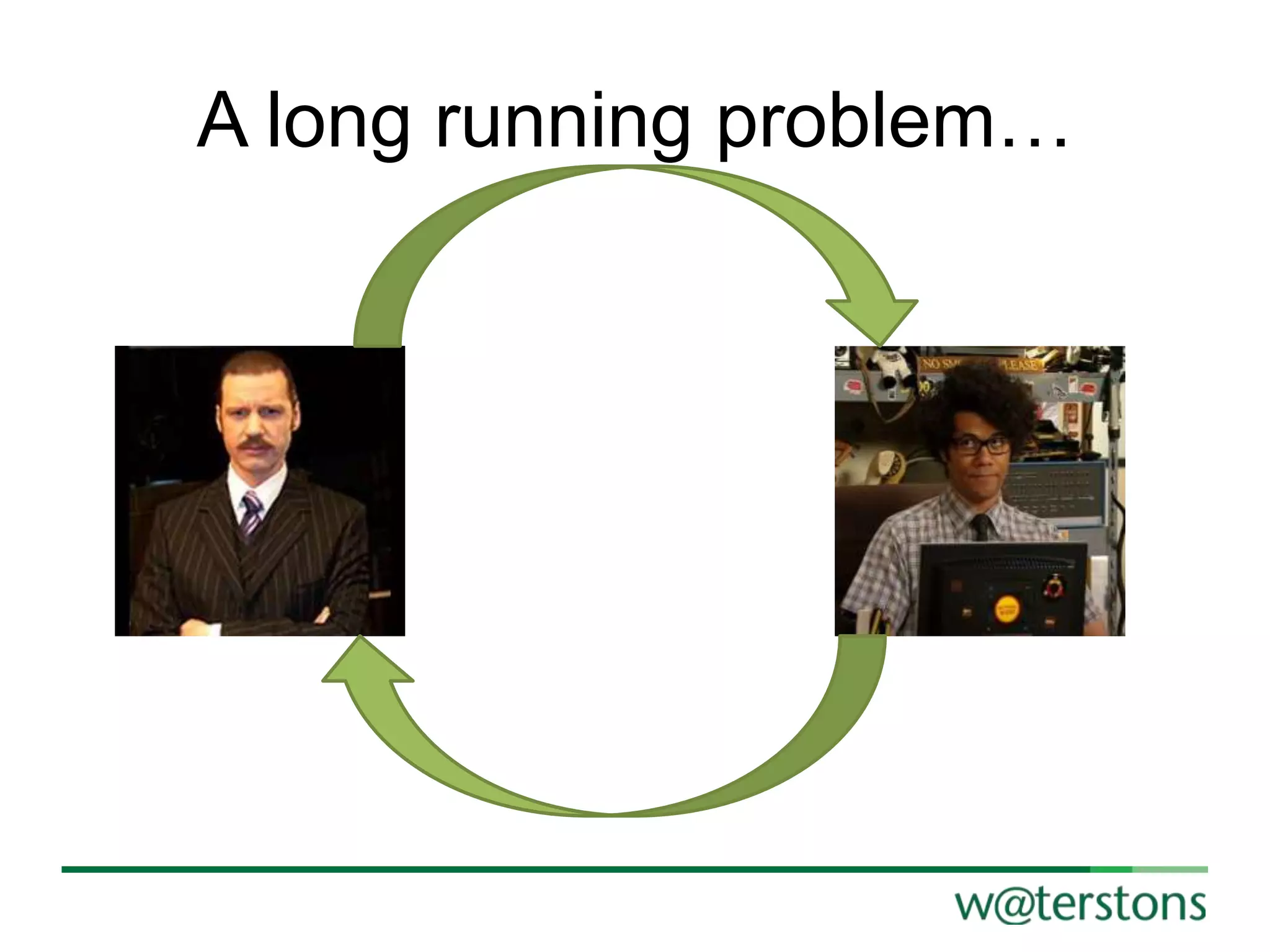
A long running problem…
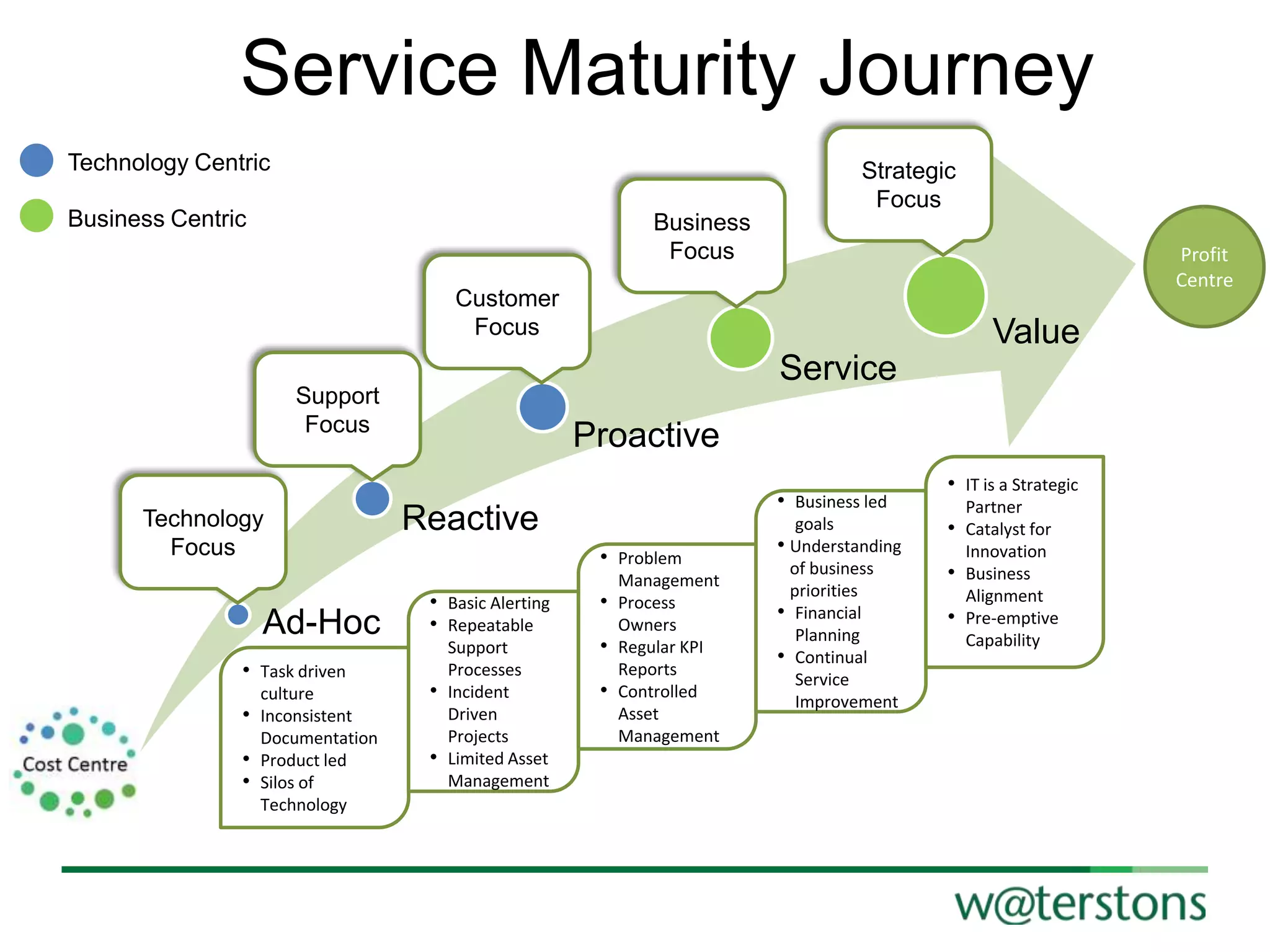
Service Maturity Journey
Technology Centric

Strategic
Focus

Business Centric

Business
Focus

Profit
Centre

Customer
Focus

Service

Support
Focus

Technology
Focus

Ad-Hoc
• Task driven
culture

• Inconsistent
Documentation
• Product led
• Silos of
Technology

Value
Proactive
• Business led

Reactive
• Problem
• Basic Alerting
• Repeatable
Support
Processes
• Incident
Driven
Projects
• Limited Asset
Management

Management

• Process

Owners

• Regular KPI
Reports

• Controlled
Asset
Management

goals
• Understanding
of business
priorities
• Financial
Planning
• Continual
Service
Improvement

• IT is a Strategic
Partner

• Catalyst for
Innovation

• Business

Alignment

• Pre-emptive
Capability
Scope of Maturity Assessments
• The journey involves taking reviewing the
following 5 aspects of the IT service
– Vision
– People
– Process
– Technology
– Culture
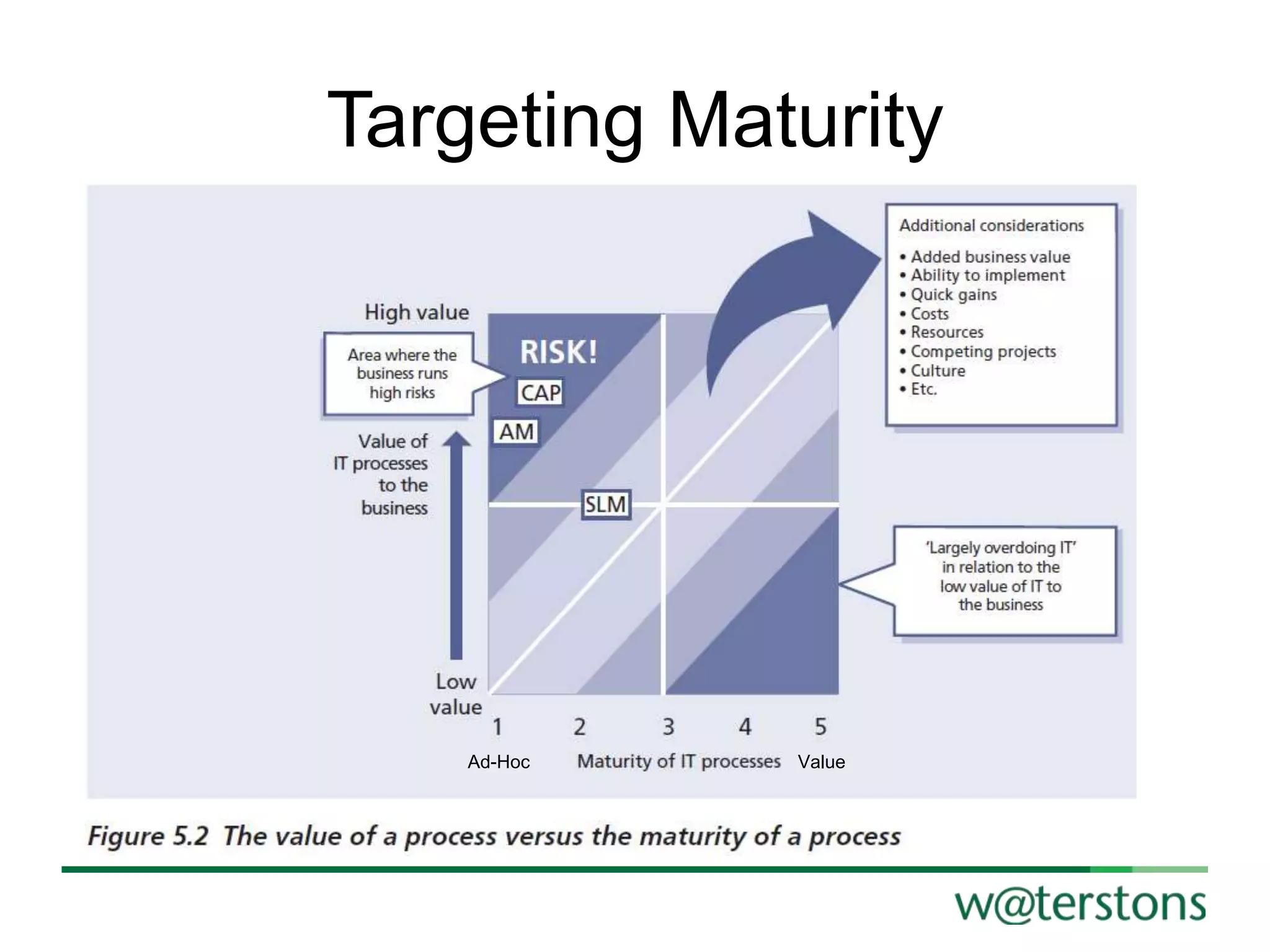
Targeting Maturity

Ad-Hoc

Value
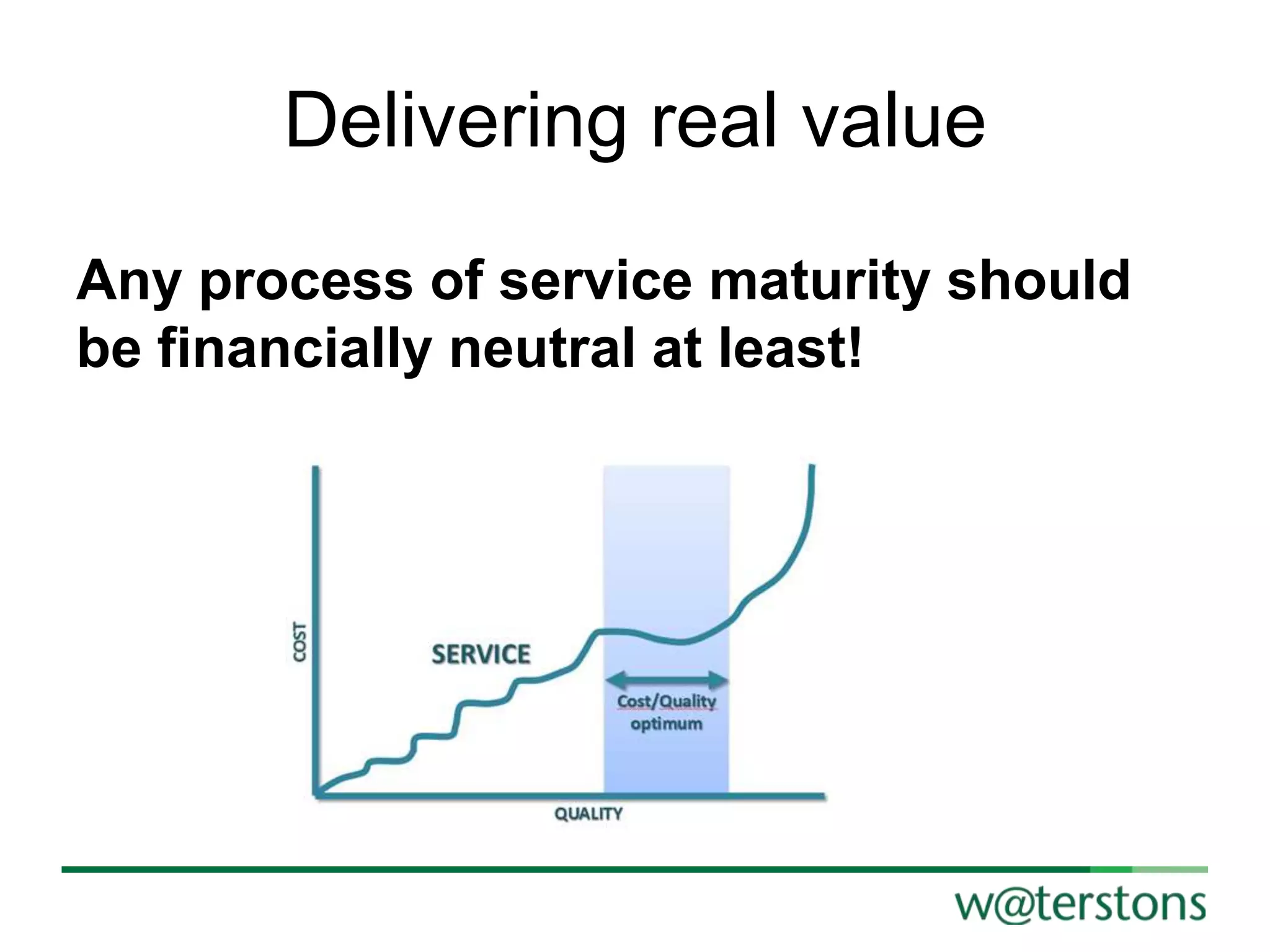
Delivering real value
Any process of service maturity should
be financially neutral at least!
Business and IT Alignment
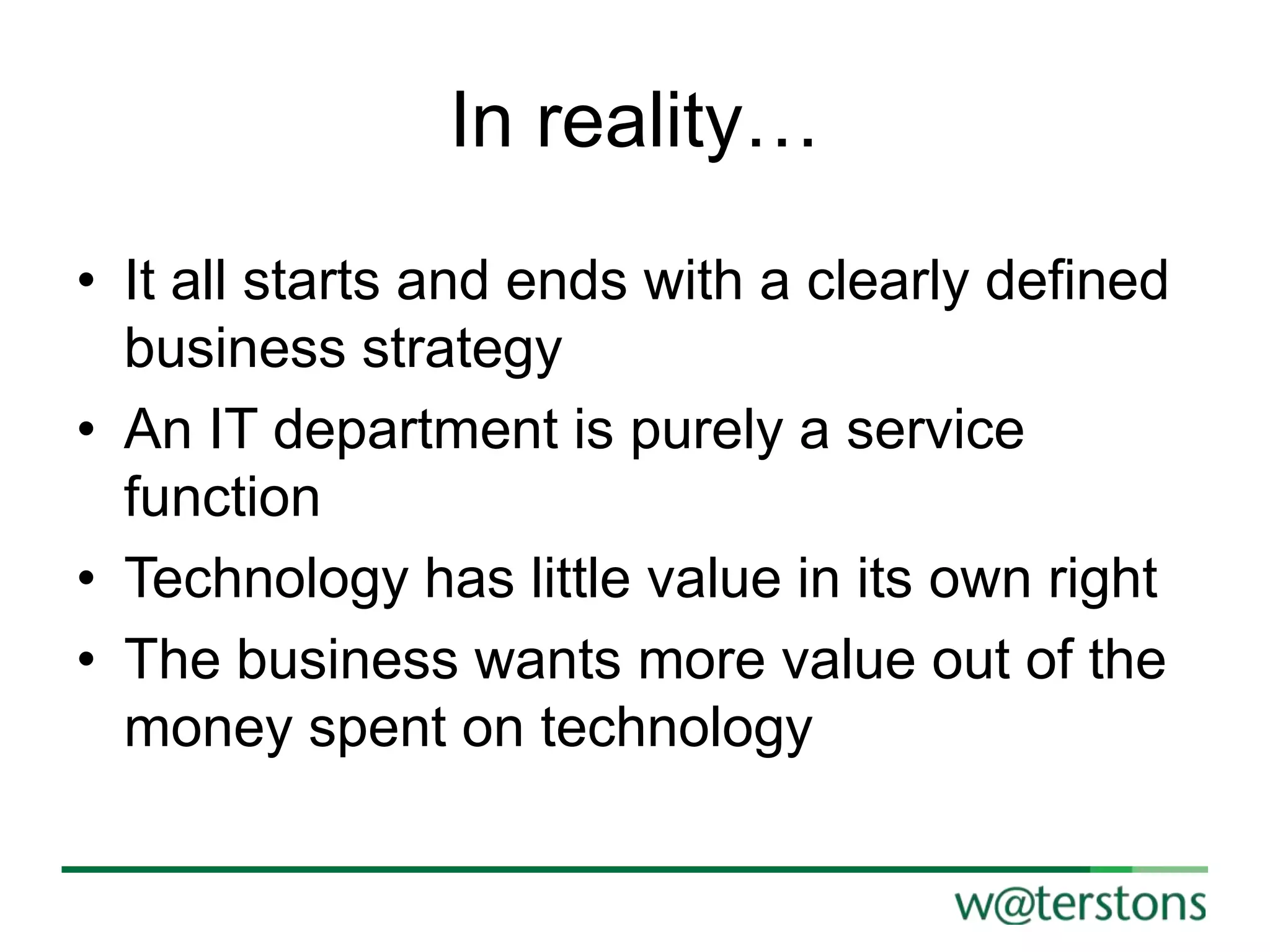
In reality…
• It all starts and ends with a clearly defined
business strategy
• An IT department is purely a service
function
• Technology has little value in its own right
• The business wants more value out of the
money spent on technology
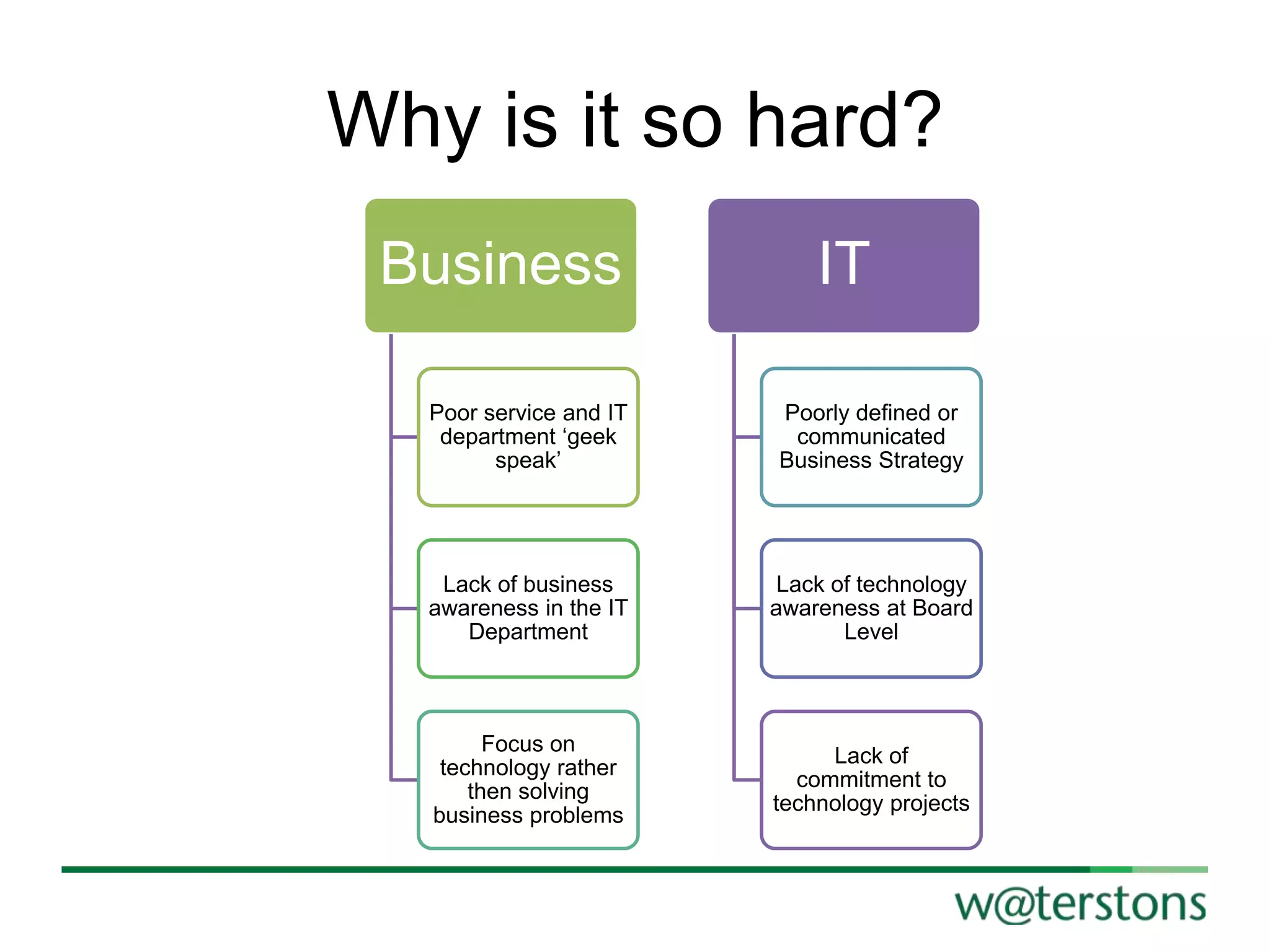
Why is it so hard?
Business

IT

Poor service and IT
department „geek
speak‟

Poorly defined or
communicated
Business Strategy

Lack of business
awareness in the IT
Department

Lack of technology
awareness at Board
Level

Focus on
technology rather
then solving
business problems

Lack of
commitment to
technology projects
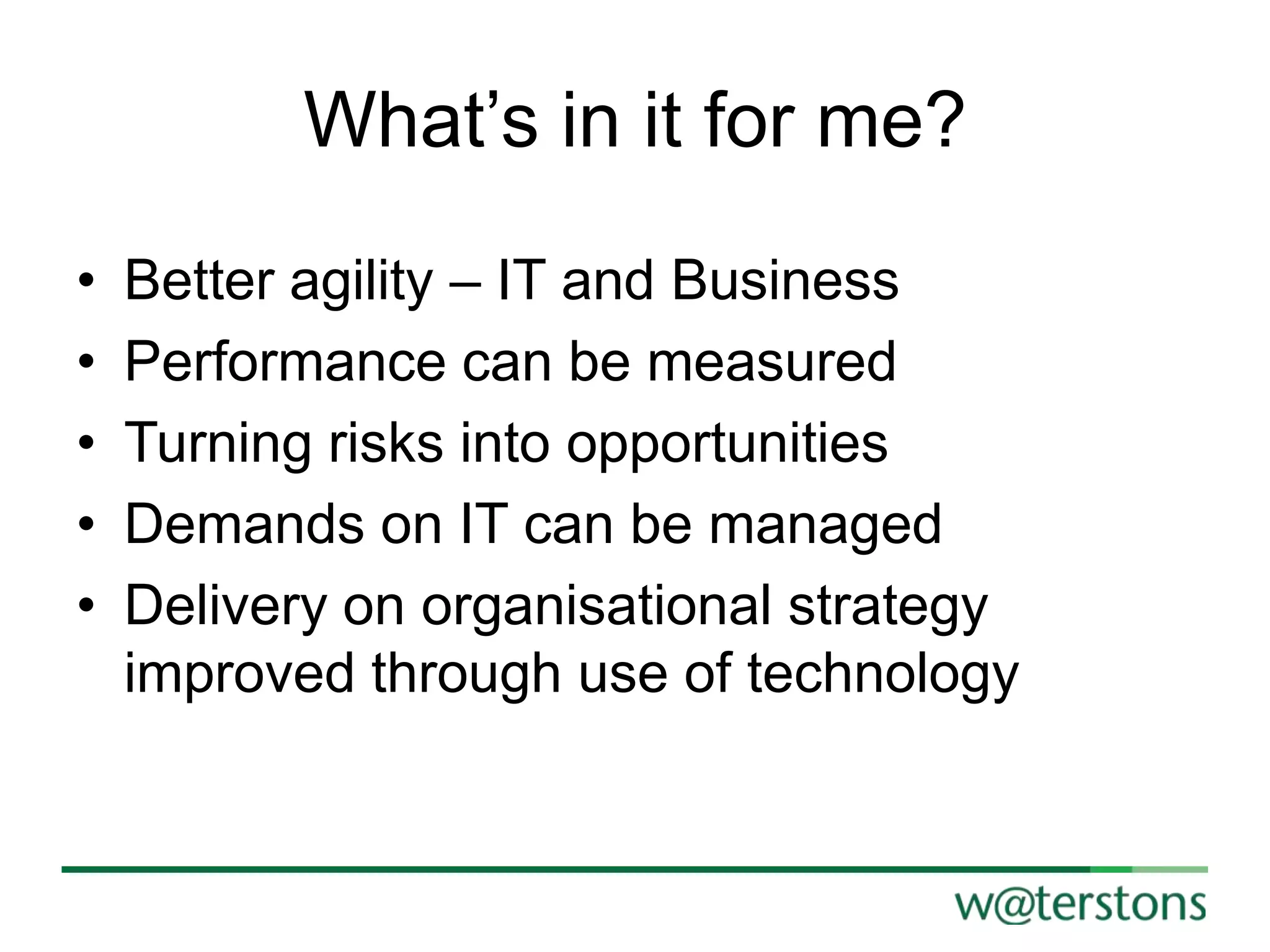
What‟s in it for me?
•
•
•
•
•

Better agility – IT and Business
Performance can be measured
Turning risks into opportunities
Demands on IT can be managed
Delivery on organisational strategy
improved through use of technology
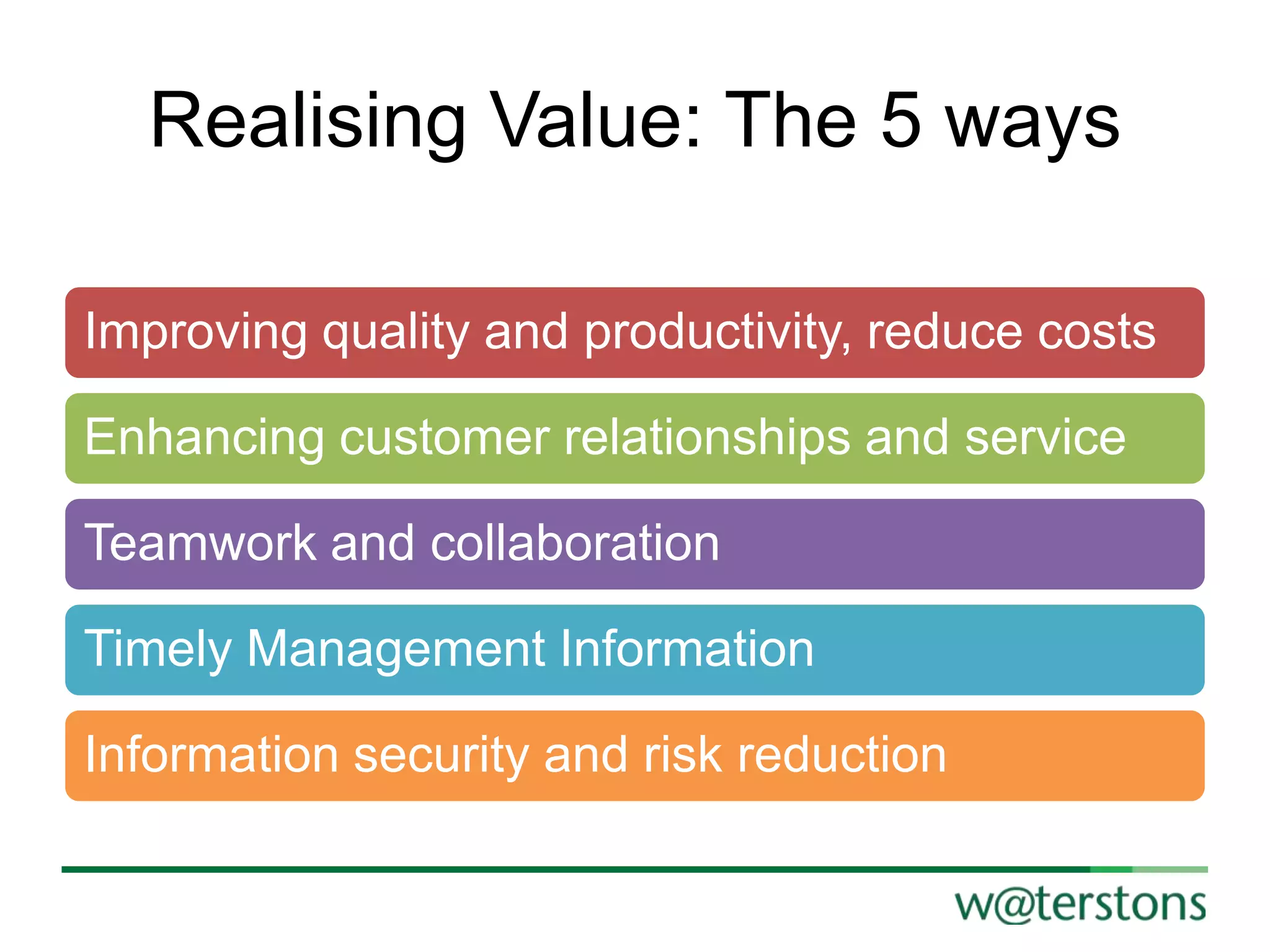
Realising Value: The 5 ways
Improving quality and productivity, reduce costs
Enhancing customer relationships and service
Teamwork and collaboration
Timely Management Information
Information security and risk reduction
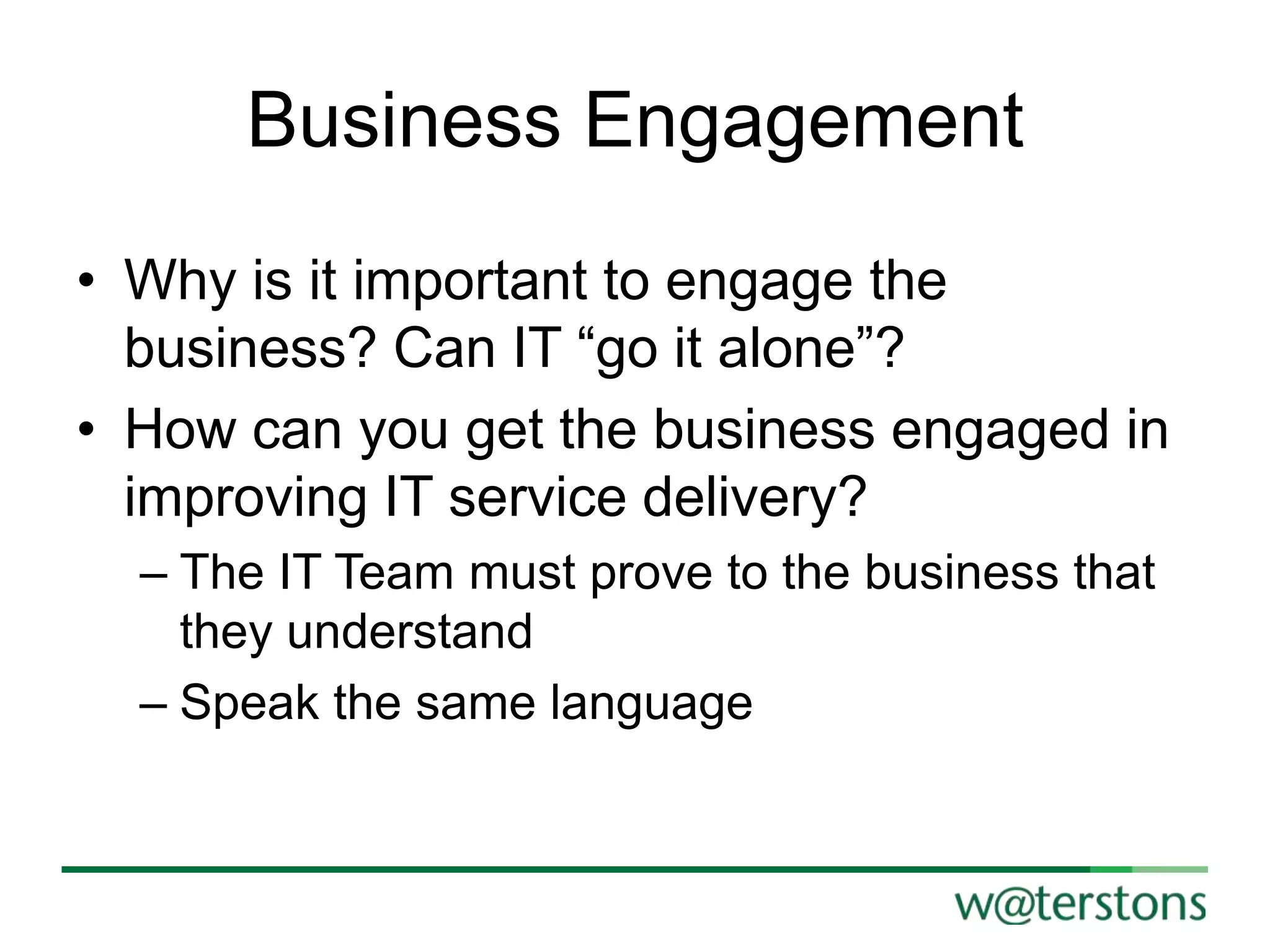
Business Engagement
• Why is it important to engage the
business? Can IT “go it alone”?
• How can you get the business engaged in
improving IT service delivery?
– The IT Team must prove to the business that
they understand
– Speak the same language
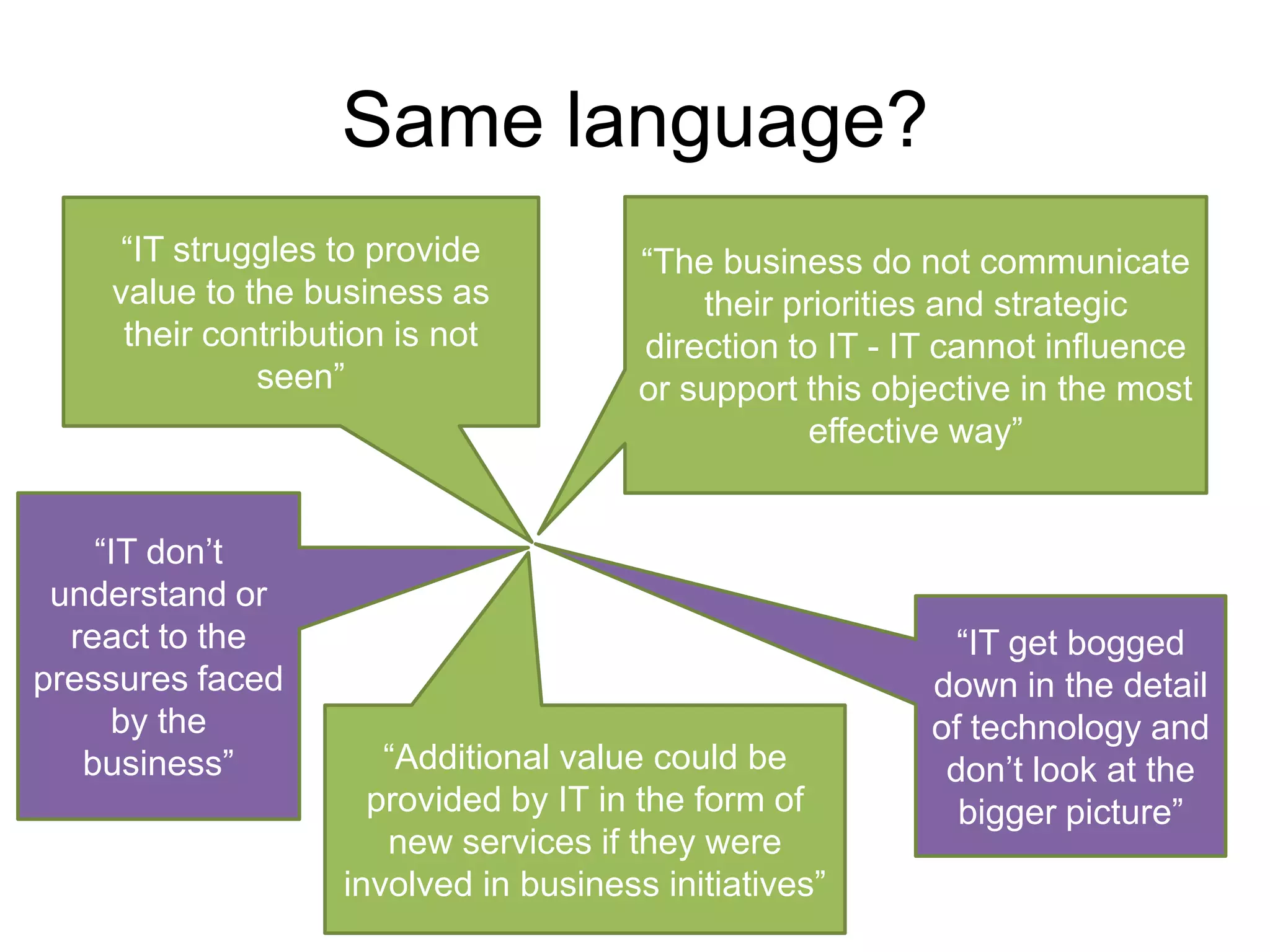
Same language?
“IT struggles to provide
value to the business as
their contribution is not
seen”

“IT don‟t
understand or
react to the
pressures faced
by the
business”

“The business do not communicate
their priorities and strategic
direction to IT - IT cannot influence
or support this objective in the most
effective way”

“Additional value could be
provided by IT in the form of
new services if they were
involved in business initiatives”

“IT get bogged
down in the detail
of technology and
don‟t look at the
bigger picture”
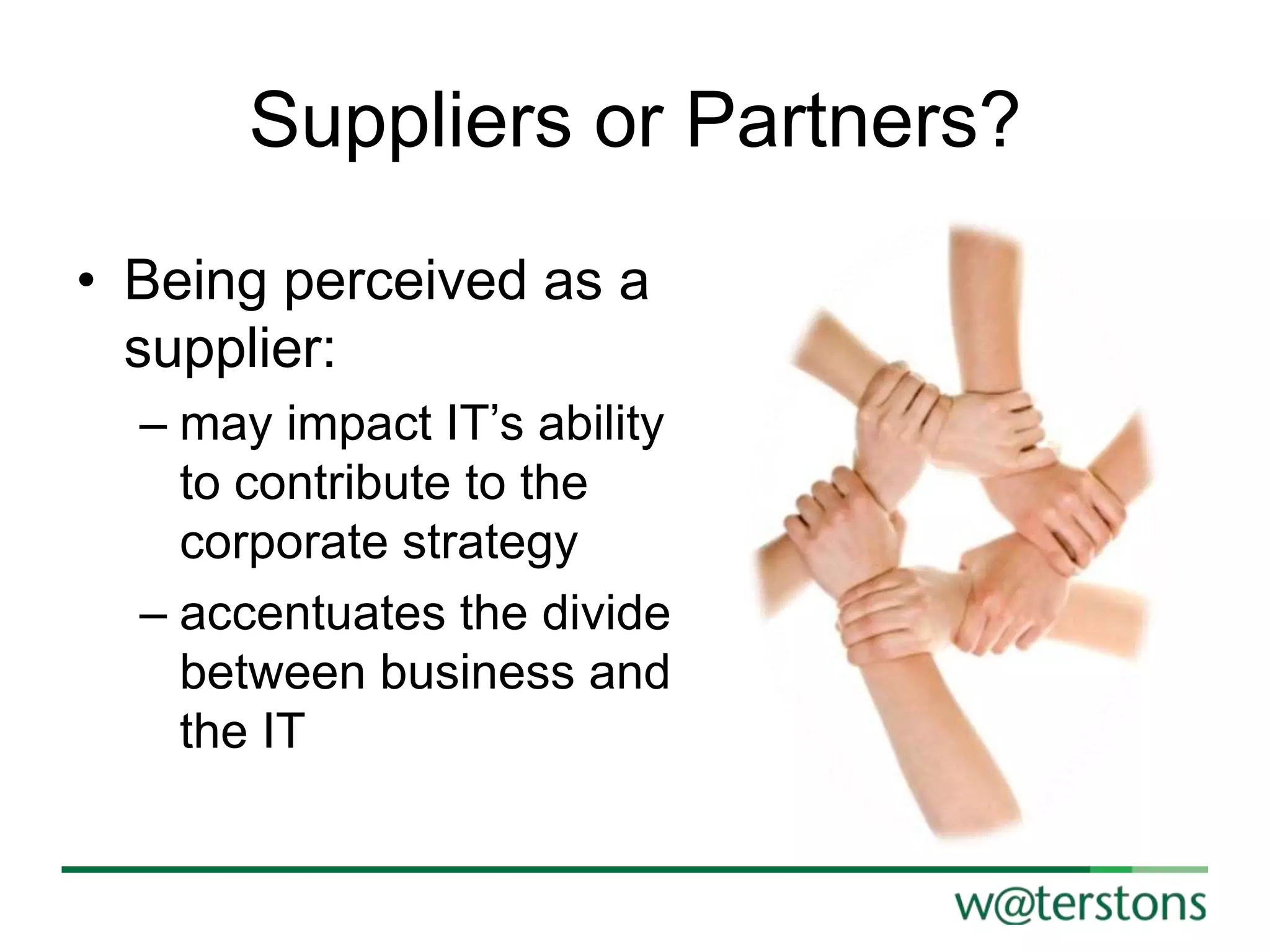
Suppliers or Partners?
• Being perceived as a
supplier:
– may impact IT‟s ability
to contribute to the
corporate strategy
– accentuates the divide
between business and
the IT
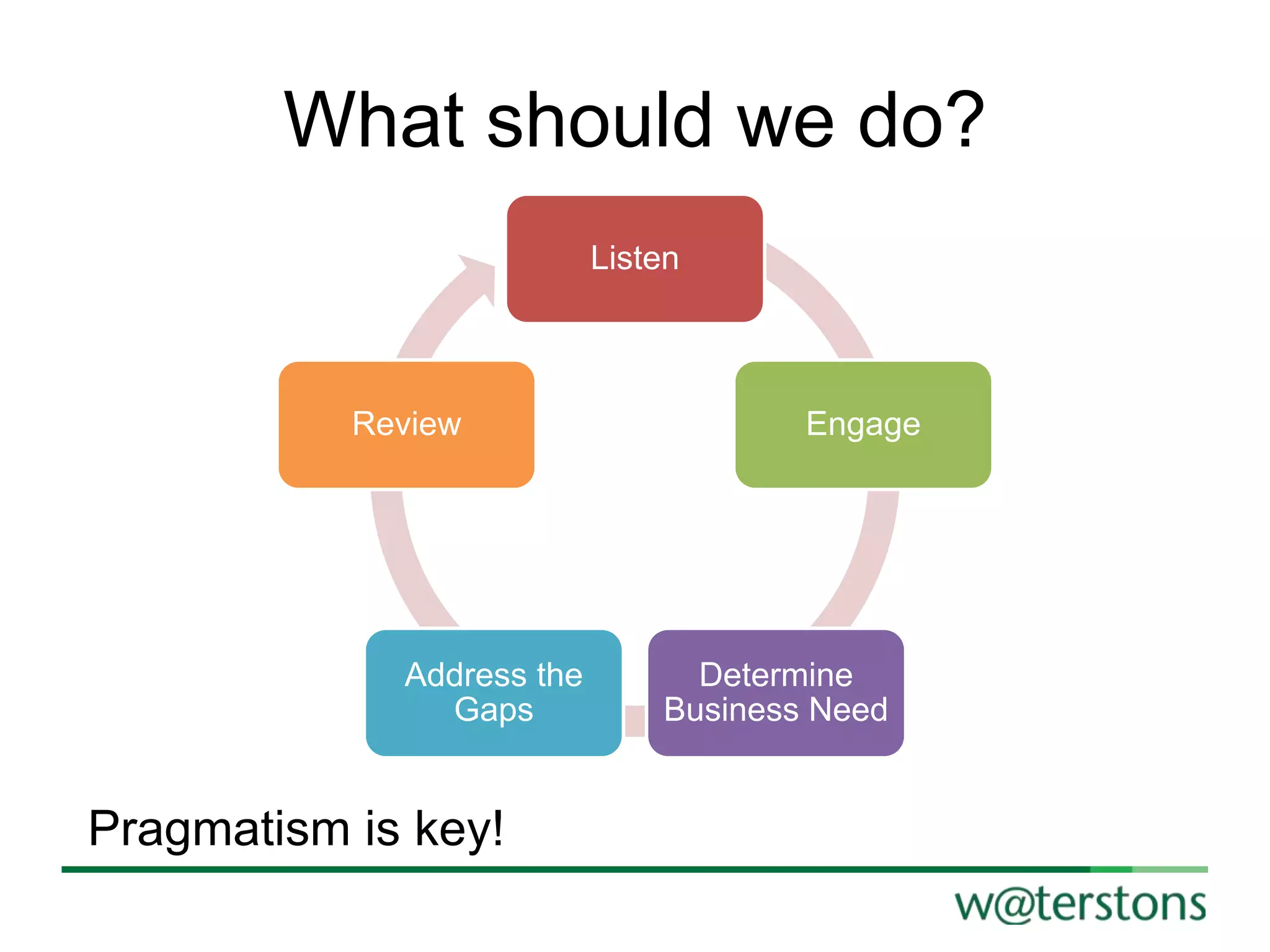
What should we do?
Listen

Review

Address the
Gaps

Pragmatism is key!

Engage

Determine
Business Need
Getting Started with IT Service
Management
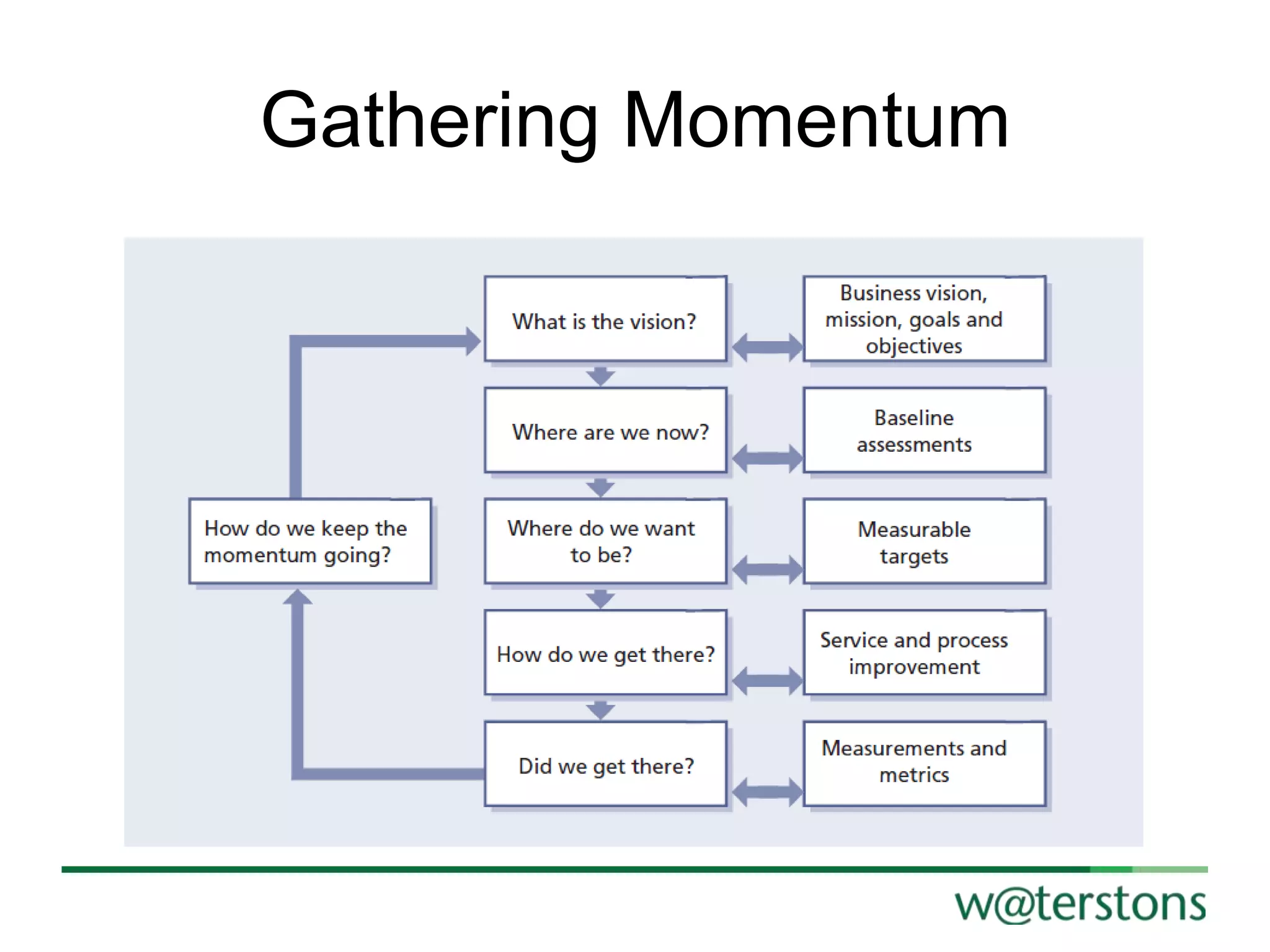
Gathering Momentum
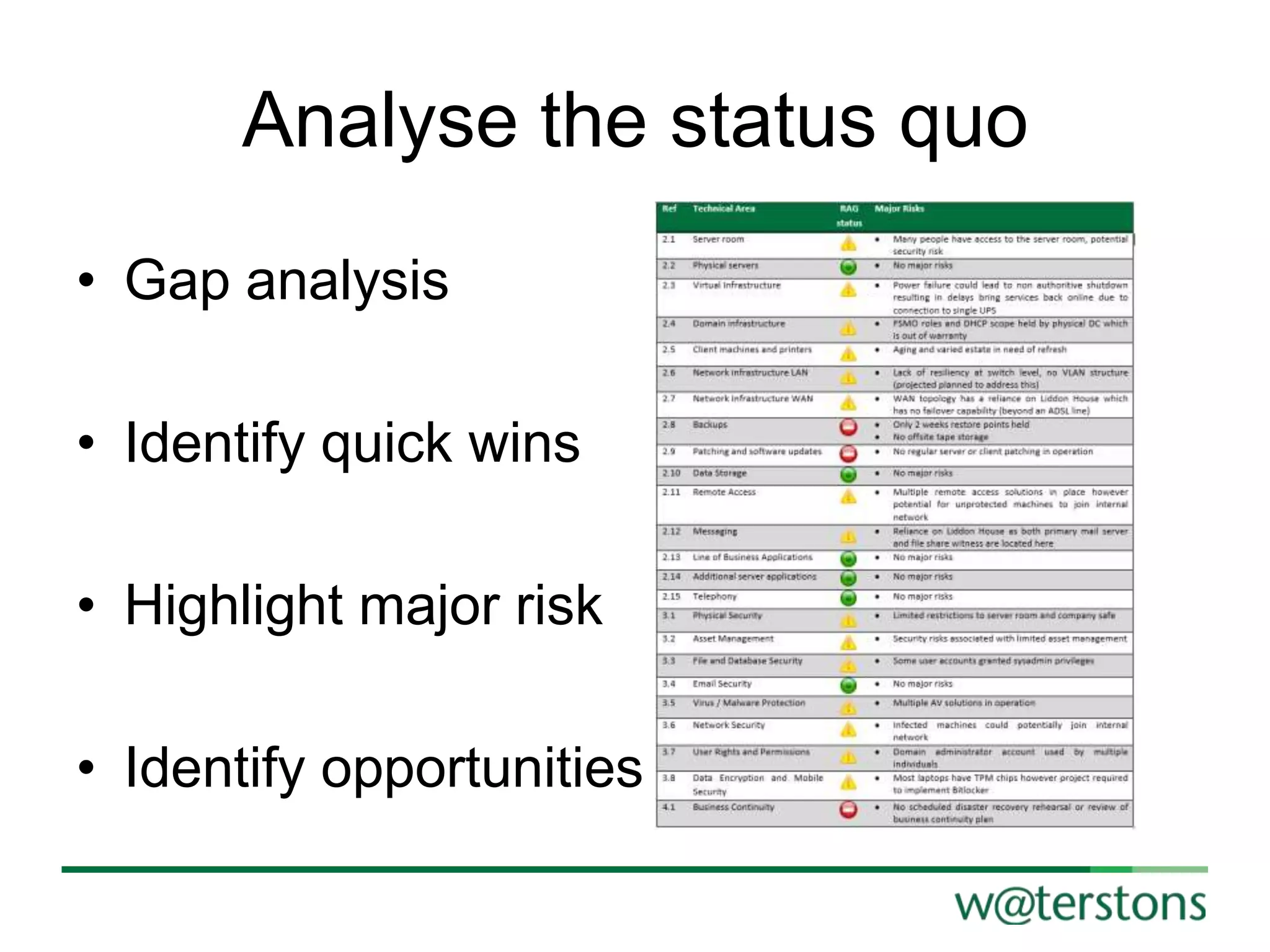
Analyse the status quo
• Gap analysis
• Identify quick wins
• Highlight major risk

• Identify opportunities
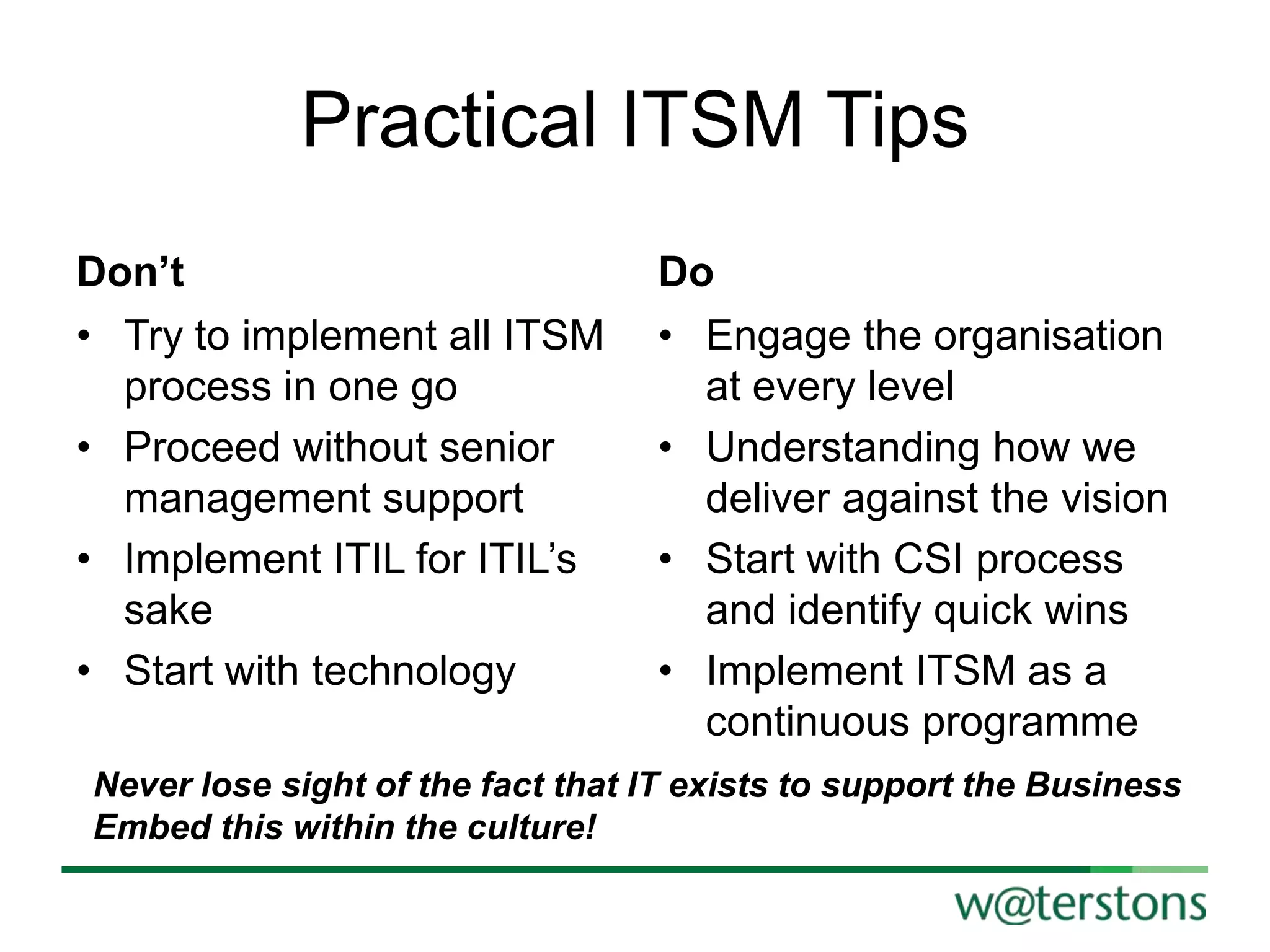
Practical ITSM Tips
Don’t
• Try to implement all ITSM
process in one go
• Proceed without senior
management support
• Implement ITIL for ITIL‟s
sake
• Start with technology

Do
• Engage the organisation
at every level
• Understanding how we
deliver against the vision
• Start with CSI process
and identify quick wins
• Implement ITSM as a
continuous programme

Never lose sight of the fact that IT exists to support the Business
Embed this within the culture!
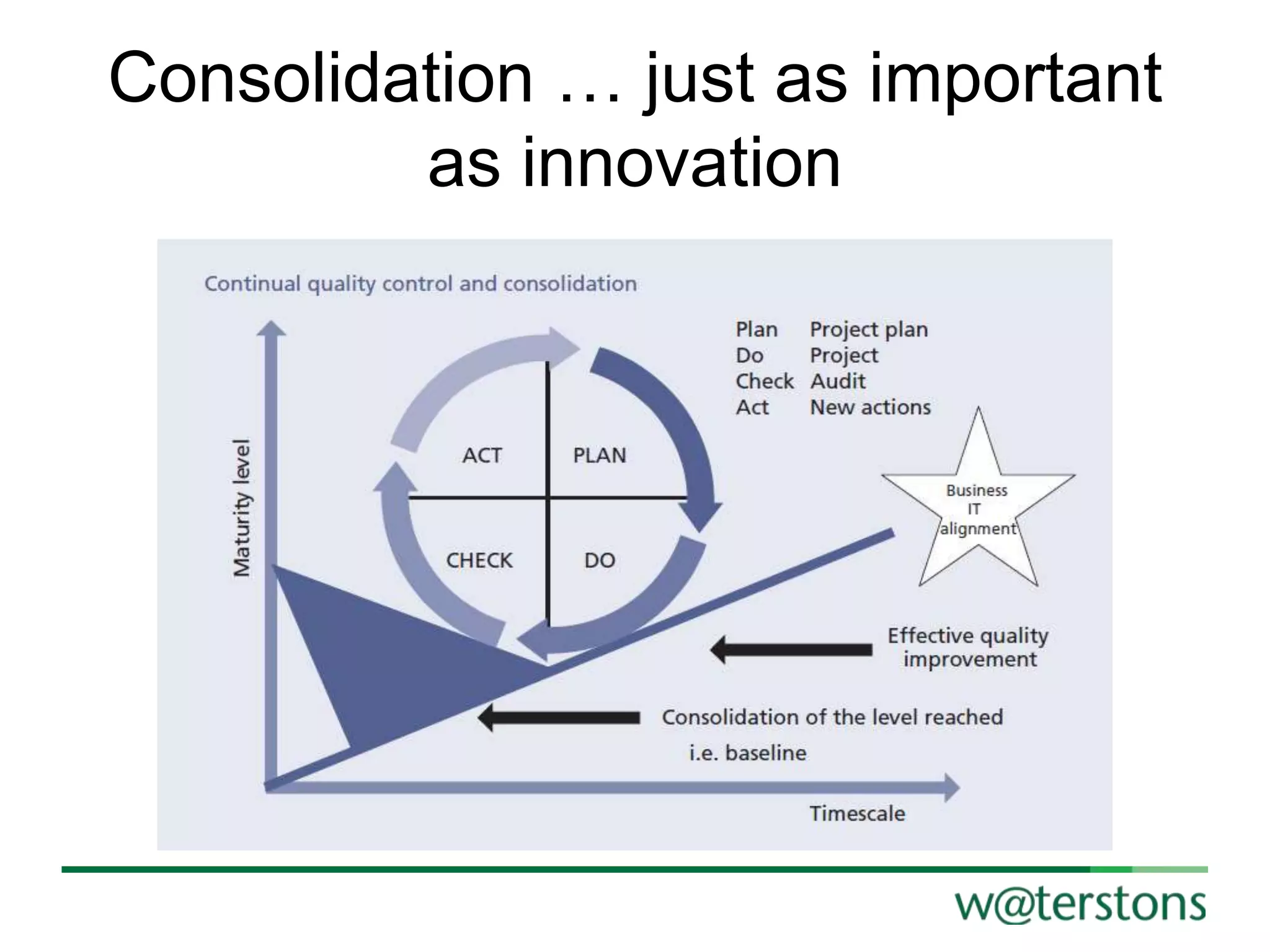
Consolidation … just as important
as innovation
A new view of IT
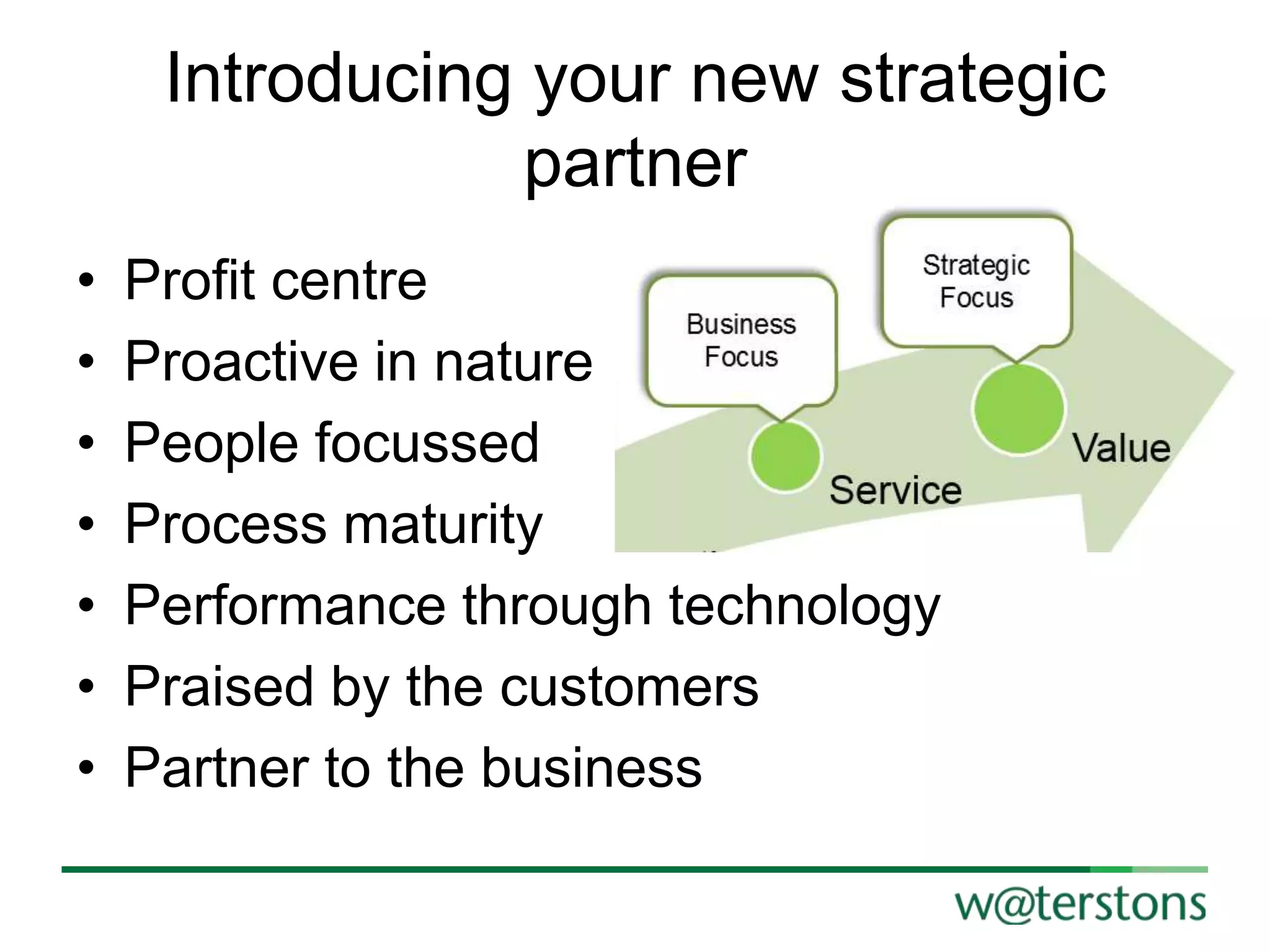
Introducing your new strategic
partner
•
•
•
•
•
•
•

Profit centre
Proactive in nature
People focussed
Process maturity
Performance through technology
Praised by the customers
Partner to the business
Let‟s Get Started
• Appoint a champion
• Baseline existing service
• Capture the Vision

• Deliver!
Questions?
Email: Stewart.hogg@Waterstons.com | James.Alderson@Waterstons.com
Twitter: @Waterstonsltd | @mrJamesAlderson
Coming soon…
PREPARING FOR MOBILE DEVICE MANAGEMENT AND BYOD
Friday 28th February 2014, 11:45am, Waterstons Durham office
Charlie Hales and Nigel Robson will cover the important considerations a business should
make before implementing an MDM/BYOD strategy, and will consider the ongoing
implications of allowing corporate data to be accessed on personal devices ensuring the
maximum benefit to businesses, customers and the end users.

Capturing the Real Value of IT Service Management

  • 1.
    Capturing the RealValue of IT Service Management Stew Hogg & James Alderson 14th Feb 2014
  • 2.
    Scope • • • • • What is ITService Management (ITSM)? Service Management: A Journey The Business and IT Alignment Getting Started with ITSM A New View of IT
  • 3.
    What is ITService Management?
  • 4.
    Why do weneed IT Service Management?
  • 5.
    What is ITService Management IT service management focuses on the optimisation of: To ensure that an IT service can deliver real value to the business
  • 6.
    What challenges doesyour IT service struggle with? Poor user perception Uncontrolled expenditure Poor understanding the business Communication Unproven business continuity Skills gap Poor ROI Lack of visibility to facilitate decision making Lack of strategic vision Misunderstanding of major risks
  • 7.
    Overview of ITILv3 •End to end Lifecycle approach • Embedded continual service improvement • Focus on alignment with business priorities • Measuring success in terms of business value
  • 8.
    The Service Lifecycle ServiceStrategy Strategies, policies, standards Service Design Plans to create and modify services and service management processes Service Transition Manage the transition of a new or changed service and/or process into production Service Operation Day-to-day operations of services and service management processes Continual Service Improvement Activities are embedded in the service lifecycle
  • 9.
    Benefit or Bureaucracy Positive Negative •Adopt and adapt to your business needs • Cost overhead to implement new processes • Improved business agility: reduce change cycle time by up to 50% • Cumbersome and rigid if adopted without a business focus • Save cost: right first time reducing rework • Improved customer & user perception • Business engagement needed before full ITSM is adopted • ITIL language can be a barrier
  • 10.
  • 11.
    A long runningproblem…
  • 12.
    Service Maturity Journey TechnologyCentric Strategic Focus Business Centric Business Focus Profit Centre Customer Focus Service Support Focus Technology Focus Ad-Hoc • Task driven culture • Inconsistent Documentation • Product led • Silos of Technology Value Proactive • Business led Reactive • Problem • Basic Alerting • Repeatable Support Processes • Incident Driven Projects • Limited Asset Management Management • Process Owners • Regular KPI Reports • Controlled Asset Management goals • Understanding of business priorities • Financial Planning • Continual Service Improvement • IT is a Strategic Partner • Catalyst for Innovation • Business Alignment • Pre-emptive Capability
  • 13.
    Scope of MaturityAssessments • The journey involves taking reviewing the following 5 aspects of the IT service – Vision – People – Process – Technology – Culture
  • 14.
  • 15.
    Delivering real value Anyprocess of service maturity should be financially neutral at least!
  • 16.
    Business and ITAlignment
  • 17.
    In reality… • Itall starts and ends with a clearly defined business strategy • An IT department is purely a service function • Technology has little value in its own right • The business wants more value out of the money spent on technology
  • 18.
    Why is itso hard? Business IT Poor service and IT department „geek speak‟ Poorly defined or communicated Business Strategy Lack of business awareness in the IT Department Lack of technology awareness at Board Level Focus on technology rather then solving business problems Lack of commitment to technology projects
  • 19.
    What‟s in itfor me? • • • • • Better agility – IT and Business Performance can be measured Turning risks into opportunities Demands on IT can be managed Delivery on organisational strategy improved through use of technology
  • 20.
    Realising Value: The5 ways Improving quality and productivity, reduce costs Enhancing customer relationships and service Teamwork and collaboration Timely Management Information Information security and risk reduction
  • 21.
    Business Engagement • Whyis it important to engage the business? Can IT “go it alone”? • How can you get the business engaged in improving IT service delivery? – The IT Team must prove to the business that they understand – Speak the same language
  • 22.
    Same language? “IT strugglesto provide value to the business as their contribution is not seen” “IT don‟t understand or react to the pressures faced by the business” “The business do not communicate their priorities and strategic direction to IT - IT cannot influence or support this objective in the most effective way” “Additional value could be provided by IT in the form of new services if they were involved in business initiatives” “IT get bogged down in the detail of technology and don‟t look at the bigger picture”
  • 23.
    Suppliers or Partners? •Being perceived as a supplier: – may impact IT‟s ability to contribute to the corporate strategy – accentuates the divide between business and the IT
  • 24.
    What should wedo? Listen Review Address the Gaps Pragmatism is key! Engage Determine Business Need
  • 25.
    Getting Started withIT Service Management
  • 26.
  • 27.
    Analyse the statusquo • Gap analysis • Identify quick wins • Highlight major risk • Identify opportunities
  • 28.
    Practical ITSM Tips Don’t •Try to implement all ITSM process in one go • Proceed without senior management support • Implement ITIL for ITIL‟s sake • Start with technology Do • Engage the organisation at every level • Understanding how we deliver against the vision • Start with CSI process and identify quick wins • Implement ITSM as a continuous programme Never lose sight of the fact that IT exists to support the Business Embed this within the culture!
  • 29.
    Consolidation … justas important as innovation
  • 30.
  • 31.
    Introducing your newstrategic partner • • • • • • • Profit centre Proactive in nature People focussed Process maturity Performance through technology Praised by the customers Partner to the business
  • 32.
    Let‟s Get Started •Appoint a champion • Baseline existing service • Capture the Vision • Deliver!
  • 33.
    Questions? Email: Stewart.hogg@Waterstons.com |James.Alderson@Waterstons.com Twitter: @Waterstonsltd | @mrJamesAlderson
  • 34.
    Coming soon… PREPARING FORMOBILE DEVICE MANAGEMENT AND BYOD Friday 28th February 2014, 11:45am, Waterstons Durham office Charlie Hales and Nigel Robson will cover the important considerations a business should make before implementing an MDM/BYOD strategy, and will consider the ongoing implications of allowing corporate data to be accessed on personal devices ensuring the maximum benefit to businesses, customers and the end users.

Editor's Notes

  • #2 Customer: New serviceProject manager: Engineer:Developer:Sales:Documentation:OperationsFinance:Service Desk:What was needed
  • #4 2 mins to discuss challenges in your org
  • #5 Understand who the customers areFinancial managementAlignment of projects with business strategiesPortfolio of new or changed servicesEnsure services are fit for use and fit for purposeDesigned with customers in mindService catalogue Security and continuity requirementsEffective change management: 50% reduction in change cycle timeManagement of build, test & deploy activitiesControlled asset managementSmooth handover to operational teamsOperational management of IT ServicesService DeskMinimising the impact of incidents / failuresProactive focus to reduce downtime & disruptionFacilitates a culture of continuous improvementProcess for identifying, evaluating and implementing improvementsDrive towards maturity and business alignment
  • #6 Both IT and business - communication
  • #7 Include average score questionFM = 2.6Capacity management = 2Asset management = 1.6
  • #8 Vision – a leaders most important weaponVision of the Business / StrategyEveryone playing their partEveryone pulling in the same direction / understand the big picture
  • #9 It all comes back to value to the business. We need to target maturity and invest in high value – low maturity areas. E.G – capacity management reports
  • #10 80:20 rule applies
  • #11 Demands on IT are managed and met in an efficient and consistent mannerIT supports the business strategy aims and objectives adding value and driving business successRisk management turns risks into opportunitiesPerformance is measured to ensure value is continually deliveredAn aligned architecture provides agility
  • #12 Keeping the lights on is still a key deliverable for IT, 5 ways help to add further value.Reducing TCO will free up money to invest in value adding projectsThe value of IT can be realised though 1 or more of 5 ways.Cundall example – WAN migrationCundall Lync example -social networkStewart Milne – Sharepoint collaboration portal, Microsoft LyncBI portals for many customersVopak SCADA security
  • #14 John P Kotter – leading change / 8 steps that need to be implemented and main realise why transformation efforts fail. 1 – true urgency required to make progress that drives people every day, not just being busy but desire to make a difference2 – The right people to make a difference including senior management support3 – Motivates, co-ordinates and focusses. A leaders most powerful weapon--- if we don’t have these 3 then stop4 – Communicate to generate business buy-in5 – Allowing people to do their best work, delegate authority and allow everyone to make improvements6 – Create visible, unambiguous success ASAP7 – Celebrate success and build momentum for more change8 – Build it into the culture (normal behaviour and shared values)