Presented By:
Rashmi Jalan
WHAT IS CANNABIS ?
Cannabis is the generic term used for the psychoactive
substance derived from the species of the Cannabis plant.
means having a relatively significant effect on the central
There are many varieties of Cannabis known.
Among them the species that are most pertinent
includes:
Cannabis sativa Cannabis indica Cannabis ruderalis
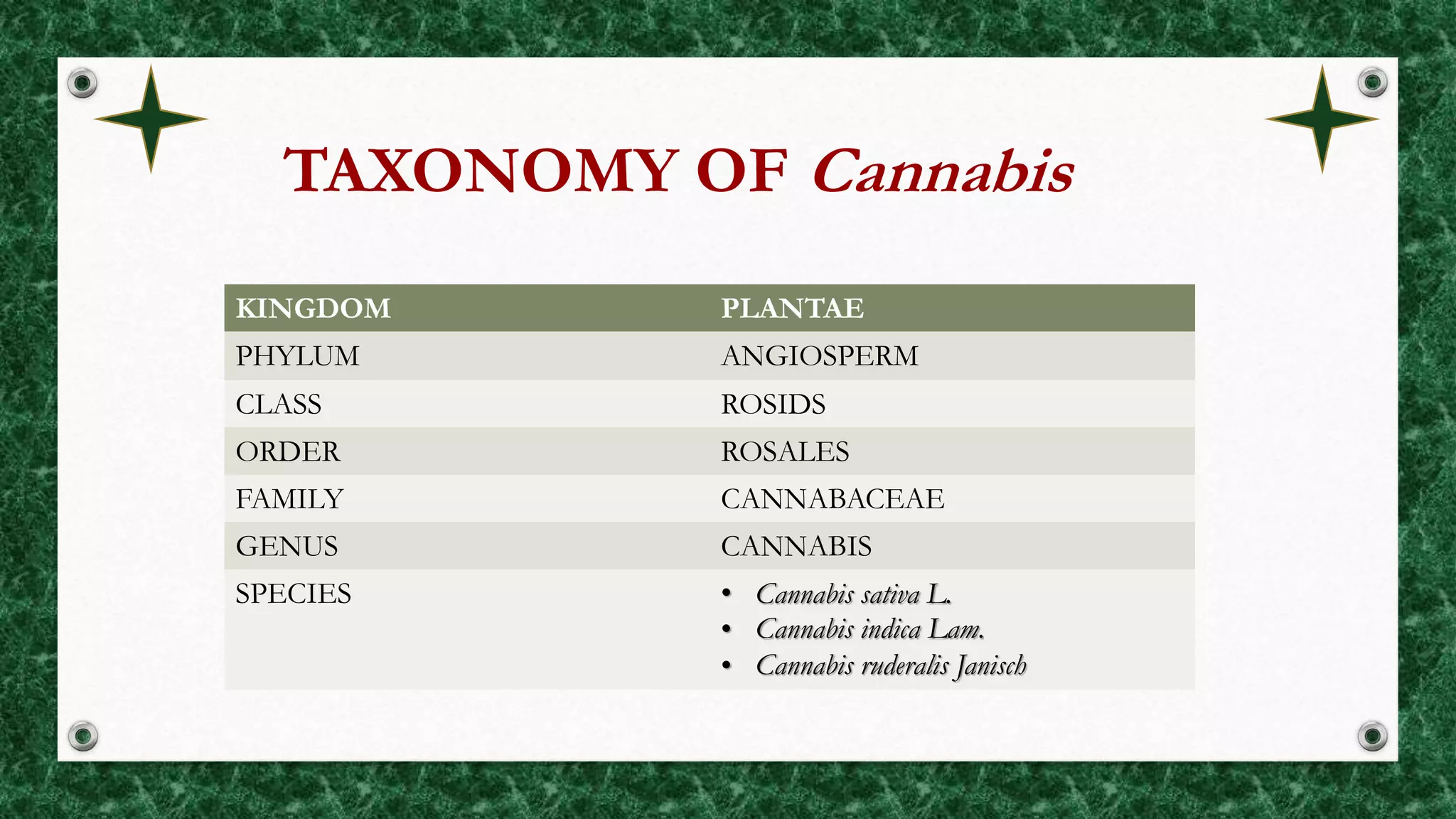
TAXONOMY OF Cannabis
KINGDOM PLANTAE
PHYLUM ANGIOSPERM
CLASS ROSIDS
ORDER ROSALES
FAMILY CANNABACEAE
GENUS CANNABIS
SPECIES • Cannabis sativa L.
• Cannabis indica Lam.
• Cannabis ruderalis Janisch
HISTORY OF Cannabis sativa
The history of Cannabis sativa use dates back to over 11,000 years, supporting its recognition as one of the
oldest domestic plants known to humanity.
It originated from Central Asia in the regions of Mongolia and southern Siberia.
The earliest cultural evidence of Cannabis comes from the oldest known Neolithic culture in China, the
Yang Shao, who appeared along the Yellow River valley.
Cannabis sativa spread to the rest of the world, to ancient Egypt, prehistoric Europe, ancient Greece and
Rome, Persia and Arabia, India, South America, Europe and North America.
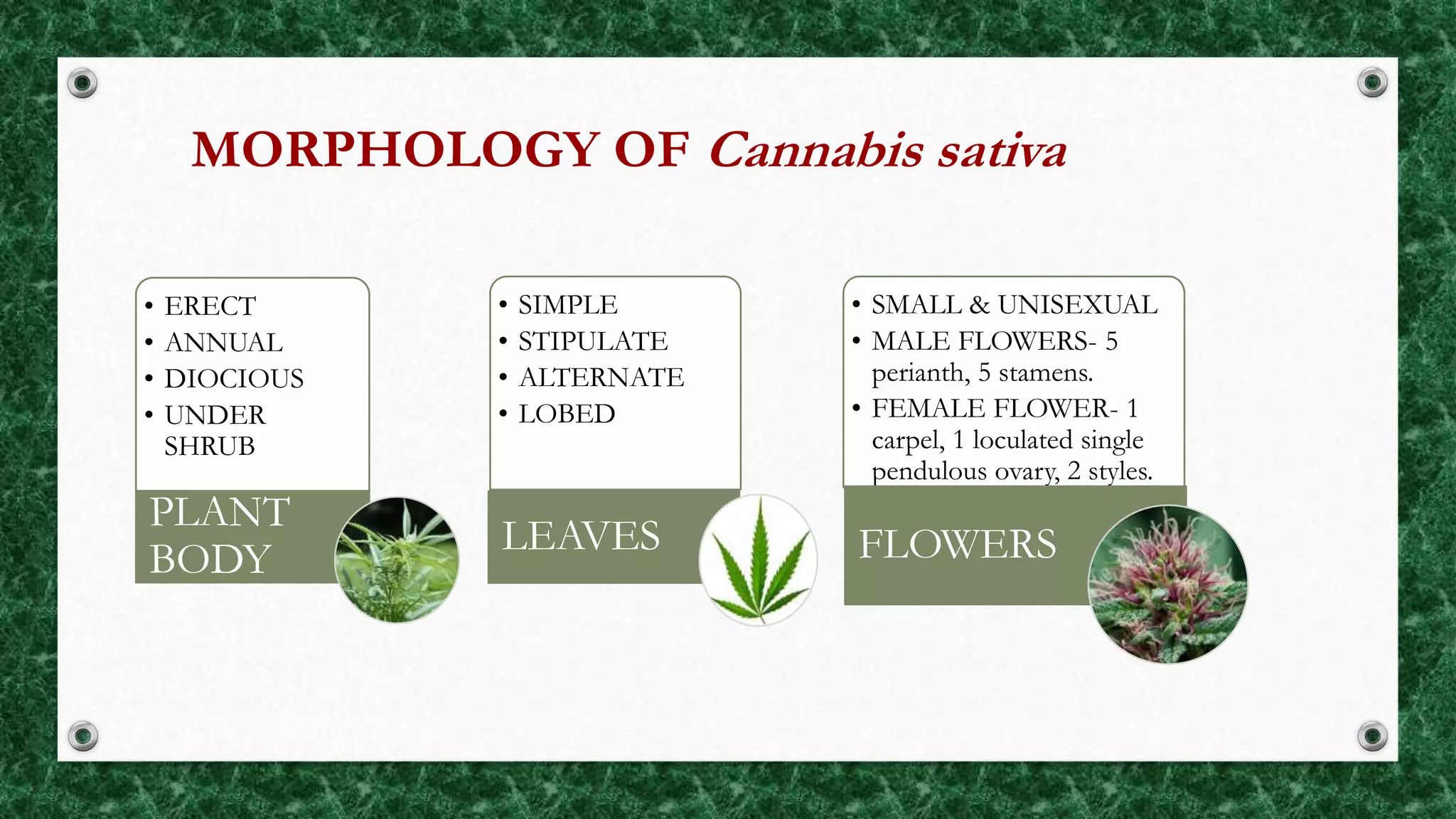
MORPHOLOGY OF Cannabis sativa
• ERECT
• ANNUAL
• DIOCIOUS
• UNDER
SHRUB
PLANT
BODY
• SIMPLE
• STIPULATE
• ALTERNATE
• LOBED
LEAVES
• SMALL & UNISEXUAL
• MALE FLOWERS- 5
perianth, 5 stamens.
• FEMALE FLOWER- 1
carpel, 1 loculated single
pendulous ovary, 2 styles.
FLOWERS
HABITAT OF Cannabis sativa
C. sativa is a species well-adapted to diverse climates,
from plains to altitudes of 10,000 feet.
It probably originated from Central Asia and is now
distributed widely, enjoying a global reputation.
The major pool of cannabis supply is from China,
Russia, India, Pakistan and Iran, but it is also cultivated
in other parts of the world.
“Gardening is civil and social, but it wants the vigor and
freedom of the forest and the outlaw.”
BIOCHEMISTRY OF Cannabis sativa
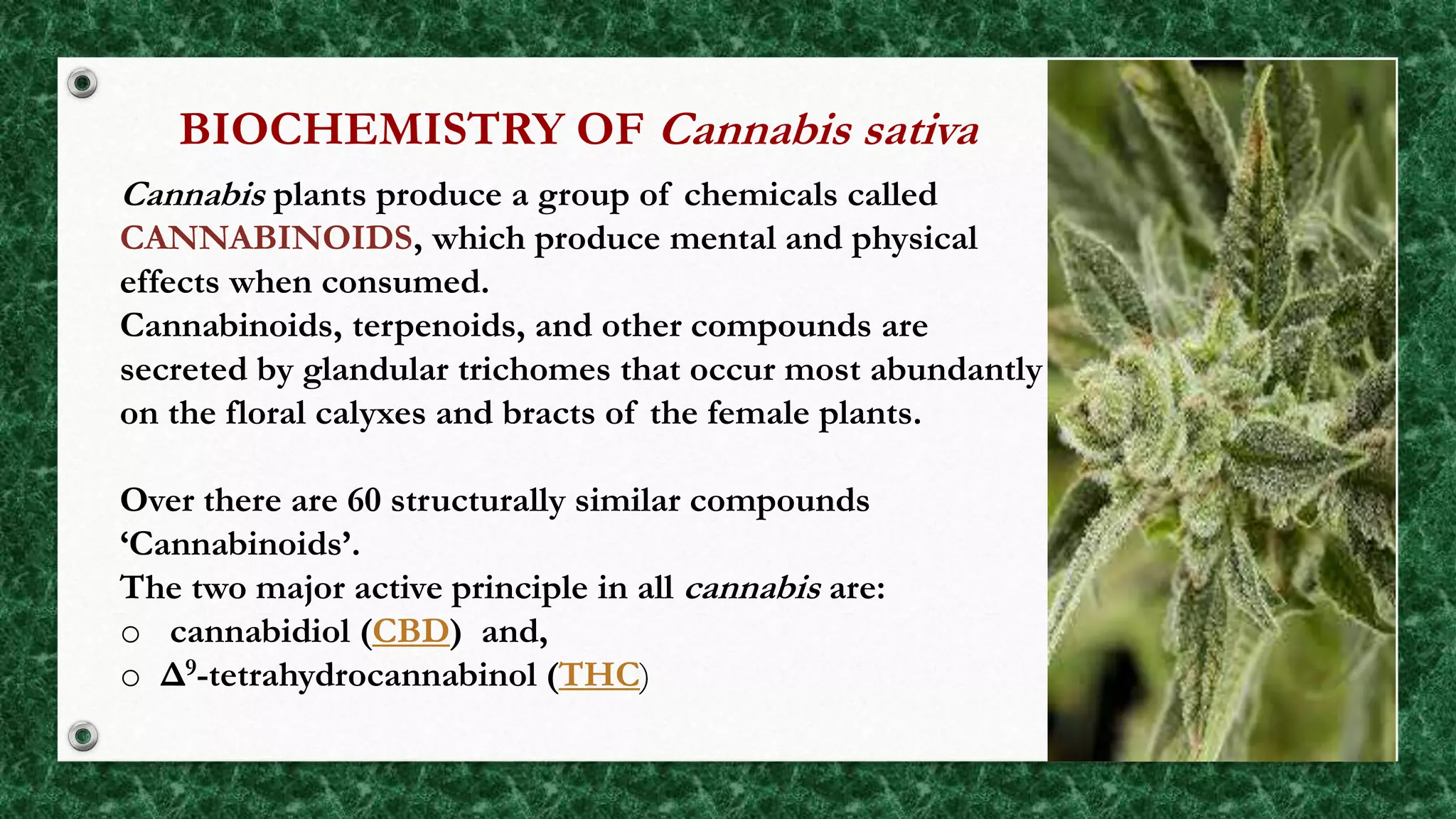
Cannabis plants produce a group of chemicals called
CANNABINOIDS, which produce mental and physical
effects when consumed.
Cannabinoids, terpenoids, and other compounds are
secreted by glandular trichomes that occur most abundantly
on the floral calyxes and bracts of the female plants.
Over there are 60 structurally similar compounds
‘Cannabinoids’.
The two major active principle in all cannabis are:
o cannabidiol (CBD) and,
o Δ9-tetrahydrocannabinol (THC)
REQUIREMENTS FOR CULTIVATION OF Cannabis sativa
Cannabis needs certain conditions to flourish.
 Growth medium(SOIL)- Well manure sandy soil or light loamy soil.
 pH- Ranges between 5.9-6.5
 Warmth-The optimal day temperature range for cannabis is 24 to 30 °C (75 to 86 °F)
 Light- Optimum light.
 SPACE-Abundant space.
 Water-Watering frequency and amount is determined by many factors, including temperature and
light, the age, size and stage of growth of the plant and the medium's ability to retain water
 Nutrients-During the vegetative stage, cannabis needs more N than P and K, while during the
flowering stage, P is more essential than N and K..
Because Cannabis nutrient needs vary widely depending on the variety, they are usually
determined by trial and error and fertilizers are applied sparingly to avoid burning the plant.
 The plant is grown as a monsoon crop and the sowing
is done during the month of June- July.
 Seeds are sown at the rate of 5- 10kg per hectare in rows
running 1.2mts apart.
 When the plant has attainted a height of about 20cm,
thinning is done to reduce their number in row.
 In order to keep free from weeds, regular weeding is
necessary.
 Irrigation is done whenever necessary.
 Flowering begins in month of November. Soon after
this male plants are removed since very little resin is
produced by them.
CULTIVATION OF Cannabis sativa
 Harvesting of plants is done during the month of December- January and
is started when lower leaves drop off and upper portions of inflorescence
turns yellow.
 At the proper stage inflorescence are cut, spread out in ringes and furrows
in processing yards and pressed by treading them.
 The material is dried and treading is done again, it been turned on regular
intervals.
 The material is then collected and made into circular heaps, 60-90 high and
kept under pressure for a couple of days.
 Chemical changes takes place in heaps, which are broken up, turned over
and spread out in thick layer.
HARVESTING AND PROCESSING OF C. sativa
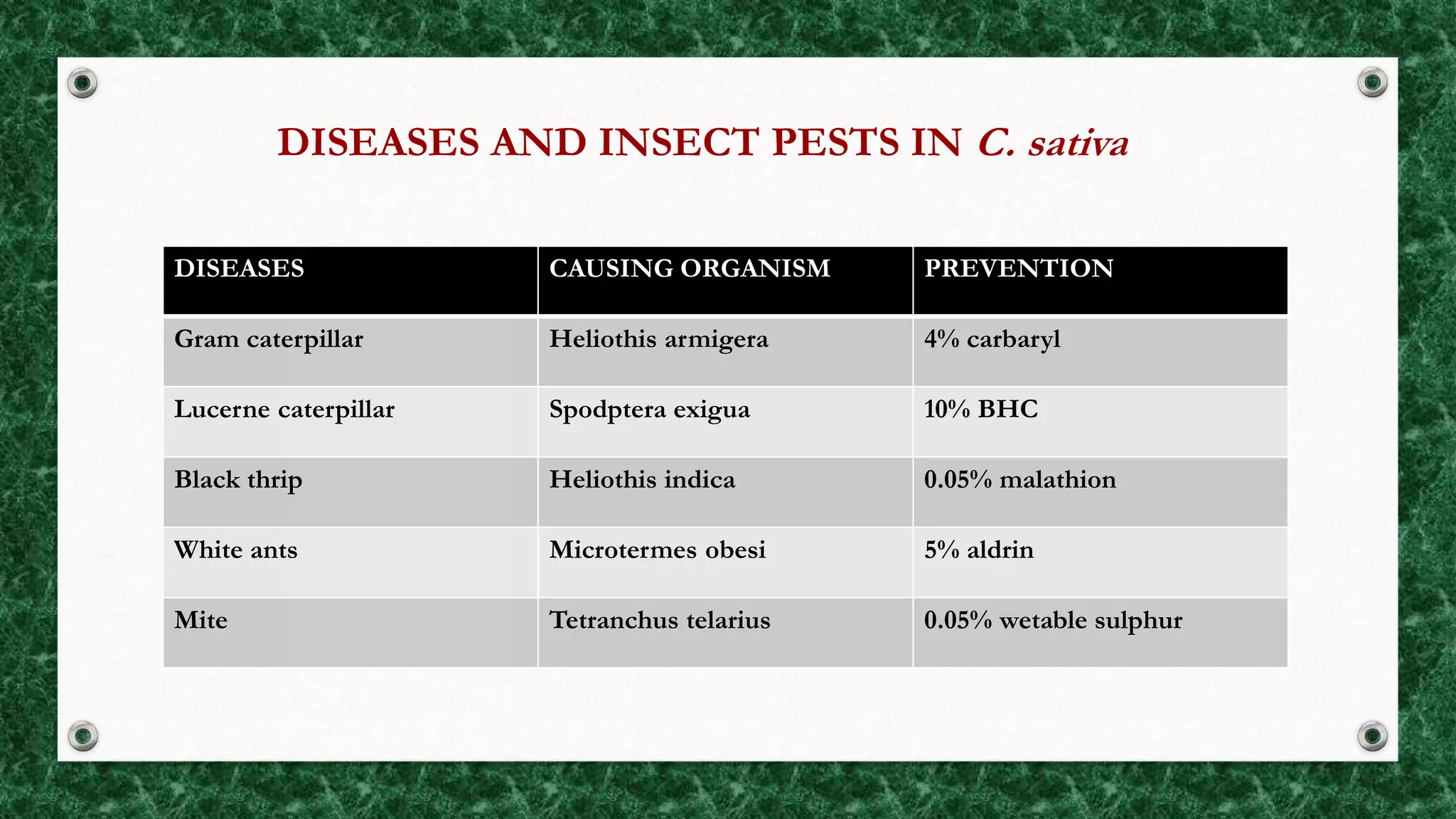
DISEASES AND INSECT PESTS IN C. sativa
DISEASES CAUSING ORGANISM PREVENTION
Gram caterpillar Heliothis armigera 4% carbaryl
Lucerne caterpillar Spodptera exigua 10% BHC
Black thrip Heliothis indica 0.05% malathion
White ants Microtermes obesi 5% aldrin
Mite Tetranchus telarius 0.05% wetable sulphur
Ganja is essentially derived
from seedless unfertilized
female flowering tops
FORMS AND PREPARATIONS
BHANG constituted of a
seeded blend of C.
sativa flowers, as well as
its stem and leaves
The strong narcotic obtained
from the resin of stem,
leaves, flower and fruit is
predominantly available in
three different forms known
by their Indian names,
bhang, ganja and charas.
These preparations vary
according to their potency,
extraction and
administration.
Charas (hashish) is procured through
hand rolling or sieving and screening
of cannabis trichomes
PHARMACOKINETICS OF Cannabis
The two most common routes for the intake of natural as
well as synthetic cannabinoids include the inhalation and oral
routes, although other routes are also available.
A number of factors influence the concentration of THC
present in its natural preparation, including plant variety, type
of preparation (hash oil > hash > sinsemilla [seedless plant] >
smoked or ingested leaves and flowers) and the technique of
cultivation.
All the cannabinoids are absorbed swiftly when administered
through the inhalation route, taking 15 min to achieve their
maximum brain concentration.
Cannabis as RECREATIONAL DRUGS
The psychoactive effects of Cannabis are known to have a triphasic nature.
• a state of relaxation,
• to a lesser degree, euphoria from its main
psychoactive compound, tetrahydrocannabinol.
1.Primary
Psychoactive
Effect
• facility for philosophical thinking
• anxiety and paranoia
2.Secondary
Psychoactive Effect
• increase in heart rate and hunger,
• believed to be caused by 11-OH-THC, a
psychoactive metabolite of THC produced in
the liver.
3. Tertiary
Psychoactive Effect
.
There are eight medical conditions for which patients are given cannabis
in different forms and concentration:
MEDICINAL USES OF Cannabis
Synthesized cannabinoids are also used as prescription
drugs such as Marinol and Cesamet.
NON- MEDICINAL USES OF Cannabis
Cannabis contributed a huge role not only in
today’s science but from the ancient
civilizations. Cannabis are well known for its
sedating properties, which is widely exploited in
both ancient and modern medicinal industries.
Apart for being used as a beneficial drug,
Cannabis is misused as a object of euphoria.
Hemp which is a product of Cannabis is widely
used in industries for manufacture of different
industrial product. As history is evident, hemp is
used as clothing, pottery and for tombs.
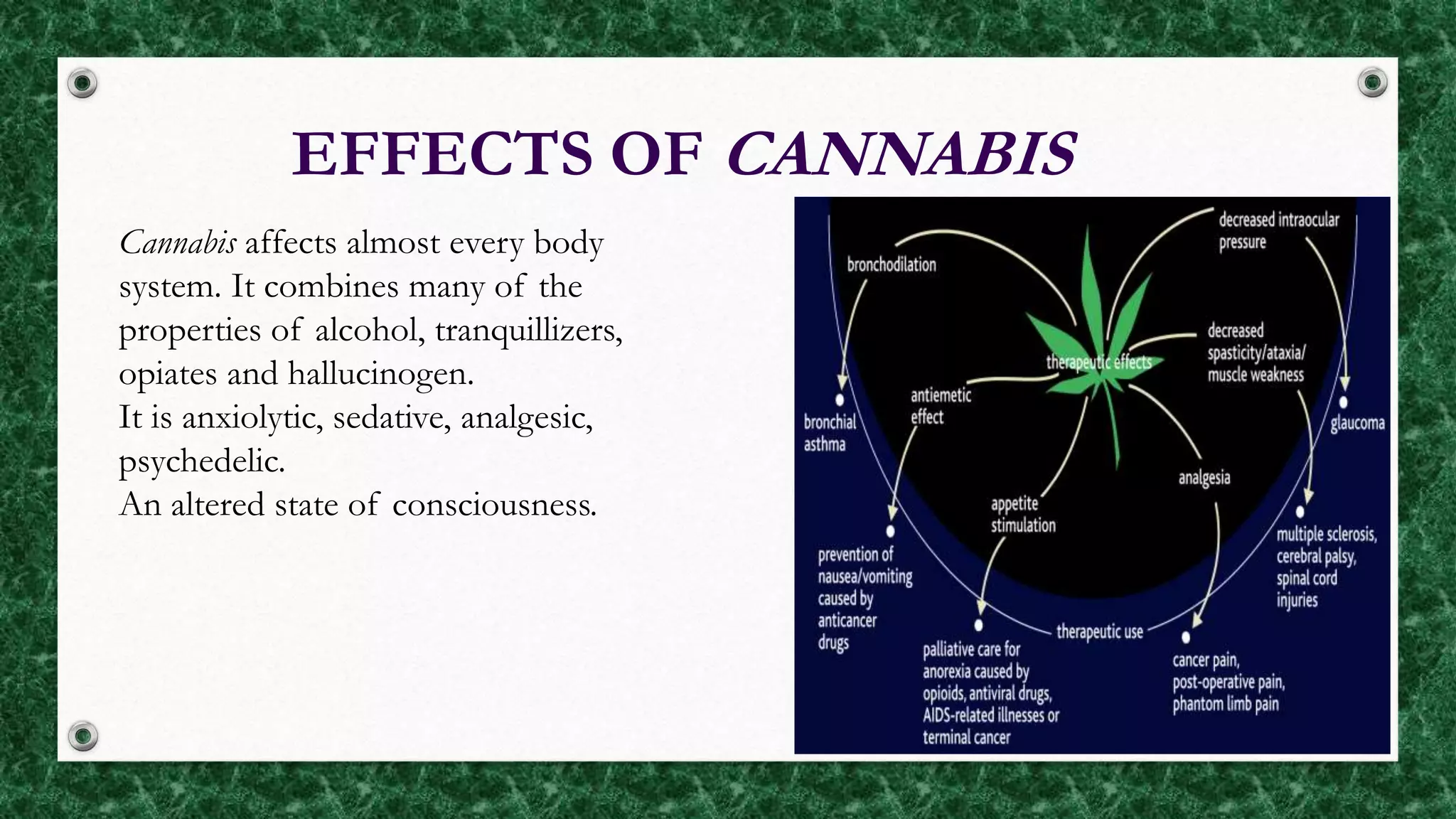
EFFECTS OF CANNABIS
Cannabis affects almost every body
system. It combines many of the
properties of alcohol, tranquillizers,
opiates and hallucinogen.
It is anxiolytic, sedative, analgesic,
psychedelic.
An altered state of consciousness.
Effect on mood
The main feature of the recreational use of cannabis is that it produces a euphoria effect or ‘high’.
Includes a feeling of intoxication, with decreased anxiety, alertness, depression and tension and
increased sociability
Effects on perception
Accompanying the high, and often contributing to it, cannabis produces perceptual changes.
Colors may seem brighter, music more vivid, emotions more poignant and meaningful. Spatial
perception is distorted and time perception is impaired so that perceived time goes faster than
clock time. Hallucinations may occur with high doses.
Effects on cognition and psychomotor performance
Not surprisingly, cannabis impairs cognitive and psychomotor performance. The effects are
similar to those of alcohol and include slowing of reaction time, motor incoordination, specific
defects in short-term memory, difficulty in concentration and particular impairment in complex
tasks which require divided attention.
CONSEQUENCES OF Cannabis USES PROBLEM
Short term
• Impaired attention, memory and
psychomotor performance while
intoxicated
• Cannabis-induced psychosis
• An increased risk of motor-vehicle
accident
Long term
• Subtle impairment in attention, memory and
the ability to organize complex information
• Risk of developing dependence on cannabis
• Respiratory problems, such as bronchitis
• Increased possibility of heart attack •
increased rate of lung cancer
• Increased likelihood of pre-cancerous
changes
• Oral health problems
• Human female fertility
• Difficulties with problem-solving and
attention for children exposed to cannabis in
the womb.
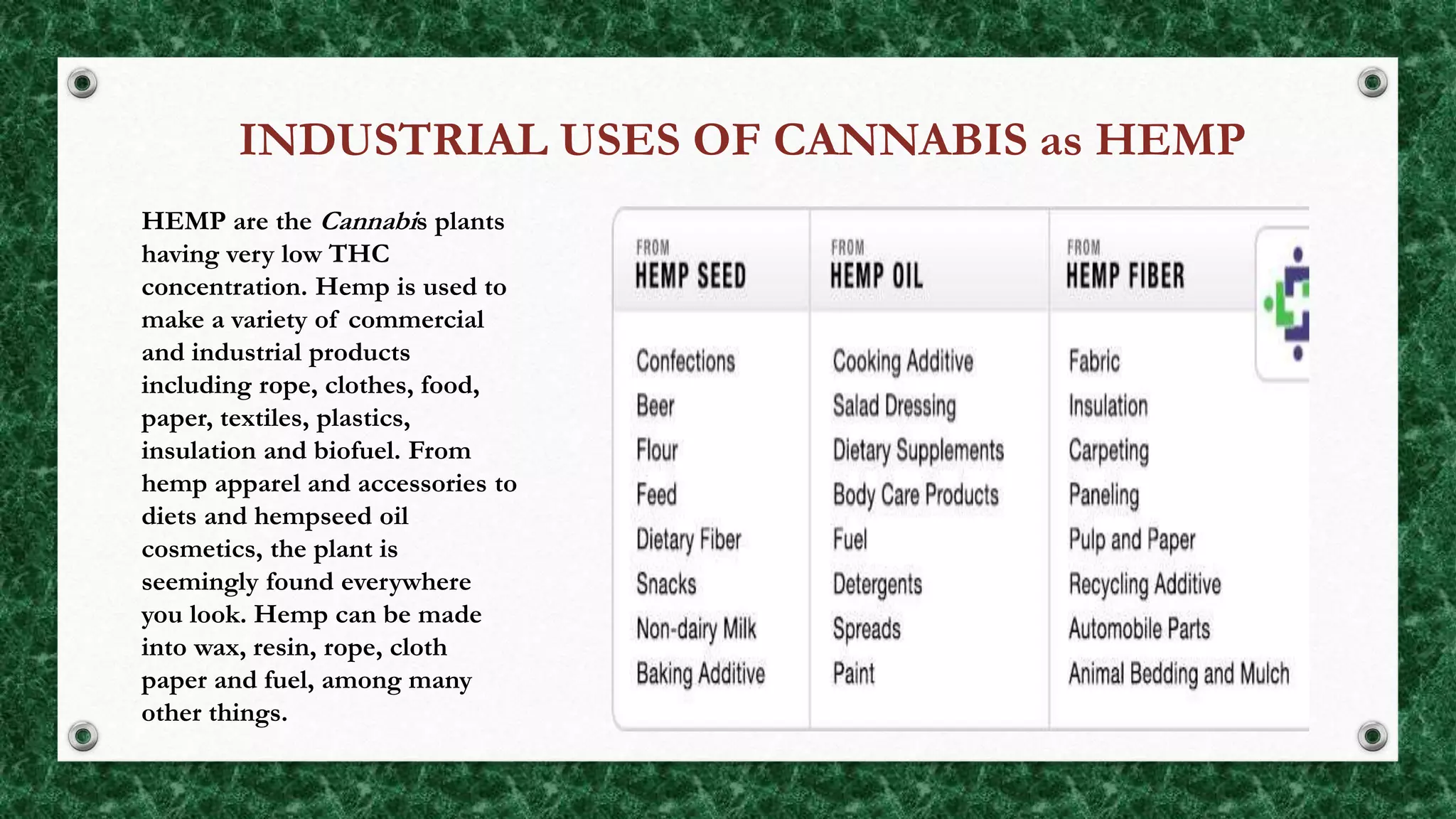
INDUSTRIAL USES OF CANNABIS as HEMP
HEMP are the Cannabis plants
having very low THC
concentration. Hemp is used to
make a variety of commercial
and industrial products
including rope, clothes, food,
paper, textiles, plastics,
insulation and biofuel. From
hemp apparel and accessories to
diets and hempseed oil
cosmetics, the plant is
seemingly found everywhere
you look. Hemp can be made
into wax, resin, rope, cloth
paper and fuel, among many
other things.
Cannabis

Cannabis

  • 1.
  • 2.
    WHAT IS CANNABIS? Cannabis is the generic term used for the psychoactive substance derived from the species of the Cannabis plant. means having a relatively significant effect on the central There are many varieties of Cannabis known. Among them the species that are most pertinent includes: Cannabis sativa Cannabis indica Cannabis ruderalis
  • 3.
    TAXONOMY OF Cannabis KINGDOMPLANTAE PHYLUM ANGIOSPERM CLASS ROSIDS ORDER ROSALES FAMILY CANNABACEAE GENUS CANNABIS SPECIES • Cannabis sativa L. • Cannabis indica Lam. • Cannabis ruderalis Janisch
  • 4.
    HISTORY OF Cannabissativa The history of Cannabis sativa use dates back to over 11,000 years, supporting its recognition as one of the oldest domestic plants known to humanity. It originated from Central Asia in the regions of Mongolia and southern Siberia. The earliest cultural evidence of Cannabis comes from the oldest known Neolithic culture in China, the Yang Shao, who appeared along the Yellow River valley. Cannabis sativa spread to the rest of the world, to ancient Egypt, prehistoric Europe, ancient Greece and Rome, Persia and Arabia, India, South America, Europe and North America.
  • 5.
    MORPHOLOGY OF Cannabissativa • ERECT • ANNUAL • DIOCIOUS • UNDER SHRUB PLANT BODY • SIMPLE • STIPULATE • ALTERNATE • LOBED LEAVES • SMALL & UNISEXUAL • MALE FLOWERS- 5 perianth, 5 stamens. • FEMALE FLOWER- 1 carpel, 1 loculated single pendulous ovary, 2 styles. FLOWERS
  • 6.
    HABITAT OF Cannabissativa C. sativa is a species well-adapted to diverse climates, from plains to altitudes of 10,000 feet. It probably originated from Central Asia and is now distributed widely, enjoying a global reputation. The major pool of cannabis supply is from China, Russia, India, Pakistan and Iran, but it is also cultivated in other parts of the world. “Gardening is civil and social, but it wants the vigor and freedom of the forest and the outlaw.”
  • 7.
    BIOCHEMISTRY OF Cannabissativa Cannabis plants produce a group of chemicals called CANNABINOIDS, which produce mental and physical effects when consumed. Cannabinoids, terpenoids, and other compounds are secreted by glandular trichomes that occur most abundantly on the floral calyxes and bracts of the female plants. Over there are 60 structurally similar compounds ‘Cannabinoids’. The two major active principle in all cannabis are: o cannabidiol (CBD) and, o Δ9-tetrahydrocannabinol (THC)
  • 8.
    REQUIREMENTS FOR CULTIVATIONOF Cannabis sativa Cannabis needs certain conditions to flourish.  Growth medium(SOIL)- Well manure sandy soil or light loamy soil.  pH- Ranges between 5.9-6.5  Warmth-The optimal day temperature range for cannabis is 24 to 30 °C (75 to 86 °F)  Light- Optimum light.  SPACE-Abundant space.  Water-Watering frequency and amount is determined by many factors, including temperature and light, the age, size and stage of growth of the plant and the medium's ability to retain water  Nutrients-During the vegetative stage, cannabis needs more N than P and K, while during the flowering stage, P is more essential than N and K.. Because Cannabis nutrient needs vary widely depending on the variety, they are usually determined by trial and error and fertilizers are applied sparingly to avoid burning the plant.
  • 9.
     The plantis grown as a monsoon crop and the sowing is done during the month of June- July.  Seeds are sown at the rate of 5- 10kg per hectare in rows running 1.2mts apart.  When the plant has attainted a height of about 20cm, thinning is done to reduce their number in row.  In order to keep free from weeds, regular weeding is necessary.  Irrigation is done whenever necessary.  Flowering begins in month of November. Soon after this male plants are removed since very little resin is produced by them. CULTIVATION OF Cannabis sativa
  • 10.
     Harvesting ofplants is done during the month of December- January and is started when lower leaves drop off and upper portions of inflorescence turns yellow.  At the proper stage inflorescence are cut, spread out in ringes and furrows in processing yards and pressed by treading them.  The material is dried and treading is done again, it been turned on regular intervals.  The material is then collected and made into circular heaps, 60-90 high and kept under pressure for a couple of days.  Chemical changes takes place in heaps, which are broken up, turned over and spread out in thick layer. HARVESTING AND PROCESSING OF C. sativa
  • 11.
    DISEASES AND INSECTPESTS IN C. sativa DISEASES CAUSING ORGANISM PREVENTION Gram caterpillar Heliothis armigera 4% carbaryl Lucerne caterpillar Spodptera exigua 10% BHC Black thrip Heliothis indica 0.05% malathion White ants Microtermes obesi 5% aldrin Mite Tetranchus telarius 0.05% wetable sulphur
  • 12.
    Ganja is essentiallyderived from seedless unfertilized female flowering tops FORMS AND PREPARATIONS BHANG constituted of a seeded blend of C. sativa flowers, as well as its stem and leaves The strong narcotic obtained from the resin of stem, leaves, flower and fruit is predominantly available in three different forms known by their Indian names, bhang, ganja and charas. These preparations vary according to their potency, extraction and administration. Charas (hashish) is procured through hand rolling or sieving and screening of cannabis trichomes
  • 14.
    PHARMACOKINETICS OF Cannabis Thetwo most common routes for the intake of natural as well as synthetic cannabinoids include the inhalation and oral routes, although other routes are also available. A number of factors influence the concentration of THC present in its natural preparation, including plant variety, type of preparation (hash oil > hash > sinsemilla [seedless plant] > smoked or ingested leaves and flowers) and the technique of cultivation. All the cannabinoids are absorbed swiftly when administered through the inhalation route, taking 15 min to achieve their maximum brain concentration.
  • 15.
    Cannabis as RECREATIONALDRUGS The psychoactive effects of Cannabis are known to have a triphasic nature. • a state of relaxation, • to a lesser degree, euphoria from its main psychoactive compound, tetrahydrocannabinol. 1.Primary Psychoactive Effect • facility for philosophical thinking • anxiety and paranoia 2.Secondary Psychoactive Effect • increase in heart rate and hunger, • believed to be caused by 11-OH-THC, a psychoactive metabolite of THC produced in the liver. 3. Tertiary Psychoactive Effect
  • 16.
    . There are eightmedical conditions for which patients are given cannabis in different forms and concentration: MEDICINAL USES OF Cannabis Synthesized cannabinoids are also used as prescription drugs such as Marinol and Cesamet.
  • 17.
    NON- MEDICINAL USESOF Cannabis Cannabis contributed a huge role not only in today’s science but from the ancient civilizations. Cannabis are well known for its sedating properties, which is widely exploited in both ancient and modern medicinal industries. Apart for being used as a beneficial drug, Cannabis is misused as a object of euphoria. Hemp which is a product of Cannabis is widely used in industries for manufacture of different industrial product. As history is evident, hemp is used as clothing, pottery and for tombs.
  • 18.
    EFFECTS OF CANNABIS Cannabisaffects almost every body system. It combines many of the properties of alcohol, tranquillizers, opiates and hallucinogen. It is anxiolytic, sedative, analgesic, psychedelic. An altered state of consciousness.
  • 19.
    Effect on mood Themain feature of the recreational use of cannabis is that it produces a euphoria effect or ‘high’. Includes a feeling of intoxication, with decreased anxiety, alertness, depression and tension and increased sociability Effects on perception Accompanying the high, and often contributing to it, cannabis produces perceptual changes. Colors may seem brighter, music more vivid, emotions more poignant and meaningful. Spatial perception is distorted and time perception is impaired so that perceived time goes faster than clock time. Hallucinations may occur with high doses. Effects on cognition and psychomotor performance Not surprisingly, cannabis impairs cognitive and psychomotor performance. The effects are similar to those of alcohol and include slowing of reaction time, motor incoordination, specific defects in short-term memory, difficulty in concentration and particular impairment in complex tasks which require divided attention.
  • 20.
    CONSEQUENCES OF CannabisUSES PROBLEM Short term • Impaired attention, memory and psychomotor performance while intoxicated • Cannabis-induced psychosis • An increased risk of motor-vehicle accident Long term • Subtle impairment in attention, memory and the ability to organize complex information • Risk of developing dependence on cannabis • Respiratory problems, such as bronchitis • Increased possibility of heart attack • increased rate of lung cancer • Increased likelihood of pre-cancerous changes • Oral health problems • Human female fertility • Difficulties with problem-solving and attention for children exposed to cannabis in the womb.
  • 21.
    INDUSTRIAL USES OFCANNABIS as HEMP HEMP are the Cannabis plants having very low THC concentration. Hemp is used to make a variety of commercial and industrial products including rope, clothes, food, paper, textiles, plastics, insulation and biofuel. From hemp apparel and accessories to diets and hempseed oil cosmetics, the plant is seemingly found everywhere you look. Hemp can be made into wax, resin, rope, cloth paper and fuel, among many other things.