Albia Dugger • Miami Dade College
Chapter 12
Marijuana
History of Marijuana
• Marijuana (cannabis) is one of the world’s oldest known
drugs
• Early settlers in Jamestown, Virginia, planted marijuana
(hemp) for its fiber, which also was used during World War II
• People started smoking it for its euphoric effect during the
1920s, coinciding with alcohol prohibition
• Marijuana use was banned after the Marijuana Tax Act was
enacted in 1937
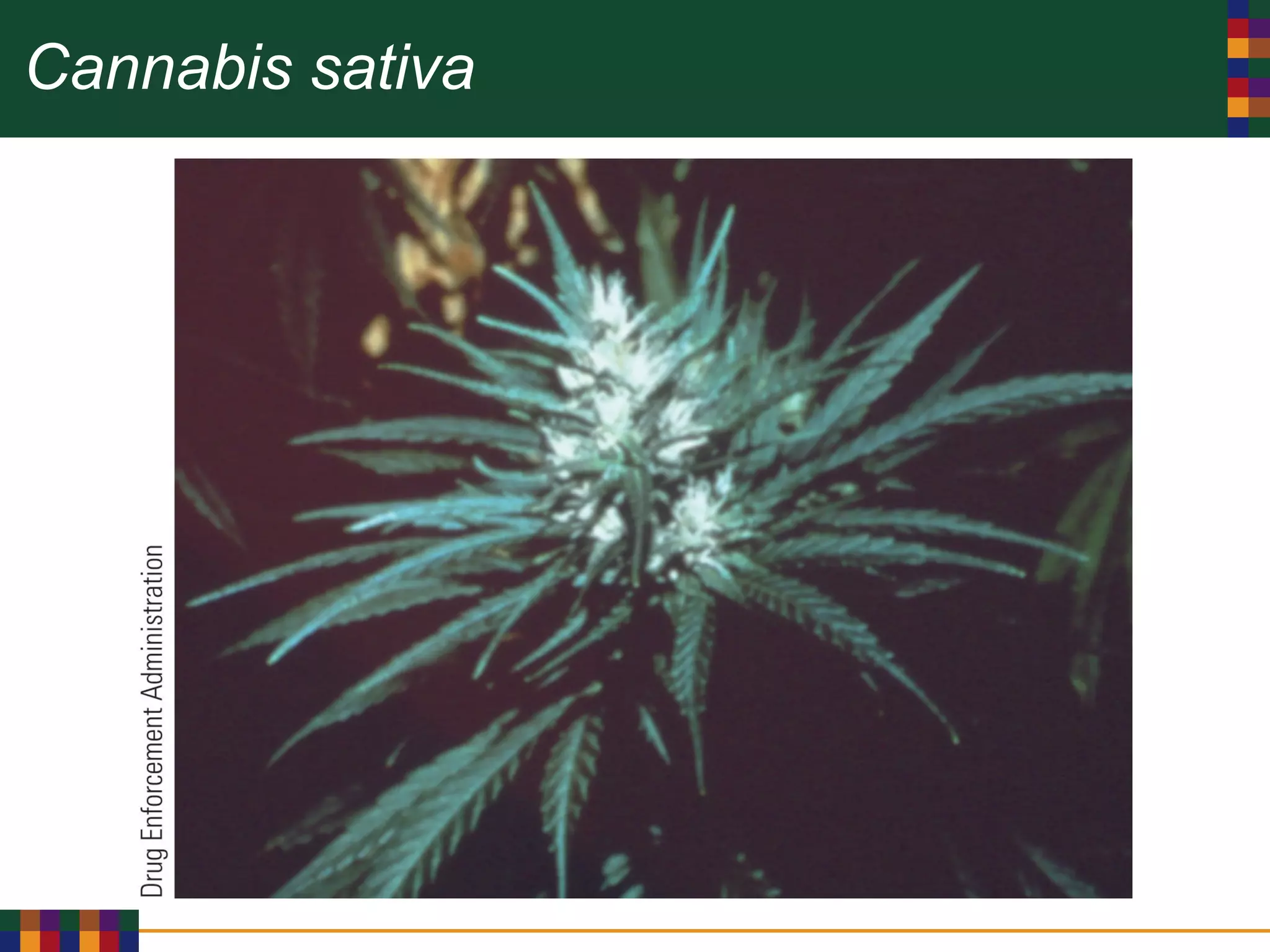
Cannabis sativa
Characteristics of Marijuana
• The primary mood-altering, psychoactive agent in marijuana
is delta-9-tetrahydrocannabinol, or THC
• Several factors influence THC levels:
• The plant’s sex
• Soil and climate conditions
• The part of the plant that is used
• How the plant is harvested, prepared, and stored
• Female plants produce more resin and flowers, which contain
higher THC concentrations
Characteristics of Marijuana
• Marijuana contains more than 500 chemicals – 60 are unique
to the cannabis plant (cannabinoids)
• Marijuana smoke contains 70% more carcinogenic
benzopyrene and 50% more tar than tobacco smoke
• Marijuana releases five times as much tar into the lungs as
cigarettes
Species and Forms of Marijuana
• Cannabis sativa
• Most widespread; used primarily to make rope
• Has a tall, woody stem and can reach a height of 20 feet
• Cannabis indica
• Grown for its psychoactive properties
• Grows to a height of 3 to 4 feet
• Cannabis ruderalis
• Found mainly in northern Europe and Asia
• Has a short growing season and low potency
Species and Forms of Marijuana
• Ganja, consisting of the top leaves and flowers of the female
cannabis plant, is considered the best quality marijuana
• Bhang consists of the lower leaves, stems, and seeds of the
cannabis plant and is regarded as poor quality marijuana
• Sinsemilla (“without seeds”) is derived from the unfertilized
female cannabis plant, and has higher THC levels
Species and Forms of Marijuana
• Two other forms are hashish (charas) and hash oil
• These forms of marijuana have a higher THC content than
Cannabis sativa
• Hashish, taken from the resin of the cannabis plant, is usually
smoked in a pipe
• Hash oil is made by boiling resin in alcohol, and has a THC
content of 60% – it is mixed with tobacco and smoked
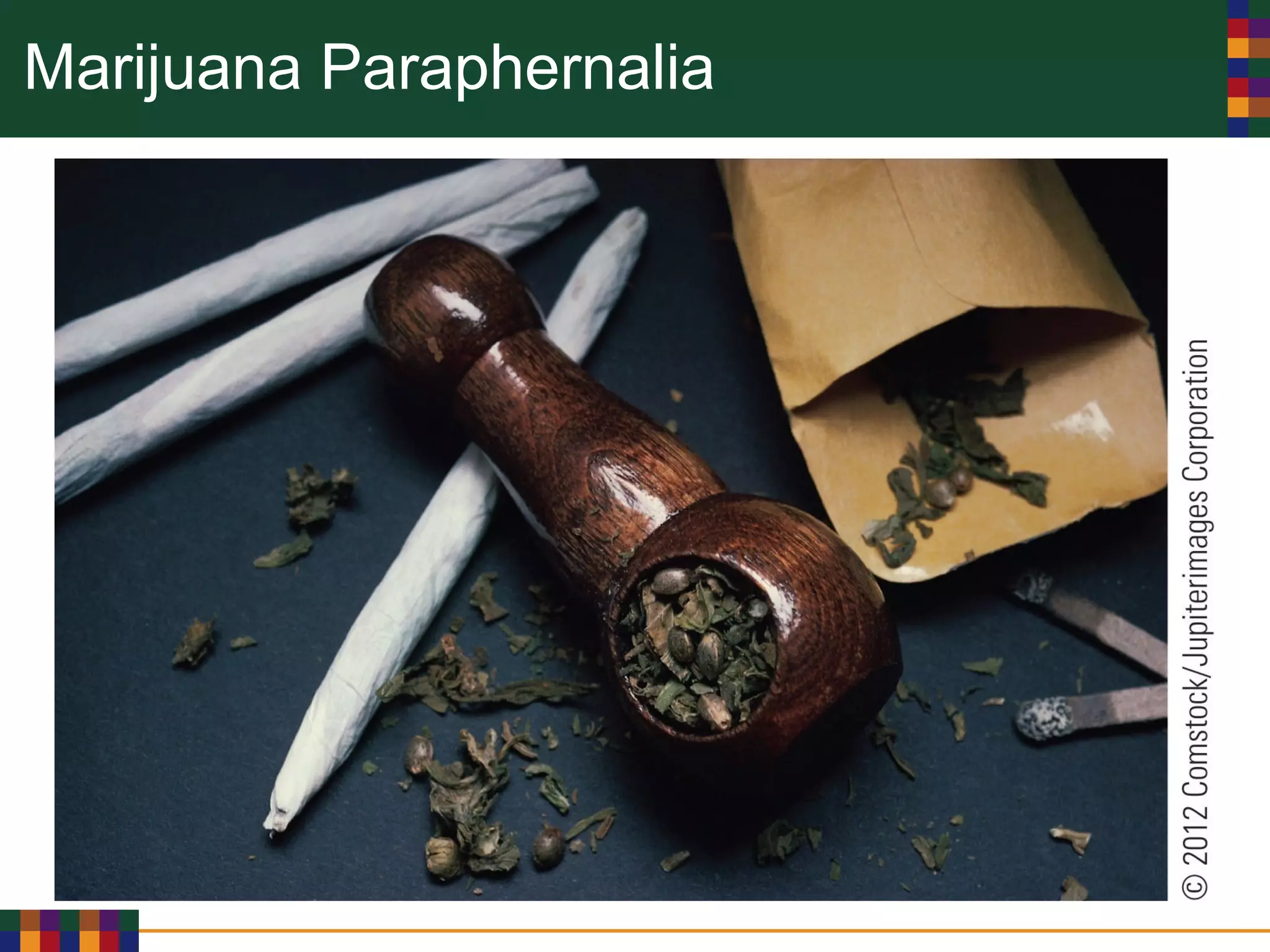
Marijuana Paraphernalia
Points of Origin
• The cannabis plant can be grown almost anywhere
• Production is especially high in Colombia and Mexico
• Other countries in Latin America, and in Asia and the
Caribbean, also produce marijuana
• Lebanon, Morocco, Pakistan, and Thailand are particularly
known for producing much marijuana
Indoor Cultivation
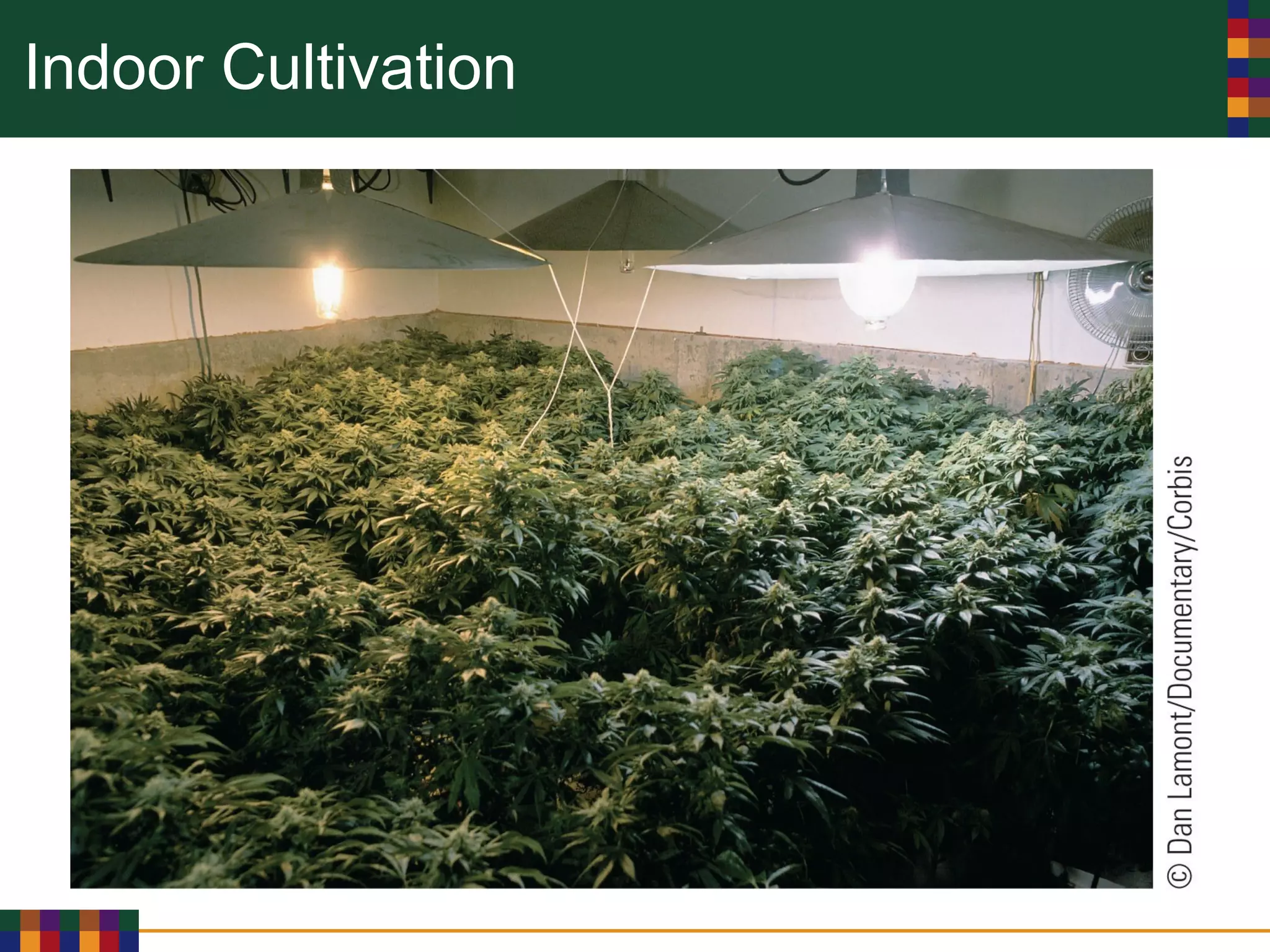
• Indoor cultivation of marijuana makes it easier to avoid
federal, state, and local law enforcement
• Indoor cultivation has allowed for production of marijuana with
a higher THC content
• The profits of indoor cultivation are higher because marijuana
plants can be harvested four to six times per year
Indoor Cultivation
Extent of Use
• Worldwide, marijuana is the fourth most commonly used drug,
after nicotine, caffeine, and alcohol
• Marijuana is the most common illegal drug in the US, with an
annual prevalence of 13.7%
• The most important reasons that students significantly
increased use of marijuana relate to reduced perception of
risk and less disapproval of its use
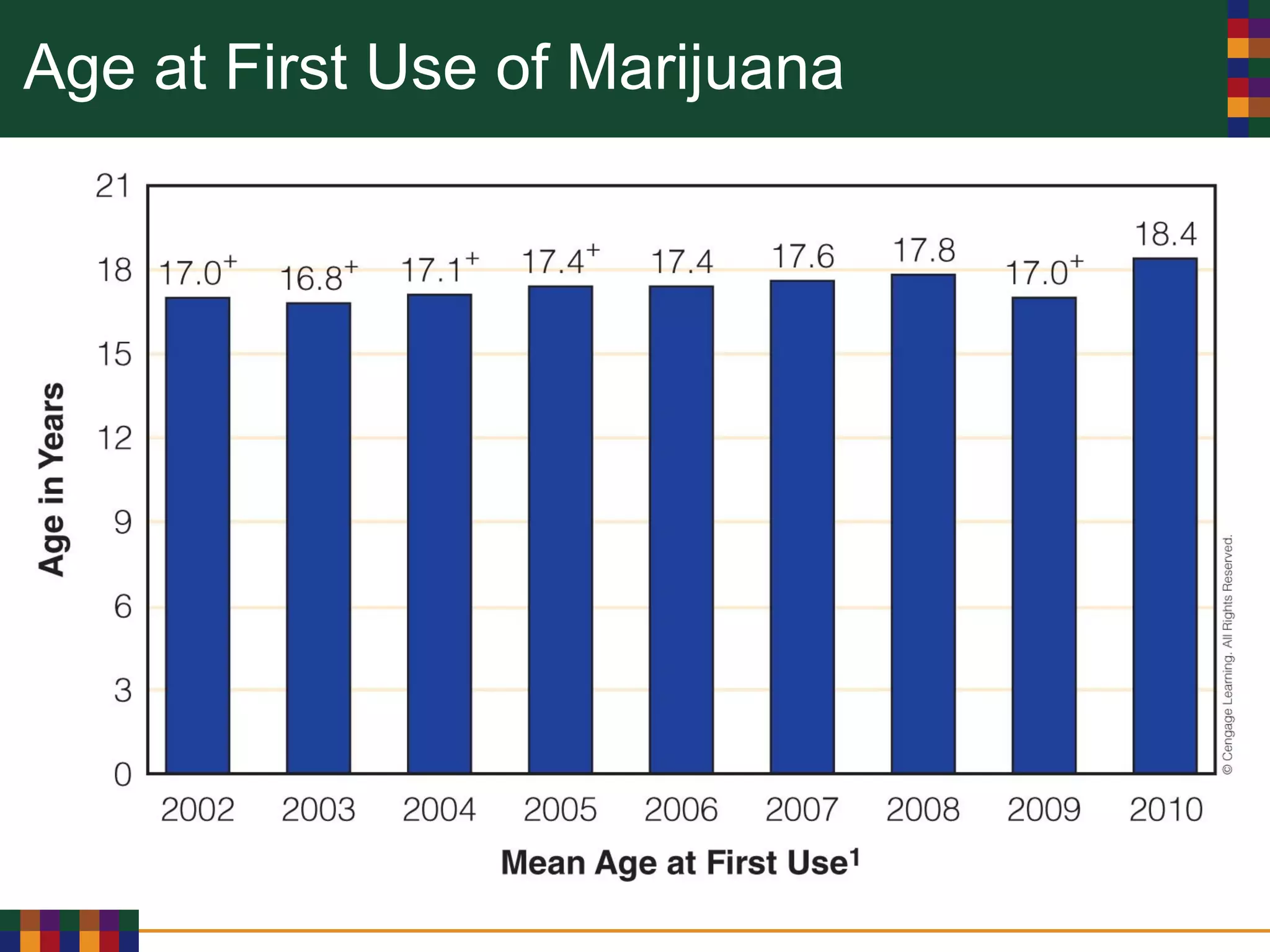
Age at First Use of Marijuana
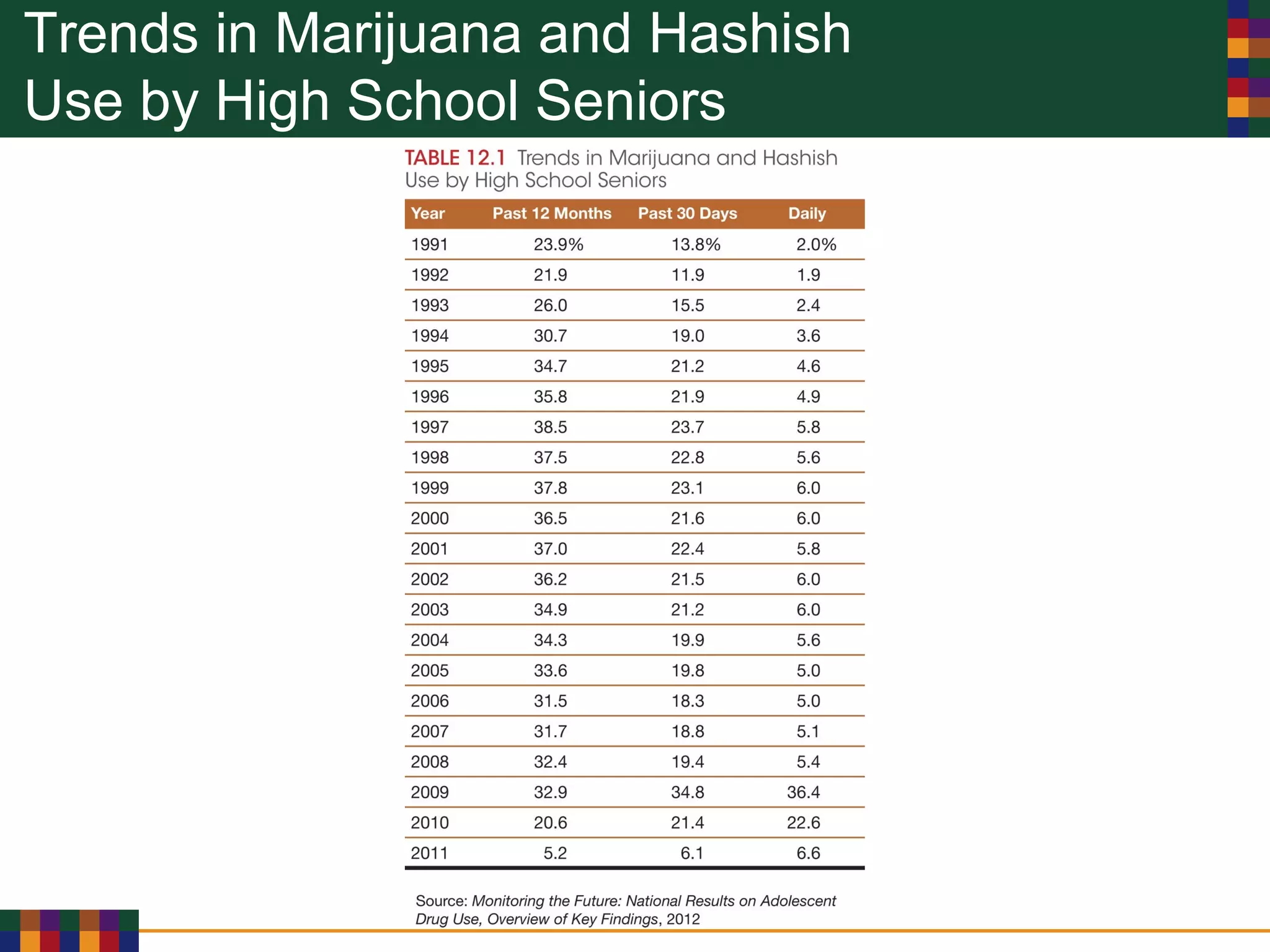
Trends in Marijuana and Hashish
Use by High School Seniors
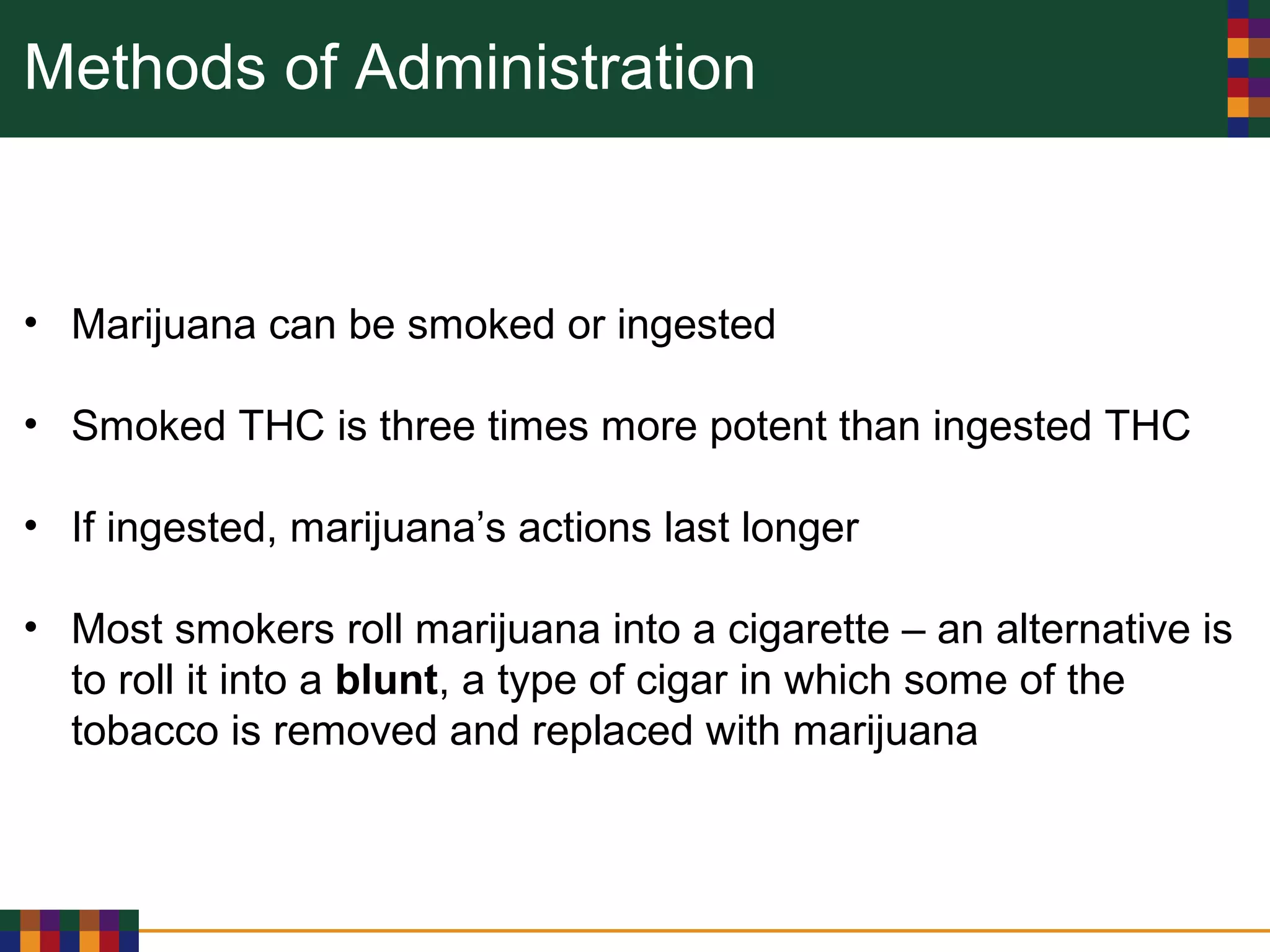
Methods of Administration
• Marijuana can be smoked or ingested
• Smoked THC is three times more potent than ingested THC
• If ingested, marijuana’s actions last longer
• Most smokers roll marijuana into a cigarette – an alternative is
to roll it into a blunt, a type of cigar in which some of the
tobacco is removed and replaced with marijuana
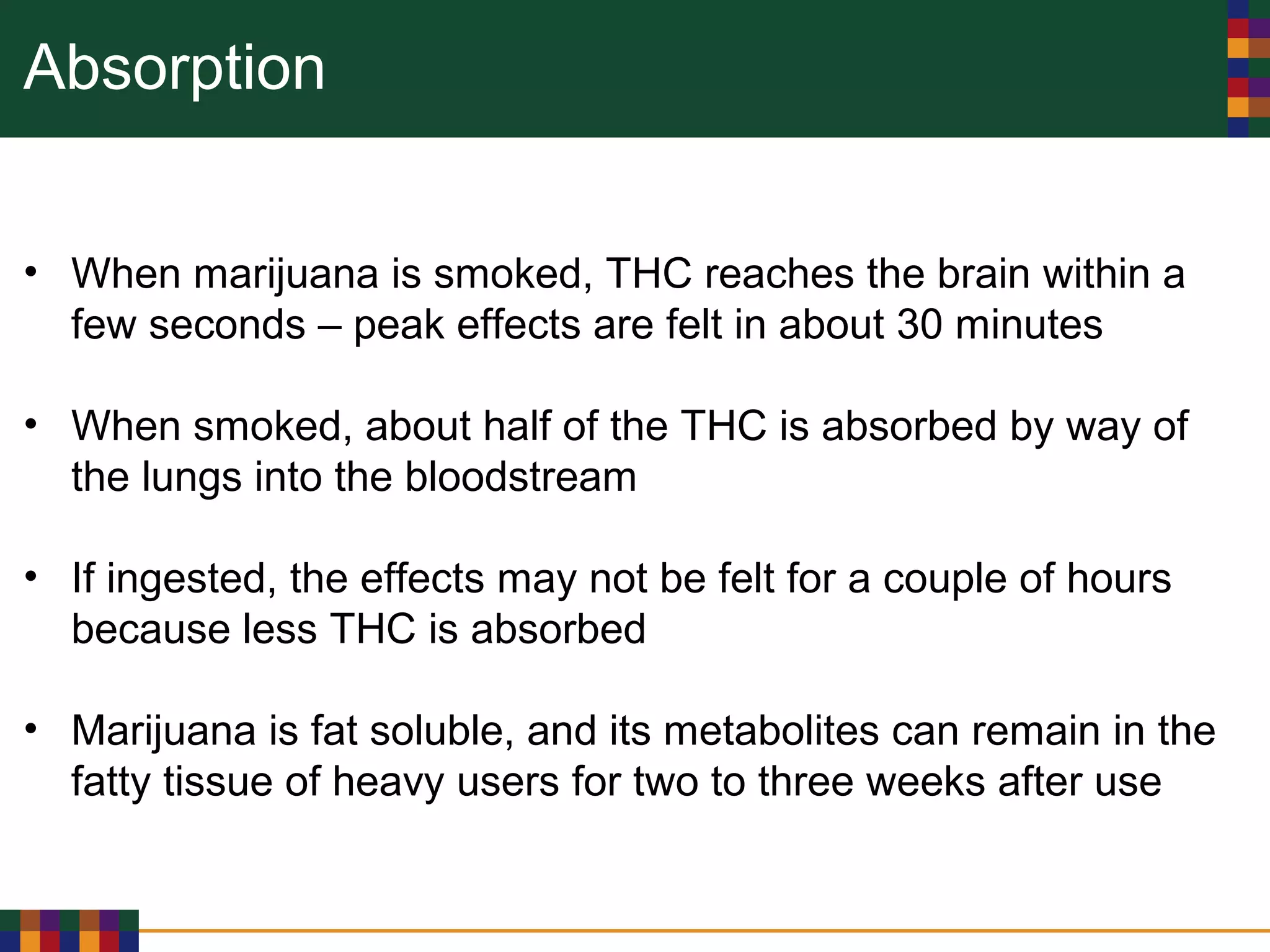
Absorption
• When marijuana is smoked, THC reaches the brain within a
few seconds – peak effects are felt in about 30 minutes
• When smoked, about half of the THC is absorbed by way of
the lungs into the bloodstream
• If ingested, the effects may not be felt for a couple of hours
because less THC is absorbed
• Marijuana is fat soluble, and its metabolites can remain in the
fatty tissue of heavy users for two to three weeks after use
Tolerance
• In studies, pharmacological tolerance was more likely to
develop among daily users
• One indication of tolerance is that heavy users are still
capable of doing cognitive tasks
• Many users claim they get high from decreasing doses,
though no evidence of reverse tolerance exists
• Frequent users also experience less loss of memory,
coordination, and concentration
Physical Dependence
• Although most experts agree that physical dependence on
marijuana does not occur – it might depend on how
dependency is defined
• One-fourth of adolescents who use marijuana frequently meet
the criteria for marijuana abuse or dependency
• 60% of regular marijuana smokers experienced significant
withdrawal symptoms, including irritability, nausea, vomiting,
diarrhea, sweating, anxiety, and insomnia
Psychological Dependence
• Marijuana can result in psychological dependence
• If dependency develops, it is more likely to be motivated by
psychosocial than by physiological factors
• The perceived need for the drug is believed to be responsible
for compulsive use and dependency
Effects of Marijuana Use
• In a study of first-year college students, over 9% had a
cannabis use disorder that resulted in concentration problems
or missing a number of classes
• Adolescents who smoked at least once a week had increased
thoughts of suicide, felt more lonely and unloved, and were
more likely to run away from home, cut classes, or steal
• Marijuana impairs perceptual and motor skills and the ability
to stay awake – skills necessary for driving
Psychological Effects
• Marijuana increases the release of dopamine, a
neurotransmitter involved in the experience of euphoria
• Numerous studies support the connection between marijuana
use and mental illness
• Detrimental psychological reactions to marijuana are unusual,
although high doses can induce anxiety, delusions,
disorientation, hallucinations, and paranoia
Perceptual Effects
• Marijuana alters perceptions of time and space
• Mood changes are marked by anxiety, sadness, laughter, and
paranoia
• Some people experience panic reactions, which tend to be
temporary and triggered by a feeling of not being in control
Cognitive Effects
• One reported cognitive effect of marijuana is impairment of
short-term memory
• Learning and remembering new information become more
arduous when using marijuana
• Heavy users were impaired in skills involving expression but
not in vocabulary, mathematics, and reading comprehension
• Cognitive deficits persist up to 28 days after a person last
smoked marijuana
Amotivational Syndrome
• Heavy marijuana users reportedly are unable to concentrate
and are unmotivated, apathetic, lacking ambition, and not
achievement-oriented (amotivational syndrome)
• Amotivational syndrome is more likely to develop in
adolescents than in older people
• However, people who smoke a great deal might also be
predisposed to these problems initially
Physical Effects
• Appetite
• Marijuana users consistently report increase in appetite
• The Respiratory System
• THC acts as a bronchodilator
• Smoke contains many respiratory irritants and
carcinogens
• One marijuana cigarette equals 20 regular cigarettes in
terms of bronchial damage
• Marijuana contains 20 times as much ammonia and 5
times as much hydrogen cyanide as tobacco smoke
Physical Effects
• The Immune System
• Studies with animals demonstrate that marijuana affects
the immune system adversely
• The Reproductive System
• In males, marijuana decreases testosterone levels, sperm
count, and libido
• In women, it may inhibit ovulation
Physical Effects
• The Brain
• Chronic marijuana users experience cognitive deficits
• Marijuana reduces acetylcholine in the hippocampus, the
portion of the brain that affects memory
• Marijuana affects the activity of the neurotransmitters
norepinephrine and dopamine
• Anticholinergic drugs such as marijuana are related to
schizophrenia
Factors Influencing Effects of Marijuana
• Factors influencing effects of marijuana:
• Whether it is smoked or ingested
• Dosage
• THC content
• Interval between puffs
• Depth of inhalation
• Length of time in one’s lungs
• Set and setting
• Previous experiences
Medical Applications
• In the late 1800s, marijuana was used medically to treat
convulsions, chronic cough, sleeplessness, gastrointestinal
disorders, gonorrhea, and pain
• Recently, marijuana has been used for treating glaucoma,
asthma, nausea and vomiting during cancer chemotherapy,
and pain associated with multiple sclerosis
• It also has been used to alleviate withdrawal symptoms
related to barbiturates, narcotics, and alcohol
Medical Applications
• Glaucoma
• Marijuana reduces pressure behind the eye
• Nausea and Vomiting
• Marijuana is an effective anti-emetic to counteract nausea
and vomiting associated with chemotherapy for cancer
• Marinol (THC formulated in sesame oil)
• Cesamet (a synthetic cannabinoid)
• More than 40% of oncologists recommended marijuana to
their cancer patients to control nausea and vomiting
Medical Applications
• Asthma
• THC dilates the bronchial tubes
• Additional Medical Uses
• Appetite stimulant
• Pain relief
• Muscle relaxant
• Recommended for epilepsy, insomnia, rheumatoid
arthritis, chronic pain conditions, premenstrual syndrome
and menstrual cramps
Decriminalization and Legalization
• In 1972, the Presidential Commission on Marijuana and Drug
Abuse recommended the decriminalization of marijuana
• 11 states decriminalized marijuana, making possession a
minor offense punishable by a $100 fine
• In 2008, Michigan became the 13th state to approve the
medical use of marijuana
Decriminalization and Legalization
• An argument against marijuana is that it is a gateway drug,
leading to the use of more dangerous drugs
• However, most marijuana smokers do not proceed to use
other drugs
• Steppingstone theory
• Hypothesis that use of soft drugs such as marijuana and
alcohol leads to use of harder drugs such as heroin and
cocaine
Decriminalization and Legalization
• Which is the greater problem—marijuana or laws against
marijuana?
• The National Organization for the Reform of Marijuana Laws
(NORML) contends that the quality of marijuana would be
controlled more effectively if it were legal
• Legalization of marijuana is compared to tobacco and alcohol,
which have known medical and social consequences
Decriminalization and Legalization
• In 2011, the Dutch government reversed its tolerance policies
and reclassified marijuana so that it is now comparable to
cocaine and Ecstasy
• The Dutch government believe that better control over
marijuana use reduces the risks
• It is estimated that 13% of Dutch high school students have
used marijuana, compared to 28% of American students
Legalization for Medical Uses
• Marijuana has a long history of medical use and is reasonably
safe
• Opponents believe that if marijuana were available for
medical use, its nonmedical use would increase dramatically
• In states that legalized medical marijuana, rates of marijuana
use, abuse, and dependence are higher
• One concern is that medical marijuana may be illegally
diverted for substance abuse
Legalization for Medical Uses
• In November 1996, California voters eliminated state
penalties for medical uses of marijuana
• Fifteen states, including the District of Columbia, have now
passed medical marijuana laws
• The Institute of Medicine (IOM) found that marijuana has
“potential for therapeutic use”
• In 2006, the FDA reaffirmed that marijuana should remain a
Schedule I drug, and has no currently accepted medical use
Cost
• Drug reform advocates:
• Treating drug offenders is much cheaper than
incarcerating them
• Legalizing marijuana and other drugs would stem the rise
in violence and criminal activity
• Opponents of drug reform:
• Marijuana is unhealthy and the only viable option is
elimination of its use
• Advertising and marketing would increase drug problems
dramatically
Crime and Violence
• Hassan, an Arabian politico who lived during the Middle Ages,
and his cult, purportedly used hashish in preparation for
aggressive acts against others
• Legalization might reduce criminal and violent behavior, but
interpersonal and intrapersonal problems might escalate
• When alcohol was prohibited, organized crime increased –
legalization would remove much of the profit motive

Goldberg Chapter 12

  • 1.
    Albia Dugger •Miami Dade College Chapter 12 Marijuana
  • 2.
    History of Marijuana •Marijuana (cannabis) is one of the world’s oldest known drugs • Early settlers in Jamestown, Virginia, planted marijuana (hemp) for its fiber, which also was used during World War II • People started smoking it for its euphoric effect during the 1920s, coinciding with alcohol prohibition • Marijuana use was banned after the Marijuana Tax Act was enacted in 1937
  • 3.
  • 4.
    Characteristics of Marijuana •The primary mood-altering, psychoactive agent in marijuana is delta-9-tetrahydrocannabinol, or THC • Several factors influence THC levels: • The plant’s sex • Soil and climate conditions • The part of the plant that is used • How the plant is harvested, prepared, and stored • Female plants produce more resin and flowers, which contain higher THC concentrations
  • 5.
    Characteristics of Marijuana •Marijuana contains more than 500 chemicals – 60 are unique to the cannabis plant (cannabinoids) • Marijuana smoke contains 70% more carcinogenic benzopyrene and 50% more tar than tobacco smoke • Marijuana releases five times as much tar into the lungs as cigarettes
  • 6.
    Species and Formsof Marijuana • Cannabis sativa • Most widespread; used primarily to make rope • Has a tall, woody stem and can reach a height of 20 feet • Cannabis indica • Grown for its psychoactive properties • Grows to a height of 3 to 4 feet • Cannabis ruderalis • Found mainly in northern Europe and Asia • Has a short growing season and low potency
  • 7.
    Species and Formsof Marijuana • Ganja, consisting of the top leaves and flowers of the female cannabis plant, is considered the best quality marijuana • Bhang consists of the lower leaves, stems, and seeds of the cannabis plant and is regarded as poor quality marijuana • Sinsemilla (“without seeds”) is derived from the unfertilized female cannabis plant, and has higher THC levels
  • 8.
    Species and Formsof Marijuana • Two other forms are hashish (charas) and hash oil • These forms of marijuana have a higher THC content than Cannabis sativa • Hashish, taken from the resin of the cannabis plant, is usually smoked in a pipe • Hash oil is made by boiling resin in alcohol, and has a THC content of 60% – it is mixed with tobacco and smoked
  • 9.
  • 10.
    Points of Origin •The cannabis plant can be grown almost anywhere • Production is especially high in Colombia and Mexico • Other countries in Latin America, and in Asia and the Caribbean, also produce marijuana • Lebanon, Morocco, Pakistan, and Thailand are particularly known for producing much marijuana
  • 11.
    Indoor Cultivation • Indoorcultivation of marijuana makes it easier to avoid federal, state, and local law enforcement • Indoor cultivation has allowed for production of marijuana with a higher THC content • The profits of indoor cultivation are higher because marijuana plants can be harvested four to six times per year
  • 12.
  • 13.
    Extent of Use •Worldwide, marijuana is the fourth most commonly used drug, after nicotine, caffeine, and alcohol • Marijuana is the most common illegal drug in the US, with an annual prevalence of 13.7% • The most important reasons that students significantly increased use of marijuana relate to reduced perception of risk and less disapproval of its use
  • 14.
    Age at FirstUse of Marijuana
  • 15.
    Trends in Marijuanaand Hashish Use by High School Seniors
  • 16.
    Methods of Administration •Marijuana can be smoked or ingested • Smoked THC is three times more potent than ingested THC • If ingested, marijuana’s actions last longer • Most smokers roll marijuana into a cigarette – an alternative is to roll it into a blunt, a type of cigar in which some of the tobacco is removed and replaced with marijuana
  • 17.
    Absorption • When marijuanais smoked, THC reaches the brain within a few seconds – peak effects are felt in about 30 minutes • When smoked, about half of the THC is absorbed by way of the lungs into the bloodstream • If ingested, the effects may not be felt for a couple of hours because less THC is absorbed • Marijuana is fat soluble, and its metabolites can remain in the fatty tissue of heavy users for two to three weeks after use
  • 18.
    Tolerance • In studies,pharmacological tolerance was more likely to develop among daily users • One indication of tolerance is that heavy users are still capable of doing cognitive tasks • Many users claim they get high from decreasing doses, though no evidence of reverse tolerance exists • Frequent users also experience less loss of memory, coordination, and concentration
  • 19.
    Physical Dependence • Althoughmost experts agree that physical dependence on marijuana does not occur – it might depend on how dependency is defined • One-fourth of adolescents who use marijuana frequently meet the criteria for marijuana abuse or dependency • 60% of regular marijuana smokers experienced significant withdrawal symptoms, including irritability, nausea, vomiting, diarrhea, sweating, anxiety, and insomnia
  • 20.
    Psychological Dependence • Marijuanacan result in psychological dependence • If dependency develops, it is more likely to be motivated by psychosocial than by physiological factors • The perceived need for the drug is believed to be responsible for compulsive use and dependency
  • 21.
    Effects of MarijuanaUse • In a study of first-year college students, over 9% had a cannabis use disorder that resulted in concentration problems or missing a number of classes • Adolescents who smoked at least once a week had increased thoughts of suicide, felt more lonely and unloved, and were more likely to run away from home, cut classes, or steal • Marijuana impairs perceptual and motor skills and the ability to stay awake – skills necessary for driving
  • 22.
    Psychological Effects • Marijuanaincreases the release of dopamine, a neurotransmitter involved in the experience of euphoria • Numerous studies support the connection between marijuana use and mental illness • Detrimental psychological reactions to marijuana are unusual, although high doses can induce anxiety, delusions, disorientation, hallucinations, and paranoia
  • 23.
    Perceptual Effects • Marijuanaalters perceptions of time and space • Mood changes are marked by anxiety, sadness, laughter, and paranoia • Some people experience panic reactions, which tend to be temporary and triggered by a feeling of not being in control
  • 24.
    Cognitive Effects • Onereported cognitive effect of marijuana is impairment of short-term memory • Learning and remembering new information become more arduous when using marijuana • Heavy users were impaired in skills involving expression but not in vocabulary, mathematics, and reading comprehension • Cognitive deficits persist up to 28 days after a person last smoked marijuana
  • 25.
    Amotivational Syndrome • Heavymarijuana users reportedly are unable to concentrate and are unmotivated, apathetic, lacking ambition, and not achievement-oriented (amotivational syndrome) • Amotivational syndrome is more likely to develop in adolescents than in older people • However, people who smoke a great deal might also be predisposed to these problems initially
  • 26.
    Physical Effects • Appetite •Marijuana users consistently report increase in appetite • The Respiratory System • THC acts as a bronchodilator • Smoke contains many respiratory irritants and carcinogens • One marijuana cigarette equals 20 regular cigarettes in terms of bronchial damage • Marijuana contains 20 times as much ammonia and 5 times as much hydrogen cyanide as tobacco smoke
  • 27.
    Physical Effects • TheImmune System • Studies with animals demonstrate that marijuana affects the immune system adversely • The Reproductive System • In males, marijuana decreases testosterone levels, sperm count, and libido • In women, it may inhibit ovulation
  • 28.
    Physical Effects • TheBrain • Chronic marijuana users experience cognitive deficits • Marijuana reduces acetylcholine in the hippocampus, the portion of the brain that affects memory • Marijuana affects the activity of the neurotransmitters norepinephrine and dopamine • Anticholinergic drugs such as marijuana are related to schizophrenia
  • 29.
    Factors Influencing Effectsof Marijuana • Factors influencing effects of marijuana: • Whether it is smoked or ingested • Dosage • THC content • Interval between puffs • Depth of inhalation • Length of time in one’s lungs • Set and setting • Previous experiences
  • 30.
    Medical Applications • Inthe late 1800s, marijuana was used medically to treat convulsions, chronic cough, sleeplessness, gastrointestinal disorders, gonorrhea, and pain • Recently, marijuana has been used for treating glaucoma, asthma, nausea and vomiting during cancer chemotherapy, and pain associated with multiple sclerosis • It also has been used to alleviate withdrawal symptoms related to barbiturates, narcotics, and alcohol
  • 31.
    Medical Applications • Glaucoma •Marijuana reduces pressure behind the eye • Nausea and Vomiting • Marijuana is an effective anti-emetic to counteract nausea and vomiting associated with chemotherapy for cancer • Marinol (THC formulated in sesame oil) • Cesamet (a synthetic cannabinoid) • More than 40% of oncologists recommended marijuana to their cancer patients to control nausea and vomiting
  • 32.
    Medical Applications • Asthma •THC dilates the bronchial tubes • Additional Medical Uses • Appetite stimulant • Pain relief • Muscle relaxant • Recommended for epilepsy, insomnia, rheumatoid arthritis, chronic pain conditions, premenstrual syndrome and menstrual cramps
  • 33.
    Decriminalization and Legalization •In 1972, the Presidential Commission on Marijuana and Drug Abuse recommended the decriminalization of marijuana • 11 states decriminalized marijuana, making possession a minor offense punishable by a $100 fine • In 2008, Michigan became the 13th state to approve the medical use of marijuana
  • 34.
    Decriminalization and Legalization •An argument against marijuana is that it is a gateway drug, leading to the use of more dangerous drugs • However, most marijuana smokers do not proceed to use other drugs • Steppingstone theory • Hypothesis that use of soft drugs such as marijuana and alcohol leads to use of harder drugs such as heroin and cocaine
  • 35.
    Decriminalization and Legalization •Which is the greater problem—marijuana or laws against marijuana? • The National Organization for the Reform of Marijuana Laws (NORML) contends that the quality of marijuana would be controlled more effectively if it were legal • Legalization of marijuana is compared to tobacco and alcohol, which have known medical and social consequences
  • 36.
    Decriminalization and Legalization •In 2011, the Dutch government reversed its tolerance policies and reclassified marijuana so that it is now comparable to cocaine and Ecstasy • The Dutch government believe that better control over marijuana use reduces the risks • It is estimated that 13% of Dutch high school students have used marijuana, compared to 28% of American students
  • 37.
    Legalization for MedicalUses • Marijuana has a long history of medical use and is reasonably safe • Opponents believe that if marijuana were available for medical use, its nonmedical use would increase dramatically • In states that legalized medical marijuana, rates of marijuana use, abuse, and dependence are higher • One concern is that medical marijuana may be illegally diverted for substance abuse
  • 38.
    Legalization for MedicalUses • In November 1996, California voters eliminated state penalties for medical uses of marijuana • Fifteen states, including the District of Columbia, have now passed medical marijuana laws • The Institute of Medicine (IOM) found that marijuana has “potential for therapeutic use” • In 2006, the FDA reaffirmed that marijuana should remain a Schedule I drug, and has no currently accepted medical use
  • 39.
    Cost • Drug reformadvocates: • Treating drug offenders is much cheaper than incarcerating them • Legalizing marijuana and other drugs would stem the rise in violence and criminal activity • Opponents of drug reform: • Marijuana is unhealthy and the only viable option is elimination of its use • Advertising and marketing would increase drug problems dramatically
  • 40.
    Crime and Violence •Hassan, an Arabian politico who lived during the Middle Ages, and his cult, purportedly used hashish in preparation for aggressive acts against others • Legalization might reduce criminal and violent behavior, but interpersonal and intrapersonal problems might escalate • When alcohol was prohibited, organized crime increased – legalization would remove much of the profit motive

Editor's Notes

  • #4 Marijuana is made from the dried leaves and flowering tops of Cannabis sativa.
  • #10 Marijuana paraphernalia includes rolling papers, clips, and pipes.
  • #13 Indoor marijuana cultivation has become more prevalent in recent years, as producers attempt to avoid detection while increasing crop yields.
  • #15 Figure 12.1 Mean Age at First Use of Marijuana Among Past Year Marijuana Initiates Aged 12 to 49: 2002–2010