DR.SUBASHINI PERUMAL
MBBS,MD
RADIATION AND CLINICAL ONCOLOGIST
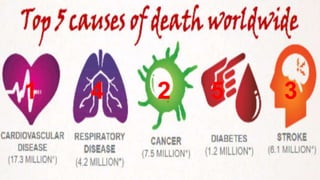
1 4 2 5 3
INDIA -THE DIABETIC CAPITAL OF THE WORLD
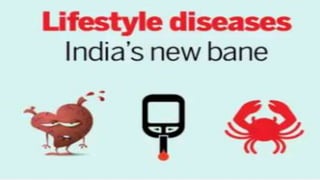
LIFE STYLE DISEASES
DIABETES
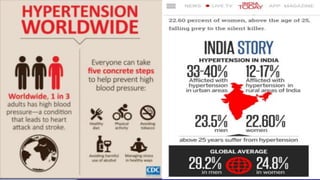
HYPERTENSION
CANCER
• WILL I GET
DIABETES?
HYPERTENSION??
CANCER???
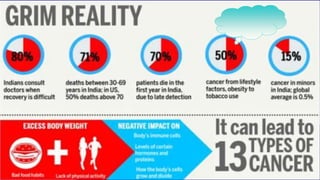
LIFESTYLE FACTORS
• TOBACCO
• OBESITY
• SEDENTARY LIVING
CANCER PREVENTION
CANCER PREVENTION & SCREENING GUIDELINES
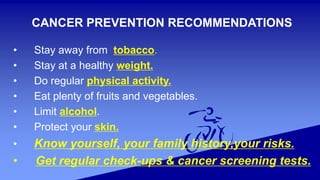
CANCER PREVENTION RECOMMENDATIONS
• Stay away from tobacco.
• Stay at a healthy weight.
• Do regular physical activity.
• Eat plenty of fruits and vegetables.
• Limit alcohol.
• Protect your skin.
• Know yourself, your family history,your risks.
• Get regular check-ups & cancer screening tests.
SMOKING CESSATION
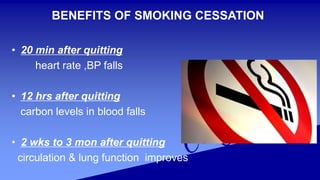
BENEFITS OF SMOKING CESSATION
• 20 min after quitting
heart rate ,BP falls
• 12 hrs after quitting
carbon levels in blood falls
• 2 wks to 3 mon after quitting
circulation & lung function improves
SMOKING CESSATION
• 1 yr after quitting
• heart attack risk is halved
• 5-10 yrs after quitting
• risk of cancer is halved
• 15 yrs after quitting
• heart attack risk is equal to a non smoker
PHYSICAL ACTIVITY
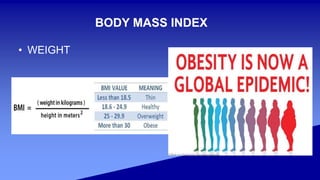
BODY MASS INDEX
• WEIGHT
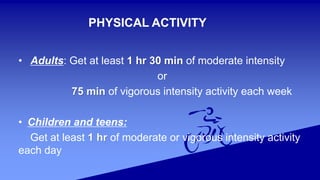
PHYSICAL ACTIVITY
• Adults: Get at least 1 hr 30 min of moderate intensity
or
75 min of vigorous intensity activity each week
• Children and teens:
Get at least 1 hr of moderate or vigorous intensity activity
each day
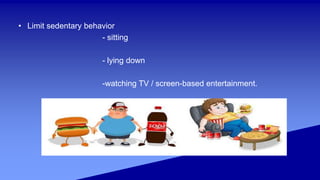
• Limit sedentary behavior
- sitting
- lying down
-watching TV / screen-based entertainment.
HEALTHY EATING
HEALTHY EATING
• Eat a healthy diet, with an emphasis on plant foods.
• maintain a healthy weight.
• Limit how much processed meat and red meat you eat.
• Eat at least 2½ cups of vegetables and fruits each day.
• Choose whole grains instead of refined grain products.
• LIMIT ALCOHOL
If you drink alcohol, limit your intake..Drink no more than 1 drink per day for
women or 2 per day for men.
• PROTECT SKIN
CANCER SCREENING
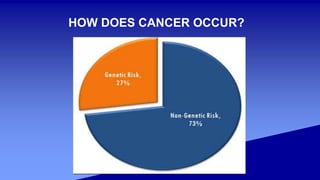
HOW DOES CANCER OCCUR?
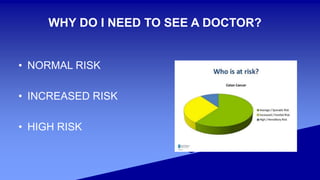
WHY DO I NEED TO SEE A DOCTOR?
• NORMAL RISK
• INCREASED RISK
• HIGH RISK
COLON CANCER SCREENING
AGE: Starting at age 50
SEX: both men and women
TEST:
• Colonoscopy every 10 yrs, or
• CT colonography every 5 yrs, or
• Flexible sigmoidoscopy every 5 yrs, or
• Double-contrast barium enema every 5 yrs*
COLON CANCER SCREENING
• Other tests to find cancer
• Yearly fecal immunochemical test or
• Yearly guaiac-based fecal occult blood test or
• Stool DNA test (sDNA) every 3 years
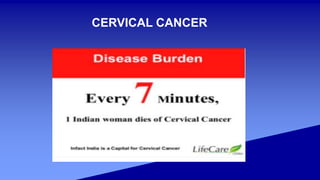
CERVICAL CANCER
CERVICAL CANCER SCREENING
PAP SMEAR TESTING
AGE : start at 21yr
• 21-29 yr : Pap test every 3 yrs.no HPV testing
• 30-65 yr : Pap test + HPV test (co-testing) every 5 yrs.
Or
Pap test alone every 3 yrs.
• >65yr: no test if normal result in the past 10 yrs.
CERVICAL CANCER SCREENING
• any cervical pre-cancer: test for at least 20 yrs after that
diagnosis.
• after total hysterectomy:no testing needed.
• previously vaccinated: routine screening
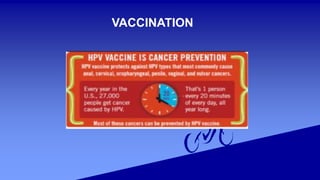
VACCINATION
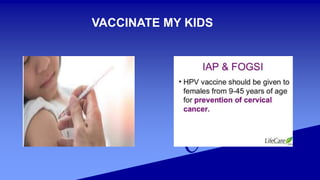
Human papillomavirus (HPV) vaccines
• Routine vaccination:
• Minimum age: 9 years
• HPV4 [Gardasil®] and HPV2 [Cervarix®] are licensed.
• For girls 9-14 years: ONLY 2 doses( 6Months interval)
• For girls >15 years: 3 doses are recommended (gardasil 0,2,6
months) or cervarix(0,1,6 months)
• HPV4 can also be given in a 3-dose series for males
aged 11 or 12 years, but not yet licensed for use in males
in India.
• Catch-up vaccination:
• Administer the vaccine series to females (either
HPV2 or HPV4) at age 13 through 45 years if not
previously vaccinated
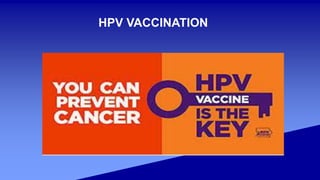
HPV VACCINATION
LUNG CANCER SCREENING
• only for high risk
• 55 to 74 years of age
• In good health
• Have at least a 30 pack-year smoking history AND are
either still smoking or have quit within the last 15 years
• (A pack-year is the number of cigarette packs smoked each day * the number of years a person has smoked. Someone who
smoked a pack of cigarettes per day for 30 years has a 30 pack-year smoking history, as does someone who smoked 2 packs a day
for 15 years.)
• Test: annual low-dose CT scan chest.
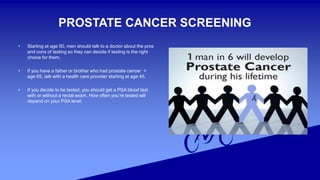
PROSTATE CANCER SCREENING
• Starting at age 50, men should talk to a doctor about the pros
and cons of testing so they can decide if testing is the right
choice for them.
• If you have a father or brother who had prostate cancer <
age 65, talk with a health care provider starting at age 45.
• If you decide to be tested, you should get a PSA blood test
with or without a rectal exam. How often you’re tested will
depend on your PSA level.
BREAST CANCER SCREENING
• SELF BREAST
EXAMINATION
• BREAST AWARENESS
• CLINICAL BREAST
EXAMINATION
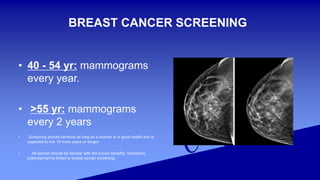
BREAST CANCER SCREENING
• 40 - 54 yr: mammograms
every year.
• >55 yr: mammograms
every 2 years
• Screening should continue as long as a woman is in good health and is
expected to live 10 more years or longer.
• All women should be familiar with the known benefits, limitations,
potential harms linked to breast cancer screening.
TAKE HOME MESSAGE
KNOW YOUR NUMBER
AGE
HEIGHT/ WEIGHT/ BMI
BP / CHOLESTROL
START TODAY
VACCINATE MY KIDS
HEALTHY LIFESTYLE
Cancer prevention and screening

Cancer prevention and screening

  • 1.
  • 3.
    1 4 25 3
  • 5.
    INDIA -THE DIABETICCAPITAL OF THE WORLD
  • 8.
  • 9.
    • WILL IGET DIABETES? HYPERTENSION?? CANCER???
  • 11.
    LIFESTYLE FACTORS • TOBACCO •OBESITY • SEDENTARY LIVING
  • 13.
  • 14.
    CANCER PREVENTION &SCREENING GUIDELINES
  • 15.
    CANCER PREVENTION RECOMMENDATIONS •Stay away from tobacco. • Stay at a healthy weight. • Do regular physical activity. • Eat plenty of fruits and vegetables. • Limit alcohol. • Protect your skin. • Know yourself, your family history,your risks. • Get regular check-ups & cancer screening tests.
  • 16.
  • 17.
    BENEFITS OF SMOKINGCESSATION • 20 min after quitting heart rate ,BP falls • 12 hrs after quitting carbon levels in blood falls • 2 wks to 3 mon after quitting circulation & lung function improves
  • 18.
    SMOKING CESSATION • 1yr after quitting • heart attack risk is halved • 5-10 yrs after quitting • risk of cancer is halved • 15 yrs after quitting • heart attack risk is equal to a non smoker
  • 19.
  • 20.
  • 21.
    PHYSICAL ACTIVITY • Adults:Get at least 1 hr 30 min of moderate intensity or 75 min of vigorous intensity activity each week • Children and teens: Get at least 1 hr of moderate or vigorous intensity activity each day
  • 22.
    • Limit sedentarybehavior - sitting - lying down -watching TV / screen-based entertainment.
  • 23.
  • 24.
    HEALTHY EATING • Eata healthy diet, with an emphasis on plant foods. • maintain a healthy weight. • Limit how much processed meat and red meat you eat. • Eat at least 2½ cups of vegetables and fruits each day. • Choose whole grains instead of refined grain products.
  • 25.
    • LIMIT ALCOHOL Ifyou drink alcohol, limit your intake..Drink no more than 1 drink per day for women or 2 per day for men. • PROTECT SKIN
  • 26.
  • 27.
  • 28.
    WHY DO INEED TO SEE A DOCTOR? • NORMAL RISK • INCREASED RISK • HIGH RISK
  • 30.
  • 31.
    COLON CANCER SCREENING AGE:Starting at age 50 SEX: both men and women TEST: • Colonoscopy every 10 yrs, or • CT colonography every 5 yrs, or • Flexible sigmoidoscopy every 5 yrs, or • Double-contrast barium enema every 5 yrs*
  • 32.
    COLON CANCER SCREENING •Other tests to find cancer • Yearly fecal immunochemical test or • Yearly guaiac-based fecal occult blood test or • Stool DNA test (sDNA) every 3 years
  • 33.
  • 34.
    CERVICAL CANCER SCREENING PAPSMEAR TESTING AGE : start at 21yr • 21-29 yr : Pap test every 3 yrs.no HPV testing • 30-65 yr : Pap test + HPV test (co-testing) every 5 yrs. Or Pap test alone every 3 yrs. • >65yr: no test if normal result in the past 10 yrs.
  • 35.
    CERVICAL CANCER SCREENING •any cervical pre-cancer: test for at least 20 yrs after that diagnosis. • after total hysterectomy:no testing needed. • previously vaccinated: routine screening
  • 36.
  • 37.
    Human papillomavirus (HPV)vaccines • Routine vaccination: • Minimum age: 9 years • HPV4 [Gardasil®] and HPV2 [Cervarix®] are licensed. • For girls 9-14 years: ONLY 2 doses( 6Months interval) • For girls >15 years: 3 doses are recommended (gardasil 0,2,6 months) or cervarix(0,1,6 months)
  • 38.
    • HPV4 canalso be given in a 3-dose series for males aged 11 or 12 years, but not yet licensed for use in males in India. • Catch-up vaccination: • Administer the vaccine series to females (either HPV2 or HPV4) at age 13 through 45 years if not previously vaccinated
  • 39.
  • 40.
    LUNG CANCER SCREENING •only for high risk • 55 to 74 years of age • In good health • Have at least a 30 pack-year smoking history AND are either still smoking or have quit within the last 15 years • (A pack-year is the number of cigarette packs smoked each day * the number of years a person has smoked. Someone who smoked a pack of cigarettes per day for 30 years has a 30 pack-year smoking history, as does someone who smoked 2 packs a day for 15 years.) • Test: annual low-dose CT scan chest.
  • 41.
    PROSTATE CANCER SCREENING •Starting at age 50, men should talk to a doctor about the pros and cons of testing so they can decide if testing is the right choice for them. • If you have a father or brother who had prostate cancer < age 65, talk with a health care provider starting at age 45. • If you decide to be tested, you should get a PSA blood test with or without a rectal exam. How often you’re tested will depend on your PSA level.
  • 42.
    BREAST CANCER SCREENING •SELF BREAST EXAMINATION • BREAST AWARENESS • CLINICAL BREAST EXAMINATION
  • 43.
    BREAST CANCER SCREENING •40 - 54 yr: mammograms every year. • >55 yr: mammograms every 2 years • Screening should continue as long as a woman is in good health and is expected to live 10 more years or longer. • All women should be familiar with the known benefits, limitations, potential harms linked to breast cancer screening.
  • 44.
  • 45.
    KNOW YOUR NUMBER AGE HEIGHT/WEIGHT/ BMI BP / CHOLESTROL
  • 46.
  • 47.
  • 48.