Survey technique- CAMERA TRAPPING
Objective: To document the presence of warm-blooded wild animals
Principle: The technique is capture-recapture, infra-red cameras are set within the field. The
camera clicks whenever a warm blooded animal crosses the camera line. In case of a tiger, each
individual has distinctive stripe pattern using which the individual level identification can also be
possible, if we recapture the same individual. Camera traps are efficient for surveying small
carnivores also.
Site Selection
Reconnaissance survey in study location will help to identify the potential activity sites of
the animal.
Method
Camera trapping technique is the one of the best methods for species documentation.
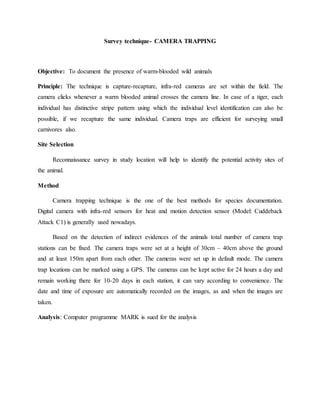
Digital camera with infra-red sensors for heat and motion detection sensor (Model: Cuddeback
Attack C1) is generally used nowadays.
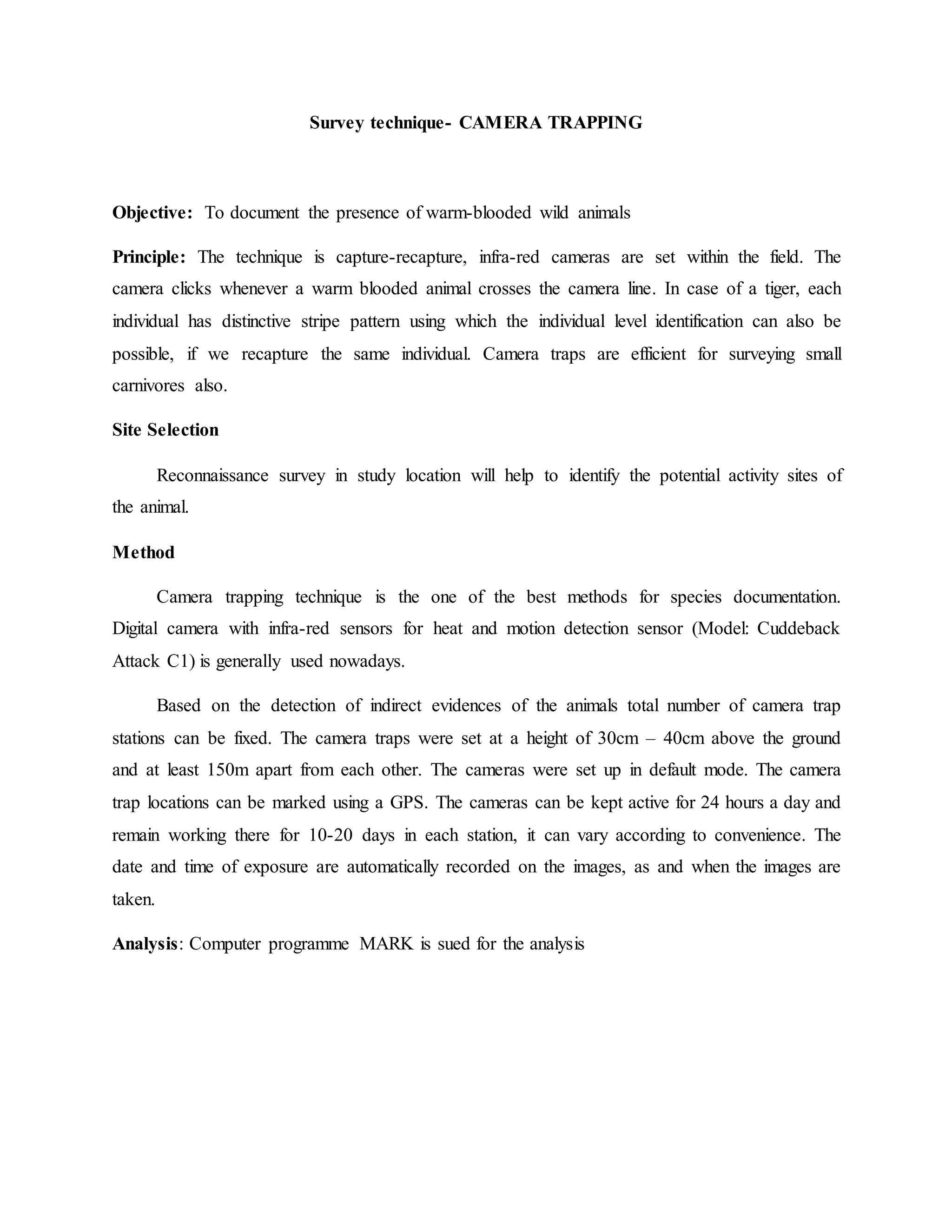
Based on the detection of indirect evidences of the animals total number of camera trap
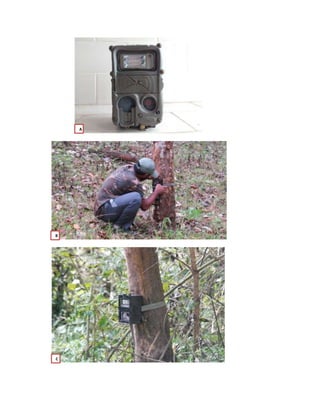
stations can be fixed. The camera traps were set at a height of 30cm – 40cm above the ground
and at least 150m apart from each other. The cameras were set up in default mode. The camera
trap locations can be marked using a GPS. The cameras can be kept active for 24 hours a day and
remain working there for 10-20 days in each station, it can vary according to convenience. The
date and time of exposure are automatically recorded on the images, as and when the images are
taken.
Analysis: Computer programme MARK is sued for the analysis
B
C
A
A-Camera trap; B-Fixing camera trap; C-Camera trap in the field

Camera trapping, wildlife Biology

  • 1.
    Survey technique- CAMERATRAPPING Objective: To document the presence of warm-blooded wild animals Principle: The technique is capture-recapture, infra-red cameras are set within the field. The camera clicks whenever a warm blooded animal crosses the camera line. In case of a tiger, each individual has distinctive stripe pattern using which the individual level identification can also be possible, if we recapture the same individual. Camera traps are efficient for surveying small carnivores also. Site Selection Reconnaissance survey in study location will help to identify the potential activity sites of the animal. Method Camera trapping technique is the one of the best methods for species documentation. Digital camera with infra-red sensors for heat and motion detection sensor (Model: Cuddeback Attack C1) is generally used nowadays. Based on the detection of indirect evidences of the animals total number of camera trap stations can be fixed. The camera traps were set at a height of 30cm – 40cm above the ground and at least 150m apart from each other. The cameras were set up in default mode. The camera trap locations can be marked using a GPS. The cameras can be kept active for 24 hours a day and remain working there for 10-20 days in each station, it can vary according to convenience. The date and time of exposure are automatically recorded on the images, as and when the images are taken. Analysis: Computer programme MARK is sued for the analysis
  • 2.
  • 3.
    A-Camera trap; B-Fixingcamera trap; C-Camera trap in the field