C.I.T.E.S.o
n
v
e
n
t
i
o
n
n
t
e
r
n
a
t
i
o
n
a
l
r
a
d
e
n
d
a
n
g
e
r
e
d
p
e
c
i
e
s
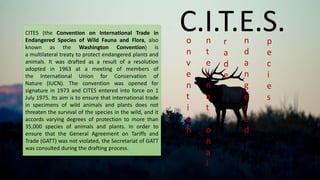
CITES (the Convention on International Trade in
Endangered Species of Wild Fauna and Flora, also
known as the Washington Convention) is
a multilateral treaty to protect endangered plants and
animals. It was drafted as a result of a resolution
adopted in 1963 at a meeting of members of
the International Union for Conservation of
Nature (IUCN). The convention was opened for
signature in 1973 and CITES entered into force on 1
July 1975. Its aim is to ensure that international trade
in specimens of wild animals and plants does not
threaten the survival of the species in the wild, and it
accords varying degrees of protection to more than
35,000 species of animals and plants. In order to
ensure that the General Agreement on Tariffs and
Trade (GATT) was not violated, the Secretariat of GATT
was consulted during the drafting process.
THE FUNCTIONS OF THE SECRETARIAT
To undertake scientific and technical studies, concerning norms for
appropiate preparation and shipment of living speciments and
means of indentifying speciments.
CITES works by subjecting international trade in specimens of selected
species to certain controls. All import, export, re-export and
introduction from the sea of species covered by the Convention has to
be authorized through a licensing system.
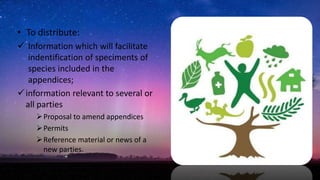
• To distribute:
 Information which will facilitate
indentification of speciments of
species included in the
appendices;
information relevant to several or
all parties
Proposal to amend appendices
Permits
Reference material or news of a
new parties.
• To coordinate and service the working of the convention.
• To arrange meeting on the conference of the parties and service
those meeting
• To assist in the fields of legislation, enforcement, science and
training.
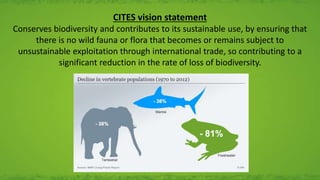
CITES vision statement
Conserves biodiversity and contributes to its sustainable use, by ensuring that
there is no wild fauna or flora that becomes or remains subject to
unsustainable exploitation through international trade, so contributing to a
significant reduction in the rate of loss of biodiversity.
APPENDICES I, II AND III
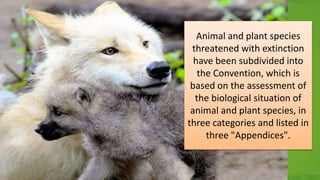
Animal and plant species
threatened with extinction
have been subdivided into
the Convention, which is
based on the assessment of
the biological situation of
animal and plant species, in
three categories and listed in
three "Appendices".
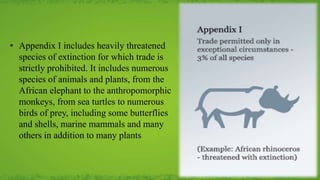
• Appendix I includes heavily threatened
species of extinction for which trade is
strictly prohibited. It includes numerous
species of animals and plants, from the
African elephant to the anthropomorphic
monkeys, from sea turtles to numerous
birds of prey, including some butterflies
and shells, marine mammals and many
others in addition to many plants
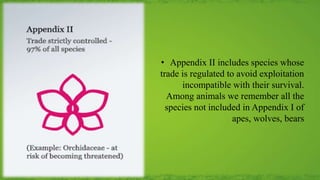
• Appendix II includes species whose
trade is regulated to avoid exploitation
incompatible with their survival.
Among animals we remember all the
species not included in Appendix I of
apes, wolves, bears
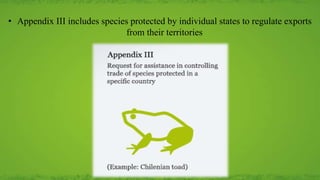
• Appendix III includes species protected by individual states to regulate exports
from their territories
Each species, according to the
population level reached, is
inserted into one of the three
Appendices above and may,
over time, pass from one level
of protection to another
according to the population
increase or decrease data
recorded by the competent
authorities scientific.
THE SECRETARIAT ORGANIZATION
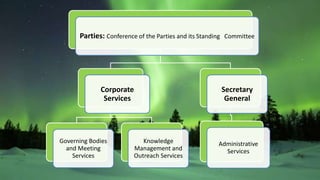
The organization chart
Shows how the Secretariat organizes itself to deliver to the
Parties
the services they have requested of the secretariat.
Parties: Conference of the Parties and its Standing Committee
Corporate
Services
Governing Bodies
and Meeting
Services
Knowledge
Management and
Outreach Services
Secretary
General
Administrative
Services
The functional chart
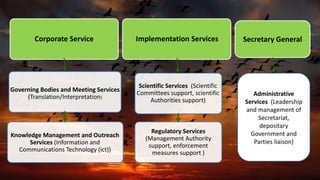
Sets out in broad terms the functions to be carried out by the
Secretariat in responding to the needs and expectations of the
Parties.
Secretary General
Administrative
Services (Leadership
and management of
Secretariat,
depositary
Government and
Parties liaison)
Corporate Service Implementation Services
Scientific Services (Scientific
Committees support, scientific
Authorities support)
Regulatory Services
(Management Authority
support, enforcement
measures support )
Governing Bodies and Meeting Services
(Translation/Interpretation)
Knowledge Management and Outreach
Services (Information and
Communications Technology (ict))
The staffing chart
Shows how staff is allocated within the Secretariat to deliver
against these functions most effectively , efficiently and
transparently.
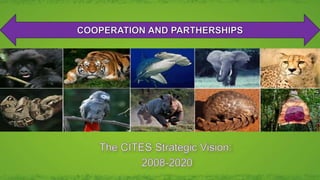
CITES Strategic Vision:2008-2020
General introduction
The Convention on International
Trade in Endangered Species of Wild
Fauna and Flora (CITES) was
concluded on 3 March 1973.
It entered into force after ratification
or accession by 10 States, on 1 July
1975.
Conference of the Parties
Capable of adapting to
changing circumstances
Adoption of
Resdutions and
Decisions
Solution to increasingly
complex wildilife trade and
conservation problems
In 1994
Commissioned a review of the convention’s
effectiveness
• Indentify deficiencies and requirements
necessary to strengthen the Convention
• Help plan for the future
1997
Action Plan for implementing findings and recommendations of
the review, adopted in 2000 with Strategic Vision through 2005
His validities were extended to the 2020
Included amendments to contribute to
the achievement of the Strategic Plan
for Biodiversity, 2011-2020
2016
Adopted amendments to contribute to the achivement of the agenda 2030 sustantable
Development Goals.
Takes into account
issues as
Contributing to the
UN Millenium
Development
Goals
Conservation of
wildlife
Strategic plan
biodiversity
2011-2020
Involve civil
society
in the
development of
conservation
policies and
practices
Agree coherent,
international and
scientific approach
To protect any
species from
unsustainable
international trade
Cultural, social,
economic factors
Play in producer
and consumer
countries
Cites

Cites

  • 1.
    C.I.T.E.S.o n v e n t i o n n t e r n a t i o n a l r a d e n d a n g e r e d p e c i e s CITES (the Conventionon International Trade in Endangered Species of Wild Fauna and Flora, also known as the Washington Convention) is a multilateral treaty to protect endangered plants and animals. It was drafted as a result of a resolution adopted in 1963 at a meeting of members of the International Union for Conservation of Nature (IUCN). The convention was opened for signature in 1973 and CITES entered into force on 1 July 1975. Its aim is to ensure that international trade in specimens of wild animals and plants does not threaten the survival of the species in the wild, and it accords varying degrees of protection to more than 35,000 species of animals and plants. In order to ensure that the General Agreement on Tariffs and Trade (GATT) was not violated, the Secretariat of GATT was consulted during the drafting process.
  • 2.
    THE FUNCTIONS OFTHE SECRETARIAT
  • 3.
    To undertake scientificand technical studies, concerning norms for appropiate preparation and shipment of living speciments and means of indentifying speciments. CITES works by subjecting international trade in specimens of selected species to certain controls. All import, export, re-export and introduction from the sea of species covered by the Convention has to be authorized through a licensing system.
  • 4.
    • To distribute: Information which will facilitate indentification of speciments of species included in the appendices; information relevant to several or all parties Proposal to amend appendices Permits Reference material or news of a new parties.
  • 5.
    • To coordinateand service the working of the convention. • To arrange meeting on the conference of the parties and service those meeting • To assist in the fields of legislation, enforcement, science and training.
  • 7.
    CITES vision statement Conservesbiodiversity and contributes to its sustainable use, by ensuring that there is no wild fauna or flora that becomes or remains subject to unsustainable exploitation through international trade, so contributing to a significant reduction in the rate of loss of biodiversity.
  • 8.
  • 9.
    Animal and plantspecies threatened with extinction have been subdivided into the Convention, which is based on the assessment of the biological situation of animal and plant species, in three categories and listed in three "Appendices".
  • 10.
    • Appendix Iincludes heavily threatened species of extinction for which trade is strictly prohibited. It includes numerous species of animals and plants, from the African elephant to the anthropomorphic monkeys, from sea turtles to numerous birds of prey, including some butterflies and shells, marine mammals and many others in addition to many plants
  • 11.
    • Appendix IIincludes species whose trade is regulated to avoid exploitation incompatible with their survival. Among animals we remember all the species not included in Appendix I of apes, wolves, bears
  • 12.
    • Appendix IIIincludes species protected by individual states to regulate exports from their territories
  • 13.
    Each species, accordingto the population level reached, is inserted into one of the three Appendices above and may, over time, pass from one level of protection to another according to the population increase or decrease data recorded by the competent authorities scientific.
  • 14.
  • 15.
    The organization chart Showshow the Secretariat organizes itself to deliver to the Parties the services they have requested of the secretariat.
  • 16.
    Parties: Conference ofthe Parties and its Standing Committee Corporate Services Governing Bodies and Meeting Services Knowledge Management and Outreach Services Secretary General Administrative Services
  • 17.
    The functional chart Setsout in broad terms the functions to be carried out by the Secretariat in responding to the needs and expectations of the Parties.
  • 18.
    Secretary General Administrative Services (Leadership andmanagement of Secretariat, depositary Government and Parties liaison) Corporate Service Implementation Services Scientific Services (Scientific Committees support, scientific Authorities support) Regulatory Services (Management Authority support, enforcement measures support ) Governing Bodies and Meeting Services (Translation/Interpretation) Knowledge Management and Outreach Services (Information and Communications Technology (ict))
  • 19.
    The staffing chart Showshow staff is allocated within the Secretariat to deliver against these functions most effectively , efficiently and transparently.
  • 20.
  • 21.
    General introduction The Conventionon International Trade in Endangered Species of Wild Fauna and Flora (CITES) was concluded on 3 March 1973. It entered into force after ratification or accession by 10 States, on 1 July 1975.
  • 23.
    Conference of theParties Capable of adapting to changing circumstances Adoption of Resdutions and Decisions Solution to increasingly complex wildilife trade and conservation problems
  • 24.
    In 1994 Commissioned areview of the convention’s effectiveness • Indentify deficiencies and requirements necessary to strengthen the Convention • Help plan for the future
  • 25.
    1997 Action Plan forimplementing findings and recommendations of the review, adopted in 2000 with Strategic Vision through 2005 His validities were extended to the 2020 Included amendments to contribute to the achievement of the Strategic Plan for Biodiversity, 2011-2020 2016 Adopted amendments to contribute to the achivement of the agenda 2030 sustantable Development Goals.
  • 27.
    Takes into account issuesas Contributing to the UN Millenium Development Goals Conservation of wildlife Strategic plan biodiversity 2011-2020 Involve civil society in the development of conservation policies and practices Agree coherent, international and scientific approach To protect any species from unsustainable international trade Cultural, social, economic factors Play in producer and consumer countries