Camera shots
 Sarah Lambe
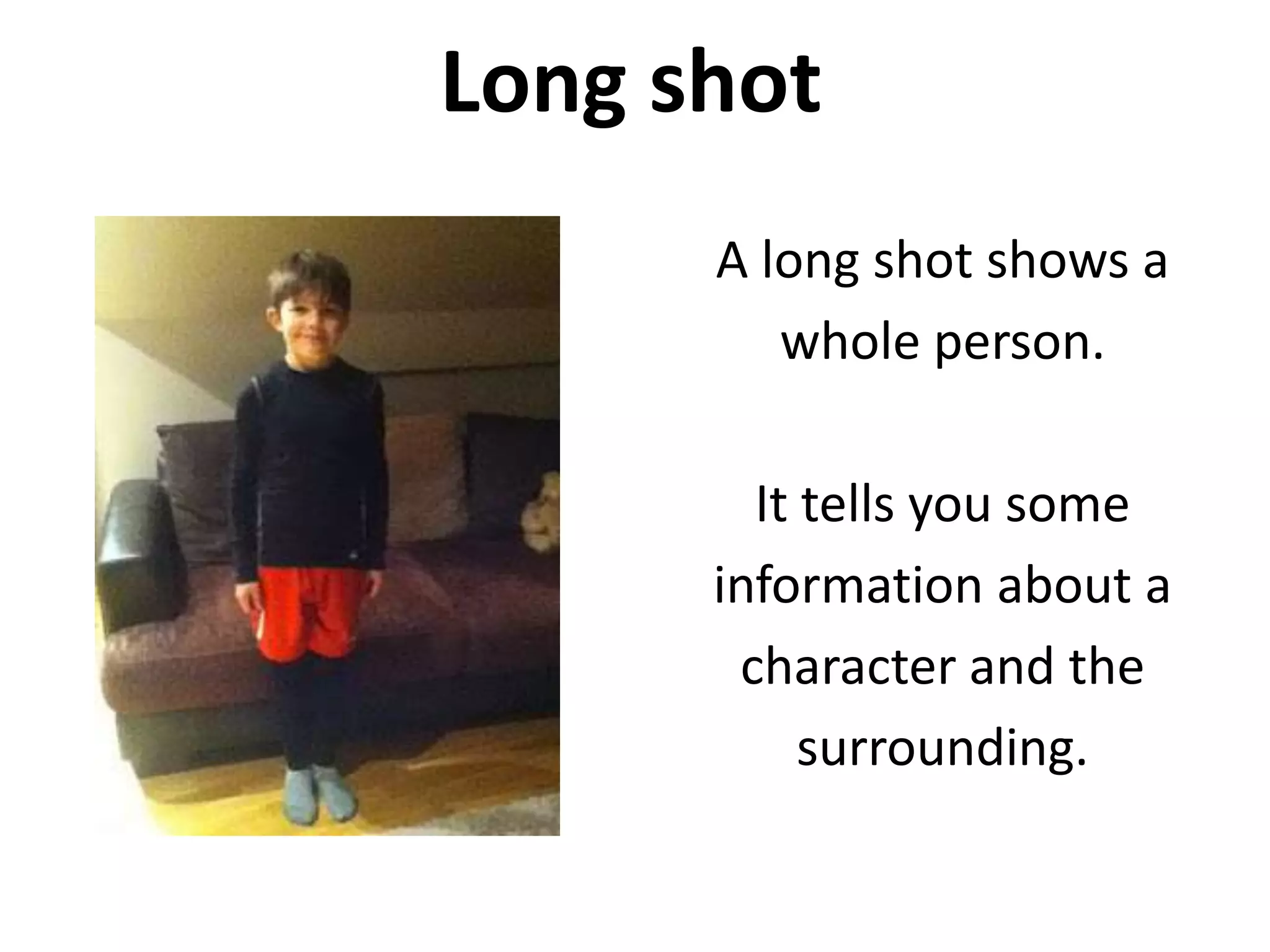
Long shot
      A long shot shows a
         whole person.

        It tells you some
      information about a
       character and the
           surrounding.
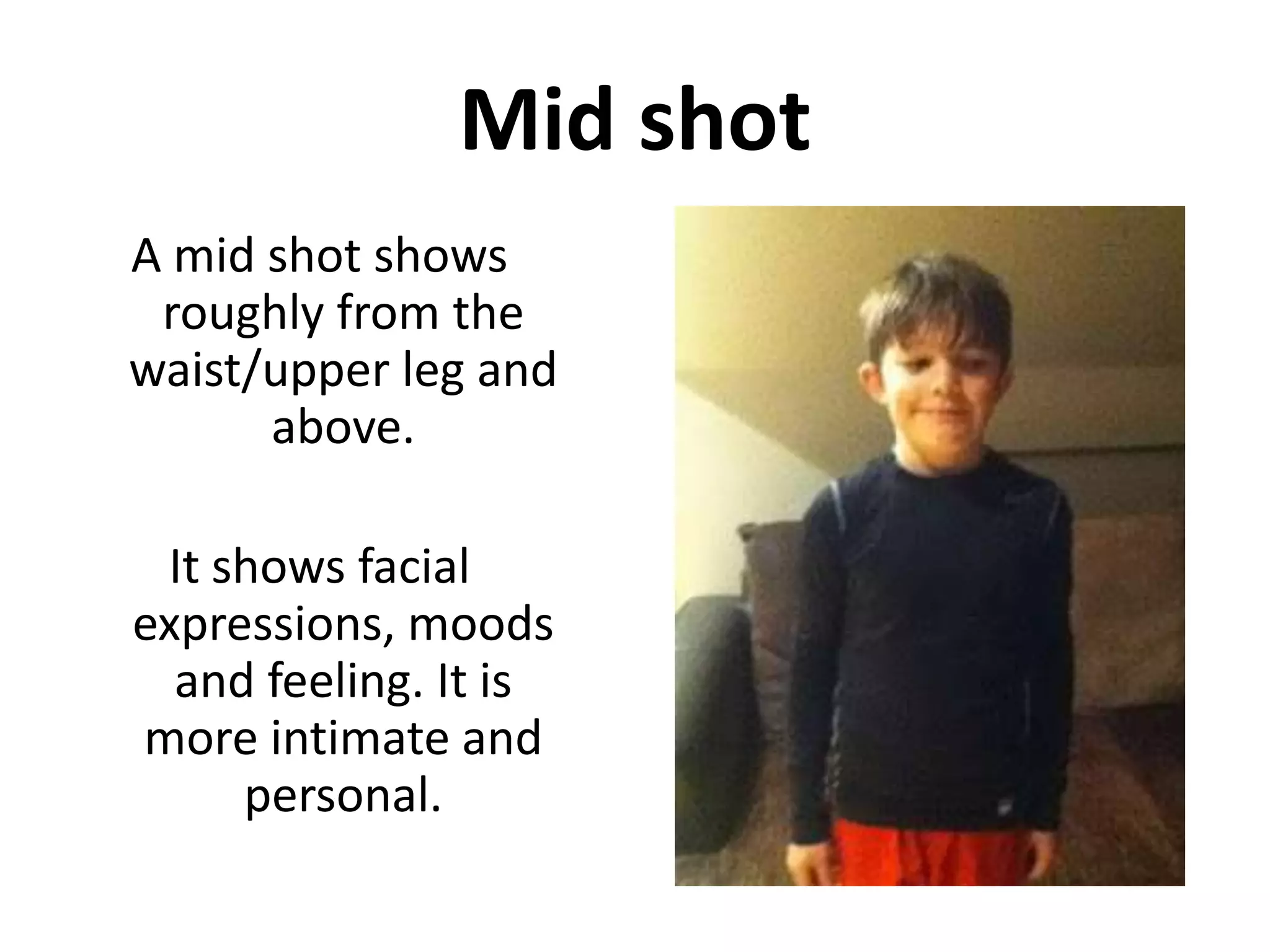
Mid shot
A mid shot shows
 roughly from the
waist/upper leg and
      above.

 It shows facial
expressions, moods
  and feeling. It is
more intimate and
     personal.
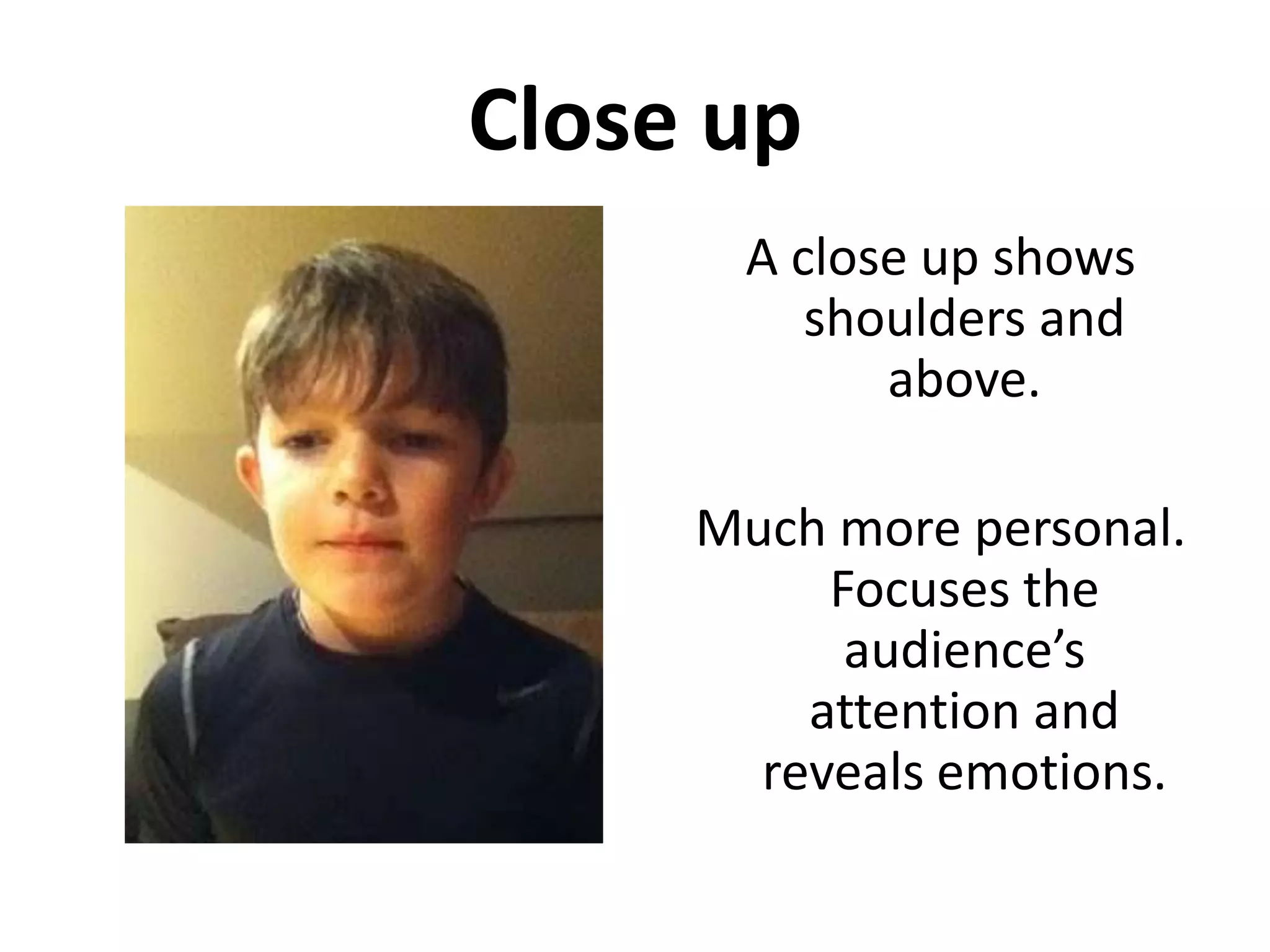
Close up
      A close up shows
         shoulders and
            above.

     Much more personal.
          Focuses the
           audience’s
         attention and
       reveals emotions.
Extreme close up
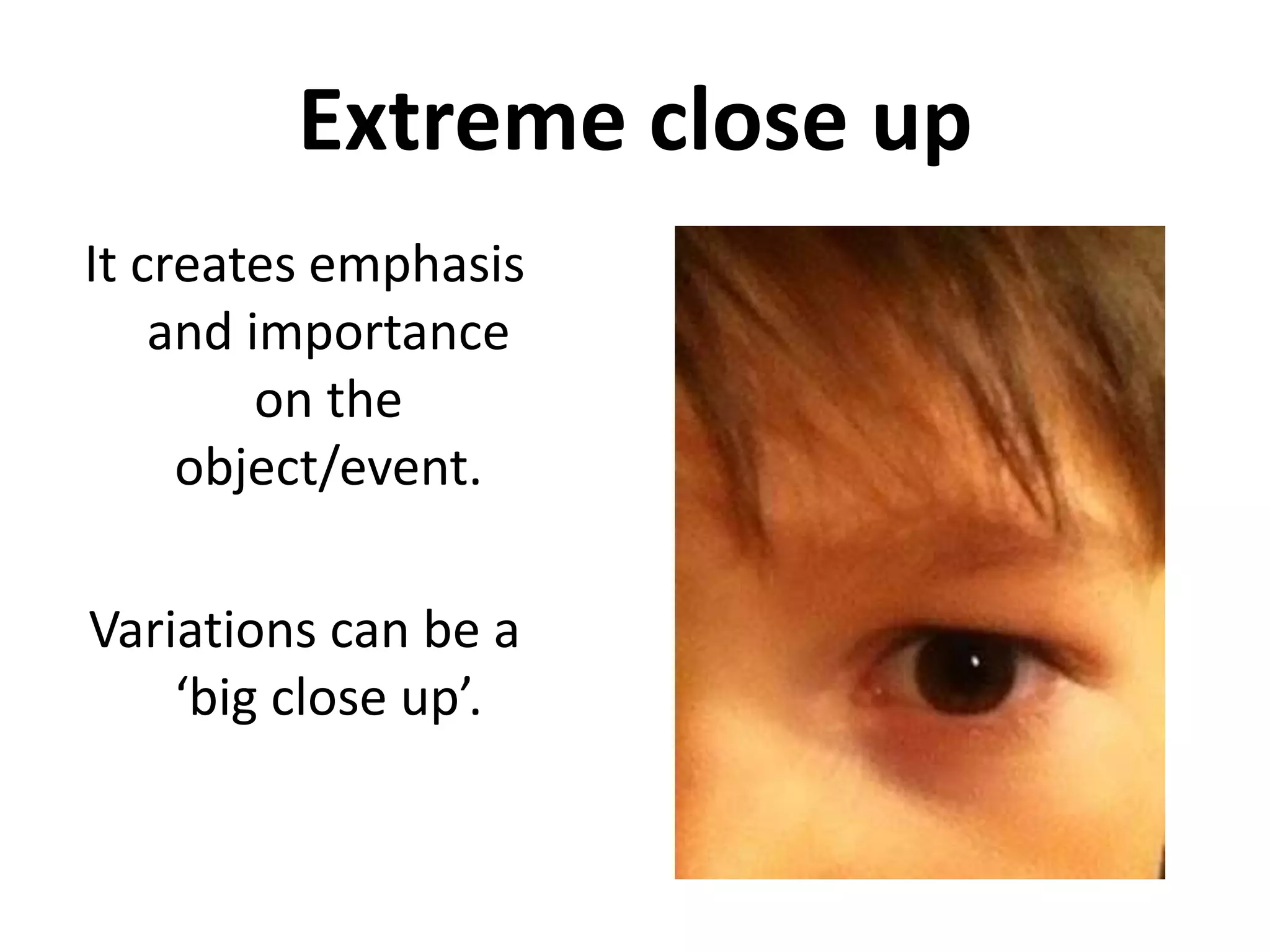
It creates emphasis
    and importance
         on the
     object/event.

Variations can be a
    ‘big close up’.
Two shot
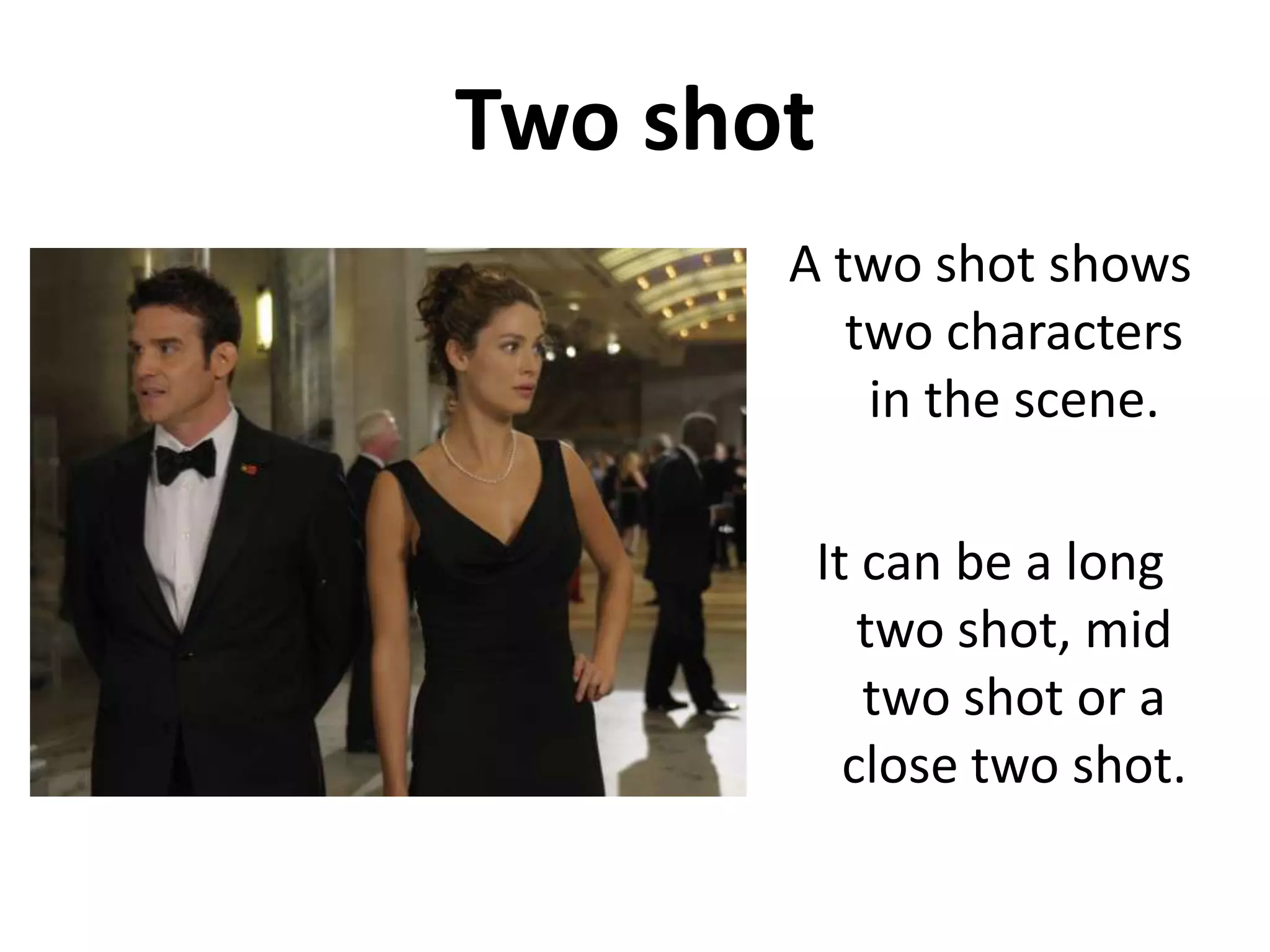
       A two shot shows
          two characters
           in the scene.

           It can be a long
              two shot, mid
              two shot or a
             close two shot.
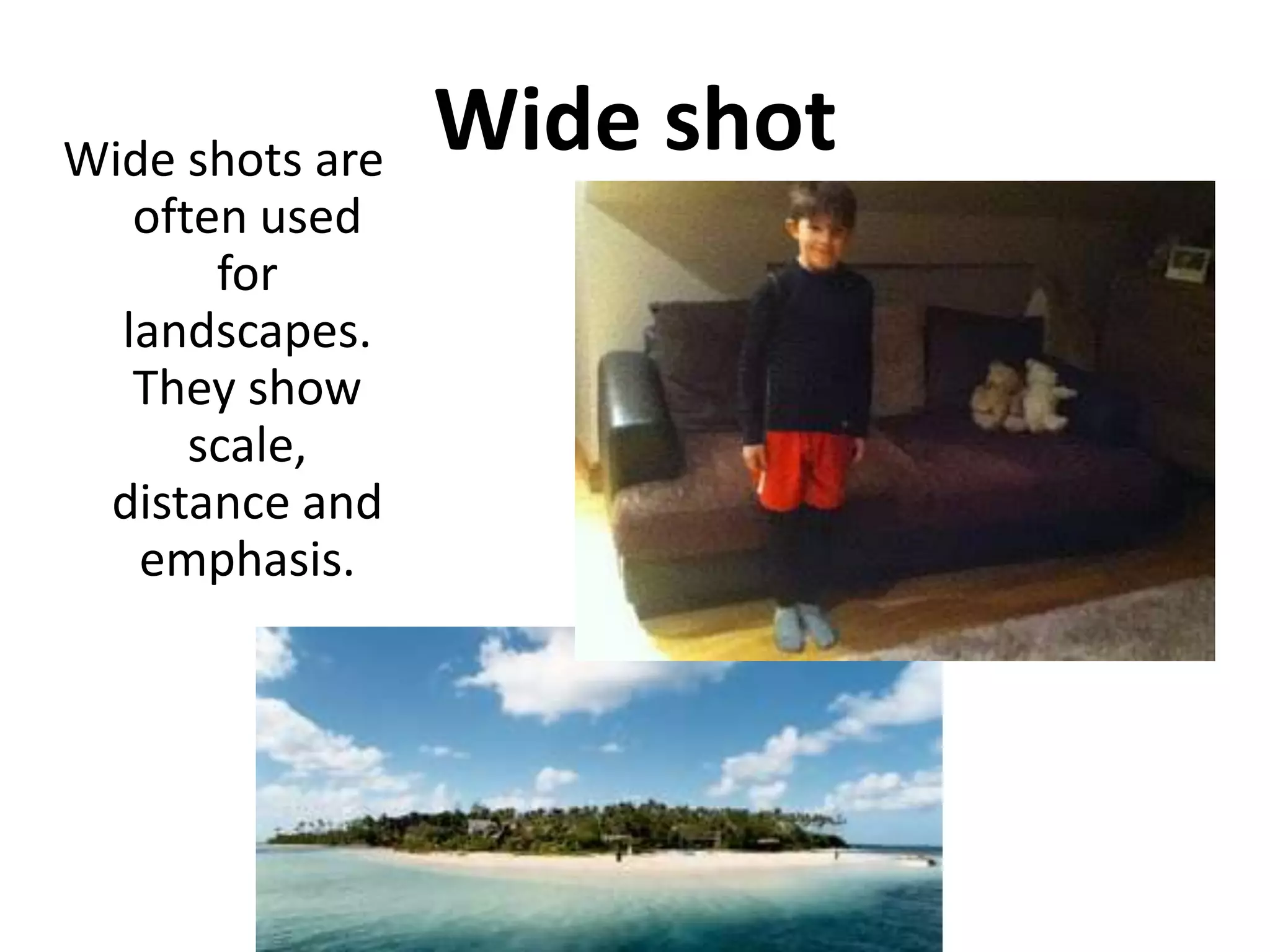
Wide shots are   Wide shot
   often used
       for
  landscapes.
   They show
      scale,
 distance and
   emphasis.
Point of view shot
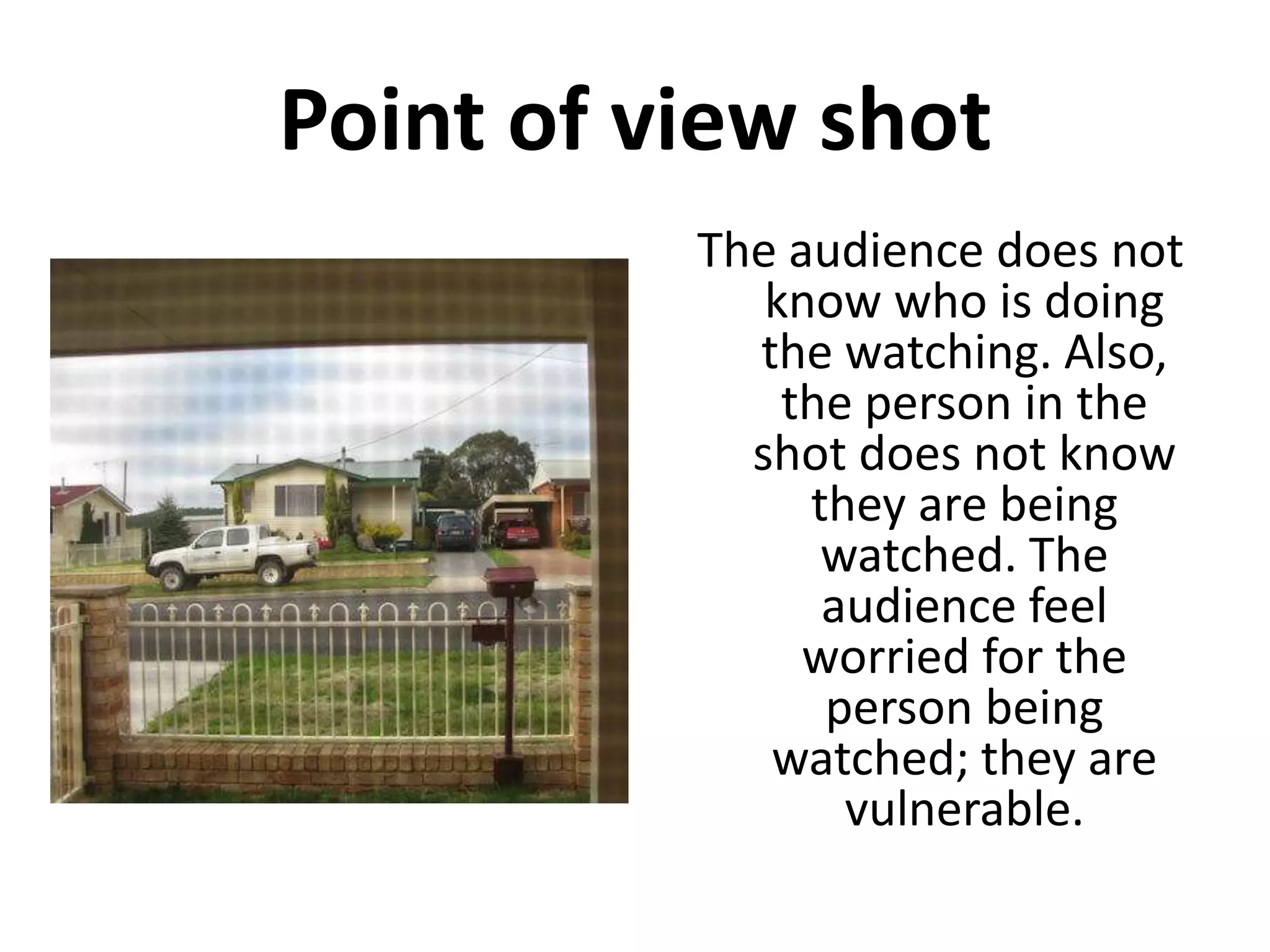
          The audience does not
             know who is doing
            the watching. Also,
              the person in the
            shot does not know
               they are being
                watched. The
                audience feel
               worried for the
                person being
             watched; they are
                 vulnerable.
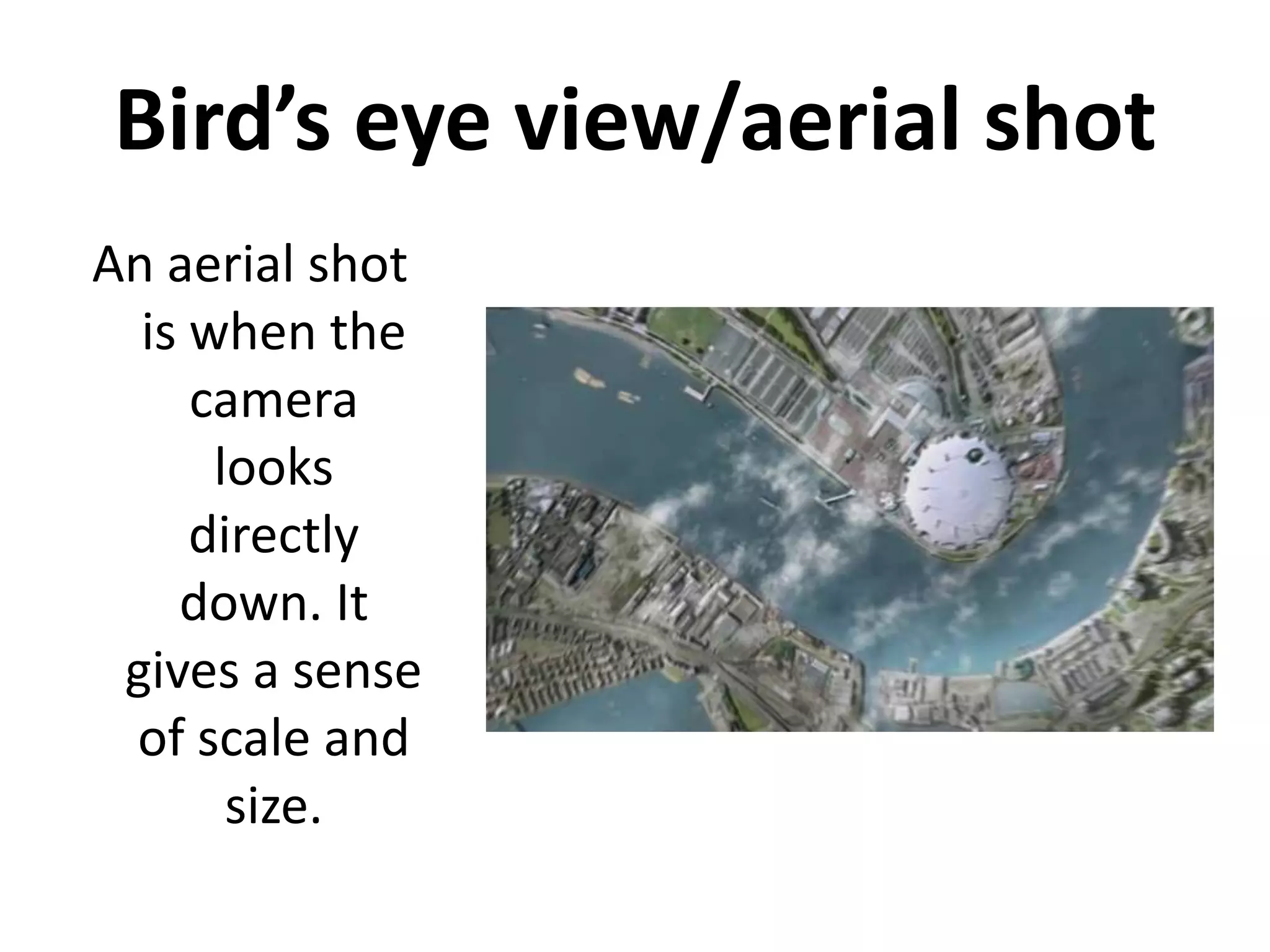
Bird’s eye view/aerial shot
An aerial shot
  is when the
     camera
      looks
     directly
    down. It
 gives a sense
 of scale and
       size.
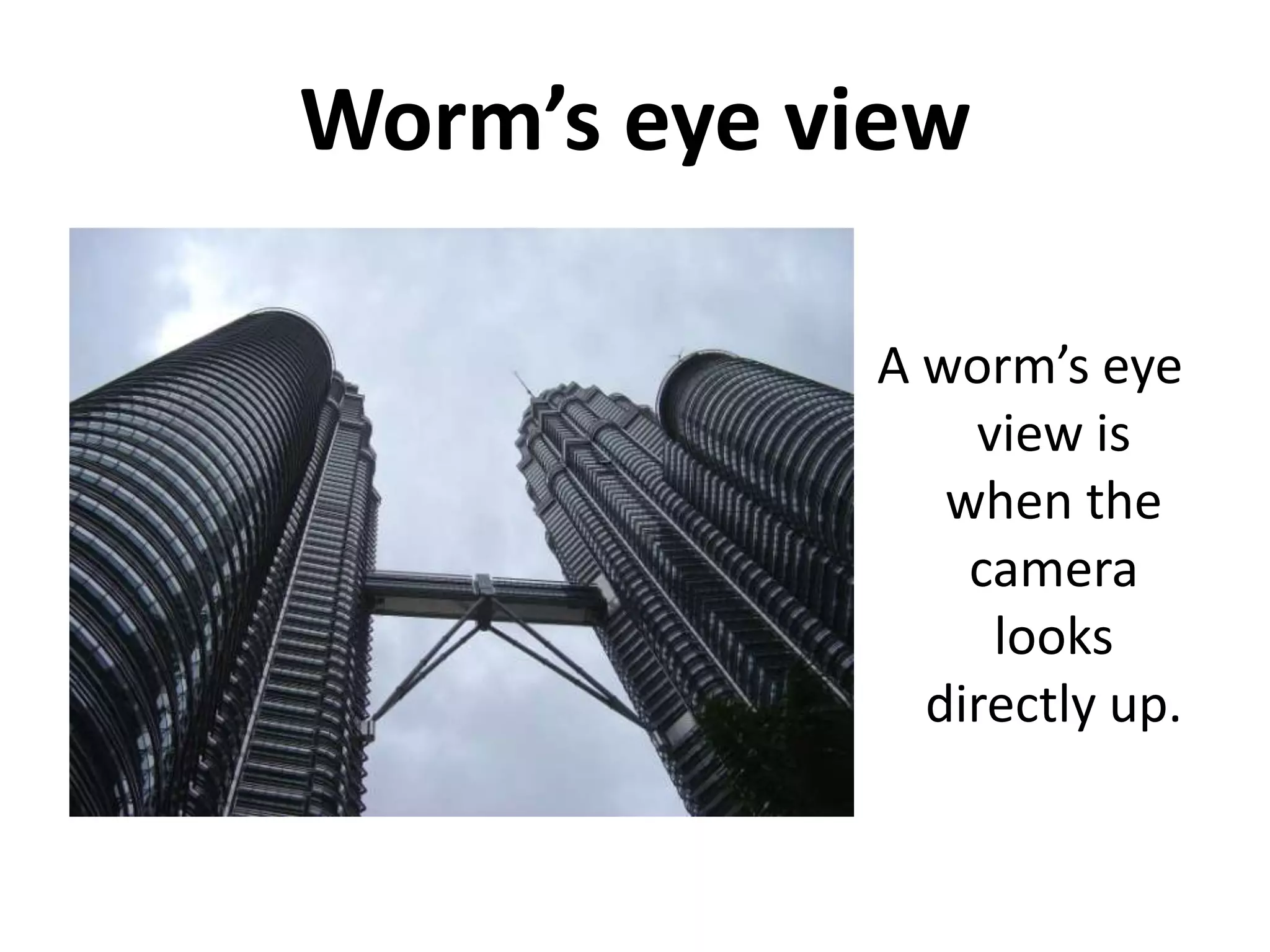
Worm’s eye view

            A worm’s eye
                view is
               when the
                camera
                 looks
              directly up.

Camera shots

  • 1.
  • 2.
    Long shot A long shot shows a whole person. It tells you some information about a character and the surrounding.
  • 3.
    Mid shot A midshot shows roughly from the waist/upper leg and above. It shows facial expressions, moods and feeling. It is more intimate and personal.
  • 4.
    Close up A close up shows shoulders and above. Much more personal. Focuses the audience’s attention and reveals emotions.
  • 5.
    Extreme close up Itcreates emphasis and importance on the object/event. Variations can be a ‘big close up’.
  • 6.
    Two shot A two shot shows two characters in the scene. It can be a long two shot, mid two shot or a close two shot.
  • 7.
    Wide shots are Wide shot often used for landscapes. They show scale, distance and emphasis.
  • 8.
    Point of viewshot The audience does not know who is doing the watching. Also, the person in the shot does not know they are being watched. The audience feel worried for the person being watched; they are vulnerable.
  • 9.
    Bird’s eye view/aerialshot An aerial shot is when the camera looks directly down. It gives a sense of scale and size.
  • 10.
    Worm’s eye view A worm’s eye view is when the camera looks directly up.